Making AI Products Is No Longer the Hard Part; Being Seen Is: Developers, Web3, and Chinese AI Opportunities at mu Shanghai

marsbitPubblicato 2026-05-19Pubblicato ultima volta 2026-05-19

Introduzione

The article discusses the shifting challenges of AI entrepreneurship, based on insights from the mu Shanghai AI WEEK event in May 2026. As AI tools drastically lower the barrier to creating product prototypes, the core difficulty for startups has moved from "how to build" to "who to build for"—finding real users, sustainable business models, and community engagement. The event itself was structured as an extended, immersive developer community space rather than a traditional conference, attracting a global mix of participants (40% AI, 20-30% Web3). This format emphasized deep networking and collaborative creation over one-way presentations. A key observation is that with powerful models and coding assistants becoming ubiquitous, execution is less of a moat. The new scarce resource is judgment—identifying valuable, defensible scenarios where an application won't be quickly rendered obsolete by the next model update. This pushes competition downstream to distribution, user acquisition, and commercialization. Notably, many Web3 practitioners are migrating into AI, bringing with them expertise in community building, global collaboration, and grassroots marketing—skills highly relevant as AI apps fight for visibility. Meanwhile, opportunities in AI hardware, robotics, and embodied intelligence are seen as more durable, leveraging China's robust manufacturing and supply chain ecosystem as a key advantage. The article notes that major Chinese model companies (like MiniMax) are n...

Author: Frank, PANews

At most technology conferences, the most common question is "who released what." But at the mu Shanghai AI WEEK in May 2026, the frequent question PANews heard was more practical: As AI makes it increasingly easy to build product prototypes, what has truly become the hardest part of entrepreneurship?

What made this event special was that it didn't feel like a standard conference, but more like a temporarily constructed developer space. There were few booths, few corporate pitches, and no fixed topics. A large number of overseas developers flew to Shanghai from Argentina, Silicon Valley, Japan, or Southeast Asia, just to connect with Chinese developers, model companies, investors, and the local ecosystem over the course of a month.

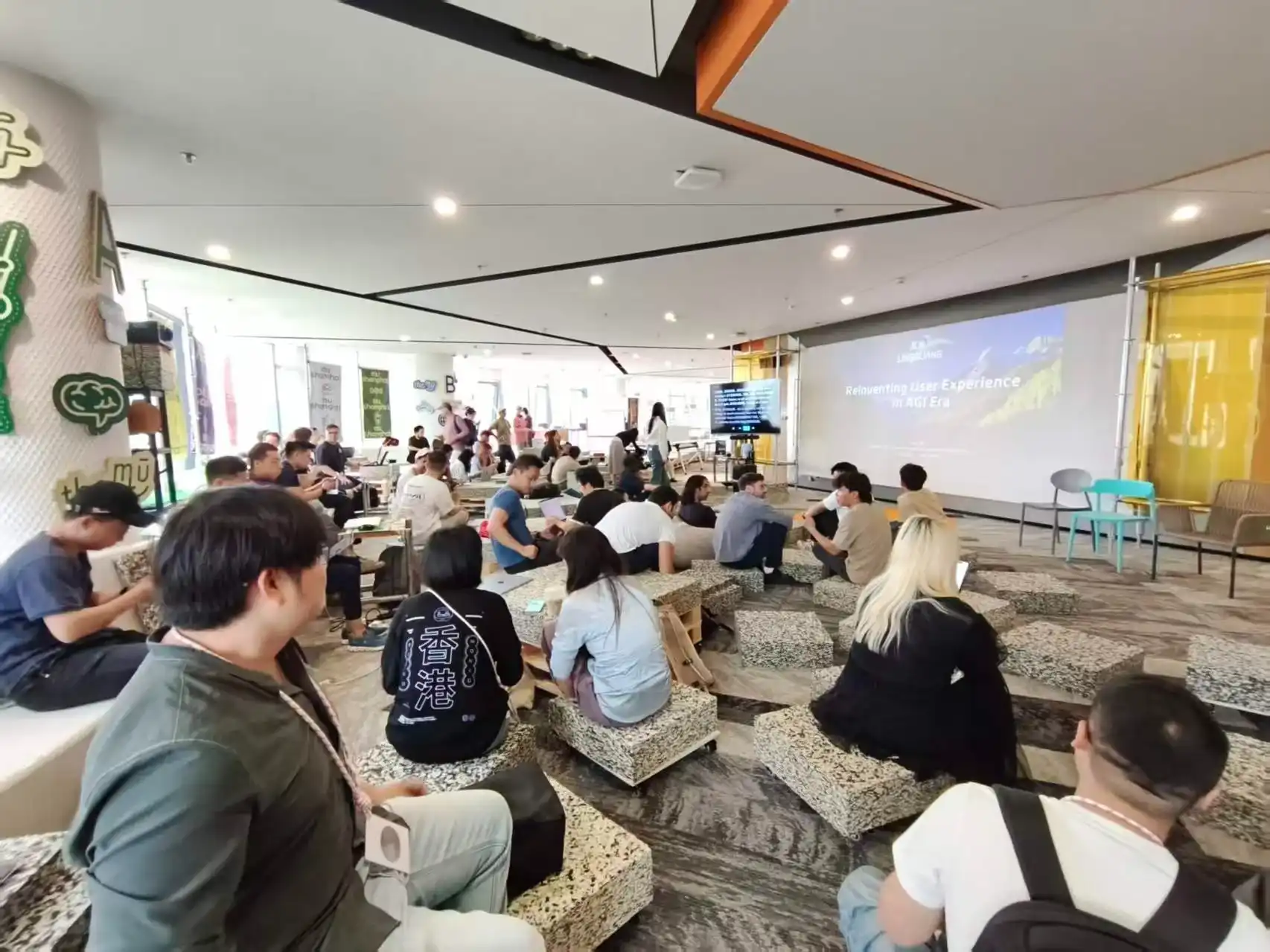
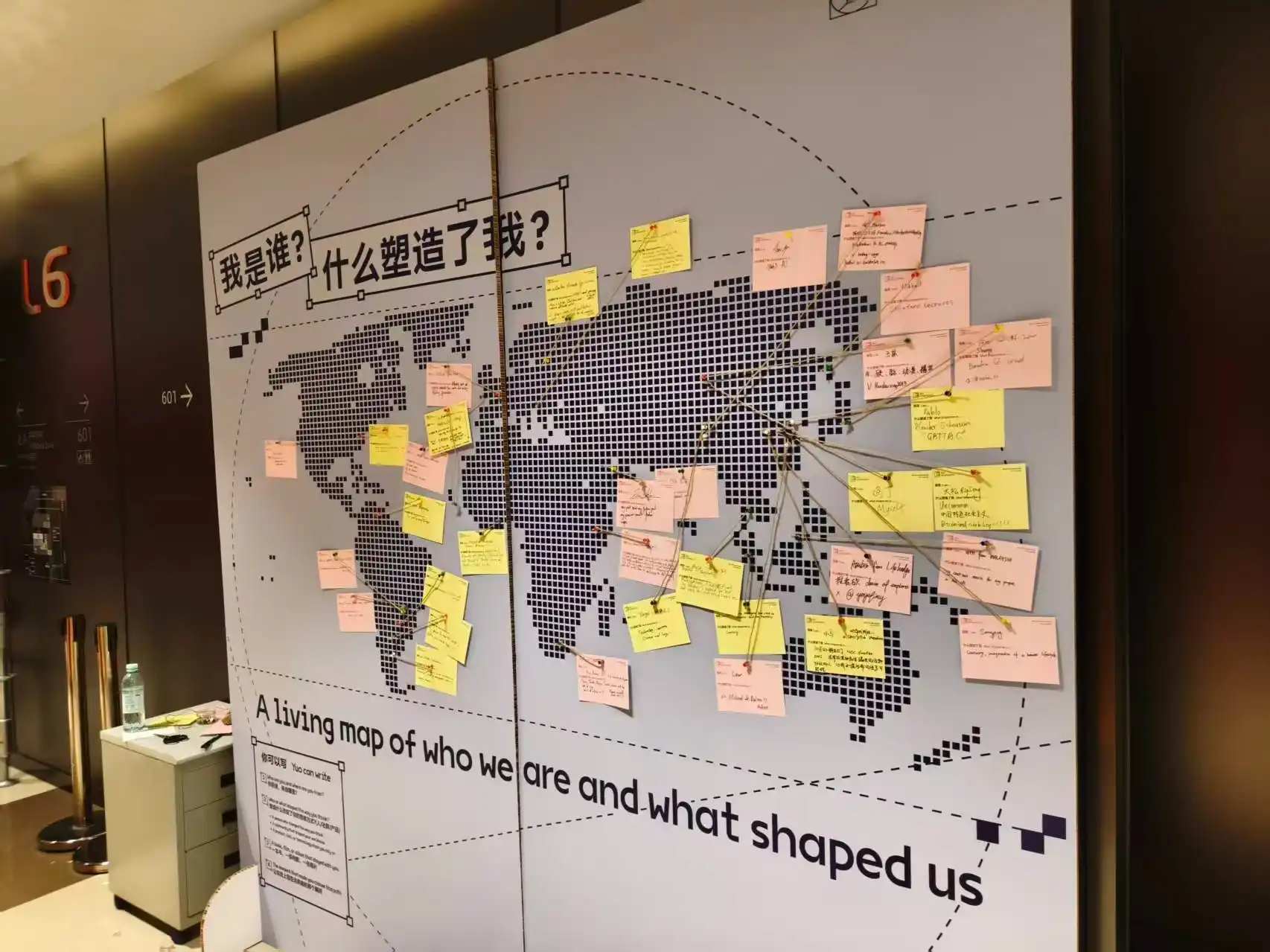
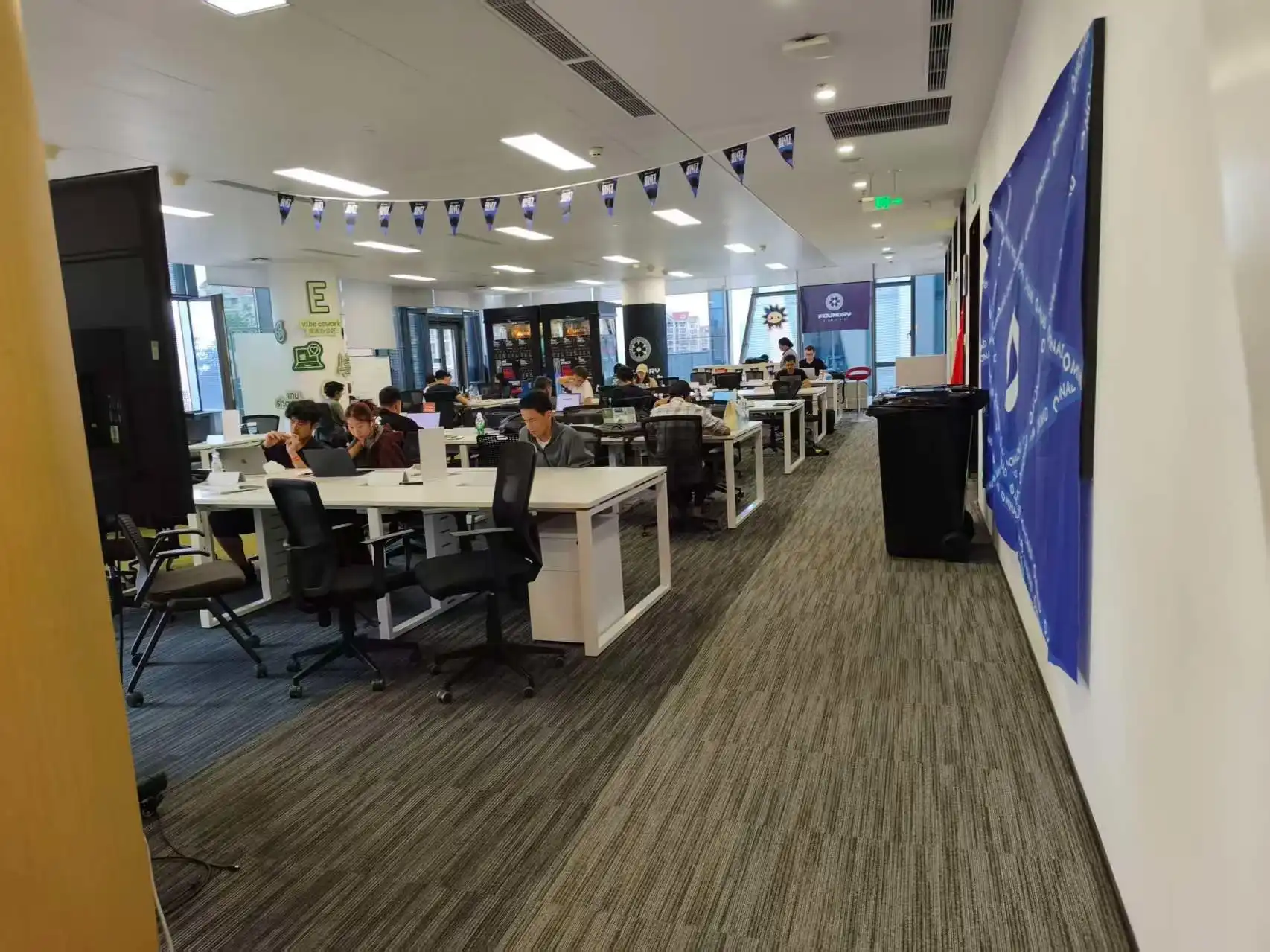
The venue wasn't set up as a traditional hotel conference hall, but as a hybrid space of open-plan work areas, stepped seating pads, bean bags, and temporary projectors. Some people sat at workstations typing code, others gathered on rugs and square cushions listening to talks, while some leaned in corners continuing to work on their products. Colorful mu Shanghai flags hung on the walls. A world map with the question "Who am I? What shaped me?" was covered with sticky notes and connecting lines, resembling an identity network being collectively filled in by participants.
Through conversations at the scene with multiple organizers, project teams, investors, and model company representatives, PANews found that AI entrepreneurship is entering a new phase. If "who can access models faster and build products" was the first phase of AI entrepreneurship; then the second phase is "who can find real-world scenarios, acquire users, build communities, and survive long enough." If models are the utilities (water, electricity, gas), then what is truly scarce now is no longer just the ability to connect the pipes, but who can find the people who most need the water.

A Deep Social Experiment with Global Developers

The most unusual aspect of mu Shanghai was first reflected in its organizational form. Founder Sun mentioned in an interview with PANews that mu didn't start in China initially, but spread in forms like pop-up cities and startup communities in places like Thailand, Argentina, Africa, and Japan. Compared to traditional two- or three-day conferences, it emphasizes a group of people entering the same city for about a month to co-create, exchange, live, and build relationships.

This format naturally gives the event a strong community attribute. According to Sun, about 2000 people registered for this mu Shanghai, with over 800 ultimately selected. The participant composition was also quite diverse: Chinese participants accounted for about 20%, other Asian regions like Japan, Korea, India about 18%, Southeast Asia about 16%, Latin America, the US, and Europe about 10%, 10%, and 11% respectively, and Africa about 6%. By industry background, AI practitioners accounted for about 40%, Web3-related practitioners about 20% to 30%, with additional groups from hardware, biotech, investment, etc.
Sun explained the appeal of this event format in the interview: "After leaving university, people rarely have that kind of deep relationship again. It's also hard to form such connections in work and big cities, so I think it's very valuable." In his view, what mu attempts to replicate is not the fleeting traffic of traditional conferences, but a relationship density closer to university, community, and shared living.

The scene indeed felt closer to this state. The main stage wasn't always the center of the space; subtitles next to projection screens, temporary display racks, and computers scattered everywhere together formed the daily backdrop of the event. During a sharing session on user experience, the audience wasn't neatly seated on chairs but dispersed among low cushions, the floor, and open workstations. The speaker shared at the front, while people below listened while taking notes, replying to messages, or continuing to work on their projects. This slightly loose state was closer to the real way developer communities operate.

The significance of these numbers lies not in the event scale itself, but in showcasing an organizational logic different from traditional exhibitions. Traditional conferences often connect brands and users, companies and clients; mu Shanghai felt more like connecting Chinese and foreign developer cultures. There were large model roundtables, hackathons, co-creation activities, language learning, community sharing, and impromptu discussions. Feng Wen, Product Lead at MiniMax, mentioned in an on-site exchange that the atmosphere here wasn't just about "taking the stage to share about AI," but also included cultural exchange, developer co-creation, and community participation.

The presence of a large number of Web3 practitioners also made this connection more complex. What the Web3 industry has accumulated over the past few years isn't just on-chain assets and speculative narratives, but also a set of methods for community mobilization, global collaboration, social media dissemination, and developer organization. As AI entrepreneurship shifts from competing on model access to competing on user reach, this set of methods regains value.

From 'How to Build' to 'Who to Sell To': AI Entrepreneurship Enters Deep Waters

The most obvious feeling PANews had at the scene was that AI entrepreneurs are no longer excited for long about "whether they can build a product." Multimodal models, code generation tools, Agent frameworks, and automated workflows are rapidly lowering the barrier for product prototyping. A small tool that previously required designers, engineers, and operations to complete might now have an initial version built by a few people in a few nights using AI coding tools.

Newer data better illustrates this change in threshold. The AI Pulse survey conducted by JetBrains in January 2026 showed that 90% of professional developers already routinely use at least one AI tool at work, and 74% have adopted specialized AI tools for developers. For entrepreneurs, "being able to build" is becoming a more common capability, no longer a natural barrier.

However, once the product is built, the real problems begin. A founder named Nathan told PANews he is working on a product to help AI entrepreneurs find startup directions. The logic is that AI can already expand information collection range, solidify the judgment and taste of serial entrepreneurs into a set of rules, and then let AI discover signals of business opportunities. But this product itself reveals a larger reality: as building products becomes easier, "what exactly to build" becomes the scarcer question.

Nathan told PANews: "With AI coding tools, making something new is already fast. The real key is whether this direction is worth pursuing." The product he is making essentially productizes the act of "finding direction." This case is small but reflects a new change in AI entrepreneurship: when execution is amplified by AI, judgment becomes the scarce asset.

In the roundtable "Innovative Practices and Path Exploration in the AI Consumer Ecosystem" hosted by PANews, multiple guests expressed similar views: AI indeed makes rapid prototyping, demo samples, and initial launch easier, but the truly difficult parts of entrepreneurship haven't disappeared. User acquisition, commercialization, community stickiness, user education, and human-to-human connections still require teams to have more composite capabilities.

In other words, AI lowers the development threshold, not the entrepreneurship threshold. In the past, the first hurdle in product competition was "can it be built?" Now that this hurdle is significantly lowered, the real filtering starts moving later to distribution, scenarios, and commercialization. An on-site intervieee summarized it as: making tools isn't hard now; what's hard is getting the product, IP, and value seen by more people.

This is also a common dilemma faced by many AI tools. The more tools there are, the harder it is for users to choose; the stronger the models, the easier it is for single-point functions to be swallowed by the next model update. For entrepreneurs, a product that seems viable today might lose its raison d'être in 6 months because underlying model capabilities improve. Therefore, the real question isn't "whether to do AI," but whether one can find a specific scenario that the model cannot completely erase in the short term.

AI usage is rapidly spreading, but between tool usage and stable value, there still lies scenarios, processes, governance, and organizational capabilities.

Web3 People Flooding into AI, Not Just Chasing Hype

If viewed only from a narrative perspective, Web3 people flooding into AI might seem like just another hype migration. But at mu Shanghai, there were more practical reasons behind this migration.

On one hand, the wealth effects, capital dividends, and technological dividends of the crypto industry are waning, and many practitioners are looking for new tech directions; on the other hand, AI applications恰好 need the capabilities Web3 is most familiar with: community, globalized communication, developer relations, and social media distribution.

A senior Web3 practitioner said bluntly on-site that the crypto industry has been around for 10 years, and most of the capital and knowledge arbitrage opportunities are over; now it's better to move towards new tech directions. He advised entrepreneurs to gradually shift their careers, personal brands, and asset allocation towards AI, rather than continuing to heavily bet on cryptocurrencies. This assessment may not represent all Web3 practitioners, but it did reflect the real mindset of some people present.

He expressed it directly: "I think AI is worth long-term investment. By investment, I don't just mean using tools, but gradually shifting one's career, personal brand, and asset allocation towards AI." His personal choice was to transition into an AI-focused blogger, holding a sports camera to film Vlogs of teams building AI products at the event.

Such judgments may not represent all Web3 practitioners, but they were enough to illustrate the on-site atmosphere: AI is no longer just an optional track, but is becoming a direction for some Web3 practitioners to reconfigure their time, assets, and professional identities.

The AI-driven social media assistant XerpaAI had a booth at the event. Their staff said in an interview, "We are a pure AI project, technically not much related to Web3. But from the user side, we will definitely reach Web3 users. For example, the X AI Assistant will serve some Web3 users with operational needs." This statement well represents the ambiguous relationship between current AI applications and the Web3 community: the product doesn't have to be Web3, but users, dissemination, and early needs often cannot avoid Web3.

In on-site exchanges, model company representatives also mentioned that the user groups of AI and Web3 are increasingly difficult to completely separate; many heavy users of AI tools originally come from Web3 backgrounds. Especially in scenarios like Hong Kong and Shanghai, AI and Web3 often share the same group of high-frequency event attendees, early users, and community dissemination nodes. For them, they don't reject whether community members are Web3 users; as long as the theme is AI, everyone's goals are aligned.

From this perspective, Web3 entering AI isn't just a "change of scene." What Web3 brings isn't the on-chain technology itself, but a set of methods on how to gather global developers around a project, sustain discussions, and contribute attention. For current AI applications, this capability might be harder to replicate than a short-term feature.

Hardware, Supply Chain, and the Chinese Foundation

Compared to the anxiety over "whether AI software apps will be eaten by models," discussions on AI hardware, embodied intelligence, and the Chinese supply chain at the scene felt more certain. Multiple interviewees mentioned that as AI enters the real world in the future, hardware, robotics, embodied intelligence, and multi-sensory interaction will see greater opportunities. In the consumer-grade AI roundtable hosted by PANews, Feng Wen, Open Platform Product Lead at MiniMax, also predicted that smart hardware, robotics, and embodied intelligence will reach an important inflection point in the next three to five years; AI will no longer exist only in software interfaces but also enter the real physical world.

Outside the venue, the robotics track is also becoming a focus. A human vs. robot parcel sorting competition hosted by overseas robotics company Figur on May 18 sparked widespread online discussion. Even though humans won by a narrow margin within 10 hours, it's clear that over longer timeframes, robots have become the winners. The Stanford HAI "2026 AI Index" also shows that AI agents' accuracy in real-world computer task tests like OSWorld improved from about 12% to 66.3%, autonomous driving has begun to see scaled deployment, and China's Apollo Go completed 11 million fully driverless trips cumulatively.

AI entering the real world through hardware, robotics, and on-device deployment is no longer just a distant narrative.

This is precisely the special advantage of the Chinese ecosystem. Sun repeatedly mentioned in the interview that China possesses almost the entire supply chain from hardware, AI, life tech to infrastructure. For overseas entrepreneurs, if they want to do AI hardware, whether it's raw materials, factories, engineers, or rapid prototyping capabilities, it's ultimately hard to avoid China. He also revealed that for many entrepreneurs coming from overseas to China for this event, the goal was to experience and closely observe China's complete industrial chain.

Sun stated: "As long as you're doing hardware, overseas teams will eventually return to China to find supply chains, raw materials, engineers, and prototyping capabilities." He believes that in the next five to ten years, more international talent will come to China to find supply chains, raw materials, talent, and capital. For overseas entrepreneurs, China is not just a market, but a set of infrastructure for product realization.

A venture capital professional told PANews on-site that their main goal for participating was to see if there were more hard tech, embodied intelligence, and world model projects, rather than purely consumer applications. Their logic was that if the replication cost of software AI is decreasing, then hardware, supply chain, and real-world interaction might instead become barriers harder to be directly erased by model updates.

However, the attractiveness of the Chinese AI ecosystem to overseas developers doesn't come only from the supply chain. The emergence of domestic models like DeepSeek, Kimi, MiniMax, Zhipu, and Qwen has made overseas developers start to reconsider Chinese model capabilities. But Chinese models going overseas still face trust and deployment challenges. Feng Wen, Open Platform Product Lead at MiniMax, mentioned that Chinese models mainly gain attention and brand influence overseas through open source, but many overseas developers still worry about data, compliance, and trust issues. Even if models are open source, most people may not have enough computing power to deploy them themselves, leading to the emergence of an intermediary layer where US companies deploy Chinese open-source models and then provide them to overseas clients.

For overseas developers, the attractiveness of the Chinese AI ecosystem no longer comes only from cost or market size, but also from continuously expanding model supply, engineering capabilities, and industrial conversion capabilities.

This means the opportunity for the Chinese AI ecosystem isn't a single line. Model capabilities, hardware supply chain, government execution, and developer communities need to operate together to truly bring overseas entrepreneurs in. The role mu Shanghai plays in this process is more like a connector bringing overseas developers into China.

Large Model Companies Begin Competing for Developer Communities

If the competition among large model companies in the past year was mainly reflected in parameters, leaderboards, and prices, then at mu Shanghai, the importance of developer communities was pushed to the forefront. Domestic large model companies don't just need more API calls; they need developers to know about them, trust them, and be willing to build applications around their models.

Feng Wen mentioned in on-site exchanges that they do a lot of developer-related work. Developer experience, event screening, guest participation, hackathons, judging, token sponsorship, etc., all need to be incorporated into the ecosystem work of model companies.

"Developers are our users, so we value developer experience highly and also hope more developers understand what we are doing," Feng Wen stated. This sentence can almost be seen as a footnote to the ecosystem strategy of domestic large model companies: models are no longer just placed on a platform waiting to be called, but must actively enter spaces where developers gather.

This isn't a choice unique to MiniMax. On-site participants revealed that Zhipu has "Origin Academy" in Beijing, with activities almost every week, and close ties to university resources like Tsinghua and Peking University; AIGC and AGI communities also continuously gather talent through fixed spaces, hackathons, hotpot gatherings, and developer nights. These spaces are becoming offline versions of developer portals.
Behind this is a larger change: model companies are no longer satisfied with "releasing the model." They need documentation, trial platforms, case studies, video tutorials, and also communities, hackathons, and developer events to help users cross the initial threshold. As Agent capabilities improve, user education itself is being reshaped. In the past, developers needed to read documentation, check error codes, and understand parameters themselves; now, Agents can help users read documentation, search for solutions, select models, and automatically correct paths.

For model companies, the real competition isn't just model call prices, but who can enter developers' daily workflows earlier. For application entrepreneurs, the real opportunity isn't just which model to connect to, but whether they can find a group of early users willing to continuously use, provide feedback, and even actively spread the word.

Being Needed, Understood, and Kept

mu Shanghai didn't provide a unified answer for AI entrepreneurship. Some are bullish on hardware, some are making social media growth assistants, some are discovering entrepreneurial opportunities, some discussed cultural出海 and spiritual consumption, while others treated it as an entry point to meet overseas developers and local partners.

But these seemingly scattered clues precisely constitute the most real current state of AI entrepreneurship. Model capabilities continue to advance, but application forms are still searching for stable scenarios; development thresholds are lowered, but distribution and commercialization become more critical; Web3 hype cools, but the community methods it left behind are being absorbed by AI; Chinese supply chain and model capabilities become important, but overseas developers still need a trusted entry point to understand China.

Sun mentioned in the interview that mu Shanghai's long-term goal isn't just to host an event, but to form a continuous space where overseas and domestic people can meet, collaborate, and create new things in the same place. In fact, mu has very few formal employees; much of the work is driven by contributors and partners. This organizational method itself resembles Web3 and open-source communities: low centralization, emphasis on contribution and relationship networks, and thus more attractive to people familiar with this culture.

Of course, this model still has many uncertainties. Whether the event can transform into a long-term space, whether community enthusiasm can solidify into real projects, whether overseas developers will stay long-term in the Chinese ecosystem, whether large model companies can convert developer activities into stable call volumes, all remain to be seen. Communities can create encounters but cannot replace business closure; cities can provide scenarios but cannot guarantee product success.

However, mu Shanghai at least made one trend clear: AI entrepreneurship is moving from "model worship" to "scenario competition," from "making tools" to "being seen by users," from single-point products to comprehensive competition involving communities, supply chains, and cross-national collaboration. For ordinary entrepreneurs, the opportunity brought by AI isn't making everyone a winner easily, but exposing more people earlier to the same, more intense screening process.

When products become increasingly easy to produce, what is truly scarce becomes the ability to understand users, enter scenarios, build trust, and continuously connect people. AI will continue to lower the production cost of tools, but it won't automatically answer "why you?" In this sense, building the product is only the first step; being needed, understood, and kept is the harder second half of AI entrepreneurship.


Domande pertinenti

QWhat is the core shift in the difficulty of AI entrepreneurship discussed in the article about mu Shanghai?

AThe core shift is moving from the initial challenge of 'who can build a product prototype faster using AI models' to the current and more difficult challenge of 'who can find real user scenarios, acquire users, build a community, and survive in the long term.' The scarcity is no longer just the ability to connect to models (the 'plumbing'), but the ability to find those who most need the water.

QHow does the mu Shanghai event differ from a traditional tech conference according to the article?

AThe mu Shanghai event differs by being organized more like a temporary, month-long developer co-living and co-creation space rather than a standard short conference. It focuses on deep social connections and community building among global developers, featuring open workspaces, casual seating, impromptu discussions, and a mix of activities like hackathons and cultural exchanges, rather than a fixed agenda of corporate presentations and exhibition booths.

QWhy are many Web3 practitioners moving into the AI field, beyond just chasing trends?

AWeb3 practitioners are moving into AI because, while crypto industry opportunities are diminishing, the AI application field urgently needs the community-building, global communication, developer relations, and social media distribution skills that the Web3 industry has honed over the past decade. AI applications, even if not blockchain-based, often find their early users and community nodes within Web3 circles.

QWhat unique advantage does China's AI ecosystem offer to global entrepreneurs, especially in hardware?

AChina's AI ecosystem offers a complete hardware and supply chain advantage, including access to raw materials, factories, engineers, and rapid prototyping capabilities. For global entrepreneurs working on AI hardware, robotics, or embodied intelligence, China serves as essential infrastructure for product realization, not just a market.

QAccording to the article, how is the competition among major Chinese AI model companies (LLMs) evolving?

AThe competition is evolving from focusing solely on model parameters, benchmarks, and pricing to actively competing for developer community mindshare and loyalty. Model companies are now heavily investing in developer experience, documentation, tutorials, hackathons, sponsorships, and physical community spaces to integrate themselves into developers' workflows and build trust.

Letture associate

Eight Global Central Banks Enter the Fray, Aiming to Claim a Piece of the Stablecoin Pie?

The article discusses the Agorá project, a global cross-border payment system initiative led by the Bank for International Settlements (BIS) with participation from eight major central banks (including the Federal Reserve Bank of New York, Bank of England, and Bank of Japan) and over 40 private financial institutions like JPMorgan and SWIFT. Agorá aims to create a unified platform for the instant settlement of cross-border transactions using tokenized commercial bank deposits. A key feature is its strict "permissioned" design, where funds are pre-labeled by country and smart contracts enforce AML and sanctions checks. This contrasts with the "permissionless" ideal suggested by its ancient Greek namesake. The system employs a two-tier architecture: central banks retain full control over sovereign reserves on separate ledgers, while private entities manage a shared ledger for multi-currency clearing. The project, which completed a prototype in May 2026, seeks to streamline the slow, multi-step process of traditional cross-border payments. It is positioned as a centralized, regulatory-compliant alternative to decentralized stablecoins like Tether, targeting large-scale institutional transfers. The analysis highlights a potential future market split: projects like Agorá could dominate wholesale institutional payments, while public blockchain-based stablecoins retain their role in retail, remittance, and emerging market use cases. This represents an effort by traditional finance to establish boundaries for decentralized networks. The upcoming integration of the EU's Pontes framework with its core settlement system will test this dynamic.

marsbit1 min fa

Eight Global Central Banks Enter the Fray, Aiming to Claim a Piece of the Stablecoin Pie?

marsbit1 min fa

BitMart Research Institute Weekly Highlights: ETF Continued Outflows + AI Drain, Crypto Market Seeks Bottom Amid Volatility

**BitMart Research Weekly Highlights: ETF Outflows and AI Demand Weigh on Crypto Market** The crypto market saw a correction this past week, diverging from the all-time highs in U.S. equity markets. Bitcoin (BTC) fell roughly 6%, while Ethereum (ETH) declined about 4.5%. The primary pressure point was significant and sustained outflows from U.S. spot Bitcoin ETFs, which experienced a record nine consecutive days of net redemptions totaling approximately $2.8 billion. Spot Ethereum ETFs also faced continuous outflows. This weakness in digital assets contrasted with the continued surge in traditional markets, particularly AI-related stocks. The news of Anthropic's secret IPO filing, targeting a potential $750B IPO, and Alphabet's major new AI infrastructure funding further fueled the tech rally. The analysis suggests a potential "liquidity siphon" effect, where capital is being diverted from crypto into the dominant AI investment narrative. Other notable developments include DTCC's DTC announcing plans to integrate Stellar for tokenized asset services, signaling a major step for tokenized equities. Meanwhile, MicroStrategy paused its primary mechanism for funding Bitcoin purchases to focus on debt management, removing a key institutional buyer from the market. The report concludes that the crypto market remains under pressure from the competing AI narrative and major upcoming IPOs, with a potential for a broader market bottom if an AI-driven correction occurs later this cycle.

marsbit17 min fa

BitMart Research Institute Weekly Highlights: ETF Continued Outflows + AI Drain, Crypto Market Seeks Bottom Amid Volatility

marsbit17 min fa

The Death of the Three-Act Play: AI Ushers Enterprise Software Startups into the ‘Speedrun Era’

The Death of the Three-Act Play: How AI is Ushering in a 'Speedrun Era' for Enterprise Software Startups The traditional three-act play for building an enterprise software company—first, a niche wedge product; second, an expanded suite; third, a dominant platform—is becoming obsolete in the AI era. Previously, startups would spend 3-5 years perfecting a single-point solution to reach tens of millions in ARR (Act 1: The Wedge). Then, over another few years, they'd build adjacent products to form a suite and cross the $100M ARR threshold (Act 2: The Suite). Finally, with scale and user engagement, they could aim to become a foundational platform themselves (Act 3: The Platform). This model assumed a timeline measured in years. However, AI-driven tools have dramatically compressed software development costs and timelines. Companies like Cursor, Clay, and Harvey have scaled from near zero to approaching or surpassing $100M ARR in remarkably short periods, demonstrating a new competitive pace. The core argument is that in this rapidly changing market, relying on a small, "safe" wedge as a protective harbor may now be a conservative, even risky, strategy. The plummeting cost of building software means the time required for Acts 1 and 2 is approaching zero. Consequently, rational strategy now favors planning to build the entire vision from the outset. This shift changes the calculus for early-stage investment. The emphasis is moving from finding a defensible niche to backing founders with "unreasonable, relentless ambition" to reimagine entire workflows or replace incumbent platforms from day one. The age of gradual expansion is giving way to an era of immediate, full-scale ambition.

marsbit36 min fa

The Death of the Three-Act Play: AI Ushers Enterprise Software Startups into the ‘Speedrun Era’

marsbit36 min fa

After the 'Golden Finger' Points to IBM, the Stock God Trump's Next Target Emerges

The White House occupant is being called a "stock god." Financial disclosures show former President Trump executed 3,642 stock trades in Q1 2026, averaging 58 per trading day. More significantly, a pattern has emerged where companies he publicly praises often see their stock prices rise and frequently overlap with his personal portfolio holdings, government industrial policy, and federal funding. Since a high-profile Tesla event in March 2025, Trump has publicly endorsed at least nine companies, including Intel, Dell, Micron, Palantir, IBM, Apple, Thermo Fisher, Nvidia, and AMD. These "Trump concept stocks" share key traits: they are tied to AI, semiconductors, quantum computing, or "Made in America" narratives; they often receive government contracts, subsidies (like CHIPS Act funding), or regulatory favors; and their CEOs typically have strong personal or political ties to Trump. Timing raises questions. In several instances, such as with Palantir and Dell, Trump's personal account established or increased positions weeks before his public endorsements, which were followed by significant stock price jumps. While his assets are reportedly held in a blind trust managed by his children, the correlation is notable. Based on this pattern, analysis suggests the next companies likely to be endorsed are those where the US government has already taken a strategic equity stake but which haven't yet received a high-profile "call-out." Prime candidates include MP Materials (rare earths, 15% DoD interest), Lithium Americas (lithium, DoE-backed), and quantum computing firms like IonQ, Rigetti, and D-Wave, which are reportedly in talks for government equity-for-funding deals. Other potential names are Oracle (deep political ties) and GlobalFoundries (semiconductors and quantum funding). These stocks carry high political premium, meaning their valuations are highly sensitive to political favor, which can be volatile.

marsbit1 h fa

After the 'Golden Finger' Points to IBM, the Stock God Trump's Next Target Emerges

marsbit1 h fa

Trading

Spot
Futures

Articoli Popolari

Cosa è GROK AI

Grok AI: Rivoluzionare la Tecnologia Conversazionale nell'Era Web3 Introduzione Nel panorama in rapida evoluzione dell'intelligenza artificiale, Grok AI si distingue come un progetto notevole che collega i domini della tecnologia avanzata e dell'interazione con l'utente. Sviluppato da xAI, un'azienda guidata dal rinomato imprenditore Elon Musk, Grok AI cerca di ridefinire il modo in cui interagiamo con l'intelligenza artificiale. Mentre il movimento Web3 continua a prosperare, Grok AI mira a sfruttare il potere dell'IA conversazionale per rispondere a query complesse, offrendo agli utenti un'esperienza che è non solo informativa ma anche divertente. Cos'è Grok AI? Grok AI è un sofisticato chatbot di intelligenza artificiale conversazionale progettato per interagire dinamicamente con gli utenti. A differenza di molti sistemi di intelligenza artificiale tradizionali, Grok AI abbraccia un'ampia gamma di domande, comprese quelle tipicamente considerate inappropriate o al di fuori delle risposte standard. Gli obiettivi principali del progetto includono: Ragionamento Affidabile: Grok AI enfatizza il ragionamento di buon senso per fornire risposte logiche basate sulla comprensione contestuale. Supervisione Scalabile: L'integrazione dell'assistenza degli strumenti garantisce che le interazioni degli utenti siano sia monitorate che ottimizzate per la qualità. Verifica Formale: La sicurezza è fondamentale; Grok AI incorpora metodi di verifica formale per migliorare l'affidabilità delle sue uscite. Comprensione del Lungo Contesto: Il modello di IA eccelle nel trattenere e richiamare una vasta storia di conversazione, facilitando discussioni significative e consapevoli del contesto. Robustezza Adversariale: Concentrandosi sul miglioramento delle sue difese contro input manipolati o malevoli, Grok AI mira a mantenere l'integrità delle interazioni degli utenti. In sostanza, Grok AI non è solo un dispositivo di recupero informazioni; è un partner conversazionale immersivo che incoraggia un dialogo dinamico. Creatore di Grok AI Il cervello dietro Grok AI non è altri che Elon Musk, un individuo sinonimo di innovazione in vari campi, tra cui automotive, viaggi spaziali e tecnologia. Sotto l'egida di xAI, un'azienda focalizzata sull'avanzamento della tecnologia AI in modi benefici, la visione di Musk mira a rimodellare la comprensione delle interazioni con l'IA. La leadership e l'etica fondamentale sono profondamente influenzate dall'impegno di Musk nel superare i confini tecnologici. Investitori di Grok AI Sebbene i dettagli specifici riguardanti gli investitori che sostengono Grok AI rimangano limitati, è pubblicamente riconosciuto che xAI, l'incubatore del progetto, è fondato e supportato principalmente dallo stesso Elon Musk. Le precedenti imprese e partecipazioni di Musk forniscono un robusto sostegno, rafforzando ulteriormente la credibilità e il potenziale di crescita di Grok AI. Tuttavia, al momento, le informazioni riguardanti ulteriori fondazioni di investimento o organizzazioni che supportano Grok AI non sono facilmente accessibili, segnando un'area per potenziali esplorazioni future. Come Funziona Grok AI? Le meccaniche operative di Grok AI sono innovative quanto il suo framework concettuale. Il progetto integra diverse tecnologie all'avanguardia che facilitano le sue funzionalità uniche: Infrastruttura Robusta: Grok AI è costruito utilizzando Kubernetes per l'orchestrazione dei container, Rust per prestazioni e sicurezza, e JAX per il calcolo numerico ad alte prestazioni. Questo trio garantisce che il chatbot operi in modo efficiente, si scaldi efficacemente e serva gli utenti prontamente. Accesso alla Conoscenza in Tempo Reale: Una delle caratteristiche distintive di Grok AI è la sua capacità di attingere a dati in tempo reale attraverso la piattaforma X—precedentemente nota come Twitter. Questa capacità consente all'IA di accedere alle informazioni più recenti, permettendole di fornire risposte e raccomandazioni tempestive che altri modelli di IA potrebbero perdere. Due Modalità di Interazione: Grok AI offre agli utenti la scelta tra “Modalità Divertente” e “Modalità Normale”. La Modalità Divertente consente uno stile di interazione più giocoso e umoristico, mentre la Modalità Normale si concentra sulla fornitura di risposte precise e accurate. Questa versatilità garantisce un'esperienza su misura che soddisfa varie preferenze degli utenti. In sostanza, Grok AI sposa prestazioni con coinvolgimento, creando un'esperienza che è sia arricchente che divertente. Cronologia di Grok AI Il viaggio di Grok AI è segnato da traguardi fondamentali che riflettono le sue fasi di sviluppo e distribuzione: Sviluppo Iniziale: La fase fondamentale di Grok AI si è svolta in circa due mesi, durante i quali sono stati condotti l'addestramento iniziale e il perfezionamento del modello. Rilascio Beta di Grok-2: In un significativo avanzamento, è stata annunciata la beta di Grok-2. Questo rilascio ha introdotto due versioni del chatbot—Grok-2 e Grok-2 mini—ognuna dotata delle capacità per chattare, programmare e ragionare. Accesso Pubblico: Dopo lo sviluppo beta, Grok AI è diventato disponibile per gli utenti della piattaforma X. Coloro che hanno account verificati tramite un numero di telefono e attivi per almeno sette giorni possono accedere a una versione limitata, rendendo la tecnologia disponibile a un pubblico più ampio. Questa cronologia racchiude la crescita sistematica di Grok AI dall'inizio all'impegno pubblico, enfatizzando il suo impegno per il miglioramento continuo e l'interazione con gli utenti. Caratteristiche Chiave di Grok AI Grok AI comprende diverse caratteristiche chiave che contribuiscono alla sua identità innovativa: Integrazione della Conoscenza in Tempo Reale: L'accesso a informazioni attuali e rilevanti differenzia Grok AI da molti modelli statici, consentendo un'esperienza utente coinvolgente e accurata. Stili di Interazione Versatili: Offrendo modalità di interazione distinte, Grok AI soddisfa varie preferenze degli utenti, invitando alla creatività e alla personalizzazione nella conversazione con l'IA. Avanzata Struttura Tecnologica: L'utilizzo di Kubernetes, Rust e JAX fornisce al progetto un solido framework per garantire affidabilità e prestazioni ottimali. Considerazione del Discorso Etico: L'inclusione di una funzione di generazione di immagini mette in mostra lo spirito innovativo del progetto. Tuttavia, solleva anche considerazioni etiche riguardanti il copyright e la rappresentazione rispettosa di figure riconoscibili—una discussione in corso all'interno della comunità AI. Conclusione Come entità pionieristica nel campo dell'IA conversazionale, Grok AI incarna il potenziale per esperienze utente trasformative nell'era digitale. Sviluppato da xAI e guidato dall'approccio visionario di Elon Musk, Grok AI integra conoscenze in tempo reale con capacità di interazione avanzate. Si sforza di spingere i confini di ciò che l'intelligenza artificiale può realizzare, mantenendo un focus su considerazioni etiche e sicurezza degli utenti. Grok AI non solo incarna il progresso tecnologico, ma rappresenta anche un nuovo paradigma conversazionale nel panorama Web3, promettendo di coinvolgere gli utenti con sia conoscenze esperte che interazioni giocose. Man mano che il progetto continua a evolversi, si erge come testimonianza di ciò che l'incrocio tra tecnologia, creatività e interazione simile a quella umana può realizzare.

482 Totale visualizzazioniPubblicato il 2024.12.26Aggiornato il 2024.12.26

Cosa è GROK AI

Cosa è ERC AI

Euruka Tech: Una Panoramica di $erc ai e delle sue Ambizioni in Web3 Introduzione Nel panorama in rapida evoluzione della tecnologia blockchain e delle applicazioni decentralizzate, nuovi progetti emergono frequentemente, ciascuno con obiettivi e metodologie uniche. Uno di questi progetti è Euruka Tech, che opera nel vasto dominio delle criptovalute e del Web3. L'obiettivo principale di Euruka Tech, in particolare del suo token $erc ai, è presentare soluzioni innovative progettate per sfruttare le crescenti capacità della tecnologia decentralizzata. Questo articolo si propone di fornire una panoramica completa di Euruka Tech, un'esplorazione dei suoi obiettivi, della funzionalità, dell'identità del suo creatore, dei potenziali investitori e della sua importanza nel contesto più ampio del Web3. Cos'è Euruka Tech, $erc ai? Euruka Tech è caratterizzato come un progetto che sfrutta gli strumenti e le funzionalità offerte dall'ambiente Web3, concentrandosi sull'integrazione dell'intelligenza artificiale nelle sue operazioni. Sebbene i dettagli specifici sul framework del progetto siano piuttosto sfuggenti, è progettato per migliorare l'engagement degli utenti e automatizzare i processi nello spazio crypto. Il progetto mira a creare un ecosistema decentralizzato che non solo faciliti le transazioni, ma incorpori anche funzionalità predittive attraverso l'intelligenza artificiale, da cui il nome del suo token, $erc ai. L'obiettivo è fornire una piattaforma intuitiva che faciliti interazioni più intelligenti e un'elaborazione delle transazioni più efficiente all'interno della crescente sfera del Web3. Chi è il Creatore di Euruka Tech, $erc ai? Attualmente, le informazioni riguardanti il creatore o il team fondatore di Euruka Tech rimangono non specificate e piuttosto opache. Questa assenza di dati solleva preoccupazioni, poiché la conoscenza del background del team è spesso essenziale per stabilire credibilità nel settore blockchain. Pertanto, abbiamo classificato queste informazioni come sconosciute fino a quando dettagli concreti non saranno resi disponibili nel dominio pubblico. Chi sono gli Investitori di Euruka Tech, $erc ai? Allo stesso modo, l'identificazione degli investitori o delle organizzazioni di supporto per il progetto Euruka Tech non è prontamente fornita attraverso la ricerca disponibile. Un aspetto cruciale per i potenziali stakeholder o utenti che considerano di impegnarsi con Euruka Tech è la garanzia che deriva da partnership finanziarie consolidate o dal supporto di società di investimento rispettabili. Senza divulgazioni sulle affiliazioni di investimento, è difficile trarre conclusioni complete sulla sicurezza finanziaria o sulla longevità del progetto. In linea con le informazioni trovate, anche questa sezione rimane allo stato di sconosciuto. Come funziona Euruka Tech, $erc ai? Nonostante la mancanza di specifiche tecniche dettagliate per Euruka Tech, è essenziale considerare le sue ambizioni innovative. Il progetto cerca di sfruttare la potenza computazionale dell'intelligenza artificiale per automatizzare e migliorare l'esperienza dell'utente all'interno dell'ambiente delle criptovalute. Integrando l'IA con la tecnologia blockchain, Euruka Tech mira a fornire funzionalità come operazioni automatizzate, valutazioni del rischio e interfacce utente personalizzate. L'essenza innovativa di Euruka Tech risiede nel suo obiettivo di creare una connessione fluida tra gli utenti e le vaste possibilità presentate dalle reti decentralizzate. Attraverso l'utilizzo di algoritmi di apprendimento automatico e IA, mira a ridurre le sfide degli utenti alle prime armi e semplificare le esperienze transazionali all'interno del framework Web3. Questa simbiosi tra IA e blockchain sottolinea l'importanza del token $erc ai, fungendo da ponte tra le interfacce utente tradizionali e le avanzate capacità delle tecnologie decentralizzate. Cronologia di Euruka Tech, $erc ai Sfortunatamente, a causa delle limitate informazioni disponibili riguardo a Euruka Tech, non siamo in grado di presentare una cronologia dettagliata dei principali sviluppi o traguardi nel percorso del progetto. Questa cronologia, tipicamente preziosa per tracciare l'evoluzione di un progetto e comprendere la sua traiettoria di crescita, non è attualmente disponibile. Man mano che le informazioni su eventi notevoli, partnership o aggiunte funzionali diventano evidenti, gli aggiornamenti miglioreranno sicuramente la visibilità di Euruka Tech nella sfera crypto. Chiarimento su Altri Progetti “Eureka” È importante sottolineare che più progetti e aziende condividono una nomenclatura simile con “Eureka.” La ricerca ha identificato iniziative come un agente IA della NVIDIA Research, che si concentra sull'insegnamento ai robot di compiti complessi utilizzando metodi generativi, così come Eureka Labs ed Eureka AI, che migliorano l'esperienza utente nell'istruzione e nell'analisi del servizio clienti, rispettivamente. Tuttavia, questi progetti sono distinti da Euruka Tech e non dovrebbero essere confusi con i suoi obiettivi o funzionalità. Conclusione Euruka Tech, insieme al suo token $erc ai, rappresenta un attore promettente ma attualmente oscuro nel panorama del Web3. Sebbene i dettagli sul suo creatore e sugli investitori rimangano non divulgati, l'ambizione centrale di combinare intelligenza artificiale e tecnologia blockchain si erge come un punto focale di interesse. Gli approcci unici del progetto nel promuovere l'engagement degli utenti attraverso l'automazione avanzata potrebbero distinguerlo mentre l'ecosistema Web3 progredisce. Con l'evoluzione continua del mercato crypto, gli stakeholder dovrebbero tenere d'occhio gli sviluppi riguardanti Euruka Tech, poiché lo sviluppo di innovazioni documentate, partnership o una roadmap definita potrebbe presentare opportunità significative nel prossimo futuro. Così com'è, attendiamo ulteriori approfondimenti sostanziali che potrebbero svelare il potenziale di Euruka Tech e la sua posizione nel competitivo panorama crypto.

500 Totale visualizzazioniPubblicato il 2025.01.02Aggiornato il 2025.01.02

Cosa è ERC AI

Cosa è DUOLINGO AI

DUOLINGO AI: Integrare l'apprendimento delle lingue con Web3 e innovazione AI In un'era in cui la tecnologia rimodella l'istruzione, l'integrazione dell'intelligenza artificiale (AI) e delle reti blockchain annuncia una nuova frontiera per l'apprendimento delle lingue. Entra in scena DUOLINGO AI e la sua criptovaluta associata, $DUOLINGO AI. Questo progetto aspira a fondere la potenza educativa delle principali piattaforme di apprendimento delle lingue con i benefici della tecnologia decentralizzata Web3. Questo articolo esplora gli aspetti chiave di DUOLINGO AI, esaminando i suoi obiettivi, il framework tecnologico, lo sviluppo storico e il potenziale futuro, mantenendo chiarezza tra la risorsa educativa originale e questa iniziativa indipendente di criptovaluta. Panoramica di DUOLINGO AI Alla sua base, DUOLINGO AI cerca di stabilire un ambiente decentralizzato in cui gli studenti possono guadagnare ricompense crittografiche per il raggiungimento di traguardi educativi nella competenza linguistica. Applicando smart contracts, il progetto mira ad automatizzare i processi di verifica delle competenze e le allocazioni di token, aderendo ai principi di Web3 che enfatizzano la trasparenza e la proprietà da parte degli utenti. Il modello si discosta dagli approcci tradizionali all'acquisizione linguistica, facendo forte affidamento su una struttura di governance guidata dalla comunità, che consente ai detentori di token di suggerire miglioramenti ai contenuti dei corsi e alle distribuzioni delle ricompense. Alcuni degli obiettivi notevoli di DUOLINGO AI includono: Apprendimento Gamificato: Il progetto integra traguardi blockchain e token non fungibili (NFT) per rappresentare i livelli di competenza linguistica, promuovendo la motivazione attraverso ricompense digitali coinvolgenti. Creazione di Contenuti Decentralizzati: Apre opportunità per educatori e appassionati di lingue di contribuire con i propri corsi, facilitando un modello di condivisione dei ricavi che beneficia tutti i collaboratori. Personalizzazione Guidata dall'AI: Utilizzando modelli avanzati di machine learning, DUOLINGO AI personalizza le lezioni per adattarsi ai progressi individuali, simile alle funzionalità adattive presenti nelle piattaforme consolidate. Creatori del Progetto e Governance A partire da aprile 2025, il team dietro $DUOLINGO AI rimane pseudonimo, una pratica comune nel panorama decentralizzato delle criptovalute. Questa anonimato è inteso a promuovere la crescita collettiva e il coinvolgimento degli stakeholder piuttosto che concentrarsi su sviluppatori individuali. Lo smart contract distribuito sulla blockchain di Solana annota l'indirizzo del wallet dello sviluppatore, che segna l'impegno verso la trasparenza riguardo alle transazioni, nonostante l'identità dei creatori sia sconosciuta. Secondo la sua roadmap, DUOLINGO AI mira a evolversi in un'Organizzazione Autonoma Decentralizzata (DAO). Questa struttura di governance consente ai detentori di token di votare su questioni critiche come l'implementazione di funzionalità e le allocazioni del tesoro. Questo modello si allinea con l'etica dell'empowerment della comunità presente in varie applicazioni decentralizzate, enfatizzando l'importanza del processo decisionale collettivo. Investitori e Partnership Strategiche Attualmente, non ci sono investitori istituzionali o capitalisti di rischio identificabili pubblicamente legati a $DUOLINGO AI. Invece, la liquidità del progetto proviene principalmente da scambi decentralizzati (DEX), segnando un netto contrasto con le strategie di finanziamento delle aziende tradizionali di tecnologia educativa. Questo modello di base indica un approccio guidato dalla comunità, riflettendo l'impegno del progetto verso la decentralizzazione. Nel suo whitepaper, DUOLINGO AI menziona la formazione di collaborazioni con “piattaforme educative blockchain” non specificate, mirate ad arricchire la sua offerta di corsi. Sebbene partnership specifiche non siano ancora state divulgate, questi sforzi collaborativi suggeriscono una strategia per mescolare innovazione blockchain con iniziative educative, ampliando l'accesso e il coinvolgimento degli utenti attraverso diverse vie di apprendimento. Architettura Tecnologica Integrazione AI DUOLINGO AI incorpora due componenti principali guidate dall'AI per migliorare la sua offerta educativa: Motore di Apprendimento Adattivo: Questo sofisticato motore apprende dalle interazioni degli utenti, simile ai modelli proprietari delle principali piattaforme educative. Regola dinamicamente la difficoltà delle lezioni per affrontare le sfide specifiche degli studenti, rinforzando le aree deboli attraverso esercizi mirati. Agenti Conversazionali: Utilizzando chatbot alimentati da GPT-4, DUOLINGO AI offre una piattaforma per gli utenti per impegnarsi in conversazioni simulate, promuovendo un'esperienza di apprendimento linguistico più interattiva e pratica. Infrastruttura Blockchain Costruito sulla blockchain di Solana, $DUOLINGO AI utilizza un framework tecnologico completo che include: Smart Contracts per la Verifica delle Competenze: Questa funzionalità assegna automaticamente token agli utenti che superano con successo i test di competenza, rinforzando la struttura di incentivi per risultati di apprendimento genuini. Badge NFT: Questi token digitali significano vari traguardi che gli studenti raggiungono, come completare una sezione del loro corso o padroneggiare competenze specifiche, consentendo loro di scambiare o mostrare digitalmente i loro successi. Governance DAO: I membri della comunità dotati di token possono partecipare alla governance votando su proposte chiave, facilitando una cultura partecipativa che incoraggia l'innovazione nell'offerta di corsi e nelle funzionalità della piattaforma. Cronologia Storica 2022–2023: Concettualizzazione I lavori per DUOLINGO AI iniziano con la creazione di un whitepaper, evidenziando la sinergia tra i progressi dell'AI nell'apprendimento delle lingue e il potenziale decentralizzato della tecnologia blockchain. 2024: Lancio Beta Un lancio beta limitato introduce offerte in lingue popolari, premiando i primi utenti con incentivi in token come parte della strategia di coinvolgimento della comunità del progetto. 2025: Transizione DAO Ad aprile, avviene un lancio completo della mainnet con la circolazione di token, stimolando discussioni nella comunità riguardo a possibili espansioni nelle lingue asiatiche e ad altri sviluppi dei corsi. Sfide e Direzioni Future Ostacoli Tecnici Nonostante i suoi obiettivi ambiziosi, DUOLINGO AI affronta sfide significative. La scalabilità rimane una preoccupazione costante, in particolare nel bilanciare i costi associati all'elaborazione dell'AI e nel mantenere una rete decentralizzata reattiva. Inoltre, garantire la creazione e la moderazione di contenuti di qualità in un'offerta decentralizzata presenta complessità nel mantenere standard educativi. Opportunità Strategiche Guardando al futuro, DUOLINGO AI ha il potenziale per sfruttare partnership di micro-credentialing con istituzioni accademiche, fornendo validazioni verificate dalla blockchain delle competenze linguistiche. Inoltre, l'espansione cross-chain potrebbe consentire al progetto di attingere a basi utenti più ampie e a ulteriori ecosistemi blockchain, migliorando la sua interoperabilità e portata. Conclusione DUOLINGO AI rappresenta una fusione innovativa di intelligenza artificiale e tecnologia blockchain, presentando un'alternativa focalizzata sulla comunità ai sistemi tradizionali di apprendimento delle lingue. Sebbene il suo sviluppo pseudonimo e il modello economico emergente comportino alcuni rischi, l'impegno del progetto verso l'apprendimento gamificato, l'istruzione personalizzata e la governance decentralizzata illumina un percorso per la tecnologia educativa nel regno di Web3. Man mano che l'AI continua a progredire e l'ecosistema blockchain evolve, iniziative come DUOLINGO AI potrebbero ridefinire il modo in cui gli utenti interagiscono con l'istruzione linguistica, potenziando le comunità e premiando il coinvolgimento attraverso meccanismi di apprendimento innovativi.

457 Totale visualizzazioniPubblicato il 2025.04.11Aggiornato il 2025.04.11

Cosa è DUOLINGO AI

Discussioni

Benvenuto nella Community HTX. Qui puoi rimanere informato sugli ultimi sviluppi della piattaforma e accedere ad approfondimenti esperti sul mercato. Le opinioni degli utenti sul prezzo di AI AI sono presentate come di seguito.

活动图片












