Lightspark CEO: In Ten Years, Bitcoin Will Be as Invisible as TCP/IP, Yet Power Trillions in Daily Transactions

foresightnews_apiPubblicato 2026-06-05Pubblicato ultima volta 2026-06-05

Introduzione

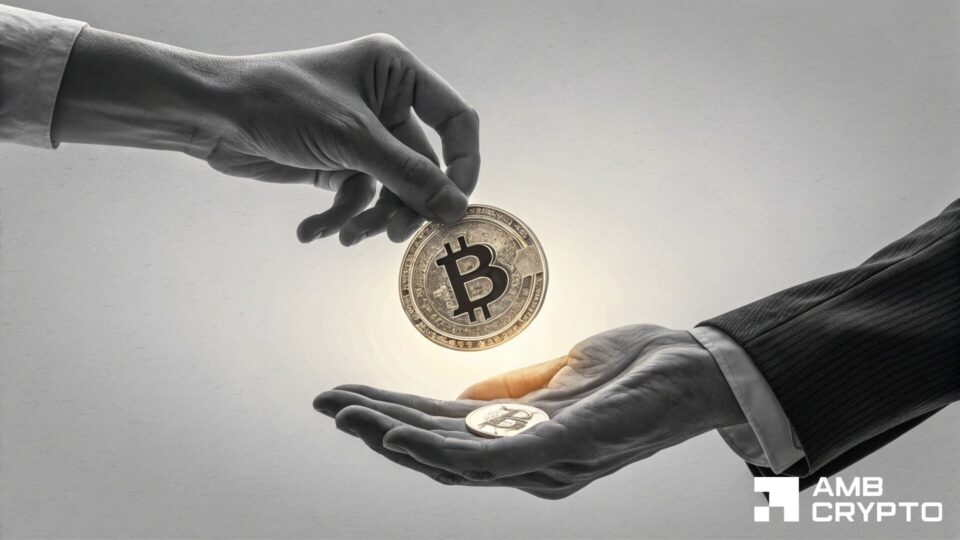
A decade from now, Bitcoin will function like TCP/IP — invisible yet foundational, supporting trillions in daily transactions globally, according to Lightspark CEO David Marcus. In this future, a coffee shop in Lagos receives instant payment, a manufacturer in São Paulo settles an invoice with a supplier in Ho Chi Minh City, and a freelancer in Bangalore gets paid weekly from an Austin startup — all via Bitcoin's settlement layer, with none of the parties consciously interacting with it. This vision parallels the adoption of open protocols: first driven by necessity where existing systems fail, then scaling rapidly as tools mature and economic benefits become clear. The structural shift begins with wallets. Modern non-custodial wallets, like Spark, allow users to hold dollars, local currency, and Bitcoin in a single address, seamlessly switching between them. This eliminates friction and revolutionizes global custody, moving significant deposits to user-controlled keys not by ideology, but by superior utility. As a result, Bitcoin becomes the default savings layer for billions, as its fixed supply and appreciating value make it a rational choice for savers holding it alongside stablecoins in their everyday wallets. Businesses follow a similar path, from small companies in emerging markets to multinational corporations, holding Bitcoin alongside operational stablecoins. The latest trend is direct Bitcoin transactions for commerce. When both parties hold Bitcoin, transacting ...


Author: David Marcus (CEO of Lightspark)

Compiled by: AididiaoJP, Foresight News


A coffee shop in Lagos receives a payment within seconds. A manufacturer in São Paulo settles an invoice with a supplier in Ho Chi Minh City using Bitcoin. A freelancer in Bangalore receives their weekly wage from a startup in Austin. All these transactions run on Bitcoin, yet none of the parties involved are thinking about Bitcoin.


This is 2036. And the most important fact about today's monetary system is: almost no one really understands how it works.


A decade ago, I wrote that Bitcoin would become the TCP/IP of money—an open settlement layer upon which everything else runs, completely transparent to the user. This analogy later proved to be almost literally correct.


Today, trillions of dollars flow across the Bitcoin network daily. Most of it is denominated in dollars, euros, reais, naira, pesos, rupees, etc.—these are stablecoins pegged to local or reserve currencies, routed through Bitcoin's settlement infrastructure. The businesses and individuals on both sides of these transactions are mostly unaware. They only see their bank, wallet, or payment app. The underlying protocol is as invisible to them as TCP/IP is to someone checking their email.


This didn't happen overnight. It followed the classic path of all protocol adoption: first driven by need where existing systems fail, then exploding globally when the tools mature and the economics become undeniable.


The Structural Shift Starts with the Wallet


Spark allows users to hold dollars, local currency, and Bitcoin in the same non-custodial address, eliminating the last remaining substantive friction between them. One wallet, one address: spend in dollars, save in Bitcoin, switch to local currency when needed. No separate apps, no bridging transactions, no counterparty temporarily holding your funds.


This design revolutionized the logic of global custody. Today, a double-digit percentage of global deposits already reside on infrastructure where users hold their own private keys. Not because people were forced to choose between convenience and ownership, but because the wallets themselves are simply better. Custody is built into the protocol, not bolted on as an afterthought.


Banks used to hold your money because there was no better option. Now there is a better option—faster, cheaper, and where you actually own the assets in your account. This shift is less an ideological revolution and more a product revolution; the better wallet wins.


And because all of this runs on Bitcoin's settlement network, something happened that most didn't anticipate: Bitcoin became the default savings layer for billions of people who initially just wanted to use dollars.


The logic is simple. You have a wallet that holds both stablecoins and Bitcoin. You spend the stablecoins, and Bitcoin sits there quietly. Over the past decade, anyone who left money in Bitcoin saw their savings outperform any local currency and most investment products. Not due to speculation, but because Bitcoin is the only monetary asset with a fixed supply operating at the protocol layer of the global monetary grid, its value pushed up by persistent demand.


So people started saving in Bitcoin. First a few hundred million, then over a billion. Not because they read the whitepaper or attended conferences, but because their wallet had two balances, and one was consistently appreciating against everything else. Saving in Bitcoin became as commonplace as transferring dollars—the same wallet, the same rails.


Businesses followed the same path. Corporate treasuries began holding Bitcoin alongside operating stablecoins. First small companies in emerging markets (where local currency depreciation made the need urgent), then larger companies, then multinational giants. The adoption curve looks almost identical to that of corporate internet adoption in the late 1990s. Once the infrastructure proved reliable, the question became "how much to hold," not "whether to hold."


The Latest Trend: People Are Starting to Transact Directly in Bitcoin


The latest development now is that people are beginning to transact directly in Bitcoin itself. It's still early, but the trend has become clear this year, and the direction is unmistakable.


When your savings are in Bitcoin and the recipient also holds Bitcoin, transacting in Bitcoin becomes the simplest option—no conversion, no intermediary currency, payment stays on the network where both parties already hold funds.


It started in niche scenarios: high-value B2B settlements, freelancer payments, commerce among those whose wealth is primarily in Bitcoin. It's still a small fraction of total volume. But when the infrastructure makes sending Bitcoin as easy as sending stablecoins, the choice of which money to use becomes about which you trust more, not about technical limitations.


For the first twenty-five years of Bitcoin, the maximalist vision was more of an ideal. Now the infrastructure is in place, but the adoption is coming from a completely unexpected direction. People aren't moving from Bitcoin ideology to usability; they're starting with a great wallet running on Bitcoin, discovering that saving in Bitcoin performs better, and then naturally choosing to transact with it—because their money is already there.


The rails created the savers, and the savers are becoming the payers.


Another Accelerant: AI Agents


There's another force accelerating this process, and it has nothing to do with human preference.


In 2036, most commercial activity is conducted by AI agents representing individuals and businesses. Your agent books your flights, negotiates supplier contracts, pays invoices, manages subscriptions. Millions of these agents transact continuously with each other, and they overwhelmingly choose Bitcoin as their preferred settlement asset. Not because they were programmed to, but because when agents are optimizing for speed, finality, and minimal counterparty risk across jurisdictions, they naturally arrive at Bitcoin as the answer.


From an agent's perspective, the math is simple. When two agents settle value on behalf of their principals, converting through fiat rails adds cost, delay, and trust dependencies. Bitcoin settles finally on a global network in minutes, with no intermediaries. Through millions of transactions, agents have validated what took humans a decade to accept: if both parties already hold Bitcoin, there's no reason to route through anything else.


Net settlement between agents now accounts for a growing share of Bitcoin's daily volume. The agent handling procurement for a German automaker and the agent managing receivables for a Korean battery supplier don't need dollars, euros, or won as an intermediary. They net obligations against each other and settle the difference in Bitcoin. Faster, cheaper, and with definitive finality.


The result: Bitcoin is becoming the native currency of machine commerce, just as it has become humanity's native savings asset. Both for structural reasons, not ideology. The protocol is neutral, programmable, and globally accessible. For agents optimizing millions of transactions per day, that's enough.


The global monetary system is being rebuilt from the protocol layer up: open infrastructure, self-custody by default, Bitcoin settling everything underneath, stablecoins as the interface layer. And more and more who understand the trend are choosing Bitcoin as their primary money.


Most people still won't think about this when they send money, and they don't need to.

Domande pertinenti

QAccording to the article, what does the CEO of Lightspark predict Bitcoin will be like ten years from now?

AHe predicts that in ten years, Bitcoin will be like TCP/IP: an invisible foundational layer supporting trillions of dollars in daily transactions, with users largely unaware of it.

QWhat key feature of the 'Spark' wallet does the author credit for changing the logic of global custody?

AThe key feature is allowing users to hold US dollars, local currency, and Bitcoin in the same non-custodial address, eliminating friction between them and making self-custody the default, better option.

QHow did Bitcoin become a default savings layer for billions of people, according to the article?

APeople started saving in Bitcoin because their wallets held both stablecoins and Bitcoin. Over time, they observed Bitcoin's value appreciating against other assets, making saving in it a natural, common-sense choice within the same convenient wallet they used for spending.

QWhat is the latest trend in Bitcoin usage mentioned in the article, and what is driving it?

AThe latest trend is people starting to transact directly in Bitcoin itself. This is driven by the convenience of trading within the same asset network where both parties already hold their savings, eliminating the need for currency conversion once the technical infrastructure makes it as easy as sending stablecoins.

QWhat role do AI agents play in accelerating Bitcoin adoption, as described in the article's vision for 2036?

AAI agents, which handle most commercial transactions, autonomously choose Bitcoin as their preferred settlement asset. They do this to optimize for speed, finality, and minimal counterparty risk in cross-border dealings, making Bitcoin the native currency for machine commerce through billions of efficient, trust-minimized transactions.

Letture associate

Near Returns to the AI Stage: Transformation into a Public Chain Due to 'Payroll Difficulties,' Agent and Privacy Emerge as New Growth Narratives

NEAR Returns to AI Origins: From Payroll Struggles to Blockchain, Now Focusing on AI Agents and Privacy NEAR Protocol's journey began not with grand blockchain ambitions, but from a practical hurdle: its AI startup founders, including Transformer paper co-author Illia Polosukhin, couldn't efficiently pay international developers in 2017. This led them to pivot and build a high-performance, scalable blockchain. After years navigating various crypto narratives like sharding and cross-chain interoperability, NEAR is now leveraging its AI roots to re-enter the AI arena. A key driver is its "NEAR Intents" layer, which abstracts complex cross-chain transactions. Users simply state their goal (e.g., swap BTC for ETH), and a solver network finds the optimal route. This system has processed over $20B in cross-chain volume, generating significant fee revenue. A major growth area is private transactions via "Confidential Intents/Swaps," which hide trade details until settlement to protect against MEV and front-running. Remarkably, private swaps recently accounted for over 40% of NEAR's transaction volume, highlighting strong demand but also potential regulatory scrutiny. With its AI-founder pedigree, NEAR is positioning itself at the intersection of blockchain, AI agents, and privacy, aiming to become infrastructure for the emerging agent economy while navigating the challenges of its rapid adoption.

marsbit1 min fa

Near Returns to the AI Stage: Transformation into a Public Chain Due to 'Payroll Difficulties,' Agent and Privacy Emerge as New Growth Narratives

marsbit1 min fa

From Ethereum to AI's 'CROPS': What Exactly is This Set of 'Slow Variables' That Vitalik Repeatedly Emphasizes?

In recent discussions, Vitalik Buterin has frequently emphasized the concept of "CROPS," a framework defining core values for Ethereum's development. CROPS stands for Censorship Resistance, Capture Resistance, Open Source, Privacy, and Security. Initially outlined in the Ethereum Foundation's "EF Mandate," it represents a commitment to user sovereignty, ensuring that the network resists external control, remains open, protects privacy, and prioritizes security. The relevance of CROPS extends beyond Ethereum's foundational principles, becoming crucial in the context of AI integration. As AI agents begin handling wallet operations and automated transactions, the risk increases that users may cede control over their digital assets, privacy, and intentions to centralized AI service providers. A "CROPS AI" would therefore emphasize local execution where possible, privacy-preserving remote model calls (e.g., using zero-knowledge proofs), and transparent, verifiable processes to maintain user agency. Vitalik highlights a significant convergence between "CROPS Ethereum access layer" and "CROPS AI." Both address the same fundamental challenge: how users can access powerful services—be it blockchain data via RPCs or AI models—without exposing sensitive information or relinquishing ultimate control. This intersection points toward a future digital entry point that is more private, secure, and user-controlled. Ultimately, CROPS is not merely an abstract ideal but a practical guidepost. It steers development—from protocol resilience and wallet design to AI agent safety—towards a future where users retain self-sovereignty even as digital systems grow more complex and powerful. In an era of accelerating AI adoption, these "slow variables" of censorship resistance, openness, privacy, and security may define Ethereum's enduring value.

marsbit11 min fa

From Ethereum to AI's 'CROPS': What Exactly is This Set of 'Slow Variables' That Vitalik Repeatedly Emphasizes?

marsbit11 min fa

Silicon Valley 'Startup Guru' Steve Hoffman: Web3 + AI Could Be a Trap

Silicon Valley investor and "Godfather of Startups" Steve Hoffman warns that combining Web3 with AI is likely a trap, not a promising venture. In an interview, Hoffman argues that while AI is a foundational technology touching all industries, Web3 adds complexity, friction, and regulatory risk without solving mainstream consumer or business needs. He advises founders to focus on deep, specialized applications where startups can out-iterate giants, rather than on generic features easily replicated by large tech companies. Hoffman observes that Silicon Valley will lead foundational AI research, while China excels at rapid, large-scale application and commercialization, particularly in robotics. He stresses that AI-driven autonomous agents capable of collaborative, multi-step tasks are 2-4 years away, which will cause significant job displacement. The solution is not to slow AI but to redesign business models around human-AI collaboration and reform social systems like education and retraining. For startups, Hoffman recommends focusing on vertical, expertise-heavy domains to build defensibility. He sees major opportunities in AI fraud detection and cybersecurity. Key founder mindsets include systemic thinking over feature-focus, relentless customer centricity, building adaptive teams, and deeply understanding AI's capabilities and limits. Hoffman is also leading a non-profit initiative to establish university centers aimed at training future leaders in responsible, human-value-aligned AI innovation.

marsbit1 h fa

Silicon Valley 'Startup Guru' Steve Hoffman: Web3 + AI Could Be a Trap

marsbit1 h fa

Token Inefficient, Economy Tokenless

The article "Tokens Aren't Economical, Economics Aren't Tokenized" analyzes a pivotal shift in the AI industry from a technology-driven narrative to one dominated by capital efficiency. It highlights two concurrent trends: a severe capital shortage due to the exorbitant and recurring costs of compute (e.g., OpenAI's high burn rate) and a wave of corporate spin-offs where major tech companies are separating their AI units (like Kuaishou's Kling and Baidu's Kunlunxin). The core argument is that AI's "anti-internet" business model, where user growth increases costs rather than profits, has created a disconnect between high valuations and actual cash flow. Spin-offs address this by allowing AI assets to be valued independently. Within a parent company, they are seen as cost centers, but as standalone entities, they are priced based on their growth potential and scarcity in the primary market, leading to massive valuation premiums (e.g., Kling's estimated value tripling post-spin-off). The industry is at an inflection point, moving from "model worship" to "value realization." The competition is evolving from a pure compute (GPU) race to a broader focus on systemic efficiency and full-stack engineering (involving CPUs and orchestration) to achieve viable commercialization. The year 2026 is framed as a critical moment where the industry must definitively answer how to economically translate AI capability into tangible business value, reshaping the sector's future power structure.

marsbit1 h fa

Token Inefficient, Economy Tokenless

marsbit1 h fa

Trading

Spot
Futures

Articoli Popolari

Cosa è STORY

Comprendere il Protocollo Story: Pionieri di una Nuova Era nella Gestione della Proprietà Intellettuale Introduzione al Protocollo Story Nel mondo in rapida evoluzione della tecnologia blockchain, il Protocollo Story emerge come una soluzione innovativa volta a trasformare il panorama della gestione della proprietà intellettuale (IP). Progettato per dare potere ai creatori, il Protocollo Story sta tracciando la strada per un ecosistema digitale che promuove trasparenza, creatività e potere legale. Il protocollo opera sui principi del web3, introducendo un framework decentralizzato che consente ai creatori di proteggere e monetizzare le proprie opere in modo efficiente. In un'era in cui i contenuti possono essere facilmente riprodotti e condivisi, il Protocollo Story mira a stabilire un meccanismo che rispetti i diritti dei creatori e favorisca una cultura di collaborazione. Cos'è il Protocollo Story? Nel suo nucleo, il Protocollo Story è uno strumento avanzato di gestione della proprietà intellettuale basato su blockchain che si propone di rivoluzionare il modo in cui la proprietà intellettuale viene creata, gestita e concessa in licenza. L'obiettivo del progetto è interrompere i metodi tradizionali sfruttando la natura decentralizzata della tecnologia blockchain. Questo offre una libreria globale e scalabile di asset di proprietà intellettuale, consentendo ai creatori di coinvolgere il proprio pubblico in modo più diretto. I creatori possono facilmente registrare le proprie opere usando la piattaforma, impostando linee guida personalizzabili su come il loro contenuto può essere utilizzato. Questo processo non solo protegge i loro diritti legali, ma facilita anche la monetizzazione delle loro creazioni in modo trasparente ed efficiente. Di conseguenza, il Protocollo Story si rivolge a una vasta gamma di creatori - da scrittori e artisti a musicisti e programmatori - promuovendo un ambiente inclusivo e accessibile. Chi è il Creatore del Protocollo Story? La visione del Protocollo Story prende vita grazie a Seung Yoon Lee, noto come SY Lee, e Jason Zhao. SY Lee svolge il ruolo di CEO e co-fondatore, portando con sé una vasta esperienza dal suo background nel giornalismo e nell'imprenditoria. Le sue precedenti avventure, tra cui Byline e Radish Fiction - successivamente vendute a Kakao - lo hanno posizionato come una figura pionieristica nelle piattaforme di contenuti digitali. Il co-fondatore Jason Zhao completa la visione di SY Lee con la sua solida competenza tecnica. Laureato in Informatica presso la Stanford University e ex dipendente di DeepMind, l'esperienza di Jason nelle tecnologie avanzate potenzia le capacità del Protocollo Story nell'ecosistema digitale. Chi sono gli Investitori del Protocollo Story? Il Protocollo Story ha ottenuto un sostegno finanziario sostanziale da una serie di investitori rinomati, noti per il loro occhio attento per le tecnologie trasformative. Questo supporto vitale riflette la fiducia nel potenziale del progetto di rimodellare il mercato della proprietà intellettuale. Tra gli investitori più noti c'è A16z Crypto, che ha guidato sia il round di finanziamento seed sia il finanziamento di Serie B, dimostrando ulteriormente il suo impegno per il futuro delle economie digitali. Altri investitori significativi che contribuiscono al progetto includono: Polychain Capital: Un leader riconosciuto negli investimenti nel blockchain che ha partecipato al round di Serie B. Hashed Endeavor Samsung Next Foresight Ventures Dao5 Insignia Venture Partners Alliance DAO Mirana Ventures L'ampiezza di questa rete di investimenti non solo fornisce finanziamenti, ma aggiunge anche credibilità e insight strategici alla piattaforma, posizionando il Protocollo Story come un leader nel suo campo. Come Funziona il Protocollo Story? Il Protocollo Story offre un framework completo che consente ai creatori di gestire la propria proprietà intellettuale senza soluzione di continuità. La piattaforma è sostenuta da diverse caratteristiche uniche e innovative che la distinguono dai tradizionali sistemi di gestione della proprietà intellettuale. Caratteristiche Chiave: IP Programmabile: Questa funzione consente ai creatori di definire i termini di come la loro IP può essere utilizzata, comprese le linee guida per il remix e la collaborazione. Stabilendo parametri chiari e programmabili, i creatori possono garantire che le loro opere vengano utilizzate in modi che si allineano con la loro visione. Ecosistema Decentralizzato: Il protocollo consente ai creatori di operare in modo indipendente, senza la necessità di intermediari spesso presenti nei tradizionali accordi di licenza. Questo approccio decentralizzato non solo dà potere ai creatori, ma riduce anche la frizione tipicamente associata alla gestione della proprietà intellettuale. Licenze Trasparenti: Semplificando il processo di licenza, il Protocollo Story rende più facile per i creatori tenere traccia di come le loro opere vengono utilizzate. Questa trasparenza manuale è essenziale per stabilire fiducia e promuovere collaborazione in un panorama digitale in cui i diritti di IP sono spesso contestati. Insieme, queste caratteristiche creano un ambiente robusto che incoraggia l'innovazione, la cooperazione e il rispetto dei diritti dei creatori, semplificando al contempo le complessità della legge sulla proprietà intellettuale nell'era digitale. Cronologia del Protocollo Story Comprendere le tappe evolutive del Protocollo Story può fornire spunti sulla sua crescita strategica e visione per il futuro. Di seguito è riportata una cronologia che evidenzia eventi significativi nella storia del progetto: 2021: Fondazione gettata per il concetto di Protocollo Story mentre si formulano i suoi obiettivi. 2023: Il progetto ha raccolto con successo 29,3 milioni di dollari in un round di finanziamento seed guidato da A16z Crypto, segnando il suo ingresso ufficiale nel panorama competitivo delle innovazioni blockchain. 2024: Dopo il successo del suo finanziamento iniziale, il Protocollo Story ha annunciato un round di finanziamento di Serie B da 80 milioni di dollari a una valutazione sostanziale di 2,25 miliardi di dollari, consolidando ulteriormente la sua posizione nel mercato. Questa cronologia illustra non solo la rapida crescita del Protocollo Story, ma anche l'interesse crescente e gli investimenti che ha attratto da parte di importanti attori del settore. Il Futuro del Protocollo Story Mentre il panorama dei contenuti digitali continua a evolversi, il Protocollo Story si trova in prima linea di una rivoluzione nella gestione della proprietà intellettuale. Sfruttando la tecnologia blockchain per l'emancipazione dei creatori e la trasparenza, il protocollo offre una visione convincente per un ecosistema di proprietà intellettuale sostenibile. In un mondo che richiede creatività e innovazione, il Protocollo Story consente ai creatori di mantenere la proprietà e il controllo sui propri asset, favorendo infine un ambiente in cui la creatività può prosperare. Il sostegno esteso da investitori esperti sottolinea ulteriormente il potenziale di questa piattaforma di ridefinire il funzionamento della proprietà intellettuale nell'economia digitale in rapida evoluzione. In conclusione, il Protocollo Story non è solo un progetto; è un movimento verso un panorama di IP più equo e accessibile. Con l'espansione del mondo digitale, il Protocollo Story promette di guidare la carica, garantendo che i creatori siano riconosciuti e compensati equamente per i loro contributi alla cultura e alla società. Il viaggio è appena iniziato e le implicazioni di tale iniziativa sono profonde - non solo per i creatori, ma anche per il futuro dei contenuti digitali stessi.

262 Totale visualizzazioniPubblicato il 2024.04.04Aggiornato il 2024.12.03

Cosa è STORY

Come comprare IP

Benvenuto in HTX.com! Abbiamo reso l'acquisto di Story (IP) semplice e conveniente. Segui la nostra guida passo passo per intraprendere il tuo viaggio nel mondo delle criptovalute.Step 1: Crea il tuo Account HTXUsa la tua email o numero di telefono per registrarti il tuo account gratuito su HTX. Vivi un'esperienza facile e sblocca tutte le funzionalità,Crea il mio accountStep 2: Vai in Acquista crypto e seleziona il tuo metodo di pagamentoCarta di credito/debito: utilizza la tua Visa o Mastercard per acquistare immediatamente StoryIP.Bilancio: Usa i fondi dal bilancio del tuo account HTX per fare trading senza problemi.Terze parti: abbiamo aggiunto metodi di pagamento molto utilizzati come Google Pay e Apple Pay per maggiore comodità.P2P: Fai trading direttamente con altri utenti HTX.Over-the-Counter (OTC): Offriamo servizi su misura e tassi di cambio competitivi per i trader.Step 3: Conserva Story (IP)Dopo aver acquistato Story (IP), conserva nel tuo account HTX. In alternativa, puoi inviare tramite trasferimento blockchain o scambiare per altre criptovalute.Step 4: Scambia Story (IP)Scambia facilmente Story (IP) nel mercato spot di HTX. Accedi al tuo account, seleziona la tua coppia di trading, esegui le tue operazioni e monitora in tempo reale. Offriamo un'esperienza user-friendly sia per chi ha appena iniziato che per i trader più esperti.

319 Totale visualizzazioniPubblicato il 2025.03.26Aggiornato il 2026.06.02

Come comprare IP

Discussioni

Benvenuto nella Community HTX. Qui puoi rimanere informato sugli ultimi sviluppi della piattaforma e accedere ad approfondimenti esperti sul mercato. Le opinioni degli utenti sul prezzo di IP IP sono presentate come di seguito.

活动图片