L1 is Dead, Long Live Appchain

marsbitPubblicato 2026-04-20Pubblicato ultima volta 2026-04-20

Introduzione

"L1 is Dead, Appchain Rises" critiques the failure of current Layer-1 (L1) blockchain models, arguing their tokens are trending toward zero. The author identifies key flaws: linear token emissions that incentivize selling rather than value creation, weak value propositions like "gas token" and "governance" narratives, mismanagement by bloated "foundations" or "labs" that drain value through excessive spending and token sales, and poor industry leadership focused on short-term narratives and overhyped trends like RaaS and high TPS. The solution proposed is a fundamental shift. New L1 token models are needed, moving away from the "low float, high FDV" paradigm that disadvantages retail investors. Fundraising should be sufficient only for launch, not excessive. Token unlocks should be tied to real milestones like CEX listings or DeFi integration. The ultimate goal should be for L1 tokens to become widely used mediums of exchange, not just fuel for networks. Value is increasingly moving to the application layer, with successful apps building their own chains (appchains). The author concludes that L1s must build sustainable value by creating useful applications and services, fostering strong holder communities, and achieving self-sustainability without relying on continuous token emissions.

Author:iwillpat

Compiled by: Jiahuan, ChainCatcher

Since the era of "Rollup as a Service" (RaaS) began, the outcome was already predetermined. This is the precursor to the execution layer entering a death spiral and commoditization.

What I mean is, general-purpose L1 tokens will continue to trend towards zero, and likely no exceptions. I will try to explain why, and what I would do differently if I were an L1 operator.

The main drivers of L1 failure are as follows: linear token releases, failed value propositions, poor governance, and industry "leadership".

I will briefly elaborate on these points—these are just personal views, not definitive conclusions.

Linear staking releases in their current form have some benefits, namely distribution through liquid staking ("My 7% APY!"), but they fail in several key aspects.

Delegated Proof of Stake (DPoS) makes it easy for armchair "decentralization fundamentalists" to participate in network security, but it does not properly incentivize insiders, users, and developers. At best, it incentivizes people to hold tokens, doing nothing to create any real value.

The most classic argument I've heard about PoS is: large validators have an economic incentive not to dump on you. But that hasn't stopped them from selling every possible allocation and block reward.

This leads to my next point: they sell because L1 tokens have no long-term value proposition.

Tissue Paper Thin

The "gas token" and "governance" narratives are tired and unconvincing—like two-ply Bounty paper towels that disintegrate when wet. The value of a network token depends on what you can buy with it.

So the goal of all blockchain teams should be to push their token as a currency as widely as possible. In the pursuit of higher TPS and lower block times, the industry's vision of "peer-to-peer electronic cash" seems to have been lost.

Let's be brutally honest: throughput, TVL, and low latency give the token no value. Liquidity and usage rate do.

This next point is the most substantial and painful: blockchain "Labs". (And various foundations.)

Selling at unlock, large-discount OTC deals, eye-watering operational expenses, incentive programs to attract hot money, hiring "KOLs"... we can all name a few.

Ultimately, every dollar spent by Labs is a tax on token holders. Unless that Labs generates revenue through some service, first-party wallet, or application, it is surviving by selling tokens.

This in itself is not bad—they provide valuable services through engineering resources, explorers, and APIs. But if Labs does not bring net new buy pressure to the token, and expenses are climbing unsustainably, it is slowly bleeding to death.

One of the primary goals of Labs should be to build the network into a permissionless, self-sustaining system that passes the "hands-off test". Eventually, business development should be community-driven, and the network should have its own spiritual "CTO".

This doesn't require 400 employees; 30-40 excellent people are enough, plus those developing first-party apps and services.

Finally—after this I'll share my "solution"—cryptocurrency has been led astray by many large capital allocators and advisors.

Putting aside FTX, Celsius, and Luna, we have been force-fed by the industry's biggest players: short-term narratives, excessive leverage, "maximal extractable value", like stuffing a pathetic, bloated retail turkey.
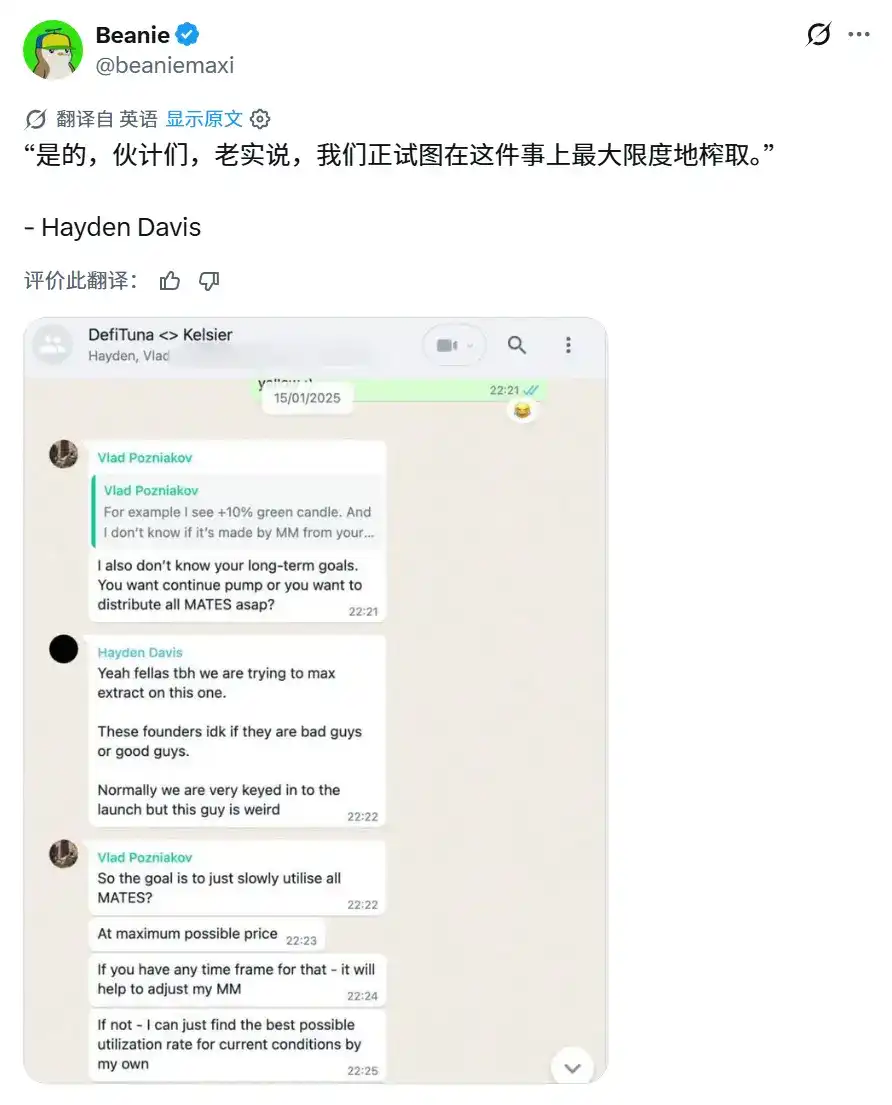
Promoting TPS over smart contract security, investing in the 10th general-purpose blockchain, raising funds at outrageous valuations, raising far more capital than needed, claiming security advantages that simply don't exist... these are all classic symptoms of severe crypto brain rot.

Placing bold bets on the direction of the industry is one thing—privacy coins, MoveVM, tokenized IP, decentralized social.

But burning money into another idiotic hype cycle or short-term cash grab is another matter entirely: RaaS, data availability, any L1 that tokens at a product with a multi-unicorn valuation before having a product, infrastructure solutions for crypto problems that don't exist or generate revenue...

(Full disclosure: I don't claim to be an investment genius, but I can do basic math. Buy pressure must exceed sell pressure.)

Where to Next?

Next, I will briefly talk about where the industry should go.

We need new L1 token models and a completely different way for crypto VCs to play. The current "low float, high FDV" paradigm works when valuations are lower and there is incremental capital flowing in.

But retail is no longer willing to pay for seed-round valuations that are 1000x at TGE, nor withstand the selling pressure from massive unlocks and insider staking rewards 12 months later.

L1s simply don't need hundreds of millions to launch a mainnet—unless I'm missing something. Raise enough to build the platform and go to market, then raise more later; everyone will be better off.

Token unlocks should be tied to milestones like CEX liquidity, payments, and DeFi lending, and on-chain governance should be given higher priority. Foundations should maintain at least some transparency regarding their balance sheets, expenses, and investments.

Retail doesn't want to pay for network security (i.e., validator rewards). Eventually, the network should be able to sustain itself without any staking rewards.

Maybe staking rewards shouldn't have existed from the start, and network or Labs revenue should go directly to validators. Then, see how hard validators would work.

Less and less value is flowing to the base layer, and we shouldn't be investing so much in their development. Gas fees on all chains are trending towards zero, successful applications are migrating to their own chains, and cross-chain bridging has never been easier.

So you can draw this conclusion: it's better to build an application (or appchain) first and then vertically integrate—Hyperliquid, Pump, etc. have done this.

I'm not saying to stop investing in general-purpose blockchains, but I do believe the core function of a network token should ultimately be a truly useful medium of exchange—permissionless L1s should be liquidity hubs for DeFi and testing grounds for new applications.

These are not new ideas. I think many L1 teams have realized: to survive, they need to build their own applications and services. The treadmill of foundations surviving by selling tokens is slowing down.

If you work in these teams on something that doesn't generate revenue, you might want to start thinking about what value you can create.

Interestingly, mass adoption by retail or institutions seems far less important than building a strong holder community and keeping them happy. When in doubt, ask the community.

Even if their advice is terrible, at least ask them who their favorite and least favorite person on your team is.

I hesitated for weeks about posting this. This is not a well-structured thought piece; it's more like a bunch of shower thoughts.

My point is: all L1s are making the same serious mistakes, differing only in luck and timing. The best-performing projects survive, usually due to stronger leadership and faster delivery, but the question of a sustainable value proposition remains unanswered.

We can continue down this long and painful path of value extraction, watching BTC maxis and sats stackers continue to outperform; or, we admit the problems with the current L1 model and start building for a slightly fairer outcome.


Domande pertinenti

QWhat are the main reasons the author believes that general L1 tokens will trend towards zero?

AThe author cites four main reasons: linear token releases, failed value propositions, poor governance, and flawed industry leadership that prioritizes short-term gains over sustainable development.

QAccording to the author, why do large validators in Proof-of-Stake systems continue to sell their tokens despite economic incentives not to?

AThey sell because L1 tokens lack a long-term value proposition; the 'gas token' and 'governance' narratives are weak, and token value ultimately depends on what it can be used to purchase.

QWhat criticism does the author level against blockchain 'Labs' and Foundations?

AThe author criticizes them for acting as a tax on token holders by selling tokens to fund high operational expenses, over-hiring, and unsustainable spending without generating net new buy pressure for the token.

QWhat does the author propose as a better model for launching and funding L1s?

AThe author suggests that L1s do not need hundreds of millions to launch, token unlocks should be tied to milestones like CEX listings and DeFi adoption, and governance should be more community-driven with greater transparency from foundations.

QWhat is the author's view on the future direction of the industry, and what does 'Appchain' represent in the title?

AThe author believes value is moving away from base layers (L1s) and that the future lies in application-specific blockchains (Appchains), where successful applications migrate to their own chains, enabling vertical integration and a more sustainable model.

Letture associate

Warsh's First Conundrum: Rate Cuts, Inflation, and a Fractured Fed

Walsh's First Dilemma: Rate Cuts, Inflation, and a Divided Fed Kevin Warsh officially assumed the Fed Chairmanship on May 15th, inheriting a central bank deeply divided over inflation. Contrary to market expectations of a dovish stance due to his appointment by President Trump, Warsh's historical record shows early and consistent hawkish concerns about inflation. The Fed he leads is fractured, with three FOMC members recently dissenting against even hinting at future rate cuts. The immediate challenge is surging inflation. While the Iran-related oil shock is a temporary factor, core CPI and services inflation are accelerating, showing signs of becoming entrenched—echoing the Fed's 2022 "transitory" misstep. Warsh faces the task of building consensus within a committee where several members believe policy may not be restrictive enough, especially if the neutral interest rate (r-star) is higher than currently estimated. Politically, Warsh is caught between Trump's desire for rate cuts and the economic reality of persistent price pressures. Any move perceived as bowing to political pressure could undermine Fed independence. Market implications are significant. Long-term Treasury yields (e.g., 30-year at 5.19%) could rise further, especially if the June FOMC statement hints at possible tightening. Tech stocks face continued valuation pressure from higher rates. The key variable is progress in Iran negotiations; a breakthrough before the June meeting could temporarily ease oil-driven inflation, but stubborn services inflation would remain. All eyes are on Warsh's first post-FOMC press conference on June 17th. His wording on inflation and policy will reveal how much the market has mispriced his stance and the Fed's likely path forward.

marsbit20 min fa

Warsh's First Conundrum: Rate Cuts, Inflation, and a Fractured Fed

marsbit20 min fa

Harvard and Others Exit, Six Core Talents Depart in a Month: What's Happening to Ethereum?

Ethereum faces significant internal and external pressures, marked by a wave of high-profile departures from its core development team and a loss of confidence from major institutional investors. Within four months, at least seven key figures—including researchers, protocol leads, and a former executive director—have left the Ethereum Foundation. This exodus, partly triggered by controversy over a new "mission statement" requiring employee sign-off, risks derailing critical roadmap upgrades like PeerDAS and Verkle trees, and has already contributed to delays in the planned Glamsterdam upgrade. Compounding the internal instability, major institutions are reducing their exposure. Goldman Sachs slashed its iShares Ethereum Trust holdings by approximately 70%, and Harvard's endowment fund completely exited its $87 million Ethereum ETF position. Concurrently, the Ethereum Foundation itself has been unstaking and selling ETH for "treasury rebalancing," further unsettling the market. These challenges emerge as Ethereum's competitive dominance erodes. Its share of the total DeFi market has fallen to around 54%, with rivals like Solana and Base gaining ground. In fee revenue, it was recently outpaced by newer chains like Hyperliquid. Furthermore, a trend of institutions exploring proprietary or hybrid blockchains (exemplified by Circle's Arc) threatens Ethereum's position as the premier settlement layer for institutional assets. While founder Vitalik Buterin's vision for Ethereum as a secure, decentralized "technical sanctuary" and "world computer" remains clear, its realization is threatened by the concurrent loss of execution capability, institutional patience, and market share during a critical competitive phase.

链捕手1 h fa

Harvard and Others Exit, Six Core Talents Depart in a Month: What's Happening to Ethereum?

链捕手1 h fa

IOSG | After the Halving of Developer Count: Crypto Isn't Dead, It's Just Handing Over Talent to AI

IOSG Report: Crypto's Developer Exodus Masks a "Talent Deleveraging" and Migration to AI The number of monthly active crypto developers on GitHub has roughly halved from its 2022 peak to around 23,000. This decline is not a sign of industry collapse but a "talent deleveraging." The exodus consists largely of newcomers who entered during the bull market, while the cohort of established developers (2+ years of experience) has grown to a record high, now contributing about 70% of the code. These core builders are consolidating in ecosystems with real users and activity, like Bitcoin and Solana. The crypto industry has forged a unique skill set: building operational, trusted systems from scratch in environments with no external authority, near-zero tolerance for error, and missing rules. This involves creating trust through pure code/mechanisms and making judgments under profound technical and economic uncertainty. This capability is finding new, high-value applications in the AI era, which faces structurally similar problems: trust in opaque autonomous systems, a lack of governance frameworks, and coordination among self-interested AI agents. Key migration patterns include: 1. **Direct Hardware/Infrastructure Translation:** Projects like CoreWeave pivoted from GPU mining to AI compute supply. 2. **Mechanism Design & Trust Engineering:** Crypto's experience in decentralized coordination and incentive design (e.g., via tokenomics, staking/slashing) is being applied to critical AI challenges: * **Compute Aggregation & Verification:** Solving trust and efficiency problems in decentralized GPU networks (e.g., Hyperbolic). * **AI Agent Governance:** Using cryptoeconomic mechanisms to align the behavior of multiple autonomous AI agents (e.g., EigenLayer's approach). * **Autonomous Agent Payments:** Leveraging stablecoins and programmable money for fast, permissionless micro-transactions between AI agents (e.g., x402 protocol). The builder's role is evolving from "writing smart contracts" to "designing trust mechanisms for autonomous AI systems." This convergence is reflected in hiring trends at major firms and significant capital allocation from top venture funds like Paradigm and a16z into the crypto-AI intersection. While regional approaches differ—with the US focusing more on foundational protocol innovation and Asia on application-layer integration—the core thesis remains: the systemic skills honed in crypto's trustless environments are becoming a scarce and critical asset for scaling AI.

marsbit1 h fa

IOSG | After the Halving of Developer Count: Crypto Isn't Dead, It's Just Handing Over Talent to AI

marsbit1 h fa

Trading

Spot
Futures

Articoli Popolari

Come comprare ERA

Benvenuto in HTX.com! Abbiamo reso l'acquisto di Caldera (ERA) semplice e conveniente. Segui la nostra guida passo passo per intraprendere il tuo viaggio nel mondo delle criptovalute.Step 1: Crea il tuo Account HTXUsa la tua email o numero di telefono per registrarti il tuo account gratuito su HTX. Vivi un'esperienza facile e sblocca tutte le funzionalità,Crea il mio accountStep 2: Vai in Acquista crypto e seleziona il tuo metodo di pagamentoCarta di credito/debito: utilizza la tua Visa o Mastercard per acquistare immediatamente CalderaERA.Bilancio: Usa i fondi dal bilancio del tuo account HTX per fare trading senza problemi.Terze parti: abbiamo aggiunto metodi di pagamento molto utilizzati come Google Pay e Apple Pay per maggiore comodità.P2P: Fai trading direttamente con altri utenti HTX.Over-the-Counter (OTC): Offriamo servizi su misura e tassi di cambio competitivi per i trader.Step 3: Conserva Caldera (ERA)Dopo aver acquistato Caldera (ERA), conserva nel tuo account HTX. In alternativa, puoi inviare tramite trasferimento blockchain o scambiare per altre criptovalute.Step 4: Scambia Caldera (ERA)Scambia facilmente Caldera (ERA) nel mercato spot di HTX. Accedi al tuo account, seleziona la tua coppia di trading, esegui le tue operazioni e monitora in tempo reale. Offriamo un'esperienza user-friendly sia per chi ha appena iniziato che per i trader più esperti.

333 Totale visualizzazioniPubblicato il 2025.07.17Aggiornato il 2025.07.17

Come comprare ERA

Discussioni

Benvenuto nella Community HTX. Qui puoi rimanere informato sugli ultimi sviluppi della piattaforma e accedere ad approfondimenti esperti sul mercato. Le opinioni degli utenti sul prezzo di ERA ERA sono presentate come di seguito.

活动图片












