Kyle Samani Is Back: This Time, We're Outperforming CEX in Efficiency!

marsbitPubblicato 2026-03-12Pubblicato ultima volta 2026-03-12

Introduzione

Kyle Samani, former co-founder of Multicoin Capital, has returned to advocate for PropAMM, a breakthrough in market microstructure innovation on Solana. He argues that PropAMM could surpass traditional centralized exchanges (CEXs) in efficiency by hosting market maker algorithms directly on the blockchain, eliminating latency from bidirectional communication between exchanges and market makers. In CEXs, market makers co-locate servers and constantly exchange data with the exchange, leading to delays. In contrast, PropAMM runs algorithms on the same physical hardware as the Solana blockchain, allowing price updates to occur almost instantaneously within the same silicon chip. This reduces latency significantly compared to traditional systems. Currently, PropAMM already offers narrower spreads for SOL-USDC spot trading than major CEXs. Samani expects it to dominate on-chain trading this year, including spots, perpetuals, and prediction markets. Challenges remain in ensuring best execution for takers due to private algorithms and non-deterministic routing, but solutions from aggregators like Jupiter and dFlow are anticipated. Upcoming Solana upgrades—such as higher compute limits, reduced slot times, and lower network latency—will further enhance PropAMM performance, solidifying its advantage over CEXs.

Source:Kyle Samani

Compiled | Odaily Planet Daily (@OdailyChina); Translator | Azuma (@azuma_eth)

Editor's Note: The man who knows best how to promote Solana, former co-founder of Multicoin Capital Kyle Samani, who had loudly exited the crypto world not long ago, is back!

Last night, Kyle Samani posted a long Thread on his personal X account. In the post, Kyle Samani once again demonstrated his highly persuasive "promotion" (not derogatory here) rhetoric, using "efficiency"—a weak point in the decentralized narrative—as a breakthrough. He detailed how the PropAMM currently being promoted in the Solana ecosystem will catch up with or even surpass traditional centralized models in efficiency, arguing that PropAMM is one of the most important innovations in market microstructure in recent years, or even decades.

  • Related articles: 《The Man Who Knows Best How to Promote SOL Exits the Crypto World》; 《Is There More to Kyle Samani's Exit?》.

Below is the original content by Kyle Samani, compiled by Odaily Planet Daily.

PropAMM is one of the most important innovations in market microstructure in recent years, and perhaps even one of the most significant in decades.

To help everyone understand this conclusion, let's first look at how market makers (MM) quote prices on traditional centralized exchanges (CEX).

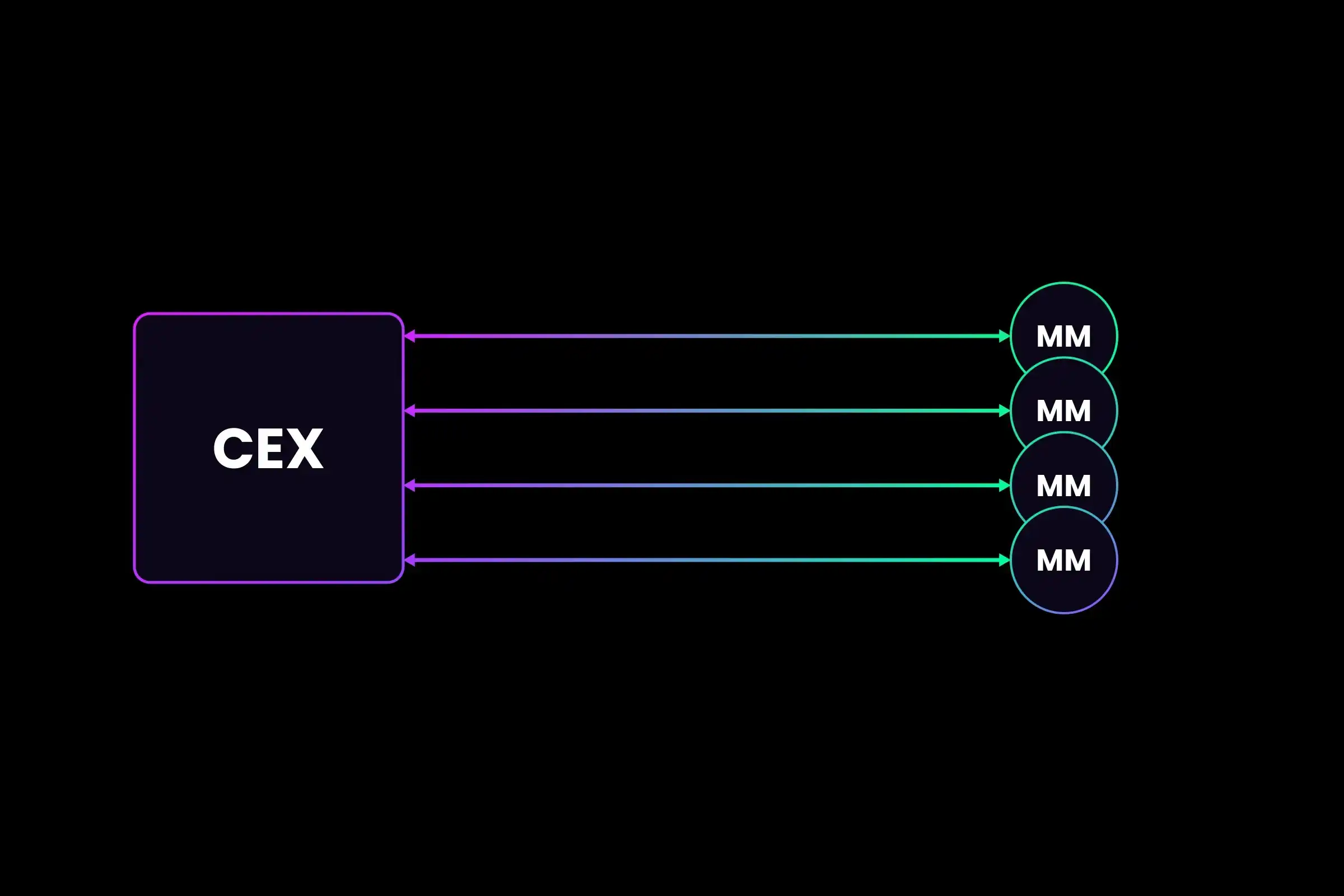
Market makers typically physically co-locate with the exchange. Each market maker runs an algorithm on a server and connects to another server running the exchange's system via a network cable of uniform length (e.g., 50 meters).

A massive stream of data is constantly sent back and forth between market makers and the exchange. Every time a market maker sends an order to the exchange—whether it's a limit order, cancellation, or market order—the exchange must broadcast this information to all other market makers; then, other market makers resend their own orders based on the new information; this cycle repeats indefinitely.

Here is a simple diagram.
Now let's look at how propAMM works on the Solana mainnet.

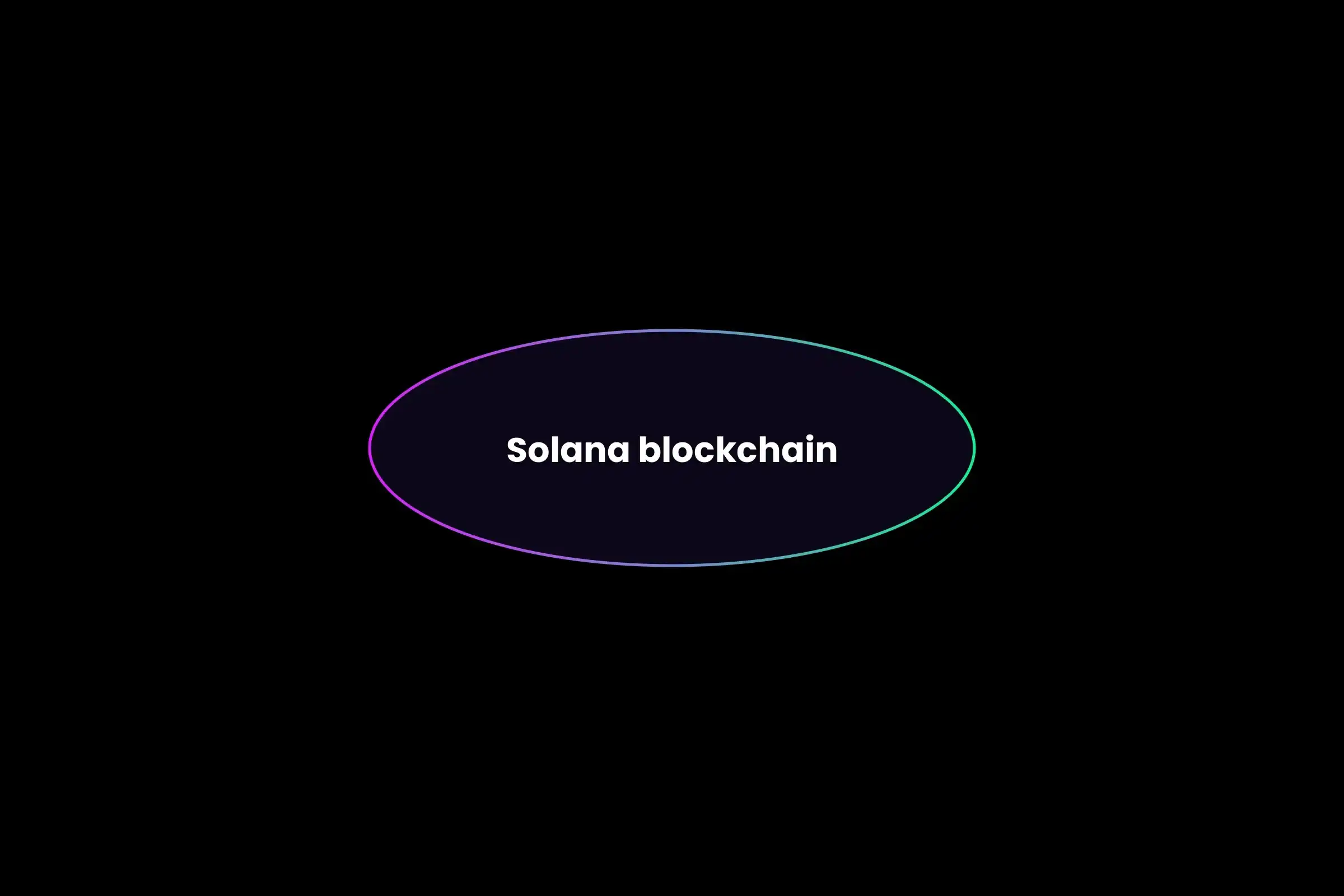
The beauty of propAMM on Solana is that the blockchain itself directly "hosts" the market maker algorithms. This means the system no longer needs to send billions of messages back and forth between market makers and the exchange; the market-making algorithms will run directly on the same physical machine as the exchange.

The new diagram is as follows. (Yes, only the Solana blockchain is needed!)
There has long been a common view in the cryptocurrency industry that decentralized systems must be slower (have higher latency) than centralized systems because they require communication between global nodes.

But if you think about it differently, on-chain hosted algorithms may actually have lower latency than traditional centralized exchanges in finance.

Why is that? The reason is that the latency required for propAMM to update prices only involves electrons moving within the same physical piece of silicon. For example, if the last market order causes a change in the SOL-USD price, this information is immediately visible to all propAMMs and used to price the next market order. Everything happens within the same piece of silicon; no bidirectional communication between servers is needed.

It's worth noting that propAMM does require frequent oracle updates, but this is not a problem and does not change the overall fact I described above.

The most critical point remains: when the exchange—in this case, the Solana blockchain—directly hosts the propAMM algorithms, the market makers' pricing changes in real-time within the same physical piece of silicon.

propAMM has already become the dominant mechanism for SOL-USDC spot quotes on Solana, with narrower spreads than all major CEXs. I expect this market structure to become the dominant model for on-chain trading this year, including spot, perpetual contracts (perps), and even prediction markets.

The biggest challenge for propAMM is that there is currently no way to ensure that the taker always gets the best execution, because:

  • All propAMM algorithms are not public (which is reasonable, as traditional market-making algorithms are also proprietary);
  • When routing trades between multiple propAMMs, the result is non-deterministic.

However, this problem can be solved. I expect all relevant aggregator teams to launch solutions this year, such as Jupiter and dFlow for spot, and Phoenix for contracts.

Current propAMM is still not fully optimized and is subject to various limitations of the Solana blockchain itself. This year, Solana will roll out a series of major upgrades that will significantly improve propAMM's performance, including:

  1. Higher CU (compute unit) limits per transaction and larger transaction sizes;
  2. Higher CU limits per block;
  3. Alpenglow: reducing slot time from 400ms to 100–150ms;
  4. DoubleZero: reducing global network latency;
  5. Application-controlled execution;
  6. Multiple concurrent leaders.

If propAMM on the Solana mainnet can already offer narrower quotes than all CEXs without these upgrades, imagine how powerful they will become as these upgrades are gradually implemented.


Domande pertinenti

QWhat is PropAMM and why does Kyle Samani consider it a major innovation in market microstructure?

APropAMM is a mechanism on Solana where market-making algorithms are hosted directly on the blockchain, eliminating the need for constant bidirectional communication between market makers and exchanges. Kyle Samani considers it one of the most important innovations in market microstructure in recent years, or even decades, because it significantly improves efficiency by running algorithms on the same physical hardware as the exchange, reducing latency and narrowing spreads compared to traditional CEXs.

QHow does PropAMM on Solana achieve lower latency compared to traditional centralized exchanges (CEXs)?

APropAMM achieves lower latency by hosting market-making algorithms directly on the Solana blockchain, which runs on the same physical hardware. This means price updates and order processing occur within the same silicon chip, eliminating the delay caused by network communication between separate servers in traditional CEX setups. Electronic movements within the chip are faster than inter-server data transfers.

QWhat current evidence does Kyle Samani provide to show PropAMM's effectiveness on Solana?

AKyle Samani points out that PropAMM has become the dominant mechanism for SOL-USDC spot quotes on Solana, with narrower spreads than all major centralized exchanges (CEXs). This demonstrates its superior performance in market efficiency and execution quality compared to traditional systems.

QWhat are the main challenges facing PropAMM, and how does Samani expect them to be addressed?

AThe main challenges are ensuring best execution for takers, as PropAMM algorithms are not public and routing between multiple PropAMMs is non-deterministic. Samani expects solutions to be developed by aggregator teams like Jupiter and dFlow for spot trading, and Phoenix for perpetual contracts, within the year to optimize routing and execution.

QWhat upcoming Solana upgrades does Samani mention that will further enhance PropAMM performance?

ASamani mentions several Solana upgrades: higher CU (Compute Unit) limits per transaction and larger transaction sizes, higher CU limits per block, Alpenglow (reducing slot time from 400ms to 100-150ms), DoubleZero (reducing global network latency), application-controlled execution, and multiple concurrent leaders. These will collectively boost PropAMM efficiency and performance.

Letture associate

$292 Million KelpDAO Cross-Chain Bridge Hack: Who Should Foot the Bill?

On April 18, 2026, an attacker stole 116,500 rsETH (worth ~$292M) from KelpDAO’s cross-chain bridge in 46 minutes—the largest DeFi exploit of 2026. The stolen assets were deposited into Aave V3 as collateral, causing $177–200M in bad debt and triggering a cascade of losses across nine DeFi protocols. Aave’s TVL dropped by ~$6B overnight. This legal analysis argues that KelpDAO and LayerZero Labs share concurrent liability, with fault apportioned 60%/40%. KelpDAO negligently configured its bridge with a 1-of-1 decentralized verifier network (DVN)—a single point of failure—despite LayerZero’s explicit recommendation of a 2-of-3 setup. LayerZero, which operated the compromised DVN, failed to secure its RPC infrastructure against a known poisoning attack vector. Both protocols’ terms of service cap liability at $200 (KelpDAO) or $50 (LayerZero), but these limits are likely unenforceable due to unconscionability, gross negligence exceptions, and potential securities law invalidation (if rsETH is deemed a security under the Howey test). Aave’s governance also faces fiduciary duty claims for raising rsETH’s loan-to-value ratio to 93%—far above competitors’ 72–75%—without adequately assessing bridge risks, amplifying the systemic fallout. Practical recovery targets include LayerZero Labs (a registered Canadian entity), KelpDAO’s founders, auditors, and identifiable Aave governance delegates. The incident underscores escalating legal risks for DeFi protocols, infrastructure providers, and governance participants.

marsbit53 min fa

$292 Million KelpDAO Cross-Chain Bridge Hack: Who Should Foot the Bill?

marsbit53 min fa

Insider Trading in War: 5 People Involved, the Highest Earner Was Arrested

On April 24, the U.S. Department of Justice arrested U.S. Army Special Forces Staff Sergeant Gannon Ken Van Dyke for insider trading related to the capture of Venezuelan President Nicolás Maduro on January 3. Van Dyke allegedly profited over $400,000 by placing bets on a prediction market, Polymarket, using insider knowledge of the covert operation. According to the indictment, Van Dyke registered an account (0x31a5) on December 26 and made a series of bets predicting Maduro’s capture and U.S. military involvement in Venezuela. He withdrew most of his funds on the day of the operation and attempted to obscure his tracks by transferring assets through crypto and brokerage accounts. This case marks the first time the DOJ has prosecuted insider trading on Polymarket. PolyBeats had previously identified five suspicious accounts, including Van Dyke’s—the highest earner—in January. The other accounts, with profits ranging from $34,000 to $145,000, remain under unofficial scrutiny but have not been charged. Their lower profits, indirect access to information, and unclear legal boundaries may complicate prosecution. Polymarket has since strengthened its market integrity rules, explicitly prohibiting trading based on confidential or insider information. Van Dyke’s arrest, nearly four months after his trades, signals increased regulatory attention and the persistent traceability of blockchain-based transactions.

marsbit55 min fa

Insider Trading in War: 5 People Involved, the Highest Earner Was Arrested

marsbit55 min fa

Bitwise: Bullish on Bitcoin's Performance in the Second Half of the Year, AI and Regulation Will Spark a New Altcoin Season

Bitwise CIO Matt Hougan and Research Lead Ryan Rasmussen express strong bullish sentiment on Bitcoin's long-term prospects, suggesting that its $1 million price target may be too conservative. They argue Bitcoin serves a dual role: as digital gold and a potential global settlement asset, especially amid declining trust in traditional monetary systems. Despite a weak Q1 2026 where nearly all crypto assets and prices saw double-digit declines, the analysts remain optimistic due to strong forward-looking catalysts, including institutional adoption via Bitcoin ETFs from major firms like Morgan Stanley and Goldman Sachs. Geopolitical instability, such as Iran’s mention of using Bitcoin for international payments, increases the value of Bitcoin’s “out-of-the-money call option” as a non-political, global settlement currency. This enhances its appeal beyond a mere store of value. . Additionally, Hougan highlights that a clearer regulatory token framework under current SEC leadership, combined with AI efficiency gains and high-performance blockchains, could fuel a new “altseason” by late 2026. This may lead to a wave of legitimate, value-capturing token projects, unlike the earlier ICO boom. . Bitwise also announced an Avalanche ETF, citing its unique architecture and rapid growth in real-world asset (RWA) tokenization, which has surged 10x to nearly $30 billion in two years. The firm believes Layer 1 blockchains are still early in their growth cycle, with significant potential ahead.

marsbit1 h fa

Bitwise: Bullish on Bitcoin's Performance in the Second Half of the Year, AI and Regulation Will Spark a New Altcoin Season

marsbit1 h fa

Trading

Spot
Futures
活动图片




