Kraken Reveals Extortion Demands After Client Data Incident: ‘We Will Not Pay’, Security Chief Says

bitcoinistPubblicato 2026-04-14Pubblicato ultima volta 2026-04-14

Introduzione

Kraken, a major US crypto exchange, has publicly refused extortion demands from a criminal group following two incidents of unauthorized access to limited client support data. Chief Security Officer Nick Percoco stated the exchange identified and terminated access for individuals involved, emphasizing that no systems were breached and user funds remained safe. Approximately 2,000 client accounts (0.02% of users) were affected. Kraken is cooperating with law enforcement and industry partners to investigate what it describes as insider recruitment efforts targeting multiple sectors. The incident has sparked community concerns over insider threats and data security, drawing comparisons to a similar past event at Coinbase.

Kraken, the US’s second-largest crypto exchange, has rejected extortion threats from a criminal group after two incidents of unauthorized access to limited client support data in the past year, reigniting investors’ concerns about insider threats.

Kraken Fights Back Extortion Demands

On Monday, Kraken’s Chief Security Officer (CSO), Nick Percoco, revealed that a criminal group is extorting the crypto exchange, threatening to release videos of their systems exposing client data.

In a security update, the CSO affirmed that Kraken had identified and shut down two instances of inappropriate access to limited client support data since 2025. Per the post, the crypto exchange received a tip about a video shared on a criminal forum. The video reportedly showed access to Kraken’s client support system.

The exchange “immediately launched an investigation and quickly identified the individual involved as a member of our support team,” Percoco explained, “Their access was revoked immediately, a full investigation was conducted, additional security controls were put in place and a limited number of affected clients were notified.”

More recently, they received another tip with a new video showing similar activity, prompting a new investigation to identify the parties involved, terminate their access, and notify the affected clients.

“Shortly after access was terminated, we began receiving extortion demands,” the security chief stated. “The criminals threatened to distribute materials from both the February 2025 incident and the recent incident to media outlets and on social media if we did not comply.”

Percoco emphasized that the exchange’s systems were never breached and funds were never at risk. In addition, he noted that “only a very small number” of client accounts, approximately 2,000 or 0.02% of clients, were potentially viewed across both incidents.

Kraken has now publicly rejected the criminal demands, declaring that they “will not pay these criminals” and “will not ever negotiate with bad actors.”

In the announcement, the exchange highlighted that it has been collaborating with industry partners and law enforcement to “investigate and disrupt insider recruitment efforts targeting not only crypto companies, but also gaming and telecommunications organizations.”

Based on intelligence gathered from the two incidents and extensive analysis, Kraken believes there is sufficient evidence to identify and arrest all individuals involved, but did not share additional details as the investigation continues. However, they urged anyone with relevant information to contact the exchange directly.

This incident comes just a month after Kraken scored a major victory for the crypto industry, becoming the first crypto company with direct access to the Federal Reserve’s core payment system after winning the Kansas City Fed’s approval for a Fed master account.

Crypto Community Raises Insider Access Concerns

Crypto investors and Kraken users online reacted to the news, questioning the exchange about the details of the two incidents and criticizing the exchange for offshoring customer support staff.

“So, basically, you outsourced it to shady third-party companies (or even worse, your internal recruiters are sleeping), and you got hacked twice or more. You made your customers vulnerable to wrench attacks,” an X user wrote under Percoco’s post.

However, details of whether the inappropriate data access was from an in-house support team or an overseas third-party support staff have not been revealed yet.

Another crypto community member pushed back on Kraken’s “very small number” of clients clarification, asserting that “this is not the metric you think it is... of those 2000 accounts, they are probably the ones with balances worth wrench attacking.”

Others drew a parallel between this incident and Coinbase’s data breach controversy from last year. For context, Coinbase CEO Brian Armstrong revealed in May 2025 that malicious actors had bribed a handful of support contractors overseas to access the company’s internal tools.

This led to the leak of names, email addresses, limited transaction records, and partial Social Security numbers of around 1% of the exchange’s users. Then, the attackers attempted to blackmail Coinbase using the breached information, demanding a $20 million Bitcoin (BTC) ransom for the sensitive data.

Reuters later alleged that Coinbase had been aware of the customer data leak months before it disclosed it, also raising concerns about transparency and insider threats.
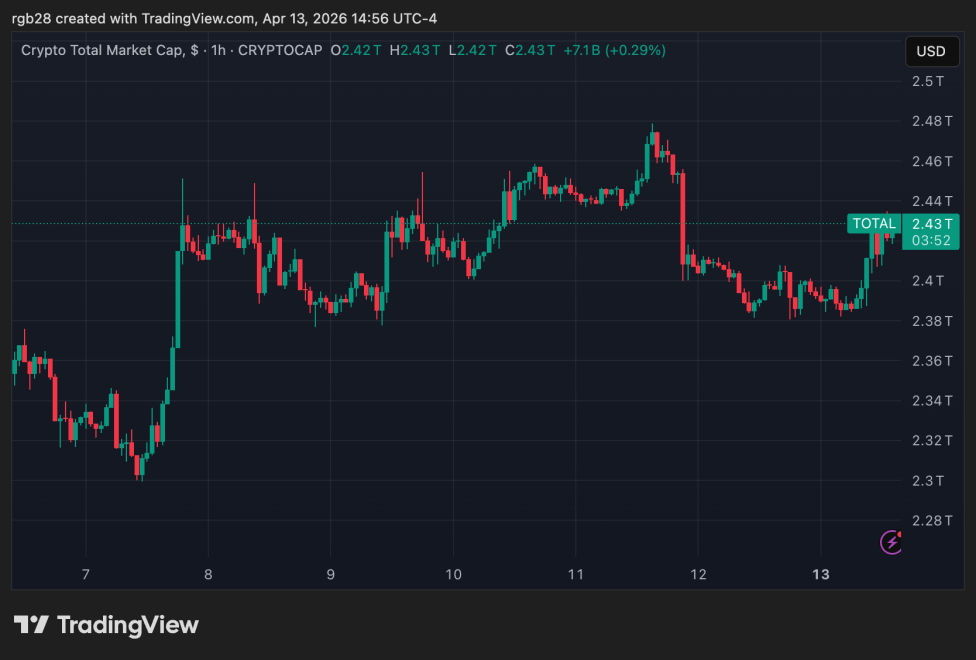
The total crypto market capitalization is at $2.43 trillion in the one-week chart. Source: TOTAL on TradingView


Domande pertinenti

QWhat did Kraken's Chief Security Officer reveal about the extortion demands?

AKraken's CSO Nick Percoco revealed that a criminal group is extorting the crypto exchange by threatening to release videos of their systems exposing client data, and that Kraken will not pay or negotiate with these criminals.

QHow many client accounts were potentially affected by the unauthorized access incidents at Kraken?

AApproximately 2,000 client accounts, or 0.02% of Kraken's clients, were potentially viewed across both incidents.

QWhat was the nature of the security incidents at Kraken, according to the company?

AThe incidents involved two instances of unauthorized access to limited client support data by individuals who were members of the support team, but the company's core systems were never breached and client funds were never at risk.

QHow did the crypto community react to Kraken's announcement of the security incidents?

AThe community questioned the details of the incidents, criticized the exchange for potentially offshoring customer support staff, and expressed concern that the affected accounts might be high-value targets for 'wrench attacks'.

QWhat parallel was drawn between this Kraken incident and another crypto exchange?

AThe incident was compared to Coinbase's data breach from May 2025, where malicious actors bribed overseas support contractors to access internal tools, leading to a data leak and a subsequent extortion attempt.

Letture associate

The Verdict in Choi Tae-won's Divorce Case: Revealing the Inheritance Undercurrent Behind SK Hynix's Trillion-Won Empire

SK Group Chairman Chey Tae-won's high-profile divorce case, involving a record 1.38 trillion won settlement, has drawn attention to the succession plans for Korea's second-largest conglomerate, especially its crown jewel, SK hynix. Unlike traditional chaebol scripts centered on the eldest son, Chey's three children from his marriage to former President Roh Tae-woo's daughter, Roh Soh-yeong, are carving distinct, non-traditional paths. Eldest daughter Chey Yun-jung (b. 1989) is seen as the most evident successor. With a scientific and consulting background, she holds executive roles at SK bioscience and SK Inc.'s growth support department, focusing on future strategy and biopharma. Her marriage is to an AI infrastructure entrepreneur, not a traditional business alliance. Second daughter Chey Min-jung (b. 1991) took a unique route, voluntarily serving as a South Korean naval officer, including an anti-piracy deployment. She later worked on policy and strategy for SK hynix in Washington D.C. before co-founding an AI-driven healthcare startup. She married a former U.S. Marine Corps officer, connecting her to U.S. defense and policy circles—networks crucial for a global semiconductor giant. The only son, Chey In-geun (b. 1995), who studied physics like his father, worked briefly at SK E&S before joining McKinsey. Despite fitting the traditional "heir" profile as the eldest son, he remains silent and holds no public position or shares in SK, suggesting the old succession playbook is obsolete. As SK hynix's valuation soars, becoming a geopolitical asset in the AI era, the heirs' legitimacy is no longer automatic. They must prove themselves in fields like AI biotech, global policy, and strategic consulting. Their marriages also reflect new elite networks in tech and defense, not old political alliances. Their inheritance is the complex challenge of navigating a globalized, tech-driven world, not just a corporate throne.

marsbit4 h fa

The Verdict in Choi Tae-won's Divorce Case: Revealing the Inheritance Undercurrent Behind SK Hynix's Trillion-Won Empire

marsbit4 h fa

From OpenSea to OpenRouter: Is Alex Atallah Repeating His 'Exit at the Peak' Playbook?

From OpenSea to OpenRouter: Is Alex Atallah Repeating His "Exit at the Peak" Playbook? According to the Wall Street Journal, payments giant Stripe is in talks to acquire the AI model aggregation platform OpenRouter in a potential deal valuing the company near $100 billion. This would mark founder Alex Atallah's second creation of a company reaching a $100 billion valuation, following his co-founding of NFT marketplace OpenSea. OpenRouter, founded just over three years ago, has grown rapidly by acting as a unified gateway for developers to access over 400 AI models. It currently has about 10 million users and processes over 200 trillion tokens monthly. While the platform's annualized revenue is around $50 million, its valuation has skyrocketed from $1.3 billion in March 2026. The potential acquisition by Stripe, a company OpenRouter's founder once likened it to, represents a major expansion into AI infrastructure for the payments leader. This move echoes Atallah's previous timing with OpenSea, where he departed before the NFT market's significant downturn. For OpenRouter, selling now may be strategic. Despite its scale, its business model—charging a 5-5.5% fee on AI inference calls—faces pressure from competition, open-source models, and potential price wars among model providers, limiting its profitability narrative for an IPO. A key asset for potential acquirers like Stripe is OpenRouter's vast repository of real-world AI usage data, which offers unique insights into model performance and developer preferences that are difficult to replicate. Whether this potential deal signifies a new valuation benchmark for AI infrastructure or another market peak signal remains to be seen.

链捕手4 h fa

From OpenSea to OpenRouter: Is Alex Atallah Repeating His 'Exit at the Peak' Playbook?

链捕手4 h fa

Trading

Spot
活动图片




