Kevin Warsh Emerges as a Surprise Contender: How Did an Inflation Hawk Become a Top Candidate for Fed Chair?

marsbitPubblicato 2025-12-18Pubblicato ultima volta 2025-12-18

Introduzione

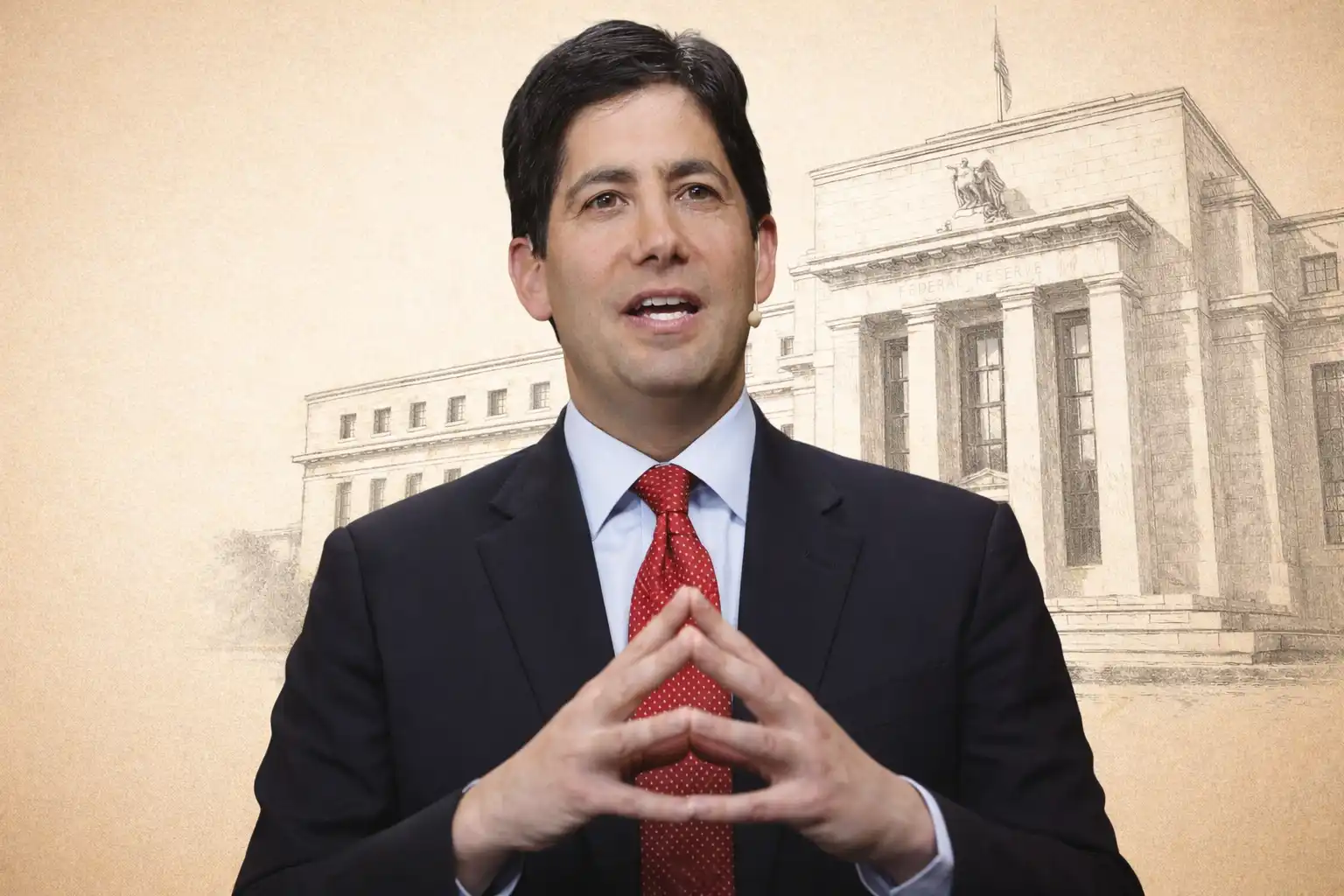
Kevin Warsh, a former Federal Reserve governor known for his hawkish stance on inflation, has unexpectedly re-emerged as a top contender for the next Fed chair, competing against Trump’s longtime economic advisor Kevin Hassett. President Trump has indicated his next Fed pick will aggressively cut interest rates, a priority for his administration. Warsh brings a blend of Wall Street experience, academic credentials, and prior Fed service during the 2008 financial crisis. Despite his historical skepticism toward quantitative easing and concerns over inflation, Warsh has recently signaled openness to rate cuts, aligning with Trump’s demands. He has proposed a “rate cuts plus balance sheet reduction” strategy to reconcile stimulus with inflation control. Hassett, by contrast, is seen as a loyalist who would more directly implement Trump’s preference for looser monetary policy. However, some within Trump’s circle question his technical competence compared to Warsh’s deeper central banking experience. The competition reflects a broader tension between professional independence and political alignment. Warsh is viewed as more institutionally cautious, while demonstrating recent flexibility, whereas Hassett advocates for a Fed more directly responsive to the White House. The outcome will significantly influence the Fed’s future direction and perceived independence.

Author: Zen, PANews

Trump recently stated that he will announce the next Federal Reserve Chair "soon" and emphasized that the new chair would significantly lower interest rates. Trump's final selection is expected to be announced in early 2026. As the White House's screening for the next Fed Chair enters its final stage, former Federal Reserve Governor Kevin Warsh has unexpectedly re-emerged as a core candidate.

Against the backdrop of the Trump team publicly advocating for faster and deeper rate cuts, Warsh's return has drawn attention. He possesses both the central banking experience of participating in decision-making during the financial crisis and a long-standing critique of the Fed's excessive balance sheet expansion and policy direction shifts.

Now, Warsh, who is poised to potentially unseat the "shadow chair," faces a more practical test: how to meet the White House's expectations for low interest rates while simultaneously ensuring market confidence in the Fed's independence.

The Making of an "Inflation Hawk"

Kevin Warsh was born in 1970 and grew up in New York State in a business-oriented family. He graduated from Stanford University and earned a Juris Doctor degree from Harvard Law School. After completing his studies, Warsh embarked on a Wall Street career, working for years in Morgan Stanley's investment banking division, specializing in mergers and acquisitions and rising to the position of Executive Director. This Wall Street experience gave him a deep understanding of financial market operations, which proved highly valuable later when he entered public service.

In 2002, Warsh left Wall Street and turned to politics. He joined the team of then-President George W. Bush, serving as Special Assistant to the President for Economic Policy and working on domestic financial and capital market policies. In 2006, at just 35 years old, Warsh was nominated by President Bush to the Board of Governors of the Federal Reserve System, becoming one of the youngest Fed governors in history.

During his tenure at the Fed, he was responsible for liaising with international entities like the G20, accumulating extensive monetary policy experience. During the 2008 financial crisis, Governor Warsh worked closely with then-Chairman Ben Bernanke and New York Fed President Tim Geithner to help financial institutions weather the storm and participated in decisions regarding the Fed's launch of unconventional measures like quantitative easing (QE).

However, Warsh consistently maintained a cautious stance towards overly accommodative monetary policy, worrying that QE could lead to inflationary risks. Shortly after the launch of the second round of QE, he resigned from the Board prematurely in March 2011, a move widely seen as related to his concerns about QE and inflation risks. Warsh's demonstration of principled independence also earned him a reputation as an "inflation hawk" in financial circles.

After leaving the Fed, Warsh returned to his roots, shifting towards academia and think tanks, remaining active on the forefront of economic policy discussions. He became a Distinguished Visiting Fellow at the Hoover Institution at Stanford University and taught at the business school, focusing his research on monetary policy and financial stability. Simultaneously, Warsh was invited to join influential institutions like the Group of Thirty, frequently authoring media articles criticizing the Fed's overly loose policy orientation.

It is worth noting that Warsh also boasts prominent connections: his wife is from the renowned Estée Lauder family, and his father-in-law, Ronald Lauder, is an old friend and major supporter of President Trump. This provides Warsh with unique networking resources in both political and business circles. Tempered by experiences in government, Wall Street, and academia, Warsh has gradually built an image combining policy expertise and market insight, laying a solid foundation for his bid for higher office.

How Did Warsh Break Through Mid-Race?

After Trump's return to the White House, the new administration began the process of identifying a successor to Jerome Powell as the next Fed Chair. Initially, it was widely believed that Trump's chief economic advisor, Kevin Hassett, had the best chances. Hassett served as Chairman of the Council of Economic Advisers during Trump's first term, had long followed Trump's lead, was seen as a close confidant of the president, and was dubbed the "shadow chair" by outsiders.

However, Warsh unexpectedly emerged mid-race as a candidate, winning the favor of Trump's team. In early December, Trump revealed that his choice for Fed Chair had narrowed down to "two Kevins"—Hassett and Warsh. Warsh's strong rise has elevated him to a position where he can rival Hassett. Trump stated, "I think both Kevins are excellent," hinting that the final choice would be between the two.

Warsh's ability to catch up is closely tied to his active efforts. Trump disclosed that he had met with Warsh at the White House in mid-December, during which Warsh directly expressed support for rate cuts. Trump claimed that Warsh believed current rates "should be lower," a view aligning with his own demand for a more accommodative monetary environment. Having both professional background and a willingness to align with policy direction, particularly迎合 (catering to) the White House's demands on interest rates, this somewhat alleviated Trump's previous concerns about his hawkish stance.

Furthermore, Warsh's network of connections also played a role. Wall Street heavyweights like JPMorgan Chase CEO Jamie Dimon expressed support for Warsh leading the Fed. Dimon indicated in private settings that while Hassett might cut rates more aggressively in the short term, Warsh, with his richer central banking experience, was the steadier choice in the long run.

Moreover, changing evaluations of the candidates within Trump's inner circle contributed to Warsh's breakthrough. Media reports disclosed that some Trump administration officials privately expressed concerns about Hassett's capabilities. These insiders believed that during his tenure as Director of the National Economic Council, Hassett had no outstanding practical decision-making ability beyond promoting Trump's policies. Such reservations led some Trump aides to question whether Hassett was suited for the highly technical role of Fed Chair.

In contrast, Warsh, with his experience as a Fed governor and market expertise, was deemed more competent. This tension between "loyalty" and "expertise" created a博弈 (game) within Trump's team: on one hand, the president's political advisors valued Hassett's absolute loyalty to Trump; on the other hand, economic officials like Treasury Secretary Scott Bessent leaned towards Warsh, who possessed professional credibility.

Mid-December reports indicated that Trump had personally interviewed Warsh; it was uncertain if he would meet other candidates. However, mainstream analysis suggested the competition had increasingly focused on the "two Kevins" by year-end. The process of breaking through mid-race also shows that Warsh is adept at strategizing, mobilizing connections, and flexibly adjusting his stance according to the situation. For the Trump camp, he brings both professional credibility and political flexibility, which is precisely why he has become a top contender for the 2025 Fed Chair position.

The Battle of the Two Kevins

Due to differences in background and orientation, the economic policy proposals and approaches of the "two Kevins" also show distinct variations.

On monetary policy, Warsh has long been known as an "inflation hawk,"始终保持警惕 (always maintaining vigilance) towards measures like quantitative easing. He strongly focuses on long-term inflation risks, emphasizing the central bank must maintain resolve in controlling prices. Hassett, coming from an academic economic advisory background and not a career central banker, has a stance on monetary policy that changes more with political needs.

Under Trump's influence, Hassett's recent remarks have trended dovish, publicly calling for the Fed to increase the pace of rate cuts to stimulate growth. Comparing the two, Warsh's image is more that of a traditional central banker, cautious and focused on long-term stability; Hassett appears more as a strategist灵活迎合 (flexibly catering to) political intentions. As JPMorgan CEO Dimon evaluated, Hassett might cut rates more aggressively in the short term, while Wash embodies deeper policy expertise and a steadier立场 (stance).

However, it is noteworthy that Warsh has recently adjusted his policy proposals to move closer to Trump. In a Wall Street Journal op-ed published in November, Warsh proposed simultaneously cutting interest rates and significantly shrinking the Fed's balance sheet, thereby兼顾 (balancing) stimulating the economy and guarding against inflation. This combination of "rate cuts + balance sheet reduction" is seen as a concession and adaptation of his traditional hawkish stance: allowing rates to fall first but回收流动性 (mopping up liquidity) by reducing the scale of bonds held by the Fed to prevent inflation from rising. In contrast, Hassett has not proposed similar technical balancing measures; he prefers direct and sweeping rate cuts, believing this can immediately boost economic growth.

There are also clear differences in their attitudes towards curbing inflation. Warsh has bluntly criticized the Powell-led Fed for "making unwise mistakes in dealing with inflation." He proposes that "inflation is a choice," arguing that the high inflation in recent years was largely due to Fed policy errors, not an unavoidable force. Therefore, Warsh advocates that the new chair must strictly adhere to the price stability goal, prioritizing inflation control.

Based on this理念 (philosophy), he opposes simply attributing economic overheating and a tight labor market as causes of inflation, criticizing the Fed's past "dogma" of blaming inflation on excessive economic growth. Instead, Warsh believes that by increasing productivity and理顺供给 (smoothing out supply), higher growth and employment can be achieved without triggering inflation. Unlike Warsh's emphasis on the Fed's own responsibility, Hassett's stance on inflation is more politically colored.

The issue of the Fed's independence and political neutrality is a point of particular external concern. The differences in their concepts will not only reflect their personal styles but also profoundly impact the reputation and functional positioning of the Federal Reserve as an institution in the coming years.

Warsh, as a former Fed official,深知 (is deeply aware of) the value of central bank independence. He emphasized professional integrity during his 2017 bid for the chair nomination and demonstrated a degree of independent principle by resigning due to policy disagreements. Even though he has compromised somewhat this time to meet Trump's demand for lower rates, Warsh is still seen as a member of the financial elite, relatively reserved and steady in style. Trump has privately expressed不完全信任 (incomplete trust) in "Bush-era elites" like Warsh, worrying that he might be too independent and too polished to be fully controllable.

In comparison, Hassett has publicly argued that the Fed has become "politicized" and needs new leadership to align with the president's agenda. Even though Hassett has recently begun to constantly emphasize that he would ensure central bank independence upon taking office, he实质上仍主张 (still essentially advocates) for monetary policy to be more closely serve the goals of the administration. This aligns highly with Trump's public demands: Trump has repeatedly stated that the next Fed Chair "should listen to me" and demanded that his opinion be sought before interest rate decisions.

In summary, Kevin Warsh,凭借 (relying on) his unique resume and flexible strategy during the selection process, has successfully跻身 (joined the ranks of) the top candidates for the 2025 Fed Chair. His experiences in government, Wall Street, and academia add significant weight, and his interactions with President Trump's camp also demonstrate a pragmatic side. In comparison with his main competitor, Kevin Hassett, Wash demonstrates stronger professional independence and monetary policy experience, while Hassett excels in loyalty and political acumen. Their分歧 (divergences) on core economic policies reflect the different paths the Fed might face in the future: adhering to the independence and steadiness of a traditional central bank, or迎合 (catering to) political demands for looser policy and growth.

In the analysis and reporting of mainstream media, this contest between the "two Kevins" is not just a personnel battle but also a博弈 (game) concerning the Fed's independence and policy orientation. Regardless of who ultimately wins, investors in the US and globally are closely watching how the final victor of this tug-of-war will define the next chapter of the Federal Reserve.


Crypto di tendenza

Domande pertinenti

QWho are the two main candidates for the next Federal Reserve Chairman as mentioned in the article, and what are their respective backgrounds?

AThe two main candidates are Kevin Warsh and Kevin Hassett. Kevin Warsh is a former Federal Reserve Governor with a background in Wall Street (Morgan Stanley) and served in the Bush administration. Kevin Hassett is Trump's former chief economic advisor and former Chairman of the Council of Economic Advisers, known for his close alignment with Trump.

QWhy is Kevin Warsh, historically known as an inflation hawk, considered a candidate despite Trump's desire for lower interest rates?

ADespite his hawkish reputation, Warsh has recently adjusted his stance to align with Trump by expressing support for lower interest rates. He proposed a combination of 'rate cuts + balance sheet reduction' to stimulate the economy while controlling inflation, demonstrating flexibility that appealed to Trump's team.

QWhat role did Kevin Warsh play during the 2008 financial crisis?

ADuring the 2008 financial crisis, Kevin Warsh, as a Federal Reserve Governor, worked closely with Chairman Ben Bernanke and New York Fed President Tim Geithner. He helped financial institutions navigate the crisis and participated in decisions to implement unconventional measures like quantitative easing.

QWhat are the key differences in policy approach between Kevin Warsh and Kevin Hassett regarding the Federal Reserve's independence?

AKevin Warsh, as a former Fed official, values central bank independence and has a reputation for professional integrity. Kevin Hassett, however, has argued that the Fed has become too political and should align more closely with the presidential agenda, which matches Trump's desire for a chairman who would 'listen to him'.

QHow did Kevin Warsh's personal connections and Wall Street support influence his candidacy?

AWarsh's wife is from the Estée Lauder family, and his father-in-law, Ronald Lauder, is a longtime friend and supporter of Trump, providing valuable political and business connections. Additionally, Wall Street figures like JPMorgan CEO Jamie Dimon expressed support for Warsh, citing his extensive central banking experience as a稳健 choice.

Letture associate

Buyback and Burn: Just Empty Promises? The Unbridgeable Rights Gap Between Tokens and Equity

"Token Repurchase and Burn: An Empty Promise? The Unbridgeable Rights Gap Between Tokens and Equity" Holding company stock grants shareholders residual claim rights - a legally enforceable entitlement to remaining assets after all other obligations are paid. This comes with rights like voting, dividends, and a share in sale proceeds. Crypto protocols have long promised token holders similar benefits: governance participation and a share of future growth. However, this narrative is fundamentally flawed and built on voluntary promises, not enforceable legal rights. The core difference is that token holders lack any legally enforceable claim to a protocol's underlying value or revenues. Common mechanisms like using protocol revenue to buy back and burn tokens are purely discretionary; the team can alter or stop the policy at any time. Token holders have no legal recourse. This rights gap becomes critically apparent when protocols introduce traditional equity alongside tokens, as seen with Venice AI's $65M funding round. Equity investors hold legal contracts with rights to company assets and profits, while token holders' benefits depend entirely on the continued goodwill of the protocol's management. The acquisition of Houdini Swap, where equity holders were paid while token holders received nothing, starkly illustrates this disparity. Upcoming legislation like the CLARITY Act threatens to eliminate the regulatory gray area that has allowed this ambiguous "pseudo-equity" narrative. The Act would classify tokens as either digital commodities (regulated by CFTC) or investment contract assets/securities (regulated by SEC). Protocols aiming for the "digital commodity" classification would be explicitly prohibited from granting token holders any legal claim to corporate revenue, profits, or assets. Promising that tokens will appreciate from protocol profits would likely classify them as securities. Projects like Aave are attempting technical solutions, such as its automated, on-chain "Aavenomics 3.0" buyback mechanism. However, this remains code that the governance body could still vote to change, not an immutable legal contract. The industry faces a clear fork: either acknowledge tokens as digital commodities and stop promising economic rights tied to corporate profits, or formally register tokens as securities and bear the associated compliance burden. The decade-long narrative equating tokens with ownership is built on unenforceable promises. The entry of traditional equity investors with real legal rights exposes this foundational weakness, which may unravel with the next major funding deal.

Foresight News42 min fa

Buyback and Burn: Just Empty Promises? The Unbridgeable Rights Gap Between Tokens and Equity

Foresight News42 min fa

Navigating the World of Event Trading: Top 5 Prediction Markets for Every Type of User

The prediction market industry has grown significantly, with trading volumes exceeding $20 billion monthly by mid-2026, driven by sports, politics, and macroeconomics. Success now depends heavily on platform choice and execution logistics. This guide compares five leading networks: **Polymarket**: A high-volume, decentralized platform on Polygon, using USDC for international and crypto-native users. It offers diverse markets but lacks built-in risk tools. **Kalshi**: A CFTC-regulated U.S. exchange for institutional traders, using direct fiat. It leads in regulated volume, especially for major sports and economic events, but has limited contract listings. **Outpoll**: A CeDeFi platform for advanced traders, focusing on professional tools. It uniquely features built-in stop-loss/take-profit orders, 0.1% fees, and full API support, with settlement in USDC. **OG Predictive**: A CFTC-regulated, sports-focused platform from Crypto.com. It offers granular player props and a flat fee structure, appealing to long-term position traders. **Manifold Markets**: A play-money, no-KYC platform for casual users and developers. It allows user-generated markets on any topic with zero fees, serving as a sandbox for strategy testing. Key differentiators include regulatory models (regulated vs. decentralized), funding (fiat vs. crypto), order types, risk management features, API access, and mobile support. The conclusion emphasizes that in today's event trading, profitability hinges not just on accurate predictions but on optimizing execution through platform infrastructure, liquidity, fees, and risk tools.

TheNewsCrypto1 h fa

Navigating the World of Event Trading: Top 5 Prediction Markets for Every Type of User

TheNewsCrypto1 h fa

Why Are Large-Scale Crypto Conferences No Longer Glamorous?

Why Are Major Crypto Conferences Losing Their Allure? A growing sense of fatigue surrounds large in-person crypto conferences, with many founders and investors now avoiding events they would never have missed just two years ago. While complaints cite declining ROI and information quality, the root causes are more structural. Crypto, global from inception, once relied on these mega-conferences as neutral hubs for essential face-to-face connections. However, their core value has been fragmented. High-quality participants—developers, investors—have largely migrated to smaller, private side-events, leaving main stages for repetitive content already shared online. The main conference often just becomes the excuse for being in the same city, with attendees scrambling between exclusive dinners and micro-events. While these intimate gatherings offer signal-rich conversations, they lose the "serendipitous encounters" of large conferences and can create insular echo chambers, especially as talent concentrates in hubs like New York. Meanwhile, invite-only, high-caliber summits are rising, offering quality and scale but at the cost of accessibility and crypto's early egalitarian ethos. This shift isn't unique to crypto; AI events in San Francisco show a similar trend. The perception of higher-value interactions drives core groups towards smaller, private settings, potentially creating a vicious cycle that drains larger events of their vitality. Yet, a more optimistic view exists. The apparent decline of crypto-centric events may signal industry maturation. Leading projects are now focused outward—on stablecoins for traditional finance, consumer-facing digital banks, or real-world assets. Crypto topics are increasingly integrated into mainstream finance and tech conferences. Just as dedicated "internet conferences" faded, dedicated crypto summits may become redundant as the technology embeds into every sector. The future likely holds far fewer large, inward-looking crypto conferences. The industry has moved past needing frequent self-congratulatory gatherings. True growth lies in engaging with the broader economy. This evolution towards private networking and mainstream integration, for better or worse, is a mark of the industry coming of age.

marsbit1 h fa

Why Are Large-Scale Crypto Conferences No Longer Glamorous?

marsbit1 h fa

Coin & Stock Compass: Global Listed Companies Net Sold $85.45 Million in BTC Last Week, Strategy's Dollar Reserves Scale Up to $3 Billion (July 14)

Global Public Companies Net Sell $85.45 Million in BTC; Strategy's Dollar Reserves Hit $3 Billion (July 14) Last week saw a significant net sell-off of Bitcoin by global public companies, excluding miners, totaling $85.45 million—a 908.42% decrease from the prior week. Major buyers like Strategy (formerly MicroStrategy) and Japan's Metaplanet were notably absent from the market. However, two companies, Brazil's OrangeBTC and asset manager Strive, made purchases, adding 8 and 18 BTC, respectively. The aggregate BTC holdings of tracked public companies now stand at 1,139,635 BTC, valued at approximately $71.38 billion and representing 5.7% of Bitcoin's circulating market cap. In corporate updates, Strategy announced its dollar reserves have grown by $450 million to reach $3 billion, while its BTC holdings remain at 843,775 coins. Hyperscale Data increased its BTC reserves past 1,000 coins. Strategy will report its Q2 2026 financial results on July 30. Mining firm Cleanspark added 454 BTC, bringing its total to 13,924 BTC. Conversely, BitFuFu sold 184 BTC, Bitdeer maintained zero net BTC holdings after selling its weekly production, and Empery Digital sold 1,400 BTC to fund an AI data center project and repay debt. Overall, public companies purchased 110,000 BTC in Q2 2026, 1.8 times the volume of the previous two quarters combined. In other cryptocurrency-related corporate news, Ethereum treasury company Bitmine increased its ETH holdings by 27,801 coins, with total staked ETH exceeding 4.9 million. Solana-focused company DFDV transferred daily operations of its meme coin DONT to an independent team. BNB treasury company BNB Plus was delisted from Nasdaq for failing to meet the $1 minimum bid price and moved to trade on the OTCQB market under the symbol BNBX. The broader equity markets showed mixed signals. Bank of America warned that bullish investor positioning indicated a potential pullback risk for stocks. In contrast, Morgan Stanley predicted the ongoing earnings season could broaden market gains beyond tech giants. Specific regional highlights included continued foreign investor outflows from South Korean stocks, pressure on US equities, and the upcoming IPO of Chinese memory chip maker ChangXin Memory. Most crypto-linked stocks remained in a downtrend.

marsbit2 h fa

Coin & Stock Compass: Global Listed Companies Net Sold $85.45 Million in BTC Last Week, Strategy's Dollar Reserves Scale Up to $3 Billion (July 14)

marsbit2 h fa

Trading

Spot

Articoli Popolari

Come comprare O

Benvenuto in HTX.com! Abbiamo reso l'acquisto di O1 exchange (O) semplice e conveniente. Segui la nostra guida passo passo per intraprendere il tuo viaggio nel mondo delle criptovalute.Step 1: Crea il tuo Account HTXUsa la tua email o numero di telefono per registrarti il tuo account gratuito su HTX. Vivi un'esperienza facile e sblocca tutte le funzionalità,Crea il mio accountStep 2: Vai in Acquista crypto e seleziona il tuo metodo di pagamentoCarta di credito/debito: utilizza la tua Visa o Mastercard per acquistare immediatamente O1 exchangeO.Bilancio: Usa i fondi dal bilancio del tuo account HTX per fare trading senza problemi.Terze parti: abbiamo aggiunto metodi di pagamento molto utilizzati come Google Pay e Apple Pay per maggiore comodità.P2P: Fai trading direttamente con altri utenti HTX.Over-the-Counter (OTC): Offriamo servizi su misura e tassi di cambio competitivi per i trader.Step 3: Conserva O1 exchange (O)Dopo aver acquistato O1 exchange (O), conserva nel tuo account HTX. In alternativa, puoi inviare tramite trasferimento blockchain o scambiare per altre criptovalute.Step 4: Scambia O1 exchange (O)Scambia facilmente O1 exchange (O) nel mercato spot di HTX. Accedi al tuo account, seleziona la tua coppia di trading, esegui le tue operazioni e monitora in tempo reale. Offriamo un'esperienza user-friendly sia per chi ha appena iniziato che per i trader più esperti.

87 Totale visualizzazioniPubblicato il 2026.06.19Aggiornato il 2026.06.29

Come comprare O

Come comprare PROS

Benvenuto in HTX.com! Abbiamo reso l'acquisto di Pharos (PROS) semplice e conveniente. Segui la nostra guida passo passo per intraprendere il tuo viaggio nel mondo delle criptovalute.Step 1: Crea il tuo Account HTXUsa la tua email o numero di telefono per registrarti il tuo account gratuito su HTX. Vivi un'esperienza facile e sblocca tutte le funzionalità,Crea il mio accountStep 2: Vai in Acquista crypto e seleziona il tuo metodo di pagamentoCarta di credito/debito: utilizza la tua Visa o Mastercard per acquistare immediatamente PharosPROS.Bilancio: Usa i fondi dal bilancio del tuo account HTX per fare trading senza problemi.Terze parti: abbiamo aggiunto metodi di pagamento molto utilizzati come Google Pay e Apple Pay per maggiore comodità.P2P: Fai trading direttamente con altri utenti HTX.Over-the-Counter (OTC): Offriamo servizi su misura e tassi di cambio competitivi per i trader.Step 3: Conserva Pharos (PROS)Dopo aver acquistato Pharos (PROS), conserva nel tuo account HTX. In alternativa, puoi inviare tramite trasferimento blockchain o scambiare per altre criptovalute.Step 4: Scambia Pharos (PROS)Scambia facilmente Pharos (PROS) nel mercato spot di HTX. Accedi al tuo account, seleziona la tua coppia di trading, esegui le tue operazioni e monitora in tempo reale. Offriamo un'esperienza user-friendly sia per chi ha appena iniziato che per i trader più esperti.

80 Totale visualizzazioniPubblicato il 2026.06.22Aggiornato il 2026.06.29

Come comprare PROS

Cosa è VERONA

I. Introduzione al Progetto VERONA è una blockchain costruita per tutti, ovunque attraverso l'astrazione della catena. Utilizzando il suo livello di astrazione generalizzato, VERONA si distingue integrando funzionalità blockchain complesse, come conti, firme e interoperabilità, direttamente a livello di protocollo. Questo approccio consente di interagire con le applicazioni blockchain senza la necessità di comprendere le tecnologie sottostanti.1) Informazioni di Base Nome:VERONA(VERONA)III. Link Correlati Link al sito ufficiale:https://xion.burnt.com/ Whitepaper:https://xion.burnt.com/whitepaper.pdf Esploratori:https://explorer.burnt.com/ Social Media: https://x.com/burnt_xion Nota: L'introduzione al progetto proviene dai materiali pubblicati o forniti dal team ufficiale del progetto, che è solo a scopo di riferimento e non costituisce consulenza per investimenti. HTX non si assume responsabilità per eventuali perdite dirette o indirette risultanti.

112 Totale visualizzazioniPubblicato il 2026.06.22Aggiornato il 2026.06.22

Cosa è VERONA

Discussioni

Benvenuto nella Community HTX. Qui puoi rimanere informato sugli ultimi sviluppi della piattaforma e accedere ad approfondimenti esperti sul mercato. Le opinioni degli utenti sul prezzo di A A sono presentate come di seguito.

活动图片