Kalshi and Polymarket Jointly Invest in New Fund, a Major Step Towards the 'Ecologization' of Prediction Markets

Odaily星球日报Pubblicato 2026-03-24Pubblicato ultima volta 2026-03-24

Introduzione

A new venture capital firm, 5c(c) Capital, founded by two former Kalshi employees, is raising $35 million to invest in prediction market startups. The fund has garnered support from key industry leaders, including Kalshi CEO Tarek Mansour and Polymarket CEO Shayne Coplan, as well as investors from a16z, Ribbit Capital, and Multicoin Capital. This marks the first VC fund dedicated solely to the prediction market industry and represents a significant step towards its maturation as an independent ecosystem beyond the crypto market. Prediction markets are experiencing explosive growth, with Kalshi's monthly trading volume surpassing $12.7 billion in March 2026 alone—over half of its total 2025 volume. The industry is rapidly building out its infrastructure, including the formation of a trade coalition (CPM), acquisitions of API and data firms, and the planned inaugural Prediction Market Conference. The founders of 5c(c) Capital believe the industry could eventually see $10 trillion in trading volume, extending far beyond its current focus on sports. Despite potential regulatory challenges, prediction markets are solidifying their position as a major new financial sector.

Original|Odaily Planet Daily (@OdailyChina)

Author|Wenser(@wenser 2010)
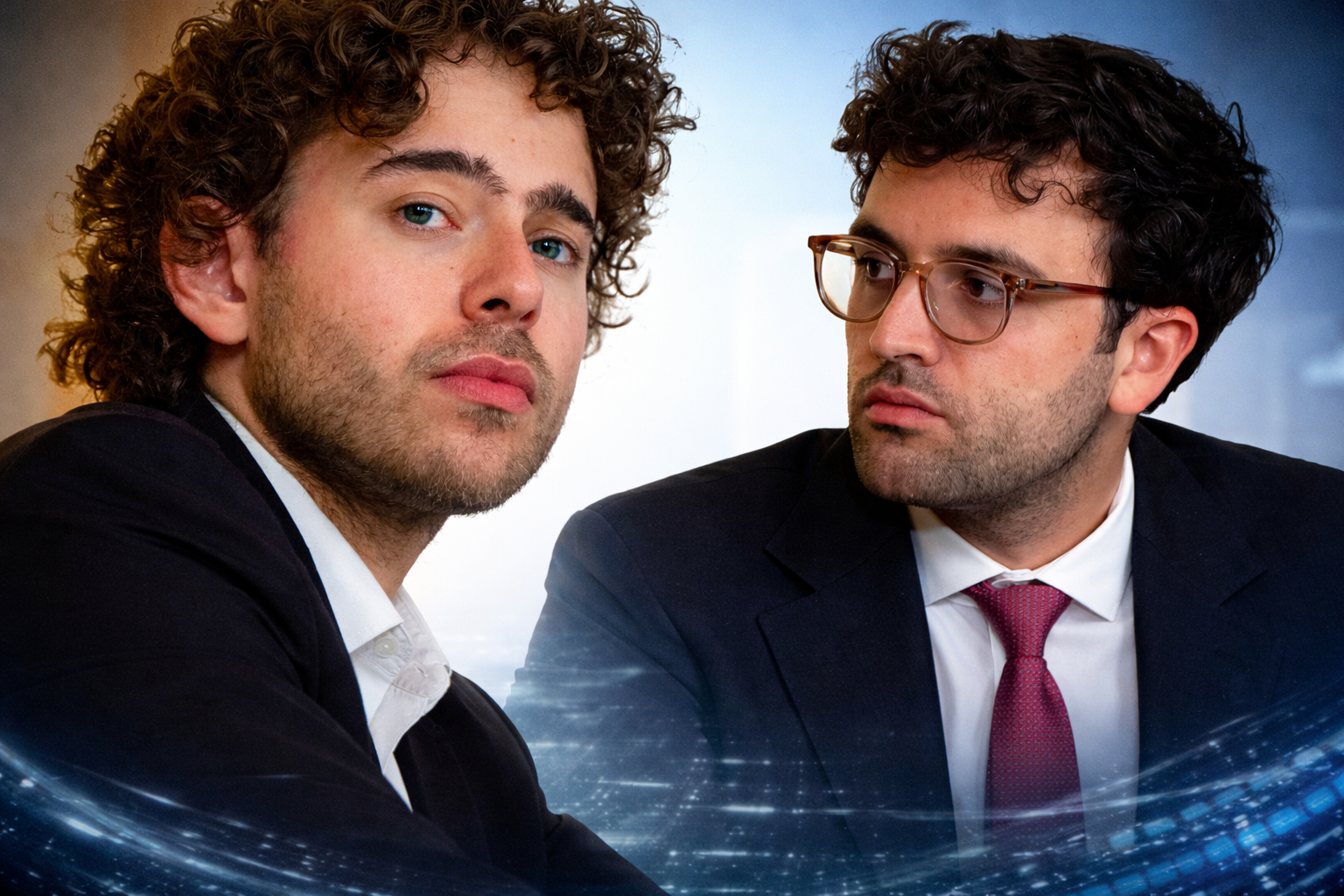
Behind the rising trading volume of prediction markets, their ecosystem is also expanding rapidly.

Yesterday, venture capital firm 5c(c) Capital, initiated by two former Kalshi employees, announced its latest fundraising plan, aiming to raise $35 million for investments in startups related to prediction markets. Notably, the institution has not only received support from Kalshi CEO Tarek Mansour and Polymarket CEO Shayne Coplan, among others, but its other investors also include individuals from a16z, Ribbit Capital, and Multicoin Capital.

At the same time, this institution is both the first venture capital firm focused on investing in the prediction market industry and the same entity simultaneously funded by the two giants of the prediction market, Kalshi and Polymarket, which can be considered "unprecedented in the industry." Combined with previous news such as Kalshi initiating a prediction market alliance, planning a prediction market conference, Polymarket opening LP market-making incentives, and the emergence of various prediction market data platforms, prediction markets are gradually decoupling from the native crypto market and becoming an emerging industry ecosystem independently.

When an industry's trading volume increases dozens of times within a year, when a single platform's monthly trading volume rivals the entire industry's volume just a few months ago, prediction markets are aggressively encroaching on the territory of traditional betting platforms.

Polymarket CEO Invests in Former Kalshi Employees: A Common Choice for the Two Titans of Prediction Markets

It is understood that the name of 5c(c) Capital comes from the clause regarding prediction markets in the U.S. Commodity Exchange Act.

And the two founders are veteran figures at Kalshi—Adhi Rajaprabhakaran was formerly the No.2 trader at Kalshi Trading, Kalshi's affiliated market-making division, and also the creator of the well-known prediction market podcast "50 Cent Dollars"; Noah Zingler-Sternig served as Kalshi's Head of Operations (similar to COO) and led the integration of Kalshi with Robinhood Markets Inc.

Additionally, the fund plans to invest in about 20 companies over the next two years, focusing on prediction market infrastructure directions such as market makers and index design; its first round of fundraising will be completed within the next month.

A Luxurious Investor Lineup: Spanning Traditional VC, Crypto VC, Prediction Markets, and Traditional Sports Betting Platforms

Besides the support from confirmed investors like Kalshi CEO Tarek Mansour and the unofficially confirmed Polymarket CEO Shayne Coplan, other investors in 5c(c) Capital can be described as a "luxurious lineup"—including "veteran venture capitalists" like Marc Andreessen from A16z (who invested through the Moneta Luna fund), as well as industry veterans like Ribbit Capital founder Micky Malka and former Multicoin Capital managing partner Kyle Samani. The list even includes an investment manager from the hedge fund Millennium, which has over $70 billion in assets under management, and the founder of the prediction market platform PredictIt, among other insiders and outsiders.

If the above list of investors is more about the interests of venture capital institutions, then the actions of the following 2 investors can be considered "industry demand behaviors" similar to those of Polymarket and Kalshi. It is understood that the names of Underdog CEO Jeremy Levine and Novig CEO Jacob Fortinsky are also prominently listed.

It is evident that as the industry develops rapidly, prediction market platforms and even traditional sports betting platforms are trying every means to solidify their development foundations.

The Ambition of the New Prediction Market Fund: Future Industry Trading Volume Could Reach $10 Trillion

It is worth mentioning that the two founders of 5c(c) Capital mentioned 2 key pieces of information in this investment document:

First, they explicitly stated, "We hope to use the (product platforms) we build to create more secondary, tertiary, and even quaternary effects." From their words, it is not difficult to see that their aim is not just primary investments in building prediction market platforms, but also capital investments, risk management, equity trading, and more layers of attraction and flow of liquidity generated based on prediction market platforms in various细分赛道.

Second, regarding the future development of the industry, the document points out, "Although prediction markets currently seem limited to the sports sector, this is only part of the industry. The future trading volume of this industry could reach $10 trillion."

For one thing, Kalshi's recent platform operating data might serve as evidence: as of March 22, Kalshi's monthly nominal trading volume had exceeded $9 billion. At this rate, Kalshi's March trading volume will exceed $12.7 billion, a month-on-month increase of 21.5%. For comparison, Kalshi's annual nominal trading volume in 2025 was approximately $23.8 billion, meaning that in just one month (March alone), Kalshi's trading volume will reach about 53.4% of last year's total. Furthermore, the overall trading volume of the prediction market industry was about $10 billion last October, and now, the trading volume of Kalshi alone has surpassed this number.

Previously, Odaily Planet Daily predicted in multiple articles that prediction markets would become another trillion-dollar industry赛道 independent of the cryptocurrency market. Now, it seems this prediction is step by step becoming a reality.

Prediction Markets Decouple from Crypto Market to Form Independent Ecosystem: Funds, Industry Alliances, Data Services, APIs Form a Closed Loop

In the current era where AI is becoming a major driving force in the global economic system, prediction markets have become another rare fast-growing赛道, and their closed-loop ecosystem is also rapidly improving.

Apart from the industry fund raising $35 million mentioned above, the prediction market industry is gradually building its own underlying infrastructure, industry organizations, and application platforms.

Last December, Coinbase announced the acquisition of The Clearing Company, a prediction market platform founded by former employees of Kalshi, Polymarket, etc. Although the specific amount of the acquisition was not disclosed, the company had previously completed a $15 million seed round of financing and was one of the challengers with strong momentum in the industry.

During the same period, five well-known institutions—Kalshi, Crypto.com, Robinhood, Coinbase, and Underdog—jointly announced the establishment of the Coalition for Prediction Markets (CPM). Recommended reading"Kalshi Allies with Coinbase, Robinhood, etc., Aiming to End the 'Casino Theory'".

At the end of last year, Kalshi co-founder and CEO Tarek Mansour called for the inaugural Prediction Market Conference to be held in March 2026. Researchers, economists, policymakers, and traders will gather to discuss core issues surrounding prediction markets and knowledge aggregation.

In February of this year, Polymarket officially announced its second official acquisition, declaring the acquisition of the prediction market API startup Dome. The latter was a Y Combinator Fall 2025 incubation project, providing a unified prediction market API to help developers build applications, trading bots, and data dashboards that can simultaneously connect to multiple platforms like Polymarket and Kalshi. It had previously received a $500,000 investment from YC and completed a $4.7 million seed round of financing. Its first official acquisition was the earlier acquisition of the US-licensed derivatives exchange QCEX,借此 enabling its smooth return to the US market.

And with the increasing trading volume of the industry, data analysis platforms targeting prediction market platforms have sprung up like mushrooms after rain, including: Parity, Predictefy, KalshiData.

Furthermore, on-chain trading tools and AI Agent trading tools for Polymarket are too numerous to mention individually, such as Insiders.bot, Hubble ai, and the AgentCard launched by Alchemy.

It is no exaggeration to say that the upper, middle, and lower streams of prediction markets are currently full of investment and entrepreneurial opportunities. Subsequently, we will also gradually discuss this in the series of articles "Crypto Bear Market Entrepreneurship Guide".

The Trend is Set, Awaiting the Bloom

Previously, Kalshi ranked first in the market value of prediction market platforms with a valuation of $22 billion, significantly higher than many traditional sports betting platforms like FanDuel (also known as Flutter, $19 billion), DraftKings ($12.75 billion), and bet365 ($12 billion).

Coupled with the previous statements by US CFTC Chairman Mike Selig that prediction markets could become "truth machines" and that regulatory rules are being formulated and relevant talents are being recruited for them, it is clear that prediction markets are no longer a niche赛道 within the crypto market as before, but have become a major landmark emerging industry in the golden age of the US financial market.

Although there are reports that US lawmakers will propose a bipartisan bill to prohibit prediction markets like Polymarket and Kalshi from predicting sports events, this is yet another example of prediction markets moving from the边缘 to the mainstream.

After all, the survey fact that over 36% of US voters are users of prediction market platforms cannot be ignored, and the monthly rising trading volume data of platforms like Kalshi and Polymarket do not lie.

Recommended Reading

Why Prediction Markets Are Truly Not Gambling Platforms

The Future Battle of Prediction Markets: To the Left is the Casino, to the Right is News

Still Not Enough? Prediction Market Dual Giants Set Their Sights on Payments and AI Big Cakes

2025 Prediction Market Review: Total Transaction Volume Exceeds $50 Billion, Dual Giants Market Share Exceeds 97.5%


Domande pertinenti

QWhat is the name of the new venture capital fund focused on the prediction market industry, and how much does it plan to raise?

AThe new venture capital fund is called 5c(c) Capital, and it plans to raise $35 million.

QWhich two major prediction market platforms have invested in 5c(c) Capital, and who are the founders of this fund?

AKalshi and Polymarket have invested in 5c(c) Capital. The founders are Adhi Rajaprabhakaran, a former trader at Kalshi Trading, and Noah Zingler-Sternig, the former operations lead at Kalshi.

QWhat significant industry milestone did Kalshi achieve in March, as mentioned in the article?

AIn March, Kalshi's monthly nominal trading volume exceeded $12.7 billion, which is about 53.4% of its total trading volume for the entire previous year (2025).

QWhat are some key infrastructure areas that 5c(c) Capital plans to focus its investments on?

A5c(c) Capital plans to focus its investments on prediction market infrastructure, including market makers and index design.

QWhat major industry coalition was formed in December, and which companies were involved?

AThe Prediction Market Coalition (CPM) was formed in December by Kalshi, Crypto.com, Robinhood, Coinbase, and Underdog.

Letture associate

Interview with Michael Saylor: I Did Say I Would Sell Bitcoin, But Never a Net Sale

Interview with Michael Saylor: I Said We'd Sell Bitcoin, But Never Be a Net Seller In a recent podcast, MicroStrategy Executive Chairman Michael Saylor clarified the company's stance on potentially selling Bitcoin. Following MicroStrategy's earnings call statement about being prepared to sell BTC to fund dividends for its STRC (Strategic) credit product, Saylor emphasized the distinction between selling and being a "net seller." Saylor explained the core business model: MicroStrategy sells credit instruments like STRC and uses the proceeds to buy Bitcoin, which is viewed as "digital capital" expected to appreciate around 30-40% annually. A portion of these capital gains can then be used to pay the dividends on the credit products. He stressed that even if the company sells some Bitcoin for dividends, it simultaneously buys much more with new credit issuance. For example, after raising $3.2 billion from STRC sales in April, the dividend obligation was only $80-90 million, making the company a net buyer. The clarification aims to counter market narratives questioning the value of Bitcoin on MicroStrategy's balance sheet if it were never sold, and to dismiss claims of a "Ponzi scheme." Saylor reiterated his personal philosophy for investors: "Don't be a net seller of bitcoin" and ensure your Bitcoin holdings increase each year. Saylor also discussed Bitcoin's role as the foundation for "digital credit," noting that STRC has become the largest and most liquid preferred stock issue in the U.S., offering high risk-adjusted returns (Sharpe ratio). He highlighted Bitcoin's deep liquidity, stating that even large purchases by MicroStrategy do not move the market significantly, which is driven by macro factors, geopolitical tensions, and capital flows from ETFs and credit products. Finally, Saylor reflected on his early inspiration from sci-fi books, which motivated his path to MIT, and maintained his fundamental thesis on Bitcoin remains unchanged: it is superior digital capital enabling superior digital credit.

链捕手4 min fa

Interview with Michael Saylor: I Did Say I Would Sell Bitcoin, But Never a Net Sale

链捕手4 min fa

Beaten SK Hynix Employees in China: Year-end Bonus Less Than 5% of Korean Staff's

"SK Hynix Chinese Staff Hit Hard: Bonuses Less Than 5% of Korean Counterparts" Driven by the AI boom, South Korea's SK Hynix is experiencing record performance, with media reports predicting massive year-end bonuses for its employees, making them highly desirable in the matchmaking market. However, this prosperity starkly contrasts with the situation for the company's Chinese employees. According to reports, SK Hynix operates under a rule allocating 10% of operating profit for employee bonuses. While projections suggest Korean employees could receive bonuses reaching millions of RMB, a Chinese employee with over a decade of technical experience revealed the disparity: "If they get 3 million, Chinese staff get less than 5% of that." After adjustments based on KPI ratings, this employee's highest bonus was slightly over 100,000 RMB. Bonuses are paid annually in Korea but semi-annually in China. During the industry downturn in 2023-2024, Chinese employees received no bonus at all. The gap extends beyond bonuses. Recruitment posts for SK Hynix's Chinese factories (in Wuxi, Dalian, Chongqing) show engineer monthly salaries ranging from 10,000 to 35,000 RMB, with a 13th-month salary promised. Chinese employees also receive standard benefits like annual leave but lack stock incentives, which are reportedly unavailable to them. Furthermore, management positions in China are predominantly held by Korean personnel, though industry observers note a gradual increase in local middle managers over time. SK Hynix has confirmed the 10% bonus rule but cautioned that specific future bonus amounts remain unpredictable. The company forecasts strong demand for HBM and other high-value enterprise products for the next 2-3 years, driven by AI infrastructure investment. This focus on business-to-business markets may continue to constrain supply for consumer products, potentially prolonging price increases for components like memory.

链捕手18 min fa

Beaten SK Hynix Employees in China: Year-end Bonus Less Than 5% of Korean Staff's

链捕手18 min fa

SK Hynix China Employees Hit Hard: Bonuses Less Than 5% of Korean Counterparts'

"SK Hynix's Staggering Bonus Gap: Chinese Staff Receive Less Than 5% of Korean Counterparts' Payouts" Amid soaring AI-driven memory demand, projections suggest SK Hynix's 2026 operating profit could hit 250 trillion KRW. Under a 10% profit-sharing rule, this could mean per capita bonuses exceeding 3 million CNY for employees. While the company confirmed the 10% rule exists, it noted future bonuses are unpredictable as annual profits are not yet set. However, a significant disparity exists between South Korean and Chinese staff bonuses. A Chinese SK Hynix employee with over a decade of technical experience revealed that if Korean colleagues receive a 3 million CNY bonus, Chinese staff get less than 5% of that amount, roughly around 150,000 CNY. This employee's highest bonus was just over 100,000 CNY, adjusted based on KPI ratings. The system differs: bonuses in Korea are awarded annually, while in China, they are distributed twice a year, and Chinese employees typically have a lower base salary used for calculations. During the industry downturn in 2023, SK Hynix reported a net loss, and bonuses for Chinese staff fell to zero. Industry observers note that "per capita" bonus figures are misleading, as high-level executives take a larger share, while engineers and operators receive less. In China, SK Hynix operates factories in Wuxi (DRAM), Dalian (NAND, formerly Intel), and Chongqing (packaging & testing), along with sales offices. Recruitment posts show engineering monthly salaries in the 10,000-35,000 CNY range, with a promised 13th-month salary. Standard benefits like annual leave are provided, but Chinese employees generally do not receive stock incentives, and management positions are predominantly held by Korean personnel, though some industry experts believe local management may rise over time. Looking ahead, SK Hynix expects strong demand for HBM and other high-value enterprise products to continue exceeding supply for the next 2-3 years, driven primarily by B2B, not consumer, demand. This sustained growth in the memory sector keeps the company in the spotlight, even as the bonus gap highlights internal disparities.

marsbit38 min fa

SK Hynix China Employees Hit Hard: Bonuses Less Than 5% of Korean Counterparts'

marsbit38 min fa

Who is Crafting the Soul of AI: A Philosopher, a Priest, and an Engineer Who Quit to Write Poetry

Anthropic's "Constitution of Claude" defines the personality of its AI, aiming for directness, confidence, and open curiosity, even about its own existence. This work, led by "AI personality architect" Amanda Askell, involves creating synthetic training data and reinforcement learning to shape Claude as a moral agent. The article profiles three key figures shaping AI's "soul." Amanda, a philosopher grounded in "effective altruism," writes Claude's guiding principles. Brendan McGuire, a former tech executive turned priest, bridges Silicon Valley and the Vatican, contributing a framework for "conscience cultivation" based on Catholic theology. Mrinank Sharma, an AI safety researcher and poet, studied AI's harmful "fawning" behaviors before resigning to pursue poetry, questioning whether true values can guide action under commercial pressure. Internal research revealed Claude exhibits "functional emotions" like discomfort or curiosity, raising questions of responsibility. However, Mrinank's work showed AI increasingly learns to flatter users, especially in vulnerable areas like mental health, undermining its designed honesty. Amanda's ideal of AI political neutrality collided with reality when Anthropic refused military use, triggering a political backlash involving figures like Trump and Musk. Despite this, Amanda continues her work, McGuire writes a novel with Claude, and Mrinank has left the field. Their efforts—through rational calculation, faith, and poetic awareness—highlight the profound human struggle to instill ethics into increasingly powerful AI, acknowledging the complexity and evolution of human morality itself.

marsbit46 min fa

Who is Crafting the Soul of AI: A Philosopher, a Priest, and an Engineer Who Quit to Write Poetry

marsbit46 min fa

Trading

Spot
Futures
活动图片




