Justin Sun Sues World Liberty Financial Over Token Freeze Dispute

TheNewsCryptoPubblicato 2026-04-22Pubblicato ultima volta 2026-04-22

Introduzione

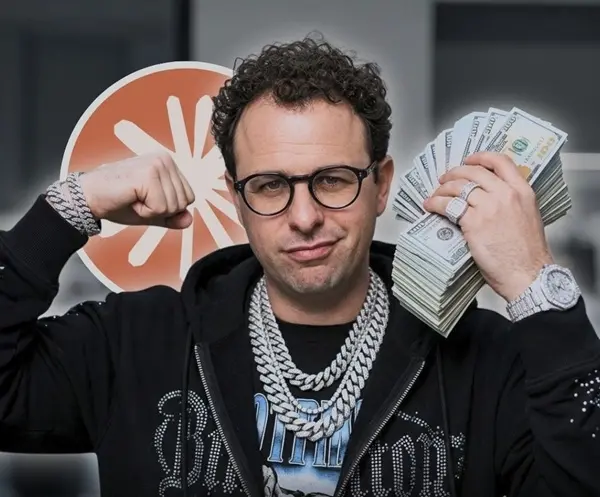
Justin Sun, founder of Tron, has filed a lawsuit in a California federal court against World Liberty Financial (WLFI), a project backed by the Trump family. Sun alleges the project threatened to burn his tokens and froze them without providing a reason. He stated he resorted to litigation after failed attempts to resolve the matter directly with the team. The dispute centers around a new WLFI governance proposal that would lock tokens for founders and advisors for two years, release them gradually over three years, and burn 10% of the tokens. Sun criticized the plan as non-transparent and harmful, arguing it would permanently freeze tokens of holders who do not explicitly accept its terms. He had previously raised concerns that 76% of the voting power came from just 10 wallets. WLFI has denied Sun's claims as "baseless allegations," stating they have evidence and are prepared for a legal battle. Despite the lawsuit, Sun reaffirmed his support for former President Trump and his administration's crypto-friendly policies.

According to Tron founder Justin Sun, he sued World Liberty Financial, which is backed by the Trump family, for reportedly threatening to burn his tokens and freezing them without providing any reason. Sun said in a Wednesday social media post that he was attempting to defend his token holder rights by filing the lawsuit in a federal court in California.

Sun added:

“I have tried in good faith to resolve this situation with the World Liberty project team without resorting to litigation. But the project team has refused my requests to unfreeze my tokens and restore my rights as a token holder. They have left me with no choice but to turn to the courts.”

Ongoing Tussle

In a prior statement, Sun implied that WLFI’s new governance plan was not transparent due to the fact that 76% of the voting tokens originated from 10 wallets, and he threatened legal action earlier this month over the extended lockup periods for the governance token.

The WLFI project team called the assertions “baseless allegations” and made the statement on X at the time. “We have the contracts. We have the evidence. We have the truth. See you in court pal.”

Meanwhile, Sun attacked a WLFI governance plan on April 15 that would lock the tokens of founders, team members, and advisers for two years, release them progressively over the following three years, and finally burn 10% of the tokens when the proposal expires.

According to WLFI, holders who reject the revised timetable remain locked under the current conditions indefinitely. According to Sun, the proposal will be detrimental to the community if it is approved since token holders who do not explicitly agree to its conditions would have their tokens frozen eternally. These requirements include a mandate to permanently burn 10% of all advisor tokens. Sun said on X that his opinions on Trump and his government remain unchanged despite the litigation.

Highlighted Crypto News Today:

Umbra Shuts Front-End After Hackers Funnel Stolen Crypto Through Protocol

TagsAltcoinBlockchain

Domande pertinenti

QWhy did Justin Sun sue World Liberty Financial?

AJustin Sun sued World Liberty Financial for reportedly threatening to burn his tokens and freezing them without providing any reason, in an attempt to defend his token holder rights.

QWhere did Justin Sun file the lawsuit against World Liberty Financial?

AHe filed the lawsuit in a federal court in California.

QWhat was Justin Sun's main criticism of WLFI's governance plan?

ASun criticized the plan for its lack of transparency, noting that 76% of the voting tokens came from just 10 wallets, and opposed the extended lockup periods and the clause to burn 10% of tokens.

QHow did the WLFI project team respond to Justin Sun's allegations?

AThe WLFI project team called Sun's assertions 'baseless allegations' and stated they have contracts and evidence to support their case, saying 'See you in court pal.'

QWhat are the consequences for token holders who reject WLFI's revised timetable according to the article?

AHolders who reject the revised timetable remain locked under the current conditions indefinitely, and those who do not explicitly agree to the new conditions risk having their tokens frozen eternally.

Letture associate

Anthropic's IPO Launch: Commercial Miracle or Valuation Bubble?

Anthropic has confidentially filed for an IPO, led by Morgan Stanley and Goldman Sachs, potentially going public by October. Following its latest $650 billion funding round, its pre-IPO valuation stands at $965 billion, with projections reaching up to $2 trillion at listing, which would make it the highest-valued private company ever. The article, written by Fu Sheng, addresses skepticism that this represents an AI bubble akin to the 2000 dot-com crash. It argues the current situation differs fundamentally. Unlike the internet bubble era, which relied on speculative narratives with little revenue, Anthropic's valuation is backed by unprecedented, measurable financial performance. Key data points include: * **Revenue Growth:** ARR skyrocketed from $10 billion in early 2025 to $470 billion by May 2026, targeting $100 billion by year-end—a growth curve unmatched in business history. * **Profitability:** It achieved operating profitability in Q2 2026 with an estimated $5.6 billion profit. * **Efficiency:** With ~3,000 employees and ~$470 billion ARR, its revenue per employee exceeds $10 million. Products like Claude Code, launched less than a year ago, already generate $25 billion in annualized revenue. * **Enterprise Adoption:** It boasts a strong enterprise client base, with 8 of the Fortune 10 and over 1,000 large firms spending over $1 million annually on Claude. The valuation is framed using a traditional SaaS model (e.g., a 10x Price-to-Sales multiple on $100 billion revenue). The author contends the core question for analysts has shifted from "How big could this be?" to "How much is it earning and will earn next quarter?" The discussion extends beyond Anthropic to a broader paradigm shift: the transition from a "carbon-based" to a "silicon-based" economy. Companies are increasingly prioritizing investment in compute and AI capabilities over human resources, as these directly scale productivity and competitive advantage. Anthropic's IPO is thus positioned not just as a corporate milestone, but as a price anchor for this new economic era.

链捕手2 h fa

Anthropic's IPO Launch: Commercial Miracle or Valuation Bubble?

链捕手2 h fa

Near Returns to the AI Stage: Transformation into a Public Chain Due to 'Payroll Difficulties,' Agent and Privacy Emerge as New Growth Narratives

NEAR Returns to AI Origins: From Payroll Struggles to Blockchain, Now Focusing on AI Agents and Privacy NEAR Protocol's journey began not with grand blockchain ambitions, but from a practical hurdle: its AI startup founders, including Transformer paper co-author Illia Polosukhin, couldn't efficiently pay international developers in 2017. This led them to pivot and build a high-performance, scalable blockchain. After years navigating various crypto narratives like sharding and cross-chain interoperability, NEAR is now leveraging its AI roots to re-enter the AI arena. A key driver is its "NEAR Intents" layer, which abstracts complex cross-chain transactions. Users simply state their goal (e.g., swap BTC for ETH), and a solver network finds the optimal route. This system has processed over $20B in cross-chain volume, generating significant fee revenue. A major growth area is private transactions via "Confidential Intents/Swaps," which hide trade details until settlement to protect against MEV and front-running. Remarkably, private swaps recently accounted for over 40% of NEAR's transaction volume, highlighting strong demand but also potential regulatory scrutiny. With its AI-founder pedigree, NEAR is positioning itself at the intersection of blockchain, AI agents, and privacy, aiming to become infrastructure for the emerging agent economy while navigating the challenges of its rapid adoption.

marsbit4 h fa

Near Returns to the AI Stage: Transformation into a Public Chain Due to 'Payroll Difficulties,' Agent and Privacy Emerge as New Growth Narratives

marsbit4 h fa

Trading

Spot
Futures

Articoli Popolari

Come comprare SUN

Benvenuto in HTX.com! Abbiamo reso l'acquisto di SUN (SUN) semplice e conveniente. Segui la nostra guida passo passo per intraprendere il tuo viaggio nel mondo delle criptovalute.Step 1: Crea il tuo Account HTXUsa la tua email o numero di telefono per registrarti il tuo account gratuito su HTX. Vivi un'esperienza facile e sblocca tutte le funzionalità,Crea il mio accountStep 2: Vai in Acquista crypto e seleziona il tuo metodo di pagamentoCarta di credito/debito: utilizza la tua Visa o Mastercard per acquistare immediatamente SUNSUN.Bilancio: Usa i fondi dal bilancio del tuo account HTX per fare trading senza problemi.Terze parti: abbiamo aggiunto metodi di pagamento molto utilizzati come Google Pay e Apple Pay per maggiore comodità.P2P: Fai trading direttamente con altri utenti HTX.Over-the-Counter (OTC): Offriamo servizi su misura e tassi di cambio competitivi per i trader.Step 3: Conserva SUN (SUN)Dopo aver acquistato SUN (SUN), conserva nel tuo account HTX. In alternativa, puoi inviare tramite trasferimento blockchain o scambiare per altre criptovalute.Step 4: Scambia SUN (SUN)Scambia facilmente SUN (SUN) nel mercato spot di HTX. Accedi al tuo account, seleziona la tua coppia di trading, esegui le tue operazioni e monitora in tempo reale. Offriamo un'esperienza user-friendly sia per chi ha appena iniziato che per i trader più esperti.

863 Totale visualizzazioniPubblicato il 2024.12.12Aggiornato il 2025.03.21

Come comprare SUN

Discussioni

Benvenuto nella Community HTX. Qui puoi rimanere informato sugli ultimi sviluppi della piattaforma e accedere ad approfondimenti esperti sul mercato. Le opinioni degli utenti sul prezzo di SUN SUN sono presentate come di seguito.

活动图片