JST Embarks on Its Second Buyback and Burn: Cumulative 10.96% of Total Supply Destroyed, Accelerating Entry into a New Era of Value Growth

marsbitPubblicato 2026-01-16Pubblicato ultima volta 2026-01-16

Introduzione

JST, the token of the JUST ecosystem, has completed its second major buyback and burn event on January 15, 2026, permanently removing 525 million JST (5.3% of total supply) worth over $21 million. Combined with the first burn, a total of 10.96% of JST's supply has been destroyed, accelerating its deflationary trajectory and reinforcing its value proposition. The buyback was funded by $10.19 million from JustLend DAO's Q4 2025 net profits and $10.34 million from accumulated reserve earnings, demonstrating the ecosystem's strong profitability and financial health. Key drivers include JustLend DAO's robust performance, with Total Value Locked (TVL) exceeding $7.08 billion, innovative products like sTRX (with over 9.3 billion TRX staked), and the widely adopted GasFree smart wallet, which has facilitated over $46 billion in transactions and saved users $36.25 million in fees. Additionally, growth from the USDD decentralized stablecoin ecosystem, which recently surpassed $1 billion in TVL, contributed significant incremental revenue. This burn signifies a fundamental shift for JST from a utility governance token to a yield-backed asset, directly tethering its value to the ecosystem's cash flow. The reduced supply increases scarcity, enhances per-token governance power for holders, and establishes a sustainable, transparent deflation model for DeFi. With a market cap surpassing $400 million and growing trading volume, JST is positioned for continued value appreciation driven by r...

On January 15, 2026, the JST token officially completed its second large-scale buyback and burn. This burn action not only demonstrates the project's firm commitment to its deflationary mechanism but also showcases the robust profitability and financial health of the JUST ecosystem to the entire cryptocurrency market with the destruction of 525,000,000 JST (5.3% of the total supply).

According to the JustLend DAO official announcement, the estimated value corresponding to this burn exceeds 21 million US dollars. Combined with the amount burned in the first round, the cumulative number of JST tokens burned has reached 1,084,890,753, accounting for 10.96% of the total supply. This means that in less than three months, JST has permanently removed over one-tenth of its total supply, a remarkable pace of deflation.

From a broader perspective, this burn marks a fundamental evolution in JST's value narrative. It is transitioning from a governance token to an equity asset anchored to the growth of the ecosystem's cash flow. This process not only enhances the scarcity and value foundation of the JST token but also provides a clear, practical path for the decentralized finance (DeFi) sector—one driven by real yield to fuel token value—demonstrating a transparent and sustainable new paradigm of deflation.

Strong Performance of JustLend DAO Ecosystem Forges the Financial Cornerstone for Large-Scale Buyback

Such a large-scale buyback and burn necessarily requires a solid financial foundation. The announcement clearly reveals the dual pillars of the funding source: $10,192,875 came from JustLend DAO's net profit in the fourth quarter of 2025, while another $10,340,249 originated from the project's accumulated stock of reserve earnings. These figures themselves are the most powerful proof of performance; they collectively point to a core fact: the JustLend DAO ecosystem not only possesses strong immediate profitability but also boasts a robust financial structure and sustainable cash flow, which form the solid foundation supporting its commitment to buybacks and its deflation strategy.

A deeper analysis of JustLend DAO's performance in Q4 2025 reveals clear growth trajectories. Firstly, as the flagship lending protocol of the JUST ecosystem, JustLend DAO benefits from the continuous improvement of the TRON infrastructure. Its Total Value Locked (TVL) broke through the $7.08 billion mark in the fourth quarter and has long been ranked among the top three in the lending market, with lending activity in its SBM market also climbing to a new cycle high.

It is worth noting that the $10,340,249 in stock earnings, which formed an important part of this buyback fund, can be traced back to the earnings from the reserve capital deposited in the SBM USDT market during the first JST buyback. The appreciation process of this capital is itself the most direct proof of the SBM market's strong profitability. It showcases JustLend DAO's sophisticated financial operation model: strategically reinvesting ecosystem profits for "self-regeneration" within the protocol, thereby providing an endogenous and sustainable source of funding for subsequent value returns.

On this basis, JustLend DAO's revenue structure is also showing a trend of diversification. While the traditional lending market, its core business, maintains steady growth, JustLend DAO has innovatively built a product matrix including sTRX (Staked TRX) and Energy Rental, greatly expanding the boundaries and depth of its value capture.

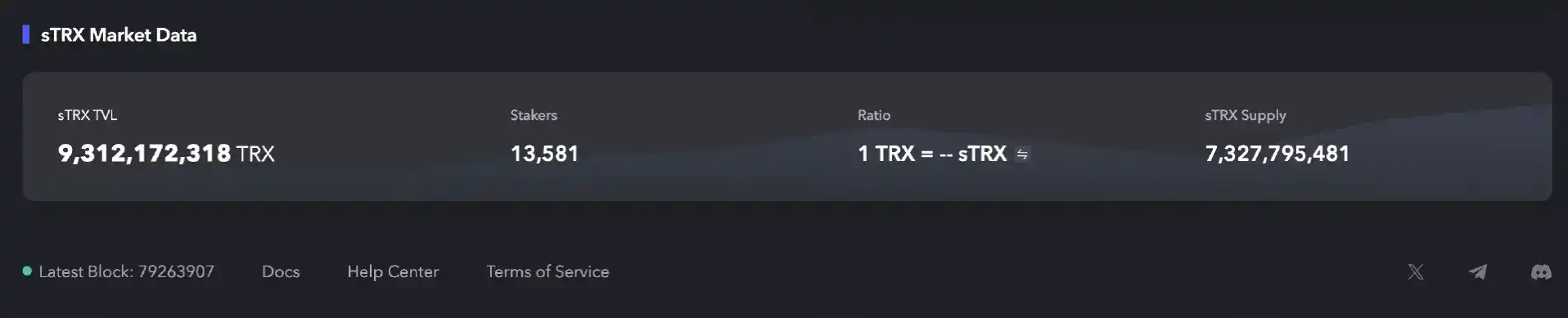
Among these, the sTRX service allows users to stake TRX to earn rewards while still flexibly participating in other DeFi activities. This innovative design significantly improves capital efficiency and user stickiness. As of January 15, the amount of TRX staked on the platform has surpassed 9.3 billion tokens. This staggering figure not only reflects the community's high recognition of the sTRX product but also generates considerable and sustainable service revenue.
Meanwhile, the "Energy Rental" service, designed to reduce users' on-chain operation costs, has also demonstrated strong market appeal through active rate optimization. Since September 2025, the base rate for this service was significantly reduced from 15% to a more competitive 8%. The rate optimization directly stimulated market demand and transaction frequency, thereby creating steady incremental revenue for the protocol through more active leasing business.

While the core product matrix continues to perform strongly, JustLend DAO, focusing on lowering the participation threshold for the general user, innovatively launched the GasFree smart wallet in March 2025. This feature彻底打破了用户必须预先持有原生代币(TRX)以支付手续费这一长期困扰新手用户的壁垒 (completely breaks down the long-standing barrier for new users of having to hold the native token (TRX) in advance to pay transaction fees), allowing users to directly deduct and pay the required network fees from the token assets they are transferring (e.g., USDT). This design not only achieves ultimate operational convenience but also fundamentally broadens the accessibility of blockchain finance.

To accelerate the adoption of this innovative feature, JustLend DAO simultaneously launched a highly attractive 90% transfer fee subsidy campaign. With this support, users only need to pay an extremely low fee of approximately 1 USDT when using the GasFree function for USDT transfers. This combined strategy quickly ignited market demand. As of January 15, the total transaction volume driven by the GasFree smart wallet has exceeded $46 billion. This astonishing scale not only validates the market's strong desire for a frictionless transaction experience but has also directly saved users a cumulative total of over $36.25 million in network fee costs. This innovation, by significantly reducing actual usage costs and cognitive barriers, has introduced massive incremental users and capital flow into the ecosystem, constituting another powerful growth pole for the platform's network effects and revenue potential.

Meanwhile, another funding channel in the buyback and burn plan, namely the incremental revenue from the USDD multi-chain ecosystem (the portion exceeding $10 million), also constitutes a significant source of value. USDD, as the core decentralized stablecoin of the TRON ecosystem, has seen remarkable results from its multi-chain expansion strategy. It has been successfully deployed on mainstream public chains like Ethereum and BNB Chain, broadening its application scenarios and user base.

Its ecosystem value recently achieved a milestone breakthrough. On January 14, USDD's TVL historically surpassed the $1 billion mark. This means that in less than two months, USDD's TVL规模实现了惊人的100%增长 (achieved an astonishing 100% growth), its expansion speed and market acceptance fully confirming the strong momentum and deep asset appeal of this stablecoin within the multi-chain ecosystem. The rapid growth of its TVL and the continuous prosperity of its ecosystem significantly enhance the potential scale of this funding channel, providing an anticipated source of value for JST's subsequent quarterly buyback and burn plans.

Through deep integration with various DeFi protocols, USDD not only consolidates its peg stability but also creates continuous value inflow for the entire ecosystem. The inclusion of USDD ecosystem's excess income in the JST buyback and burn plan builds a value闭环 (closed loop) of "stablecoin + lending protocol + governance token". In this model, the expansion and prosperity of USDD and JustLend DAO directly power the deflation of JST, while the increase in JST's value in turn enhances the attractiveness and cohesion of the entire TRON DeFi ecosystem, creating a powerful internal synergy and value feedback effect.

Deepening Deflation Mechanism: Revolutionary Reshaping of JST's Value Foundation

In summary, the significance of this buyback and burn早已超越了单纯的价格支撑范畴 (has long surpassed the scope of mere price support); it is triggering a series of profound structural changes. Most fundamentally, it has completed the reshaping of JST's value support logic. JST is no longer merely a "utility token" for paying network fees or participating in governance votes; it has evolved into an "equity asset" directly anchored to the cash flow performance of JustLend DAO, USDD, and associated ecosystems.
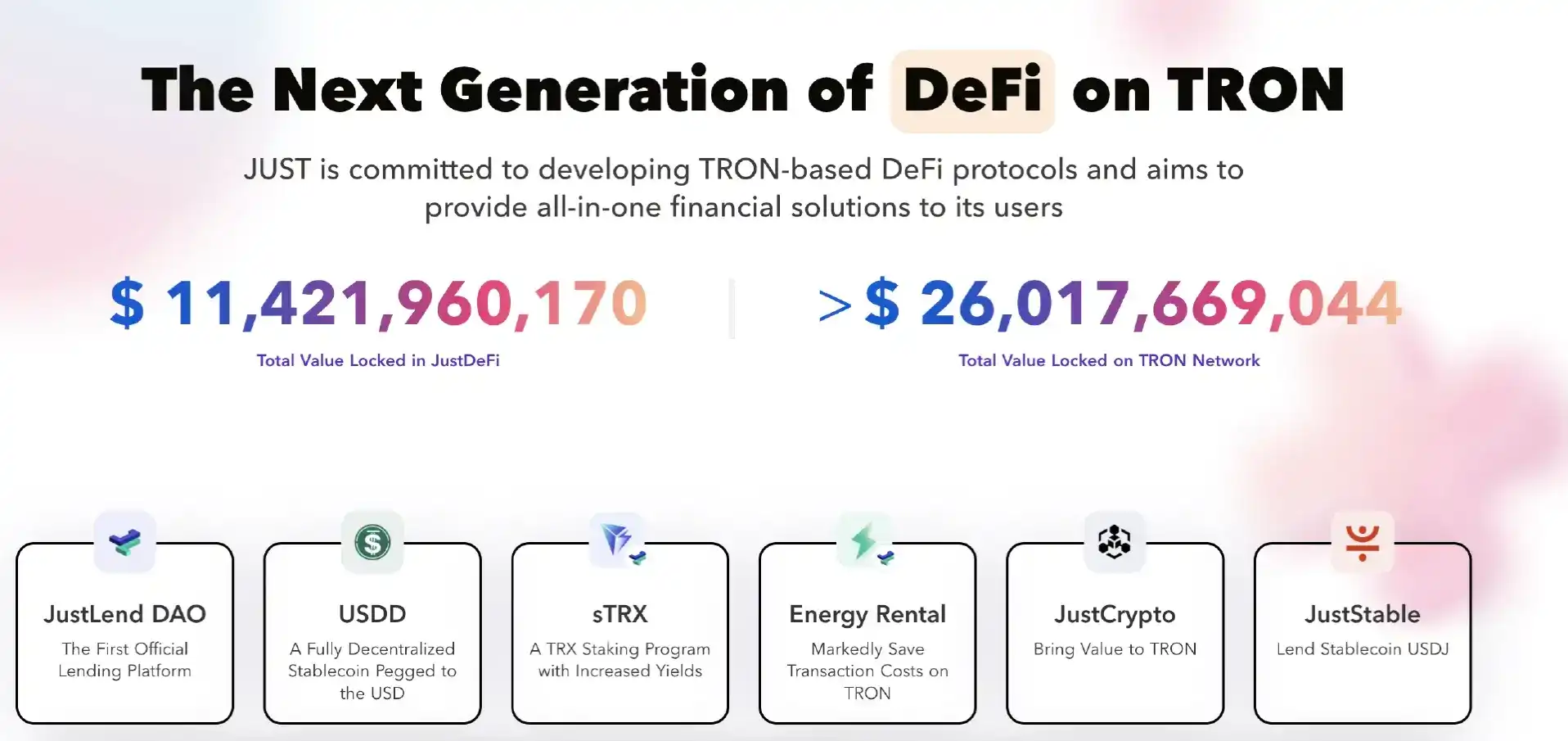
Through the buyback and burn mechanism, the profit growth of the ecosystem is continuously injected into the value foundation of the JST token, making holding JST equivalent to holding an equity certificate that shares in the future profit growth of the ecosystem. On January 8, CoinMarketCap data showed that JST's market cap historically broke through the $400 million mark. This is not just a numerical leap but substantial market recognition of its new positioning. Accompanying the rising market cap was increased activity of funds. On January 8, its 24-hour trading volume significantly increased by 21.92%, reaching $31.49 million, and its price had also risen 10.82% steadily over the past month, with a daily increase of 3.1%.

The synchronous expansion of trading volume and market cap at key junctures is not偶然的市场波动 (an accidental market fluctuation) but a clear "vote of confidence" from the capital markets in response to the improving fundamentals of the JUST ecosystem, particularly the profitability and value return mechanism demonstrated by the buyback and burn.

Secondly, the JST buyback and burn also带来治理权力的实质性增值 (brings substantial增值 to governance power). As the total token supply is irreversibly reduced, the governance weight in the protocol represented by each remaining JST in the market will increase accordingly. This means that long-term holders not only enjoy the economic benefits of value appreciation but also see their voice in key community decisions (such as parameter adjustments, new product launches, treasury fund usage, etc.) amplified simultaneously. This design deeply binds the interests of core community members to the long-term success of the protocol,极大地增强了社区的稳定性和参与感 (greatly enhancing community stability and sense of participation).

From a broader industry perspective, JST's buyback and burn practice provides a clear and借鉴的新范式 (new paradigm to emulate) for token economics in the DeFi field. Removing 10.96% of the total supply through two rounds of burns in an extremely short time not only demonstrates efficient execution but, more profoundly, deeply binds the protocol's financial success to the interests of token holders, thereby establishing a良性循环典范 (exemplary virtuous cycle) of "value creation - value return".

This model fundamentally reverses the old logic where token value relied on speculative narratives,转向由协议基本面现金流驱动的可持续路径 (turning towards a sustainable path driven by the protocol's fundamental cash flow), providing a solid and credible case study for the industry on how to build economic models with substantial value support.

Looking ahead, with JST buyback and burn becoming a quarterly routine, a clear, predictable deflation path has been laid out. The scarcity of JST will be a certain narrative that strengthens over time. Each quarterly report disclosure and the subsequent burn will serve as a catalyst for reassessing its intrinsic value. This burn is not an endpoint but the beginning of a more恢弘的价值累积篇章 grand chapter of value accumulation). A value revolution, supported by ecosystem profitability and driven by product synergy, has already pressed the accelerator.


Crypto di tendenza

Domande pertinenti

QWhat was the total amount of JST tokens burned in the second buyback and what percentage of the total supply did it represent?

A525,000,000 JST tokens were burned, representing 5.3% of the total supply.

QWhat is the cumulative amount and percentage of JST tokens burned so far through the two buyback events?

AThe cumulative amount burned is 1,084,890,753 JST tokens, which is 10.96% of the total supply.

QWhat were the two main financial pillars that funded the buyback and burn initiative?

AThe funding came from JustLend DAO's Q4 2025 net revenue of $10,192,875 and a reserve of accumulated earnings of $10,340,249.

QWhat innovative product significantly lowered the barrier to entry for new users by eliminating the need to hold TRX for gas fees?

AThe GasFree Smart Wallet, which allows users to pay network fees directly from the tokens being transferred (like USDT).

QWhat major milestone did the USDD ecosystem achieve recently, and what does it signify for the JST buyback mechanism?

AThe USDD ecosystem's Total Value Locked (TVL) historically surpassed $1 billion, signifying rapid growth and providing a substantial, predictable value source for future JST buyback and burn plans.

Letture associate

Dialogue with Jia Hang | Looking Back at Two Decades of Chinese Payment Going Global

**Summary: A Conversation with Jia Hang on Two Decades of China's Payment Globalization** Jia Hang, a veteran with over twenty years in payments, reflects on China's attempts to build a global payment network through three key phases: UnionPay (card networks), Alipay+ (digital wallets), and now, stablecoins. His journey began at UnionPay International, aiming to establish China's card network abroad. While successful in following Chinese tourists ("where Chinese go, UnionPay goes"), it struggled to achieve true global scale. The core lesson: card networks like Visa/Mastercard's unassailable advantage isn't just technical standards, but their deeply entrenched **governance and profit-sharing models** that create powerful network effects. Competing as the "same species" is nearly impossible. At Ant Group, he led Alipay+, a strategy to bypass card networks by interconnecting local e-wallets worldwide. While innovative, it faced a similar ceiling. Mobile QR payments and card swipes were essentially **the same species competing for the same pie**, lacking a disruptive value proposition for users or a sustainable new incentive model to replace the card networks' established flywheel. Today, at Singapore's DCS, Jia focuses on stablecoin-based payments. He argues stablecoins represent a fundamental shift. They are not competing with Visa for consumer payments but challenging the **traditional banking and account system for value movement**. Products like "U Cards" (stablecoin-linked payment cards) are transitional, leveraging existing card networks for acceptance while building new rails. The real potential lies in stablecoins enabling seamless, low-cost global value transfer, potentially reorganizing the financial infrastructure around **accounts rather than cards**. Jia believes stablecoin adoption for local retail payments, cross-border transactions, and as high-yield savings vehicles is becoming irreversible. This could gradually reduce reliance on traditional fiat channels, especially in regions with weak currencies or capital controls. The quest for the "next global payment network" continues, now centered on whether stablecoins can successfully bridge Web2 and Web3, establish new governance, and create compelling user value beyond mere cost reduction.

marsbit6 min fa

Dialogue with Jia Hang | Looking Back at Two Decades of Chinese Payment Going Global

marsbit6 min fa

Circle's Stock Price Plunges 76%, Hong Kong Dollar Stablecoin Set to Launch Within Two Weeks

Circle's stock price has plunged approximately 76% from its 2023 peak, reflecting a major market revaluation. Despite this, Circle President Heath Tarbert emphasized the company's focus on long-term execution and its dominant position with USDC's $73 billion circulation across 34 blockchains. The competitive landscape is intensifying. A new consortium-backed stablecoin, Open USD, is attempting to challenge incumbents by sharing reserve yields with partners. More significantly, Visa's new stablecoin platform, initially supporting Open USD while also being compatible with USDC, could erode Circle's network effects. In response, Circle is expanding into real-world payments through partnerships like the one with Japan's JCB. Separately, Tether (USDT) faces a two-year compliance window under new U.S. regulations, requiring it to adjust its reserve composition away from assets like Bitcoin and loans towards cash and U.S. Treasuries. Meanwhile, in Hong Kong, Standard Chartered-backed fintech firm Dian Dian is poised to launch a licensed HKD-pegged stablecoin (HKDAP), moving the industry into a phase where the real test is integrating licensed stablecoins into actual payment flows and corporate treasury systems. The sharp decline in Circle's stock underscores a broader shift: the stablecoin market is moving from a winner-takes-all dynamic to a multi-player competitive arena where execution, compliance, and real-world utility are becoming paramount.

marsbit6 min fa

Circle's Stock Price Plunges 76%, Hong Kong Dollar Stablecoin Set to Launch Within Two Weeks

marsbit6 min fa

Amidst Capital's Encirclement, Decentralization is the Sole Defense for Public Blockchains

In a landscape dominated by power and profit motives, the author argues that decentralization is not merely one desirable feature among many in blockchain design—it is the singular, non-negotiable defense against corporate and capital capture. The article adopts a Machiavellian, realist perspective on human institutions, positing that businesses will inevitably attempt to co-opt any valuable network to protect their profits and dominance. While external attacks like 51% forks are often discussed, the greater existential risk is internal capture—the gradual erosion of a protocol’s neutrality by vested interests, as seen historically with platforms like Visa and Google. The piece critiques permissioned chains, highly centralized “permissionless” layer-1s, and layer-2s without sufficient decentralization (e.g., single sequencers) as inherently vulnerable. These compromised systems, promoted by established financial players, are framed as delaying tactics to stifle truly open networks that threaten existing high-fee, inefficient business models. Real-world examples, such as closed enterprise consortiums that exclude competitors, illustrate how such systems cement oligopolies rather than foster innovation. The author concludes that while decentralized protocols like Ethereum are imperfect and costly to operate, they represent the only viable long-term equilibrium. In a market where value naturally flows to the most secure and neutral settlement layer, only maximally decentralized public blockchains can resist being subsumed by capital and powerful incumbents.

Foresight News16 min fa

Amidst Capital's Encirclement, Decentralization is the Sole Defense for Public Blockchains

Foresight News16 min fa

Who Decides the Rules of Bitcoin? BIP-110 Ignites Governance Debate

Bitcoin's governance is once again at the center of a heated debate, this time ignited by BIP-110, the "Reduced Data Temporary Softfork." This proposal aims to curb non-monetary data (like inscriptions and Runes) by introducing seven new consensus-layer restrictions over a year, such as limiting new output scripts to 34 bytes and restoring the OP_RETURN cap to 83 bytes. The controversy stems from BIP-110's fundamental shift: it moves the battle against "spam" from node relay and miner policies to the consensus layer, rendering currently valid transactions invalid. Supporters, arguing that default policy governance has failed (highlighted by Bitcoin Core v30's relaxation of OP_RETURN limits), see this as necessary to protect node resources and Bitcoin's monetary focus. Opponents, led by figures like Michael Saylor and Adam Back, warn it dangerously centralizes governance. Saylor listed 110 reasons against it, criticizing its low 55% miner activation threshold and potential for chain splits. Back emphasized Bitcoin's "permissionless" ethos, arguing no single group should impose value judgments via consensus rules. Further complicating matters, technical critiques suggest BIP-110 may be technically circumventable, and a "BlockSlop" vulnerability in its upgrade path poses a consensus risk. The debate has drawn in diverse stakeholders: miners (with pools like Ocean signaling support and Foundry polling clients), node operators (like Bitcoin Knots), and new players like corporate treasury holder MicroStrategy (Saylor), whose market influence adds a novel dimension. Ultimately, BIP-110 acts as a governance stress test, exposing the unresolved question: who decides Bitcoin's rules? It pits the authority of miners, node operators, developers, and capital holders against each other, with each side claiming to defend Bitcoin's core principles of neutrality and security.

marsbit33 min fa

Who Decides the Rules of Bitcoin? BIP-110 Ignites Governance Debate

marsbit33 min fa

Who Decides Bitcoin's Rules? BIP-110 Ignites Governance Debate

Title: Who Decides Bitcoin's Rules? BIP-110 Ignites Governance Debate A new technical proposal, BIP-110 (Reduced Data Temporary Softfork), has sparked a fundamental governance debate within the Bitcoin community. It aims to impose new consensus rules for one year to limit non-financial data (like inscriptions and Runes) on-chain, moving beyond simple node and miner policy filters to invalidate currently valid transactions. Supporters argue that default policies have failed due to workarounds, necessitating consensus-layer changes to protect Bitcoin's core monetary function from data spam. Critics, including Michael Saylor and Adam Back, contend this dangerously centralizes judgment, undermines permissionlessness, and sets a risky governance precedent. They advocate for market-based solutions like fees or Layer 2s instead. The debate exposes deeper tensions: miners are divided on activation; node operators assert their sovereignty; Bitcoin Core developers influence defaults without direct accountability; and large corporate holders like MicroStrategy now wield narrative influence. Technically, BIP-110 may not fully block data and carries a disclosed consensus bug risk. Ultimately, BIP-110 acts as a stress test, forcing the community to confront the unresolved question: who legitimately decides what Bitcoin is and how it evolves, amidst competing claims from miners, nodes, developers, and capital holders.

链捕手45 min fa

Who Decides Bitcoin's Rules? BIP-110 Ignites Governance Debate

链捕手45 min fa

Trading

Spot

Articoli Popolari

Come comprare JST

Benvenuto in HTX.com! Abbiamo reso l'acquisto di JUST (JST) semplice e conveniente. Segui la nostra guida passo passo per intraprendere il tuo viaggio nel mondo delle criptovalute.Step 1: Crea il tuo Account HTXUsa la tua email o numero di telefono per registrarti il tuo account gratuito su HTX. Vivi un'esperienza facile e sblocca tutte le funzionalità,Crea il mio accountStep 2: Vai in Acquista crypto e seleziona il tuo metodo di pagamentoCarta di credito/debito: utilizza la tua Visa o Mastercard per acquistare immediatamente JUSTJST.Bilancio: Usa i fondi dal bilancio del tuo account HTX per fare trading senza problemi.Terze parti: abbiamo aggiunto metodi di pagamento molto utilizzati come Google Pay e Apple Pay per maggiore comodità.P2P: Fai trading direttamente con altri utenti HTX.Over-the-Counter (OTC): Offriamo servizi su misura e tassi di cambio competitivi per i trader.Step 3: Conserva JUST (JST)Dopo aver acquistato JUST (JST), conserva nel tuo account HTX. In alternativa, puoi inviare tramite trasferimento blockchain o scambiare per altre criptovalute.Step 4: Scambia JUST (JST)Scambia facilmente JUST (JST) nel mercato spot di HTX. Accedi al tuo account, seleziona la tua coppia di trading, esegui le tue operazioni e monitora in tempo reale. Offriamo un'esperienza user-friendly sia per chi ha appena iniziato che per i trader più esperti.

414 Totale visualizzazioniPubblicato il 2024.12.11Aggiornato il 2025.03.21

Come comprare JST

Discussioni

Benvenuto nella Community HTX. Qui puoi rimanere informato sugli ultimi sviluppi della piattaforma e accedere ad approfondimenti esperti sul mercato. Le opinioni degli utenti sul prezzo di JST JST sono presentate come di seguito.

活动图片