Japan’s Largest Banks Eye FY2026 Stablecoin Rollout Amid Regulatory Push

bitcoinistPubblicato 2026-06-11Pubblicato ultima volta 2026-06-11

Introduzione

Japan's three largest banks—MUFG Bank, Sumitomo Mitsui Banking Corp., and Mizuho Bank—are advancing plans to launch a jointly-issued yen-pegged stablecoin by the end of fiscal year 2026 (March 31, 2027). They have established a voluntary council to develop the operational framework, governance, and issuance infrastructure for the token, which will be issued under a trust agreement. The move aligns with Japan's regulatory push to expand its yen-based digital asset market, following 2022 amendments to the Payment Services Act that restrict stablecoin issuance to licensed entities like banks and trust companies. The banks, which began exploring this initiative in late 2025, aim to support a wide range of use cases and are considering future collaborations with other financial institutions. This development occurs alongside other yen-stablecoin launches and recent political proposals to promote such tokens for settlement in Asia.

As Japanese financial authorities push to expand the yen-based digital asset market, three megabanks have advanced their joint stablecoin plans by establishing a council to develop the framework for issuing the token this fiscal year.

Megabanks Advance Joint Stablecoin Plans

The three largest Japanese banks, Mitsubishi UFJ Financial Group (MUFG) Bank, Sumitomo Mitsui Banking Corp., and Mizuho Bank, are preparing to launch their jointly issued stablecoin by the end of the 2026 fiscal year (FY2026).

In a Wednesday statement, the megabanks revealed their plan to conduct commercial transactions during FY2026 using a stablecoin issued under a trust agreement, where the three banks will serve as joint settlors and a trust bank or similar entity will act as trustee.

The banks announced they have signed a memorandum of understanding (MoU) to form a joint voluntary council to review operational frameworks, governance, and related issues to support the token’s practical implementation.

“The Council will serve as a framework for examining the potential development of an issuance infrastructure related to the Subject Stablecoin, as well as the design of systems, schemes, and governance structures,” the statement read.

The three banks will also accelerate their efforts to support the potential use of these tokens across a wide range of use cases, aiming to launch live transactions of the joint stablecoin before March 31, 2027, when the current fiscal year ends. In addition, the council will also consider collaborations with financial institutions and other relevant stakeholders that may join the project in the future.

Notably, the megabanks, which serve over 300,000 companies combined, began exploring the launch of a joint stablecoin in late 2025, with initial reports suggesting plans to debut the token within FY2025.

In November, the banks announced a pilot project under the Financial Services Agency’s (FSA) Payment Innovation Project. The pilot used the infrastructure of Tokyo-based fintech company Progmat and aimed to gather “practical knowledge” on the joint issuance of a stablecoin and advanced cross-border payments.

Japan’s Regulatory Push For Yen-Backed Tokens

In 2022, Japanese authorities amended the Payment Services Act to establish a legal framework for stablecoins. Under the new regime, only licensed money transfer companies, trust companies, and banks are allowed to issue yen-denominated tokens.

Tokyo fintech company JPYC launched the first yen-pegged token, JPYC, in October, backed by yen reserves, including bank deposits and government bonds. Earlier this year, SBI Holdings partnered with Startale Group for JPYSC, a trust bank-backed yen stablecoin for institutional and cross-border use cases.

Last week, Japan’s Liberal Democratic Party (LDP) called for the creation of rules for crypto exchange-traded funds (ETFs) and the promotion of yen-denominated stablecoins in the region in a new proposal to the government.

Junichi Kanda, a lawmaker on the ruling party’s panel, affirmed that the LDP pushed the government to boost the use of yen stablecoins in the region. “We urged the government to take steps to promote ​yen stablecoins for settlement in Asia in the future,” he stated.

The lawmaker also said that Japan could promote yen-based tokens and blockchain innovation next year, when the country hosts the Asian Development Bank’s annual meeting.

Meanwhile, the FSA recently expanded the Cabinet Office Ordinance to recognize certain trust-type stablecoins issued by foreign trust banks and similar entities as electronic payment instruments under the Payment Services Act.
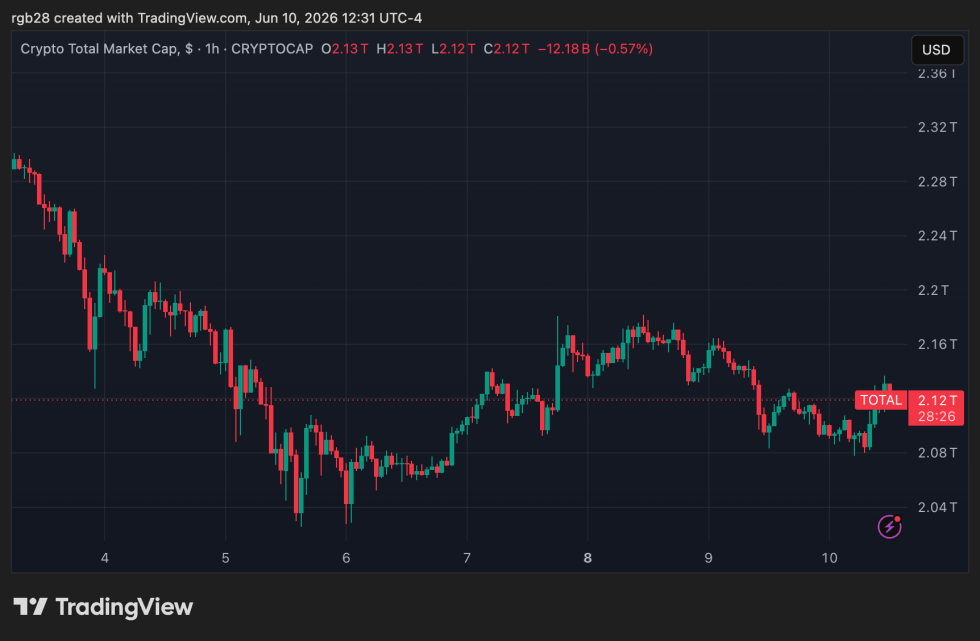
The total crypto market capitalization is at $2.12 trillion in the one-week chart. Source: TOTAL on TradingView


Crypto di tendenza

Domande pertinenti

QWhat is the target fiscal year for Japan's three megabanks to roll out their jointly issued stablecoin?

AThe target fiscal year is FY2026, aiming for launch before March 31, 2027.

QWhich three Japanese megabanks are collaborating on the joint stablecoin project?

AThe three banks are Mitsubishi UFJ Financial Group (MUFG) Bank, Sumitomo Mitsui Banking Corp., and Mizuho Bank.

QWhat recent regulatory change in Japan created a legal framework for stablecoin issuance?

AIn 2022, Japanese authorities amended the Payment Services Act to establish a legal framework, allowing only licensed money transfer companies, trust companies, and banks to issue yen-denominated stablecoins.

QWhat is the purpose of the voluntary council formed by the three megabanks?

AThe council's purpose is to examine the development of an issuance infrastructure, as well as the design of systems, schemes, and governance structures to support the practical implementation of their joint stablecoin.

QHow does Japan's ruling Liberal Democratic Party (LDP) intend to promote yen stablecoins according to the article?

AThe LDP, through a lawmaker on its panel, urged the government to promote yen stablecoins for settlement in Asia, potentially leveraging events like next year's Asian Development Bank annual meeting which Japan will host.

Letture associate

IOSG Founder: Ethereum Doesn't Need Another Leap of Technical Faith, It Needs a Musk-style Compromise

Jocy, founder of IOSG Ventures, argues that Ethereum does not need renewed technological faith but a "Musk-like compromise." The recent formation of ETHLabs—funded by major ETH holders like BitMine and Lubin—highlights a market-driven move to fill a gap left by the Ethereum Foundation (EF), signaling a loss of confidence in its decentralized, hands-off approach. The core critique contrasts Vitalik Buterin's (V) idealistic, technology-first vision with Elon Musk's pragmatic, business-driven execution. The author asserts Ethereum's current shortage is not another technical roadmap but a clear, real-world application narrative and a leader willing to engage directly with commercial realities—like Musk. Internal issues are emphasized, citing EF's management problems and talent drain. While the new decentralized model with independent nodes like ETHLabs addresses the single foundation's limitations, it risks fragmentation without cohesive direction. True cohesion, the author suggests, must come from a shared, compelling narrative around ETH's value, not just from aligned financial interests. Independence claims for new entities are seen as aspirational, needing years of transparency to build trust. The ultimate threat is not competitors like Solana, but the broader shift of attention and talent toward AI. Ethereum has a limited window—12 to 18 months—to recapture focus by delivering tangible, real-world applications. The conclusion urges V to shift from abstract ideals to grounded, pragmatic leadership. The time for this crucial pivot is running out.

marsbit1 h fa

IOSG Founder: Ethereum Doesn't Need Another Leap of Technical Faith, It Needs a Musk-style Compromise

marsbit1 h fa

Google Starts Selling TPUs, Big Tech Aims to Produce "Low-Cost Tokens" with AI Chips

Google has begun selling its proprietary TPU chips and AI computing hardware directly to third-party data centers and clients, marking a strategic shift. Previously only accessible via cloud rentals, TPUs are specialized processors designed for the matrix and tensor operations central to AI models. By combining thousands into supercomputing clusters managed by CPUs, Google achieves high-efficiency AI processing. This move enables Google’s Gemini AI to offer competitive token pricing, challenging rivals like OpenAI. It also signals a broader industry trend where AI compute is becoming a commoditized resource like electricity. While NVIDIA remains dominant with its CUDA ecosystem and high-performance GPUs, the focus is shifting from raw power to cost efficiency and system integration. Google’s approach mirrors NVIDIA’s by selling an entire ecosystem—hardware, software, and data center expertise—rather than just chips. This threatens NVIDIA’s grip on the mid-range inference market, where lower-cost, efficient solutions are increasingly demanded. Similarly, cloud providers like Huawei Cloud and Alibaba Cloud in China are developing their own AI chip ecosystems (e.g., Ascend, Zhenwu), packaging chips, clusters, and tools into full-stack solutions. They aim to reduce token costs and capture market share through integrated systems. In summary, the AI infrastructure race is evolving from a competition for the strongest chips to a contest for the most efficient and cost-effective systems. Google’s TPU sales highlight this transition, emphasizing that future success lies in delivering affordable, scalable AI compute as a foundational service.

marsbit1 h fa

Google Starts Selling TPUs, Big Tech Aims to Produce "Low-Cost Tokens" with AI Chips

marsbit1 h fa

Trading

Spot
Futures

Articoli Popolari

Come comprare PUSH

Benvenuto in HTX.com! Abbiamo reso l'acquisto di Push Protocol (PUSH) semplice e conveniente. Segui la nostra guida passo passo per intraprendere il tuo viaggio nel mondo delle criptovalute.Step 1: Crea il tuo Account HTXUsa la tua email o numero di telefono per registrarti il tuo account gratuito su HTX. Vivi un'esperienza facile e sblocca tutte le funzionalità,Crea il mio accountStep 2: Vai in Acquista crypto e seleziona il tuo metodo di pagamentoCarta di credito/debito: utilizza la tua Visa o Mastercard per acquistare immediatamente Push ProtocolPUSH.Bilancio: Usa i fondi dal bilancio del tuo account HTX per fare trading senza problemi.Terze parti: abbiamo aggiunto metodi di pagamento molto utilizzati come Google Pay e Apple Pay per maggiore comodità.P2P: Fai trading direttamente con altri utenti HTX.Over-the-Counter (OTC): Offriamo servizi su misura e tassi di cambio competitivi per i trader.Step 3: Conserva Push Protocol (PUSH)Dopo aver acquistato Push Protocol (PUSH), conserva nel tuo account HTX. In alternativa, puoi inviare tramite trasferimento blockchain o scambiare per altre criptovalute.Step 4: Scambia Push Protocol (PUSH)Scambia facilmente Push Protocol (PUSH) nel mercato spot di HTX. Accedi al tuo account, seleziona la tua coppia di trading, esegui le tue operazioni e monitora in tempo reale. Offriamo un'esperienza user-friendly sia per chi ha appena iniziato che per i trader più esperti.

538 Totale visualizzazioniPubblicato il 2024.12.13Aggiornato il 2026.06.02

Come comprare PUSH

Discussioni

Benvenuto nella Community HTX. Qui puoi rimanere informato sugli ultimi sviluppi della piattaforma e accedere ad approfondimenti esperti sul mercato. Le opinioni degli utenti sul prezzo di PUSH PUSH sono presentate come di seguito.

活动图片