Japan’s Largest Banks Eye FY2026 Stablecoin Rollout Amid Regulatory Push

bitcoinistPubblicato 2026-06-11Pubblicato ultima volta 2026-06-11

Introduzione

Japan's three largest banks—MUFG Bank, Sumitomo Mitsui Banking Corp., and Mizuho Bank—are advancing plans to launch a jointly-issued yen-pegged stablecoin by the end of fiscal year 2026 (March 31, 2027). They have established a voluntary council to develop the operational framework, governance, and issuance infrastructure for the token, which will be issued under a trust agreement. The move aligns with Japan's regulatory push to expand its yen-based digital asset market, following 2022 amendments to the Payment Services Act that restrict stablecoin issuance to licensed entities like banks and trust companies. The banks, which began exploring this initiative in late 2025, aim to support a wide range of use cases and are considering future collaborations with other financial institutions. This development occurs alongside other yen-stablecoin launches and recent political proposals to promote such tokens for settlement in Asia.

As Japanese financial authorities push to expand the yen-based digital asset market, three megabanks have advanced their joint stablecoin plans by establishing a council to develop the framework for issuing the token this fiscal year.

Megabanks Advance Joint Stablecoin Plans

The three largest Japanese banks, Mitsubishi UFJ Financial Group (MUFG) Bank, Sumitomo Mitsui Banking Corp., and Mizuho Bank, are preparing to launch their jointly issued stablecoin by the end of the 2026 fiscal year (FY2026).

In a Wednesday statement, the megabanks revealed their plan to conduct commercial transactions during FY2026 using a stablecoin issued under a trust agreement, where the three banks will serve as joint settlors and a trust bank or similar entity will act as trustee.

The banks announced they have signed a memorandum of understanding (MoU) to form a joint voluntary council to review operational frameworks, governance, and related issues to support the token’s practical implementation.

“The Council will serve as a framework for examining the potential development of an issuance infrastructure related to the Subject Stablecoin, as well as the design of systems, schemes, and governance structures,” the statement read.

The three banks will also accelerate their efforts to support the potential use of these tokens across a wide range of use cases, aiming to launch live transactions of the joint stablecoin before March 31, 2027, when the current fiscal year ends. In addition, the council will also consider collaborations with financial institutions and other relevant stakeholders that may join the project in the future.

Notably, the megabanks, which serve over 300,000 companies combined, began exploring the launch of a joint stablecoin in late 2025, with initial reports suggesting plans to debut the token within FY2025.

In November, the banks announced a pilot project under the Financial Services Agency’s (FSA) Payment Innovation Project. The pilot used the infrastructure of Tokyo-based fintech company Progmat and aimed to gather “practical knowledge” on the joint issuance of a stablecoin and advanced cross-border payments.

Japan’s Regulatory Push For Yen-Backed Tokens

In 2022, Japanese authorities amended the Payment Services Act to establish a legal framework for stablecoins. Under the new regime, only licensed money transfer companies, trust companies, and banks are allowed to issue yen-denominated tokens.

Tokyo fintech company JPYC launched the first yen-pegged token, JPYC, in October, backed by yen reserves, including bank deposits and government bonds. Earlier this year, SBI Holdings partnered with Startale Group for JPYSC, a trust bank-backed yen stablecoin for institutional and cross-border use cases.

Last week, Japan’s Liberal Democratic Party (LDP) called for the creation of rules for crypto exchange-traded funds (ETFs) and the promotion of yen-denominated stablecoins in the region in a new proposal to the government.

Junichi Kanda, a lawmaker on the ruling party’s panel, affirmed that the LDP pushed the government to boost the use of yen stablecoins in the region. “We urged the government to take steps to promote ​yen stablecoins for settlement in Asia in the future,” he stated.

The lawmaker also said that Japan could promote yen-based tokens and blockchain innovation next year, when the country hosts the Asian Development Bank’s annual meeting.

Meanwhile, the FSA recently expanded the Cabinet Office Ordinance to recognize certain trust-type stablecoins issued by foreign trust banks and similar entities as electronic payment instruments under the Payment Services Act.
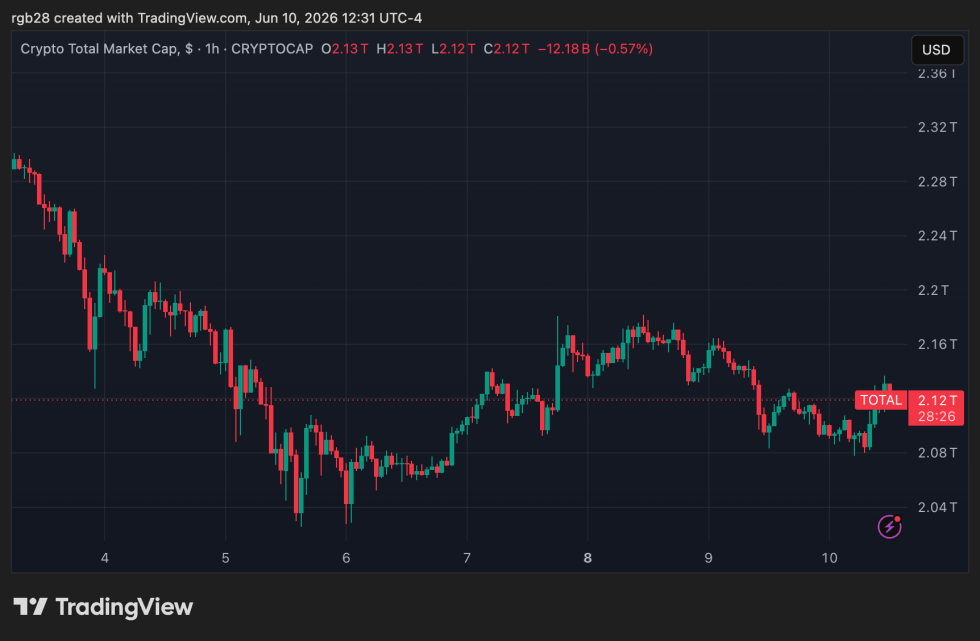
The total crypto market capitalization is at $2.12 trillion in the one-week chart. Source: TOTAL on TradingView


Crypto di tendenza

Domande pertinenti

QWhat is the target fiscal year for Japan's three megabanks to roll out their jointly issued stablecoin?

AThe target fiscal year is FY2026, aiming for launch before March 31, 2027.

QWhich three Japanese megabanks are collaborating on the joint stablecoin project?

AThe three banks are Mitsubishi UFJ Financial Group (MUFG) Bank, Sumitomo Mitsui Banking Corp., and Mizuho Bank.

QWhat recent regulatory change in Japan created a legal framework for stablecoin issuance?

AIn 2022, Japanese authorities amended the Payment Services Act to establish a legal framework, allowing only licensed money transfer companies, trust companies, and banks to issue yen-denominated stablecoins.

QWhat is the purpose of the voluntary council formed by the three megabanks?

AThe council's purpose is to examine the development of an issuance infrastructure, as well as the design of systems, schemes, and governance structures to support the practical implementation of their joint stablecoin.

QHow does Japan's ruling Liberal Democratic Party (LDP) intend to promote yen stablecoins according to the article?

AThe LDP, through a lawmaker on its panel, urged the government to promote yen stablecoins for settlement in Asia, potentially leveraging events like next year's Asian Development Bank annual meeting which Japan will host.

Letture associate

Podcast Notes | Conversation with GSR Asset Management Head: To Determine if This Crypto Rally is Real, Just Watch the Lending Rates on Aave

Podcast Summary: Dialogue with GSR's Head of Asset Management: To Determine if This Crypto Rally is Real, Just Check Lending Rates on Aave Andy Baehr, Managing Director of Asset Management at GSR, discusses the current crypto market, characterizing it as stuck in a state of "ambivalence" with short-lived, unsustainable rallies. He outlines a simple framework: the market moves between "ambivalence" and "conviction" (sustained upward momentum). Currently, every rally resembles a single-stage rocket booster that quickly fizzles out. Baehr identifies three key signals to watch: 1) DeFi lending rates, 2) the potential passage of the CLARITY Act, and 3) the market forming a consensus on the "Fed hawkish peak." He emphasizes that the most immediate indicator for the sustainability of the recent CPI-triggered rally is the USDC borrowing rate on Aave, currently around 3.75%—close to U.S. Treasury yields. The absence of a credit spread indicates low leverage demand and a lack of market energy. He explains that a healthy, sustained rally requires layered buying pressure. Last year's rally progressed from an ETH short squeeze to crypto-native trader influx and finally to ETF inflows. Currently, this structure is missing. Other potential structural buyers like Digital Asset Treasury (DAT) companies are absent, and ETF flows have proven transient. Baehr notes that while small-cap crypto tokens outperformed large caps in Q2—a potential sign of capitation in major assets—capital is also flowing to more exciting opportunities like AI stocks and tech IPOs, leaving crypto sidelined. Regarding DeFi, he highlights that platforms like Aave provide a clear, real-time signal of leverage demand through their supply/demand-driven interest rates. A significant, sustained rate increase would signal genuine market conviction. He also observes the quiet emergence of fixed-income-like products and vaults in DeFi. On regulation, the probability of the CLARITY Act passing before the August 7th deadline has dropped linearly from 75% to below 40% on Polymarket. Baehr suggests its passage would be treated as a bullish surprise, a potent driver for price movement. However, political hurdles, including ethical clause debates and disclosures about the First Family's crypto profits, remain significant obstacles. Ultimately, the market awaits clarity on the Fed's terminal rate under Chair Warsh. Until the "Fed Solstice"—the point where the market collectively understands the peak of hawkish policy—sustained conviction will be difficult to achieve.

marsbit16 min fa

Podcast Notes | Conversation with GSR Asset Management Head: To Determine if This Crypto Rally is Real, Just Watch the Lending Rates on Aave

marsbit16 min fa

7 Months After the Collapse of Huiwang, Southeast Asia's Escrow Platforms Undergo a Major Reshuffle

Following the collapse of Huione Pay—dubbed the "Alipay of Southeast Asia"—seven months ago, the region's underground financial guarantee platform sector is undergoing a significant reshuffle. This power vacuum has been swiftly filled by emerging platforms such as XinBi, Tiger/Navigator, JinBei (renamed JinBo), Dali/Tiancheng, and FullyLight. These platforms, operating largely via Telegram and offering services like escrow for illicit transactions, have absorbed the vast user base and markets left behind by Huione. While positioning themselves as "trust intermediaries," their primary clientele consists of networks involved in online scams, money laundering, illegal gambling, and even human trafficking. For instance, the Tiger/Navigator platform explicitly provides "escrow" services for kidnapping-for-ransom operations ("强押车交易"). Data underscores the immense scale: Huione alone processed over $103 billion in cryptocurrency payments and facilitated over $31 billion through its escrow market before its downfall, linking it to Cambodia's notorious Prince Group. Since its collapse, competitors have seen explosive growth. For example, the XinBi platform has accumulated over $1.6 billion in total USDT revenue, while platforms like NewPay, OkPay (under Dali), and FullyLight Wallet collectively processed over $4.8 billion in USDT in a single year. This ecosystem thrives in regions like Cambodia and Myanmar, where regulatory gaps allow these platforms to act as critical financial infrastructure for sprawling cybercrime industries, from scam compounds to online casinos. The article concludes that the moniker "Southeast Asian Alipay" is a misnomer, obscuring the platforms' fundamental role in enabling serious criminal enterprises rather than representing legitimate financial innovation.

Odaily星球日报1 h fa

7 Months After the Collapse of Huiwang, Southeast Asia's Escrow Platforms Undergo a Major Reshuffle

Odaily星球日报1 h fa

Trading

Spot

Articoli Popolari

Come comprare PUSH

Benvenuto in HTX.com! Abbiamo reso l'acquisto di Push Protocol (PUSH) semplice e conveniente. Segui la nostra guida passo passo per intraprendere il tuo viaggio nel mondo delle criptovalute.Step 1: Crea il tuo Account HTXUsa la tua email o numero di telefono per registrarti il tuo account gratuito su HTX. Vivi un'esperienza facile e sblocca tutte le funzionalità,Crea il mio accountStep 2: Vai in Acquista crypto e seleziona il tuo metodo di pagamentoCarta di credito/debito: utilizza la tua Visa o Mastercard per acquistare immediatamente Push ProtocolPUSH.Bilancio: Usa i fondi dal bilancio del tuo account HTX per fare trading senza problemi.Terze parti: abbiamo aggiunto metodi di pagamento molto utilizzati come Google Pay e Apple Pay per maggiore comodità.P2P: Fai trading direttamente con altri utenti HTX.Over-the-Counter (OTC): Offriamo servizi su misura e tassi di cambio competitivi per i trader.Step 3: Conserva Push Protocol (PUSH)Dopo aver acquistato Push Protocol (PUSH), conserva nel tuo account HTX. In alternativa, puoi inviare tramite trasferimento blockchain o scambiare per altre criptovalute.Step 4: Scambia Push Protocol (PUSH)Scambia facilmente Push Protocol (PUSH) nel mercato spot di HTX. Accedi al tuo account, seleziona la tua coppia di trading, esegui le tue operazioni e monitora in tempo reale. Offriamo un'esperienza user-friendly sia per chi ha appena iniziato che per i trader più esperti.

561 Totale visualizzazioniPubblicato il 2024.12.13Aggiornato il 2026.06.02

Come comprare PUSH

Discussioni

Benvenuto nella Community HTX. Qui puoi rimanere informato sugli ultimi sviluppi della piattaforma e accedere ad approfondimenti esperti sul mercato. Le opinioni degli utenti sul prezzo di PUSH PUSH sono presentate come di seguito.

活动图片












