Israel-US-Iran Conflict Surpasses 100 Days, One Key to US-Iran Reconciliation Lies in Asset Unfreezing?

Odaily星球日报Pubblicato 2026-06-10Pubblicato ultima volta 2026-06-10

Introduzione

The U.S.-Israel-Iran conflict has surpassed 100 days, with peace talks remaining difficult. A key sticking point in U.S.-Iran negotiations is the approximately $24 billion in frozen Iranian assets, including around $1 billion in cryptocurrencies like USDT, BTC, and ETH seized by the U.S. Treasury. Iran demands at least 50% of its assets be unfrozen immediately upon any agreement, a condition U.S. President Trump has firmly rejected, insisting no sanctions will be lifted early. Trump's inconsistent statements about an imminent deal have complicated negotiations. Iran has proposed a four-phase peace plan, with the second phase focusing on core issues like asset unfreezing. Meanwhile, the U.S. is reportedly considering using the frozen Iranian funds to aid Gulf nations affected by the conflict. Analysts suggest the asset dispute and broader geopolitical tensions mean a pattern of "fighting while talking" is likely to continue, with the conflict having a general macro impact on crypto markets rather than causing direct sell-offs of specific assets.

Original | Odaily Planet Daily (@OdailyChina)

Author | Wenser (@wenser 2010 )
June 10th, the 103rd day since the outbreak of the US-Israel-Iran war, peace talks between the US and Iran remain arduous with no conclusion yet.

Today, following Israel's strike action against Iran, according to US officials, the US's third round of strikes against Iran has also commenced and swiftly concluded. Behind this century-defining conflict, the key to reconciliation is not only the deeper issues of Iran's nuclear weapons and uranium enrichment materials but also a current major sticking point between the two sides: the $24 billion worth of Iranian assets frozen by the US, including approximately $1 billion in crypto assets.

Where do these assets come from? What do the crypto assets include? Can the US and Iran reach an agreement on this matter going forward? These are the main topics we will explore in this article.

Trump's Laughably 'Hot-and-Cold' Duplicity: Coexisting Toughness and Compromise

Whether the US-Iran conflict can end through negotiations naturally hinges on the key figure, US President Trump. However, the businessman-turned-president Trump has a particularly flexible character and, compared to politician-type presidents, is more focused on practical interests. Therefore, his projected image is also extremely fragmented: on one hand, his public statements are sometimes tough, sometimes conciliatory; on the other hand, he is accustomed to setting up smokescreens, using pretexts like negotiations, reconciliation, and 'an agreement is about to be reached' to mislead Iran and even global news media, thereby achieving goals such as 'manipulating capital markets' and other undisclosed purposes.

According to CNN reports, since the outbreak of the Iran conflict on February 28th, Trump has made statements like 'a US-Iran agreement is about to be reached' more than 30 times (Odaily Planet Daily note: some say at least 37 times) on social media, in public appearances, and during phone interviews with reporters.

In view of this, Iran has also not harbored a 'quick-fix' fantasy about the peace talks, instead envisioning them as a four-stage plan.

On June 4th, according to reports from the Iranian media Fars News, Iran outlined a four-phase plan for an agreement with the United States:

  • The first phase focuses on a comprehensive cessation of military action on all fronts, including Iran, the United States, and the Axis of Resistance;
  • The core of the second phase is the implementation of measures for four key issues, including: the Strait of Hormuz and related mechanisms, lifting the blockade, canceling oil restrictions and sanctions, and unfreezing part of Iran's assets;
  • The third phase would initiate broader negotiations on sanctions and nuclear issues after objective and verifiable measures are implemented;
  • The fourth phase involves establishing a supervisory committee to monitor the implementation of the agreement and track the parties' compliance.

Previously, the US and Iran had ceased hostilities, but due to Israel attacking Iran again and the turbulent situation in Lebanon, the efforts of the first phase were temporarily thwarted; the second phase is now the main sticking point in the US-Iran talks.

Specific Amount of Frozen Iranian Assets: Iran Claims $24 Billion, US Confiscated $1 Billion in Crypto Assets

Previously, according to CNN, a US official familiar with the negotiations stated that one of the remaining key sticking points in the US-Iran negotiations is the issue of economic compensation, as Trump is eager to secure a deal perceived as superior to the agreement reached during the Obama administration.

The official said, Iran has informed mediators that once both sides agree on an initial Memorandum of Understanding, they want some form of economic compensation as soon as possible, not deferred to a future date. But officials in the Trump administration worry that unfreezing funds at such an early stage could alleviate the economic damage inflicted on Iran—this might eliminate, or at least weaken, a key leverage Washington holds over Tehran. This leverage would be crucial for the US entering the second phase of negotiations to discuss specific details of Iran's nuclear program. Trump has made clear to his team that he wants any deal to appear much tougher than the 2015 agreement and to avoid any action that could be interpreted as 'handing over large sums of cash'—a phrase Trump used to criticize Obama's decision to provide economic compensation to Iran.

On June 6th, media reports indicated that a potential US-Iran agreement depends on whether the US agrees to release $24 billion in frozen Iranian assets. This figure was later confirmed by Iranian officials.

That day, according to Iran's Tasnim News Agency, Iran's Deputy Foreign Minister for Legal and International Affairs, Kazem Gharibabadi, stated that at least 50% of Iran's frozen financial assets must be unfrozen immediately upon signing any Memorandum of Understanding with the US. He added that the remaining funds should be 'unfrozen within a limited time of one to two months after the agreement is signed.' Gharibabadi stated that these assets belong to Iran and were 'illegally frozen' by the US, and unfreezing them is a core requirement of any potential understanding. He said the remaining details of the access-to-funds mechanism, including technical and financial arrangements, would be negotiated further during the 60-day implementation period after the memorandum is signed.

However, this demand was immediately met with Trump's stern refusal: he stated he would not unfreeze Iranian assets or lift any sanctions in advance of any agreement.

In late May, US Treasury Secretary Scott Bessent stated in an interview with Fox News that the US had seized approximately $1 billion in Iranian crypto assets. Bessent said the action was part of sanctions against the Iranian regime and its proxy networks, and the funds had been frozen. This includes about $344 million worth of USDT stablecoin frozen by stablecoin issuer Tether in April this year, as well as other cryptocurrencies like BTC and ETH.

He stated that before the US Treasury Department intervened, the Iranian regime was stealing $400 to $500 million per month and distributing the money to dozens of senior officials. 'We are working with allies across Europe to seize various villas, houses, and properties,' Bessent explained. 'And this money was actually stolen from the Iranian people.' Additionally, according to Bitcoin News analysis, the figure Bessent initially disclosed in late April was 'close to $500 million,' while the latest figure as of May 29th has surpassed the $1 billion mark, indicating that the enforcement intensity of this operation, named 'Operation Economic Fury,' continues to increase.

It is worth mentioning that, according to Wikipedia, the US had previously even seized an Iranian government-owned skyscraper in Manhattan (valued at over $1 billion) and its accumulated rent (approximately $50 million).

Furthermore, according to the latest media reports, the US is considering using frozen Iranian assets to fund the reconstruction and repair work in Gulf countries affected by the 'US-Israel-Iran conflict.' According to informed sources, US Treasury Secretary Scott Bessent has directed relevant teams to assess the damage Iran has caused to Gulf allies. Additionally, the US is considering using frozen Iranian assets to compensate for potential future losses.

Considering all the above information, despite Trump stating last night that he was 'very close to a very good, strong, powerful agreement,' the US-Israel-Iran conflict will find it difficult to achieve reconciliation before the issues of compensation and the handling of frozen assets are determined.

As for the impact on crypto assets, it is largely confined to the macro landscape affecting the broader crypto market; the direct market-dumping impact on specific cryptocurrencies like BTC and ETH is relatively minor.

In the foreseeable future, although both sides hope to end this conflict quickly, constrained by conflicts of interest and the international situation, 'fighting while talking, talking while fighting' will likely remain the norm for the US, Iran, and even Israel.

Domande pertinenti

QAccording to the article, what is identified as a key obstacle in the US-Iran negotiations after the initial ceasefire?

AAccording to the article, a key obstacle in the US-Iran negotiations is the issue of Iran's frozen assets, specifically the process and timing of their unfreezing, with Iran demanding immediate access to at least 50% of the $24 billion in total.

QWhat are the four stages of the agreement plan outlined by Iran's Fars News, as mentioned in the article?

AAccording to Iran's Fars News, the four-stage plan is: 1) A comprehensive cessation of military operations on all fronts. 2) Addressing four key issues: mechanisms for the Strait of Hormuz, lifting the blockade, canceling oil restrictions/sanctions, and unfreezing part of Iran's assets. 3) Initiating broader talks on sanctions and nuclear issues after verifiable measures from stage 2 are implemented. 4) Forming a supervisory committee to oversee the implementation of the agreement.

QWhat amount of Iranian assets, particularly in cryptocurrency, did US Treasury Secretary Scott Bessent claim were seized by the United States?

AUS Treasury Secretary Scott Bessent stated that the United States had seized approximately $1 billion in Iranian cryptocurrency assets, which included around $344 million in USDT stablecoin frozen by Tether in April, as well as other cryptocurrencies like BTC and ETH.

QWhat was President Trump's reported reaction to Iran's demand for the immediate unfreezing of its assets?

APresident Trump reportedly rejected the demand, stating he would not unfreeze Iranian assets or lift any sanctions ahead of any agreement.

QHow does the article assess the potential impact of the US-Iran conflict on the cryptocurrency market, specifically on assets like BTC and ETH?

AThe article assesses that the impact of the conflict is primarily on the macro landscape of the cryptocurrency market, with minimal direct market 'dumping' pressure on specific coins like BTC and ETH.

Letture associate

Do Robots Also Need Encrypted Wallets? Stablecoin Giant Tether Bets on German Company NEURA Robotics

Do Robots Need Crypto Wallets? Stablecoin Giant Tether Bets on German Firm NEURA Robotics German robotics company NEURA Robotics has secured up to $1.4 billion in what is claimed to be the largest-ever funding round in the full-stack robotics industry, valuing the company at $7 billion. The Series C round attracted major investors like Tether, Qualcomm, Amazon, NVIDIA, Bosch, and the European Investment Bank. NEURA, founded in 2019, initially focused on AI-powered collaborative robots (cobots) for industrial automation, later expanding to autonomous mobile robots, service robots, and humanoid robots. Its core strategy is evolving from a hardware manufacturer to the operator of "Neuraverse," a platform designed to enable different robots to share learned experiences and data, creating network effects. A key, crypto-focused aspect of this investment is Tether's involvement. Tether plans to integrate its open-source Wallet Development Kit (WDK) into NEURA's robot platforms. This would embed self-custody wallet functionality, allowing robots to autonomously handle payments and settlements for tasks under pre-set rules—envisioning use cases in logistics or Robotics-as-a-Service (RaaS) models. This move could position stablecoins and crypto wallets as potential "machine payment infrastructure." Additionally, the partnership will see Tether's QVAC (QuantumVerse Automatic Computer) edge-AI framework tested and deployed within Neuraverse. This aims to enable low-latency, offline-capable AI decision-making directly on robots, reducing reliance on cloud computing for critical, time-sensitive operations. The investment underscores Tether's broader ambition to expand beyond being just a stablecoin issuer into AI, energy, and digital infrastructure, with NEURA's robotics network serving as a testbed for merging crypto-based financial layers with edge-based intelligence for the future of automation.

marsbit14 min fa

Do Robots Also Need Encrypted Wallets? Stablecoin Giant Tether Bets on German Company NEURA Robotics

marsbit14 min fa

AMD Launches Compact AI Host, Directly Challenging NVIDIA DGX Spark

In June 2026, AMD announced the Ryzen AI Halo, a compact AI developer desktop to rival NVIDIA's DGX Spark. Both feature 128GB unified memory for running 200B+ parameter models locally. Priced from $2,949 to $3,999, AMD undercuts NVIDIA's $3,999+ DGX Spark. The core divergence lies in architecture and philosophy. Ryzen AI Halo uses an x86-based Ryzen AI Max+ 395 APU (CPU+GPU+NPU), runs standard Windows/Linux, and emphasizes general-purpose PC flexibility. DGX Spark uses an ARM-based Grace Blackwell Superchip, runs a custom DGX OS, and includes a high-speed ConnectX-7 NIC for cluster prototyping, anchoring it to NVIDIA's full-stack CUDA ecosystem. AMD's ROCm software has improved, with simpler installation and support for major frameworks, but still lags behind CUDA's 17-year maturity in community support and cutting-edge library availability. AMD's broader strategy focuses on becoming a viable second-source supplier. Key moves include acquiring design capabilities via ZT Systems (while outsourcing manufacturing) and securing two major 6GW GPU supply deals with OpenAI and Meta in late 2025/early 2026. These contracts validate AMD's role in diversifying the AI supply chain, rather than outright beating NVIDIA. NVIDIA counters with a tightly integrated stack from desktop (DGX Spark) to data center, emphasizing seamless scalability and enterprise software subscriptions (AI Enterprise). In summary, Ryzen AI Halo represents AMD's pragmatic path: offering a cost-effective, open-ecosystem alternative for developers wary of vendor lock-in, while its large data center contracts aim to capture share from customers seeking a second GPU supplier. The choice boils down to a familiar, flexible PC environment with potential software gaps (AMD) versus a premium, optimized, but locked-in ecosystem (NVIDIA).

marsbit14 min fa

AMD Launches Compact AI Host, Directly Challenging NVIDIA DGX Spark

marsbit14 min fa

Sharplink CEO: One Million Ethereum Developers, Who Can Compete?

Etherean Ecosystem: One Million Developers and a Formidable Moat The Ethereum network has surpassed a significant milestone: over one million unique lifetime developers, with approximately 232,000 active in the past year. This vast and growing talent pool is Ethereum's core advantage, far more critical than transient metrics like speed or transaction fees. The central question is not which blockchain is fastest, but where the best builders choose to build long-term. Ethereum's answer lies in a decade-long accumulation of infrastructure, standards, tools, liquidity, and collaborative culture that is exceptionally difficult to replicate. It has become the default operating system for programmable finance. This massive developer base is actively working on complex, high-risk challenges that deepen Ethereum's strategic moat: * **Glamsterdam Upgrade (2026):** Focused on core protocol scalability (ePBS, parallel execution) while preserving core values like credible neutrality. * **Synchronous Composability:** Aims to make numerous Rollups interoperate like a single chain, directly addressing fragmentation concerns. * **Quantum Resistance:** Ethereum leads mainstream ecosystems in coordinated preparation for post-quantum cryptography, with a targeted migration plan around 2029. This developer advantage is self-reinforcing, fueled by: * **Deep Composability:** Applications interact like interoperable financial Lego bricks via shared standards (e.g., EVM, Solidity). * **Credible Neutrality:** Secured by over 900,000 validators, making it trusted by major institutions. * **Modularity:** Rollups (Base, Arbitrium, etc.) expand, rather than fracture, the ecosystem into a tightly connected modular internet economy. * **Culture:** Attracts top-tier researchers and standard-setters who guide the entire industry. In essence, while other chains generate activity, Ethereum is consolidating as the trusted, long-term coordination layer for internet-native finance. Its future is being built now by the architects of the next-generation financial infrastructure.

Odaily星球日报1 h fa

Sharplink CEO: One Million Ethereum Developers, Who Can Compete?

Odaily星球日报1 h fa

Ethereum Reaches the Milestone of One Million Developers, Sharplink CEO Delves Deep into Ethereum's Future Possibilities

Ethereum Surpasses One Million Developers Milestone: A Look at Its Unshakeable Dominance and Future Joseph Chalom, CEO of Sharplink, reflects on his recent Asia trip where he engaged deeply with Ethereum developers and ecosystem leaders. The most striking takeaway was not just the industry's vibrancy, but the rigorous, long-term vision of local builders. This context brings to life a pivotal statistic: Ethereum has now surpassed one million cumulative developers (1,012,824), with approximately 232,000 remaining active in the past year—a talent pool unmatched by any other crypto ecosystem. The critical question isn't which blockchain is fastest, but where top developers choose to build long-term. Ethereum's answer is unequivocal. Its decade-long lead stems from a unique convergence of technology, institutional culture, economic systems, and composability, cementing its role as the foundational operating system for programmable finance. This massive developer base is tackling the industry's hardest problems, continuously strengthening Ethereum's moat. Key initiatives include: * **The Glamsterdam Upgrade (planned 2026):** Introducing ePBS and Block-level Access Lists for parallel execution and higher throughput while preserving core values like credible neutrality and fair MEV distribution. * **Synchronous Composability:** Projects are working to enable atomic transactions across dozens of Rollups, making them function as one unified chain and eliminating ecosystem fragmentation. * **Post-Quantum Security:** Ethereum is far ahead in preparing for quantum computing threats, with a dedicated foundation working group and testnets targeting a full migration by ~2029—a crucial factor for institutional adoption. Beyond developers, Ethereum's core network effects are its unparalleled composability and unified standards (like EVM and Solidity), which create a powerful flywheel: more developers → better tools → greater liquidity → more institutional participation. Its other decisive advantages include credible neutrality (over 900k validators), a secure modular architecture with interconnected Rollups, and a deeply entrenched culture shaped by top-tier researchers. Ultimately, there's a vast difference between generating short-term activity and becoming the trusted, long-term coordination layer for global native finance. Major institutions prioritize security, trust, and liquidity—areas where Ethereum holds dominant mindshare. The industry's trajectory shows resources consolidating around unified standards, deep liquidity, and developer consensus. After meeting the builders in Seoul and Hong Kong, Chalom is more convinced than ever: Ethereum's unshakeable future is being built right now.

Foresight News1 h fa

Ethereum Reaches the Milestone of One Million Developers, Sharplink CEO Delves Deep into Ethereum's Future Possibilities

Foresight News1 h fa

Saylor's Latest Long Read: Bitcoin is Not Money, It's Digital Capital, and Money is Built Upon It

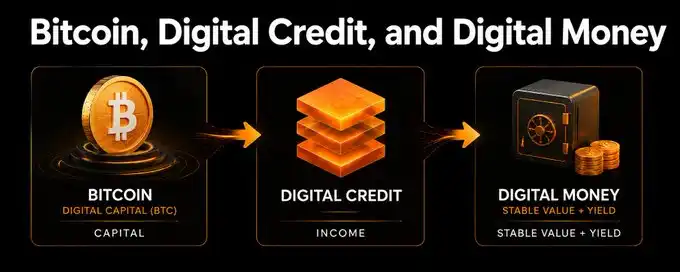
Michael Saylor presents his "Digital Asset Stack" theory, positioning Bitcoin as the foundational layer of digital capital. He argues Bitcoin itself should remain unchanged—no staking, inflation, or protocol alterations. Instead, a five-layer financial architecture should be built atop it: Digital Capital (BTC), Digital Credit (e.g., yield instruments like STRC), Digital Currency (stable, yield-bearing instruments pegged to fiat), Digital Yield (leveraged/structured products), and Digital Equity (e.g., MSTR stock, absorbing residual volatility). Saylor asserts this stack transforms Bitcoin's high-volatility, high-energy capital into tailored products: stable currencies for payments/savings, yield instruments for income seekers, and equity for growth investors. This approach meets diverse needs—corporate treasuries, banks, retirees, emerging market users—without compromising Bitcoin's core properties (scarcity, decentralization). The "killer use case" is rebuilding global money, credit, and capital markets on Bitcoin, bridging the fiat world with a superior digital asset foundation. The system leverages traditional finance principles (risk layering, structured products) while using Bitcoin as the ultimate collateral. This expands Bitcoin's utility, drives adoption, and offers a better monetary experience: digital, yield-bearing, stable-value tools for everyday use.

marsbit1 h fa

Saylor's Latest Long Read: Bitcoin is Not Money, It's Digital Capital, and Money is Built Upon It

marsbit1 h fa

Trading

Spot
Futures

Articoli Popolari

Come comprare ONE

Benvenuto in HTX.com! Abbiamo reso l'acquisto di Harmony (ONE) semplice e conveniente. Segui la nostra guida passo passo per intraprendere il tuo viaggio nel mondo delle criptovalute.Step 1: Crea il tuo Account HTXUsa la tua email o numero di telefono per registrarti il tuo account gratuito su HTX. Vivi un'esperienza facile e sblocca tutte le funzionalità,Crea il mio accountStep 2: Vai in Acquista crypto e seleziona il tuo metodo di pagamentoCarta di credito/debito: utilizza la tua Visa o Mastercard per acquistare immediatamente HarmonyONE.Bilancio: Usa i fondi dal bilancio del tuo account HTX per fare trading senza problemi.Terze parti: abbiamo aggiunto metodi di pagamento molto utilizzati come Google Pay e Apple Pay per maggiore comodità.P2P: Fai trading direttamente con altri utenti HTX.Over-the-Counter (OTC): Offriamo servizi su misura e tassi di cambio competitivi per i trader.Step 3: Conserva Harmony (ONE)Dopo aver acquistato Harmony (ONE), conserva nel tuo account HTX. In alternativa, puoi inviare tramite trasferimento blockchain o scambiare per altre criptovalute.Step 4: Scambia Harmony (ONE)Scambia facilmente Harmony (ONE) nel mercato spot di HTX. Accedi al tuo account, seleziona la tua coppia di trading, esegui le tue operazioni e monitora in tempo reale. Offriamo un'esperienza user-friendly sia per chi ha appena iniziato che per i trader più esperti.

325 Totale visualizzazioniPubblicato il 2024.12.12Aggiornato il 2026.06.02

Come comprare ONE

Discussioni

Benvenuto nella Community HTX. Qui puoi rimanere informato sugli ultimi sviluppi della piattaforma e accedere ad approfondimenti esperti sul mercato. Le opinioni degli utenti sul prezzo di ONE ONE sono presentate come di seguito.

活动图片