Is altseason finally brewing? Only if THESE 2 indicators flip first

ambcryptoPubblicato 2026-02-03Pubblicato ultima volta 2026-02-03

Introduzione

Hopes for an altcoin season in 2026 are building as investors look beyond Bitcoin, but conditions for a full altcoin rally are not yet firmly in place. Two key indicators need to flip first. The latest ISM Manufacturing PMI reached 52.6%, its highest in nearly 40 months, pushing U.S. manufacturing into expansion territory. Historically, altcoin rallies followed periods when ISM moved decisively higher, particularly above the 55 mark, as seen in 2017 and 2021. While current levels are below that threshold, a potential turning point may be emerging. However, Ethereum (ETH), a known harbinger of altseason, has closed in the red for 12 of the last 15 months, showing a prolonged stretch of weakness with uneven gains and frequent drawdowns. Sustained altseasons have almost always followed a clear and consistent uptrend in Ethereum. Furthermore, the Altcoin Season Index from CoinGlass was at 39, below the level that usually indicates a rotation away from Bitcoin. At the same time, Bitcoin dominance (BTC.D) remained high near 60% on the daily chart. Altseasons typically begin with a clear decline in BTC dominance as investors move down the risk curve, a shift that has not yet occurred. Overall, while altseason expectations are growing, they may be premature. Early macro signals are improving, but the market lacks a trigger for a true altseason, and capital remains firmly in Bitcoin.

Hopes for an altcoin season in 2026 are starting to build, with investors beginning to look beyond Bitcoin.

That said, it may still be too soon to call it. While expectations are rising, the conditions needed for a full altcoin rally are not firmly in place yet.

Altseason within sight?

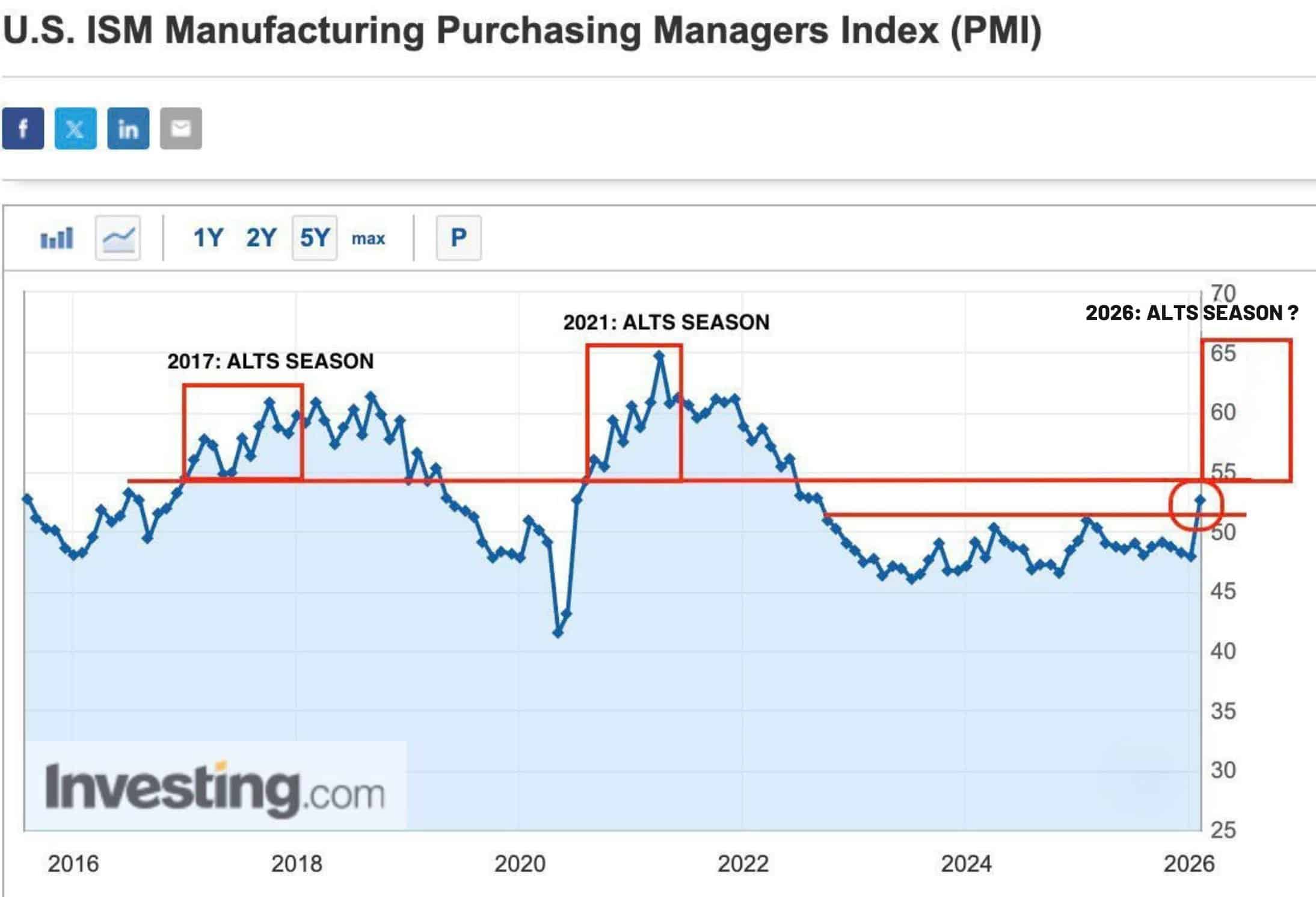
The latest ISM Manufacturing PMI came in at 52.6%, its highest reading in nearly 40 months. This pushed U.S. manufacturing back into expansion territory.

Source: X

Past altcoin rallies have tended to follow periods when ISM moved decisively higher. In both 2017 and 2021, altseasons took shape only after PMI readings climbed above the 55 mark.

While current levels remain below that threshold, it looks like a potential turning point may be in order.

But that’s not all…

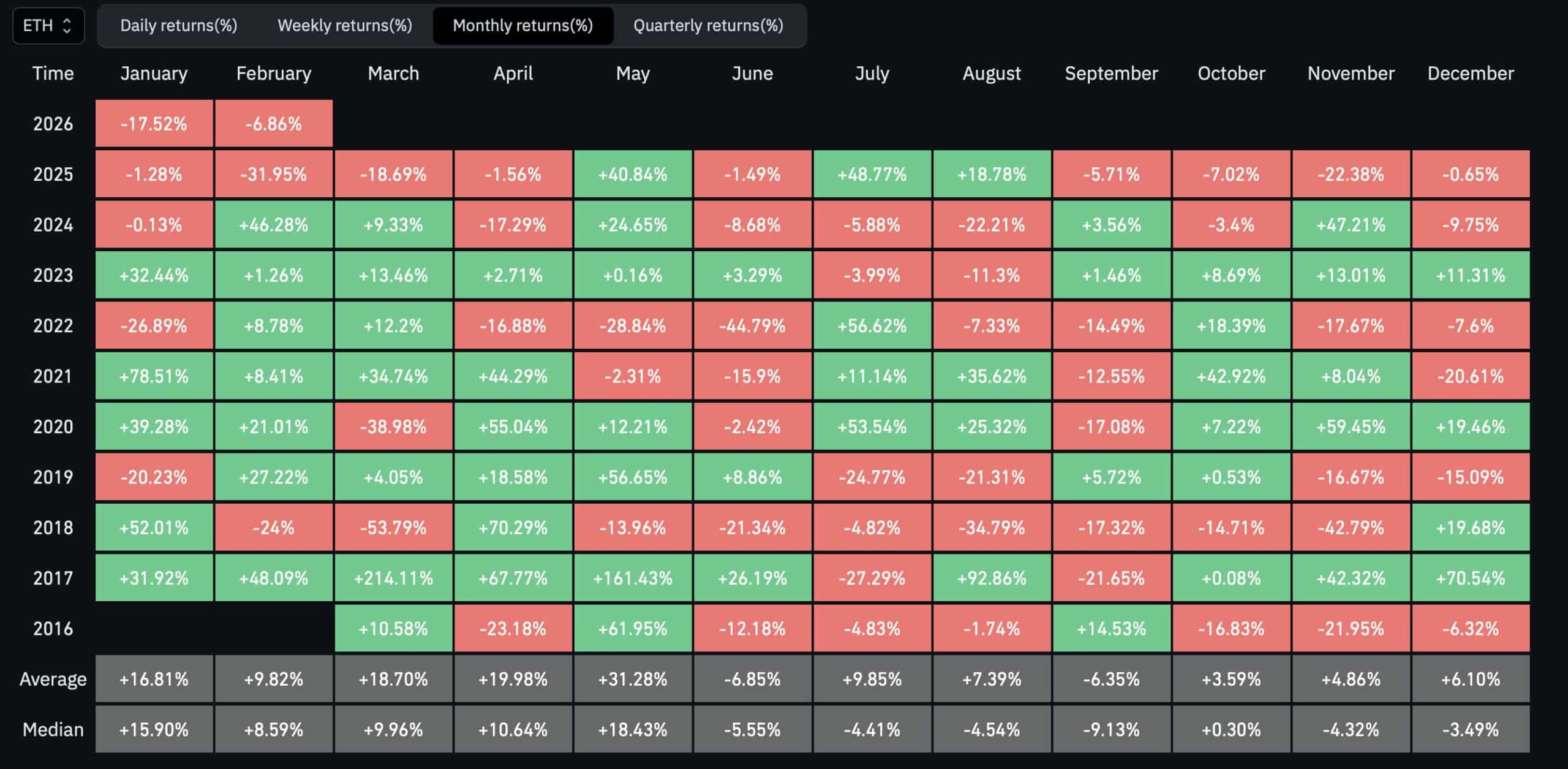
Ethereum [ETH] – famously known as a harbinger of altseason – has closed in the red in 12 of the last 15 months with a prolonged stretch of weakness.

Source: X

The monthly returns chart makes this slowdown obvious, showing uneven gains with frequent drawdowns across 2024 and into early 2026. Even during brief comebacks, follow-through has been limited.

This is important. Sustained altseasons have almost always followed a clear and consistent uptrend in Ethereum.

Altcoin signs look weak

Source: CoinGlass

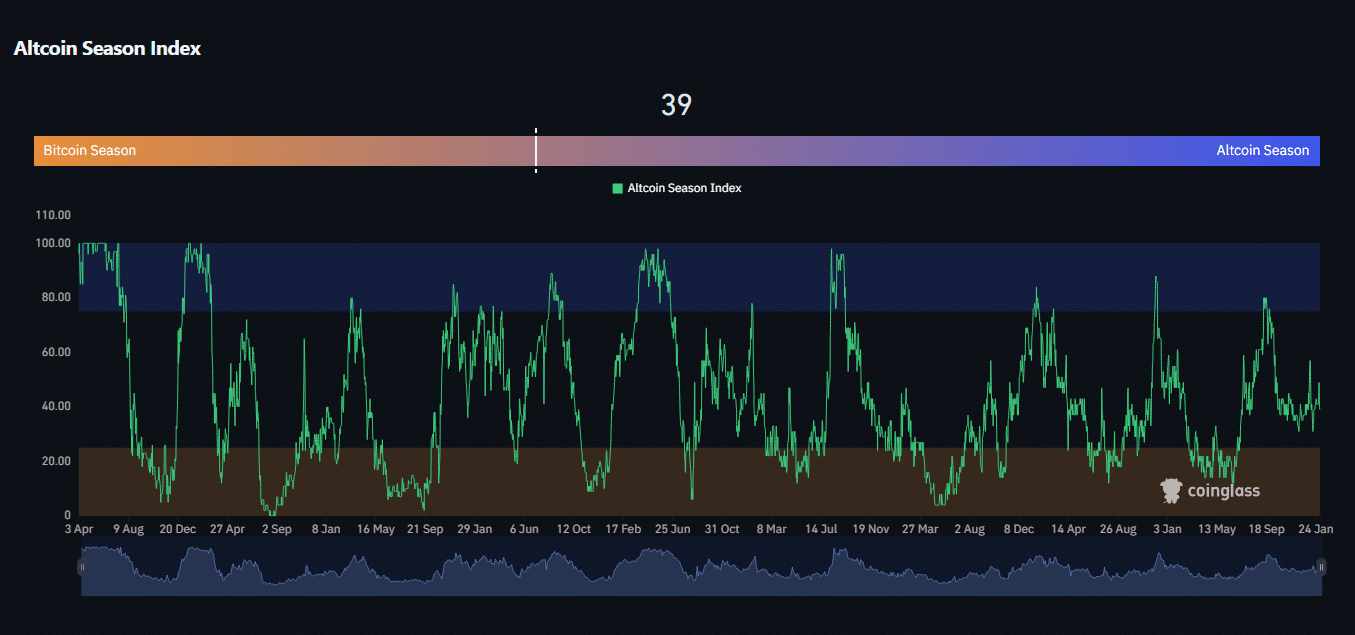
CoinGlass’ Altcoin Season Index was at 39 at the time of writing, below the level that usually indicates a rotation away from Bitcoin [BTC]. Despite growing macro optimism, capital has yet to flow into altcoins on a larger scale.

Source: TradingView

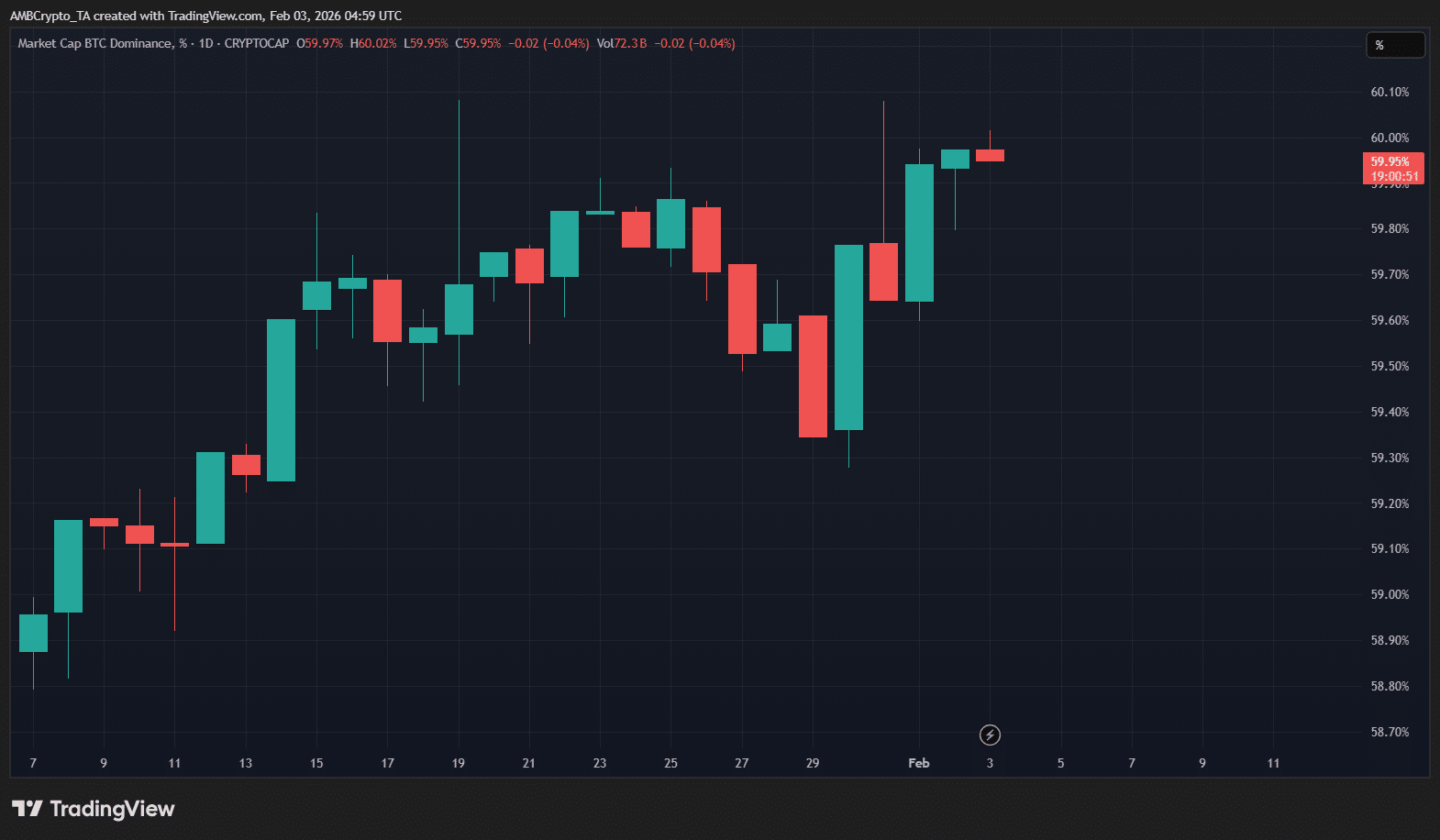
At the same time, BTC.D was close to 60% on the daily chart.

Altseasons usually started with a clear decline in BTC dominance, with investors moving down the risk curve. For now, that shift has not yet happened.

Overall, while altseason expectations are beginning to fire up, they may very well be premature. Only time will tell.


Final Thoughts

  • Early macro signals are improving, but the market lacks a trigger for a true altseason.
  • With altcoin season index at 39, capital is still firmly in Bitcoin.
Next: White House talks expose stablecoin rewards as fault line in U.S. crypto legislation
Share
  • Share
  • Tweet

Domande pertinenti

QWhat are the two key indicators that need to flip for an altseason to begin according to the article?

AThe two key indicators are the ISM Manufacturing PMI rising above the 55 mark and a clear decline in Bitcoin dominance (BTC.D) as capital flows into altcoins.

QWhat was the current reading of the Altcoin Season Index mentioned in the article, and what does it indicate?

AThe Altcoin Season Index was at 39 at the time of writing, indicating that capital is still firmly in Bitcoin and below the level that usually signals a rotation into altcoins.

QHow has Ethereum's performance been described in relation to predicting altseasons?

AEthereum has closed in the red in 12 of the last 15 months with prolonged weakness, and sustained altseasons have almost always followed a clear and consistent uptrend in Ethereum's price.

QWhat significant level did the latest ISM Manufacturing PMI reach, and why is this important for altcoins?

AThe latest ISM Manufacturing PMI came in at 52.6%, its highest reading in nearly 40 months, pushing U.S. manufacturing into expansion territory. Past altcoin rallies have followed periods when ISM moved decisively higher, particularly above 55.

QWhat is the current state of Bitcoin dominance (BTC.D) and its implication for an altseason?

ABTC.D was close to 60% on the daily chart, indicating that the shift of investors moving down the risk curve into altcoins has not yet happened, which is necessary for an altseason to start.

Letture associate

Cook's Curtain Call and Ternus Takes the Helm: The Disruption and Reboot of Apple's 4 Trillion Dollar Empire

Tim Cook has officially announced he will step down as CEO of Apple in September, transitioning to executive chairman after a 15-year tenure during which he grew the company’s market value from around $350 billion to nearly $4 trillion. He will be succeeded by John Ternus, a 50-year-old hardware engineering veteran who has been groomed for the role through increasing public visibility and internal responsibility. Ternus’s appointment signals a strategic shift toward hardware and engineering leadership, with Johny Srouji—head of Apple Silicon—taking on an expanded role as Chief Hardware Officer. This consolidation aims to strengthen Apple’s core technological capabilities. However, Cook’s departure highlights a significant unresolved issue: Apple’s delayed and fragmented approach to artificial intelligence. Despite early efforts, such as hiring John Giannandrea from Google in 2018, Apple’s AI initiatives—particularly around Siri—have struggled with internal restructuring and reliance on external partnerships, including with Google. The transition comes at a critical moment as Apple faces paradigm shifts with the rise of artificial general intelligence (ASI). The company’s closed ecosystem of hardware, software, and services—once a major advantage—now presents challenges in adapting to an AI-centric world where intelligence may matter more than the device itself. Ternus must quickly articulate a clear AI strategy, possibly starting at WWDC, to reassure markets and redefine Apple’s role in a new technological era. His task is not only to maintain Apple’s operational excellence but also to reinvigorate its capacity to innovate and lead in the age of AI.

marsbit2 h fa

Cook's Curtain Call and Ternus Takes the Helm: The Disruption and Reboot of Apple's 4 Trillion Dollar Empire

marsbit2 h fa

Trading

Spot
Futures
活动图片