Interview with the Founder of an AI-Focused Investment Fund: Forget the False Narrative of 100x Returns, What Crypto x AI Assets Are Worth Watching?

marsbitPubblicato 2026-05-26Pubblicato ultima volta 2026-05-26

Introduzione

Interview with Austin Barack, founder of AI-focused fund Relayer Capital. He emphasizes prioritizing real value over hype, especially in the Crypto x AI sector. Key assets discussed include: * **Venice:** A private AI platform where user data isn't shared with model providers. Its unique two-token model (VVV and DM) provides sustainable, capped user incentives for computation. Rapid user growth (3M) and token usage (15x in months) suggest significant upside. * **Grass:** Sells high-quality, specialized web-scraped datasets to AI labs for model training. With ~$50M+ ARR and triple-digit growth, its ~$400M valuation is seen as undervalued. * **NEAR:** Praised for its superior cross-chain swap infrastructure via intents, positioning it as crucial infrastructure for AI agents and decentralized applications. * **Akash:** A decentralized GPU compute marketplace gaining traction, with visible usage on platforms like OpenRouter. * **Investment Framework:** Shift from generic "buyback-and-burn" narratives to analyzing the "net token value flow"—whether token holders genuinely capture value from the underlying business. Markets are consolidating around a smaller set of quality projects with strong fundamentals like Venice, Grass, and NEAR, making targeted investments more effective.

Organized & Compiled: Deep Tide TechFlow
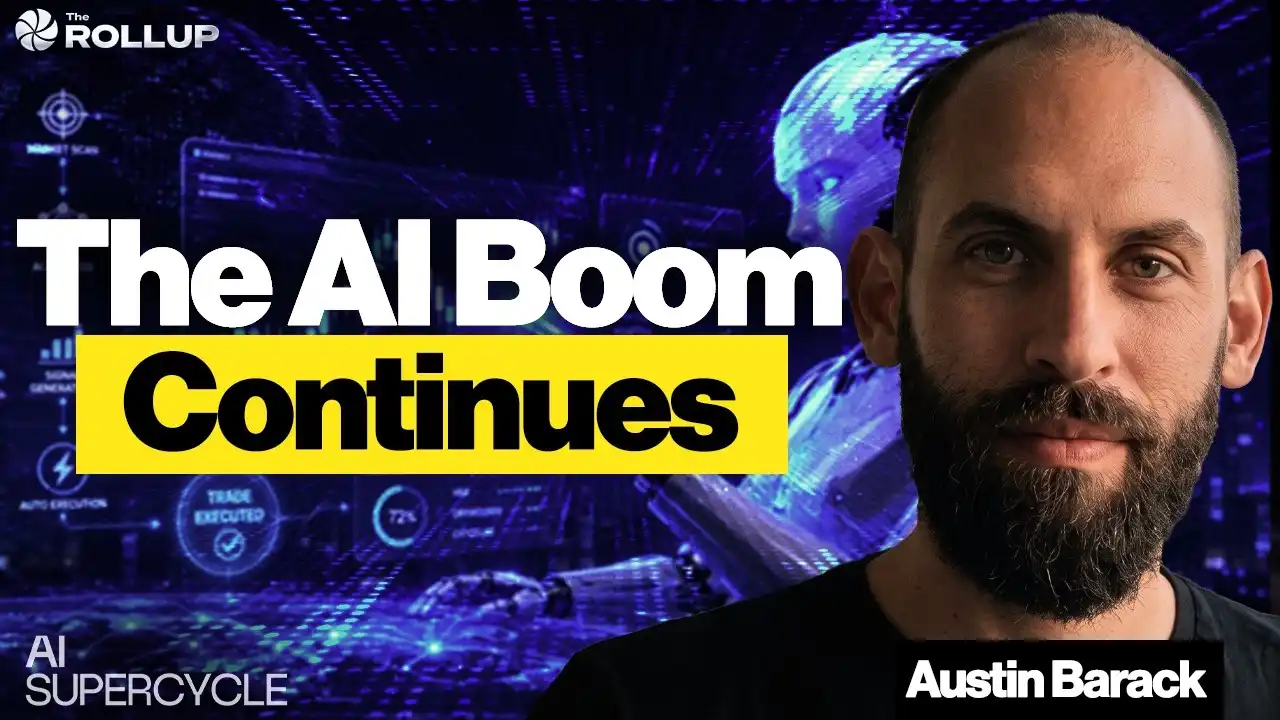
Guest: Austin Barack, Founder of Relayer Capital (a digital asset investment fund focused on the AI sector)

Host: Andy

Podcast Source: The Rollup

Original Title: Austin Barack: My AI Bull Thesis (...And What I'm Holding)

Broadcast Date: May 23, 2026

Key Summary

This episode of AI Supercycle invited Austin Barack, founder of Relayer Capital, to discuss Venice, Grass, NEAR, Akash, and the broader Crypto x AI asset framework. Austin's core viewpoint is that AI is scaling user data to levels unimaginable for past internet products, making privacy AI, data supply, inference computing power, decentralized training, and Agent infrastructure key sectors. He believes there is a clear misalignment between the revenue growth, user growth, and valuation of Venice and Grass, and that NEAR's positioning in cross-chain Intents and Agent infrastructure is also undervalued. Regarding the broader crypto market, Austin emphasizes that investors should start from the perspective of "net Token value flow" rather than mechanically looking at buyback and burn mechanisms, truly assessing whether Token holders are capturing the value created by the business.

Excerpts of Notable Points

The True Value of Venice and Privacy AI

  • "In AI, privacy is more important than in any other scenario. Because you're sharing health data, financial data, you'll connect all your files, and you'll share your entire life in ways never done before."
  • "This isn't 10 times more data than social media; it's 100 times more data."
  • "What's really cool about Venice is that it's not just about using AI in a private environment; it does this without sacrificing the user experience at all, even improving it."
  • "Tokens can become a very important part, significantly enhancing the experience, but for most users, they don't need to understand Tokens to find the product useful."

VVV, DM, and Venice's Economic Model

  • "The role of DM is: for every 1 DM Token you own, you get $1 worth of free inference compute credit per day on the Venice platform. You can think of it as a kind of perpetual right, equivalent to getting $365 of compute credit per year."
  • "Its credit expires if unused; it doesn't accumulate over time. If you only used 50 cents one day, it doesn't become $1.50 the next day; it resets to $1."
  • "If all DM is locked and used for inference compute, then Venice's maximum cost is $38,000 per day, an annualized cost of about $10 million, and this cost will not exceed that figure."
  • "I think DM should be valued more like a corporate bond, rather than using a high discount rate to suppress its value."

Grass and AI Data Demand

  • "Grass collects datasets and then sells these datasets to cutting-edge AI labs that need data to train new models."
  • "This isn't random web crawling; it has to be very specialized, very specific datasets, and of high quality."
  • "The scale of investment into models is huge, and Grass benefits from this trend. The more invested in models, the greater the demand for data."
  • "According to recently disclosed data, the project's ARR is about $50 million. Currently, its valuation is about $400 million. For a project growing this fast, valuing it at just 5x revenue seems completely unreasonable to me."

NEAR, Akash, and the AI Stack

  • "NEAR Intents is very practical and arguably one of the best cross-chain Swap experiences available now. Also, it plays a very important role in the Agent space."
  • "I think NEAR is doing very well on the Intents side. They're also doing many other things, like private intents and other elements around AI usage; it's one of the few L1s that has truly found its unique positioning."
  • "Akash. They started with a decentralized CPU marketplace early on and later pivoted to the GPU market."
  • "The main areas I'm focused on include: decentralized training, inference and compute marketplaces, Agent infrastructure, data, and consumer-facing model usage applications."

Token Value Capture and Market Divergence

  • "Hyperliquid is first and foremost a very successful business model, so people like its Token, and buybacks are just one way it transfers value to Token holders. If it wasn't a well-functioning business to begin with, then even with a buyback mechanism, the Token price wouldn't naturally rise."
  • "The core issue isn't what the mechanism is called, but whether Token holders can maximally capture the value generated by what you're building."
  • "Every project and each mechanism needs specific analysis. But the core question is: Are Token holders able to benefit from the value the system is generating?"
  • "Investors can choose from a smaller pool of quality projects. Now, capital flows are concentrating into projects like Venice, HYPE, Grass, AERO, NEAR, and Zcash."
  • "For investors seeking 5 to 10x, or even 3x returns, it's easier to succeed now than before. While you might still achieve a 100x return eventually, I think there's a set of projects doing very interesting things right now, and these are the assets I would watch and invest in."

Venice Privacy Overview

Host Andy: I used Venice for the first time not long ago. I typed into Venice: "Is this really private?" It replied: "Yes, the inference process is private," then explained a bunch. I replied: "That's so cool." It immediately responded: "Yes, it is pretty cool, isn't it? Using Venice, you can..."

So the first time using Venice, there's an interesting moment: you suddenly realize that all the chat content you've ever entered into typical AI providers, while not necessarily public, the data flows to large providers. The most private diaries, trade secrets, plans, etc., are all handed over to them.

From a high-level perspective, regarding market structure, investment logic, founding team, how do you view private AI and Venice?

Austin:

Venice is interesting because it has gone through many different stages of iteration. I first came across the project last January. I was closely following Virtuals and aixbt at the time, and a large portion of Venice's early airdrop went to holders of tokens in those ecosystems, so that's where I first saw it.

It was already an interesting product at that time. It's crazy that even though only about 16 months have passed, AI was far from being as ubiquitous as it is today, and it hadn't become an indispensable part of everyone's daily life yet. During this period, whether it's Claude, ChatGPT, or other services, AI started out as a replacement for Google search. People would say: "I don't use Google to search for certain questions anymore; I go directly to an AI platform to ask an LLM." But now it's entered into creation, task solving, even the stage where you have an entire team and a bunch of Agents helping you work.

AI Data Usage is 100x Greater Than Before

Austin:

I think people are gradually realizing that privacy in AI is more important than in any other scenario. Because you're sharing health data, financial data, you connect all your files, you share your entire life in ways never done before.

In the past, when people talked about privacy, it was more in the context of social media, like whether my account is public or private, whether Facebook knows too much about me. But AI isn't just 10 times more data; it's 100 times more data.

The really cool thing about Venice is that it doesn't just let you use AI in a private environment; it does so without sacrificing the user experience at all, even improving it. Because you're not tied to one specific model. For example, if you use ChatGPT, you're just following OpenAI's model upgrades; if you use Anthropic, you follow Anthropic's different model evolutions; or you use Gemini, open-source models, each with its own boundaries.

In Venice, you can choose the most suitable model for each task, and you can also choose which models you want to use. So it has a high degree of customization. They first created a very, very good consumer product, and most users don't know what Tokens are.

Tokens then add an interesting element on top of that. I'm very bullish on what they're doing. The key here is, I think crypto consumer products will evolve into a form where Tokens can become a very important part, significantly enhancing the experience, but for most users, they don't need to understand Tokens to find the product useful.

Host Andy: This indeed seems like a breakthrough form for consumer products: there's Crypto underneath, but users don't need to understand it first. But it also brings an interesting Token structure. Some compare it to Luna: staking VVV yields DM Tokens, then the inference credit forms some sort of debt structure.

3 Million Users

Host Andy: So how should one understand the VVV Token and DM Token within Venice's current flywheel? Also, could you talk about Venice's revenue side? Because they are indeed doing some buybacks, but the scale isn't particularly large. How do these two Tokens actually work? Why isn't it like Luna?

Austin:

They just announced having 3 million users, and growth is very fast. They added about 1 million users in the last 3 months, whereas the previous 1 million users took about 7 months. So growth has been accelerating.

The VVV and DM Token Flywheel

Austin:

They have two Tokens. The first is VVV. Protocol revenue is used to burn VVV. Users can also stake VVV to get free membership. But the most interesting part is that users can stake and lock VVV to mint a Token called DM. You can also buy DM on the open market, but the core mechanism is staking VVV and minting DM.

The role of DM is: for every 1 DM Token you own, you get $1 worth of free inference compute credit per day on the Venice platform. You can think of it as a kind of perpetual right, equivalent to getting $365 of compute credit per year.

But its credit expires if unused; it doesn't accumulate over time. If you only used 50 cents one day, it doesn't become $1.50 the next day; it resets to $1. I think this creates a very interesting mechanism, similar to a tool for customer acquisition at near cost. This is different from Luna. Luna went to an extreme state, issuing an insane number of Tokens, leading to stablecoin scale in the tens or hundreds of billions. Venice is very clear on this: they keep the potential cost within a defined range.

Currently, the amount of DM that can be minted per Venice Token gradually decreases as the amount of DM in circulation increases, which effectively sets a hard cap of about 38,000 DM. Under current conditions, if all DM is locked and used for inference compute, then Venice's maximum cost is $38,000 per day, an annualized cost of about $10 million, and this cost will not exceed that figure.

Currently, about 10,000 DM are used for inference compute per day, corresponding to an annualized cost of about $3.5 million. This cost is offset by their business revenue. They offer Pro and Premium subscription services, ranging from $18 to $68 per month, or even higher. At the same time, when users use the platform, they also purchase Tokens or additional credits to use models.

Notably, their daily Token usage has grown from the initial few billion to recently about 70 billion, a roughly 15x increase over the past few months. So the difference here from Luna, I think, is that there is a maximum potential cost for the company, and DM users, while using DM, also use subscription services. If they need more than $1 credit per Token per day, they also buy other credits. This cost is easily covered by business revenue, and business revenue already far exceeds it.

DM Should Be Priced Like a Corporate Bond

Austin:

On the other hand, the coolest thing about DM is that it guarantees you future access to compute resources. The market currently values it with about a 20% discount rate, with a price around $1,800.

I think this type of asset should be priced more like a corporate bond, for example using an 8% to 12% discount rate. Using a 10% discount rate, its price would be roughly $3,650. For example, when I first started paying attention to it, the price was in the $200 range.

Host Andy: I was also thinking, how can an asset that generates $365 worth of rights per year be worth only $200? Unless the market believes Venice simply cannot sustain this mechanism.

Austin:

Exactly. So at that price point, it was almost a no-brainer investment opportunity for me. Even now, I still think there's room for upside.

However, looking beyond DM at Venice's overall economic situation, the numbers are very impressive. And its growth model is completely different from most projects we see in the crypto industry. It's more like the growth rate only possible in the AI field, which is why it's so attractive.

Is Venice at $20 Still Undervalued?

Host Andy: So you're convinced that Venice's VVV asset price is now around $20. Do you think a valuation range of $1.5 to $2 billion is still significantly undervalued for VVV?

Austin:

Yes. When I first bought in January, it was around $2.5. At that time, their daily token volume was only a few billion. Now it's about 15 times that.

Back then, their daily token transaction volume was only a few billion, and now it's grown 15 times that. Their user base grew from 1.5 million to the current 3 million. By my estimates, their revenue is at least 3 times what it was then.

Currently, Venice's valuation is roughly 20 to 30 times its annual revenue, and this is a company still growing at 20% per month. From this perspective, I think its valuation remains very low. You could even compare it to OpenRouter. OpenRouter's valuation is similar to Venice's, but its revenue scale might be slightly lower, and its growth speed might not be as fast as Venice's.

The key difference is that Venice has direct customer resources. It's not a pure backend infrastructure service provider, but a platform that users actively use every day. Personally, currently, the only way I use AI is through Venice.

So, I think its potential is still huge. Of course, this is just my personal opinion and not any investment advice.

How Grass Makes Money

Host Andy: I'm not very familiar with Grass yet. You've mentioned this project multiple times before, and it seems poised for rapid growth now. Of course, its price might have pulled back today. I heard its annualized revenue has exceeded $50 million, and growth is accelerating, reaching triple-digit growth rates. Could you briefly explain Grass's core profit model? How does it make money? And why is it so attractive?

Austin:

Grass collects datasets and then sells these datasets to cutting-edge AI labs that need data to train new models. These labs are generating new models at a very fast pace, but to generate these new models, they need more data. And this isn't random internet crawling; it has to be very specialized, very specific datasets, and of high quality.

This is the role Grass plays, because the scale of investment into building these models is huge, and Grass becomes a beneficiary of this trend. The more invested in models, the greater the demand for data.

Grass's Triple-Digit Growth

Austin:

The Grass team has been building for many years. I remember in some quarter last year, they did about $3 million in revenue. By the end of the year, they were doing $12 million or close to $13 million per quarter. By my estimates, they are growing even faster now. In the next month to a month and a half, they will hold a Token holder call, and we'll get more information.

But this is a project showing triple-digit growth. According to recently disclosed data, the project's ARR is about $50 million. However, I expect it might now be close to $80 million. Currently, its valuation is about $400 million. So, for a project growing this fast, valuing it at just 5x revenue seems completely unreasonable to me; it's a prime candidate for a revaluation.

Host Andy: Is there any working relationship between Grass and Venice?

Austin:

Currently, no. Venice typically doesn't build its own models. So no relationship for now. Who knows in the future. But I see them as two different sides of the same equation. One question is: How do you use AI, and how do you use it privately? Another question is: How are models built in the first place? Grass and Venice are addressing these two sides respectively.

Is Grass's $400M Valuation Too Cheap?

Host Andy: So Grass is trading at about 5x revenue. Some things in the crypto industry trade at 20, 30, 40, 50x revenue. Do you think the ~$400 million range is kind of a no-brainer?

Austin:

Yes. I think it's important to note that the crypto industry also has other things trading at relatively low multiples, but they don't have growth. People come to crypto because they want to invest in growth.

So I think many low-multiple cases might not hold up because there's no capital flow there. But a case like Grass is one of the best examples of extremely fast growth. I think that alone makes it worth paying attention to, let alone the fact that it seems quite cheap to me.

NEAR Cross-Chain Swap

Host Andy: So do you have an investment thesis for NEAR? Are you following NEAR?

Austin:

I've been following NEAR. Even without the AI component, NEAR is an interesting project. Because it's the underlying infrastructure for a lot of cross-chain Swaps. Last October, November, when people were moving in and out of Zcash, NEAR gained a lot of attention in that regard.

NEAR Intents is very practical and arguably one of the best cross-chain Swap experiences available now. Also, it plays a very important role in the Agent space. In my view, NEAR is one of the most suitable infrastructures for carrying cross-chain Swaps, able to avoid many dependencies issues other projects have.

They are growing fast in this area. Now if you're an L1, I think you need to satisfy one of several directions: either you are a vertically integrated app experience, or you're 10x better at something, or you're very, very strong in a certain class of applications.

I think NEAR is doing very well on the Intents side. They're also doing many other things, like private intents and other elements around AI usage; it's one of the few L1s that has truly found its unique positioning.

This reminds me of NBA player categories. Now there are many new L1s and L2s on the market; they're like promising rookies. Over time, some will become superstars, and some will fade away. But there's another category of players, "role players," who perform exceptionally well in their specific roles. For example, OKC's Lu Dort or Alex Caruso.

That's how NEAR feels to me. It's not LeBron James, but it's very important because it's very strong at what it does.

Akash GPU Market Update

Host Andy: Another project that has been constantly undervalued, and Robbie always emphasizes to me, is Akash. Too bad he's not here today. Akash got into distributed inference, distributed models, decentralized training very early, right?

This sounds like the first wave of Crypto AI narrative. After that, we went through those fake Agent projects with Meme Tokens. Now, we seem to have entered the next wave of decentralized inference and model training, but this time the products are much stronger. Have you looked at what Akash is doing? Do you have an investment view on this project?

Austin:

I have indeed looked at Akash. They started with a decentralized CPU marketplace early on and later pivoted to the GPU market. Now, you can actually see how much data is flowing through OpenRouter. A significant portion of that data goes through Akash, i.e., Akash ML, which is very cool. And this data is public; anyone can see it.

However, I must admit, Akash isn't one of the projects I follow most closely. But for a team that's been around for a long time, constantly iterating, it's cool to see them finally finding real product-market fit, and that fit seems to be accelerating.

AI Stack Breakdown

Host Andy: There's a project called Gitlab, with a small market cap on Base, but the number of tokens produced daily performs strongly. Now there's a batch of highly speculative AI Tokens on Base, and there are many small sub-sectors within this puzzle that need to be understood.

I want to ask from a broader perspective: Within this AI stack, are there certain parts most suitable for achieving massive growth after integrating with blockchain? We've already seen Venice providing private inference and uncensorable ChatGPT; NEAR as infrastructure for an Agent marketplace; Akash has Akash ML; Grass focuses on datasets.

In your view, within the AI stack, what are the key sectors or components most likely to be replaced by blockchain technology, or most suitable for on-chain use?

Austin:

I think first is the privacy context, including private use of large language models (LLMs) and uncensorable use. Then comes the data collection needed to train models, which is what Grass is doing.

Next is inference compute and compute marketplaces; you mentioned Akash. We also see other inference marketplaces emerging. There's another project building around DM, also offering other services allowing users to sell idle compute, called AnC. That's an interesting project I've been watching. While it doesn't have a Token live yet, I think they're already doing some very cool things, especially regarding integration with Venice and DM.

I think another important direction is decentralized model training. The question is how to build open-source models while retaining model ownership and monetization ability through private weights. Several teams are currently exploring this space. For example, I think Pluralis is one of the most interesting projects. Nous Research is also doing some very interesting work around Hermes. Additionally, there's Prime Intellect and a few other teams working in this area.

So the main areas I'm focused on include: decentralized training, inference and compute marketplaces, Agent infrastructure, data, and consumer-facing model usage applications.

Net Token Value Flow Framework

Host Andy: Recently you've been emphasizing another point: we need new ways to understand Token models and economics. You've been a strong supporter of projects like Aerodrome and Hyperliquid.

I want to ask a broader question to conclude, outside the AI context: How do you view net Token value flow? That is, using a credit (income) and debit (expense) approach, using a plus-minus table to analyze a crypto asset's value. What kind of shift in thinking do you think is happening across the industry when analyzing Token economics? What is your current framework? Do you agree that investors should understand the net Token value flow of an asset as if looking at a plus-minus table?

Austin:

I think there are several different ways to look at this, and it's not a one-size-fits-all thing.

We can start with high-level mechanisms like buyback and burn. Hyperliquid made this mechanism very popular, and people say, "Look how well Hyperliquid is doing; it has buyback and burn." But for every Hyperliquid, there are nine other Tokens also trying to adopt the same buyback and burn mechanism, and their price performance ends up being very poor.

What's the lesson here? The lesson is that Hyperliquid is first and foremost a very successful business model, so people like its Token, and buybacks are just one way it transfers value to Token holders. If it wasn't a well-functioning business to begin with, then even with a buyback mechanism, the Token price wouldn't naturally rise.

This is the first point I think people often confuse.

The second point is, are you actually creating value for Token holders. Whether you adopt buyback and burn, buyback and distribute, reinvest funds into the business, or put funds in a bank account to enhance balance sheet flexibility, the core question is: Can Token holders maximally capture the value generated by what you're building.

For example, Hyperliquid does it, Aerodrome does it. As for Grass, many people wish it would do more buybacks, but clearly, all its contracts are with the foundation, all revenue goes into the foundation's bank account, and these assets are controlled by Token holders.

So, I think there are many different ways to understand this matter.

Buyback and Burn Only Works in Some Cases

Austin:

Then there's the issue of Token liquidity. Take Hyperliquid as an example. Theoretically, it has a maximum unlock amount per month, but in reality, maybe only two to three hundred thousand Tokens get unlocked. However, buying volume from ETFs, DAT, and the assistance fund is much higher. Therefore, naturally, there are more buyers than sellers.

Look at Aerodrome. If you lock AERO as veAERO, then after they expand to the Ethereum mainnet in July, veAERO will be renamed sAERO. Holders not only earn the platform's full revenue but can also direct Token emissions to the liquidity pools most in need of liquidity while also generating the most revenue.

Some might say that if the value of Token emissions in a certain cycle exceeds the value of revenue, then that cycle is net negative. But I think this view is completely wrong.

The correct way to analyze it is: How much revenue did the system generate in this cycle? How much did the Token circulating supply increase, but actually wasn't sold? For example, Aerodrome recently renamed one of its mechanisms the Momentum Fund, whose essence is similar to the foundation continuously doing buybacks. Additionally, many people who earn AERO choose to lock and stake it as veAERO to earn more revenue. Moreover, some people are just confident in the Token's future and never planned to sell in the first place.

From this perspective, every cycle, that is, every week, the amount of Tokens actually flowing to the open market is far less than the revenue scale the platform generates in the same cycle.

Coupled with some recent new launches, like Atlas, Aura, and other projects, Aerodrome's revenue has increased significantly now. Here, when I mention revenue, I mean the earnings Token holders get from the platform, which have clearly exceeded the value actually emitted out.

So, every project and each mechanism needs specific analysis. But the core question is: Are Token holders able to benefit from the value the system is generating? That's the key point of analysis. Building on this, you can continue deeper analysis from this perspective.

Two New Groups in Digital Asset Markets

Host Andy: I think the entire industry is moving towards a similar mental model, even though this model is very detailed. Now two types of things seem to be emerging: one is those companies with revenue, with fundamentals; the other is more narrative-driven, niche, but technically very useful projects, like Zcash, Venice, NEAR—assets related to AI privacy. Additionally, there are purely on-chain business projects, while the middle ground doesn't seem to have much happening currently.

Austin:

I agree with you. An interesting point about this market is that the set of Tokens truly worth watching has become smaller. Because now people have a clearer understanding of which projects truly have market appeal, which are real and not just hype. Now maybe only 10 to 20 Tokens have very strong fundamentals.

Therefore, we see these Tokens clearly outperforming the market. Because for the first time in a long while, this is the situation: investors can choose from a smaller pool of quality projects. Now, capital flows are concentrating into projects like Venice, HYPE, Grass, AERO, NEAR, and Zcash.

Zcash is another project focused on privacy. Some people now worry that Bitcoin might become increasingly influenced by Michael Saylor (that's another topic), while Zcash represents Bitcoin's original spirit, and its structure is also very similar to Bitcoin.

Although Zcash doesn't have revenue in the current context, it's still an interesting asset. Because the higher its price, the greater its actual utility. The higher the price, the more likely it is to become consolidated, forming stronger consensus and community value around it.

So, I think we're at a very interesting stage now: it's easier to choose the right Tokens. It just requires more focused research to discern which projects are real and which are just false hype.

For investors seeking 5 to 10x, or even 3x returns, it's easier to succeed at this point in time than before. While you might still achieve a 100x return eventually, I think there's a set of projects doing very interesting things right now, and these are the assets I would watch and invest in.

Domande pertinenti

QAccording to Austin Barack, what is the unique value proposition of Venice in the privacy AI space?

AAccording to Austin Barack, Venice's unique value lies in providing a private AI environment that handles 100 times more sensitive user data than traditional internet products, without sacrificing user experience. It allows users to choose the most suitable model for each task, offering high customizability. Most users find the product useful without needing to understand the underlying crypto tokens.

QHow does the DM token function within the Venice ecosystem, and how does Austin suggest it should be valued?

AEach DM token entitles the holder to $1 worth of free daily inference computing on the Venice platform, like a perpetual right. The daily allowance does not accumulate. Austin suggests that DM should be valued more like a corporate bond, using an 8-12% discount rate (implying a price around $3,650), rather than the higher discount rate the market was applying.

QWhat is Grass's core business model and why does Austin believe its valuation is currently attractive?

AGrass collects high-quality, specialized datasets and sells them to cutting-edge AI labs that need data to train new models. Austin believes its valuation is attractive because, with an estimated ARR of around $50-80 million and rapid triple-digit growth, it trades at only about 4-5x revenue, which he considers unreasonably low for such a fast-growing project in the crypto space.

QWhat key areas within the AI stack does Austin Barack identify as being well-suited for blockchain integration and growth?

AAustin identifies several key areas: 1) Privacy and uncensorable use of LLMs (e.g., Venice), 2) Data collection for training (e.g., Grass), 3) Inference computing and compute markets (e.g., Akash), 4) Decentralized model training (e.g., Pluralis, Nous Research), and 5) Agent infrastructure and consumer-facing applications for model usage.

QWhat is Austin's core framework for analyzing token value capture, beyond just looking at mechanisms like buyback-and-burn?

AAustin's core framework focuses on whether token holders are able to maximally capture the value created by the project. The key question is: 'Are token holders benefiting from the value the system is generating?' This involves analyzing net token value flows, understanding real sell pressure versus income generated, and assessing whether the underlying business is successful, rather than just the presence of a specific tokenomic mechanism.

Letture associate

BTC Thrice Rejected at $80,000 Threshold, HYPE Reaches New Highs Signaling Opportunity | Guest Analysis

**Bitcoin (BTC) Struggles at $80k; HYPE Reaches New Highs | Key Analysis & Strategy** Bitcoin faces continued resistance in the $78.5k - $79.5k zone after failing to sustain a break above its daily chart rising channel. It has retreated to the channel's midline. A failure to hold here could see a test of the $73.5k - $75k support area. The 4-hour chart shows a complex corrective structure. The strategy is neutral for mid-term positions. For short-term trading, two scenarios are outlined: **A)** Selling on a failed rally into the $78.5k-$79.5k resistance, and **B)** Selling on a confirmed breakdown below the $73.5k-$75k support, both with tight risk management. Meanwhile, **HYPE** has posted consecutive highs. The 4-hour chart indicates its current uptrend may be weakening near $65, with models showing potential bearish divergence. The view is that a short-term top could be forming. The strategy advises against chasing the rally and instead looking for a potential long entry on a pullback to the $47.5 - $50 support zone, provided clear reversal signals appear. Last week, a disciplined short BTC trade based on model signals yielded a 2.78% profit. The article emphasizes that all analysis is for informational purposes only and not investment advice, highlighting the importance of strict stop-loss discipline and dynamic position management in a volatile market. *(Note: The text references proprietary models like the "Price Difference Trading Model" and "Momentum Quantification Model" for generating trade signals.)*

marsbit30 min fa

BTC Thrice Rejected at $80,000 Threshold, HYPE Reaches New Highs Signaling Opportunity | Guest Analysis

marsbit30 min fa

Tether's New Business: Helping Small Countries Issue Stablecoins

Tether has announced a partnership with the Georgian government to issue GEL₮, a Lari-pegged stablecoin, aiming to reduce costs, accelerate settlements, and promote cross-border payments. This move is part of Tether's broader strategy to establish a replicable, standardized business of issuing sovereign currency-backed stablecoins for smaller nations, alongside its flagship USDT and other regional offerings like MXNT (Mexican Peso) and CNHT (Offshore Yuan). Georgia represents an ideal test case due to its high reliance on remittances (~15% of GDP), established digital asset regulatory framework aligned with U.S. standards, and prior engagement with Tether. The country gains accelerated internationalization of its currency by accessing Tether's global distribution network and liquidity pools, where GEL₮ can be swapped directly with assets like USDT. For Tether, the immediate financial gain from Georgia's small market is minimal. The true value lies in creating a template. Successfully navigating the compliance, reserve, and redemption processes for GEL₮ allows Tether to replicate this model swiftly for other nations with similar profiles, such as Azerbaijan or Nigeria. The deeper strategy involves subtly integrating these national currencies into an informal USDT-anchored dollar system, positioning Tether as the essential routing infrastructure. This partnership highlights a potential new model: the outsourcing of sovereign currency globalization to private stablecoin issuers. It offers smaller states a faster path to digital currency integration than developing a Central Bank Digital Currency (CBDC). However, it raises significant questions about monetary sovereignty, financial stability risks, and increased dependency on a private entity. If more countries adopt this model in the coming year, Tether could evolve from a stablecoin issuer into a unique, cross-sovereign financial infrastructure service provider.

marsbit35 min fa

Tether's New Business: Helping Small Countries Issue Stablecoins

marsbit35 min fa

Notion CEO: AI companies should be a 'Jazz Band,' and I am a 'Refounder'

Notion CEO Ivan Zhao, in a recent podcast, shared his journey of twice rebuilding the company from near-collapse and now applying the same "Refounder" mindset to reshape the 1000-person organization in the AI era. He argues that AI has commoditized technical capability (Capability). True talent now hinges on Taste (judgment/values) and Agency (proactive drive), necessitating a shift in hiring—e.g., hiring more juniors for curiosity and having sales candidates demonstrate work upfront. Zhao envisions the company as a "Jazz Band"—agile and improvisational—versus a rigid "Marching Band." This is reflected in an engineering "dumbbell" structure (super juniors + top-tier seniors, with middle layers compressed), dissolving the CMO role to let teams operate directly, and integrating entrepreneurs via acquisitions to lead their expertise areas. Notion has abandoned traditional long-term product roadmaps, planning only conservatively for finances while adopting a week-by-week, improvisational approach to product strategy, as longer plans proved futile during rapid AI shifts. He concludes that while human nature and roles remain constants, companies must rewrite their approaches to hiring (valuing Taste/Agency over Capability), organizational design (reducing roles focused on coordination/execution), and planning (embracing flexibility). Modern knowledge work, being only ~150 years old, is ripe for reinvention.

marsbit36 min fa

Notion CEO: AI companies should be a 'Jazz Band,' and I am a 'Refounder'

marsbit36 min fa

BTC Faces Triple Resistance at $80,000 Milestone, HYPE Hits New Highs Signaling Potential | Invited Analysis

This weekly analysis maintains a structured framework, focusing on Bitcoin (BTC) and HYPE, dissecting their multi-timeframe price action to identify key support and resistance zones and formulate actionable trading plans. The previous week's short position on BTC yielded a 2.78% gain, reinforcing the "signal-driven, disciplined" approach. For Bitcoin, the core scenario revolves around the battle between the 78,500–79,500 USD resistance zone and the 73,500–75,000 USD support area. The daily chart shows BTC within a rising channel; a failure to hold support at the channel's midline could lead to a test of the lower boundary. The 4-hour chart details an 8-segment corrective structure from the 82,850 USD high. Two short-term strategies are proposed: (A) Selling on a failed rally into the 78.5k-79.5k zone, with a stop above 80,600, or (B) Selling a confirmed breakdown below the 73.5k-75k support, with a stop above 76,500. Medium-term positioning remains neutral. For HYPE, the 4-hour chart indicates a five-wave advance from the May 14th low, now showing potential exhaustion and a top warning signal near 65 USD. The core view is to watch for a potential short-term peak formation. The recommended strategy is to avoid chasing the rally and instead look for a long setup upon a pullback to the 47.5–50 USD support zone, provided clear stabilization and model confirmation signals appear. The report concludes with a detailed review of the prior BTC short trade, executed based on model signals and candlestick patterns, and reiterates strict risk management rules, including immediate stop-loss placement and trailing stops to protect profits. All analysis is presented as a personal trading log, not investment advice.

Odaily星球日报45 min fa

BTC Faces Triple Resistance at $80,000 Milestone, HYPE Hits New Highs Signaling Potential | Invited Analysis

Odaily星球日报45 min fa

Trading

Spot
Futures

Articoli Popolari

Cosa è GROK AI

Grok AI: Rivoluzionare la Tecnologia Conversazionale nell'Era Web3 Introduzione Nel panorama in rapida evoluzione dell'intelligenza artificiale, Grok AI si distingue come un progetto notevole che collega i domini della tecnologia avanzata e dell'interazione con l'utente. Sviluppato da xAI, un'azienda guidata dal rinomato imprenditore Elon Musk, Grok AI cerca di ridefinire il modo in cui interagiamo con l'intelligenza artificiale. Mentre il movimento Web3 continua a prosperare, Grok AI mira a sfruttare il potere dell'IA conversazionale per rispondere a query complesse, offrendo agli utenti un'esperienza che è non solo informativa ma anche divertente. Cos'è Grok AI? Grok AI è un sofisticato chatbot di intelligenza artificiale conversazionale progettato per interagire dinamicamente con gli utenti. A differenza di molti sistemi di intelligenza artificiale tradizionali, Grok AI abbraccia un'ampia gamma di domande, comprese quelle tipicamente considerate inappropriate o al di fuori delle risposte standard. Gli obiettivi principali del progetto includono: Ragionamento Affidabile: Grok AI enfatizza il ragionamento di buon senso per fornire risposte logiche basate sulla comprensione contestuale. Supervisione Scalabile: L'integrazione dell'assistenza degli strumenti garantisce che le interazioni degli utenti siano sia monitorate che ottimizzate per la qualità. Verifica Formale: La sicurezza è fondamentale; Grok AI incorpora metodi di verifica formale per migliorare l'affidabilità delle sue uscite. Comprensione del Lungo Contesto: Il modello di IA eccelle nel trattenere e richiamare una vasta storia di conversazione, facilitando discussioni significative e consapevoli del contesto. Robustezza Adversariale: Concentrandosi sul miglioramento delle sue difese contro input manipolati o malevoli, Grok AI mira a mantenere l'integrità delle interazioni degli utenti. In sostanza, Grok AI non è solo un dispositivo di recupero informazioni; è un partner conversazionale immersivo che incoraggia un dialogo dinamico. Creatore di Grok AI Il cervello dietro Grok AI non è altri che Elon Musk, un individuo sinonimo di innovazione in vari campi, tra cui automotive, viaggi spaziali e tecnologia. Sotto l'egida di xAI, un'azienda focalizzata sull'avanzamento della tecnologia AI in modi benefici, la visione di Musk mira a rimodellare la comprensione delle interazioni con l'IA. La leadership e l'etica fondamentale sono profondamente influenzate dall'impegno di Musk nel superare i confini tecnologici. Investitori di Grok AI Sebbene i dettagli specifici riguardanti gli investitori che sostengono Grok AI rimangano limitati, è pubblicamente riconosciuto che xAI, l'incubatore del progetto, è fondato e supportato principalmente dallo stesso Elon Musk. Le precedenti imprese e partecipazioni di Musk forniscono un robusto sostegno, rafforzando ulteriormente la credibilità e il potenziale di crescita di Grok AI. Tuttavia, al momento, le informazioni riguardanti ulteriori fondazioni di investimento o organizzazioni che supportano Grok AI non sono facilmente accessibili, segnando un'area per potenziali esplorazioni future. Come Funziona Grok AI? Le meccaniche operative di Grok AI sono innovative quanto il suo framework concettuale. Il progetto integra diverse tecnologie all'avanguardia che facilitano le sue funzionalità uniche: Infrastruttura Robusta: Grok AI è costruito utilizzando Kubernetes per l'orchestrazione dei container, Rust per prestazioni e sicurezza, e JAX per il calcolo numerico ad alte prestazioni. Questo trio garantisce che il chatbot operi in modo efficiente, si scaldi efficacemente e serva gli utenti prontamente. Accesso alla Conoscenza in Tempo Reale: Una delle caratteristiche distintive di Grok AI è la sua capacità di attingere a dati in tempo reale attraverso la piattaforma X—precedentemente nota come Twitter. Questa capacità consente all'IA di accedere alle informazioni più recenti, permettendole di fornire risposte e raccomandazioni tempestive che altri modelli di IA potrebbero perdere. Due Modalità di Interazione: Grok AI offre agli utenti la scelta tra “Modalità Divertente” e “Modalità Normale”. La Modalità Divertente consente uno stile di interazione più giocoso e umoristico, mentre la Modalità Normale si concentra sulla fornitura di risposte precise e accurate. Questa versatilità garantisce un'esperienza su misura che soddisfa varie preferenze degli utenti. In sostanza, Grok AI sposa prestazioni con coinvolgimento, creando un'esperienza che è sia arricchente che divertente. Cronologia di Grok AI Il viaggio di Grok AI è segnato da traguardi fondamentali che riflettono le sue fasi di sviluppo e distribuzione: Sviluppo Iniziale: La fase fondamentale di Grok AI si è svolta in circa due mesi, durante i quali sono stati condotti l'addestramento iniziale e il perfezionamento del modello. Rilascio Beta di Grok-2: In un significativo avanzamento, è stata annunciata la beta di Grok-2. Questo rilascio ha introdotto due versioni del chatbot—Grok-2 e Grok-2 mini—ognuna dotata delle capacità per chattare, programmare e ragionare. Accesso Pubblico: Dopo lo sviluppo beta, Grok AI è diventato disponibile per gli utenti della piattaforma X. Coloro che hanno account verificati tramite un numero di telefono e attivi per almeno sette giorni possono accedere a una versione limitata, rendendo la tecnologia disponibile a un pubblico più ampio. Questa cronologia racchiude la crescita sistematica di Grok AI dall'inizio all'impegno pubblico, enfatizzando il suo impegno per il miglioramento continuo e l'interazione con gli utenti. Caratteristiche Chiave di Grok AI Grok AI comprende diverse caratteristiche chiave che contribuiscono alla sua identità innovativa: Integrazione della Conoscenza in Tempo Reale: L'accesso a informazioni attuali e rilevanti differenzia Grok AI da molti modelli statici, consentendo un'esperienza utente coinvolgente e accurata. Stili di Interazione Versatili: Offrendo modalità di interazione distinte, Grok AI soddisfa varie preferenze degli utenti, invitando alla creatività e alla personalizzazione nella conversazione con l'IA. Avanzata Struttura Tecnologica: L'utilizzo di Kubernetes, Rust e JAX fornisce al progetto un solido framework per garantire affidabilità e prestazioni ottimali. Considerazione del Discorso Etico: L'inclusione di una funzione di generazione di immagini mette in mostra lo spirito innovativo del progetto. Tuttavia, solleva anche considerazioni etiche riguardanti il copyright e la rappresentazione rispettosa di figure riconoscibili—una discussione in corso all'interno della comunità AI. Conclusione Come entità pionieristica nel campo dell'IA conversazionale, Grok AI incarna il potenziale per esperienze utente trasformative nell'era digitale. Sviluppato da xAI e guidato dall'approccio visionario di Elon Musk, Grok AI integra conoscenze in tempo reale con capacità di interazione avanzate. Si sforza di spingere i confini di ciò che l'intelligenza artificiale può realizzare, mantenendo un focus su considerazioni etiche e sicurezza degli utenti. Grok AI non solo incarna il progresso tecnologico, ma rappresenta anche un nuovo paradigma conversazionale nel panorama Web3, promettendo di coinvolgere gli utenti con sia conoscenze esperte che interazioni giocose. Man mano che il progetto continua a evolversi, si erge come testimonianza di ciò che l'incrocio tra tecnologia, creatività e interazione simile a quella umana può realizzare.

473 Totale visualizzazioniPubblicato il 2024.12.26Aggiornato il 2024.12.26

Cosa è GROK AI

Cosa è ERC AI

Euruka Tech: Una Panoramica di $erc ai e delle sue Ambizioni in Web3 Introduzione Nel panorama in rapida evoluzione della tecnologia blockchain e delle applicazioni decentralizzate, nuovi progetti emergono frequentemente, ciascuno con obiettivi e metodologie uniche. Uno di questi progetti è Euruka Tech, che opera nel vasto dominio delle criptovalute e del Web3. L'obiettivo principale di Euruka Tech, in particolare del suo token $erc ai, è presentare soluzioni innovative progettate per sfruttare le crescenti capacità della tecnologia decentralizzata. Questo articolo si propone di fornire una panoramica completa di Euruka Tech, un'esplorazione dei suoi obiettivi, della funzionalità, dell'identità del suo creatore, dei potenziali investitori e della sua importanza nel contesto più ampio del Web3. Cos'è Euruka Tech, $erc ai? Euruka Tech è caratterizzato come un progetto che sfrutta gli strumenti e le funzionalità offerte dall'ambiente Web3, concentrandosi sull'integrazione dell'intelligenza artificiale nelle sue operazioni. Sebbene i dettagli specifici sul framework del progetto siano piuttosto sfuggenti, è progettato per migliorare l'engagement degli utenti e automatizzare i processi nello spazio crypto. Il progetto mira a creare un ecosistema decentralizzato che non solo faciliti le transazioni, ma incorpori anche funzionalità predittive attraverso l'intelligenza artificiale, da cui il nome del suo token, $erc ai. L'obiettivo è fornire una piattaforma intuitiva che faciliti interazioni più intelligenti e un'elaborazione delle transazioni più efficiente all'interno della crescente sfera del Web3. Chi è il Creatore di Euruka Tech, $erc ai? Attualmente, le informazioni riguardanti il creatore o il team fondatore di Euruka Tech rimangono non specificate e piuttosto opache. Questa assenza di dati solleva preoccupazioni, poiché la conoscenza del background del team è spesso essenziale per stabilire credibilità nel settore blockchain. Pertanto, abbiamo classificato queste informazioni come sconosciute fino a quando dettagli concreti non saranno resi disponibili nel dominio pubblico. Chi sono gli Investitori di Euruka Tech, $erc ai? Allo stesso modo, l'identificazione degli investitori o delle organizzazioni di supporto per il progetto Euruka Tech non è prontamente fornita attraverso la ricerca disponibile. Un aspetto cruciale per i potenziali stakeholder o utenti che considerano di impegnarsi con Euruka Tech è la garanzia che deriva da partnership finanziarie consolidate o dal supporto di società di investimento rispettabili. Senza divulgazioni sulle affiliazioni di investimento, è difficile trarre conclusioni complete sulla sicurezza finanziaria o sulla longevità del progetto. In linea con le informazioni trovate, anche questa sezione rimane allo stato di sconosciuto. Come funziona Euruka Tech, $erc ai? Nonostante la mancanza di specifiche tecniche dettagliate per Euruka Tech, è essenziale considerare le sue ambizioni innovative. Il progetto cerca di sfruttare la potenza computazionale dell'intelligenza artificiale per automatizzare e migliorare l'esperienza dell'utente all'interno dell'ambiente delle criptovalute. Integrando l'IA con la tecnologia blockchain, Euruka Tech mira a fornire funzionalità come operazioni automatizzate, valutazioni del rischio e interfacce utente personalizzate. L'essenza innovativa di Euruka Tech risiede nel suo obiettivo di creare una connessione fluida tra gli utenti e le vaste possibilità presentate dalle reti decentralizzate. Attraverso l'utilizzo di algoritmi di apprendimento automatico e IA, mira a ridurre le sfide degli utenti alle prime armi e semplificare le esperienze transazionali all'interno del framework Web3. Questa simbiosi tra IA e blockchain sottolinea l'importanza del token $erc ai, fungendo da ponte tra le interfacce utente tradizionali e le avanzate capacità delle tecnologie decentralizzate. Cronologia di Euruka Tech, $erc ai Sfortunatamente, a causa delle limitate informazioni disponibili riguardo a Euruka Tech, non siamo in grado di presentare una cronologia dettagliata dei principali sviluppi o traguardi nel percorso del progetto. Questa cronologia, tipicamente preziosa per tracciare l'evoluzione di un progetto e comprendere la sua traiettoria di crescita, non è attualmente disponibile. Man mano che le informazioni su eventi notevoli, partnership o aggiunte funzionali diventano evidenti, gli aggiornamenti miglioreranno sicuramente la visibilità di Euruka Tech nella sfera crypto. Chiarimento su Altri Progetti “Eureka” È importante sottolineare che più progetti e aziende condividono una nomenclatura simile con “Eureka.” La ricerca ha identificato iniziative come un agente IA della NVIDIA Research, che si concentra sull'insegnamento ai robot di compiti complessi utilizzando metodi generativi, così come Eureka Labs ed Eureka AI, che migliorano l'esperienza utente nell'istruzione e nell'analisi del servizio clienti, rispettivamente. Tuttavia, questi progetti sono distinti da Euruka Tech e non dovrebbero essere confusi con i suoi obiettivi o funzionalità. Conclusione Euruka Tech, insieme al suo token $erc ai, rappresenta un attore promettente ma attualmente oscuro nel panorama del Web3. Sebbene i dettagli sul suo creatore e sugli investitori rimangano non divulgati, l'ambizione centrale di combinare intelligenza artificiale e tecnologia blockchain si erge come un punto focale di interesse. Gli approcci unici del progetto nel promuovere l'engagement degli utenti attraverso l'automazione avanzata potrebbero distinguerlo mentre l'ecosistema Web3 progredisce. Con l'evoluzione continua del mercato crypto, gli stakeholder dovrebbero tenere d'occhio gli sviluppi riguardanti Euruka Tech, poiché lo sviluppo di innovazioni documentate, partnership o una roadmap definita potrebbe presentare opportunità significative nel prossimo futuro. Così com'è, attendiamo ulteriori approfondimenti sostanziali che potrebbero svelare il potenziale di Euruka Tech e la sua posizione nel competitivo panorama crypto.

494 Totale visualizzazioniPubblicato il 2025.01.02Aggiornato il 2025.01.02

Cosa è ERC AI

Cosa è DUOLINGO AI

DUOLINGO AI: Integrare l'apprendimento delle lingue con Web3 e innovazione AI In un'era in cui la tecnologia rimodella l'istruzione, l'integrazione dell'intelligenza artificiale (AI) e delle reti blockchain annuncia una nuova frontiera per l'apprendimento delle lingue. Entra in scena DUOLINGO AI e la sua criptovaluta associata, $DUOLINGO AI. Questo progetto aspira a fondere la potenza educativa delle principali piattaforme di apprendimento delle lingue con i benefici della tecnologia decentralizzata Web3. Questo articolo esplora gli aspetti chiave di DUOLINGO AI, esaminando i suoi obiettivi, il framework tecnologico, lo sviluppo storico e il potenziale futuro, mantenendo chiarezza tra la risorsa educativa originale e questa iniziativa indipendente di criptovaluta. Panoramica di DUOLINGO AI Alla sua base, DUOLINGO AI cerca di stabilire un ambiente decentralizzato in cui gli studenti possono guadagnare ricompense crittografiche per il raggiungimento di traguardi educativi nella competenza linguistica. Applicando smart contracts, il progetto mira ad automatizzare i processi di verifica delle competenze e le allocazioni di token, aderendo ai principi di Web3 che enfatizzano la trasparenza e la proprietà da parte degli utenti. Il modello si discosta dagli approcci tradizionali all'acquisizione linguistica, facendo forte affidamento su una struttura di governance guidata dalla comunità, che consente ai detentori di token di suggerire miglioramenti ai contenuti dei corsi e alle distribuzioni delle ricompense. Alcuni degli obiettivi notevoli di DUOLINGO AI includono: Apprendimento Gamificato: Il progetto integra traguardi blockchain e token non fungibili (NFT) per rappresentare i livelli di competenza linguistica, promuovendo la motivazione attraverso ricompense digitali coinvolgenti. Creazione di Contenuti Decentralizzati: Apre opportunità per educatori e appassionati di lingue di contribuire con i propri corsi, facilitando un modello di condivisione dei ricavi che beneficia tutti i collaboratori. Personalizzazione Guidata dall'AI: Utilizzando modelli avanzati di machine learning, DUOLINGO AI personalizza le lezioni per adattarsi ai progressi individuali, simile alle funzionalità adattive presenti nelle piattaforme consolidate. Creatori del Progetto e Governance A partire da aprile 2025, il team dietro $DUOLINGO AI rimane pseudonimo, una pratica comune nel panorama decentralizzato delle criptovalute. Questa anonimato è inteso a promuovere la crescita collettiva e il coinvolgimento degli stakeholder piuttosto che concentrarsi su sviluppatori individuali. Lo smart contract distribuito sulla blockchain di Solana annota l'indirizzo del wallet dello sviluppatore, che segna l'impegno verso la trasparenza riguardo alle transazioni, nonostante l'identità dei creatori sia sconosciuta. Secondo la sua roadmap, DUOLINGO AI mira a evolversi in un'Organizzazione Autonoma Decentralizzata (DAO). Questa struttura di governance consente ai detentori di token di votare su questioni critiche come l'implementazione di funzionalità e le allocazioni del tesoro. Questo modello si allinea con l'etica dell'empowerment della comunità presente in varie applicazioni decentralizzate, enfatizzando l'importanza del processo decisionale collettivo. Investitori e Partnership Strategiche Attualmente, non ci sono investitori istituzionali o capitalisti di rischio identificabili pubblicamente legati a $DUOLINGO AI. Invece, la liquidità del progetto proviene principalmente da scambi decentralizzati (DEX), segnando un netto contrasto con le strategie di finanziamento delle aziende tradizionali di tecnologia educativa. Questo modello di base indica un approccio guidato dalla comunità, riflettendo l'impegno del progetto verso la decentralizzazione. Nel suo whitepaper, DUOLINGO AI menziona la formazione di collaborazioni con “piattaforme educative blockchain” non specificate, mirate ad arricchire la sua offerta di corsi. Sebbene partnership specifiche non siano ancora state divulgate, questi sforzi collaborativi suggeriscono una strategia per mescolare innovazione blockchain con iniziative educative, ampliando l'accesso e il coinvolgimento degli utenti attraverso diverse vie di apprendimento. Architettura Tecnologica Integrazione AI DUOLINGO AI incorpora due componenti principali guidate dall'AI per migliorare la sua offerta educativa: Motore di Apprendimento Adattivo: Questo sofisticato motore apprende dalle interazioni degli utenti, simile ai modelli proprietari delle principali piattaforme educative. Regola dinamicamente la difficoltà delle lezioni per affrontare le sfide specifiche degli studenti, rinforzando le aree deboli attraverso esercizi mirati. Agenti Conversazionali: Utilizzando chatbot alimentati da GPT-4, DUOLINGO AI offre una piattaforma per gli utenti per impegnarsi in conversazioni simulate, promuovendo un'esperienza di apprendimento linguistico più interattiva e pratica. Infrastruttura Blockchain Costruito sulla blockchain di Solana, $DUOLINGO AI utilizza un framework tecnologico completo che include: Smart Contracts per la Verifica delle Competenze: Questa funzionalità assegna automaticamente token agli utenti che superano con successo i test di competenza, rinforzando la struttura di incentivi per risultati di apprendimento genuini. Badge NFT: Questi token digitali significano vari traguardi che gli studenti raggiungono, come completare una sezione del loro corso o padroneggiare competenze specifiche, consentendo loro di scambiare o mostrare digitalmente i loro successi. Governance DAO: I membri della comunità dotati di token possono partecipare alla governance votando su proposte chiave, facilitando una cultura partecipativa che incoraggia l'innovazione nell'offerta di corsi e nelle funzionalità della piattaforma. Cronologia Storica 2022–2023: Concettualizzazione I lavori per DUOLINGO AI iniziano con la creazione di un whitepaper, evidenziando la sinergia tra i progressi dell'AI nell'apprendimento delle lingue e il potenziale decentralizzato della tecnologia blockchain. 2024: Lancio Beta Un lancio beta limitato introduce offerte in lingue popolari, premiando i primi utenti con incentivi in token come parte della strategia di coinvolgimento della comunità del progetto. 2025: Transizione DAO Ad aprile, avviene un lancio completo della mainnet con la circolazione di token, stimolando discussioni nella comunità riguardo a possibili espansioni nelle lingue asiatiche e ad altri sviluppi dei corsi. Sfide e Direzioni Future Ostacoli Tecnici Nonostante i suoi obiettivi ambiziosi, DUOLINGO AI affronta sfide significative. La scalabilità rimane una preoccupazione costante, in particolare nel bilanciare i costi associati all'elaborazione dell'AI e nel mantenere una rete decentralizzata reattiva. Inoltre, garantire la creazione e la moderazione di contenuti di qualità in un'offerta decentralizzata presenta complessità nel mantenere standard educativi. Opportunità Strategiche Guardando al futuro, DUOLINGO AI ha il potenziale per sfruttare partnership di micro-credentialing con istituzioni accademiche, fornendo validazioni verificate dalla blockchain delle competenze linguistiche. Inoltre, l'espansione cross-chain potrebbe consentire al progetto di attingere a basi utenti più ampie e a ulteriori ecosistemi blockchain, migliorando la sua interoperabilità e portata. Conclusione DUOLINGO AI rappresenta una fusione innovativa di intelligenza artificiale e tecnologia blockchain, presentando un'alternativa focalizzata sulla comunità ai sistemi tradizionali di apprendimento delle lingue. Sebbene il suo sviluppo pseudonimo e il modello economico emergente comportino alcuni rischi, l'impegno del progetto verso l'apprendimento gamificato, l'istruzione personalizzata e la governance decentralizzata illumina un percorso per la tecnologia educativa nel regno di Web3. Man mano che l'AI continua a progredire e l'ecosistema blockchain evolve, iniziative come DUOLINGO AI potrebbero ridefinire il modo in cui gli utenti interagiscono con l'istruzione linguistica, potenziando le comunità e premiando il coinvolgimento attraverso meccanismi di apprendimento innovativi.

449 Totale visualizzazioniPubblicato il 2025.04.11Aggiornato il 2025.04.11

Cosa è DUOLINGO AI

Discussioni

Benvenuto nella Community HTX. Qui puoi rimanere informato sugli ultimi sviluppi della piattaforma e accedere ad approfondimenti esperti sul mercato. Le opinioni degli utenti sul prezzo di AI AI sono presentate come di seguito.

活动图片