Interview with Strategy CEO: Beyond the 32 BTC Selling Controversy, 6 Trillion AI Agents Are Bitcoin's Ultimate Endgame

链捕手Pubblicato 2026-06-23Pubblicato ultima volta 2026-06-23

Introduzione

Interview with Strategy CEO Phong Le: The company's sale of 32 BTC sparked market reactions, but Le emphasizes their long-term focus on Bitcoin. He explains the sale was a small test to demonstrate liquidity to creditors and internal processes, not a reaction to "death spiral" fears. The decision-making process involves the board and rigorous financial modeling, moving away from a founder-centric model. Le highlights the strategic option of "doing nothing," holding their 845,000 BTC reserve, as a key lesson from the 2022 bear market. He expresses unwavering belief in Bitcoin's underlying value proposition for global financial sovereignty. Looking ahead, Le is most excited about AI's role. He reveals their AI-aided development of the STRC (Strategy Preferred Stock) product and envisions a future with trillions of AI agents conducting commerce on decentralized networks, with Bitcoin as the foundational store of value. Le advocates for inclusivity in Bitcoin adoption, welcoming all methods from self-custody to ETFs. Regarding STRC trading below its $100 face value, he attributes it to temporary reserve drawdowns for bond buybacks and expects it to stabilize with replenished reserves and the start of dividend payments. He also confirms the company did sell BTC before May 31st, as disclosed in their filings.

Author|Coinage

Compiler| WuBlockchain

Market Reaction and Long-Term Logic: The Short Term is a Voting Machine, the Long Term is a Weighing Machine

Zack Guzman: The sale of these 32 bitcoins has drawn global attention. Facing the various market reactions, what's the one point you most want to clarify?

Phong Le: There's an old saying on Wall Street: 'In the short run, the market is a voting machine, but in the long run, it is a weighing machine.' We are not seeking votes on 'how we increase bitcoin per share,' we are just transparently providing KPIs and a long-term perspective. There will always be short-term overreactions, but I won't spend much time reading every comment on X (Twitter). We make decisions considering the daily, annual, and long-term lens, and the long-term lens is the most important.

We focus on whether we are continuously creating value for different classes of shareholders, such as common stockholders, preferred stock holders, debt holders, etc., while also driving the development of the Bitcoin ecosystem itself. This isn't even our first time selling bitcoin; we sold about $2.5 million worth of bitcoin in 2022 and bought back later. This time we similarly sold 32 bitcoins (approx. $2.5 million), bought about $100 million the week before, and bought about $1.5 billion the week before that. We voluntarily disclose this information through 8-K filings every week. As the world's largest corporate holder of bitcoin, bearing the positive and negative market feedback is part of the responsibility that comes with our transparency.

Proving Liquidity to the Market: Dispelling the "Death Spiral" Narrative

Zack Guzman: Some see this sale as 'vaccinating' the market. Others compare you to Terra, worried that STRC (Strategy Preferred Stock, i.e., the Stretch preferred stock product) might trigger a 'death spiral' of cascading sales if leveraged by other DeFi protocols. Was this a concern you heard before selling?

Phong Le: That was not a driving factor at all. We are not worried about DeFi protocols built on STRC causing a cascading collapse because roughly 80% of STRC is held by retail investors, a significant portion is held by long-term institutional holders, and DeFi protocols hold a very small percentage, less than 10%.

When we say 'vaccinating the market,' it has two main meanings: First, our debt holders (digital credit and bond holders) want confirmation that, given almost 100% of our assets are bitcoin, we have the ability and willingness to mobilize these assets if needed for dividend payments or other purposes. At the same time, rating agencies want to see that we won't sell bitcoin arbitrarily. So we made one small sale to prove to creditors that we *can* sell, and to prove to rating agencies that we have discipline. Second, it tests our internal business processes. We disclosed custodian information but not the specific bitcoin addresses. Once we move bitcoin from cold storage to a hot wallet, countless people in the market will be watching, trying to guess which are our wallets. We wanted to see how the entire sales process operates in a real environment and how the market reacts. Hopefully, the market won't make a fuss when we sell a few million dollars worth of bitcoin in the future.

Farewell to the Black Box: Michael Saylor and Strategy's Decision-Making Mechanism

Zack Guzman: We've seen all sorts of experiments in the crypto space, and frankly, we've reported on founders with highly concentrated power like SBF and Do Kwon. But Strategy is different. How was a decision like 'selling 32 bitcoins' actually made internally?

Phong Le: As a well-known public company on Nasdaq, Michael Saylor no longer holds a majority stake. We have 8 board members, common stockholders, preferred stockholders, and debt holders, and to some extent we are also responsible to the broader crypto community.

On a macro level, we discuss the 'optionality' of capital with the board every quarter during earnings calls — we can issue stock, preferred stock, convertible notes, buy and sell bitcoin, or buy back bonds. Only after reaching consensus at this level do we move to the execution layer. On a micro level, we run extremely complex financial models every month, analyzing the impact of different actions on equity quality and credit quality; every week, Michael and I discuss targets for the week; every morning, we confirm daily instructions with the treasury team, investor relations team, and traders. We even use sentiment analysis via Grok on X, website traffic, and Strategy App usage data to aid decisions. This is by no means a spur-of-the-moment decision, but the rigorous approach expected of a data analytics company.

Funding Mechanisms and the Highest Philosophy: "Doing Nothing"

Zack Guzman: Besides bitcoin, if STRC remains below par, what other funding mechanisms might you utilize in the future?

Phong Le: We have many options: issuing more stock (our stock trades $2.7 billion daily, one of the most liquid stocks globally), issuing other preferred stock, or issuing more convertible debt. The market is also very open to us. But I want to emphasize one point: we currently hold 845,000 bitcoins, and we can completely choose the option of 'doing nothing.' This was precisely our core strategy during the 2022 bear market: we repaid some senior secured notes and bitcoin-backed debt, and then just sat quietly on this massive bitcoin treasury. As bitcoin recovers, the company's valuation and bitcoin per share naturally rise. In a bear market, the most dangerous temptation is often the urge to 'do something,' like panic selling on a large scale, but we would never do that. 'Doing nothing' is an extremely important strategic option for us.

Facing Volatility and Conviction: Great Companies Have All Experienced "Near-Death" Moments

Zack Guzman: When you choose to 'do nothing,' watching unrealized losses accumulate to billions of dollars on paper, what is your personal feeling like?

Phong Le: People sometimes forget that this company, once called MicroStrategy, was founded by Michael Saylor in 1989, went public in 1998, and we only added bitcoin to the balance sheet in 2020. From 1989 to 2020, for 31 years, our Executive Chairman has extensive experience leading the company through countless ups and downs, which is the foundation of the company's resilience and strength. I have been CFO since 2015 and took over as CEO in 2022, also weathering 11 years of storms. Michael's hair has turned a lot whiter, and so has mine.

Look at Amazon—it couldn't be what it is today without going through several near-death experiences and severe volatility; Tesla also had its 'funding secured' tweet storm. 2022 was indeed a difficult period, but it forged resilience for those who persevered. Why am I unwavering? Because I believe in the underlying logic. I believe bitcoin can create sovereignty and freedom for people globally, believe it's a better way to move money on digital rails, and a procedurally superior scarce asset. Just like Jeff Bezos believed Amazon could create real value for hundreds of millions of consumers, as long as you believe in the underlying logic, all other fluctuations will resolve themselves.

The Evolution of AI: From Creating STRC to 6 Trillion Agents Trading on Mars

Zack Guzman: Rumors say the inspiration for the STRC product came from exploring internal AI tools. What other long-term plans do you have regarding the intersection of AI and finance?

Phong Le: Yes. When generative AI first appeared, people thought it could only write meeting minutes. But we found it could help us design revolutionary products that would normally take months or be outright rejected by lawyers and banks. AI helped us find applicable case law and financial KPIs, shortening STRC's development cycle from three years to eight months.

But this is just the beginning. What's more exciting is agentic AI. Internally, we are deploying agents to automatically summarize information, repair code (self-healing code), etc. Ultimately, the world will evolve from 6 billion humans to 6 trillion autonomous decision-making agents—imagine SpaceX deploying one million humanoid robots on Mars and the moon. When they engage in commercial interactions and value exchange, they absolutely will not use traditional financial networks like Visa, Mastercard, or SWIFT, but will use decentralized crypto rails and seek high-yield products with bitcoin as the underlying store of value. This is an immeasurably huge positive for the crypto world and bitcoin.

Bridging the Divide: Crypto Fundamentalism vs. Capital Markets

Zack Guzman: There's always been a sense of division in the crypto world: one camp is the 'fundamentalists' who only believe in bitcoin, another camp deeply understands the need to connect with traditional capital markets. How does Strategy balance these two?

Phong Le: When I deeply engaged with bitcoin, I wanted to promote it to everyone around me, but I never required them to pass an IQ test or loyalty test, nor did I ask about their religion, nationality, sexual orientation, or professional background. If bitcoin is to win the world, it must allow as many people as possible to gain exposure in various ways. Whether through self-custody with a hardware wallet, buying on Coinbase, holding Strategy stock, holding STRC, or through DeFi protocols, ETFs—all are good ways to spread bitcoin. Our philosophy is: 'Spread Bitcoin with love.'

Can STRC Return to its $100 Par Value?

Zack Guzman: Will STRC compete with USDC/USDT for the stablecoin market? What's your roadmap for it returning to its $100 par value?

Phong Le: STRC is only 10 months old, while bitcoin is 18. It's still in its infancy, and we are constantly learning and improving. Our goal is for it to trade between $99 and $101. Recently, we used our dollar reserves to buy back $1.5 billion in convertible bonds, which depleted reserves and temporarily put pressure on the STRC price. Next, we will replenish reserves, and coupled with the semi-monthly dividend payment mechanism starting June 30th, it will gradually return to par value. The product is extremely overcollateralized; paying dividends is not a problem at all and won't keep me up at night.

Polymarket Dispute Settled

Zack Guzman: There was a huge controversy on Polymarket about whether you 'sold bitcoin before May 31st.' Did you really sell?

Phong Le: I followed the whole process. I can state clearly: We did sell bitcoin the week before May 31st and truthfully recorded it in the 8-K filing released at 8 AM the following Monday. As for how prediction markets interpret contracts, that's their business, but I know very clearly what the company actually did internally.

Crypto di tendenza

Domande pertinenti

QWhat were the main two reasons Phong Le gave for selling 32 bitcoins?

AHe stated two main reasons: first, to prove to creditors that they could and would liquidate bitcoin if necessary, and to demonstrate discipline to ratings agencies. Second, to test their internal operational process for selling bitcoin in a real-world scenario and observe the market's reaction.

QHow did Phong Le describe Strategy's decision-making process regarding actions like selling bitcoin?

AHe described it as a rigorous, multi-layered process. It involves quarterly board discussions on financial 'optionality,' monthly complex financial modeling, weekly goal-setting between him and Michael Saylor, and daily coordination with teams using a variety of data sources. It is not a centralized, impulsive decision.

QWhat is the 'highest-order philosophy' Phong Le mentioned as a crucial strategic option for the company?

AHe emphasized that 'doing nothing' is an extremely important strategic option. He pointed to their strategy during the 2022 bear market, where they repaid some debt and then simply held onto their large bitcoin treasury, allowing market recovery to naturally increase the company's value.

QAccording to the interview, what is the long-term vision connecting AI agents to Bitcoin's future?

APhong Le envisions a future with trillions of autonomous AI agents. He believes that when these agents (like robots on Mars or the Moon) engage in commerce and value exchange, they will use decentralized crypto rails for transactions and seek high-yield products with Bitcoin as the underlying store of value, which would be immensely beneficial for Bitcoin.

QWhat is Strategy's stated goal for the trading price of its STRC product?

ATheir goal is for STRC to trade between $99 and $101. They plan to replenish their dollar reserves (which were used for a bond buyback) and the initiation of its semi-monthly dividend payments starting June 30th should help it return to its target price level.

Letture associate

Soaring Over Tenfold Within the Year: The Frenzy Over SK Hynix Leveraged Products

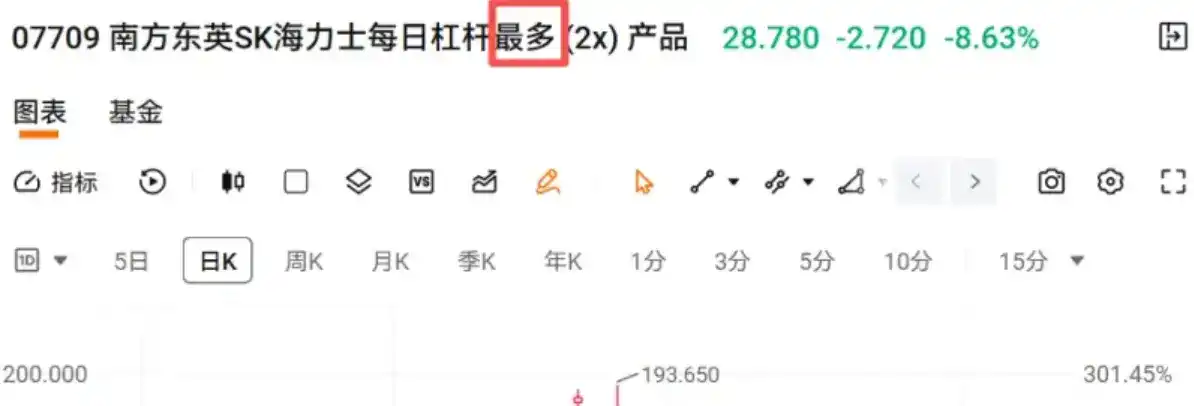
South China Morning Post The leveraged ETF tracking SK Hynix has surged over tenfold year-to-date, fueled by intense market speculation on the memory chip sector. By June 22, the value of the 'South Korea 2x Long SK Hynix ETF' listed in Hong Kong had skyrocketed by more than 1,061% since the start of the year, while its asset size exploded over twenty times from the end of last year. The rally is driven by AI-driven demand for high-bandwidth memory (HBM), with SK Hynix recently sampling its next-generation HBM4E product. However, industry professionals warn of significant risks. Leveraged ETFs magnify both gains and losses. During a recent market correction, while the underlying SK Hynix stock fell 19.1%, its double-leveraged ETF dropped nearly 38%. Korean regulators noted that such products could theoretically lose 60% in a single day. Additionally, these ETFs face risks like time decay in volatile markets, liquidity spirals during mass redemptions, and extreme price dislocations from market-making failures, as seen in early June when an ETF moved opposite to its underlying stock. The trading is predominantly driven by retail investors, with institutional capital largely absent due to the products' high volatility. Analysts caution that with the semiconductor sector at elevated valuations and facing geopolitical and supply chain uncertainties, leveraged ETFs pose a substantial threat of amplified losses for uninformed investors.

marsbit25 min fa

Soaring Over Tenfold Within the Year: The Frenzy Over SK Hynix Leveraged Products

marsbit25 min fa

18 Months, Over 50x Surge: KIOXIA's Epic Comeback

KIOXIA, a NAND flash memory giant, staged a dramatic comeback driven by AI demand. After a period of significant losses, a failed merger, and missed HBM opportunities, its 2024 IPO began modestly. However, fueled by explosive demand for AI data storage, its stock price skyrocketed over 50 times within 18 months, making it Japan's most valuable company, surpassing Toyota. Its Q1 FY2026 profit guidance soared 30-fold year-over-year, with 2026 NAND capacity already sold out. Key to its success is its 3D NAND technology, BiCS FLASH. As the inventor of NAND, KIOXIA advanced its technology through generations, reaching over 200 layers by 2023. Key innovations include CBA (CMOS directly Bonded to Array), which separately manufactures control circuits and memory arrays for better performance, and OPS (On Pitch Select Gate) to increase density. The company is now developing high-capacity packages like an 8TB solution stacking 32 dies. Looking beyond NAND, KIOXIA is exploring 3D DRAM with its OCTRAM technology, using oxide semiconductor transistors for ultra-low leakage to reduce power consumption. This fundamental research differs from HBM and represents a long-term bet to extend its 3D expertise from NAND into future DRAM architectures. KIOXIA's story highlights how technological assets and shifting market cycles can rapidly transform a company's fortunes. While questions remain about sustaining growth beyond the current AI boom, its resurgence demonstrates that in semiconductors, being down does not necessarily mean being out.

marsbit35 min fa

18 Months, Over 50x Surge: KIOXIA's Epic Comeback

marsbit35 min fa

Market Trends in U.S. Stocks (June 23): Peak at Listing? SpaceX Loses Over $800 Billion in Three Days, Tech Stocks Experience Severe Internal Divergence

Stock Market Trends (June 23): Did SpaceX Peak at IPO? The company loses over $800 billion in market value in three days as a sharp divergence unfolds within the tech sector. SpaceX's post-IPO decline of over 20%, falling below its first-day close, reflects a swift market repricing. The catalyst is a clear shift in narrative from "AI platform potential" to concerns over rising capital costs, as its $8.57 billion IPO and subsequent $20 billion debt offering are earmarked for acquisitions and refinancing existing bridge loans rather than de-leveraging. While high-valuation tech stocks like Google, Meta, Amazon, and Microsoft faced pressure, Micron surged nearly 7% to a record high following a strategic supply deal with Anthropic for HBM and memory, highlighting robust, tangible demand in AI infrastructure. The broader market saw funds rotate into more defensive industrial and financial names. Macro factors included a dip in oil prices to a three-month low on news of a US-Iran framework deal, though logistical hurdles for resuming full Strait of Hormuz shipments remain. Key events ahead include Nvidia's shareholder meeting, Micron's earnings, and the May PCE inflation data. The latter will be crucial in determining whether the sell-off in high-valuation growth stocks, which appears to have just begun, will persist.

marsbit45 min fa

Market Trends in U.S. Stocks (June 23): Peak at Listing? SpaceX Loses Over $800 Billion in Three Days, Tech Stocks Experience Severe Internal Divergence

marsbit45 min fa

Interview with MicroStrategy CEO: Beyond the 32 BTC Selling Stir, 6 Trillion AI Agents are the Ultimate Endgame for Bitcoin

Interview with Strategy CEO: Beyond the 32 BTC Sale, 6 Trillion AI Agents are Bitcoin's Ultimate Endgame Strategy CEO Phong Le discusses the recent sale of 32 BTC, clarifying it was a minor, strategic move to demonstrate operational liquidity and internal process robustness to creditors and rating agencies, not a reaction to market fears. He emphasizes Strategy's disciplined, data-driven decision-making framework involving its board and complex financial modeling, distancing the company from centralized "black box" operations seen elsewhere in crypto. Le outlines the company's resilience and long-term focus, citing the "doing nothing" strategy during the 2022 bear market as a testament to its conviction in Bitcoin's underlying value proposition for global sovereignty and freedom. He reveals that generative AI was instrumental in developing their Stretch (STRC) preferred stock product, cutting development time from years to months. The most visionary part of the discussion centers on Agentic AI. Le envisions a future with 6 trillion autonomous AI agents conducting commerce, particularly in off-world environments like Mars, which would naturally adopt decentralized crypto rails and seek yield-bearing assets like Bitcoin as a core store of value. Finally, Le addresses the STRC product, expressing confidence it will return to its $100 par value through reserve replenishment and the initiation of dividend payments, and dismisses concerns about competition with stablecoins. He concludes by affirming Strategy's philosophy of expanding Bitcoin access through all available means, from self-custody to ETFs, to onboard the next wave of users.

marsbit1 h fa

Interview with MicroStrategy CEO: Beyond the 32 BTC Selling Stir, 6 Trillion AI Agents are the Ultimate Endgame for Bitcoin

marsbit1 h fa

Trading

Spot
Futures

Articoli Popolari

Cosa è BITCOIN

Comprendere HarryPotterObamaSonic10Inu (ERC-20) e la sua posizione nel mondo delle criptovalute Negli ultimi anni, il mercato delle criptovalute ha assistito a un aumento della popolarità delle meme coin, catturando l'interesse non solo dei trader, ma anche di coloro che cercano coinvolgimento comunitario e valore di intrattenimento. Tra questi token unici c'è HarryPotterObamaSonic10Inu (ERC-20), un progetto intrigante che mescola riferimenti culturali nel tessuto delle criptovalute. Questo articolo esplora gli aspetti chiave di HarryPotterObamaSonic10Inu, analizzando i suoi meccanismi, l'etica guidata dalla comunità e il suo coinvolgimento con il panorama crittografico più ampio. Che cos'è HarryPotterObamaSonic10Inu (ERC-20)? Come suggerisce il suo nome, HarryPotterObamaSonic10Inu è una meme coin costruita sulla blockchain di Ethereum, classificata secondo lo standard ERC-20. A differenza delle criptovalute tradizionali che possono enfatizzare l'utilità pratica o il potenziale investimento, questo token prospera grazie al valore di intrattenimento e alla forza della sua comunità. Il progetto mira a creare un ambiente in cui gli utenti coinvolti possono riunirsi, condividere idee e partecipare ad attività ispirate a diversi fenomeni culturali. Una caratteristica notevole di HarryPotterObamaSonic10Inu è la zero tassa sulle transazioni. Questo elemento allettante tende a incoraggiare il trading e il coinvolgimento della comunità, privo di costi aggiuntivi che possono scoraggiare i trader di piccole dimensioni. L'offerta totale della moneta è fissata a un miliardo di token, un numero che segna la sua intenzione di mantenere una circolazione sostanziale all'interno della comunità. Creatore di HarryPotterObamaSonic10Inu (ERC-20) Le origini di HarryPotterObamaSonic10Inu sono avvolte in un certo mistero; i dettagli sul creatore rimangono sconosciuti. Lo sviluppo di questo token non presenta un team identificabile o un piano esplicito, cosa non rara nel settore delle meme coin. Invece, il progetto è emerso organicamente, con il suo progresso fortemente dipendente dall'entusiasmo e dalla partecipazione della sua comunità. Investitori di HarryPotterObamaSonic10Inu (ERC-20) Per quanto riguarda investimenti esterni e finanziamenti, HarryPotterObamaSonic10Inu rimane ambiguo. Il token non elenca alcuna fondazione di investimento conosciuta o un sostegno organizzativo significativo. Invece, la linfa vitale del progetto è la sua comunità di base, che informa la sua crescita e sostenibilità attraverso azioni collettive e coinvolgimento nello spazio crittografico. Come funziona HarryPotterObamaSonic10Inu (ERC-20)? In quanto meme coin, HarryPotterObamaSonic10Inu opera principalmente al di fuori delle strutture tradizionali che governano spesso il valore degli asset. Ci sono diversi aspetti distintivi che definiscono il funzionamento del progetto: Transazioni senza tasse: Senza costi fiscali sulle transazioni, gli utenti possono comprare e vendere liberamente il token senza preoccuparsi di costi nascosti. Coinvolgimento della comunità: Il progetto prospera sull'interazione della comunità, sfruttando le piattaforme social per creare entusiasmo e facilitare il coinvolgimento. Discussioni, condivisione di contenuti e coinvolgimento sono elementi cruciali che aiutano ad espandere la sua portata e a favorire la lealtà tra i sostenitori. Nessuna utilità pratica: Va notato che HarryPotterObamaSonic10Inu non offre un'utilità concreta all'interno dell'ecosistema finanziario. Piuttosto, è classificato come un token principalmente per attività di intrattenimento e comunitarie. Riferimento culturale: Il token incorpora astutamente elementi della cultura pop per attirare interesse, collegandosi a appassionati di meme e seguaci delle criptovalute. HarryPotterObamaSonic10Inu esemplifica come le meme coin operino in modo diverso rispetto ai progetti di criptovalute più tradizionali, entrando nel mercato come costrutti sociali innovativi piuttosto che come asset utilitari. Cronologia di HarryPotterObamaSonic10Inu (ERC-20) La storia di HarryPotterObamaSonic10Inu è segnata da diversi traguardi notevoli: Creazione: Il token è emerso da un meme virale, catturando l'immaginazione di molti appassionati di criptovalute. Le date di creazione specifiche non sono disponibili, sottolineando la sua crescita organica. Inserimento negli scambi: HarryPotterObamaSonic10Inu ha fatto il suo ingresso in vari scambi, consentendo un accesso e un trading più facili da parte della comunità. Iniziative di coinvolgimento della comunità: Attività in corso volte a migliorare l'interazione della comunità, comprese gare, campagne sui social media e generazione di contenuti da parte di fan e sostenitori. Piani di espansione futura: La tabella di marcia del progetto include il lancio di una collezione NFT, merchandising e un sito di eCommerce relativo ai suoi temi culturali, coinvolgendo ulteriormente la comunità e cercando di aggiungere più dimensioni al suo ecosistema. Punti chiave su HarryPotterObamaSonic10Inu (ERC-20) Natura guidata dalla comunità: Il progetto dà priorità al contributo collettivo e alla creatività, garantendo che il coinvolgimento degli utenti sia al centro del suo sviluppo. Classificazione come meme coin: Rappresenta l'epitome delle criptovalute basate sull'intrattenimento, distinguendosi dai veicoli d'investimento tradizionali. Nessuna affiliazione diretta con Bitcoin: Nonostante la somiglianza nel nome del ticker, HarryPotterObamaSonic10Inu è distintivo e non ha alcuna relazione con Bitcoin o altre criptovalute consolidate. Focus sulla collaborazione: HarryPotterObamaSonic10Inu è progettato per creare uno spazio per la collaborazione e la condivisione di storie tra i suoi detentori, fornendo un canale per la creatività e il legame comunitario. Prospettive future: L'ambizione di espandersi oltre il suo presupposto iniziale verso NFT e merchandising delinea un percorso per il progetto per potenzialmente entrare in strade più mainstream all'interno della cultura digitale. Poiché le meme coin continuano a catturare l'immaginazione della comunità crittografica, HarryPotterObamaSonic10Inu (ERC-20) si distingue per i suoi legami culturali e il suo approccio centrato sulla comunità. Anche se potrebbe non adattarsi al modello tipico di un token orientato all'utilità, la sua essenza risiede nella gioia e nella camaraderia coltivate tra i suoi sostenitori, evidenziando la natura in evoluzione delle criptovalute in un'epoca sempre più digitale. Con la continuazione dello sviluppo del progetto, sarà importante osservare come le dinamiche della comunità influenzano la sua traiettoria nel panorama in continuo cambiamento della tecnologia blockchain.

1.7k Totale visualizzazioniPubblicato il 2024.04.01Aggiornato il 2024.12.03

Cosa è BITCOIN

Come comprare BTC

Benvenuto in HTX.com! Abbiamo reso l'acquisto di Bitcoin (BTC) semplice e conveniente. Segui la nostra guida passo passo per intraprendere il tuo viaggio nel mondo delle criptovalute.Step 1: Crea il tuo Account HTXUsa la tua email o numero di telefono per registrarti il tuo account gratuito su HTX. Vivi un'esperienza facile e sblocca tutte le funzionalità,Crea il mio accountStep 2: Vai in Acquista crypto e seleziona il tuo metodo di pagamentoCarta di credito/debito: utilizza la tua Visa o Mastercard per acquistare immediatamente BitcoinBTC.Bilancio: Usa i fondi dal bilancio del tuo account HTX per fare trading senza problemi.Terze parti: abbiamo aggiunto metodi di pagamento molto utilizzati come Google Pay e Apple Pay per maggiore comodità.P2P: Fai trading direttamente con altri utenti HTX.Over-the-Counter (OTC): Offriamo servizi su misura e tassi di cambio competitivi per i trader.Step 3: Conserva Bitcoin (BTC)Dopo aver acquistato Bitcoin (BTC), conserva nel tuo account HTX. In alternativa, puoi inviare tramite trasferimento blockchain o scambiare per altre criptovalute.Step 4: Scambia Bitcoin (BTC)Scambia facilmente Bitcoin (BTC) nel mercato spot di HTX. Accedi al tuo account, seleziona la tua coppia di trading, esegui le tue operazioni e monitora in tempo reale. Offriamo un'esperienza user-friendly sia per chi ha appena iniziato che per i trader più esperti.

4.0k Totale visualizzazioniPubblicato il 2024.12.12Aggiornato il 2026.06.02

Come comprare BTC

Cosa è $BITCOIN

ORO DIGITALE ($BITCOIN): Un'Analisi Completa Introduzione all'ORO DIGITALE ($BITCOIN) L'ORO DIGITALE ($BITCOIN) è un progetto basato su blockchain che opera sulla rete Solana, con l'obiettivo di combinare le caratteristiche dei metalli preziosi tradizionali con l'innovazione delle tecnologie decentralizzate. Sebbene condivida un nome con Bitcoin, spesso definito “oro digitale” a causa della sua percezione come riserva di valore, l'ORO DIGITALE è un token separato progettato per creare un ecosistema unico all'interno del panorama Web3. Il suo obiettivo è posizionarsi come un asset digitale alternativo valido, anche se i dettagli riguardanti le sue applicazioni e funzionalità sono ancora in fase di sviluppo. Cos'è l'ORO DIGITALE ($BITCOIN)? L'ORO DIGITALE ($BITCOIN) è un token di criptovaluta esplicitamente progettato per l'uso sulla blockchain di Solana. A differenza di Bitcoin, che fornisce un ruolo di stoccaggio di valore ampiamente riconosciuto, questo token sembra concentrarsi su applicazioni e caratteristiche più ampie. Aspetti notevoli includono: Infrastruttura Blockchain: Il token è costruito sulla blockchain di Solana, nota per la sua capacità di gestire transazioni ad alta velocità e a basso costo. Dinamiche di Offerta: L'ORO DIGITALE ha un'offerta massima fissata a 100 quadrilioni di token (100P $BITCOIN), sebbene i dettagli riguardanti la sua offerta circolante siano attualmente non divulgati. Utilità: Sebbene le funzionalità precise non siano esplicitamente delineate, ci sono indicazioni che il token potrebbe essere utilizzato per varie applicazioni, potenzialmente coinvolgendo applicazioni decentralizzate (dApp) o strategie di tokenizzazione degli asset. Chi è il Creatore dell'ORO DIGITALE ($BITCOIN)? Attualmente, l'identità dei creatori e del team di sviluppo dietro l'ORO DIGITALE ($BITCOIN) rimane sconosciuta. Questa situazione è tipica tra molti progetti innovativi nel settore blockchain, in particolare quelli allineati con la finanza decentralizzata e i fenomeni delle meme coin. Sebbene tale anonimato possa favorire una cultura guidata dalla comunità, intensifica le preoccupazioni riguardo alla governance e alla responsabilità. Chi sono gli Investitori dell'ORO DIGITALE ($BITCOIN)? Le informazioni disponibili indicano che l'ORO DIGITALE ($BITCOIN) non ha alcun sostenitore istituzionale noto o investimenti di venture capital prominenti. Il progetto sembra operare su un modello peer-to-peer incentrato sul supporto e sull'adozione della comunità piuttosto che su percorsi di finanziamento tradizionali. La sua attività e liquidità si trovano principalmente su exchange decentralizzati (DEX), come PumpSwap, piuttosto che su piattaforme di trading centralizzate consolidate, evidenziando ulteriormente il suo approccio di base. Come Funziona l'ORO DIGITALE ($BITCOIN) Le meccaniche operative dell'ORO DIGITALE ($BITCOIN) possono essere elaborate in base al suo design blockchain e alle caratteristiche della rete: Meccanismo di Consenso: Sfruttando il proof-of-history (PoH) unico di Solana combinato con un modello di proof-of-stake (PoS), il progetto garantisce una validazione efficiente delle transazioni contribuendo all'alta performance della rete. Tokenomics: Sebbene meccanismi deflazionistici specifici non siano stati dettagliati ampiamente, l'ampia offerta massima di token implica che potrebbe soddisfare microtransazioni o casi d'uso di nicchia che devono ancora essere definiti. Interoperabilità: Esiste il potenziale per l'integrazione con l'ecosistema più ampio di Solana, inclusi vari piattaforme di finanza decentralizzata (DeFi). Tuttavia, i dettagli riguardanti integrazioni specifiche rimangono non specificati. Cronologia degli Eventi Chiave Ecco una cronologia che evidenzia traguardi significativi riguardanti l'ORO DIGITALE ($BITCOIN): 2023: Il dispiegamento iniziale del token avviene sulla blockchain di Solana, contrassegnato dal suo indirizzo di contratto. 2024: L'ORO DIGITALE guadagna visibilità poiché diventa disponibile per il trading su exchange decentralizzati come PumpSwap, consentendo agli utenti di scambiarlo contro SOL. 2025: Il progetto assiste a un'attività di trading sporadica e a un potenziale interesse per impegni guidati dalla comunità, sebbene non siano state documentate partnership significative o avanzamenti tecnici fino ad ora. Analisi Critica Punti di Forza Scalabilità: L'infrastruttura sottostante di Solana supporta alti volumi di transazioni, il che potrebbe migliorare l'utilità di $BITCOIN in vari scenari di transazione. Accessibilità: Il potenziale basso prezzo di trading per token potrebbe attrarre investitori al dettaglio, facilitando una partecipazione più ampia grazie a opportunità di proprietà frazionata. Rischi Mancanza di Trasparenza: L'assenza di sostenitori, sviluppatori o di un processo di audit pubblicamente noti potrebbe generare scetticismo riguardo alla sostenibilità e all'affidabilità del progetto. Volatilità del Mercato: L'attività di trading è fortemente dipendente dal comportamento speculativo, il che può comportare una significativa volatilità dei prezzi e incertezze per gli investitori. Conclusione L'ORO DIGITALE ($BITCOIN) emerge come un progetto intrigante ma ambiguo all'interno dell'evolvente ecosistema di Solana. Sebbene tenti di sfruttare la narrativa dell'“oro digitale”, la sua partenza dal ruolo consolidato di Bitcoin come riserva di valore sottolinea la necessità di una chiara differenziazione della sua utilità e struttura di governance. L'accettazione e l'adozione future dipenderanno probabilmente dall'affrontare l'attuale opacità e dalla definizione più esplicita delle sue strategie operative ed economiche. Nota: Questo rapporto comprende informazioni sintetizzate disponibili a ottobre 2023, e potrebbero essersi verificati sviluppi oltre il periodo di ricerca.

103 Totale visualizzazioniPubblicato il 2025.05.13Aggiornato il 2025.05.13

Cosa è $BITCOIN

Discussioni

Benvenuto nella Community HTX. Qui puoi rimanere informato sugli ultimi sviluppi della piattaforma e accedere ad approfondimenti esperti sul mercato. Le opinioni degli utenti sul prezzo di BTC BTC sono presentate come di seguito.

活动图片