In a Surprising Move, Pope and Anthropic Founder to Jointly Hold Press Conference

marsbitPubblicato 2026-05-19Pubblicato ultima volta 2026-05-19

Introduzione

In a surprising move, Pope Leo XIV will release his first encyclical, "Magnifica Humanitas," on May 26th, focusing on protecting humanity in the AI age. Anthropic co-founder Chris Olah will join him. This event, drawing parallels to a historic 1891 encyclical on labor rights, highlights the Vatican's attempt to fill the AI governance vacuum with moral authority for its 1.4 billion followers. The Vatican also established a new AI committee. The partnership aligns with Anthropic's focus on AI interpretability and safety, and its stance against military AI use. Critics, however, see this as a distraction from core questions about whether certain AI systems should be built at all, and note the lack of enforceable global AI regulation. The core question addressed is: as machines increasingly mimic human abilities, what defines human dignity? The text argues that human finitude—our mortality and capacity to suffer consequences—grounds meaningful choice and moral responsibility in a way AI cannot replicate. The ultimate warning is against outsourcing judgment and accountability to machines.

Pope Leo XIV will issue his first encyclical on May 26, focusing directly on AI, with Anthropic co-founder and Claude creator Chris Olah invited to share the stage. The Vatican simultaneously establishes an AI Commission. A 2,000-year-old institution is attempting to fill the AI governance vacuum with moral authority—covering a population larger than any AI bill's jurisdiction.

An institution with 1.4 billion followers, enduring for two millennia, has placed AI as its top agenda, even pulling in the creator of Claude to jointly release a position paper.

The core question this document aims to answer is precisely the one the entire AI industry cannot avoid—As machines become more and more like humans, what is human dignity and irreplaceability truly built upon?

On May 26, Pope Leo XIV will issue the encyclical "Magnifica Humanitas" ("Magnificent Humanity") at the Vatican, focusing on "protecting the human person in the age of AI."

An encyclical is one of the highest-level teaching documents of the Catholic Church, addressed to 1.4 billion Catholics worldwide, and also a symbolic action for a new Pope to highlight his governance priorities.

This Pope, an American with a mathematics background, has consistently been concerned with ethics in the AI age, aiming to protect humanity.

The Pope's First Encyclical, Written for AI

This release breaks two conventions.

Popes usually do not personally attend encyclical releases, delegating the task to a cardinal, but Leo XIV has chosen to be present.

Simultaneously inviting Anthropic co-founder Chris Olah as a lay spokesperson is almost unprecedented in the history of encyclical releases.

Vatican journalist Andrea Vreede's assessment is, "If only a cardinal released it, no one would really listen, but with the Pope present, all lenses will be focused there."
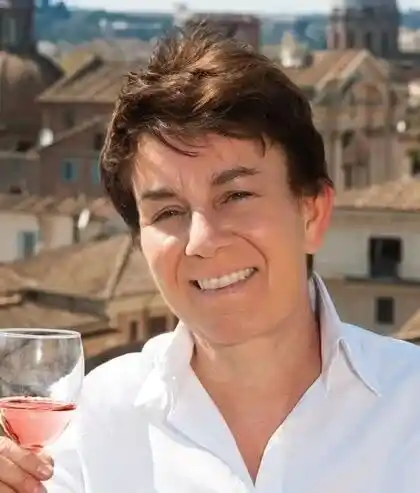
The timing was carefully chosen.

The encyclical was signed on May 15, coincidentally the same day 135 years ago when Pope Leo XIII signed the encyclical "Rerum Novarum."
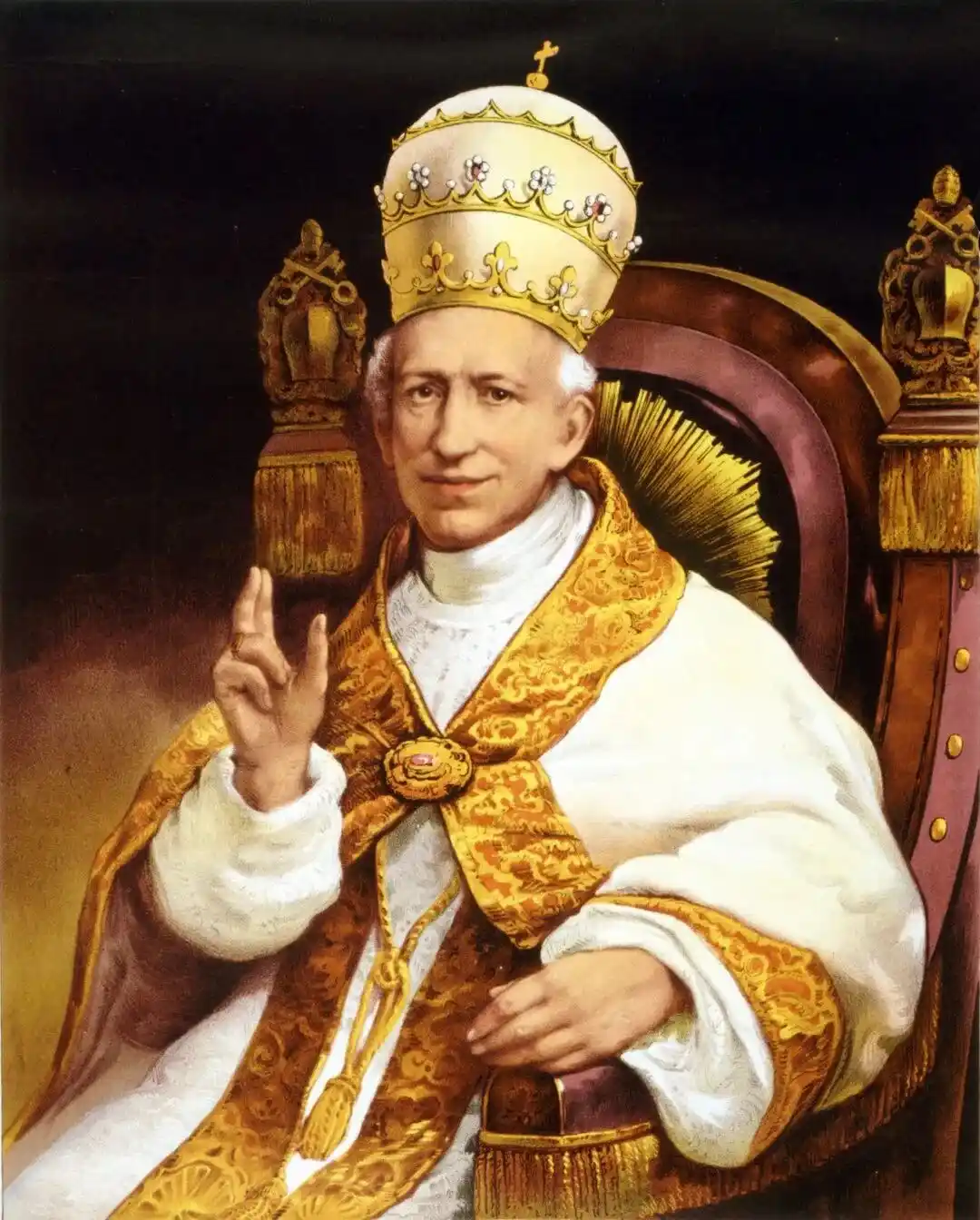
Leo XIII

"Rerum Novarum" responded to the impact of the Industrial Revolution on labor rights and is regarded as a foundational document of Catholic social teaching.

Leo XIV explicitly referenced this connection in his inaugural address: "The Church offers the treasury of its social teaching to everyone in response to yet another industrial revolution, and to developments in the field of artificial intelligence."

Almost simultaneously, the Vatican approved the establishment of an AI Commission on May 16, integrating seven curial institutions for the first time to coordinate previously scattered AI efforts.
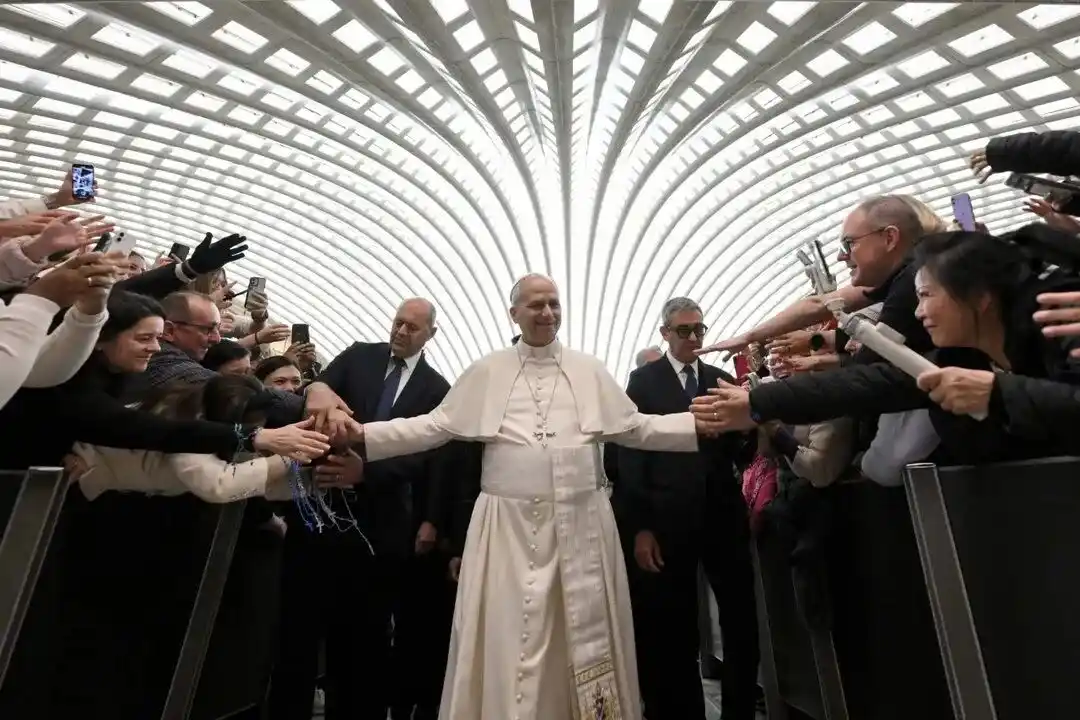
Previously, Leo XIV had already described the militarization of AI as pushing the world into a "spiral of destruction" in a speech at Europe's largest university.

Why Anthropic?

Olah's invitation is a precise alignment of mutual interests.

Olah leads interpretability research at Anthropic, aiming to open AI's black box and understand what neural networks are actually doing internally.

This happens to be the technical version of the Vatican's core concern: Can AI be fully understood and thus trusted?

Anthropic's engagement in religious ethics is systematic.

The company has previously invited clergy to participate in formulating Claude's "Constitution."

Further reading: Anthropic Officially Open Sources Claude's 'Soul'

In late April, representatives from Anthropic and OpenAI jointly participated in the inaugural "Faith-AI Covenant" roundtable in New York, discussing AI ethical frameworks with leaders from Hindu, Sikh, Jewish, Orthodox Christian, and other religious traditions. Follow-up meetings are planned in several cities globally.

A more pragmatic stake lies in Anthropic's current friction with the US government regarding the military use of AI, insisting its models cannot be used for autonomous weapon targeting and mass surveillance. This stance aligns highly with the Holy See's opposition to AI weaponization.

For Anthropic, the Vatican's moral endorsement strengthens its "responsible AI" brand positioning.

For the Vatican, having a company actually conducting AI safety research on stage elevates the encyclical beyond empty preaching. Both parties get what they need.

Silicon Valley long held skepticism towards organized religion.

Brian Boyd of the Future of Life Institute interprets this shift: "Silicon Valley's motto was 'move fast and break things.' They broke too many things and too many people."
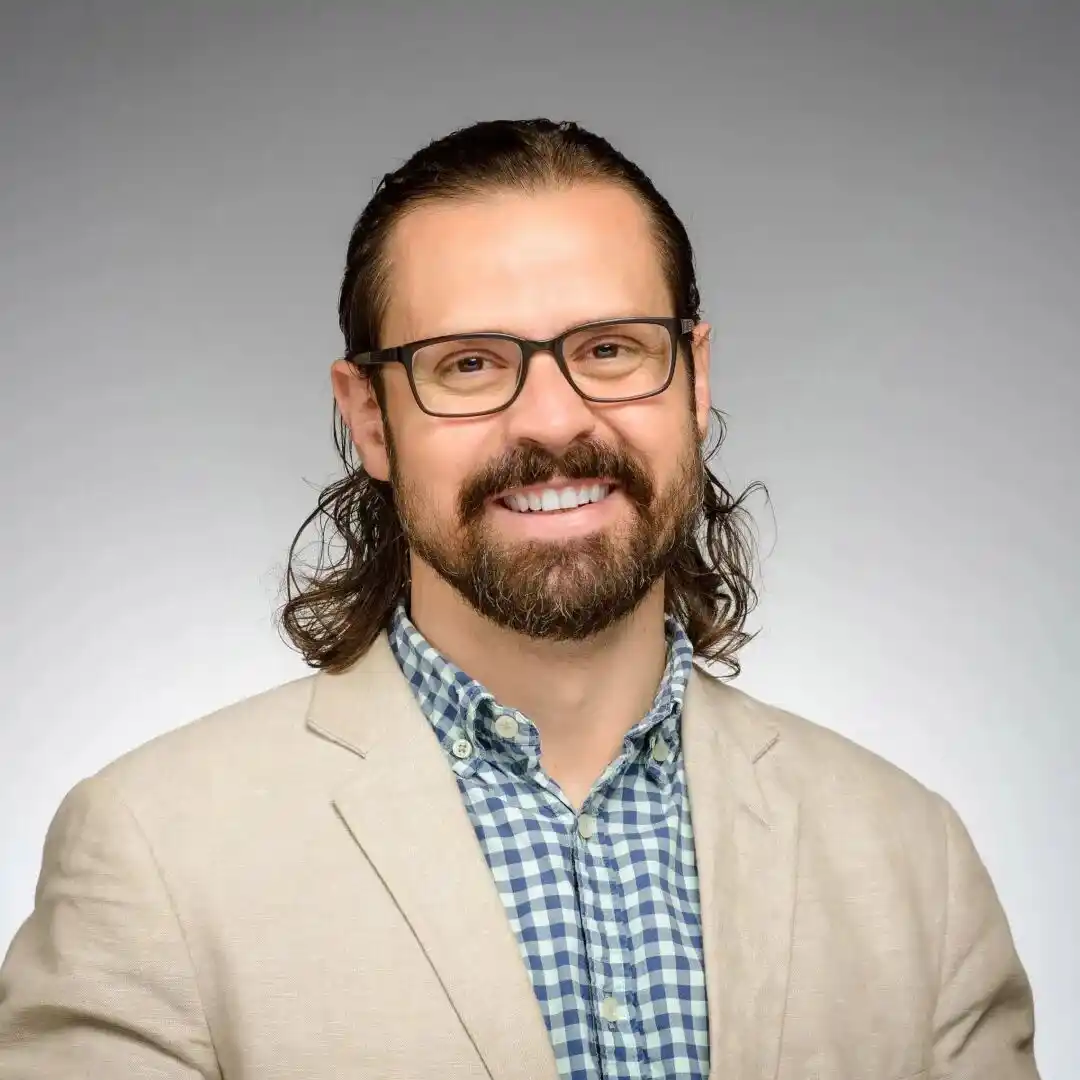
Aligning with religious authority is an attempt to rebuild overdrawn credibility.

Ethical Outsourcing or PR Prop?

The narrative sounds warm, but critics see a different picture.

The sharpest criticism comes from Dylan Baker, Research Lead at the Distributed AI Research (DAIR) Institute.

He argues that discussions around "ethical AI" obscure a more fundamental question: Should certain AI systems be developed at all?

When the discussion framework becomes "since we're building it, let's build it well," the preliminary question of "whether to build it" is completely bypassed.

Humane Intelligence CEO Rumman Chowdhury, former AI Science Envoy for the Biden administration, is similarly lukewarm: "At best it's a distraction, at worst it's derailing the issues that really matter."

She believes Silicon Valley is trying to find "universal ethical principles" from religion to handle gray areas, but the value differences among global religious traditions are no smaller than regulatory differences between nations.

The structural dilemma is even more evident.

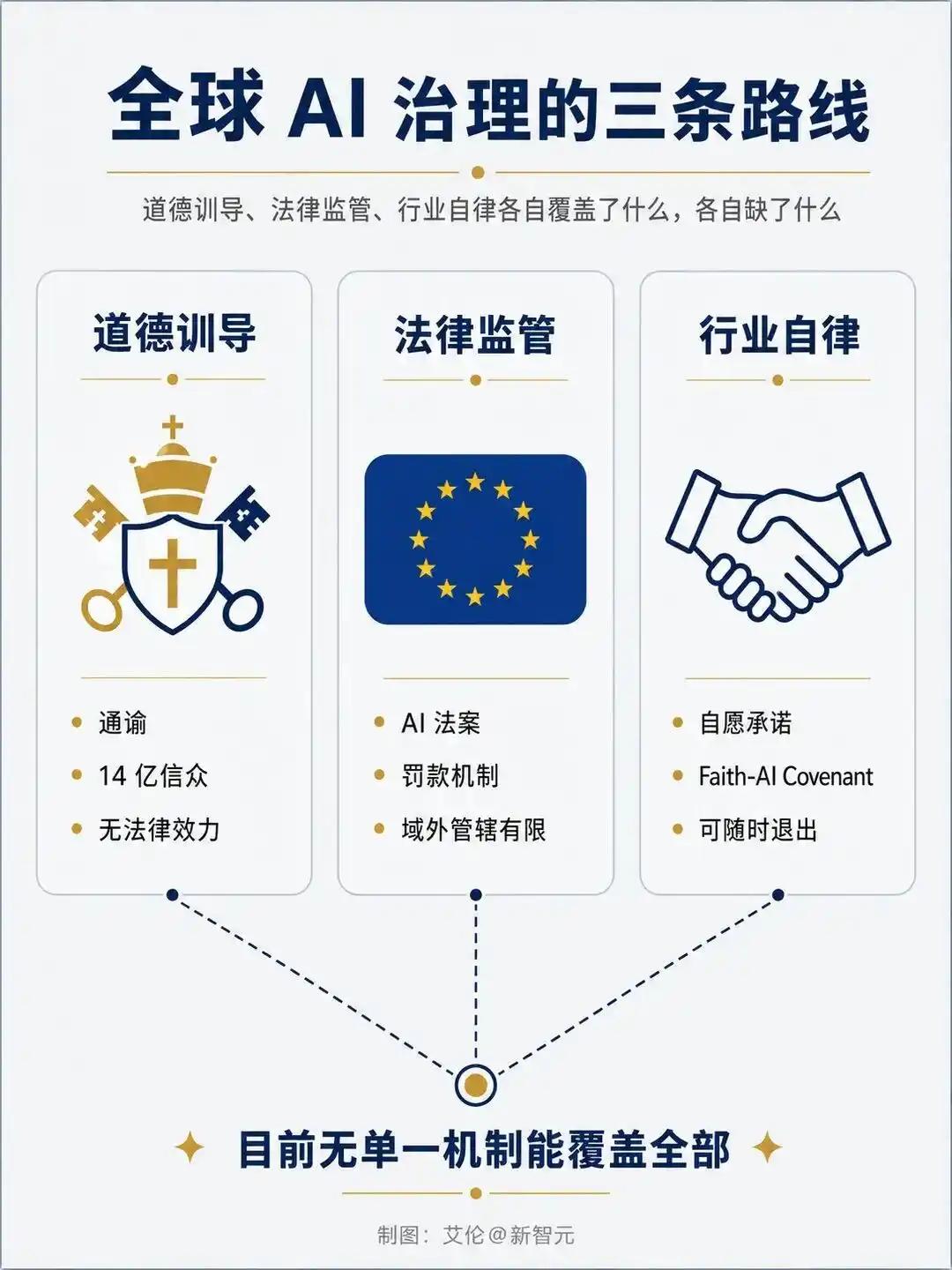
Papal encyclicals rely on moral suasion and have no legal binding force.

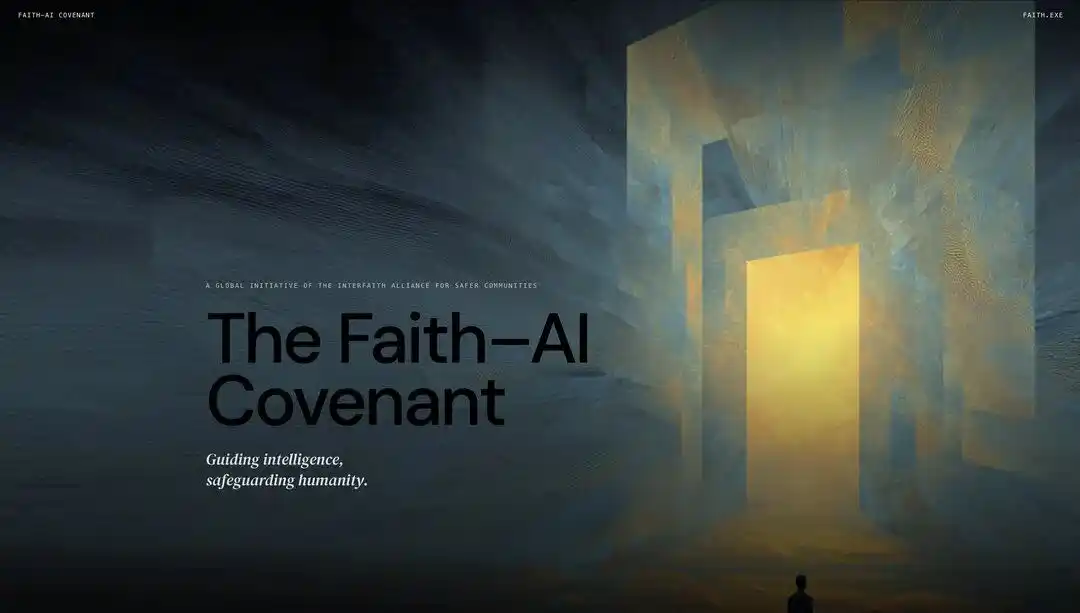
The Faith-AI Covenant is a voluntary pledge; participants can withdraw at any time.
The EU AI Act carries fines of up to €35 million or 7% of global revenue, but its extraterritorial reach is limited.

The US federal level still lacks a unified AI regulatory framework.

Currently, no single mechanism globally can effectively constrain the pace of AI development.

The Holy See is filling a vacuum of discourse, not a vacuum of governance capability.
As Machines Become More Like Humans, What Do Humans Rely on to Confirm They Are Human?

All discussions on AI ethics, whether rooted in religious doctrine, legal statutes, or corporate values, ultimately point to the same underlying question: Where does human irreplaceability lie?

People have offered many answers in the past: intelligence, creativity, linguistic ability, emotional resonance, moral judgment.

These answers are being shaken one by one.

AI can write poetry, compose music, pass the bar exam, and make users form real emotional attachments to it.

When these abilities once considered "what makes us human" can all be simulated, what can humans still use to define themselves?

The answer might lie in an attribute AI can never possess: finitude.

Humans die.

Precisely because life has an end, every choice carries weight, every sacrifice has a cost, every promise holds meaning.

Moral judgment is never just a product of logical deduction.

It's built on the visceral experience that "making a mistake causes pain, regret, and the loss of something irreplaceable."

AI can simulate the process of weighing pros and cons, but it lacks the capacity to bear consequences, the urgency brought by mortality, the existential anxiety of "having only one chance in this lifetime."

In the face of the advent of AGI or even ASI, the scenario truly worth vigilance is humans, while having the power of choice, actively outsourcing judgment, decision-making, and even moral responsibility to machines.

Humans are too eager to escape the act of "making a decision and then bearing the consequences," and AI happens to provide a seemingly perfect outlet.

The Pope's encyclical, Anthropic's Constitution, the Faith-AI Covenant roundtables—different in form, but sharing the same underlying message: Technology can evolve infinitely, but the one who ultimately presses the button must be a mortal, vulnerable human being who feels pain and must be responsible for the consequences.

This is likely what "Magnifica Humanitas" truly wants to say.

References:

https://www.theguardian.com/world/2026/may/18/pope-leo-encyclical-human-dignity-ai-anthropic

This article is from the WeChat public account "Xinzhiyuan," author: Xinzhiyuan

Domande pertinenti

QWho are the two main figures highlighted in the article regarding the upcoming AI-focused encyclical?

AThe article highlights Pope Leo XIV, who will issue the encyclical, and Chris Olah, the co-founder of Anthropic and creator of Claude. Both will be present at the release event.

QWhat is the historical significance of the date May 15th mentioned in the article?

AMay 15th is significant because it is the same date in 1891 when Pope Leo XIII signed the landmark encyclical 'Rerum Novarum,' which addressed the social issues of the Industrial Revolution. Pope Leo XIV signed his new AI-focused encyclical on the same date, drawing a parallel between the two technological revolutions.

QWhat specific area of AI research does Chris Olah lead at Anthropic, and why does it align with the Vatican's concerns?

AChris Olah leads interpretability research at Anthropic, which aims to open the 'black box' of AI to understand how neural networks function. This aligns with the Vatican's core concern about whether AI can be sufficiently understood and, therefore, trusted.

QWhat is one of the main criticisms presented in the article regarding the 'ethical AI' discussions between tech companies and religious institutions?

AOne main criticism is that these discussions on 'how to build AI ethically' often bypass the more fundamental question of 'whether certain AI systems should be built at all.' Critics argue this framing legitimizes the development of potentially harmful systems from the outset.

QAccording to the article, what uniquely human attribute might form the basis for human dignity in the age of AI?

AThe article suggests that human finitude, particularly the fact that humans are mortal, is a key attribute. Mortality gives weight to choices, consequences, and commitments—an experiential foundation for moral judgment that an AI, which does not face death or irreversible loss, cannot truly possess.

Letture associate

Where the AI Bubble Really Is: Which Layer of Players Are Naked

AI Bubble: Where It Really Is and Who's Swimming Naked This analysis dissects the AI industry not as a single entity but as a five-layer pyramid, arguing that bubbles are concentrated in specific tiers, not uniformly distributed. **Key Distinction from the 2000 Dot-com Bubble:** Unlike 2000, where companies had stock prices before revenue, today's leading AI players have massive, contract-backed revenue driving their valuations. Core infrastructure demand is real, with every GPU running at full capacity for paying customers. **The Five-Layer Pyramid & Bubble Assessment:** * **L0 (Fab/Manufacturing) & Top L4 (Leading AI Apps): NO BUBBLE.** Companies like TSMC, NVIDIA, major cloud providers (Microsoft, Google, Meta, Amazon), and top AI labs have real revenues and orders. Supply is tightly constrained by TSMC's disciplined capacity control and physical limits like power/land for data centers, preventing a supply glut. * **L1 (Memory): BATTLEGROUND.** Sky-high HBM margins could signal a new structural cycle or a classic "boom before bust." The oligopoly of three major players may enforce supply discipline, making this a high-stakes bet. * **L2 (Interconnect/Optical Modules): BUBBLE TERRITORY.** Companies like Lumentum and AAOI have seen stock surges (4-10x) far outpacing revenue growth. This hardware segment has lower physical barriers to expansion than fabs, allowing speculation. It mirrors the 2000 bubble's epicenter—optics. * **L3 (Infrastructure/"GPU Landlords"): VULNERABLE.** GPU leasing companies profit from the current compute shortage but own no long-term moat. Their business model relies on a temporary bottleneck that will ease as big tech expands and new tech (e.g., potential space-based data centers) emerges. * **L4 Long Tail (VC-backed Startups): STRONG BUBBLE SIGNALS.** VC funding concentration in AI is twice that of the 1999 peak. Many startups with little revenue use the valuation logic of successful giants to justify their own, creating high risk of a "valuation crunch" when funding dries up. **Critical Risks to Monitor:** 1. **GPU Depreciation & Accounting:** Companies extending the assumed useful life of GPUs artificially boost profits. The true economic life depends on future generational leaps from NVIDIA. 2. **"GPU Credit" & Off-Balance-Sheet Leverage:** Emerging structures where shell companies borrow to buy GPUs and lease them out (with chipmakers sometimes investing) move debt off major balance sheets. This echoes the "vendor financing" of 2000 and the securitization risks of 2008, though currently small-scale. 3. **TSMC Abandoning Caution:** If the primary supply bottleneck (TSMC's conservative capacity planning) breaks, runaway supply could trigger a bust. 4. **Algorithmic Efficiency Breakthrough:** A major leap in software efficiency could drastically reduce the need for raw compute hardware, undermining the investment thesis. **Conclusion:** The AI boom is expensive and has frothy areas, but its core is underpinned by real demand and physical supply constraints. The bubble risk is layered: most present in optical components, GPU leasing, and the long-tail startup ecosystem, while the foundational chip manufacturing and leading application layers remain relatively solid—for now.

marsbit15 min fa

Where the AI Bubble Really Is: Which Layer of Players Are Naked

marsbit15 min fa

Standing in the Light: A Comprehensive Guide to the Optical Module and CPO Supply Chain

"Standing in the Light: Understanding the Optical Module and CPO Industry Chain" This article analyzes the critical role of optical communication technology, specifically optical modules and Co-Packaged Optics (CPO), as the "nervous system" for modern AI data centers. With exponential growth in AI computational demands (e.g., NVIDIA's Vera Rubin architecture), traditional electrical interconnects using copper cables face severe bottlenecks in bandwidth, power consumption, and signal integrity over distance. The core function of an optical module is to act as a "translator," converting electrical signals from chips into optical signals for transmission over fiber (and vice-versa). Key internal components include lasers, modulators, photodetectors, drivers, and DSP chips. The industry is currently transitioning from 800G to 1.6T modules. However, the future lies in CPO. This next-generation technology integrates the optical engine directly with the switch ASIC/XPU on the same package substrate, drastically reducing power consumption (by ~3.5x according to NVIDIA), overcoming bandwidth density limits, and minimizing signal attenuation compared to traditional pluggable modules. Key challenges for CPO include advanced packaging capacity (dominated by TSMC), thermal management, repairability, and standardization. The article details the broader technology landscape, including Near-Packaged Optics (NPO, a pragmatic intermediate step), Linear-drive Pluggable Optics (LPO), Optical I/O (OIO for chip-level integration), and Optical Circuit Switches (OCS). A comprehensive CPO industry chain is mapped, highlighting shifting power dynamics: * **Architecture Definers:** NVIDIA, Broadcom, and Marvell now hold greater influence. * **Advanced Packaging & Manufacturing:** TSMC is central; Fabrinet is a key EMS player. * **Lasers ("The Heart"):** A strategic bottleneck. EML lasers are led by Lumentum and Coherent (both receiving major NVIDIA investments). CW lasers, favored for CPO/silicon photonics, see strong Chinese players like Source Photonics and Sicoya. * **Silicon Photonics Chips:** The mainstream path for CPO engines, with key players like Broadcom, Intel, Marvell, and China's Accelink. * **Fiber Connectivity Components:** A major new, high-growth market created by CPO, including Fiber Array Units (FAU), Polarization-Maintaining Fiber (PMF), and MPO connectors. Companies like Tianfu Communication and US Conec are leaders. * **Fiber & Cable:** Experiencing a super-cycle (e.g., Corning, Yangtze Optical Fiber). * **PCB/Substrates:** Requiring advanced materials (e.g., Shengyi Tech). * **DSP & SerDes:** Functions are integrated into switch ASICs in the CPO era (e.g., Broadcom, Astera Labs). * **Optical Module Makers:** Transitioning from standalone module suppliers to providers of optical engines and NPO/LPO solutions while riding the current pluggable boom (e.g., Zhongji Innolight, Eoptolink). The investment timeline is segmented: Short-term (2026-2027) features the "last feast" for pluggable modules and CPO's initial rollout. Medium-term (2027-2029) will see CPO expand and NPO peak. Long-term (2029-2032+) involves CPO/OIO penetration into intra-rack scaling. In conclusion, optical interconnects are fundamental to AI infrastructure. The competitive landscape sees US firms leading in architecture and high-end chips, TSMC in advanced packaging, and Chinese firms holding strong positions in modules, connectivity components, CW lasers, and fiber/cable. The future belongs to companies that can navigate the technological shift from "selling shovels" (modules) to "building highways" (CPO/OIO infrastructure).

marsbit25 min fa

Standing in the Light: A Comprehensive Guide to the Optical Module and CPO Supply Chain

marsbit25 min fa

Trading

Spot
Futures

Articoli Popolari

Come comprare MOVE

Benvenuto in HTX.com! Abbiamo reso l'acquisto di Movement (MOVE) semplice e conveniente. Segui la nostra guida passo passo per intraprendere il tuo viaggio nel mondo delle criptovalute.Step 1: Crea il tuo Account HTXUsa la tua email o numero di telefono per registrarti il tuo account gratuito su HTX. Vivi un'esperienza facile e sblocca tutte le funzionalità,Crea il mio accountStep 2: Vai in Acquista crypto e seleziona il tuo metodo di pagamentoCarta di credito/debito: utilizza la tua Visa o Mastercard per acquistare immediatamente MovementMOVE.Bilancio: Usa i fondi dal bilancio del tuo account HTX per fare trading senza problemi.Terze parti: abbiamo aggiunto metodi di pagamento molto utilizzati come Google Pay e Apple Pay per maggiore comodità.P2P: Fai trading direttamente con altri utenti HTX.Over-the-Counter (OTC): Offriamo servizi su misura e tassi di cambio competitivi per i trader.Step 3: Conserva Movement (MOVE)Dopo aver acquistato Movement (MOVE), conserva nel tuo account HTX. In alternativa, puoi inviare tramite trasferimento blockchain o scambiare per altre criptovalute.Step 4: Scambia Movement (MOVE)Scambia facilmente Movement (MOVE) nel mercato spot di HTX. Accedi al tuo account, seleziona la tua coppia di trading, esegui le tue operazioni e monitora in tempo reale. Offriamo un'esperienza user-friendly sia per chi ha appena iniziato che per i trader più esperti.

269 Totale visualizzazioniPubblicato il 2024.12.13Aggiornato il 2026.06.02

Come comprare MOVE

Discussioni

Benvenuto nella Community HTX. Qui puoi rimanere informato sugli ultimi sviluppi della piattaforma e accedere ad approfondimenti esperti sul mercato. Le opinioni degli utenti sul prezzo di MOVE MOVE sono presentate come di seguito.

活动图片