Hyperliquid: Why $648K whale move failed to lift HYPE prices

ambcryptoPubblicato 2026-01-16Pubblicato ultima volta 2026-01-16

Introduzione

Dragonfly Capital withdrew $648.6K worth of HYPE from Bybit, signaling a move to self-custody rather than market accumulation. Despite this, the token’s price continued to weaken due to a lack of broader market support. Spot flows reversed to net inflows, indicating increased selling pressure, and price action failed to break the $28 resistance, exposing downside targets near $22 or lower. Declining Open Interest and muted liquidations further suggest risk-off behavior and a lack of buying interest. Overall, sellers remain in control, and HYPE faces further declines without a shift in demand or flow dynamics.

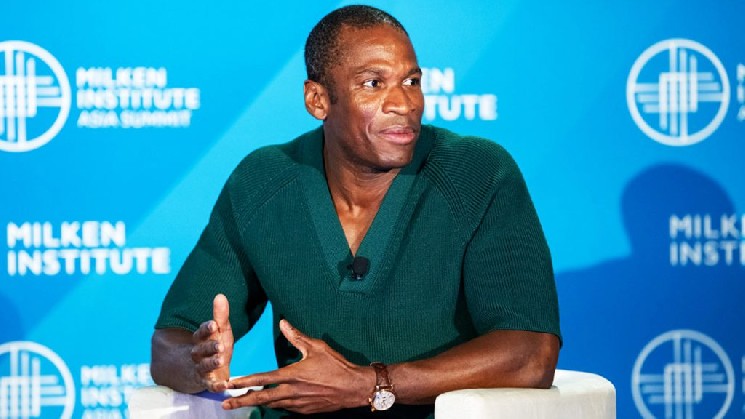
Dragonfly Capital recently withdrew 25,989.71 Hyperliquid [HYPE], worth roughly $648.6K, from Bybit, signaling a deliberate move toward self-custody rather than immediate distribution.

This action suggests conviction at the entity level, yet it does not reflect broad market accumulation. Large players often reposition assets for flexibility, risk management, or internal strategies.

However, such isolated withdrawals lose bullish weight when supporting metrics fail to confirm follow-through. In this case, the price continues to weaken despite the transfer.

Additionally, market participants have not mirrored this behavior at scale. As a result, the withdrawal reads more as selective positioning than a coordinated accumulation phase.

However, without reinforcing demand signals elsewhere, this move alone struggles to shift sentiment meaningfully.

Spot flows reverse as sellers step back in

Spot flow dynamics have shifted sharply, altering the short-term supply picture. The previous session recorded $1.62M in net outflows, briefly signaling reduced exchange supply and easing sell pressure.

However, that trend reversed quickly. Latest data shows a +$538.75K net inflow, indicating tokens have started moving back onto exchanges.

This transition matters. Inflows typically suggest preparation to sell rather than hold. Therefore, the shift implies sellers are already regaining control after a short pause.

Price weakness reinforces this interpretation. Instead of stabilizing after the outflows, HYPE continued to drift lower.

Consequently, the inflow flip undermines the bullish case and strengthens the argument for renewed distribution pressure.

Rejection at $28 sharpens bearish structure

HYPE failed decisively at the $28 resistance, confirming sellers’ dominance at higher levels. The rejection redirected the price toward the $25 support, which now looks increasingly fragile.

If sellers maintain pressure, the structure exposes $22 as the next downside level. Beyond that, prolonged weakness could open the path toward $15 before any meaningful recovery emerges.

Trend indicators reinforce this outlook. At press time, the DMI showed -DI at 24, holding above +DI at 17. This signaled sustained seller control.

Meanwhile, the ADX at 22 confirmed that bearish strength was building rather than fading. Therefore, structure and trend alignment currently favor continuation lower, not stabilization.

OI decline signals risk-off behavior

Derivatives data adds another layer to the bearish setup.

At the time of writing, the Open Interest (OI) fell 7.91% to $1.31 billion, reflecting traders closing positions instead of adding exposure.

During potential bottoms, OI often rises as participants position for rebounds.

The pattern has not appeared here. Instead, traders continue to reduce risk as the price weakens. This behavior suggests uncertainty rather than confidence.

Furthermore, declining OI alongside falling price typically signals position unwinding, not aggressive dip buying.

Consequently, leverage is leaving the market instead of supporting upside attempts. Without renewed speculative interest, the price lacks the fuel required for a sustained bounce.

Liquidations remain muted despite weakness

Liquidation data continues to show limited forced positioning, reducing the odds of a reflexive rebound.

At the latest reading, total liquidations stood near $1.94 million on the long side versus just $1.58K on shorts, highlighting an absence of short-side stress.

In major venues, Binance recorded only $1.48K in short liquidations against $142.6K in longs, while Hyperliquid saw $1.69M in long liquidations with virtually no shorts wiped out. This imbalance matters.

Without meaningful short liquidations, the price lacks the fuel required for a squeeze-driven recovery.

Instead, controlled long-side flushes suggest downside continuation rather than capitulation, leaving room for further pressure before any stabilization attempt emerges.

Are sellers setting up a deeper downside?

All major signals now lean in the same direction. Spot inflows have returned, price structure remains weak, trend indicators favor sellers, leverage continues to unwind, and liquidation pressure stays muted.

Together, these conditions suggest sellers retain control rather than losing momentum.

Unless flows flip decisively back to sustained outflows and traders rebuild exposure, downside risks remain elevated. Therefore, HYPE appears vulnerable to further declines before any durable recovery takes shape.


Final Thoughts

  • Exchange inflows and weak structure suggest sellers still control HYPE’s short-term direction.
  • Without renewed demand, downside levels remain exposed before any recovery attempt.

Letture associate

20 Billion Valuation, Alibaba and Tencent Competing to Invest, Whose Money Will Liang Wenfeng Take?

DeepSeek, an AI startup founded by Liang Wenfeng, is reportedly in talks with Alibaba and Tencent for an external funding round that could value the company at over $20 billion. This marks a significant shift, as DeepSeek had previously relied solely on funding from its parent company,幻方量化 (Huanfang Quantitative), and had resisted external investment. The potential valuation would place DeepSeek among the top-tier AI model companies in China, comparable to competitors like MoonDark (valued at ~$18 billion) and ahead of recently listed firms like MiniMax and Zhipu. The funding—which could range from $600 million (for a 3% stake) to $2 billion (for 10%)—is seen as a move to secure resources for model development, retain talent, and support infrastructure needs, particularly as competition in inference models and AI agents intensifies. Both Alibaba and Tencent are eager to invest, not only for financial returns but also to integrate DeepSeek into their broader AI ecosystems. However, DeepSeek’s leadership is cautious about maintaining independence and may prefer financial investors over strategic ones to avoid being locked into a specific tech ecosystem. Alternative options, such as state-backed funds, offer longer-term capital and policy support but may come with slower decision-making and potential constraints on global expansion. With competing AI firms accelerating their IPO plans, DeepSeek’s window for securing optimal terms may be narrowing. The final decision will reflect a trade-off between capital, resources, and strategic independence.

marsbit17 min fa

20 Billion Valuation, Alibaba and Tencent Competing to Invest, Whose Money Will Liang Wenfeng Take?

marsbit17 min fa

After Losing 97% of Its Market Value, iQiyi Attempts to Use AI to Forcefully Extend Its Lifespan

After losing 97% of its market value since its 2018 peak, iQiyi is aggressively pivoting to AI in a desperate attempt to survive. At its 2026 World Conference, CEO Gong Yu announced an "AI Artist Library" with over 100 virtual performers and a new AIGC platform, "NaDou Pro," promising faster production and lower costs. This shift comes as the company faces severe financial distress: its market cap sits near delisting thresholds at $1.36 billion, with significant losses, declining membership revenue, and depleted cash flow. The AI strategy has sparked controversy. Top actors have issued legal threats against unauthorized digital replicas, while in Hengdian, over 134,000 background actors are seeing their already scarce job opportunities vanish as AI replaces them for background roles. iQiyi's move represents a fundamental shift from being a high-cost content buyer to a landlord" to becoming a "platform capitalist" that transfers production risk to creators. This contrasts with competitors like Douyin (TikTok's Chinese counterpart), which is investing heavily in *real* actor-led short dramas, betting that authentic human connection retains users better than AI-generated content. The article draws a parallel to the 1920s transition to "talkies," which made cinema musicians obsolete but ultimately enriched the art form. In contrast, iQiyi's AI drive is framed not as an artistic evolution but as a cost-cutting measure that could degrade storytelling, replacing genuine human emotion with algorithmically calculated stimulation and potentially numbing audiences' capacity for empathy. The core question remains: can a company focused solely on financial survival preserve the art of storytelling?

marsbit20 min fa

After Losing 97% of Its Market Value, iQiyi Attempts to Use AI to Forcefully Extend Its Lifespan

marsbit20 min fa

Only a 50% Chance of Passing This Year, Can the CLARITY Bill Succeed Before the Midterm Elections?

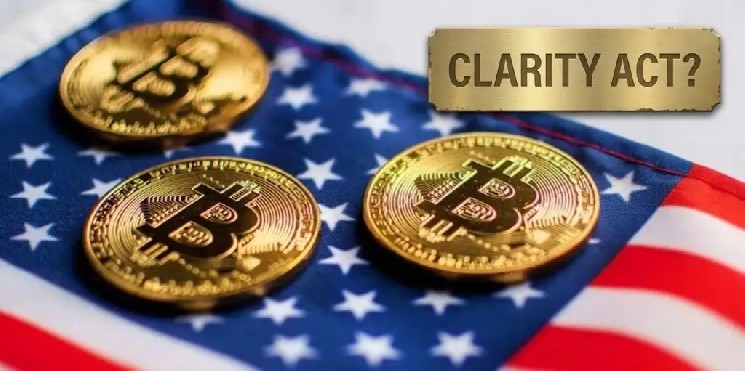
The CLARITY Act, which passed the House in July 2025 with strong bipartisan support (294-134), faces a critical juncture in the Senate. The Senate Banking Committee is expected to hold a markup soon, but key issues remain unresolved, including stablecoin yield provisions, DeFi regulations, and securing full Republican committee support. Other contentious points involve the Blockchain Regulatory Certainty Act (BRCA), ethics amendments for government officials, and SEC-related matters. The legislative calendar is tight, with limited time before the midterm elections. If the committee markup is delayed beyond mid-May, the chances of passage in 2026 drop significantly. Senator Cynthia Lummis has warned that failure this year could delay comprehensive crypto market structure legislation until 2030 or later. Galaxy estimates the probability of the CLARITY Act becoming law in 2026 is only about 50%. The bill provides crucial regulatory clarity by defining jurisdictional boundaries between the SEC and CFTC, establishing a path for decentralization, and bringing digital commodity intermediaries under federal regulation. Its passage is seen as vital before potential power shifts in the next Congress, which could bring less favorable leadership to key committees. The timeline is compressed, and the bill must compete for floor time with other priorities like Iran authorization and DHS appropriations. Key hurdles include finalizing the stablecoin yield compromise text, addressing law enforcement concerns about BRCA, and navigating political dynamics around SEC nominations. The outcome of the Banking Committee markup and the level of bipartisan support will be critical indicators of its future success.

marsbit58 min fa

Only a 50% Chance of Passing This Year, Can the CLARITY Bill Succeed Before the Midterm Elections?

marsbit58 min fa

Trading

Spot
Futures

Articoli Popolari

Come comprare MOVE

Benvenuto in HTX.com! Abbiamo reso l'acquisto di Movement (MOVE) semplice e conveniente. Segui la nostra guida passo passo per intraprendere il tuo viaggio nel mondo delle criptovalute.Step 1: Crea il tuo Account HTXUsa la tua email o numero di telefono per registrarti il tuo account gratuito su HTX. Vivi un'esperienza facile e sblocca tutte le funzionalità,Crea il mio accountStep 2: Vai in Acquista crypto e seleziona il tuo metodo di pagamentoCarta di credito/debito: utilizza la tua Visa o Mastercard per acquistare immediatamente MovementMOVE.Bilancio: Usa i fondi dal bilancio del tuo account HTX per fare trading senza problemi.Terze parti: abbiamo aggiunto metodi di pagamento molto utilizzati come Google Pay e Apple Pay per maggiore comodità.P2P: Fai trading direttamente con altri utenti HTX.Over-the-Counter (OTC): Offriamo servizi su misura e tassi di cambio competitivi per i trader.Step 3: Conserva Movement (MOVE)Dopo aver acquistato Movement (MOVE), conserva nel tuo account HTX. In alternativa, puoi inviare tramite trasferimento blockchain o scambiare per altre criptovalute.Step 4: Scambia Movement (MOVE)Scambia facilmente Movement (MOVE) nel mercato spot di HTX. Accedi al tuo account, seleziona la tua coppia di trading, esegui le tue operazioni e monitora in tempo reale. Offriamo un'esperienza user-friendly sia per chi ha appena iniziato che per i trader più esperti.

250 Totale visualizzazioniPubblicato il 2024.12.13Aggiornato il 2025.03.21

Come comprare MOVE

Discussioni

Benvenuto nella Community HTX. Qui puoi rimanere informato sugli ultimi sviluppi della piattaforma e accedere ad approfondimenti esperti sul mercato. Le opinioni degli utenti sul prezzo di MOVE MOVE sono presentate come di seguito.

活动图片