Humanity Loses $31 Million in Attack, Token Price Plummets 90% Due to a Single Private Key

marsbitPubblicato 2026-06-09Pubblicato ultima volta 2026-06-09

Introduzione

On June 9th, the digital identity project Humanity Protocol suffered a major security breach resulting in over $31 million in losses. According to on-chain analyst Specter, hundreds of wallets holding the project's H token were drained. The attack was confirmed by founder Terence Kwok to be caused by the compromise of a foundation member's private key. As a precaution, users are advised to avoid interacting with Humanity's cross-chain bridge or liquidity pools. The incident caused the H token price to crash over 90%, from around $0.70 to a low of $0.052, wiping its market cap from $2 billion to approximately $35.7 million. The attacker allegedly minted 100 million new H tokens and is selling them for BNB. This breach adds to existing controversies surrounding Humanity Protocol. Founded in 2024, it aimed to verify human users via palm-print biometrics and zero-knowledge proofs. However, a leaked conversation in 2025 revealed that only about 1 million of its 9 million claimed Human IDs had completed biometric verification, suggesting 88% might be bots. Furthermore, the project has faced allegations of being a repackaged product from a Chinese access control vendor, raising privacy and authenticity concerns. Founder Terence Kwok's previous venture, Tink Labs, a hotel smartphone startup that raised $170 million, failed and entered bankruptcy in 2020 after burning through its funding. The current attack highlights the persistent critical issue of private key management in cryp...

On June 9th, according to on-chain analyst Specter's monitoring, wallets that have interacted with the digital identity project Humanity are under sustained attack.

So far, hundreds of addresses holding H tokens have been stolen, with total losses exceeding $31 million. Approximately $9 million has already been converted to ETH, and about $9.9 million remains in the form of H tokens.
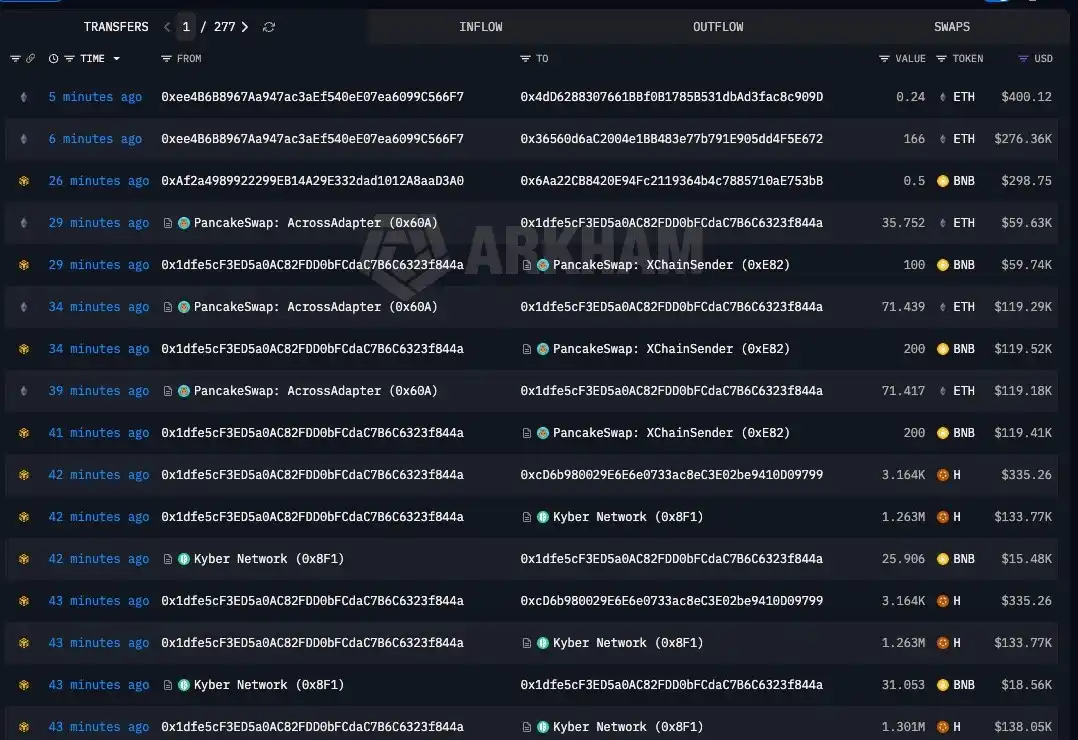
Humanity founder Terence Kwok later confirmed the security incident, which involved the leak of a private key belonging to a foundation member.

As a precautionary measure, he advised users to temporarily avoid interacting with the Humanity cross-chain bridge or any liquidity pools until further safety confirmation. The team is working with security experts and exchange partners to address the issue and will continue to update the community on progress.
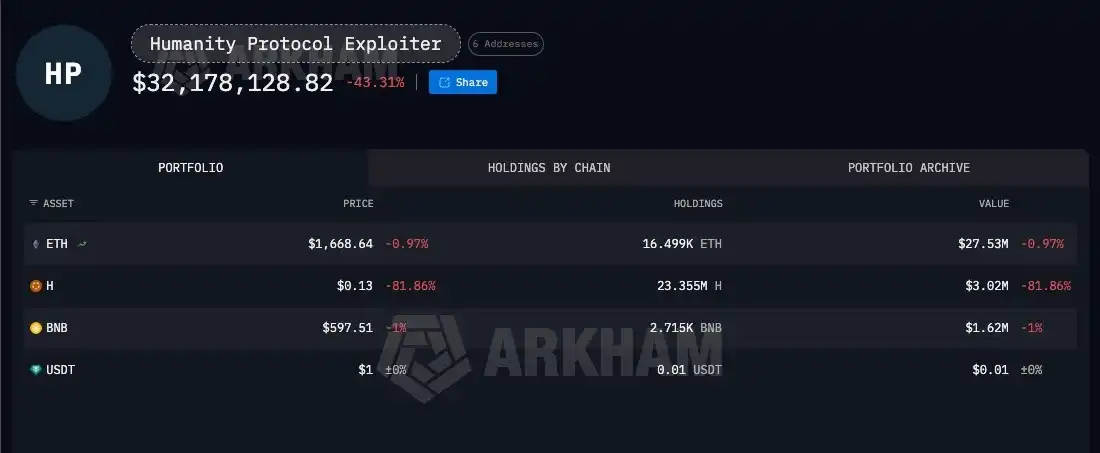
The H token price plummeted from around 0.7 USDT to a low of 0.052 USDT, a drop of over 90% in 24 hours. As of the time of writing, H is trading at 0.1368301 USDT, with its market capitalization falling from around $2 billion to approximately $35.7 million.

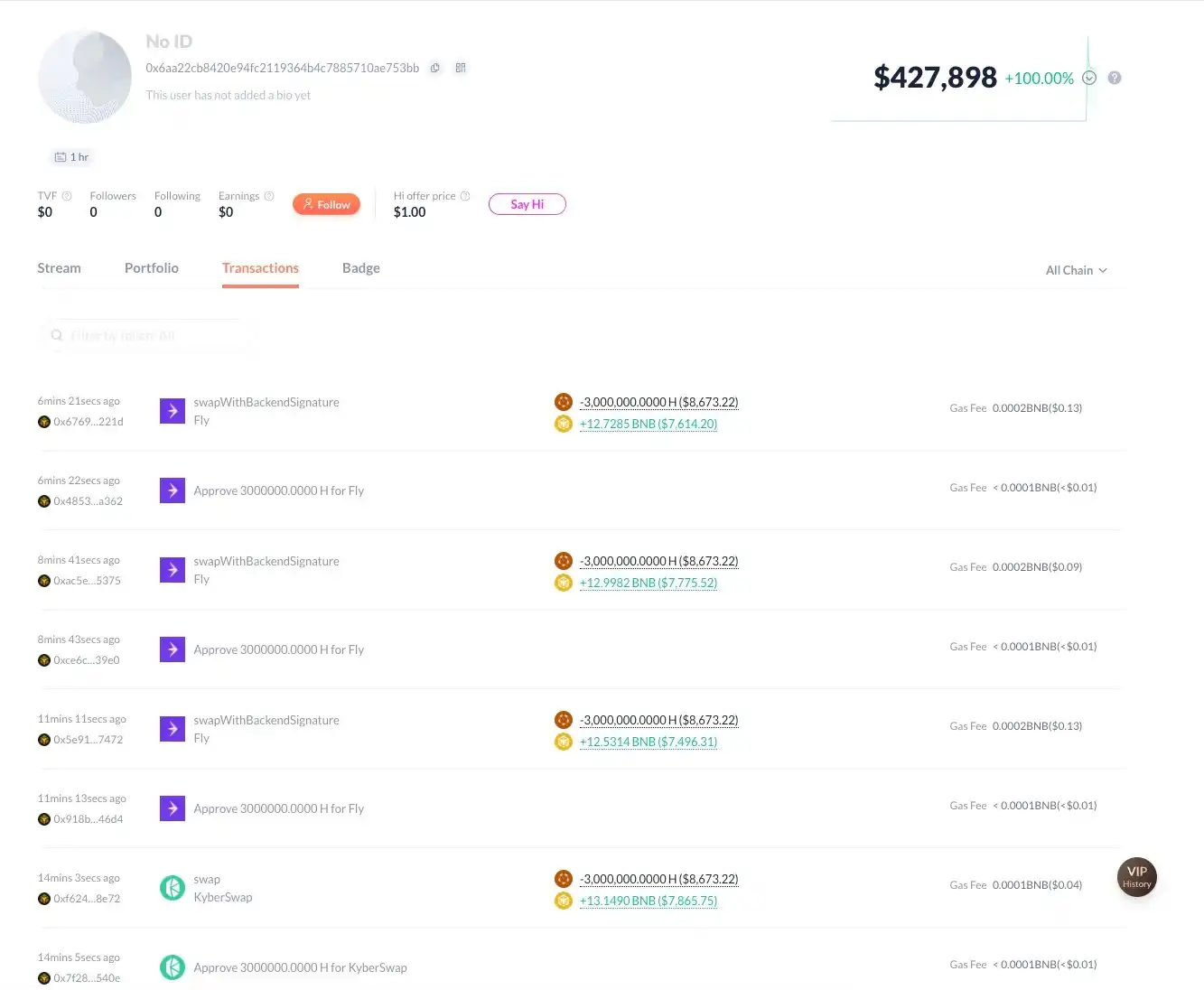
As of 11:00 on June 9th, the attacker allegedly newly minted 100 million Humanity Protocol H tokens and is dumping them in exchange for BNB.
A Project That Hasn't Truly "Proven Humanity"

Humanity Protocol was founded in 2024, positioning itself as a decentralized digital identity network. Its core selling point is verifying users as real humans using palm print biometrics and zero-knowledge proofs. The project is built on Polygon CDK (zkEVM), claiming to solve issues like Sybil attacks, fake accounts, and AI-generated identities without exposing personal information.

This narrative attracted significant capital attention in 2024. Humanity Protocol completed two rounds of funding totaling $50 million. A $30 million seed round valued the project at $1 billion, with investors including Kingsway Capital, Animoca Brands, Blockchain.com, and Shima Capital, among others.

In January 2025, a round led by Pantera Capital and Jump Crypto raised $20 million, increasing the valuation to $1.1 billion.

The Humanity Foundation also gathered many prominent figures, led by Animoca Brands Chairman Yat Siu. Co-founders include Mario Nawfal, founder of the international blockchain consulting firm, and Yeewai Chong, a senior investment expert from Morgan Stanley and Ortus Capital.

On June 25, 2025, the H token launched via a Fairdrop mechanism, touted as the first token distribution in Web 3.0 history exclusively for verified real humans. However, two days after launch, DL News reported leaked conversations from the founder. Kwok admitted in the dialogue that out of the 9 million Human IDs created on the network, only about 1 million had completed biometric verification, meaning up to 88% of users could be bots.

Furthermore, according to claims by users like SCoin(@ LianFang _) and AB Kuai . Dong(@_FOR AB) on platform X, Humanity Protocol (H) might be a "re-packaged Chinese project," with its app's code asset library still containing images from the Shenzhen access control manufacturer Zhang Teng Information, raising authenticity doubts. Netizens alleged that its social media hype was largely orchestrated by the project's own sock puppet accounts, with actual user engagement being questionable.
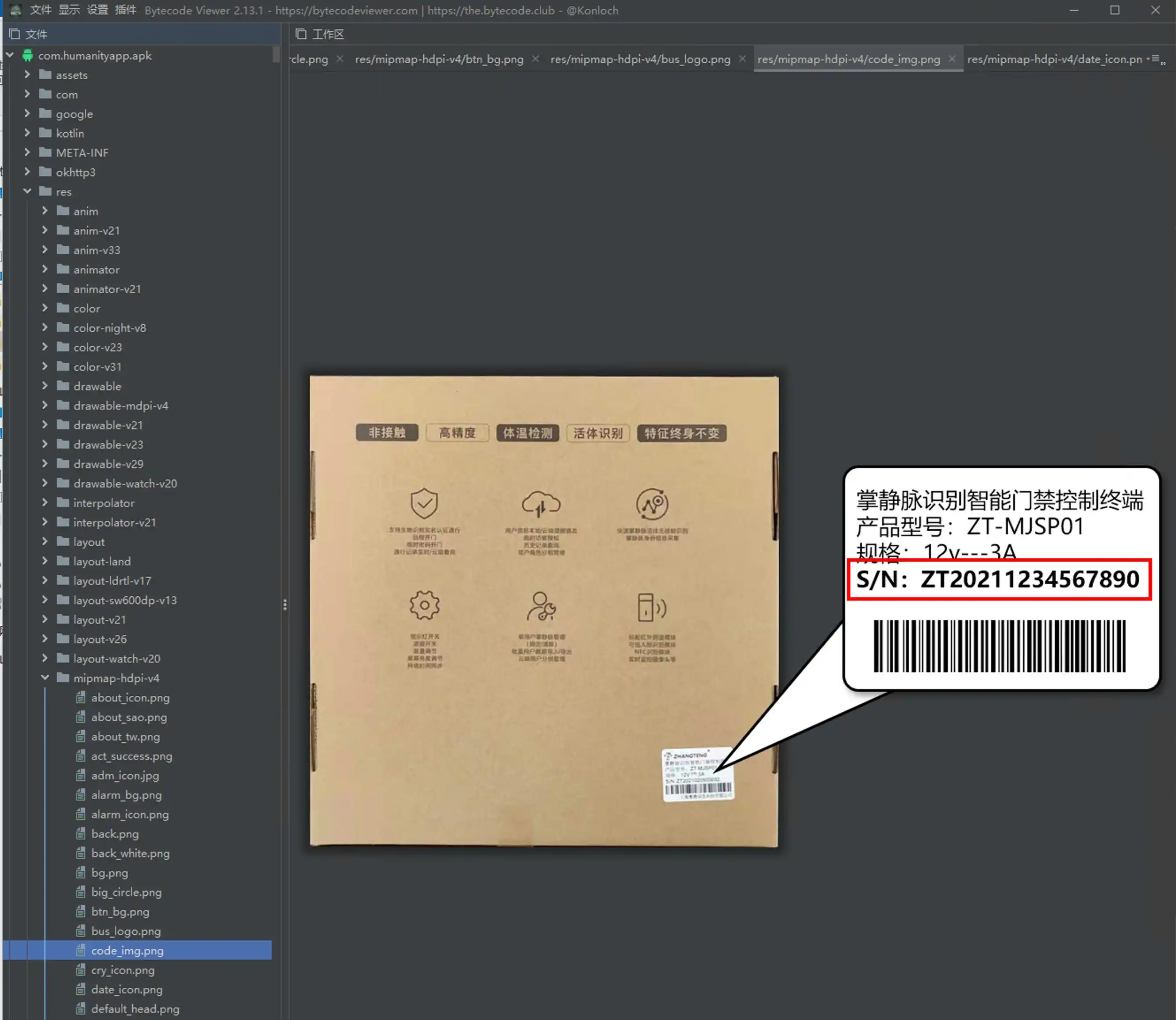
AB Kuai.Dong warned that those who previously did verification with Humanity should be careful. Zhang Teng Information is backed by a Shanghai outsourcing company specializing in full-service identity recognition outsourcing. Additionally, whistleblower SCoin claimed the project collected large amounts of user palm print information, raising privacy and security concerns.

This was fatal for a project whose core value proposition is "proving humanity." The H token fell over 61% within two days of launch, from around $0.05 to a low of $0.018.

The Founder's Previous Unicorn Burned Through $170 Million

Terence Kwok's personal history adds a risk footnote to this project. In 2012, 20-year-old Terence Kwok dropped out of the University of Chicago. After receiving a $900 roaming bill during a trip, he founded Tink Labs, which provided free smartphones (branded Handy) in hotel rooms for guests to use abroad to avoid high roaming fees.

This concept once captivated the capital market. Tink Labs raised $170 million in total from Foxconn, SoftBank, Innovation Works, and the founder of Meitu, reaching a valuation of $1.5 billion and becoming Hong Kong's first unicorn. At its peak, Handy devices covered 600,000 hotel rooms across 82 countries.

However, Kwok's aggressive expansion strategy soon met reality. Global roaming fees continued to fall, hotels were unwilling to pay for Handy devices, and the company began losing money from 2017. According to the Financial Times, after discovering that Tink Labs might have diverted funds from its Japanese joint venture to other loss-making markets, SoftBank cut off funding for the key project.

In July 2019, over 100 employees in European, Middle Eastern, and African offices did not receive their salaries. Laid-off employees smeared cake on the walls and floors as they left the Oxford office. On August 1st, Tink Labs officially shut down, entering bankruptcy liquidation in January 2020. A former HR executive told the FT that Kwok only cared about "making money," and the entire $170 million investment was lost.

Six years later, Kwok returned to the market with Humanity Protocol, securing a unicorn valuation once again from Pantera Capital and Jump Crypto.

Private Key Management: An Old Problem, A New Price

From the current information, this attack does not involve smart contract vulnerabilities or protocol-level security flaws. The attacker obtained a private key from a foundation member, representing a failure of the most traditional security management.

The security situation in the crypto industry was already severe in 2026. According to CCN statistics, losses from DeFi hacks in the first four months of 2026 exceeded $1 billion, with most stolen funds still unrecovered. The $286 million attack on Drift Protocol on April 1st was the single largest event this year.

Attackers are increasingly targeting validators, RPC nodes, and governance systems, not just smart contract vulnerabilities. However, private key leaks remain one of the most devastating attack types, as they bypass all on-chain security mechanisms and directly obtain asset control.

For a project already burdened with the controversy of 88% bot users and a token down over 90% from its high, a $31 million private key leak could be the final blow to trust.

As of the time of writing, Kwok stated in a declaration that the team is working with security experts and exchange partners, but did not mention any user compensation plan or explain why the foundation member's private key lacked basic protections like multi-signature or hardware isolation.


Domande pertinenti

QWhat is the main cause of the $31 million hack in the Humanity project according to the article?

AThe hack was caused by the compromise of a private key belonging to a foundation member, leading to unauthorized access and asset theft, not a smart contract vulnerability.

QHow did the price of the H token react immediately after the security incident?

AThe price of the H token plummeted from around $0.7 USDT to a low of $0.052 USDT, representing a drop of over 90% within 24 hours.

QWhat was a major controversy surrounding the Humanity Protocol's user verification prior to this hack?

AA leaked conversation revealed that only about 1 million out of 9 million created Human IDs had completed biometric verification, suggesting that up to 88% of the users might have been bots.

QWhat is the background of Humanity founder Terence Kwok's previous venture, Tink Labs?

ATerence Kwok's previous venture, Tink Labs (which provided Handy smartphones in hotel rooms), raised $170 million and reached a $1.5 billion valuation before collapsing in 2019, with the investment reportedly completely lost.

QWhat action did the attacker reportedly take with the stolen assets, and what precaution did the founder advise users to take?

AThe attacker reportedly converted about $9 million into ETH and was selling newly minted tokens for BNB. The founder advised users to temporarily avoid interacting with the Humanity cross-chain bridge or any liquidity pools until safety is confirmed.

Letture associate

human.tech Launches Clean SDK for Privacy-First Web3 Apps

human.tech has launched the Clean SDK, a toolkit enabling developers to build privacy-first Web3 applications with transparent accountability. Released alongside Aztec's version 5, the SDK provides components for integrating zero-knowledge identity verification, sanctions screening, and private transactions, without developers handling sensitive user data or building compliance infrastructure from scratch. It uses zero-knowledge proofs and programmable verification to allow apps to confirm user legitimacy and sanctions compliance while keeping identities confidential. The first application built on the SDK, Shield, a privacy bridge to Aztec, also launched. It allows users to transfer assets privately while proving a unique human is behind each transfer and that funds have passed sanctions checks, as verified by a May 2026 audit. The SDK offers three core verification techniques: Proof of Innocence (sanctions screening against 23 sources), Proof of Personhood (simpler verification via Human Passport), and Proof of Clean Hands (higher-assurance zero-knowledge government ID checks). This allows apps to authenticate users and transactions without exposing personal data. Designed for Aztec builders, the SDK lets developers add programmable privacy to decentralized apps, eliminating the need to create their own verification and ZK infrastructure. Shield demonstrates its practical use for private bridges, but the SDK aims to enable a wider ecosystem of private, accountable financial apps and services. The launch addresses growing demand for infrastructure that balances privacy and accountability. The SDK avoids traditional identity databases, storing encrypted data off-chain, screening at both entry and exit points, and including a gated disclosure mechanism for legal requests. human.tech's products, including the Clean SDK, focus on using zero-knowledge technology to enable verifiable personhood and privacy in digital systems.

TheNewsCrypto23 min fa

human.tech Launches Clean SDK for Privacy-First Web3 Apps

TheNewsCrypto23 min fa

Unlocking $100 Million in Liquidity? Pump.fun's New Policy Tests the 5-Minute Pump Technique

Pump.fun, a popular meme coin launchpad, has introduced a new standard mechanism called BOOST. It aims to address a significant capital efficiency issue: when a newly launched token graduates from its initial bonding curve to a liquidity pool (LP), roughly 20% of its liquidity becomes permanently locked as "dead liquidity," estimated to waste over $100 million annually. Instead of locking these funds permanently, BOOST repurposes them. Upon a token's migration, approximately 20% of the settlement funds (e.g., 17.6 SOL or ~$2516 USDC) are used to buy back the token on the open market over a 5-minute period via a Time-Weighted Average Price (TWAP) mechanism. All purchased tokens are immediately burned. This creates a brief, systematic buy pressure immediately after migration, potentially generating a short-term price surge ("pump") while permanently reducing the token's circulating supply. The goal is to enhance the immediate post-launch trading experience, potentially increasing trader retention and sustainable protocol revenue, which funds ongoing token buybacks. However, concerns exist that this artificial 5-minute boost could lower the barrier for launching low-quality tokens and lead to steeper price crashes once the buy pressure stops, if followed by large sell-offs. The feature automatically applies to tokens migrating after July 21, 2024, but not to previously migrated tokens or those launched via the Mayhem AI Agent lab.

marsbit30 min fa

Unlocking $100 Million in Liquidity? Pump.fun's New Policy Tests the 5-Minute Pump Technique

marsbit30 min fa

Podcast Notes | Conversation with GSR Asset Management Head: To Determine if This Crypto Rally is Real, Just Watch the Lending Rates on Aave

Podcast Summary: Dialogue with GSR's Head of Asset Management: To Determine if This Crypto Rally is Real, Just Check Lending Rates on Aave Andy Baehr, Managing Director of Asset Management at GSR, discusses the current crypto market, characterizing it as stuck in a state of "ambivalence" with short-lived, unsustainable rallies. He outlines a simple framework: the market moves between "ambivalence" and "conviction" (sustained upward momentum). Currently, every rally resembles a single-stage rocket booster that quickly fizzles out. Baehr identifies three key signals to watch: 1) DeFi lending rates, 2) the potential passage of the CLARITY Act, and 3) the market forming a consensus on the "Fed hawkish peak." He emphasizes that the most immediate indicator for the sustainability of the recent CPI-triggered rally is the USDC borrowing rate on Aave, currently around 3.75%—close to U.S. Treasury yields. The absence of a credit spread indicates low leverage demand and a lack of market energy. He explains that a healthy, sustained rally requires layered buying pressure. Last year's rally progressed from an ETH short squeeze to crypto-native trader influx and finally to ETF inflows. Currently, this structure is missing. Other potential structural buyers like Digital Asset Treasury (DAT) companies are absent, and ETF flows have proven transient. Baehr notes that while small-cap crypto tokens outperformed large caps in Q2—a potential sign of capitation in major assets—capital is also flowing to more exciting opportunities like AI stocks and tech IPOs, leaving crypto sidelined. Regarding DeFi, he highlights that platforms like Aave provide a clear, real-time signal of leverage demand through their supply/demand-driven interest rates. A significant, sustained rate increase would signal genuine market conviction. He also observes the quiet emergence of fixed-income-like products and vaults in DeFi. On regulation, the probability of the CLARITY Act passing before the August 7th deadline has dropped linearly from 75% to below 40% on Polymarket. Baehr suggests its passage would be treated as a bullish surprise, a potent driver for price movement. However, political hurdles, including ethical clause debates and disclosures about the First Family's crypto profits, remain significant obstacles. Ultimately, the market awaits clarity on the Fed's terminal rate under Chair Warsh. Until the "Fed Solstice"—the point where the market collectively understands the peak of hawkish policy—sustained conviction will be difficult to achieve.

marsbit1 h fa

Podcast Notes | Conversation with GSR Asset Management Head: To Determine if This Crypto Rally is Real, Just Watch the Lending Rates on Aave

marsbit1 h fa

Trading

Spot
活动图片