How Will $12 Trillion in Pension Funds Passively Flood into Bitcoin?

marsbitPubblicato 2026-04-09Pubblicato ultima volta 2026-04-09

Introduzione

A proposed U.S. Department of Labor rule could open the door for cryptocurrency investments, particularly Bitcoin, within the $12 trillion 401(k) pension market. The rule creates a "safe harbor" provision, protecting plan fiduciaries from personal liability if they follow a specific due diligence process covering performance, fees, liquidity, and other factors. This addresses the key legal barrier that had previously discouraged pension managers from including crypto due to litigation risks under the Employee Retirement Income Security Act (ERISA). The primary mechanism for adoption is expected to be through target-date funds, the default investment option for most employees. This means individuals could automatically have 1-3% of their retirement savings allocated to Bitcoin without actively choosing it. Even a small allocation of 0.1% would represent $12 billion, a significant inflow of passive, long-term capital into the crypto asset class. While this regulatory shift is a major milestone, risks remain. The volatility of Bitcoin poses a threat to retirement savings, and the legal safety net provided by the new rule is untested in court. The first lawsuit following a major market downturn will be crucial in determining its ultimate effectiveness. The rule is currently in a public comment period, and full implementation could take years.

Written by: Thejaswini M A

Compiled by: Chopper, Foresight News

Any default option will eventually become the choice for the majority. This is known as the "default effect" in behavioral economics.

The history of the entire U.S. pension system is a history of default options. In the 1980s, the default option shifted from traditional pensions to 401(k) plans, which most employees passively accepted without fully understanding what they were giving up. In the early 2000s, target-date funds became the default option for the vast majority of pension plans, and tens of millions of people ended up holding these funds without ever actively choosing them.

Each shift in the default option involved the transfer of massive amounts of capital and ultimately changed the way a generation retired. Most of those affected didn't realize it until they checked their statements later.

A new default option is set to emerge in the coming years. Right now, it doesn't look like a default option; it looks more like a proposed rule from the Department of Labor, currently undergoing a 60-day public comment period. It is carefully worded, emphasizing fiduciary duty and compliance with the Employee Retirement Income Security Act (ERISA). They often start as options, gradually become popular, and eventually become the default.

On March 30, the U.S. Department of Labor issued a rule that, for the first time, opened the door to cryptocurrencies for the $12 trillion U.S. 401(k) pension market. Indiana had already legislated in March, requiring state pension plans to offer at least one cryptocurrency investment option by July 2027; the Wisconsin pension system already holds $321 million in Bitcoin ETFs; Michigan has allocated $45 million to Bitcoin and Ethereum ETFs. Florida and New Jersey are also advancing similar policies.

First, let's look at how cryptocurrencies were previously kept out.

The Wall Blocking Cryptocurrencies

Before this rule, cryptocurrencies were not explicitly banned by law from entering 401(k) plans. The real barrier was more effective than a ban.

Under the Employee Retirement Income Security Act (ERISA), which regulates pension plans, fiduciaries are personally liable for investment decisions that lose money. It's not the company or the fund that is held accountable, but the individual who made the decision.

Since 2016, there have been over 500 lawsuits alleging ERISA violations; since 2020, related settlements have exceeded $1 billion. Pension plan managers have seen their peers sued over excessive fees, poor index fund choices, and issues with mutual fund share classes. These lawsuits are endless, come from unexpected angles, and target individuals directly.

Consider the incentive structure this creates: You manage a pension plan, you buy Bitcoin, and then Bitcoin crashes 50%. A plaintiff's lawyer sends a letter, and you spend three years defending yourself in discovery.

Conversely, if you don't* add Bitcoin, even if it goes to $200,000, no one will sue you for it.

The rational choice was always: stay away from crypto. And almost everyone did.

The Biden administration's Labor Department in 2022 went further, explicitly stating that fiduciaries must exercise "extreme care" before touching digital assets. That guidance has now been withdrawn and replaced with a six-factor safe harbor rule: as long as a fiduciary follows a written process reviewing performance, fees, liquidity, valuation, benchmarks, and complexity, they will be deemed to have fulfilled their prudent duty under ERISA. As long as the process is compliant, even if the asset price falls, they are protected from personal liability.
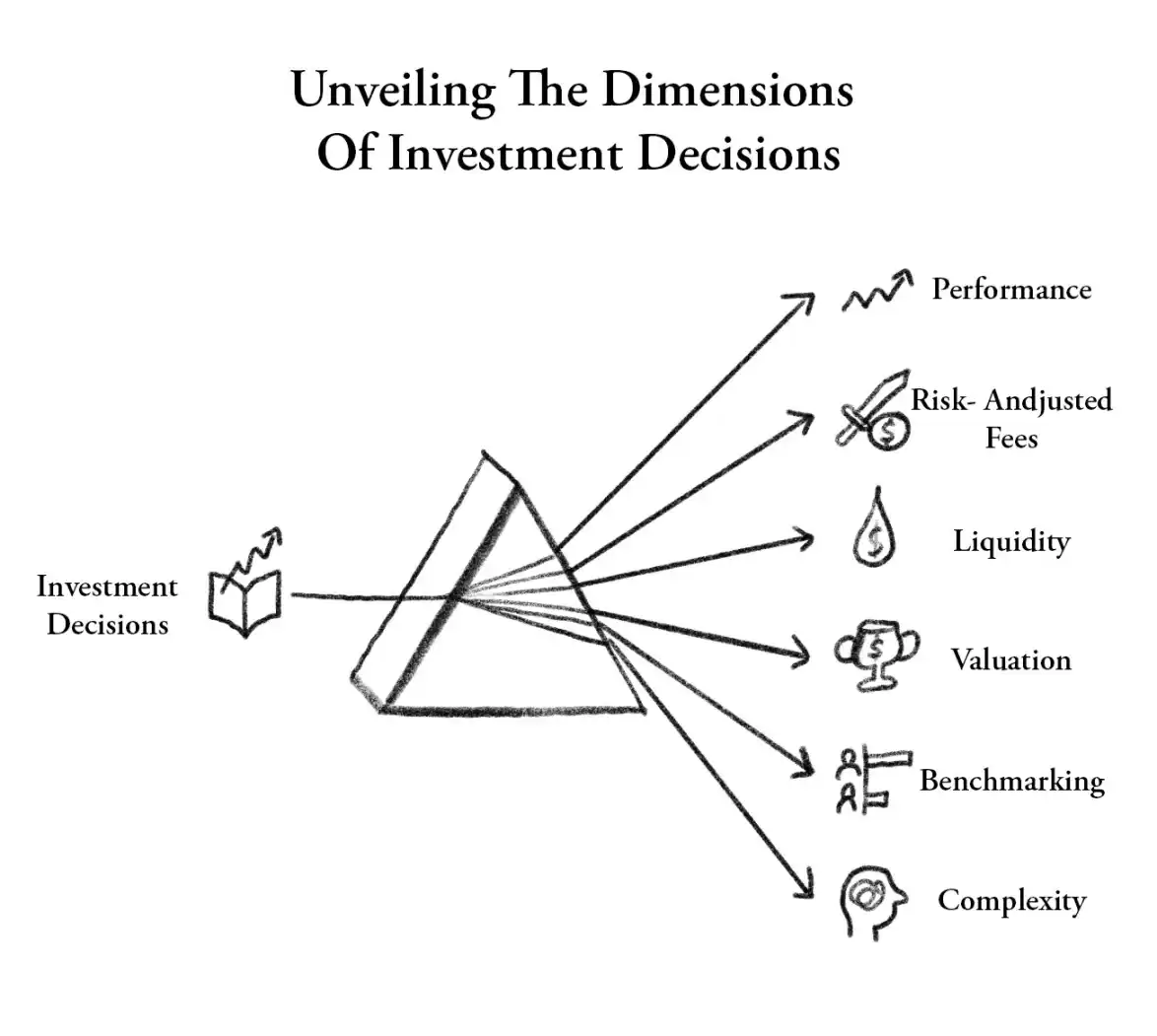
Don't mistake the rule change for a shift in market fundamentals. For the average investor, crypto's volatility remains the same. This rule really protects the fund managers. It corrects the imbalanced legal risk that marginalized crypto for a decade, finally allowing fiduciaries to feel safe saying yes.

The Conduit: Target-Date Funds

The Labor Department itself anticipates that the primary access point will be target-date funds. This is crucial for understanding the practical impact on the average saver.

Most people, upon starting a job, are defaulted into a target-date fund. You just pick the fund closest to your expected retirement year, say the 2045 fund, and it automatically adjusts its stock/bond allocation as you age, becoming more conservative closer to the target date. The vast majority of people who hold these funds never look at them a second time.

If crypto assets are allocated through target-date funds, investors won't actively go out and buy Bitcoin. Their retirement portfolio will automatically allocate 1%–3% to Bitcoin, managed and automatically rebalanced by a professional institution.

Just as many people have gold in their 401(k) without knowing it. That's how gold entered the pension system—through the same vehicle, the same logic, without asking the actual owners of the money.

Fidelity led the charge in 2022, offering plan sponsors the option to include Bitcoin in their investment menu even before the Biden administration's guidance. At the time, Fidelity allowed plan sponsors to include digital asset investments in their portfolio, with participants to invest up to 20% of their account balance in Bitcoin. What has been missing is the legal assurance for plan sponsors to feel comfortable allocating to Bitcoin without assuming personal liability. That assurance is now being formulated.

$12 Trillion

U.S. 401(k) plans hold about $12 trillion. Even a 1% allocation would mean roughly $120 billion flowing into digital assets, more than the total value locked in all of DeFi. Even just 0.1% would be $12 billion, on par with the top five Bitcoin ETFs.

Every previous wave of institutional crypto adoption came from active decisions: ETF buyers actively buying, MicroStrategy actively holding, banks actively building custody products. Those decisions can be reversed: a CFO can sell the treasury position, ETF investors can redeem.

The 401(k) channel is structurally different, something the industry has been waiting for since the spot ETF listings. Pension money is passive money, held for 30-year horizons. It doesn't panic sell on crashes, isn't swayed by the fear and greed index, and doesn't care what oil did last week.

As Morgan Stanley's Amy Oldenburg points out, currently about 80% of crypto ETF trading comes from self-directed investors, not advisor-recommended allocations. The 401(k) market is almost entirely driven by professional advisors. The DOL's new rule opens up a channel that was previously structurally difficult to access because the people controlling the gate bore excessive personal risk.

This has been a point crypto has emphasized for years: the real wave of adoption won't come from traders or tech early adopters, but when the infrastructure of ordinary people's savings systems automatically turns towards crypto. Target-date funds are that infrastructure.

Risks and Concerns

A 50% drop in a trading account is just a bad quarter. A 50% drop in a 55-year-old teacher's retirement account is a different matter entirely.

Bitcoin has drawn down over 80% in past bear markets, around 50% in this cycle, which some interpret as "maturity." But losing half your retirement savings doesn't feel any better because it's called "progress."

TD Cowen's Jaret Seiberg writes that he remains skeptical that fiduciaries will move until courts confirm the safe harbor truly protects against lawsuits. ERISA is a process-based law, but its ultimate interpretation lies with the courts.

The safe harbor might hold on paper, but if a target-date fund with crypto allocation drops 40% in a bear market, triggering the first wave of lawsuits, whether it holds up is an open question.

The comment period for the rule ends on June 1st. The Labor Department can modify the rule, withdraw it, or simply push it forward. Even if the final version is unchanged, moving from a proposed rule to actual money in pension accounts involves compliance teams, investment committees, recordkeeper system integrations, and fiduciary reviews. This will take months, more likely years.

Indiana's July 2027 deadline is a hard mandate, while the federal rule is a soft permission—their implementation timelines will be starkly different.

In the 1980s, stocks entered pensions through mutual fund; in the early 2000s, international stocks entered through target-date funds; followed by REITs, TIPS, commodities. Their arrival wasn't because retirement savers asked for them.
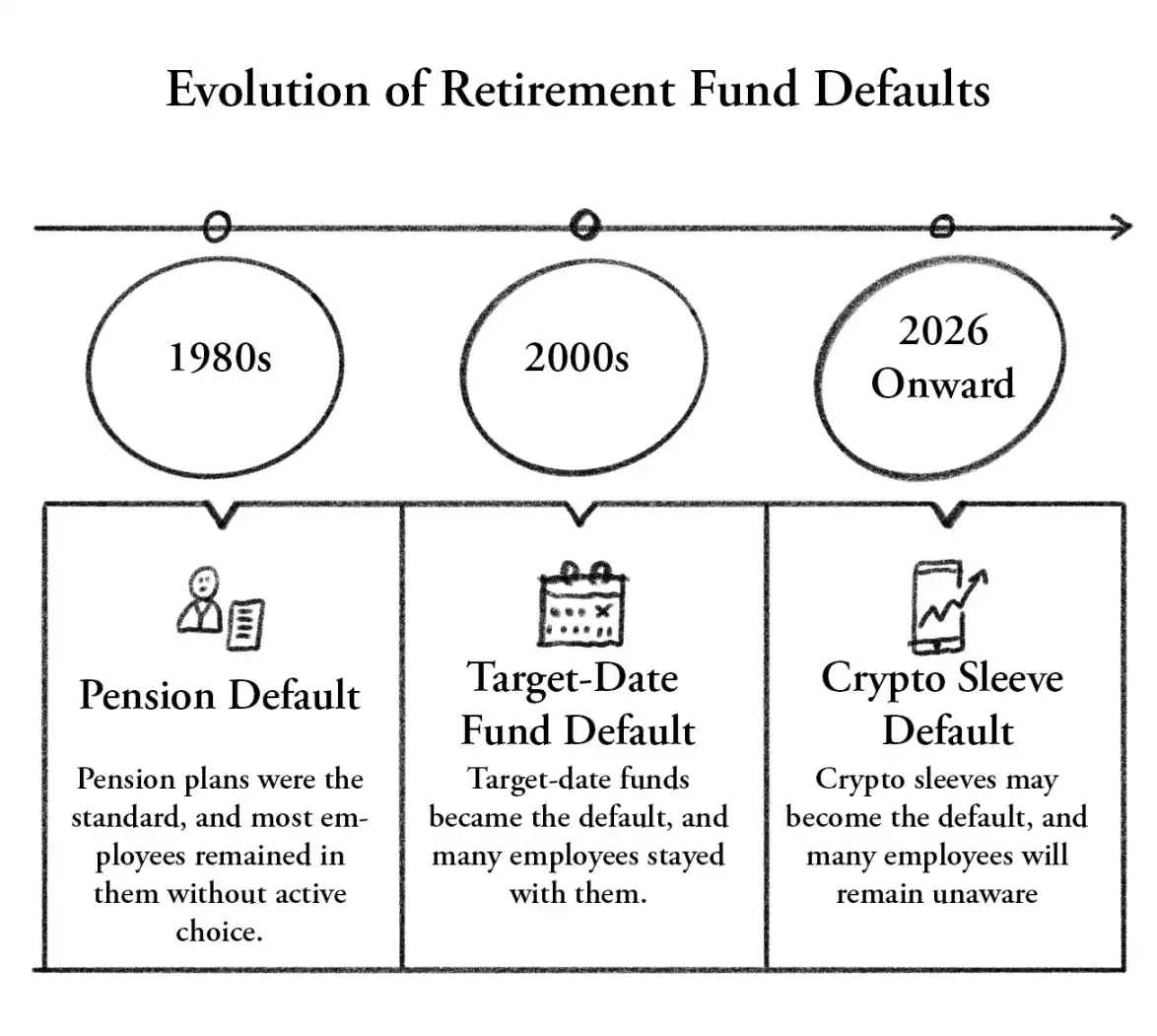
Cryptocurrency is now at that inflection point. Spot ETFs are the product, the DOL rule is the regulatory配套, Fidelity/Schwab/Morgan Stanley are the distribution channels, the CLARITY Act writes the asset classification into statute law, providing the legal basis for prudent examination by fiduciaries.

All the pieces are in place, except the last one.

Someday in the future, a pension plan manager adds Bitcoin to a target-date fund. Bitcoin crashes 60%. A retiree loses a chunk of their savings. Lawyers file a lawsuit.

At that moment, the only question that matters is: Will the judge agree that the safe harbor protected the person who made that decision.

Right now, nobody knows the answer. The Labor Department believes it will. TD Cowen believes it could take years to find out.

Until the first case is heard and adjudicated, every pension plan manager in America is being asked to trust a piece of paper that has never been tested in court.


Domande pertinenti

QWhat is the 'default effect' in behavioral economics and how does it relate to the US pension system?

AThe 'default effect' is a concept in behavioral economics where the default option becomes the choice for the majority of people. The history of the US pension system is a history of default options, such as the shift from traditional pensions to 401(k) plans and then to target-date funds, with most employees passively accepting these changes without fully understanding the implications.

QWhat was the primary legal barrier that previously prevented cryptocurrency from being included in 401(k) plans?

AThe primary barrier was not an explicit legal ban, but the fiduciary liability under the Employee Retirement Income Security Act (ERISA). Plan fiduciaries could be held personally liable for investment losses, creating a strong incentive to avoid volatile assets like cryptocurrency, as they could face lawsuits for poor performance.

QWhat is the new 'six-factor safe harbor' rule proposed by the US Department of Labor, and what does it change?

AThe new 'six-factor safe harbor' rule states that a fiduciary will be deemed to have satisfied their prudence duties under ERISA if they follow a documented process reviewing six factors: expected return, fees, liquidity, valuation, blockchain analytics, and regulatory compliance. This protects them from personal liability if the asset's price falls, as long as the process was followed.

QThrough which primary investment vehicle is cryptocurrency expected to enter the 401(k) market, and what is its significance?

ACryptocurrency is expected to enter primarily through target-date funds. This is significant because most employees are automatically enrolled in these funds and never actively manage them. Investors would not be actively buying bitcoin; their retirement portfolios would be automatically allocated 1-3% in bitcoin, managed and rebalanced by professional institutions.

QWhat is the potential financial impact on the cryptocurrency market if US 401(k) plans begin to allocate a small portion of their assets?

AThe US 401(k) market is worth approximately $12 trillion. An allocation of just 1% would channel about $120 billion into digital assets, which is more than the total value locked in all of DeFi. Even a 0.1% allocation would be $12 billion, equivalent to the size of a top-five Bitcoin ETF, representing a massive influx of passive, long-term capital.

Letture associate

What Are Some Good Paths for Chinese Web3 Entrepreneurship? (Part 5)

This article explores pathways for Chinese Web3 teams to pivot toward AI, building on a previous discussion. It focuses on two specific team profiles: **Security & Risk Control Teams:** These teams, skilled in smart contract auditing, wallet security, and on-chain monitoring, can transition to providing **Agent behavior auditing and AI security governance**. As AI Agents automate tasks, access data, and trigger payments, enterprises will need solutions to monitor permissions, audit logs, control data access, and prevent anomalies—creating a strong B2B demand. **Application & Community-Focused Teams:** Instead of completely rebranding as AI companies, these teams should use AI to **enhance their existing products**. For example, research platforms can use AI to summarize information and identify signals; community tools can automate user support and analysis; and educational products can create personalized learning paths. The key is integrating AI to solve existing user pain points, like information overload or high operational costs. The article also advises against certain AI directions for Chinese Web3 teams, such as building general-purpose large language models (too resource-intensive), creating overly broad Agent platforms (hard to monetize), developing AI traders/automated yield products (high regulatory and risk sensitivity), or simply adding superficial AI features without genuine value. The core conclusion: Successful migration depends not on chasing AI hype, but on **identifying how a team's existing Web3 capabilities—be it in data, payments, security, or user operations—can address real needs in new AI application scenarios.**

marsbit45 min fa

What Are Some Good Paths for Chinese Web3 Entrepreneurship? (Part 5)

marsbit45 min fa

Trading

Spot
Futures

Articoli Popolari

Cosa è BITCOIN

Comprendere HarryPotterObamaSonic10Inu (ERC-20) e la sua posizione nel mondo delle criptovalute Negli ultimi anni, il mercato delle criptovalute ha assistito a un aumento della popolarità delle meme coin, catturando l'interesse non solo dei trader, ma anche di coloro che cercano coinvolgimento comunitario e valore di intrattenimento. Tra questi token unici c'è HarryPotterObamaSonic10Inu (ERC-20), un progetto intrigante che mescola riferimenti culturali nel tessuto delle criptovalute. Questo articolo esplora gli aspetti chiave di HarryPotterObamaSonic10Inu, analizzando i suoi meccanismi, l'etica guidata dalla comunità e il suo coinvolgimento con il panorama crittografico più ampio. Che cos'è HarryPotterObamaSonic10Inu (ERC-20)? Come suggerisce il suo nome, HarryPotterObamaSonic10Inu è una meme coin costruita sulla blockchain di Ethereum, classificata secondo lo standard ERC-20. A differenza delle criptovalute tradizionali che possono enfatizzare l'utilità pratica o il potenziale investimento, questo token prospera grazie al valore di intrattenimento e alla forza della sua comunità. Il progetto mira a creare un ambiente in cui gli utenti coinvolti possono riunirsi, condividere idee e partecipare ad attività ispirate a diversi fenomeni culturali. Una caratteristica notevole di HarryPotterObamaSonic10Inu è la zero tassa sulle transazioni. Questo elemento allettante tende a incoraggiare il trading e il coinvolgimento della comunità, privo di costi aggiuntivi che possono scoraggiare i trader di piccole dimensioni. L'offerta totale della moneta è fissata a un miliardo di token, un numero che segna la sua intenzione di mantenere una circolazione sostanziale all'interno della comunità. Creatore di HarryPotterObamaSonic10Inu (ERC-20) Le origini di HarryPotterObamaSonic10Inu sono avvolte in un certo mistero; i dettagli sul creatore rimangono sconosciuti. Lo sviluppo di questo token non presenta un team identificabile o un piano esplicito, cosa non rara nel settore delle meme coin. Invece, il progetto è emerso organicamente, con il suo progresso fortemente dipendente dall'entusiasmo e dalla partecipazione della sua comunità. Investitori di HarryPotterObamaSonic10Inu (ERC-20) Per quanto riguarda investimenti esterni e finanziamenti, HarryPotterObamaSonic10Inu rimane ambiguo. Il token non elenca alcuna fondazione di investimento conosciuta o un sostegno organizzativo significativo. Invece, la linfa vitale del progetto è la sua comunità di base, che informa la sua crescita e sostenibilità attraverso azioni collettive e coinvolgimento nello spazio crittografico. Come funziona HarryPotterObamaSonic10Inu (ERC-20)? In quanto meme coin, HarryPotterObamaSonic10Inu opera principalmente al di fuori delle strutture tradizionali che governano spesso il valore degli asset. Ci sono diversi aspetti distintivi che definiscono il funzionamento del progetto: Transazioni senza tasse: Senza costi fiscali sulle transazioni, gli utenti possono comprare e vendere liberamente il token senza preoccuparsi di costi nascosti. Coinvolgimento della comunità: Il progetto prospera sull'interazione della comunità, sfruttando le piattaforme social per creare entusiasmo e facilitare il coinvolgimento. Discussioni, condivisione di contenuti e coinvolgimento sono elementi cruciali che aiutano ad espandere la sua portata e a favorire la lealtà tra i sostenitori. Nessuna utilità pratica: Va notato che HarryPotterObamaSonic10Inu non offre un'utilità concreta all'interno dell'ecosistema finanziario. Piuttosto, è classificato come un token principalmente per attività di intrattenimento e comunitarie. Riferimento culturale: Il token incorpora astutamente elementi della cultura pop per attirare interesse, collegandosi a appassionati di meme e seguaci delle criptovalute. HarryPotterObamaSonic10Inu esemplifica come le meme coin operino in modo diverso rispetto ai progetti di criptovalute più tradizionali, entrando nel mercato come costrutti sociali innovativi piuttosto che come asset utilitari. Cronologia di HarryPotterObamaSonic10Inu (ERC-20) La storia di HarryPotterObamaSonic10Inu è segnata da diversi traguardi notevoli: Creazione: Il token è emerso da un meme virale, catturando l'immaginazione di molti appassionati di criptovalute. Le date di creazione specifiche non sono disponibili, sottolineando la sua crescita organica. Inserimento negli scambi: HarryPotterObamaSonic10Inu ha fatto il suo ingresso in vari scambi, consentendo un accesso e un trading più facili da parte della comunità. Iniziative di coinvolgimento della comunità: Attività in corso volte a migliorare l'interazione della comunità, comprese gare, campagne sui social media e generazione di contenuti da parte di fan e sostenitori. Piani di espansione futura: La tabella di marcia del progetto include il lancio di una collezione NFT, merchandising e un sito di eCommerce relativo ai suoi temi culturali, coinvolgendo ulteriormente la comunità e cercando di aggiungere più dimensioni al suo ecosistema. Punti chiave su HarryPotterObamaSonic10Inu (ERC-20) Natura guidata dalla comunità: Il progetto dà priorità al contributo collettivo e alla creatività, garantendo che il coinvolgimento degli utenti sia al centro del suo sviluppo. Classificazione come meme coin: Rappresenta l'epitome delle criptovalute basate sull'intrattenimento, distinguendosi dai veicoli d'investimento tradizionali. Nessuna affiliazione diretta con Bitcoin: Nonostante la somiglianza nel nome del ticker, HarryPotterObamaSonic10Inu è distintivo e non ha alcuna relazione con Bitcoin o altre criptovalute consolidate. Focus sulla collaborazione: HarryPotterObamaSonic10Inu è progettato per creare uno spazio per la collaborazione e la condivisione di storie tra i suoi detentori, fornendo un canale per la creatività e il legame comunitario. Prospettive future: L'ambizione di espandersi oltre il suo presupposto iniziale verso NFT e merchandising delinea un percorso per il progetto per potenzialmente entrare in strade più mainstream all'interno della cultura digitale. Poiché le meme coin continuano a catturare l'immaginazione della comunità crittografica, HarryPotterObamaSonic10Inu (ERC-20) si distingue per i suoi legami culturali e il suo approccio centrato sulla comunità. Anche se potrebbe non adattarsi al modello tipico di un token orientato all'utilità, la sua essenza risiede nella gioia e nella camaraderia coltivate tra i suoi sostenitori, evidenziando la natura in evoluzione delle criptovalute in un'epoca sempre più digitale. Con la continuazione dello sviluppo del progetto, sarà importante osservare come le dinamiche della comunità influenzano la sua traiettoria nel panorama in continuo cambiamento della tecnologia blockchain.

1.6k Totale visualizzazioniPubblicato il 2024.04.01Aggiornato il 2024.12.03

Cosa è BITCOIN

Come comprare BTC

Benvenuto in HTX.com! Abbiamo reso l'acquisto di Bitcoin (BTC) semplice e conveniente. Segui la nostra guida passo passo per intraprendere il tuo viaggio nel mondo delle criptovalute.Step 1: Crea il tuo Account HTXUsa la tua email o numero di telefono per registrarti il tuo account gratuito su HTX. Vivi un'esperienza facile e sblocca tutte le funzionalità,Crea il mio accountStep 2: Vai in Acquista crypto e seleziona il tuo metodo di pagamentoCarta di credito/debito: utilizza la tua Visa o Mastercard per acquistare immediatamente BitcoinBTC.Bilancio: Usa i fondi dal bilancio del tuo account HTX per fare trading senza problemi.Terze parti: abbiamo aggiunto metodi di pagamento molto utilizzati come Google Pay e Apple Pay per maggiore comodità.P2P: Fai trading direttamente con altri utenti HTX.Over-the-Counter (OTC): Offriamo servizi su misura e tassi di cambio competitivi per i trader.Step 3: Conserva Bitcoin (BTC)Dopo aver acquistato Bitcoin (BTC), conserva nel tuo account HTX. In alternativa, puoi inviare tramite trasferimento blockchain o scambiare per altre criptovalute.Step 4: Scambia Bitcoin (BTC)Scambia facilmente Bitcoin (BTC) nel mercato spot di HTX. Accedi al tuo account, seleziona la tua coppia di trading, esegui le tue operazioni e monitora in tempo reale. Offriamo un'esperienza user-friendly sia per chi ha appena iniziato che per i trader più esperti.

4.0k Totale visualizzazioniPubblicato il 2024.12.12Aggiornato il 2026.06.02

Come comprare BTC

Cosa è $BITCOIN

ORO DIGITALE ($BITCOIN): Un'Analisi Completa Introduzione all'ORO DIGITALE ($BITCOIN) L'ORO DIGITALE ($BITCOIN) è un progetto basato su blockchain che opera sulla rete Solana, con l'obiettivo di combinare le caratteristiche dei metalli preziosi tradizionali con l'innovazione delle tecnologie decentralizzate. Sebbene condivida un nome con Bitcoin, spesso definito “oro digitale” a causa della sua percezione come riserva di valore, l'ORO DIGITALE è un token separato progettato per creare un ecosistema unico all'interno del panorama Web3. Il suo obiettivo è posizionarsi come un asset digitale alternativo valido, anche se i dettagli riguardanti le sue applicazioni e funzionalità sono ancora in fase di sviluppo. Cos'è l'ORO DIGITALE ($BITCOIN)? L'ORO DIGITALE ($BITCOIN) è un token di criptovaluta esplicitamente progettato per l'uso sulla blockchain di Solana. A differenza di Bitcoin, che fornisce un ruolo di stoccaggio di valore ampiamente riconosciuto, questo token sembra concentrarsi su applicazioni e caratteristiche più ampie. Aspetti notevoli includono: Infrastruttura Blockchain: Il token è costruito sulla blockchain di Solana, nota per la sua capacità di gestire transazioni ad alta velocità e a basso costo. Dinamiche di Offerta: L'ORO DIGITALE ha un'offerta massima fissata a 100 quadrilioni di token (100P $BITCOIN), sebbene i dettagli riguardanti la sua offerta circolante siano attualmente non divulgati. Utilità: Sebbene le funzionalità precise non siano esplicitamente delineate, ci sono indicazioni che il token potrebbe essere utilizzato per varie applicazioni, potenzialmente coinvolgendo applicazioni decentralizzate (dApp) o strategie di tokenizzazione degli asset. Chi è il Creatore dell'ORO DIGITALE ($BITCOIN)? Attualmente, l'identità dei creatori e del team di sviluppo dietro l'ORO DIGITALE ($BITCOIN) rimane sconosciuta. Questa situazione è tipica tra molti progetti innovativi nel settore blockchain, in particolare quelli allineati con la finanza decentralizzata e i fenomeni delle meme coin. Sebbene tale anonimato possa favorire una cultura guidata dalla comunità, intensifica le preoccupazioni riguardo alla governance e alla responsabilità. Chi sono gli Investitori dell'ORO DIGITALE ($BITCOIN)? Le informazioni disponibili indicano che l'ORO DIGITALE ($BITCOIN) non ha alcun sostenitore istituzionale noto o investimenti di venture capital prominenti. Il progetto sembra operare su un modello peer-to-peer incentrato sul supporto e sull'adozione della comunità piuttosto che su percorsi di finanziamento tradizionali. La sua attività e liquidità si trovano principalmente su exchange decentralizzati (DEX), come PumpSwap, piuttosto che su piattaforme di trading centralizzate consolidate, evidenziando ulteriormente il suo approccio di base. Come Funziona l'ORO DIGITALE ($BITCOIN) Le meccaniche operative dell'ORO DIGITALE ($BITCOIN) possono essere elaborate in base al suo design blockchain e alle caratteristiche della rete: Meccanismo di Consenso: Sfruttando il proof-of-history (PoH) unico di Solana combinato con un modello di proof-of-stake (PoS), il progetto garantisce una validazione efficiente delle transazioni contribuendo all'alta performance della rete. Tokenomics: Sebbene meccanismi deflazionistici specifici non siano stati dettagliati ampiamente, l'ampia offerta massima di token implica che potrebbe soddisfare microtransazioni o casi d'uso di nicchia che devono ancora essere definiti. Interoperabilità: Esiste il potenziale per l'integrazione con l'ecosistema più ampio di Solana, inclusi vari piattaforme di finanza decentralizzata (DeFi). Tuttavia, i dettagli riguardanti integrazioni specifiche rimangono non specificati. Cronologia degli Eventi Chiave Ecco una cronologia che evidenzia traguardi significativi riguardanti l'ORO DIGITALE ($BITCOIN): 2023: Il dispiegamento iniziale del token avviene sulla blockchain di Solana, contrassegnato dal suo indirizzo di contratto. 2024: L'ORO DIGITALE guadagna visibilità poiché diventa disponibile per il trading su exchange decentralizzati come PumpSwap, consentendo agli utenti di scambiarlo contro SOL. 2025: Il progetto assiste a un'attività di trading sporadica e a un potenziale interesse per impegni guidati dalla comunità, sebbene non siano state documentate partnership significative o avanzamenti tecnici fino ad ora. Analisi Critica Punti di Forza Scalabilità: L'infrastruttura sottostante di Solana supporta alti volumi di transazioni, il che potrebbe migliorare l'utilità di $BITCOIN in vari scenari di transazione. Accessibilità: Il potenziale basso prezzo di trading per token potrebbe attrarre investitori al dettaglio, facilitando una partecipazione più ampia grazie a opportunità di proprietà frazionata. Rischi Mancanza di Trasparenza: L'assenza di sostenitori, sviluppatori o di un processo di audit pubblicamente noti potrebbe generare scetticismo riguardo alla sostenibilità e all'affidabilità del progetto. Volatilità del Mercato: L'attività di trading è fortemente dipendente dal comportamento speculativo, il che può comportare una significativa volatilità dei prezzi e incertezze per gli investitori. Conclusione L'ORO DIGITALE ($BITCOIN) emerge come un progetto intrigante ma ambiguo all'interno dell'evolvente ecosistema di Solana. Sebbene tenti di sfruttare la narrativa dell'“oro digitale”, la sua partenza dal ruolo consolidato di Bitcoin come riserva di valore sottolinea la necessità di una chiara differenziazione della sua utilità e struttura di governance. L'accettazione e l'adozione future dipenderanno probabilmente dall'affrontare l'attuale opacità e dalla definizione più esplicita delle sue strategie operative ed economiche. Nota: Questo rapporto comprende informazioni sintetizzate disponibili a ottobre 2023, e potrebbero essersi verificati sviluppi oltre il periodo di ricerca.

99 Totale visualizzazioniPubblicato il 2025.05.13Aggiornato il 2025.05.13

Cosa è $BITCOIN

Discussioni

Benvenuto nella Community HTX. Qui puoi rimanere informato sugli ultimi sviluppi della piattaforma e accedere ad approfondimenti esperti sul mercato. Le opinioni degli utenti sul prezzo di BTC BTC sono presentate come di seguito.

活动图片













