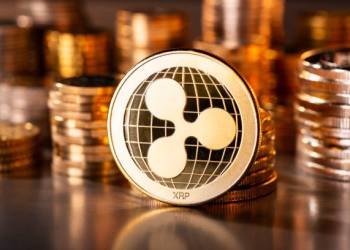
How the Ripple – BNY partnership is setting XRP’s new institutional era

ambcryptoPubblicato 2026-01-11Pubblicato ultima volta 2026-01-11

Introduzione

Institutional growth in finance is increasingly driven by strategic partnerships rather than direct capital inflows. A key example is the partnership between Ripple and BNY Mellon, a global bank with $50 trillion in assets under management. BNY Mellon has launched tokenized deposits—digital versions of cash—for institutional clients and selected Ripple Prime as an early adopter. This move signals the beginning of a "digital dollar" era where institutional funds exist as digital cash for instant, 24/7 transactions, moving beyond traditional fiat or stablecoins. This partnership strengthens Ripple's institutional role, reflecting growing confidence in its technology and positioning within digital finance. Despite XRP's price closing 2025 down 12%, XRP ETFs have gathered $1 billion in assets since their November launch, indicating institutional interest in Ripple's fundamentals rather than just speculative price action. The collaboration with BNY Mellon, which also acts as the primary custodian for Ripple's native digital dollar (RLUSD), reinforces Ripple's central role in the tokenized cash ecosystem and suggests its 2026 growth cycle will remain institutionally driven.

Institutional growth doesn’t always show up as direct capital inflows.

Instead, in recent years, it has increasingly taken the form of partnerships. Major financial institutions are using blockchain technology for practical use cases such as cross-border payments and everyday transactions.

Building on this trend, BNY Mellon (a global bank with $50 trillion in AUM) has launched tokenized deposits (digital versions of cash) for institutional clients. Notably, it chose Ripple Prime as an early adopter.

Looking deeper, this move goes beyond a simple boost for the XRPL.

Notably, many in the market see it as the start of a “digital dollar” era. One where institutional funds aren’t tied up in traditional fiat or stablecoins, but exist as “digital cash” that can move instantly in a 24/7 market.

Ripple now sits at the center of this shift. The key question is – How does this partnership impact Ripple’s institutional growth, especially with BNY already acting as a primary custodian for its native digital dollar – RLUSD?

BNY partnership boosts Ripple’s institutional role

BNY’s recent move is part of a broader trend in global finance.

As the initial “hype” around Central Bank Digital Currencies (CBDCs) gives way to real adoption, BNY’s launch of tokenized deposits represents the first step in what could become a wave of banks following suit.

In this context, Ripple being chosen as an “early adopter” is a strong signal of its growing role in digital finance. In line with this, XRP ETFs reaching $1 billion in AUM is an early sign of rising institutional interest too.

Notably, XRP’s price performance adds context to this trend.

From a technical lens, despite closing 2025 down 12% and facing a market pullback, XRP ETFs have still gathered $1 billion in assets since their launch in November.

Why does this matter? It indicates that institutions aren’t just betting on XRP’s price. Instead, they’re showing confidence in Ripple itself, with the BNY partnership serving as a clear signal of growing trust and adoption.

In short, Ripple is attracting institutional capital based on fundamentals. Hence, this explains why its 2026 cycle looks set to remain institutionally driven, reinforcing its role in the tokenized cash ecosystem.


Final Thoughts

  • BNY Mellon’s tokenized deposits place Ripple at the center of the emerging “digital dollar” era.
  • Institutional demand for Ripple is evident, highlighting confidence in its role in digital finance.


Domande pertinenti

QWhat is the significance of the partnership between Ripple and BNY Mellon for the institutional adoption of XRP?

AThe partnership signifies Ripple's growing role in digital finance, with BNY Mellon choosing Ripple Prime as an early adopter for its tokenized deposits. This move places Ripple at the center of the emerging 'digital dollar' era and is a strong signal of institutional trust and adoption, attracting capital based on fundamentals rather than just price speculation.

QWhat are tokenized deposits, and which institution recently launched them for their clients?

ATokenized deposits are digital versions of cash. BNY Mellon, a global bank with $50 trillion in assets under management (AUM), has recently launched them for its institutional clients.

QDespite a price decline in 2025, what key metric indicates rising institutional interest in XRP?

ADespite XRP closing 2025 down 12%, XRP ETFs have gathered $1 billion in assets under management (AUM) since their launch in November, indicating strong and growing institutional interest.

QHow does the article characterize the current shift in institutional funds, moving away from traditional forms?

AThe article characterizes this as the start of a 'digital dollar' era, where institutional funds are not tied up in traditional fiat or stablecoins but exist as 'digital cash' that can move instantly in a 24/7 market.

QWhat role does BNY Mellon already play in relation to Ripple's own digital currency, RLUSD?

ABNY Mellon acts as the primary custodian for Ripple's native digital dollar, RLUSD.

Letture associate

What's the Connection Between Pinduoduo's Huang Zheng and Blockchain?

This text explores the unexpected connection between Pinduoduo founder Colin Huang and blockchain, as suggested in his article *Turning Capitalism Upside Down*. Huang argues Pinduoduo's core business is about managing "uncertainty." He posits that wealth flows to the rich because they absorb life's uncertainties (e.g., illness, job loss) that devastate the poor, who pay a premium for certainty through insurance or stable prices. Pinduoduo's model attempts a "reverse insurance": by aggregating consumer demand via group-buying and flash sales, it creates a large, predictable order for manufacturers. This certainty allows factories to remove risk premiums, passing savings back as lower prices, thus partially reversing the wealth flow. The key obstacle, Huang notes, is that an individual's buying intent is an unreliable promise. He then asks if blockchain is the natural solution for this "reverse insurance." The text elaborates that blockchain, through smart contracts with binding deposits, could transform casual intent into a costly-to-break, enforceable commitment. This replaces interpersonal trust with coded rules, making promises credible, pricable, and resistant to fraud. Finally, the author draws a parallel to Bitcoin, framing two paths to creating certainty: the "Pinduoduo path" of aggregating decentralized will into scale, and the "Bitcoin path" of locking rules into immutable code. Both sacrifice something—personal freedom or system flexibility—to manufacture trust and predictability.

链捕手17 min fa

What's the Connection Between Pinduoduo's Huang Zheng and Blockchain?

链捕手17 min fa

The Storage Magnate Who Conquered a Trillion-Dollar Kingdom, Yet Ultimately Could Not Become the Richest

**Summary:** "The Memory Magnate Who Built a Trillion-Dollar Empire, Yet Never Became the Richest" explores the journey of Zhu Yiming, founder of GigaDevice (603986) and co-founder of the soon-to-IPO ChangXin Memory Technologies (CXMT). The article positions GigaDevice, a fabless chip designer now valued at ~¥340 billion, as a prequel to the massive IDM (Integrated Device Manufacturer) venture, CXMT. Starting in 2005 with minimal capital, Zhu strategically "picked up the pieces" by focusing on niche markets like NOR Flash and microcontrollers (MCUs), areas major players were exiting. This allowed GigaDevice to grow into a diversified semiconductor company, maintaining robust profitability even during industry downturns by controlling costs. However, the piece argues that in the highly cyclical and capital-intensive memory chip industry, the fabless model has limits. True resilience and scale require the ability for "counter-cyclical expansion" – investing heavily during downturns – a tactic only possible for IDMs like Samsung or SK Hynix. This insight led Zhu to partner with the Hefei city government in 2016 to establish CXMT, an IDM focused on DRAM. Zhu's symbolic moves, like forfeiting salary and diluting his equity, were crucial in securing the massive state and bank funding needed. CXMT's equipment base is now valued even higher than that of BYD's vast auto manufacturing empire. Despite the potential for CXMT to reach a market cap of ¥1-2 trillion upon its IPO, Zhu's indirect stake in both companies is estimated below 3%, placing his personal wealth far below that of China's top billionaires. The article concludes that his strategic vision built a trillion-yuan memory landscape, but the capital structure necessary to achieve it precluded a personal fortune of similar scale.

marsbit24 min fa

The Storage Magnate Who Conquered a Trillion-Dollar Kingdom, Yet Ultimately Could Not Become the Richest

marsbit24 min fa

XRP Ledger Daily Fees Drop Below $400 As Network Activity Question Returns

The XRP Ledger is drawing attention as daily network fees have fallen below $400. While low fees align with XRPL's design for affordable transactions and are often seen as a strength, the metric can also serve as an indicator of network demand and paid transaction volume. This data point of around $3,100 in weekly fee burn highlights the stark contrast with higher-fee chains like Ethereum and Bitcoin. The development fuels an ongoing debate. Proponents view low fees as a sign of efficiency and accessibility, while critics may question if the network is generating sufficient high-value activity relative to its market cap and payments-focused narrative. The article cautions against overstating the finding, noting a single low-fee day does not signify network failure. It instead adds context to discussions about XRPL's usage, especially alongside Ripple's broader initiatives in stablecoins (RLUSD), AI payments, and enterprise infrastructure. The report recommends monitoring for a fee rebound, checking transaction counts for a fuller picture, and confirming the trend via native explorers like Bithomp. It frames the story within a larger market shift where on-chain data, protocol updates, and infrastructure developments are becoming crucial alongside price action. The editorial stance is to present the verified data, explain its significance for assessing network activity, and avoid hype, positioning it as part of the daily crypto conversation.

bitcoinist4 h fa

XRP Ledger Daily Fees Drop Below $400 As Network Activity Question Returns

bitcoinist4 h fa

Trading

Spot
Futures

Articoli Popolari

Come comprare ERA

Benvenuto in HTX.com! Abbiamo reso l'acquisto di Caldera (ERA) semplice e conveniente. Segui la nostra guida passo passo per intraprendere il tuo viaggio nel mondo delle criptovalute.Step 1: Crea il tuo Account HTXUsa la tua email o numero di telefono per registrarti il tuo account gratuito su HTX. Vivi un'esperienza facile e sblocca tutte le funzionalità,Crea il mio accountStep 2: Vai in Acquista crypto e seleziona il tuo metodo di pagamentoCarta di credito/debito: utilizza la tua Visa o Mastercard per acquistare immediatamente CalderaERA.Bilancio: Usa i fondi dal bilancio del tuo account HTX per fare trading senza problemi.Terze parti: abbiamo aggiunto metodi di pagamento molto utilizzati come Google Pay e Apple Pay per maggiore comodità.P2P: Fai trading direttamente con altri utenti HTX.Over-the-Counter (OTC): Offriamo servizi su misura e tassi di cambio competitivi per i trader.Step 3: Conserva Caldera (ERA)Dopo aver acquistato Caldera (ERA), conserva nel tuo account HTX. In alternativa, puoi inviare tramite trasferimento blockchain o scambiare per altre criptovalute.Step 4: Scambia Caldera (ERA)Scambia facilmente Caldera (ERA) nel mercato spot di HTX. Accedi al tuo account, seleziona la tua coppia di trading, esegui le tue operazioni e monitora in tempo reale. Offriamo un'esperienza user-friendly sia per chi ha appena iniziato che per i trader più esperti.

350 Totale visualizzazioniPubblicato il 2025.07.17Aggiornato il 2026.06.02

Come comprare ERA

Discussioni

Benvenuto nella Community HTX. Qui puoi rimanere informato sugli ultimi sviluppi della piattaforma e accedere ad approfondimenti esperti sul mercato. Le opinioni degli utenti sul prezzo di ERA ERA sono presentate come di seguito.

活动图片