House Democrats Push SEC Chair To Resume Crypto Enforcement Actions

bitcoinistPubblicato 2026-01-15Pubblicato ultima volta 2026-01-15

Introduzione

House Democrats, including Representatives Maxine Waters, Sean Casten, and Brad Sherman, are urging SEC Chair Paul Atkins to resume enforcement actions against crypto firms. They expressed concern over the SEC's dismissal of over a dozen crypto-related cases since January 2025, including those against Binance, Coinbase, and Kraken. The lawmakers allege the SEC's pullback, amid the industry's "troubling history of harming investors," raises serious questions about its priorities and effectiveness. They also pointed to unprecedented lobbying and contributions from the crypto sector to political figures like former President Trump, suggesting a possible "pay-to-play" dynamic. The Democrats warn that this lack of enforcement leaves investors vulnerable and fails to protect them from market violations.

In a critical week for the cryptocurrency industry, following the delayed markup of the Crypto Market Structure bill (CLARITY Act), House Democrats are calling on the Securities and Exchange Commission (SEC) chair, Paul Atkins, to reinstate enforcement actions against crypto firms.

The letter, dated January 15, was signed by Representatives Maxine Waters, Sean Casten, and Brad Sherman, who expressed concerns regarding the SEC’s recent retreat to investigate and prosecute alleged violations related to “digital asset securities.”

House Democrats’ Allegations

The representatives highlighted that since January 2025, the SEC has dismissed or closed more than a dozen cases involving crypto-related activities, including litigations against major players like Binance, Coinbase, and Kraken. Just this week, the SEC also closed its case against the Zcash Foundation.

In their letter, the lawmakers alleged that given the industry’s “troubling history of harming investors,” the SEC’s decision to pull back raises serious questions about its priorities and effectiveness. They warned that this shift puts both investors and the broader US economy at considerable risk.

Moreover, the representatives highlighted unprecedented lobbying and monetary contributions to political figures, including President Trump and his associates, from the digital asset sector. They pointed out that this could have influenced the SEC’s decision to abandon a majority of its crypto enforcement actions.

Alleged Conflicts Of Interest Between Trump And Crypto

These concerns follows months of allegations from the Democratic Party suggesting conflicts of interest between the Trump administration and the crypto industry, particularly highlighted by last year’s pardon for former Binance CEO Changpeng Zhao (CZ) and connections to the Trump-affiliated World Liberty Financial (WLFI).

According to the lawmakers, the SEC’s choice to walk away from these enforcement cases has raised suspicions of a possible pay-to-play dynamic. They argued that allowing violators of securities laws to escape without repercussions contradicts the SEC’s primary responsibility.

Furthermore, the Representatives claim that recent statements by Chair Atkins, who said that ‘most crypto tokens are not securities’, have caused confusion.

The Democrats further pointed out that this lack of enforcement against digital assets leaves investors “vulnerable” and allegedly fails to protect them from potential violations in the market.

The daily chart shows the total crypto market cap’s drop below $3.2 trillion on Thursday. Source: TOTAL on TradingView.com

Featured image from DALL-E, chart from TradingView.com

Domande pertinenti

QWho are House Democrats urging to resume crypto enforcement actions, and what is the name of the relevant bill mentioned?

AHouse Democrats are urging SEC Chair Paul Atkins to resume enforcement actions. The relevant bill mentioned is the Crypto Market Structure bill (CLARITY Act).

QWhich three Representatives signed the letter to the SEC chair, and what was their primary concern?

ARepresentatives Maxine Waters, Sean Casten, and Brad Sherman signed the letter. Their primary concern was the SEC's recent retreat from investigating and prosecuting alleged violations related to 'digital asset securities'.

QAccording to the lawmakers, what two major risks does the SEC's pullback on enforcement create?

AThe lawmakers warned that the SEC's pullback puts both investors and the broader US economy at considerable risk.

QWhat two specific connections between the Trump administration and the crypto industry did the Democrats cite as alleged conflicts of interest?

AThe Democrats cited the pardon for former Binance CEO Changpeng Zhao (CZ) and connections to the Trump-affiliated World Liberty Financial (WLFI) as alleged conflicts of interest.

QWhat recent statement by SEC Chair Paul Atkins did the Representatives claim has caused confusion in the market?

AThe Representatives claimed that Chair Atkins's statement that 'most crypto tokens are not securities' has caused confusion.

Letture associate

The AI Investment Landscape Is Being Reshaped: Beyond the 'Magnificent Seven', What Opportunities Lie in the Semiconductor Supply Chain?

AI Investment Map is Reshaping: Opportunities Beyond the 'Magnificent Seven' Since ChatGPT ignited the AI wave, investment initially focused on the "Magnificent Seven" tech giants dominating cloud infrastructure. However, the rise of DeepSeek and debates on AI capital expenditure effectiveness are shifting this dynamic. Investors now recognize opportunities deeper in the supply chain—the companies providing the essential "picks and shovels." Early concerns about an AI investment "arms race" and potential low returns were partly alleviated by strong Q1 earnings from cloud providers, validating robust compute demand. This has highlighted a more certain investment thesis: regardless of which AI applications ultimately win, massive capital expenditure will first fuel demand for semiconductors and related components. This "pick-and-shovel" logic has driven semiconductor ETFs to record highs. Key beneficiaries include: * **Memory Chipmakers (e.g., SK Hynix, Samsung, Micron)**: High Bandwidth Memory (HBM) is a critical bottleneck for AI training. * **Photonics Companies**: Crucial for high-speed data transfer within AI data centers. * **The Broader "AI-11" Semiconductor Ecosystem**: This encompasses foundries & lithography (TSMC, ASML), logic & custom chips (AMD, Broadcom, Intel, Marvell), and enterprise storage (SanDisk, Western Digital). Every dollar of AI infrastructure spending flows through this chain. While the "Magnificent Seven" remain dominant in market size, their earnings growth premium over the rest of the S&P 500 ("S&P 493") is narrowing. Market attention and marginal investment are shifting towards the expanding semiconductor supply chain. The investment narrative is evolving from "betting on the ultimate AI winner" to "investing in the certainty of the infrastructure build-out." Understanding this shift from the demand side to the supply side is key to identifying future AI investment opportunities.

marsbit21 min fa

The AI Investment Landscape Is Being Reshaped: Beyond the 'Magnificent Seven', What Opportunities Lie in the Semiconductor Supply Chain?

marsbit21 min fa

600 People, $66 Billion: The First Major Cash-Out in the Era of Large Models

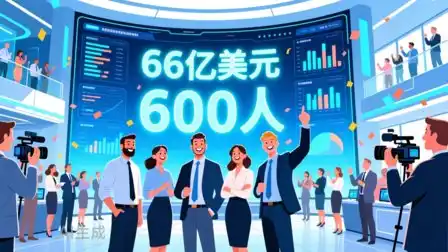
The first systematic "big cash-out" of the AI era occurred in October 2025, when over 600 current and former OpenAI employees sold a total of $6.6 billion in shares via a secondary market. Approximately 75 individuals maxed out a $30 million per-person sale limit, while around 525 others cashed out an average of $8.3 million each. This event, exceeding the scale of any 2024 US IPO, functioned as a "shadow IPO." It marked a radical departure from the traditional Silicon Valley path of waiting for a public listing, instead allowing employees to convert equity to cash after just two years of tenure—a direct retention tool in a fiercely competitive talent market where rivals like Meta have offered packages worth hundreds of millions. This massive liquidity event presents a dual-edged sword for OpenAI. While it helps retain talent, it also risks triggering a brain drain as newly wealthy employees may depart. Furthermore, it creates a dilemma for those who sold: they forfeited potential future gains as the company's valuation soared from $400 billion to $852 billion within months. In stark contrast, employees at rival Anthropic demonstrated greater reluctance to sell during their own secondary offering. The financial narratives of the two labs also diverge sharply. OpenAI, while achieving over $20 billion in annualized revenue by 2025, faces massive projected losses (up to $14 billion in 2026), a long path to cash flow positivity, and significant revenue-sharing payments to Microsoft. Anthropic reports rapid revenue growth, improving gross margins, and a faster path to profitability. OpenAI's trajectory is thus balanced precariously between skyrocketing valuation based on funding narratives and the pressures of sustained financial losses post-cash-out. The event underscores that the AI race has evolved into a capital and human experiment, where immense wealth crystallizes the complex calculations of greed, fear, and ambition within the industry.

marsbit41 min fa

600 People, $66 Billion: The First Major Cash-Out in the Era of Large Models

marsbit41 min fa

NVIDIA Begins Adding Soap to the Bubble

NVIDIA is taking on a dual role: not just as a leading chip supplier, but as a massive capital allocator across the entire AI supply chain. In 2026, the company has committed over $40 billion in investments within five months, targeting everything from optical fiber manufacturing and data center operations to foundational AI model development. This investment spree, described as a systematic "sprinkler" approach, primarily funds companies that are major buyers of NVIDIA's own GPUs. Critics, including analysts from Goldman Sachs, label this a "circular revenue" loop—comparable to a supplier financing a customer to buy more of its products. A prominent example is NVIDIA's investment in OpenAI, which is expected to generate around $13 billion in revenue for NVIDIA, much of which may be reinvested back into OpenAI. While CEO Jensen Huang dismisses the "circular financing" critique as "absurd," arguing the investments are confidence votes in long-term generational shifts, some analysts express discomfort. They note that while investments in critical supply chain components like optics are strategically sound, funding new cloud providers like CoreWeave feels like "pre-paying for your own GPUs." The strategy carries significant risks. If the AI investment cycle turns, the market may question how much demand is genuine versus artificially sustained by NVIDIA's own balance sheet. Despite posting record-breaking earnings—$215.9 billion in annual revenue and $120 billion in net profit for FY2026—NVIDIA's stock fell after its report, signaling that "beating expectations" may no longer be enough to assure investors about the duration of the AI spending boom. The article concludes that while a bubble isn't necessarily a fraud, NVIDIA's actions resemble adding soap to a bubble—making it appear more robust and durable. This creates a complex scenario requiring extreme冷静 from investors to distinguish between real structural growth and financial engineering.

marsbit58 min fa

NVIDIA Begins Adding Soap to the Bubble

marsbit58 min fa

Short Positions Have Been Squeezed Out: Will the Next Leg of the U.S. Stock AI Rally Continue in Seoul?

"Short Squeeze Exhausted: Will the Next Leg of the AI Rally Continue in Seoul?" A Nomura report suggests the US AI stock rally, which saw the S&P 500 rise ~16.6% in 28 days largely driven by 10 key stocks, may be pausing. The fuel from short covering, CTA fund positioning, and volatility-control strategies is nearing its limit. For the rally to continue, new momentum from retail and sentiment-driven FOMO (Fear Of Missing Out) is needed. South Korea's market provided a potential answer on the very day the report was published. The KOSPI index surged 4.32%, triggering a buy-side circuit breaker, led by massive gains in chip giants SK Hynix (+11.98%) and Samsung. This surge is characterized by retail "hynix FOMO" and overseas funds precisely buying into AI themes via chip-focused ETFs, shifting from broad Korean market ETFs. The Korean rally is a high-beta extension of the US AI capital expenditure story, as major cloud providers plan massive infrastructure spending, directly benefiting memory chip leaders. However, this linkage also implies vulnerability. The sustainability of this next leg depends on whether US tech stocks correct, the trajectory of US inflation (with upcoming CPI data key), and geopolitical tensions around the Strait of Hormuz. Seoul has emerged as the new epicenter of the AI trade, but its fate remains tied to these broader macro and market dynamics.

marsbit1 h fa

Short Positions Have Been Squeezed Out: Will the Next Leg of the U.S. Stock AI Rally Continue in Seoul?

marsbit1 h fa

Trading

Spot
Futures

Articoli Popolari

Come comprare HOUSE

Benvenuto in HTX.com! Abbiamo reso l'acquisto di Housecoin (HOUSE) semplice e conveniente. Segui la nostra guida passo passo per intraprendere il tuo viaggio nel mondo delle criptovalute.Step 1: Crea il tuo Account HTXUsa la tua email o numero di telefono per registrarti il tuo account gratuito su HTX. Vivi un'esperienza facile e sblocca tutte le funzionalità,Crea il mio accountStep 2: Vai in Acquista crypto e seleziona il tuo metodo di pagamentoCarta di credito/debito: utilizza la tua Visa o Mastercard per acquistare immediatamente HousecoinHOUSE.Bilancio: Usa i fondi dal bilancio del tuo account HTX per fare trading senza problemi.Terze parti: abbiamo aggiunto metodi di pagamento molto utilizzati come Google Pay e Apple Pay per maggiore comodità.P2P: Fai trading direttamente con altri utenti HTX.Over-the-Counter (OTC): Offriamo servizi su misura e tassi di cambio competitivi per i trader.Step 3: Conserva Housecoin (HOUSE)Dopo aver acquistato Housecoin (HOUSE), conserva nel tuo account HTX. In alternativa, puoi inviare tramite trasferimento blockchain o scambiare per altre criptovalute.Step 4: Scambia Housecoin (HOUSE)Scambia facilmente Housecoin (HOUSE) nel mercato spot di HTX. Accedi al tuo account, seleziona la tua coppia di trading, esegui le tue operazioni e monitora in tempo reale. Offriamo un'esperienza user-friendly sia per chi ha appena iniziato che per i trader più esperti.

263 Totale visualizzazioniPubblicato il 2025.04.27Aggiornato il 2025.04.27

Come comprare HOUSE

Discussioni

Benvenuto nella Community HTX. Qui puoi rimanere informato sugli ultimi sviluppi della piattaforma e accedere ad approfondimenti esperti sul mercato. Le opinioni degli utenti sul prezzo di HOUSE HOUSE sono presentate come di seguito.

活动图片