Hot Track, New Interaction Opportunities: Three Prediction Markets Backed by YZi Labs

Odaily星球日报Pubblicato 2025-12-23Pubblicato ultima volta 2025-12-23

Introduzione

Prediction markets are a hot topic in the crypto community, with significant activity on BNB Chain. According to Dune data, three platforms dominate: Opinion leads with 75% market share and $125M in daily volume, followed by PancakeSwap's Probable at 14.5% ($24M), and predict.fun, founded by dingaling, at 10.5% ($17M). All three are backed by YZi Labs. **Opinion**, a Binance Labs MVB alum, raised a $5M seed round. It runs a points program with weekly rewards. A special Christmas/New Year event offers 100k points for activities like daily trading, high volume, and using Binance Wallet. **predict.fun**, founded by NFT influencer dingaling, allows users to earn yield on capital locked in predictions. It airdropped initial points to active BNB Chain users. Its first weekly points event concludes soon, with a second starting immediately after. **Probable**, incubated by PancakeSwap, focuses on a zero-fee, fully on-chain experience using UMA's Oracle for dispute resolution. It supports predictions on various events and allows deposits in any token, auto-swapped to USDT. A points system based on trading volume is imminent and is already tracking user activity.

Original | Odaily Planet Daily (@OdailyChina)

Author | Asher (@Asher_ 0210)
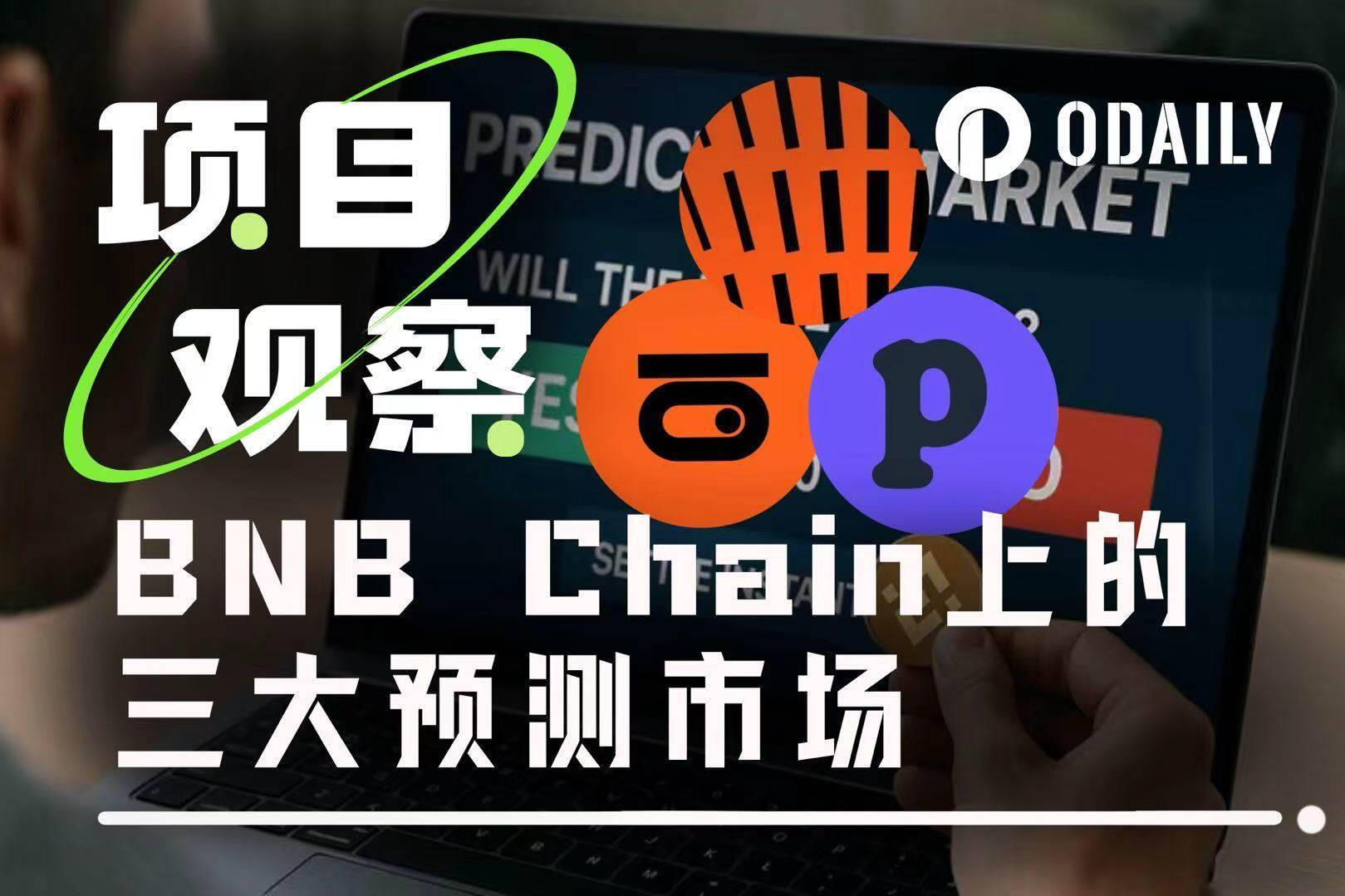
Prediction markets are a topic of extremely high discussion in the community recently. Besides Polymarket and Kalshi, the prediction market within the BNB Chain ecosystem has also been growing and strengthening. According to Dune data, looking at the trading volume of the three major prediction market platforms on BNB Chain from yesterday, Opinion currently leads far ahead of the others with a market share of 75% and a trading volume of $125 million yesterday; followed by Probable, backed by the PancakeSwap team, with a market share of 14.5% and a trading volume of $24 million yesterday; predict.fun, founded by dingaling, ranks third with a market share of 10.5% and a trading volume of $17 million yesterday.
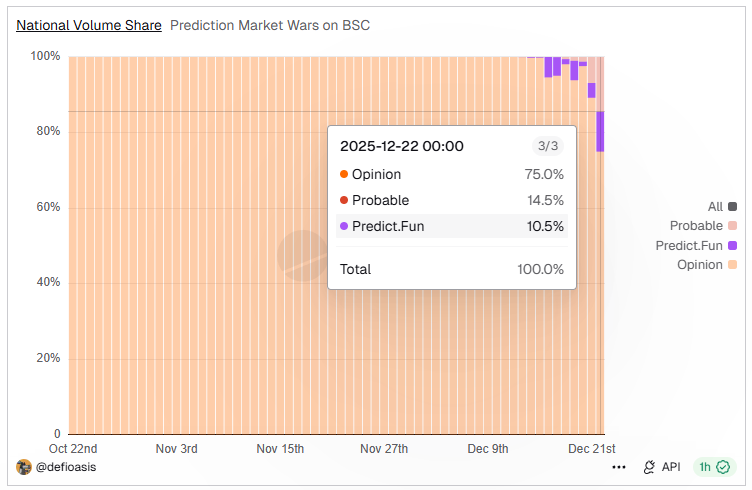
BNB Chain Ecosystem Prediction Market Share (December 22)
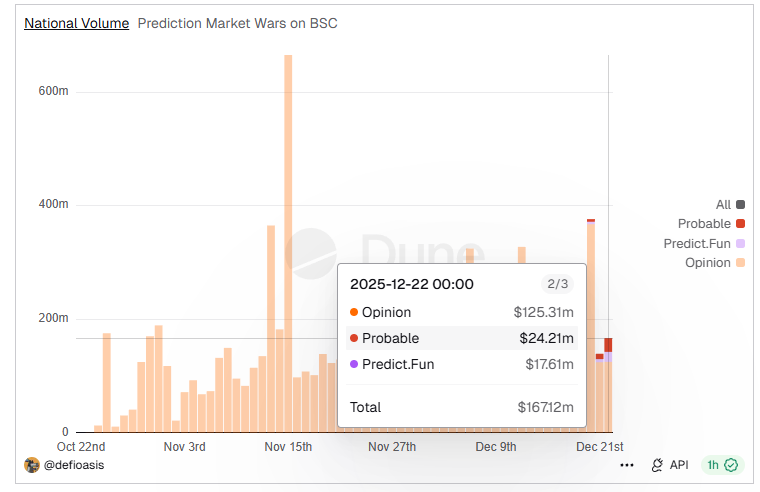
BNB Chain Ecosystem Prediction Market Trading Volume (December 22)

Next, Odaily Planet Daily will take you to understand the three prediction market platforms on BNB Chain that have received investment from YZi Labs: Opinion, predict.fun, and Probable.

Opinion: The Leader in BNB Chain's Prediction Market Ecosystem, Launched Christmas & New Year Points Activity Yesterday
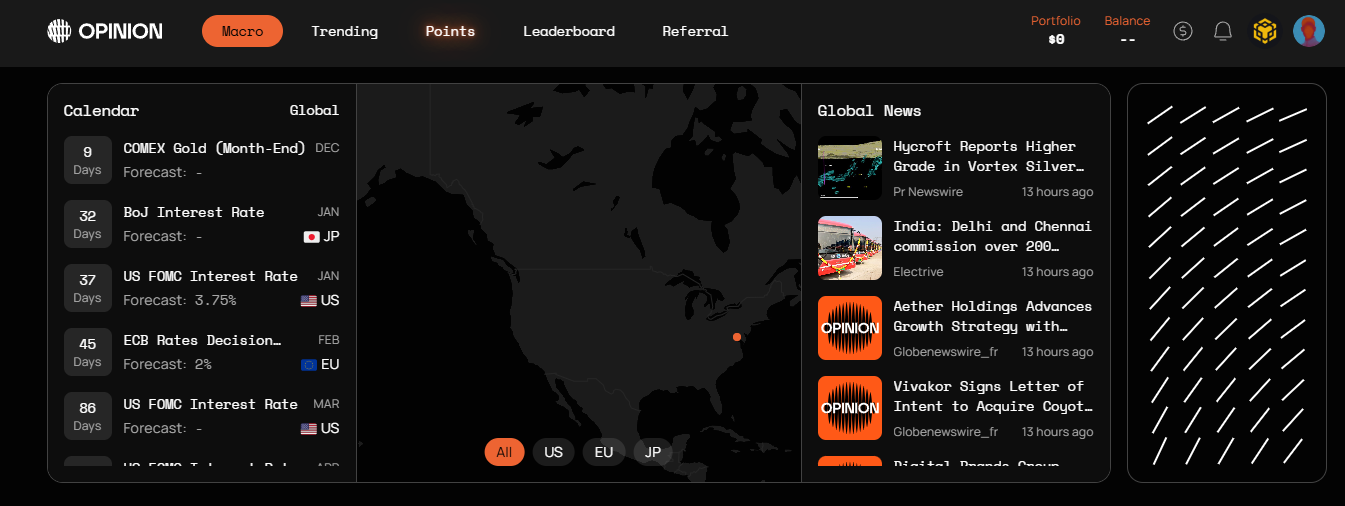
Opinion is the first prediction market platform on the BNB Chain ecosystem. According to ROOTDATA data, Opinion announced the completion of a $5 million seed round financing on March 18 this year. This round was led by YZi Labs, with participation from echo, Animoca Ventures, Manifold, Amber Group, and others. Additionally, Opinion was one of the 4 best-performing projects in the previous Binance Labs MVB program.

Points Rules

Opinion points are allocated on a weekly basis, with a total of 100,000 points rewarded per week. The rules are as follows:

1. Trading volume requirement: ≥ $200 per week (and a single order ≥ $10) to be counted for points.

2. Holding time: The larger the position and the longer the holding time → the higher the points.

3. Liquidity orders (limit orders): Limit order amount ≥ $10 to count for points; the longer the order is placed and the closer the price is to the best bid/ask → the more points; limit orders have 0 fees and add points weight, making them the most stable way to earn points (market orders charge about 2% fees).

4. Trading volume and fees: The higher the transaction volume and the more fees contributed, the more points earned.

Christmas & New Year Points Activity

Yesterday (December 22), Opinion announced on platform X the launch of the Christmas & New Year points activity. Specific details are as follows:

  • Activity reward: A total of 100,000 points;
  • Activity period: From December 22 to January 5, 2026, lasting two weeks;
  • Ways to earn points: Daily Warriors, 20,000 points total (trade > 3 times daily, and meet the requirement for > 10 days); Volume Kings: 20,000 points total (daily trading volume > $2,000, and meet the requirement for > 10 days); Binance Wallet Elite: 10,000 points total (accumulated trading volume during the activity > $2,000); Diamond Hands: 20,000 points total; Mystery Finale: 30,000 points total.

Additionally, some notes on the ways to earn points:

  • Diamond Hands reward: Allocated based on the time-weighted open positions of all users during the activity period, data comes from regular platform snapshots;
  • Daily Warriors and Volume Kings rewards: Wallets that meet the corresponding daily trading threshold for at least 10 days during the activity period will share the respective rewards;
  • Binance Wallet Elite reward: Users who complete a cumulative trading volume > $2,000 during the activity period via Binance Wallet will share the reward. This reward requires using a keyless address or a newly imported wallet; old wallets already registered with OPINION are not eligible.

predict.fun: Founder is NFT field renowned figure dingaling, First Week Points Activity Ends Tonight at 10 PM
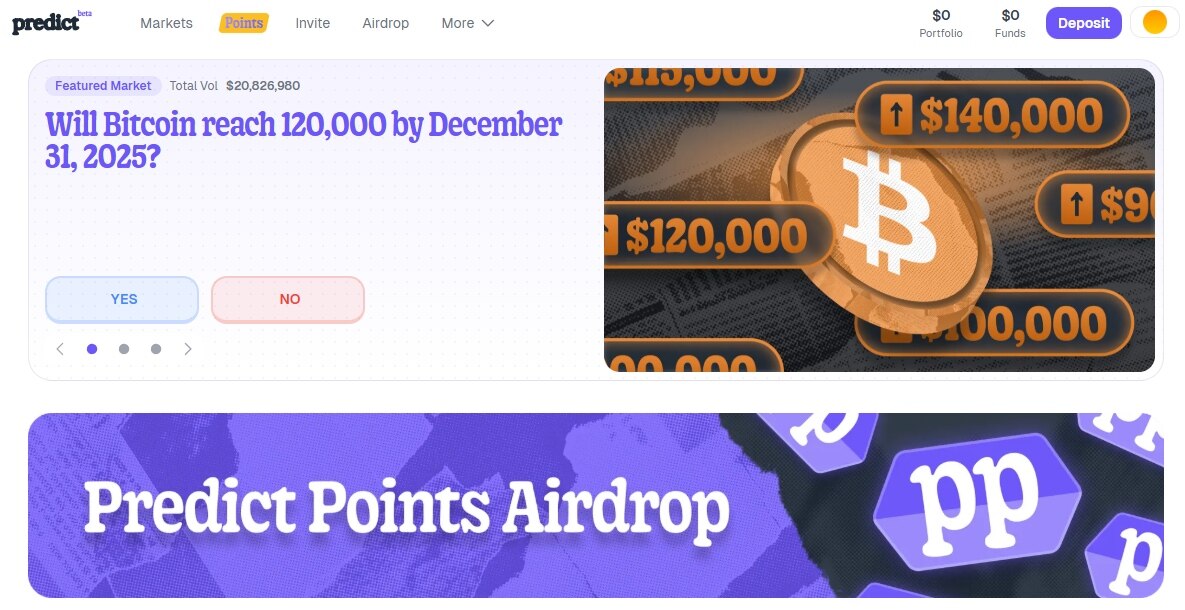
predict.fun is a prediction market platform launched on BNB Chain, founded by the previously well-known figure in the NFT field, dingaling. Unlike traditional prediction markets like Polymarket and Kalshi, predict.fun has implemented a key innovation: funds used by users to participate in predictions are no longer idle but can simultaneously generate additional returns during the prediction period.

On December 17, predict.fun's founder dingaling announced on platform X that the platform is officially open and has airdropped initial points to Meme traders on BNB Chain, Aster participants, and active users of various prediction markets. (For more interaction tutorials, read: Step-by-Step Guide to Participating in CZ-Supported predict.fun)

Today, predict.fun officially announced on platform X that the first week points activity will end at 10 PM Beijing time tonight. Prediction points rewards and other additional airdrop rewards will be credited to users' personal accounts in 3 days, and the leaderboard will also be updated. Additionally, the second week points activity will start immediately after the first week activity ends.

Probable: Prediction Market Incubated by PancakeSwap, Points System Coming Soon
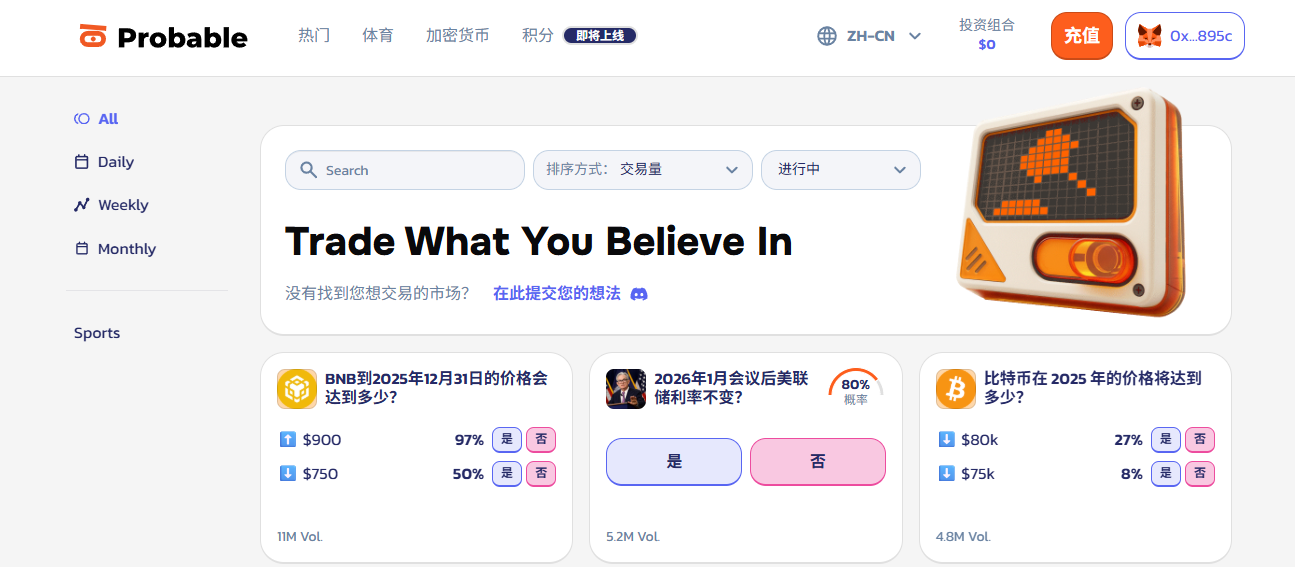
On December 16, PancakeSwap announced the launch of Probable, a fully on-chain prediction market platform incubated by them (platform language supports switching to Simplified Chinese). This project is jointly supported by PancakeSwap and YZi Labs and will be exclusively deployed on BNB Chain. PancakeSwap stated that Probable is an independent project, and its team will advance product development and ecosystem expansion with the support of PancakeSwap and YZi Labs.

According to the introduction, Probable is positioned as a user-centric on-chain prediction platform, featuring zero fees, fully on-chain settlement, and a simplified user experience. Initially, the platform will not charge prediction fees. Relying on BNB Chain's low-cost and high-performance infrastructure, it supports users to predict cryptocurrency trends, global events, sports events, and some regional characteristic markets.

At the mechanism level, Probable uses UMA's Optimistic Oracle as an event adjudication tool, achieving result confirmation through a dispute-based verification method to enhance the transparency and censorship resistance of the prediction market. Additionally, users can top up with any token, and the system will automatically exchange it for USDT on BNB Chain for participation in predictions, lowering the operational barrier.

Currently, Probable's points system has not yet been launched. According to official information, a new points system is coming soon. Points will be calculated based on users' trading volume, and the backend has already started counting and accumulating users' current trading volume.


Crypto di tendenza

Domande pertinenti

QWhich three prediction market platforms on BNB Chain are highlighted in the article as being backed by YZi Labs?

AThe three prediction market platforms on BNB Chain backed by YZi Labs are Opinion, predict.fun, and Probable.

QAccording to the Dune data from December 22nd, which BNB Chain prediction market had the highest trading volume and what was its market share?

AAccording to the Dune data from December 22nd, Opinion had the highest trading volume of $125 million, capturing a 75% market share.

QWhat is a key innovative feature of predict.fun that differentiates it from traditional prediction markets like Polymarket?

AA key innovative feature of predict.fun is that the funds users use to participate in predictions are not idle; they can simultaneously generate additional yield during the prediction period.

QWhat is the total amount of the seed round funding that Opinion completed, and who was the lead investor?

AOpinion completed a $5 million seed round funding, which was led by YZi Labs.

QWhat are two main technical features that Probable, incubated by PancakeSwap, promotes for its users?

AProbable promotes two main features: zero trading fees and a fully on-chain settlement process.

Letture associate

Q-Day Countdown: Will Quantum Computing End Cryptocurrencies?

Quantum Computing's Threat to Cryptocurrency: A Countdown to Q-Day Quantum computing, specifically Shor's algorithm, poses a fundamental threat to the public-key cryptography (e.g., ECDSA, RSA) that secures blockchain networks like Bitcoin and Ethereum. This critical juncture, known as Q-Day, is estimated to occur potentially within the next 5-15 years. The core vulnerability stems from the public and immutable nature of blockchains. Assets in addresses where the public key is already exposed on-chain (e.g., spent outputs) are at direct risk, as a sufficiently powerful quantum computer could derive the private key. This threatens the very trust model of cryptocurrencies. The response lies in Post-Quantum Cryptography (PQC)—algorithms like lattice-based ML-DSA and hash-based SLH-DSA, which are resistant to quantum attacks. NIST has standardized key PQC algorithms (FIPS 203, 204, 205), providing a migration path. However, the primary challenge is not technical but socio-economic and involves complex governance: * **Bitcoin's** path is constrained by its conservative ethos. Migrating requires a soft-fork to new address types, facing hurdles like significantly larger signature sizes and, most critically, the divisive governance question of how to handle at-risk legacy UTXOs without violating core principles. * **Ethereum** is pursuing a "cryptographic agility" strategy, with a multi-layered roadmap. It leverages account abstraction for user accounts and is developing compressed hash-based signatures (e.g., leanXMSS) for its consensus layer, aiming for a full-stack upgrade over time. In conclusion, quantum computing does not spell an instant end for cryptocurrency but initiates a critical countdown. The industry has a limited "engineering comfort window" to orchestrate a coordinated, ecosystem-wide migration to PQC. The ultimate bottlenecks are the immense coordination efforts and governance decisions required for this foundational transition.

marsbit24 min fa

Q-Day Countdown: Will Quantum Computing End Cryptocurrencies?

marsbit24 min fa

Trump, the President Who Knows Best How to 'Trade Stocks'

Former US President Donald Trump reported a record-breaking $2.2 billion in personal income for 2025, the highest annual income ever disclosed by a sitting president. This figure, from a 927-page government ethics filing, represented a 3.5-fold increase from his $600 million income in 2024 and boosted his net worth to $6.5 billion. The primary drivers were cryptocurrency (64% of income, approximately $1.4 billion) and real estate (26%, approximately $575 million). His crypto earnings stemmed largely from the launch of his personal meme coin, $TRUMP, generating over $600 million in licensing fees, and substantial profits from the WLFI token and its parent company. Despite a sluggish property market, his Mar-a-Lago resort and associated golf clubs saw revenue surges of 50% and 27%, respectively, attributed to their use as venues for presidential events. Trump's financial disclosure also revealed an unprecedented level of stock market activity, with over 22,000 trades executed in 2025, averaging 87 trades per market day. Media analyses noted several instances where significant trading coincided with major policy announcements, such as proposed tariffs, raising questions about potential conflicts of interest. While the White House stated these trades were handled by a family-managed trust fund and not Trump directly, critics highlighted this as a departure from the blind trusts traditionally used by presidents post-Watergate. The report has intensified debate over the commercialization of the presidency. Supporters view it as a success story of a businessman-president, while critics argue it demonstrates an unprecedented conversion of public influence into private wealth, with policy decisions potentially linked to personal financial gains. The controversy centers on whether Trump's earnings represent innovative entrepreneurship or a fundamental conflict of interest, sparking renewed calls for stricter ethics reforms in US governance.

marsbit33 min fa

Trump, the President Who Knows Best How to 'Trade Stocks'

marsbit33 min fa

Countdown to Q-Day: Will Quantum Computing End Cryptocurrencies?

The article explores the existential threat quantum computing poses to cryptocurrencies and the urgent need for "post-quantum" migration. It outlines that quantum computers, through Shor's algorithm, could break the elliptic-curve cryptography (ECC) underlying blockchain security, potentially allowing private keys to be derived from public keys. The core challenge is not a lack of post-quantum cryptography (PQC) standards—like NIST's ML-KEM and ML-DSA—but the immense complexity of upgrading entire ecosystems before "Q-Day" (when quantum computers become capable of such attacks, estimated around 2035-2045). Key points include: * **Bitcoin's** risk is concentrated in legacy UTXOs with exposed public keys (e.g., early P2PK outputs). Migration faces massive hurdles: PQC signatures are much larger, increasing transaction size and cost, and the governance dilemma of handling un-migrated assets threatens its "code is law" ethos. * **Ethereum's** strategy focuses on "cryptographic agility," using Account Abstraction for user accounts and developing compressed hash-based signatures (like leanXMSS with SNARK aggregation) for consensus. Its migration is a complex, full-stack overhaul of execution, consensus, and data layers. * The "security debt" is enormous. The comfortable engineering window for a coordinated, ecosystem-wide upgrade is only 5-8 years. High-value infrastructure (exchanges, bridges) may face pressure before mainnet protocols. In conclusion, quantum computing is not an instant "doomsday" event but a forcing function for systemic change. Bitcoin's ultimate test is social consensus and property rights governance, while Ethereum's is technical complexity. Failure to migrate in time could lead to a fundamental re-pricing of crypto assets.

链捕手37 min fa

Countdown to Q-Day: Will Quantum Computing End Cryptocurrencies?

链捕手37 min fa

Losing $55 Million to Sell Bitcoin, MicroStrategy's Faith Reaches Its Interest Payment Day

On July 6th, Michael Saylor's MicroStrategy announced the sale of 3,588 BTC for approximately $216 million, incurring a realized loss of around $55.45 million compared to its average cost basis. This move, contradicting Saylor's long-standing "never sell" Bitcoin philosophy, was executed to pay dividends on its digital credit securities. The article traces this shift from a small "desensitization test" sale of 32 BTC in late May to the board's authorization on June 30th to sell up to $1.25 billion in Bitcoin for corporate purposes like dividends and buybacks. Analysis reveals that MicroStrategy's previous growth "flywheel"—using stock premiums to fund more Bitcoin purchases—has stalled. With its stock trading near a critical threshold (1.22x its Bitcoin NAV), issuing new shares would dilute value. Simultaneously, its financing channels (preferred stock, common stock ATM, convertible notes) are constrained while facing rigid annual dividend/interest obligations of roughly $1.76 billion. Consequently, selling Bitcoin became the calculated "optimal solution" under its own financial model. This transforms MicroStrategy from crypto's most prominent steady buyer into a predictable seller, creating a potential overhead of ~2,400 BTC in monthly selling pressure if obligations are fully covered by sales. This shift challenges the valuation models of the entire Digital Asset Treasury (DAT) sector that emulated MicroStrategy. The company's path forward now hinges on Bitcoin's price recovery, which would allow its preferred stock to trade at par and reopen its financing flywheel, creating a cyclical dependency between the firm's financial model and the asset it holds.

链捕手1 h fa

Losing $55 Million to Sell Bitcoin, MicroStrategy's Faith Reaches Its Interest Payment Day

链捕手1 h fa

Trading

Spot

Articoli Popolari

Come comprare HOT

Benvenuto in HTX.com! Abbiamo reso l'acquisto di Holo (HOT) semplice e conveniente. Segui la nostra guida passo passo per intraprendere il tuo viaggio nel mondo delle criptovalute.Step 1: Crea il tuo Account HTXUsa la tua email o numero di telefono per registrarti il tuo account gratuito su HTX. Vivi un'esperienza facile e sblocca tutte le funzionalità,Crea il mio accountStep 2: Vai in Acquista crypto e seleziona il tuo metodo di pagamentoCarta di credito/debito: utilizza la tua Visa o Mastercard per acquistare immediatamente HoloHOT.Bilancio: Usa i fondi dal bilancio del tuo account HTX per fare trading senza problemi.Terze parti: abbiamo aggiunto metodi di pagamento molto utilizzati come Google Pay e Apple Pay per maggiore comodità.P2P: Fai trading direttamente con altri utenti HTX.Over-the-Counter (OTC): Offriamo servizi su misura e tassi di cambio competitivi per i trader.Step 3: Conserva Holo (HOT)Dopo aver acquistato Holo (HOT), conserva nel tuo account HTX. In alternativa, puoi inviare tramite trasferimento blockchain o scambiare per altre criptovalute.Step 4: Scambia Holo (HOT)Scambia facilmente Holo (HOT) nel mercato spot di HTX. Accedi al tuo account, seleziona la tua coppia di trading, esegui le tue operazioni e monitora in tempo reale. Offriamo un'esperienza user-friendly sia per chi ha appena iniziato che per i trader più esperti.

105 Totale visualizzazioniPubblicato il 2024.12.11Aggiornato il 2026.06.02

Come comprare HOT

Cosa è HOLO

Comprendere HOLO: Il Futuro delle Applicazioni Decentralizzate Introduzione a HOLO, $holo Nel panorama in rapida evoluzione delle criptovalute e delle tecnologie decentralizzate, HOLO, noto anche come Holo, è emerso come un attore notevole. Questo progetto innovativo facilita lo sviluppo di applicazioni decentralizzate (DApps) attraverso la sua architettura sottostante conosciuta come Holochain. Con una visione di creare un ponte tra l'internet centralizzato che conosciamo oggi e l'ecosistema decentralizzato del futuro, HOLO mira a rendere le DApps accessibili all'utente comune senza gli ostacoli di installazioni complesse e competenze tecniche. Cos'è HOLO, $holo? Alla sua base, HOLO è una piattaforma distribuita progettata per ospitare DApps costruite su Holochain. A differenza delle tradizionali piattaforme blockchain, Holochain adotta un approccio unico consentendo a ciascuna applicazione di funzionare secondo un proprio insieme di regole. Il mandato di HOLO è connettere queste applicazioni Holochain (hApps) con gli utenti tramite tecnologie web familiari. L'obiettivo principale di HOLO è democratizzare l'accesso e l'uso delle DApps consentendo agli utenti di accedere a queste applicazioni direttamente attraverso i normali browser web. Questa accessibilità è fondamentale per ridurre le frizioni per gli utenti medi di internet, permettendo loro di utilizzare applicazioni di nuova generazione senza dover affrontare le complessità spesso associate alle criptovalute e all'uso delle DApp. Creatore di HOLO, $holo HOLO nasce dalla visione dei suoi creatori, Arthur Brock ed Eric Harris-Braun. Entrambi sviluppatori esperti e programmatori di contratti, hanno avviato il progetto nel dicembre 2016 come parte del MetaCurrency Project. Questa iniziativa era inizialmente focalizzata sullo sviluppo di strumenti e tecnologie mirati a promuovere un'economia peer-to-peer. I loro background nella programmazione e nelle iniziative imprenditoriali li hanno posizionati in modo unico per affrontare le sfide dello sviluppo e dell'hosting di applicazioni decentralizzate. Investitori di HOLO, $holo Sebbene i dettagli specifici riguardanti investitori individuali in HOLO non siano facilmente disponibili, è evidente che il progetto ha ricevuto un sostegno significativo e attenzione dalla comunità più ampia delle criptovalute. Il suo approccio innovativo all'hosting di applicazioni decentralizzate, insieme a una comunità di supporto, ha alimentato l'interesse e l'investimento nel progetto. Come funziona HOLO, $holo? HOLO opera creando un ampio ecosistema in cui gli host contribuiscono con spazio di archiviazione e potenza di elaborazione per le DApps basate su Holochain. Trasformando i loro dispositivi o anche hardware dedicato come HoloPorts in nodi di hosting, gli individui possono monetizzare efficacemente le risorse inutilizzate dei loro computer. I principali componenti funzionali di HOLO includono: Fornitore di Applicazioni: Queste entità acquistano crediti di hosting da HOLO, che vengono mantenuti in un conto di riserva. Questo meccanismo consente agli sviluppatori di DApp di garantire le risorse necessarie per eseguire le loro applicazioni. Host: Individui o organizzazioni che scelgono di ospitare DApps generano log di servizio firmati mentre rispondono alle richieste degli utenti. Questo processo garantisce che tutte le interazioni sulla rete siano tracciate e autenticate. Prova di Servizio: Un elemento cruciale dell'integrità operativa di HOLO, gli host presentano fatture ai fornitori di applicazioni, che poi convalidano il servizio fornito. Una volta convalidato, gli host ricevono compenso sotto forma di crediti di hosting. HoloFuel: Servendo come token nativo della rete Holo, HoloFuel è progettato per microtransazioni. Questo token facilita l'ampio throughput di transazioni necessario affinché la piattaforma supporti miliardi di transazioni simultanee senza problemi. La sinergia combinata di questi componenti garantisce un ambiente di hosting robusto e decentralizzato, spingendo l'utilità e la portata delle applicazioni Holochain. Cronologia di HOLO, $holo Il percorso di HOLO è stato segnato da diversi traguardi sin dalla sua nascita: Dicembre 2016: L'inizio di HOLO da parte di Arthur Brock ed Eric Harris-Braun come parte del MetaCurrency Project. 2018: L'emissione di un token ERC20, noto come HoloToken (HOT), ha servito come un “IOU” che è riscattabile per HoloFuel al lancio del progetto. Sviluppo Continuo: Avanzamenti, test e ottimizzazione continui della rete Holo e di HoloFuel, assicurando che il progetto rimanga all'avanguardia della tecnologia di hosting di applicazioni decentralizzate. Caratteristiche Uniche di HOLO, $holo HOLO si distingue nel campo affollato delle criptovalute e delle piattaforme decentralizzate grazie alle sue caratteristiche distintive e al framework innovativo su cui opera: Hosting Peer-to-Peer: HOLO apre la porta a chiunque per diventare un host per DApps semplicemente utilizzando i propri computer. Questa democratizzazione dell'hosting è simile a come piattaforme come Airbnb hanno interrotto l'industria alberghiera tradizionale dando potere agli individui di partecipare all'economia. Framework Holochain: Centrale alle innovazioni di HOLO è il framework Holochain stesso. Posizionato come una tecnologia di nuova generazione, Holochain vanta scalabilità senza pari, velocità di transazione rapide, eccezionale efficienza energetica e convenienza rispetto alle tecnologie blockchain convenzionali. HoloFuel per Microtransazioni: HoloFuel è meticolosamente progettato per accogliere microtransazioni, consentendo alla rete Holo di gestire efficientemente miliardi di transazioni contemporaneamente. Questa capacità è fondamentale per l'adozione mainstream, consentendo agli sviluppatori di creare applicazioni che siano economicamente sostenibili su larga scala. Conclusione HOLO rappresenta un significativo avanzamento nel panorama delle applicazioni decentralizzate e della tecnologia blockchain. Con la sua infrastruttura robusta, un approccio user-friendly e il framework innovativo Holochain, HOLO è pronto a svolgere un ruolo cruciale nel futuro del web. Se migliorerà le esperienze quotidiane su internet o ridefinirà il modo in cui sviluppatori e utenti interagiscono con le applicazioni digitali rimane da vedere, ma i suoi progressi finora meritano di essere seguiti mentre il mondo continua a muoversi verso un'economia digitale decentralizzata. Man mano che il progetto evolve, i suoi sviluppi in corso e il coinvolgimento della comunità saranno componenti cruciali del suo successo, potenzialmente stabilendo HOLO come una piattaforma mainstream per applicazioni decentralizzate. Con il crescente interesse attorno alle tecnologie decentralizzate, l'importanza e l'impatto di progetti come HOLO aumenteranno solo negli anni a venire.

113 Totale visualizzazioniPubblicato il 2024.12.26Aggiornato il 2024.12.26

Cosa è HOLO

Discussioni

Benvenuto nella Community HTX. Qui puoi rimanere informato sugli ultimi sviluppi della piattaforma e accedere ad approfondimenti esperti sul mercato. Le opinioni degli utenti sul prezzo di HOT HOT sono presentate come di seguito.

活动图片