Honored as the Best Web3 Venture Capital Institution of the Year at the 12th "Hong Kong Stocks 100 Strong Awards, HTX Ventures Deeply Empowers Hong Kong's New Web3 Financial Ecosystem

marsbitPubblicato 2026-01-13Pubblicato ultima volta 2026-01-13

Introduzione

HTX Ventures, the global investment arm of Huobi HTX, was honored as the "Annual Best Web3 Venture Capital Institution" at the 12th "Hong Kong Stocks 100" Awards Ceremony held during the 2025 Hong Kong Wealth Management Summit. At the event, HTX Ventures’ representative Alec highlighted key investment focuses in the convergence of global wealth management and Web3, including yield-generating real-world assets (RWA), AI-driven automated asset management, and compliant stablecoins and payment gateways. He emphasized the importance of architectural flexibility, sustainable competitiveness, and ecosystem integration in supporting early-stage projects. Additionally, HTX DAO Ambassador Molly discussed the role of blockchain in RWA ecosystems, stressing its value in enabling transparency, automated settlement, and trust through smart contracts rather than mere tokenization. The award recognizes HTX Ventures' strategic investments in Web3 infrastructure and innovative applications, with a portfolio of over 300 projects and partnerships with top global blockchain funds. The firm continues to support Hong Kong’s development as a global Web3 hub by facilitating cross-industry collaboration and compliance-focused growth.

On January 9, 2025, the Hong Kong Wealth Management Summit Forum and the 12th "Hong Kong Stocks 100 Strong" Awards Ceremony were grandly held in Hong Kong. Alec, the head of HTX Ventures, and Molly, the ambassador of HTX DAO, were invited to attend and shared insights on the development trends of Hong Kong's wealth management industry, investment directions, and cross-industry collaboration in the RWA ecosystem.

Strategic Focus: Emphasizing Productive RWA, AI Finance, and Compliant Payments

During the roundtable forum titled "New Benchmark for Global Asset Allocation: The Rise and Future of Hong Kong's Wealth Management," Alec, the head of HTX Ventures, analyzed that as the regulatory environment gradually clarifies and institutional funds continue to enter the market, the following areas in the integration of global wealth management and Web3 are particularly worth focusing on in the current and near future:

Productive RWA (Yield-generating Real-World Assets): Focusing on innovative platforms that tokenize traditionally high-threshold private equity (PE), private credit, and green financial debt.

AI-Driven Automated Asset Management (AI-Agentic Finance): Paying attention to middleware technology solutions that effectively integrate AI strategies with SFC compliance frameworks.

Compliant Stablecoins and Payment Gateways: Centered around Hong Kong dollar stablecoins, developing cross-border trade settlement and B2B payment businesses to build the underlying infrastructure for wealth management, enabling the instantaneous conversion of traditional fiat assets into on-chain configurable assets.
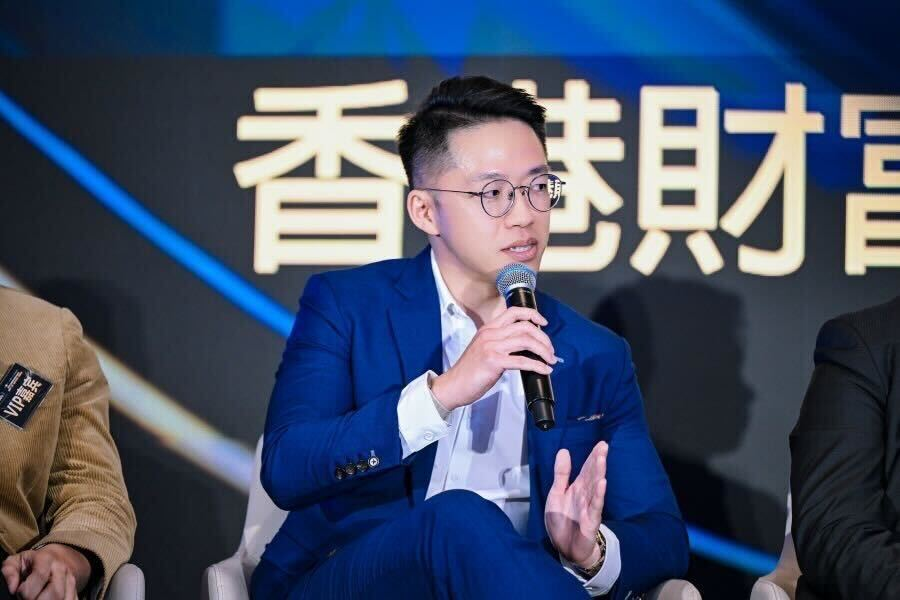
Alec, Head of HTX Ventures, at the "Rise and Future of Hong Kong Wealth Management" Roundtable Forum

Evolution of Investment Logic: Building Evergreen Foundations Amid "Dynamic Changes"

Beyond selecting the right sectors, HTX Ventures places greater emphasis on whether projects possess the ability to survive and evolve in a "dynamically changing market environment" over the long term. Alec further pointed out that HTX Ventures focuses on evaluating the following three core elements:

Architectural Flexibility: In an increasingly multipolar global regulatory environment, modular and scalable technical architectures enable projects to quickly adapt to compliance requirements in different regions without restructuring their underlying systems.

Sustained Market Competitiveness and Demand-Matching Capability: HTX Ventures not only provides financial support to projects but also leverages its global user data and industry insights to help projects establish efficient feedback loops and agile iteration mechanisms, ensuring they remain competitive in the fiercely contested Web3+AI sector.

Ecosystem Connectivity and "Unique Asset" Integration: Relying on the global fund and ecosystem partnership matrix built by HTX Ventures, projects are directly connected to unique asset sources worldwide, shortening their cycle from "proof of concept" to "commercial realization," thereby gaining a first-mover advantage in intense competition.

Alec emphasized that HTX Ventures will continue to focus on early-stage projects with cutting-edge technology and real-world application value, improving blockchain infrastructure investments, and accelerating the large-scale adoption of Web3.

The Role and Core Value of Blockchain in the RWA Ecosystem

During the roundtable forum titled "Exploring New Paths for Cross-Industry Empowerment to Drive High-Quality Development of the RWA Ecosystem," Molly, the ambassador of HTX DAO, analyzed that the key to achieving cross-border collaboration in RWA lies in role restructuring through resource complementarity. She pointed out that the real economy should provide authentic, sustainable assets and cash flow foundations, financial institutions should be responsible for structural design, risk management, and compliance output, while blockchain and Web3 infrastructure should serve as the central hub for ownership verification, circulation, and automated settlement.
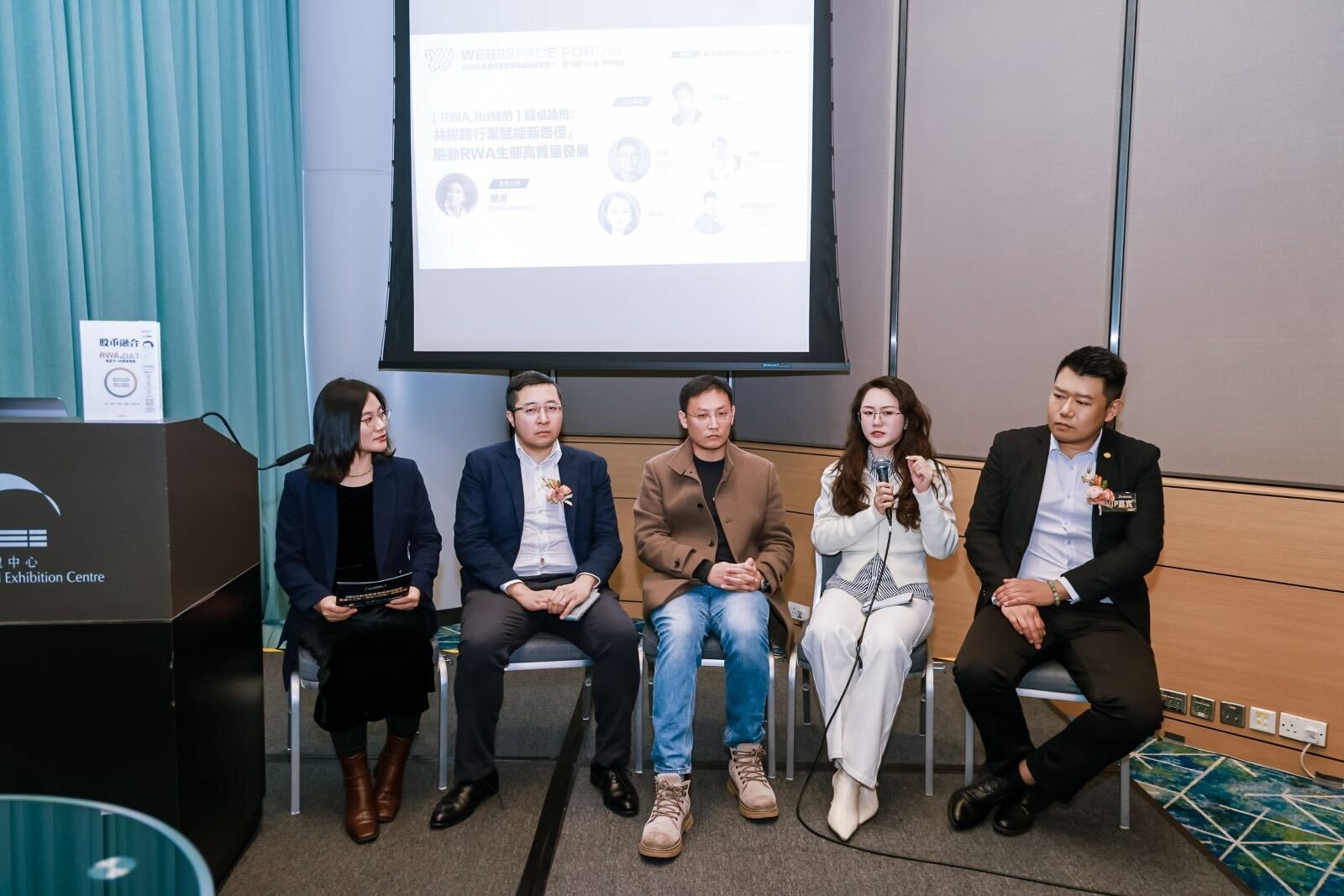
Molly, Ambassador of HTX DAO, at the "Driving High-Quality Development of the RWA Ecosystem" Roundtable Forum

Molly further emphasized that the core value of blockchain in cross-industry RWA collaboration does not lie in "on-chain" processes themselves but in the systematic restructuring of collaboration processes and trust mechanisms. Through on-chain ownership verification and information transparency, all participants can verify asset status, profit distribution, and risk exposure in real-time on a unified ledger, reducing information asymmetry. By leveraging smart contracts for automated accounting, clearing, and maturity payments, manual operations and execution friction can be significantly reduced, thereby shifting trust from "human endorsement" to "institutional and code constraints," effectively lowering communication and trust costs between the financial and real industries.

HTX Ventures Honored as "Hong Kong Stocks 100 Strong" Best Web3 Venture Capital Institution of the Year

It is worth mentioning that during this event, HTX Ventures was awarded the "Best Web3 Venture Capital Institution of the Year" for its continuous efforts in the global Web3 ecosystem and outstanding investment performance.

In recent years, HTX Ventures has consistently increased its investments in Web3 underlying infrastructure and innovative application sectors. It has developed a clear and robust investment logic in the integration of blockchain technology with real-world business scenarios, exploration of global compliance paths, and long-term value investment, earning high recognition from the industry for its systematic layout.

The "Hong Kong Stocks 100 Strong" selection activity, initiated in 2012 by Tencent.com and Finet Group, promotes the healthy and prosperous development of Hong Kong's capital market by releasing rankings and awarding prizes. Additionally, the event combines a summit forum with an awards ceremony to discuss financial market and economic trends, with its influence expanding year by year, making it one of the annual grand events in Hong Kong's financial and economic circles.

As a deep participant in the global Web3 wave, this award not only recognizes HTX Ventures' past achievements but also serves as an incentive for its future strategy of deepening its presence in Hong Kong and connecting globally. Hong Kong is becoming a high ground for the institutional narrative of global Web3. HTX Ventures and HTX DAO will continue to play the roles of "connectors" and "enablers," committed to introducing unique assets, compliant technical architectures, and forward-looking business models to the Hong Kong market, jointly promoting the healthy and prosperous development of Hong Kong's capital market.

HTX Ventures Awarded "Best Web3 Venture Capital Institution of the Year"

About HTX Ventures

HTX Ventures is the global investment division of Huobi HTX, integrating investment, incubation, and research to identify the most outstanding and intelligent teams worldwide. As an industry pioneer, HTX Ventures has over 11 years of experience in blockchain construction and excels in identifying cutting-edge technologies and emerging business models within the field. To drive growth within the blockchain ecosystem, we provide comprehensive support to projects, including financing, resources, and strategic advice.

HTX Ventures currently supports over 300 projects, covering multiple blockchain sectors, with some high-quality projects already listed on Huobi HTX. Additionally, as one of the most active FOF funds, HTX Ventures invests in 30 top global funds and collaborates with leading global blockchain funds such as Polychain, Dragonfly, Bankless, Gitcoin, Figment, Nomad, Animoca, and Hack VC to jointly build the blockchain ecosystem. Visit us.

For investment and cooperation inquiries, please feel free to contact [email protected].

Domande pertinenti

QWhat award did HTX Ventures win at the 12th 'Top 100 Hong Kong Stocks' event?

AHTX Ventures won the 'Annual Best Web3 Venture Capital Institution' award at the 12th 'Top 100 Hong Kong Stocks' event.

QWhat are the three key investment focuses for HTX Ventures in the Web3 and wealth management integration space, as outlined by Alec?

AThe three key investment focuses are: 1. Yield-generating Real-World Assets (RWA), 2. AI-driven automated asset management (AI-Agentic Finance), and 3. Compliant stablecoins and payment gateways.

QAccording to Molly, what is the core value of blockchain in cross-industry RWA collaboration?

AThe core value of blockchain is not just 'on-chain' itself, but the systematic reconstruction of collaboration processes and trust mechanisms. It enables real-time verification of asset status, profit distribution, and risk exposure on a unified ledger, reduces information asymmetry, and uses smart contracts to automate accounting, clearing, and settlement, thereby lowering communication and trust costs between finance and the real economy.

QWhat are the three core elements HTX Ventures evaluates in a project for long-term survival and evolution?

AThe three core elements are: 1. Architectural flexibility, 2. Sustained market competitiveness and demand-matching capability, and 3. Ecosystem connectivity and the ability to import 'unique assets'.

QWhat is the role of HTX Ventures within the Huobi HTX ecosystem?

AHTX Ventures is the global investment division of Huobi HTX, integrating investment, incubation, and research to identify the most outstanding and intelligent teams globally. It provides comprehensive support to projects, including financing, resources, and strategic advice, and is one of the most active Fund of Funds (FOF) in the blockchain space.

Letture associate

As Consensus Accelerates, What Are Young Investors Betting On?

Title: As Consensus Forms Faster, What Are Young Investors Betting On? In the rapid evolution of tech investment, a new generation of young investors is navigating a landscape where AI, robotics, commercial aerospace, and quantum computing are advancing simultaneously. Traditional investment logic based on financial models is giving way to a need for deep technical understanding and the ability to act before industry consensus forms. An analysis of trends from the "WAIC FUTURE TECH" list of young investment leaders reveals key shifts in focus. The first major trend is the movement of AI from the digital screen into the physical world. Investment is shifting from large language models and chatbots towards embodied AI, robotics, AI hardware, and edge computing. While demonstrations generate excitement, the real challenge lies in achieving scalable, reliable, and cost-effective delivery in complex real-world environments like factories and logistics. Success depends not just on algorithms but on the integration of sensors, actuators, and control systems. Second, the competitive focus for large models is moving beyond raw capability toward building an "intelligence flywheel." The goal is to create self-reinforcing systems where user interaction generates data, improving the model, which in turn enhances the user experience and attracts more engagement. Companies that successfully embed AI into workflows to create these closed-loop systems can build lasting value that isn't easily erased by the next model upgrade. Third, facing a potential bottleneck in high-quality human-generated data, investors are looking at new underlying technologies. Reinforcement learning and self-play, as demonstrated by AlphaGo Zero, offer paths for AI to generate its own experience. Scientific foundation models, which aim to build general AI capabilities for fields like life sciences and materials discovery, represent a non-consensus direction that could unlock new frontiers of knowledge and data. Finally, in deep-tech areas like quantum computing, commercial aerospace, and space-based infrastructure, patient capital is essential. These fields have long, uncertain development and validation cycles involving complex engineering, supply chains, and regulations. Investment here requires a long-term view, focusing on foundational team capabilities and the eventual emergence of market demand, even if commercial returns are distant. Collectively, these trends illustrate how young investors are adapting to a new era. They are learning to make earlier, technically-informed judgments, balance hype with real-world viability, and provide the patient capital needed to build the deep-tech foundations of the future.

marsbit17 min fa

As Consensus Accelerates, What Are Young Investors Betting On?

marsbit17 min fa

Can Japan Buy Growth with AI? Will the Bond Market Believe It?

Japan's cabinet has introduced the 2026 Basic Policy on Economic and Fiscal Management and Reform, shifting its primary fiscal target. The new framework moves away from the traditional annual primary balance goal and instead prioritizes a stable reduction of the debt-to-GDP ratio. This change is tied to a strategy of increased "responsible proactive fiscal" spending, aiming to boost long-term growth through investments in strategic sectors like AI, semiconductors, energy, and robotics. The government estimates total public and private investment in 62 key technologies could exceed 370 trillion yen by 2040. The market reaction has been mixed and cautious. While equity markets may respond to policy signals, bond markets are focused on fiscal credibility. Concerns center on whether the weakening of the clear primary balance anchor could lead to looser fiscal discipline. If investors doubt that these strategic investments will generate sufficient productivity gains, tax revenue, and nominal growth to outpace rising interest costs, they may demand higher yields on Japanese Government Bonds (JGBs). Recent volatility in the yen and JGB yields, with the 10-year yield briefly reaching 2.9%, reflects this skepticism. The success of this new framework hinges on two factors: whether Japan can achieve a nominal growth rate consistently higher than its long-term interest rates, and whether future budgets demonstrate disciplined control over bond issuance. The government's narrative is that strategic investment is essential to break Japan's cycle of low growth, aging, and labor shortages. However, the bond market will continuously assess the credibility of this plan, pricing the risk that it may represent fiscal expansion rather than a viable growth strategy.

marsbit54 min fa

Can Japan Buy Growth with AI? Will the Bond Market Believe It?

marsbit54 min fa

Misjudged A-Shares: Resilience, Expectations, and Confidence

China's A-share market recently faced selling pressure, especially in tech sectors, initially triggered by a global tech sell-off that began in South Korea. However, the article argues this is a case of "mistaken injury" and highlights the market's underlying resilience. This resilience stems from three main pillars: **1) Tech Sector Fundamentals:** Unlike Korea's market dominated by a few memory chip stocks, China's tech sector is diversified across computing, communications, electronics, and semiconductors, supported by dual narratives of global AI supply chains and domestic substitution. Core areas like optical modules and fiber optics continue to show strong earnings growth. **2) "National Team" Support:** State-backed institutions and large corporations have made significant market purchases and announced buybacks, providing liquidity and signaling confidence. This is seen as a stabilizing policy signal, often associated with market bottoms. **3) Broader Market Pillars:** Other major sectors are showing endogenous recovery momentum. Consumer stocks benefit from stabilizing CPI and signs of sector recovery (e.g., liquor price hikes). Cyclical sectors like aluminum have high earnings, potential price increases due to tight supply, and low valuations. The financial sector offers stable dividends and low valuations. The conclusion is that the sell-off was driven by external contagion, not a collapse in fundamentals. With strong policy support and recovering momentum across key sectors, the A-share market possesses the toughness to regain stability.

marsbit1 h fa

Misjudged A-Shares: Resilience, Expectations, and Confidence

marsbit1 h fa

Trading

Spot
活动图片





