Honored as the Annual Best Web3 Venture Capital Institution at the 12th "Hong Kong Stocks 100 Strong" Awards, HTX Ventures Deeply Empowers Hong Kong's New Web3 Financial Ecosystem

marsbitPubblicato 2026-01-13Pubblicato ultima volta 2026-01-13

Introduzione

HTX Ventures, the global investment arm of Huobi HTX, was honored as the "Annual Best Web3 Venture Capital Institution" at the 12th "Hong Kong Stocks 100 Strong" Awards during the Hong Kong Wealth Management Summit on January 9, 2025. Alec, Head of HTX Ventures, participated in a roundtable discussion highlighting key investment trends, including yield-generating real-world assets (RWA) such as tokenized private equity and credit, AI-driven automated asset management compliant with SFC frameworks, and compliant stablecoins and payment gateways for cross-border trade. He emphasized the importance of architectural flexibility, sustainable competitiveness, and ecosystem integration in Web3 investments. Molly, Ambassador of HTX DAO, discussed the role of blockchain in RWA ecosystems, emphasizing its value in enabling transparent verification, automated settlements, and trust through smart contracts rather than mere asset tokenization. The award recognizes HTX Ventures' strategic focus on foundational Web3 infrastructure and real-world application integration. With over 11 years of experience and investments in more than 300 projects, HTX Ventures continues to support global blockchain innovation through funding, resources, and partnerships with leading funds and ecosystems.

On January 9, the 2025 Hong Kong Wealth Management Summit Forum and the 12th "Hong Kong Stocks 100 Strong" Awards Ceremony were grandly held in Hong Kong. Alec, the head of HTX Ventures, and Molly, the ambassador of HTX DAO, were invited to attend and shared insights on topics such as the development trends of Hong Kong's wealth management industry, investment directions, and cross-industry collaboration in the RWA ecosystem.

Strategic Focus: Concentrating on Productive RWA, AI Finance, and Compliant Payments

During the roundtable forum titled "Global Asset Allocation New Benchmark: The Rise and Future Landscape of Hong Kong Wealth Management," Alec, the head of HTX Ventures, analyzed that as the regulatory environment gradually clarifies and institutional funds continue to enter the market, the following areas are particularly noteworthy in the integration of global wealth management and Web3 in the current and future periods:

Productive RWA (Yield-generating Real-World Assets): Focusing on innovative platforms that tokenize traditionally high-threshold private equity (PE), private credit, and green financial debt.

AI-Driven Automated Asset Management (AI-Agentic Finance): Paying attention to middleware technology solutions that effectively integrate AI strategies with SFC compliance frameworks.

Compliant Stablecoins and Payment Gateways: Developing cross-border trade settlement and B2B payment businesses with Hong Kong dollar stablecoins at the core, building the underlying infrastructure for wealth management, and achieving instant conversion of traditional fiat assets into on-chain configurable assets.
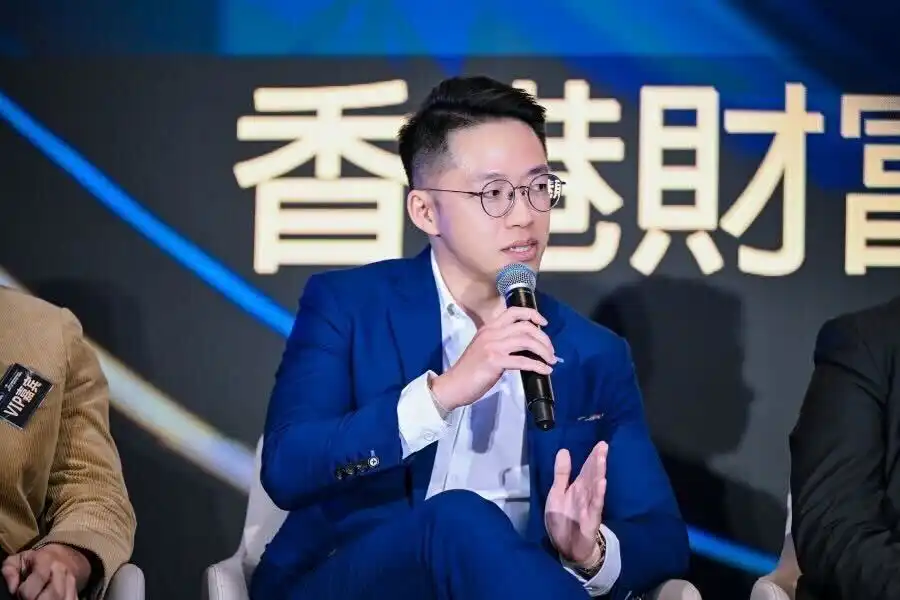
HTX Ventures Head Alec at the "Rise and Future Landscape of Hong Kong Wealth Management" Roundtable Forum

Evolution of Investment Logic: Building Evergreen Foundation Amid "Dynamic Changes"

Beyond selecting sectors, HTX Ventures places greater emphasis on whether projects possess the ability to survive and evolve in a "dynamically changing market environment" over the long term. Alec further pointed out that HTX Ventures focuses on evaluating the following three core elements:

Architectural Flexibility: In an increasingly multipolar global regulatory environment, modular and scalable technical architectures enable projects to quickly adapt to compliance requirements in different regions without reconstructing underlying systems.

Sustained Market Competitiveness and Demand Matching Capability: HTX Ventures not only provides financial support to projects but also helps them establish efficient feedback loops and agile iteration mechanisms through its global user data and industry insights, ensuring they are not eliminated in the highly competitive Web3+AI sector.

Ecosystem Linkage and "Unique Asset" Introduction: Leveraging the global fund and ecosystem cooperation matrix built by HTX Ventures, projects are directly connected to unique asset ends worldwide, shortening their cycle from "proof of concept" to "commercial realization," thereby establishing first-mover advantages in fierce competition.

Alec emphasized that HTX Ventures will continue to focus on early-stage projects with cutting-edge technology and real application value, improve blockchain infrastructure investment, and accelerate the large-scale adoption of Web3.

The Role and Core Value of Blockchain in the RWA Ecosystem

HTX DAO Ambassador Molly, at the roundtable forum titled "Exploring New Paths for Cross-Industry Empowerment to Drive High-Quality Development of the RWA Ecosystem," analyzed that the key to achieving cross-border collaboration in RWA lies in role restructuring through resource complementarity. She pointed out that the real economy should provide real, sustainable assets and cash flow foundations, financial institutions are responsible for structural design, risk management, and compliance output, while blockchain and Web3 infrastructure serve as the central hub for rights confirmation, circulation, and automated settlement.
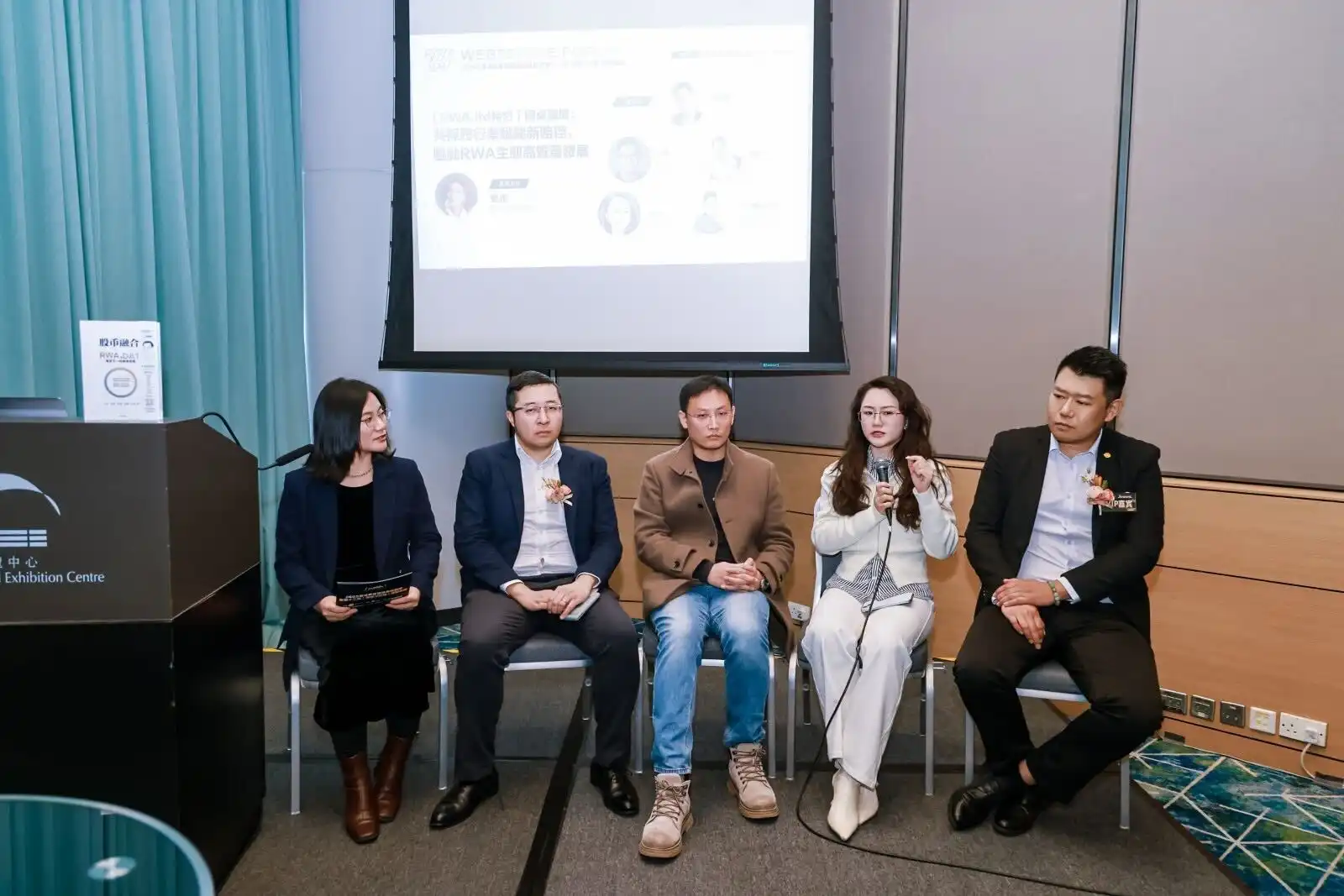
HTX DAO Ambassador Molly at the "Driving High-Quality Development of the RWA Ecosystem" Roundtable Forum

Molly further emphasized that the core value of blockchain in cross-industry RWA collaboration does not lie in "on-chain" itself but in the systematic restructuring of collaboration processes and trust mechanisms. Through on-chain rights confirmation and information transparency, all participants can verify asset status, income distribution, and risk exposure in a unified ledger in real time, reducing information asymmetry; by using smart contracts to achieve automatic accounting, clearing, and maturity payment, manual operations and execution friction can be significantly reduced, thereby promoting the shift of trust from "human endorsement" to "institutional and code constraints," effectively lowering communication and trust costs between the financial and real industries.

HTX Ventures Honored as "Hong Kong Stocks 100 Strong" Annual Best Web3 Venture Capital Institution

It is worth mentioning that during this event, HTX Ventures was awarded the "Annual Best Web3 Venture Capital Institution" award for its continuous dedication and outstanding investment performance in the global Web3 ecosystem.

In recent years, HTX Ventures has consistently increased its investment in Web3 underlying infrastructure and innovative application sectors, forming a clear and stable investment logic in the integration of blockchain technology with real business scenarios, exploration of global compliance paths, and long-term value investment. Its systematic layout has received high recognition from the industry.

The "Hong Kong Stocks 100 Strong" selection activity began in 2012, co-initiated by Tencent.com and Finet Group. By releasing lists and awarding prizes, it promotes the healthy and prosperous development of the Hong Kong capital market. At the same time, the event combines summit forums with award ceremonies to discuss financial market and economic trends, and its influence has expanded year by year, becoming one of the annual grand events in Hong Kong's financial and economic circles.

As a deep participant in the global Web3 wave, this award for HTX Ventures is not only an affirmation of past achievements but also an incentive for its future strategy of deepening its roots in Hong Kong and connecting globally. Hong Kong is becoming a high ground for the global institutional narrative of Web3, and HTX Ventures and HTX DAO will continue to play the roles of "connectors" and "enablers," committed to introducing unique assets, compliant technical architectures, and forward-looking business models into the Hong Kong market, jointly promoting the healthy and prosperous development of Hong Kong's capital market.
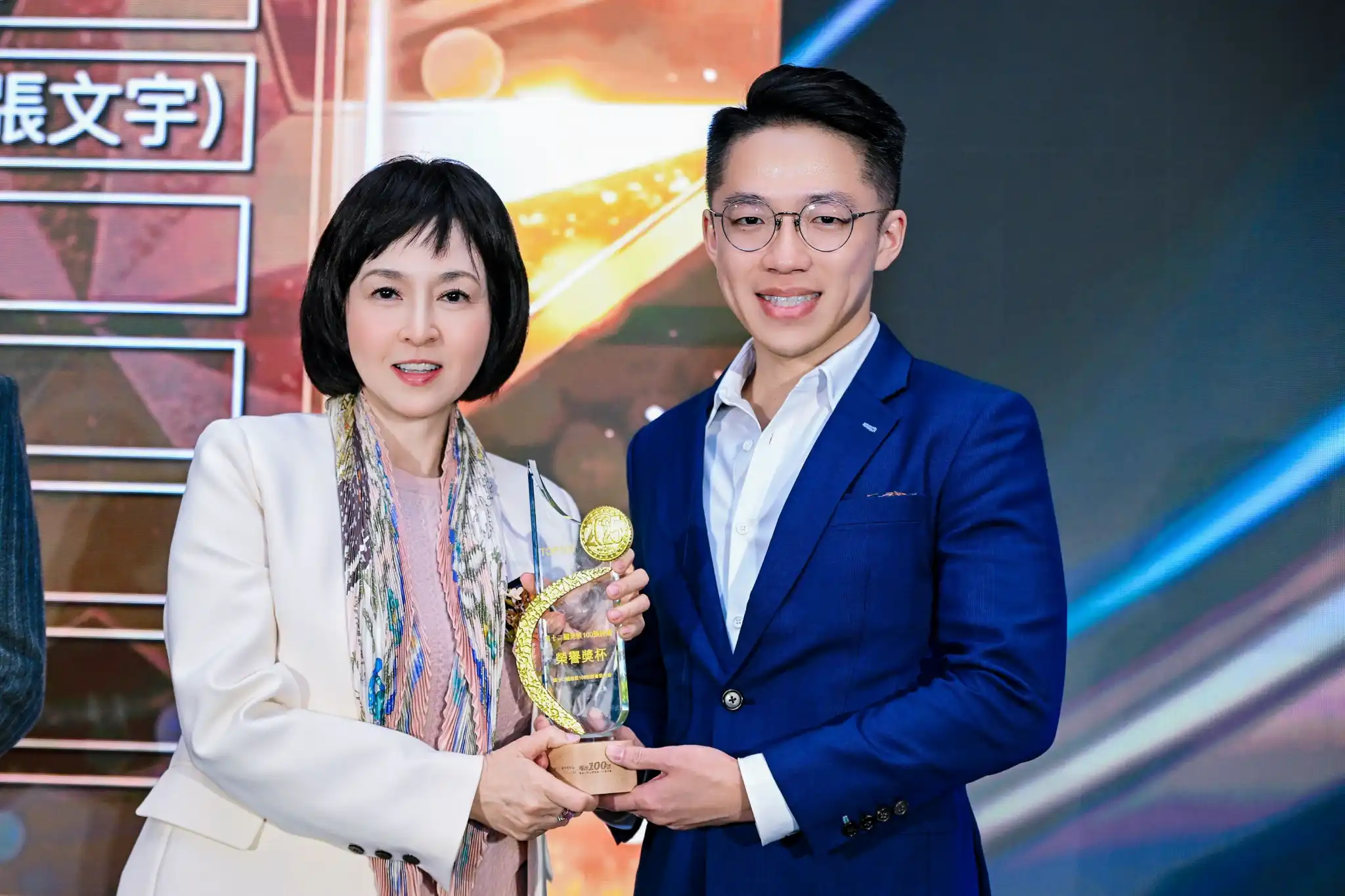
HTX Ventures Wins the "Annual Best Web3 Venture Capital Institution" Award

About HTX Ventures

HTX Ventures is the global investment department of Huobi HTX, integrating investment, incubation, and research to identify the best and brightest teams worldwide. As an industry pioneer, HTX Ventures has over 11 years of experience in blockchain construction and excels in identifying cutting-edge technologies and emerging business models in this field. To drive growth within the blockchain ecosystem, we provide comprehensive support to projects, including financing, resources, and strategic advice.

HTX Ventures currently supports over 300 projects, covering multiple blockchain sectors, with some high-quality projects already listed on Huobi HTX. Additionally, as one of the most active FOF funds, HTX Ventures invests in 30 top global funds and collaborates with global top-tier blockchain funds such as Polychain, Dragonfly, Bankless, Gitcoin, Figment, Nomad, Animoca, and Hack VC to jointly build the blockchain ecosystem. Visit us.

For investment and cooperation, please feel free to contact [email protected]

Domande pertinenti

QWhat award did HTX Ventures win at the 12th 'Hong Kong Stocks 100' Awards?

AHTX Ventures won the 'Annual Best Web3 Venture Capital Institution' award.

QWhat are the three key investment focuses highlighted by Alec from HTX Ventures for the future of global wealth management and Web3 integration?

AThe three key focuses are yield-generating Real-World Assets (RWA), AI-driven automated asset management (AI-Agentic Finance), and compliant stablecoins and payment gateways.

QAccording to Molly, what is the core value of blockchain in cross-industry RWA collaboration?

AThe core value lies in the systematic reconstruction of collaboration processes and trust mechanisms, including on-chain confirmation, information transparency, and automated settlement through smart contracts to reduce information asymmetry and operational friction.

QHow many projects has HTX Ventures supported, and what is one of its roles as a fund of funds (FOF)?

AHTX Ventures has supported over 300 projects and is one of the most active FOF funds, investing in 30 top global funds.

QWhat is the primary role of HTX Ventures and HTX DAO in Hong Kong's Web3 ecosystem, as stated in the article?

AThey act as 'connectors' and 'enablers,' dedicated to introducing unique assets, compliant technical frameworks, and forward-thinking business models to the Hong Kong market to promote the healthy and prosperous development of its capital market.

Letture associate

Anthropic and OpenAI Have Single-Handedly Severed the Logic of Pre-IPO Stock Tokenization

The pre-IPO stock token market is experiencing significant turmoil following strong statements from AI giants Anthropic and OpenAI. Both companies have updated their official policies, declaring that any transfer of their company shares—including sales, transfers, or assignments of share interests—without prior board approval is "invalid" and will not be recognized in their corporate records. This means buyers in such unauthorized transactions would not be recognized as shareholders and would have no shareholder rights. A major point of contention is the use of Special Purpose Vehicles (SPVs), which are legal entities commonly used by pre-IPO token platforms to pool investor funds and indirectly acquire shares from employees or early investors. The companies explicitly state they do not permit SPVs to acquire their shares, and any such transfer violates their restrictions. They warn that third parties selling shares through SPVs, direct sales, forward contracts, or stock tokens are likely engaged in fraud or are offering worthless investments due to these transfer limits. This stance directly threatens the core model of many pre-IPO token platforms, which rely on SPV structures. The announcement revealed additional risks within this model, such as complex "SPV-within-SPV" layering that obscures legal transparency, increases management fees, and creates a chain reaction risk of invalidation. Following the news, tokens like ANTHROPIC and OPENAI on platforms like PreStocks fell sharply (over 20%). The market reaction highlights a divergence: while asset-backed pre-IPO tokens plummeted, purely speculative pre-IPO futures contracts, which are bilateral bets on future IPO prices with no claim to actual shares, remained relatively stable as they are unaffected by the transfer restrictions. The industry is split on the implications. Some believe the fundamental logic of pre-IPO token trading is broken if leading companies reject SPV-held shares, potentially causing a domino effect. Others, like Rivet founder Nick Abouzeid, argue that buyers of such unofficial tokens always knowingly accepted the risk of non-recognition by the company. The statements serve as a stark risk warning and a corrective measure for a market where valuations for some AI-related pre-IPO tokens had soared to irrational levels, far exceeding recent funding round valuations.

marsbit37 min fa

Anthropic and OpenAI Have Single-Handedly Severed the Logic of Pre-IPO Stock Tokenization

marsbit37 min fa

Anthropic and OpenAI Personally Sever the Logic of Pre-IPO Crypto-Stocks

The pre-IPO token market has been rocked by strong statements from Anthropic and OpenAI. Both AI giants have updated official warnings, declaring that any sale or transfer of their company shares without explicit board approval is "invalid" and will not be recognized on their corporate records. This directly targets Special Purpose Vehicles (SPVs), the common legal structure used by pre-IPO token platforms. These platforms typically use an SPV to acquire shares from employees or early investors, then issue blockchain-based tokens representing a claim on the SPV's economic benefits. Anthropic and OpenAI's position means that if an SPV's share purchase lacked authorization, the underlying asset could be deemed worthless, nullifying the token's value. Anthropic explicitly warned that any third party selling its shares—via direct sales, forwards, or tokens—is likely fraudulent or offering a valueless investment. The crackdown highlights risks in the popular SPV model, including complex multi-layered "Russian doll" SPV structures that obscure legal ownership, add fees, and concentrate risk. If one layer is invalidated, the entire chain could collapse. Following the announcements, tokens like ANTHROPIC and OPENAI on platforms like PreStocks fell sharply (over 20%). In contrast, purely speculative pre-IPO prediction contracts remained stable, as they involve no actual share ownership. The move is seen as a corrective measure amid a market frenzy where some pre-IPO token valuations (e.g., Anthropic's token hitting a $1.4 trillion implied valuation) far exceeded recent official funding rounds. Opinions are split: some believe this undermines the core logic of pre-IPO token trading if top companies reject SPVs, while others argue buyers always assumed this legal risk when accessing unofficial channels. The statements serve as a stark warning and a potential catalyst for market de-leveraging and clearer boundaries.

Odaily星球日报40 min fa

Anthropic and OpenAI Personally Sever the Logic of Pre-IPO Crypto-Stocks

Odaily星球日报40 min fa

The Waged Worker Driven to Poverty by AI Subscriptions

"AI Membership: The Hidden Cost Pushing Workers Toward 'Poverty'" The widespread corporate push for AI adoption is creating a hidden financial burden for employees. Companies, from giants like Alibaba to small firms, are mandating AI use, often tying token consumption to KPIs, but frequently refuse to cover the costs. Workers are forced to pay for subscriptions out of pocket to stay competitive and avoid being replaced. Front-end developer Long Shen spends up to 2000 RMB monthly on tools like Cursor and ChatGPT Plus, seeing it as a necessary 3% salary investment to handle 90% of his coding tasks. While it boosted his performance and led to promotions, he now faces idle time at work, pretending to be busy. Designer Peng Peng navigates strict company firewalls by using personal devices and accounts for AI image generation tools like Midjourney, spending hundreds monthly without reimbursement, while her boss demands faster, more numerous revisions. The pressure creates workplace anxiety and suspicion. Programmer Li Huahua, after a friend's experience of raised KPIs following AI success, fears being branded a "traitor" for using it yet worries about falling behind if she doesn't. The dynamic allows management to demand results without understanding the tools or covering expenses, treating employees like AI "agents." While some, like entrepreneur Jin Tu, find high value in paid AI, building entire systems and winning competitions, for most, it's a trap. Free tools like Kimi and Doubao are introducing fees, closing off alternatives. The initial efficiency gains individual advantage, but as AI becomes ubiquitous, the personal edge disappears, workloads increase, and a cycle of dependency begins. Workers like Long Shen realize they cannot maintain AI-generated code without AI, making stopping harder than continuing to pay. The tool promising liberation is instead becoming a compulsory, costly chain in the modern workplace.

marsbit1 h fa

The Waged Worker Driven to Poverty by AI Subscriptions

marsbit1 h fa

SK Hynix's Trillion-Won Empire: The Successors

"SK Hynix's Trillion-Won Empire and Its Heirs" explores the unconventional succession narrative within SK Group, South Korea's second-largest conglomerate, following SK Hynix's dramatic market rise. Unlike traditional chaebol scripts prioritizing the eldest son, ownership, and political marriages, Chairman Choi Tae-won's three children from his first marriage are charting distinct paths. The eldest daughter, Choi Yun-jeong, is considered the most visible candidate. With a background in biology, consulting, and a PhD, she holds executive roles at SK Bioscience and SK Inc.'s growth strategy unit, focusing on biopharma and new businesses. Her marriage is to an AI infrastructure entrepreneur, not a traditional chaebol heir. The second daughter, Choi Min-jeong, took a unique route by voluntarily serving as a South Korean naval officer, including a tour in the Gulf of Aden. She later worked on policy and strategy for SK Hynix in Washington D.C. before co-founding an AI-driven healthcare startup in San Francisco. She married a former U.S. Marine Corps officer, connecting the family to U.S. defense and policy networks. The son, Choi In-geun, who has Type 1 diabetes, followed a more classic preparatory path with a physics degree and a stint at SK E&S but left to join McKinsey's Seoul office. He remains publicly silent and holds no SK shares, defying the traditional "crown prince" archetype. Their paths unfold against the backdrop of their parents' high-profile, contentious divorce and a record-setting asset division lawsuit. The article argues that as SK Hynix becomes a geopolitical asset in the AI era, the conventional rules of chaebol inheritance are changing. The heirs are being groomed not simply to take over, but to navigate a complex global landscape defined by AI, biotech, geopolitics, and policy, forging legitimacy through their own expertise and networks rather than birth order alone.

marsbit1 h fa

SK Hynix's Trillion-Won Empire: The Successors

marsbit1 h fa

Trading

Spot
Futures
活动图片





