Hong Kong Freezes Stablecoin Rollout, Leaving HSBC, Standard Chartered Waiting

bitcoinistPubblicato 2026-04-02Pubblicato ultima volta 2026-04-02

Introduzione

Hong Kong has postponed the issuance of its first batch of stablecoin licenses, delaying approvals for major applicants like HSBC and Standard Chartered. The delay, attributed to money laundering concerns, may lead to stricter KYC regulations. This setback affects 36 applicants and follows mainland China's earlier crackdown on stablecoins due to regulatory and illegal activity risks. Despite initial plans to issue a small number of licenses in March, the Hong Kong Monetary Authority (HKMA) has not yet granted any approvals. The article also notes similar regulatory delays in South Korea, while Japan and the U.S. have advanced their stablecoin frameworks. The stablecoin market cap remains strong at $316 billion, a new all-time high. Bitcoin is trading around $68,700, down 4% over the week.

Hong Kong has postponed its first batch of stablecoin licenses amid money laundering concerns that could warrant stricter KYC rules.

Hong Kong Has Delayed Its Initial Batch Of Stablecoin Licenses

As reported by Wu Blockchain, citing coverage from Caixin, Hong Kong has postponed the issuance of its first stablecoin approvals, meaning that applicants would be waiting for longer before they can receive a license.

Hong Kong first passed its stablecoin bill in August 2025, making it so that organizations looking to issue stablecoins in the Chinese city’s jurisdiction will need to acquire approval from the Hong Kong Monetary Authority (HKMA).

Following the rollout of the new rules, HKMA started receiving applications from big names like Standard Chartered in its Joint Venture (JV) and HSBC. The first batch of approvals was expected to go out by the end of March, but now April has begun, and no licenses have been handed out at all.

“Hong Kong is concerned that stablecoins may be used for money laundering and may therefore implement stricter KYC regulations,” noted Wu Blockchain. The delay has thrown a wrench in the plans of 36 applicants. Earlier, mainland Chinese regulators cracked down on the sector, stating that fiat-tied cryptocurrencies don’t qualify as legal tender, as they fail to meet regulatory requirements and pose a risk of being used for illegal activities.

Despite the mainland’s stance, however, Hong Kong still moved forward with its stablecoin plans, announcing in February that a “very small number” of issuer licenses would be handed out in March. With that plan not coming to fruition, it now remains to be seen when the HKMA will be able to advance the city’s stablecoin ambitions.

Elsewhere in Asia, South Korea has also seen its stablecoin plans stall, with the Bank of Korea (BoK) arguing for bank-majority stablecoins, while the Financial Services Commission (FCS) advocates for laxer rules.

Meanwhile, Japan took ahead of its neighbors with the launch of its first yen-backed coin last year. The nation could also see its first bank-backed stablecoin this year, with Shinsei Trust and Banking planning on a Q2 2026 launch.

Over in the United States, President Donald Trump signed into law the GENIUS Act last year, providing a formal framework for stablecoins. Overall, this part of the cryptocurrency sector has seen significant global regulatory momentum over the past year, so it’s not surprising to see that its market cap has held up relatively well despite the recent market downturn.
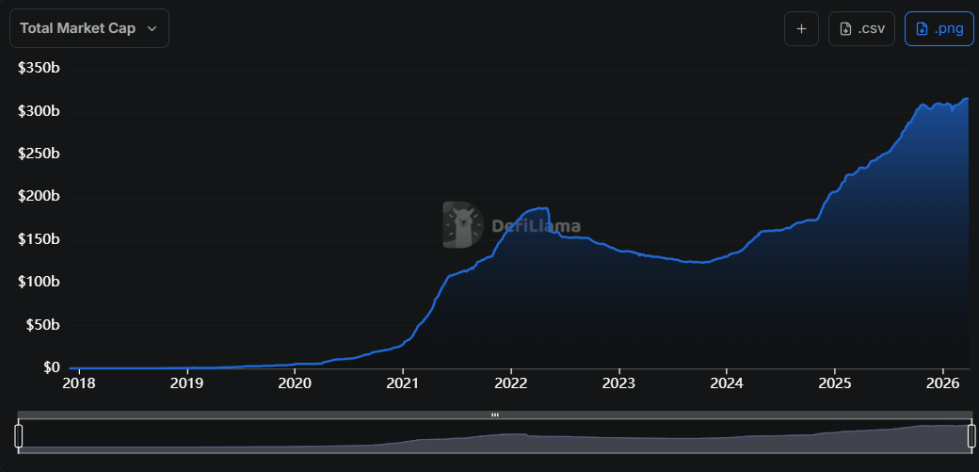
The trend in the stablecoin market cap over the last several years | Source: DefiLlama

As the chart from DefiLlama shows, the market cap of the fiat-tied tokens has mostly moved sideways in recent months, with its value currently sitting at $316 billion, a new all-time high (ATH).

Bitcoin Price

At the time of writing, Bitcoin is trading around $68,700, down over 4% in the last week.

Looks like the price of the coin has gone up a bit over the past day | Source: BTCUSDT on TradingView


Domande pertinenti

QWhy has Hong Kong postponed the issuance of its first stablecoin licenses?

AHong Kong has postponed the issuance due to concerns that stablecoins may be used for money laundering, which could lead to the implementation of stricter Know Your Customer (KYC) regulations.

QWhich major financial institutions are among the applicants for stablecoin licenses in Hong Kong?

AMajor applicants include Standard Chartered, through its Joint Venture, and HSBC.

QWhat was the original timeline for issuing the first batch of stablecoin licenses, and what is the current status?

AThe first batch of approvals was expected to be issued by the end of March, but as of the beginning of April, no licenses have been handed out.

QHow does the regulatory stance on stablecoins in mainland China differ from that in Hong Kong?

AMainland Chinese regulators have cracked down on stablecoins, stating they do not qualify as legal tender and pose a risk for illegal activities. In contrast, Hong Kong has moved forward with its own regulatory framework to license stablecoin issuers.

QWhat is the current total market capitalization of stablecoins, according to the article?

AThe current market capitalization of stablecoins is $316 billion, which is a new all-time high (ATH).

Letture associate

Bitcoin Withdrawals Continue: 8 Years of Storage in a Coldcard Cold Wallet Ended in Zero

Coldcard Hardware Wallet Hacked: Losses Mount Due to Vulnerable Seed Generation A critical vulnerability in Coldcard hardware wallets has led to a continued wave of fund thefts. According to Galaxy Research, the total stolen has reached 1,367.05 BTC (approx. $88.6 million) from 4,585 addresses, a significant increase from the initial 594.5 BTC reported on July 30, 2026. Most of the stolen funds remain on the attackers' addresses. The issue is not with the current firmware, which Coinkite has updated, but with seed phrases generated on vulnerable devices between March 2021 and the release of fixed firmware versions. Due to a programmer error, devices switched from using a hardware random number generator to the software-based Yasmarang generator, which was initialized with publicly accessible data like the chip's serial number. This made the seed phrases predictable through offline brute-force attacks, meaning wallets remain at risk until funds are moved to a new wallet generated with the patched firmware. Affected devices include Mk2/Mk3 with firmware 4.0.1–4.1.9 (and up to 5.0.3), Mk4/Mk5 up to version 5.6.0, and Q models up to 1.5.0Q. The only exceptions are seeds created with a high-entropy method like at least 50 independent dice rolls or a strong unique BIP-39 passphrase. All other owners must generate a new seed on the fixed firmware and transfer their assets. A case highlighting the human impact involves a 39-year-old long-term investor who lost 2 BTC (approx. $130,000) in minutes. He had accumulated the Bitcoin over eight years through physical labor, viewing it as a financial lifeline and a retirement plan in a country suffering from hyperinflation. His story underscores that even conservative "buy and hold in cold storage" strategies can be compromised by such underlying technical flaws. From a technical perspective, this incident echoes historical failures where weak random number generators undermined cryptographic security, challenging the assumption that offline storage is automatically foolproof.

cryptonews.ru3 h fa

Bitcoin Withdrawals Continue: 8 Years of Storage in a Coldcard Cold Wallet Ended in Zero

cryptonews.ru3 h fa

Trading

Spot
活动图片




