Heat Rises for TermMax and Renaiss: How to Engage with These Two Projects Incubated by YZi Labs?

Odaily星球日报Pubblicato 2026-05-28Pubblicato ultima volta 2026-05-28

Introduzione

The article introduces TermMax and Renaiss, two projects recently gaining attention from the YZi Labs EASY Residency program incubator. It explains how users can potentially participate in them. TermMax is a DeFi protocol offering fixed-rate, fixed-term lending, functioning as a "lending AMM" to provide predictable interest rates. It has launched its V2 version, which improves capital efficiency and liquidity. Users can engage through its "Season 0" event on its V2 platform by connecting a wallet, daily check-ins, and completing tasks (deposit, trading, social) to earn points. Renaiss is a RWA infrastructure project focused on "collectible finance," specifically tokenizing real-world collectible trading cards (like Pokémon) onto the blockchain to enhance their liquidity and enable financial applications. Users can participate by visiting its official website, funding their account, and purchasing card packs (e.g., the OMEGA pack) with varying rarity tiers for a chance to obtain different card grades. Both projects represent specialized approaches within DeFi and RWA, aiming to offer users new avenues for fixed-income lending and investing in tokenized physical collectibles.

Original | Odaily Planet Daily (@OdailyChina)

Author | Asher (@Asher_ 0210)

Earlier this month, YZi Labs announced the 25 graduating projects from the third season of its flagship incubation program EASY Residency (For more details, read: EASY Residency Season 3 Graduation List Released, Which Sectors Has YZi Lab Focused On?). This round focused on directions such as restructuring on-chain financial markets, AI agents, tokenizing real-world assets, prediction markets, and privacy compliance.

Most projects are still in very early stages, with limited public information and relatively sparse community discussion. However, Odaily Planet Daily has observed that two projects in particular have seen a noticeable increase in heat recently: TermMax, which focuses on fixed-rate lending, and Renaiss, which revolves around the financialization of real-world collectible card assets.

Below, Odaily Planet Daily will examine TermMax and Renaiss from the perspectives of project positioning, product mechanisms, and potential engagement opportunities.

TermMax: A New DeFi Solution for Fixed-Rate Lending

Project Introduction
TermMax is a DeFi protocol focused on fixed-rate, fixed-term lending, which can be understood as a "Lending AMM." Compared to floating-rate lending protocols like Aave and Compound, TermMax emphasizes interest rate predictability—borrowers can lock in financing costs before opening a position, and lenders can also determine their yield at maturity in advance.

In terms of product mechanism, TermMax draws inspiration from the AMM concept of Uniswap V3 and tokenizes leverage and fixed-income exposure through Gearing Token and Fixed-rate Token. Users can complete fixed-rate lending, one-click Looping, Range Orders, and custom pricing curves within the platform. Operations such as lending, leveraging, and interest rate trading, which previously required repeated actions across multiple protocols, are now integrated into a single market.

Key Developments

Since its mainnet launch in April 2025, TermMax's TVL recently surpassed $71 million. The project currently supports multiple networks including Ethereum, Arbitrum, BNB Chain, and is expanding to ecosystems like X Layer and Base. Previously, on March 25, 2026, TermMax ranked second on Token Terminal's daily active address leaderboard for DeFi lending protocols, second only to Aave.
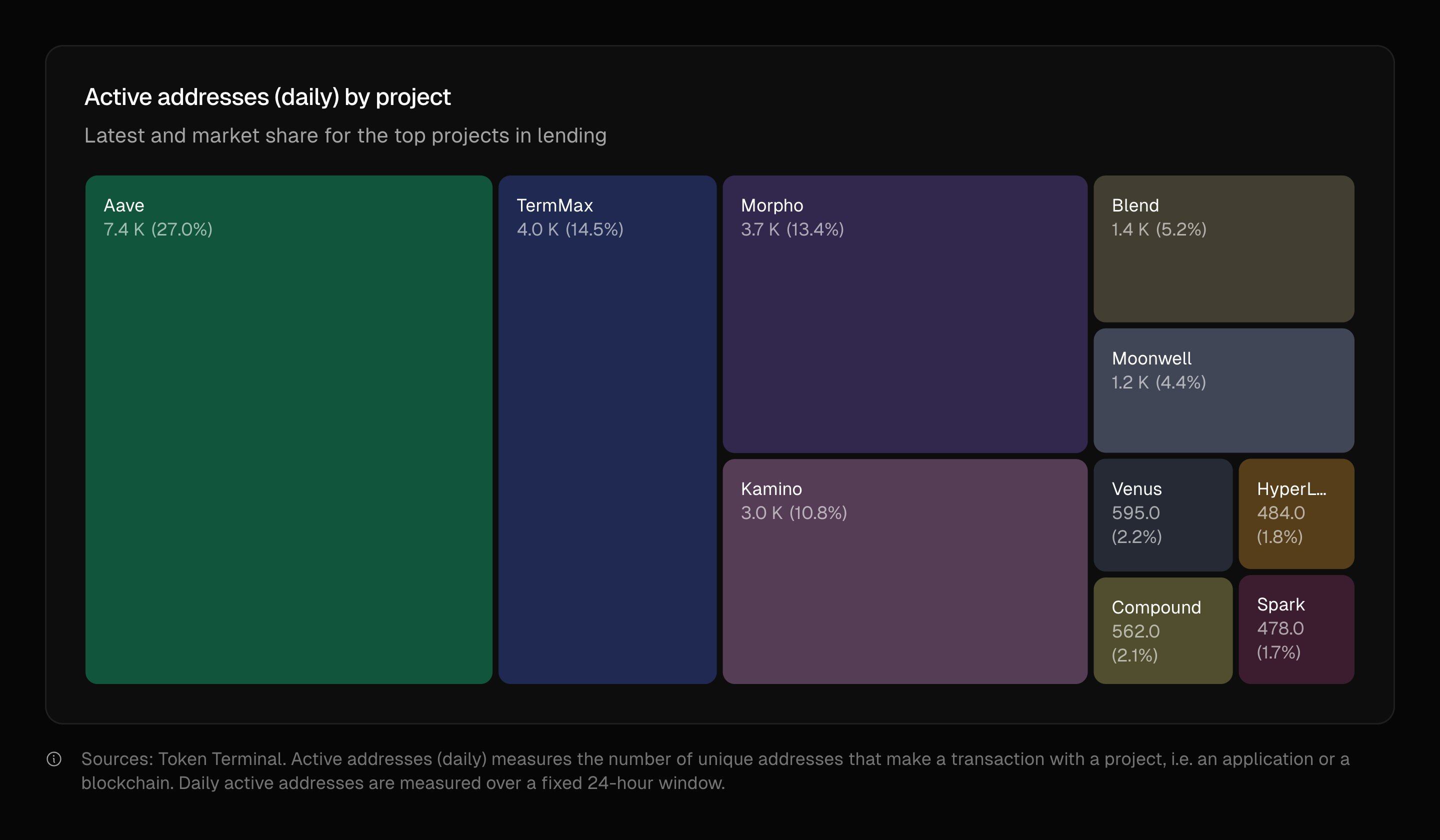
Daily Active Address Leaderboard for DeFi Lending Protocols (March 25, 2026)

Furthermore, TermMax is integrating fixed-rate lending with RWA scenarios. In January 2026, TermMax launched a fixed-rate market on BNB Chain supporting Ondo tokenized stocks as collateral, allowing users to access funds without selling their tokenized stock assets. Additionally, TermMax launched a single-asset USD₮0 lending product on X Layer with a fixed APY of up to about 5.07%, and collaborated with Morpho to introduce one-click Rollover, enhancing the flexibility of fixed-term debt.

Last night, TermMax announced on platform X the launch of its V2 version. Compared to V1, the V2 version primarily restructures to address issues like liquidity fragmentation, low idle fund utilization, and insufficient order matching efficiency.
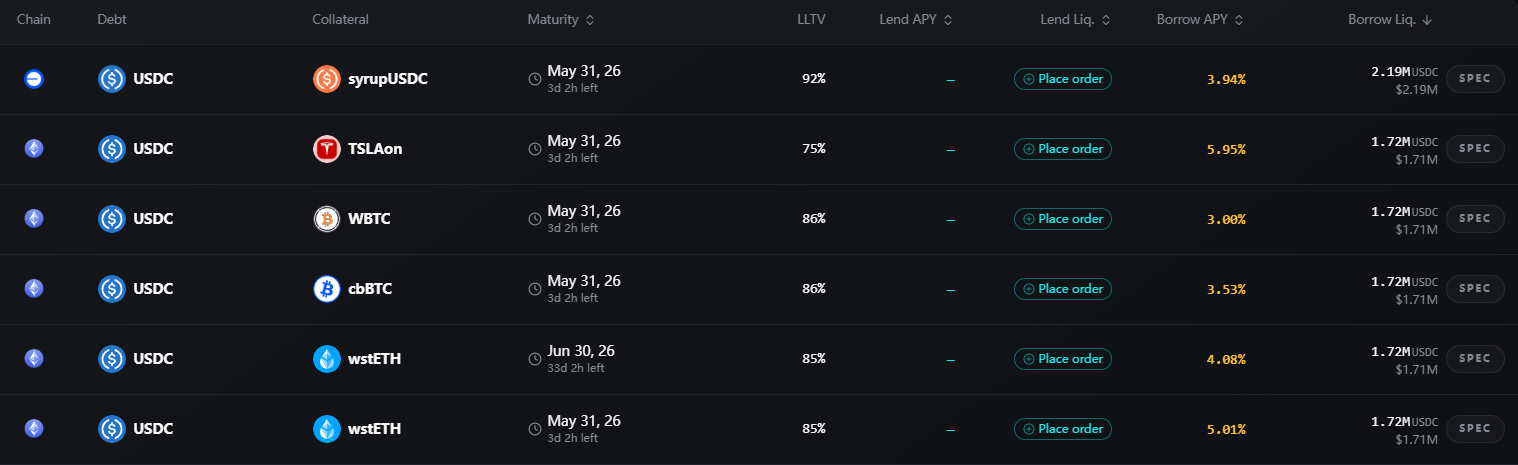
TermMax V2 Version Now Live

Specifically, V2 introduces Composable Base Yield, allowing Vaults to connect to ERC-4626 yield sources like Aave and Morpho, enabling idle funds that are not yet matched to generate base yield; Atomic Order allows the same liquidity to be listed in multiple markets simultaneously but can only be consumed once, thereby improving liquidity utilization; Order Aggregator automatically scans different order types to match users with better interest rate paths.

Additionally, V2 incorporates Smart Unwind and Alpha Zone. The former enhances the exit and fund recycling efficiency of debt positions, while the latter supports the more flexible creation of new markets. Overall, the focus of TermMax V2 is not on adding more complex features, but on making the fixed-rate lending market deeper in liquidity, more efficient in capital use, and simpler for users to operate.

Engagement Opportunities

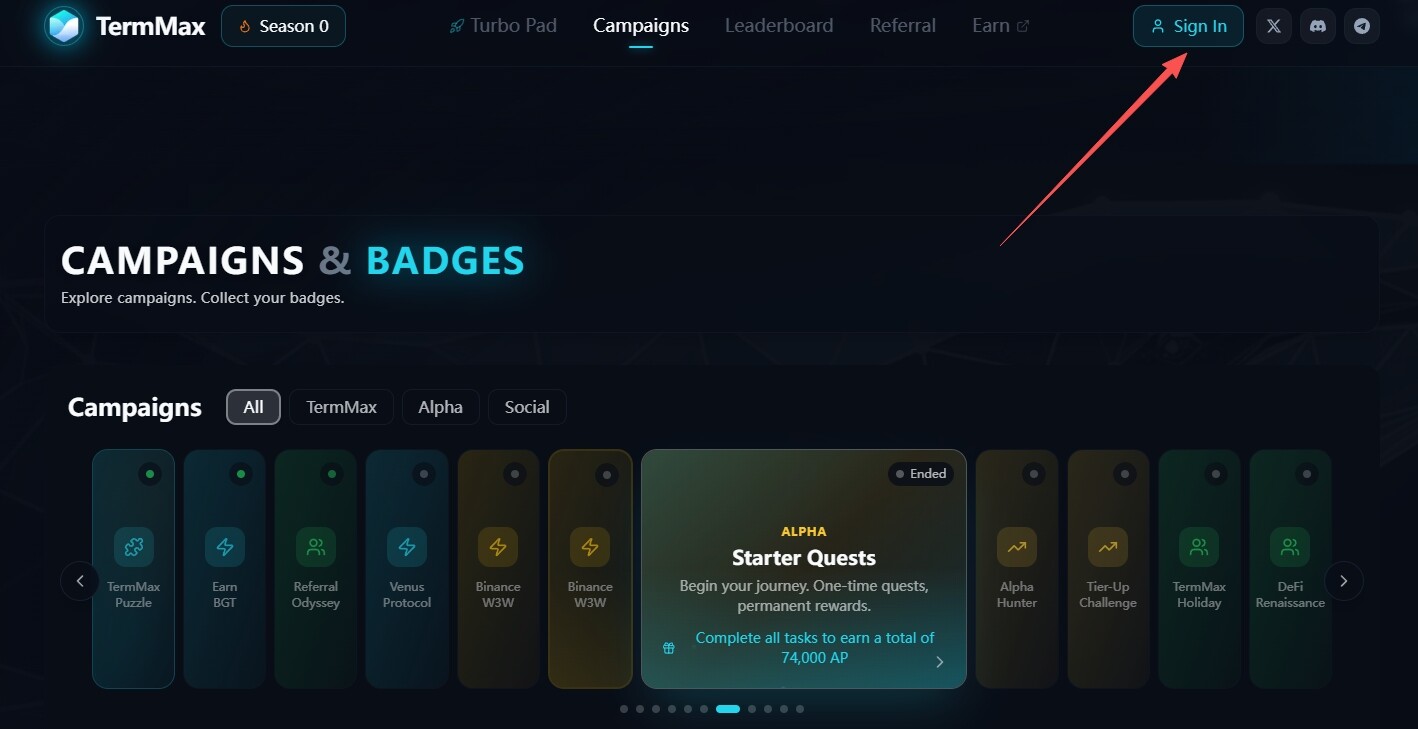
STEP 1. After entering the V2 version, click "Leaderboard" at the top to jump to the TermMax Season 0 event interface.

STEP 2. Click "Sign In" and connect your Web3 wallet to complete personal account login.
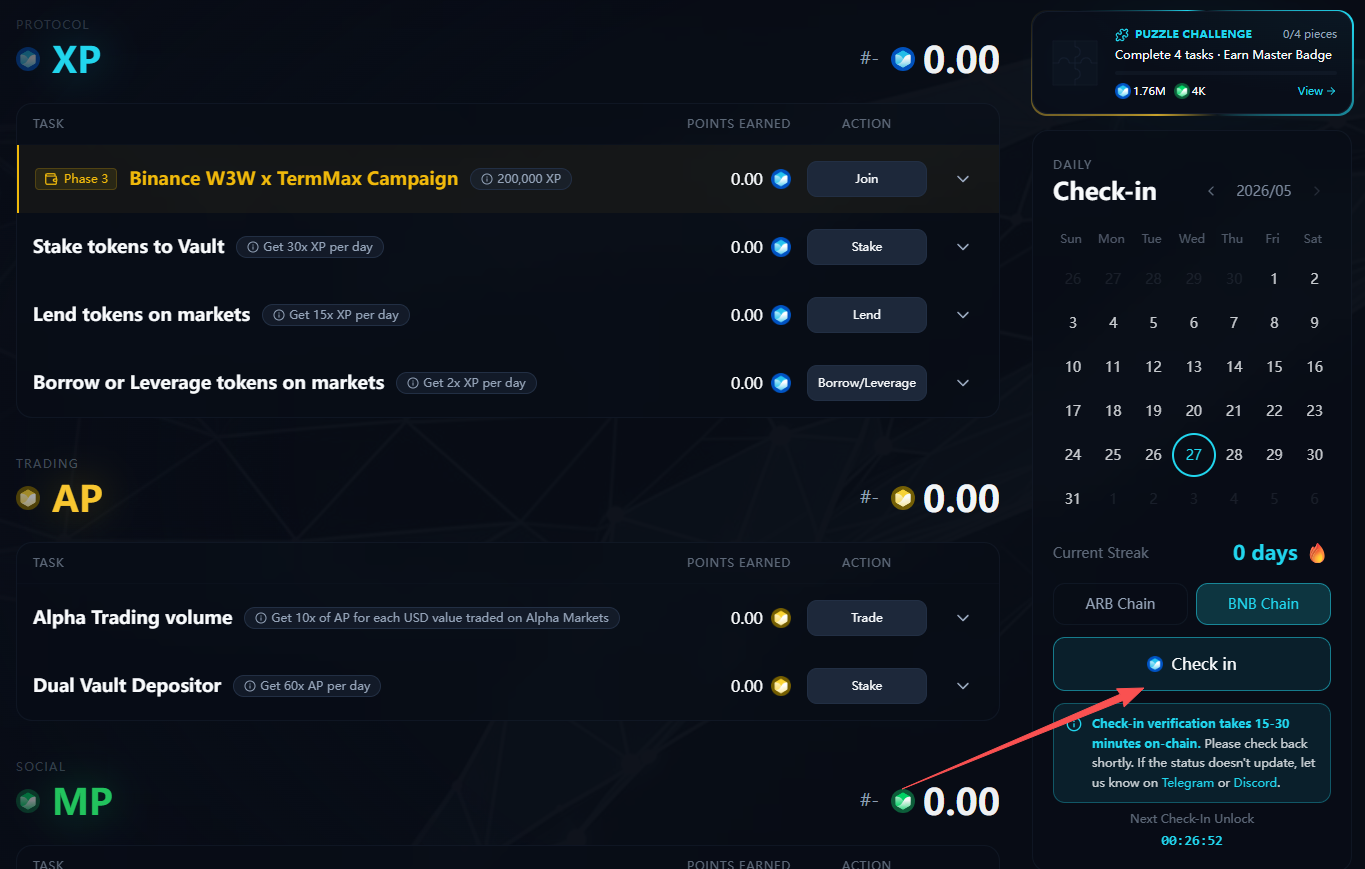
STEP 3. Complete daily check-ins (resets daily at 8 AM) to earn points.
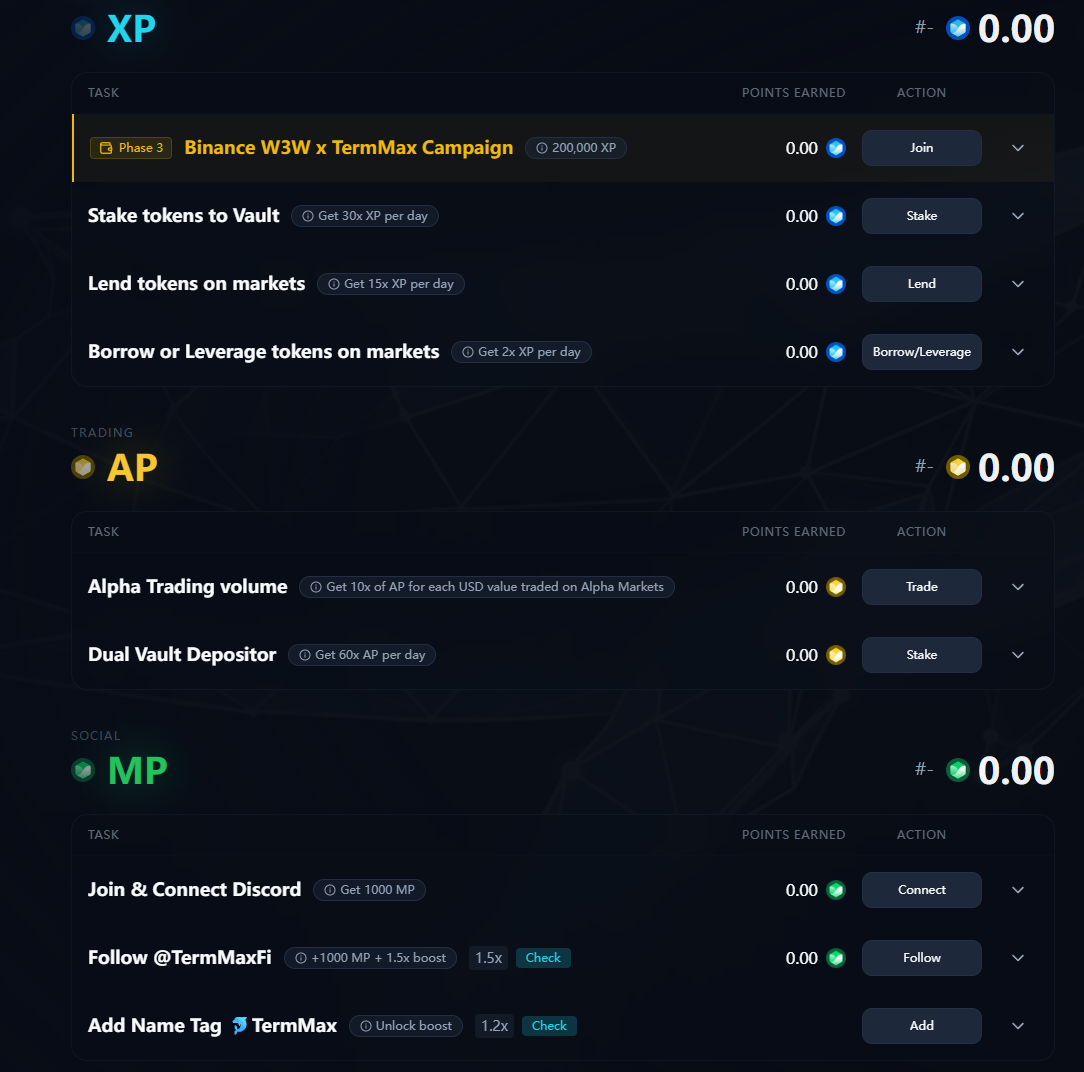
STEP 4. Points are divided into XP tasks (deposit-related), AP tasks (trade-related), and MP tasks (social-related). Complete the corresponding tasks according to the specified requirements to earn the respective point rewards.
Renaiss: Providing On-Chain Liquidity for Real-World Collectible Cards

Project Introduction
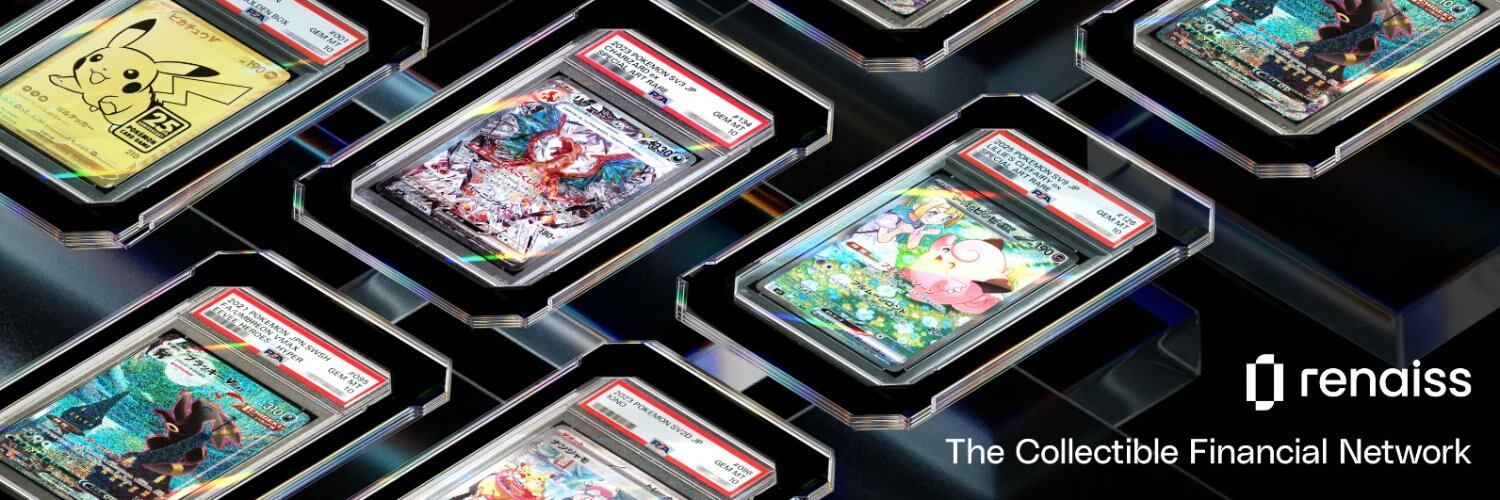
Renaiss is an RWA liquidity infrastructure project centered around real-world collectibles, focusing on collectible finance. Compared to common RWA categories like government bonds, stocks, and funds, Renaiss targets the more niche collectibles market, particularly real-world collectible assets such as trading cards and Pokémon cards. To date, Renaiss platform trading volume has exceeded $15 million.

Renaiss aims to address long-standing pain points in the real-world collectibles market, including high costs for physical custody and authenticity verification, opaque price data, fragmented trading liquidity, and difficulty in further financializing assets. The project uses on-chain ownership certificates, third-party custody, and data pricing systems to turn real-world cards and other collectibles into verifiable, tradable, and composable on-chain assets.

Renaiss enables more real-world collectibles to become verifiable, tradable, and usable in DeFi as on-chain assets. For example, once a high-value collectible card undergoes custody and on-chain mapping, it can not only be bought and sold but also has the potential to enter on-chain financial scenarios like staking and lending, ultimately becoming a protocol-layer project for real-world collectibles. This also distinguishes Renaiss from typical NFT projects. It does not reissue a batch of purely on-chain image assets but connects physically existing cards with established offline value and collector demand to the blockchain, allowing collectors to retain ownership of the physical asset while gaining higher liquidity on-chain.

Key Developments

On May 22, announced the launch of the Magma Pack series card packs, with a total of 1,000 packs. The top cards have a maximum value of up to $2,900, and they sold out on the same day.
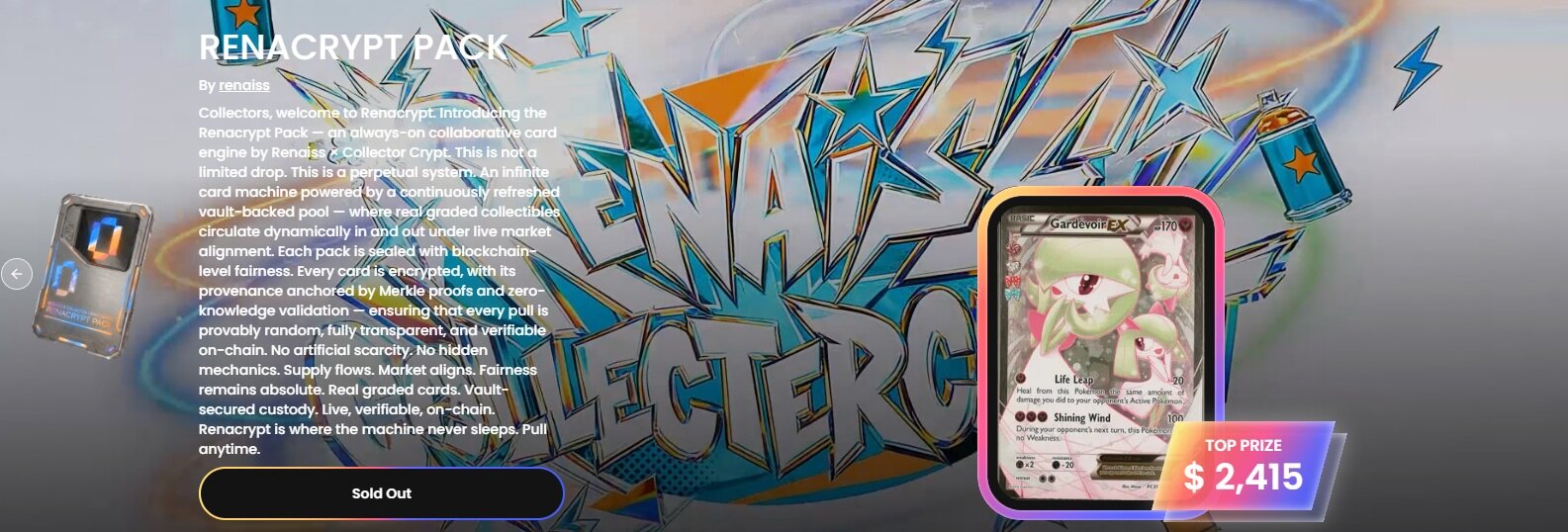
On May 26, announced the upcoming launch of the Eden Pack series card packs, themed around One Piece. The total number was not disclosed, but it includes over 100 top-grade cards.

Engagement Opportunities

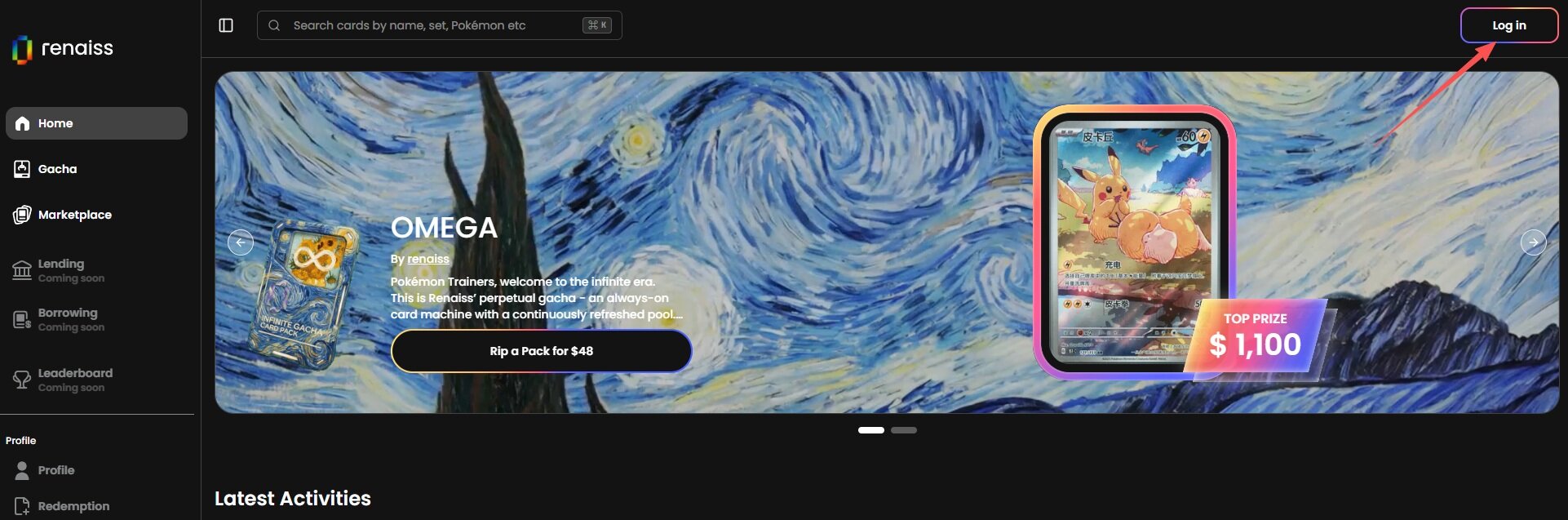
STEP 1. Go to the official website (link: https://www.renaiss.xyz/) and click "Log in" for personal account login.
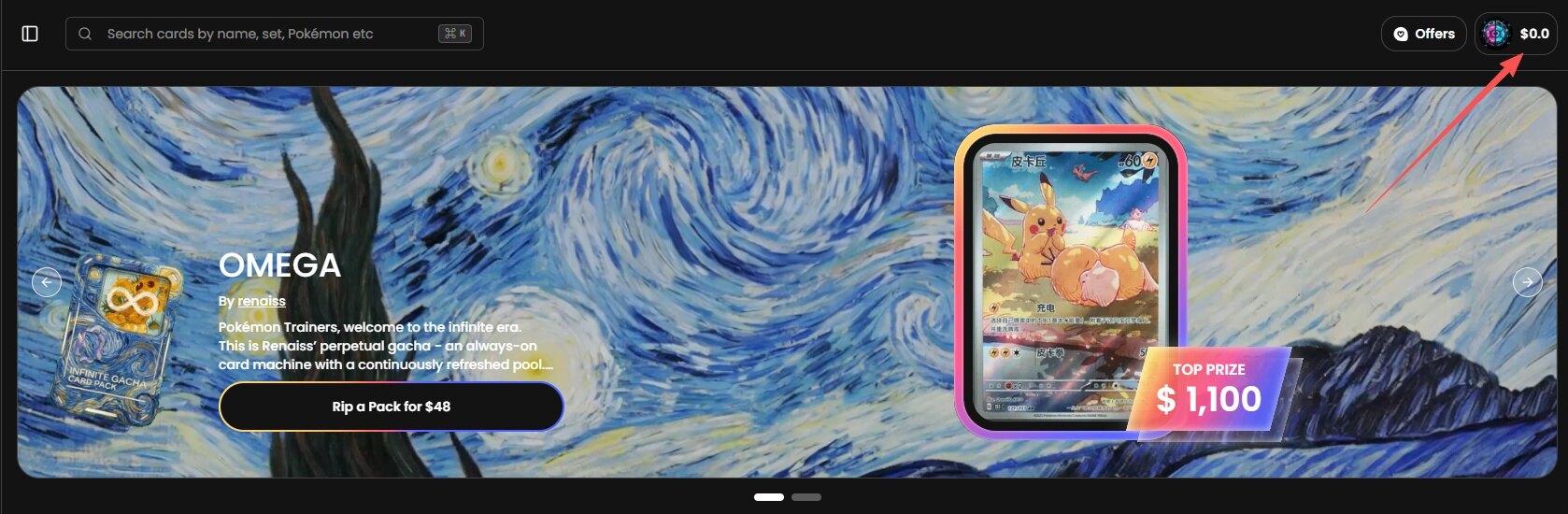
STEP 2. Click the avatar in the top right corner to deposit funds.
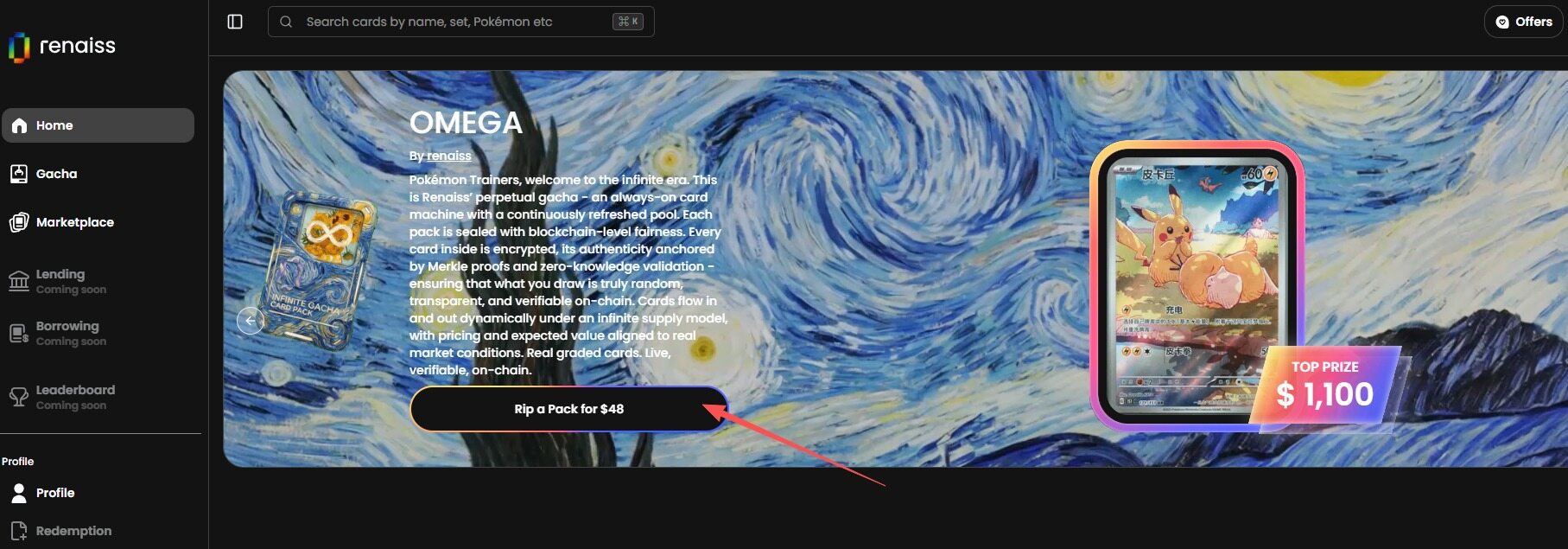
STEP 3. Click on the OMEGA card opening event on the homepage. Each card pack costs $48. There is a 90% chance of opening a C-grade card; a 7% chance for a B-grade card; a 2% chance for an A-grade card; and less than a 1% chance for an S-grade card.
Domande pertinenti

QAccording to the article, what are the two projects incubated by YZi Labs that have seen a significant rise in popularity recently?

AAccording to the article, the two projects are TermMax, a fixed-rate lending protocol, and Renaiss, a platform for the financialization of real-world collectible card assets.

QWhat is the core problem TermMax V2 aims to solve, and what are the key new features introduced?

ATermMax V2 aims to address issues like fragmented liquidity, low utilization of idle funds, and inefficient order matching. Key new features include Composable Base Yield (integrating ERC-4626 yield sources like Aave), Atomic Order (allowing single liquidity to be listed across multiple markets), Order Aggregator (for better rate matching), Smart Unwind (for efficient position exit), and Alpha Zone (for flexible market creation).

QHow does Renaiss differentiate itself from typical NFT projects?

ARenaiss differentiates itself by not minting purely digital art assets. Instead, it focuses on bringing real-world collectible assets (like trading cards) with existing offline value and demand onto the blockchain through custody, verification, and on-chain representation. This allows owners to retain physical ownership while gaining enhanced on-chain liquidity and enabling potential DeFi use cases like staking or lending.

QWhat are the three types of points (and their corresponding tasks) users can earn in TermMax's Season 0 activity?

AIn TermMax's Season 0 activity, users can earn three types of points: XP points from deposit-related tasks, AP points from trading-related tasks, and MP points from social-related tasks.

QWhat specific feature did TermMax launch on BNB Chain in January 2026 to connect fixed-rate lending with the RWA sector?

AIn January 2026, TermMax launched a fixed-rate lending market on BNB Chain that supports Ondo tokenized stock as collateral, allowing users to borrow funds without selling their tokenized stock assets.

Letture associate

ETH Bull and Bear Views Compilation: Can Ethereum's Value Flow Back to ETH?

Titled "ETH Bull and Bear Views: Can Ethereum's Value Flow Back to ETH?", this article synthesizes the current heated debate around Ethereum's native token, ETH, following Bankless co-founder David Hoffman's decision to sell his entire ETH holdings. The **bullish case**, represented by figures like Tom Lee (BitMine CEO) and Raoul Pal, argues that ETH's core thesis remains intact. They contend Ethereum is the essential, secure, and neutral foundational layer for future finance—encompassing stablecoins, RWA, DeFi, L2s, and Agentic AI. Bulls bet on ETH's long-term revaluation as institutional adoption of on-chain finance grows, with significant buying activity from entities like BitMine and Consensys cited as evidence. Conversely, the **bearish perspective**, led by Hoffman and analysts like Markus Thielen, questions ETH's value capture mechanism. They acknowledge Ethereum's network success but argue that the value created by L2s, DeFi, and applications does not sufficiently accrue to the ETH token itself. Bears point to ETH's prolonged underperformance versus the broader crypto market, lack of traditional cash flows, weakening "ultrasound money" narrative, and apparent institutional retreat (e.g., Harvard Management Company exiting its ETH ETF position) as key concerns. The debate highlights a pivotal shift: ETH is no longer just a community belief asset. The central question is whether ETH can transition from being a "**used infrastructure**" to a "**continuously bought and held core asset**" as more value enters the Ethereum ecosystem. The market is now critically examining the direct link between network growth and ETH's value.

marsbit38 min fa

ETH Bull and Bear Views Compilation: Can Ethereum's Value Flow Back to ETH?

marsbit38 min fa

Crypto is dead, Perps are forever

The crypto industry is shifting from a focus on creating native assets (like altcoins and protocol tokens) to becoming a "global asset pipeline." Native cryptocurrencies, except for Bitcoin, are seen as failing in their value storage and utility promises, with demand driven largely by speculation. Attention and liquidity are now moving toward real-world assets (RWAs) like U.S. stocks, bonds, gold, and oil traded on-chain via perpetual contracts (Perps). Stablecoins like USDT and USDC set the precedent, proving blockchain's core strength is efficient global settlement and transfer, not inventing new monetary systems. Meanwhile, assets like Ethereum and many DeFi tokens struggle as their narratives weaken against tangible traditional assets and the rapid real-world progress of AI. Perpetual contracts have emerged as a pivotal innovation. They simplify trading by offering pure price exposure to any asset, bypassing complexities of ownership, custody, and traditional market hours. Projects like Hyperliquid gained traction by combining CEX-like efficiency with on-chain transparency, capitalizing on post-FTX distrust, macroeconomic volatility, and the surge in demand for 24/7 stock trading. In conclusion, while the era of speculative native "crypto assets" may be over, perpetual contracts persist as the industry's most potent financial instrument—transforming all assets into globally accessible, constantly tradable instruments centered on price speculation.

marsbit44 min fa

Crypto is dead, Perps are forever

marsbit44 min fa

Tencent, Alibaba, ByteDance in a Battle for the Skill Store

Skill is becoming a key concept in the AI field, essentially serving as a structured "instruction manual" for AI Agents that specifies tool calls, decision logic, and output standards. This allows Agents to execute predefined tasks. As the number of Skills grows, distribution platforms have emerged. Major tech companies are swiftly entering this space. In March, Tencent, Alibaba, and ByteDance launched Skill stores within their respective Agent platforms. Subsequently, players like Zhipu AI, Meituan, and Xiaohongshu joined the fray. This competition for the "Skill store" is fundamentally a battle for the AI-era user entry point; whoever controls distribution controls the users. While ByteDance's Coze has experimented with paid Skills, most platforms offer them for free. The real value lies not in the stores themselves but in using them to attract and retain users within an ecosystem, driving revenue from services like cloud computing, model calls, or advertising. The landscape features three main player types: 1) **Internet giants** (e.g., Alibaba, ByteDance, Tencent, Meituan), leveraging Skills to drive traffic and monetize through their broader ecosystems (cloud services, transactions, ads). 2) **Large model companies** (e.g., Zhipu AI, Moonshot AI), using Skill stores to increase user engagement and monetize model API calls. 3) **Content platforms** (e.g., Xiaohongshu), treating Skills as a new content format to generate traffic and ad revenue. However, transforming Skill stores into a sustainable business faces significant hurdles. Key challenges include: the **difficulty in pricing Skills** due to inconsistent outputs across different models and contexts; **lack of cost transparency** (varying token consumption); **security risks** like Skill poisoning; and the **absence of standardized protocols** for development and evaluation. Unlike standardized mobile apps, Skills are often personalized workflows resistant to uniformity, which hinders the establishment of a reliable review and monetization system akin to the App Store. While there is genuine user demand for paid Skills—particularly in enterprise (e.g., contract review) and certain personal productivity scenarios—current platforms offer developers limited and unpredictable distribution. The future of Skill stores depends on overcoming these standardization, evaluation, and safety challenges to make acquiring a Skill as straightforward as downloading an app. For now, the stores function more as display shelves than robust marketplaces.

marsbit44 min fa

Tencent, Alibaba, ByteDance in a Battle for the Skill Store

marsbit44 min fa

The Crypto Scene Is Dead, Perpetual Swaps Are Eternal

The crypto industry is undergoing a fundamental shift. The era defined by minting novel, native digital assets (altcoins) is fading. These assets, lacking real-world cash flows or clear value, are losing relevance as attention and capital flow elsewhere. Two powerful external forces are reshaping the space. First, traditional assets like U.S. stocks, bonds, gold, and oil are being tokenized and traded on-chain. Second, the explosive growth of AI, with its tangible products, has overshadowed crypto's once-dominant "future narrative." This marks a critical pivot: crypto is transitioning from being a "factory for new assets" to becoming a "global conduit for existing assets." Its validated utility is not complex financial reinvention but efficient global settlement, transfer, and trading—the original promise of blockchain. Stablecoins like USDT and USDC exemplify this, offering faster dollar movement rather than replacing it. Consequently, native ecosystems like Ethereum face profound challenges. While still crucial infrastructure, ETH struggles to capture value as users interact with Layer 2s or trade traditional assets without needing to hold it. DeFi's grand narrative of rebuilding finance has narrowed to core needs like cheap transfers and deep liquidity. The true breakout innovation is the perpetual contract (Perp). It brilliantly bypasses the complexities of direct asset ownership (custody, compliance, dividends) by creating pure price exposure. Users can speculate on the price movement of *any* asset—NVIDIA, gold, oil—24/7, globally, and with leverage. This "price casino" model, while risky and ethically fraught, delivers unmatched liquidity and accessibility. Projects like Hyperliquid succeeded not by inventing new mechanics but by perfecting the timing and execution of this model. Key drivers included making on-chain Perps feel like centralized exchanges, post-FTX trust migration towards transparency, and rising demand to trade macro assets and equities round-the-clock. In conclusion, the crypto world's most enduring successes are the dollar (via stablecoins), Bitcoin, and trading. Its new frontier is not creating alternative assets but providing a seamless, perpetual trading layer—a new API—for the world's existing financial system. The age of native altcoins is over; the age of perpetual synthetic exposure has begun.

Odaily星球日报53 min fa

The Crypto Scene Is Dead, Perpetual Swaps Are Eternal

Odaily星球日报53 min fa

Trading

Spot
Futures
活动图片