He Was the Hero of Shanghai's Two Major Industries, Yet Passed Away Quietly in Regret

marsbitPubblicato 2026-08-05Pubblicato ultima volta 2026-08-05

Introduzione

He was a pivotal figure in the development of two major Shanghai industries—semiconductors and commercial aircraft—yet passed away in quiet regret. Jiang Shangzhou, son of a veteran revolutionary and a Swiss-educated technocrat, became Deputy Director of the Shanghai Economic Commission in 1997. Tasked with identifying strategic industries, he championed integrated circuits (ICs) despite a climate of skepticism. Countering a national plan for just two 8-inch chip production lines, he boldly declared Shanghai would build ten within five years. He masterminded the Zhangjiang microelectronics zone, personally recruited top talent like Morris Chang, and helped establish SMIC. Through innovative financing that circumvented Western embargoes, SMIC grew rapidly, with Shanghai exceeding its target by building 18 lines. Simultaneously, while battling lung cancer, Jiang led the push for China's large commercial aircraft program as head of a state major projects panel. He argued it was a strategic imperative that would drive advancements across multiple industries. His relentless advocacy culminated in the 2006 state approval that paved the way for the C919. Jiang's career was marked by foresight often deemed too超前. Earlier postings in Sanya and Yangpu saw his ideas for tourism and economic reform initially rejected, only to be validated years later. In 2009, he became Chairman of the embattled SMIC. Despite his deteriorating health, he steered the company until his death in 2011, le...

"Building two chip production lines in five years is far too bold."

When the microphone at the National Integrated Circuit "10th Five-Year Plan" Strategy Seminar was handed to Jiang Shangzhou, then Deputy Director of the Shanghai Municipal Economic Commission, he told the assembled experts:

"Not two. Shanghai will build ten lines in five years."

In 1997, 50-year-old Jiang Shangzhou received a new appointment: Deputy Director of the Shanghai Municipal Economic Commission.

He was a standard "red second generation." His father, Jiang Yizhen, was an old Red Army soldier who participated in the Long March, and had served as Minister of Agriculture, Minister of Health, and Secretary of the Hebei Provincial Party Committee.

He was also a rare official of that era with overseas study experience, having been sent by the state to study at the Swiss Federal Institute of Technology in Zurich, whose most famous alumnus is Albert Einstein.

This time, he was handed a difficult game to play.

At that time, Shanghai, China's largest industrial city, was experiencing the throes of transition.

Textiles, steel, petrochemicals... these past glories of Shanghai were gradually becoming the city's "burdens." In the central government's development plan, Shanghai's future was to rely on high technology and emerging industries.

As Deputy Director of the Economic Commission, Jiang Shangzhou's core task was to screen strategic industries that would lead Shanghai's future development. One of his answers: integrated circuits.

Over the past two decades, China's integrated circuit projects had always progressed in fits and starts. Under Western technological blockades, China could only purchase "second-hand production lines" already discarded by developed countries. Coupled with delays and time for absorption and implementation, by the time a production line was acquired, it was already three generations behind, trapping the industry in an inescapable cycle of "introduction — factory construction — production — falling behind — re-introduction."

The autonomous 908/909 projects failed successively, casting a pall of depression over the entire integrated circuit industry. Add to that the global semiconductor industry downturn at the time, and industry profits had already been severely slashed. At the national "10th Five-Year Plan" strategic planning seminar for integrated circuits, the prevailing tone was: we must develop chips, but aim for two 8-inch production lines over five years.

But when the microphone was passed to Jiang Shangzhou, he faced the room of experts and stated Shanghai's plan:

During the "10th Five-Year Plan" period, Shanghai would build ten 8-inch chip production lines.

As a technical official with a professional background, Jiang Shangzhou's words had their basis.

In his view, chips were one of the industries most severely constraining China's development, and they had to be mastered no matter how difficult.

By around 2000, chips had already become China's largest import product, exceeding the import volume of the five major strategic materials (minerals, grain, etc.), and more than all energy imports. Virtually 100% of chips for China's TVs and mobile phones were imported.

With this plan, Jiang Shangzhou returned to Shanghai.

After reviewing the history of Taiwan's Hsinchu Science Park and comparing Shanghai's strengths and weaknesses, he proposed to Shanghai's decision-makers: planning a 22-square-kilometer Zhangjiang Microelectronics Development Zone in Pudong, three times the size of Taiwan's Hsinchu Science Park.

In Jiang Shangzhou's view:

Within the semiconductor industry, ethnic Chinese are a remarkable group, possessing one of the world's best talent pools and networks. Shanghai, being the mainland city most favored by international capital and having a strong industrial foundation, would surely surpass Taiwan as long as it built the nest to attract the phoenixes.

Therefore, Jiang Shangzhou spared no effort traveling to Taiwan specifically to recruit talent. He sought out the renowned semiconductor industry figure, Zhang Rujing.

In Shanghai, Zhang Rujing received the strongest possible commitment: you can choose any plot of land in Zhangjiang.

But according to the manufacturing processes of the time, building 10 production lines required at least tens of billions more in investment. Where would the money come from? Jiang Shangzhou thought of introducing foreign capital.

SMIC, structured as a foreign-invested enterprise, ingeniously introduced a wide array of Chinese and foreign capital in a very dispersed manner, even including American firms like Goldman Sachs and Walden. This sophisticated calculation not only provided SMIC with capital but also circumvented Western blockade restrictions, enabling the acquisition of large amounts of semiconductor equipment to quickly join the race.

On August 24, 2000, he led SMIC in driving the first pile officially in Pudong's Zhangjiang. Just 13 months later, trial production began. Within 3 years, 4 eight-inch production lines and 1 twelve-inch production line were established—a speed unprecedented globally.

By 2003, SMIC had already surged to become the world's fourth-largest foundry, its rise astonishing.

In 2004, Jiang Shangzhou encountered another key figure: Yin Zhiyao, who had worked at semiconductor giants Intel, Lam Research, and Applied Materials, and was then Vice President at Applied Materials and a top global expert in chip etching. Jiang invited the 60-year-old Yin Zhiyao to Shanghai's Zhangjiang to establish AMEC (Advanced Micro-Fabrication Equipment Inc.), beginning China's "pioneering era" in etching equipment.

Through Jiang Shangzhou's efforts, a group of semiconductor talent set up companies in Shanghai. In less than five years, Shanghai had built or was building 18 eight-inch IC production lines, exceeding the target.

Jiang Shangzhou firmly believed that at this pace, his 1998 prediction that "the mainland chip industry will surpass Taiwan between 2015 and 2020" would surely come true.

Compared to integrated circuits, Jiang Shangzhou's other grand endeavor was commercial large aircraft.

Jiang Shangzhou's connection with large aircraft began in 2003 when he became the head of the State Council's Major Special Project Demonstration Group, participating in the formulation of the National Medium- and Long-Term Science and Technology Development Plan Outline.

But what no one knew was that this was his third year since being diagnosed with lung cancer.

As head of the demonstration group, "Large Civil Aircraft" became the first project he selected, and also the hardest "bone to chew" in the demonstrations.

For over half a century, China's journey in building civil large aircraft had been exceptionally difficult, with many twists and turns from the Y-10 to the C919.

At that time, discussions advocating "it's better to buy than to build, better to lease than to buy" were rampant. Due to technological monopolies by developed countries, China's commercial aircraft R&D faced problems of high costs and long payback periods. Moreover, the large aircraft project was entangled in complex interest games.

However, Jiang Shangzhou understood that large commercial aircraft were the pearl on the crown of modern industrial technology. "Large aircraft must be developed. This is not just an economic issue; it involves national strategic security."

In reality, what developed countries truly wanted to curb was not the technology of a particular aircraft, but the entire platform upon which such technological capabilities depended. Jiang Shangzhou saw early on the profound significance of the large aircraft project for China's industrial restructuring.

"Having 100 technologies doesn't necessarily mean you can build a large aircraft. Conversely, building a large aircraft can drive the development of 100 technologies."

Developing large aircraft could drive breakthroughs in key technologies across fields like new materials, electronic information, and automatic control, and would also spur major advances in fundamental disciplines such as fluid mechanics. Therefore, incorporating large aircraft into the national major strategic development plan was installing a leading force for China's machinery, electronics, materials, metallurgy, and all other related industries.

More importantly, Jiang Shangzhou saw that Shanghai possessed the capability to manufacture large aircraft—as early as the 1970s, Shanghai had independently produced the "Y-10" large civil airliner and had engaged in multiple collaborations with American company McDonnell Douglas, accumulating rich technical experience.

To this end, he pushed back against dissent and organized a three-year-long discussion within academia and industry.

For three years, Jiang Shangzhou shuttled constantly between Shanghai and Beijing until February 26, 2006, when the State Council approved the project, listing "Large Aircraft" as a national science and technology major special project.

The C919 passenger aircraft project took its first step.

Jiang Shangzhou dealt with major undertakings, but he was also someone who did not know how to "play the official game." His political career can be described as full of twists and turns.

Before the age of 40, Jiang Shangzhou was just a "scholar." In 1965, he was admitted to the Radio Department of Tsinghua University, but due to the "Cultural Revolution," he spent only a little over nine months at the university.

For over a decade, he never stopped studying. He and his classmate, later his wife Wu Qidi (former Vice Minister of Education), taught themselves university courses. In 1978, both returned to their alma mater as graduate students. They later became among the first intellectuals to study abroad since the reform and opening-up.

In 1987, Jiang Shangzhou came to Sanya, Hainan.

This was a new city that had just been upgraded from a county-level city. The entire city of Sanya had no more than 1,000 telephones, and phone numbers were only three digits.

Eight years of overseas study had endowed Jiang Shangzhou with forward-looking strategic vision. However, precisely because it was "ahead of its time," he was often controversial and misunderstood.

For example, he wanted to build a science city in Sanya, creating China's "Hawaii." However, in 1990, the GDP of mainland China was only $387.8 billion, while Hong Kong, with a population of just over 5 million, had a GDP as high as 20% of the mainland's.

At that time, China needed to solve the problem of feeding and clothing 1.1 billion people. The importance of high-tech industries and a tourism economy was still difficult for most to comprehend.

Concepts like creating urban public spaces and establishing land transaction systems, commonplace in urban management today, also faced significant resistance at the time for being "too advanced."

Consequently, Jiang Shangzhou lost the election for Vice Mayor of Sanya in 1989. Interestingly, at that time, his father Jiang Yizhen was the Vice President of the "Hainan Development Promotion Association," yet his son serving in Hainan lost the election.

Interestingly, after losing, he did not choose to leave but continued to work as the Mayor's Assistant, striving to steer Sanya towards becoming an international tourist city. Relying on this pragmatic work, Jiang Shangzhou was elected Vice Mayor with a high vote count in the 1991 election.

That year was Jiang Shangzhou's third year in politics. At 43, he was as energetic as a 23-year-old, always rushing tirelessly to conduct research at the grassroots level across various regions.

Regrettably, in the debate over focusing on "tourism" or "agriculture," Sanya at the time chose the latter, forcing Jiang Shangzhou to leave. The reality of Sanya today undoubtedly proves Jiang Shangzhou's foresight.

At the urging of Ruan Chongwu, then Party Secretary of Hainan Province, Jiang Shangzhou took up the post of Director of the Yangpu Economic Development Zone Administration.

In 1993, Yangpu was a testing ground for China's reform and opening-up. There, Jiang Shangzhou introduced concepts such as "seek the market, not the mayor" and "minimal administrative intervention, maximum economic freedom."

The experiences accumulated in Yangpu at that time, such as pioneering the civil service examination system, centralized procurement, and public finance, successively took center stage in China's administrative reforms over the following decade.

However, again because it was "too far ahead," Jiang Shangzhou encountered setbacks once more in Yangpu.

It wasn't until September 2007, when the State Council approved the establishment of the Yangpu Bonded Port Area, that Yangpu's development welcomed new opportunities. This seemed to affirm Jiang Shangzhou's earlier pioneering efforts in Yangpu, but by then, he had long since left Hainan for Shanghai.
Because it was too threatening, SMIC faced repeated sniping from industry leader TSMC from its inception, leading to high compensation demands.

In 2009, one of its founders, Zhang Rujing, was forced to leave the company. Jiang Shangzhou was appointed Chairman to handle the crisis, but what no one knew was that he was already in the late stages of lung cancer.

Facing this predicament, Jiang Shangzhou's stress was unimaginable. Although barely holding on, he never ceased pondering the development of China's chip industry.

"In terms of semiconductor processes, we don't necessarily have to master everything. As long as we lead in a few areas ahead of foreign countries, we can forge our own development path."

This might have been Jiang Shangzhou's final advice to China's chip industry in the last years of his life. On June 27, 2011, Jiang Shangzhou passed away due to illness. Subsequently, SMIC quickly descended into chaos. During a two-year period of internal strife, senior executives left one after another, and development nearly stalled.

During the same period, the national chip industry was also experiencing its darkest hour. It wasn't until 2014, when the National Integrated Circuit Industry Investment Fund, with a scale of hundreds of billions, was established, that the entire industry gradually emerged from the gloom and embarked on a new glorious journey.

Therefore, whether it was the ARJ21 regional jet (which formally entered market operation in 2015) or the C919 passenger aircraft, Jiang Shangzhou did not live to see the day they truly soared in the skies.

Looking back on Jiang Shangzhou's life, from a世俗 (worldly) perspective, he might be seen as a tragic "loser." However, he was also a true behind-the-scenes hero.

Relying on the foundation laid by Jiang Shangzhou back then, today's Shanghai has become a pioneer in integrated circuits and China's commercial aviation.

In 2025, the overall scale of Shanghai's integrated circuit industry exceeded 570 billion yuan, ranking first among Chinese cities for many consecutive years.

Today, Shanghai is the region with the most complete integrated circuit industry chain and the highest comprehensive technical level in China. From design, manufacturing, packaging and testing to materials and equipment, Shanghai has leading companies deployed in all five key areas of the chip industry chain.

SMIC, AMEC, Shanghai Micro Electronics Equipment (SMEE), Unisoc, Shanghai Simgui...... These enterprises, which were more or less "supported" by Jiang Shangzhou, represent China's hopes for breaking through blockades in different fields of the chip industry.

The large aircraft project, first advocated and landed by Jiang Shangzhou, has also seen the C919 aircraft series from COMAC (Commercial Aircraft Corporation of China) long since embarked on the journey of commercializing domestically produced passenger aircraft, becoming a new calling card for Chinese manufacturing.

Looking back, Jiang Shangzhou never "chased trends." Instead, he maintained an exceptionally calm attitude towards Shanghai's positioning and the real economy.

Jiang Shangzhou believed that Shanghai, as one of the world's most densely concentrated regions for manufacturing resources, should strive to occupy industrial high ground and drive the upgrading and adjustment of traditional industries nationwide.

Now, when we remember Jiang Shangzhou, what are we remembering?

We appreciate his strategic vision, admire his pragmatic and progressive character, and also regret that his great ambition remained unfulfilled, "his task unfinished, his body perished first." His achievements benefit the present, his contributions extend for generations; perhaps his life is the best testament to this.

"The government needs a group of people whose eyes are fixed on change and the forefront. The changes he brings to the economy may not be reflected in the present moment but play a crucial role in development over the next 30 years." In the eyes of his friend Wan Gang, Vice Chairman of the National Committee of the Chinese People's Political Consultative Conference (CPPCC), Jiang Shangzhou was "ahead of his time his whole life."

This article is from WeChat Official Account: 华商韬略 , author: 华商韬略

Crypto di tendenza

Domande pertinenti

QWhat were the two major strategic industries that Jiang Shangzhou played a key role in promoting for Shanghai's future development?

AThe two major strategic industries were integrated circuits (microchips) and commercial large aircraft (the C919 project).

QWhat ambitious goal did Jiang Shangzhou announce for Shanghai's integrated circuit industry at the 'Fifteenth Five-Year Plan' national strategic seminar, and how did the actual outcome compare?

AHe announced that Shanghai planned to build ten 8-inch chip production lines within five years. The actual outcome exceeded expectations, with Shanghai having 18 such lines built or under construction in less than five years.

QWhich two key figures and their companies did Jiang Shangzhou help bring to Shanghai's Zhangjiang area to develop the chip industry, and what were their roles?

AHe recruited Zhang Rujing, who founded SMIC (Semiconductor Manufacturing International Corporation), a major chip foundry. He also invited Yin Zhiyao, who founded AMEC (Advanced Micro-Fabrication Equipment Inc. China), a leading manufacturer of semiconductor etching equipment.

QDespite being diagnosed with lung cancer, what major national project did Jiang Shangzhou champion and help get approved as the head of the State Council's major project demonstration group?

AHe championed and helped get the 'Large Aircraft' project (which led to the C919 passenger jet) approved as a major national science and technology development project.

QAccording to the article, what is Jiang Shangzhou's lasting legacy for Shanghai's industrial landscape as of the time the article was written?

AHis legacy is that Shanghai became a leading base for China's integrated circuit and commercial aviation industries. Shanghai's IC industry scale exceeded 570 billion yuan, ranking first nationally, and the C919 aircraft began its commercial journey, becoming a new name card for Chinese manufacturing.

Letture associate

Stunning, Musk Joins Forces with Huang Jen-hsun to Deploy the Stellar Brain! AI Computing Center Launched into Space

SpaceX, in its first public earnings report, has announced a partnership with NVIDIA to launch Starmind, an orbital AI computing network. This initiative aims to move AI's computational foundation into space to solve the critical challenges of energy consumption and heat dissipation faced by terrestrial data centers. The core concept involves deploying data centers equipped with NVIDIA's advanced GPUs (like the upcoming Rubin) into sun-synchronous orbit. Key advantages include near-continuous solar power for energy, the vacuum of space for highly efficient radiative cooling, and the absence of terrestrial constraints like land use and grid capacity. The first computational node, the Starmind AI1 satellite, is described as a massive vehicle with a 75-meter wingspan, generating 210 kW of solar power to run a 150 kW computing payload—equivalent to a full NVIDIA GB300 supercomputer rack. These "compute satellites" will connect to users via SpaceX's existing Starlink constellation using high-speed laser links, promising low-latency access from anywhere on Earth. SpaceX's ability to realize this vision is underpinned by its Starship rocket, designed for low-cost, high-frequency launches to transport thousands of satellites, and massive planned manufacturing facilities like the Gigasat factory and the Terafab chip plant. Elon Musk framed the project within the context of the Kardashev Scale, proposing Starmind as humanity's first substantive step toward becoming a Type II civilization capable of harnessing a star's energy. The ultimate goal is to deploy one terawatt of computational power in space, with even more ambitious plans involving lunar-based manufacturing and launch systems. The report positions Starmind not merely as a commercial AI service, but as a foundational infrastructure project to expand human intelligence and capability beyond Earth, leveraging SpaceX's integrated strengths in rockets, satellites, and global connectivity.

marsbit35 min fa

Stunning, Musk Joins Forces with Huang Jen-hsun to Deploy the Stellar Brain! AI Computing Center Launched into Space

marsbit35 min fa

Despite the sell-off, Goldman Sachs remains bullish on Samsung and SK Hynix. Here's why.

Goldman Sachs maintains "Buy" ratings on Samsung Electronics and SK Hynix despite recent stock declines. Its bullish view centers on three core arguments. Firstly, it expects HBM (High Bandwidth Memory) pricing to re-establish a premium over conventional DRAM by 2027, with a projected blended ASP of around $2.9/Gb. This is driven by tight supply-demand dynamics, increasing manufacturing complexity for newer HBM generations, and the need to restore its historical price premium. Secondly, the volatility of the memory cycle is expected to moderate due to widespread adoption of 3-5 year Long-Term Agreements (LTAs) with key customers. These contracts, covering a significant portion of planned capacity, feature mechanisms like price floors, prepayments, and penalties, reducing supplier risk and improving earnings visibility. Thirdly, inventory levels remain low at key suppliers and major customers, providing a buffer against a sharp downturn. Furthermore, robust demand from enterprise SSDs for AI servers is seen offsetting weakness in consumer segments like smartphones and PCs, preventing NAND markets from slipping into oversupply in the near term. While risks exist—such as potential weaker AI demand or aggressive capacity expansion—Goldman Sachs believes the combination of HBM repricing, LTAs, and low inventory underpins a more stable earnings outlook for the leading Korean memory makers.

marsbit50 min fa

Despite the sell-off, Goldman Sachs remains bullish on Samsung and SK Hynix. Here's why.

marsbit50 min fa

Korean Cryptocurrency Market Platform Kimpga Integrates with Global Web3 Data Platform RootData, Providing Popularity and Growth Scores for Token Projects

South Korean cryptocurrency market data platform Kimpga (kimpga.com) has announced a data partnership with the global Web3 project data platform RootData. As a result, Kimpga has integrated comprehensive token project information directly into its platform services. The integration introduces a new "RD Score" column within Kimpga's market listings. Clicking the score opens a detailed data window that displays the "RD Popularity Index," the "RD Growth Index," and key fundamental project data such as leading investors, core team members, and project category tags. For example, for Solana (SOL), users can view its indices and identify major backers like Polychain Capital, a16z, and Multicoin Capital directly from the interface, with links to full RootData project pages for deeper research. Jin Jae-yong, a representative of Kimpga, stated that the partnership allows users to quickly assess a project's fundamental strength, including its development team and investor lineup, without leaving the market data screen. This addresses a key challenge for investors who previously had to rely solely on price and premium data. RootData is a widely used global platform providing Web3 project details on funding history, team composition, and investor portfolios for due diligence and investment analysis. Kimpga, which boasts 10 million cumulative users, is a leading Korean crypto market platform providing real-time data and price premiums from over 18 domestic and international exchanges. This collaboration with RootData follows Kimpga's previous partnership with the token rating platform APYWA, further enriching its data offering to support user investment decisions.

marsbit50 min fa

Korean Cryptocurrency Market Platform Kimpga Integrates with Global Web3 Data Platform RootData, Providing Popularity and Growth Scores for Token Projects

marsbit50 min fa

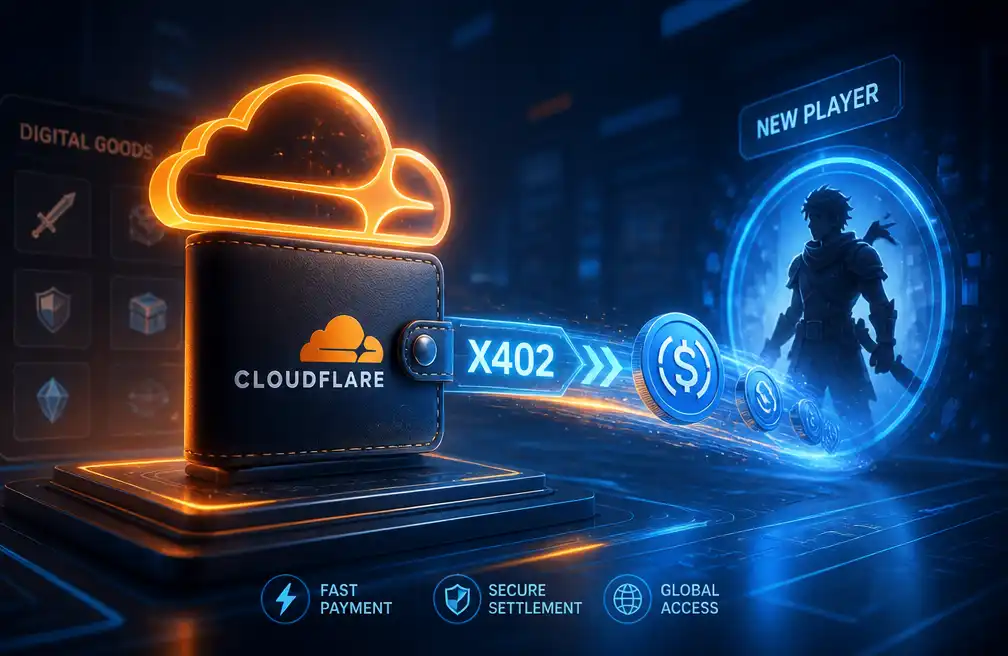
Illustrating the Cloudflare Wallet: The New Player in Stablecoin Payments Using x402

On August 4th, Cloudflare announced the launch of "Wallets," though the initial offering is limited to claiming a user handle. Full functionality for topping up, making payments, and using a Virtual Wallet via API keys is marked "Soon." The announcement clarifies that this handle is not yet a functional wallet. It represents a key piece in Cloudflare's broader payments strategy, alongside the Stripe Projects service (currently in open beta for agent-assisted purchases) and the Monetization Gateway for merchants (on a waitlist). The Wallet is positioned as the payer-side component for managing identity, balances, and authorization rules. While the underlying x402 protocol shows activity (75.41 million transactions, $24.24M volume in 30 days, averaging ~$0.32 per transaction), this data reflects the open network's usage, not specifically Cloudflare Wallet adoption. These metrics indicate suitability for frequent micro-payments like API calls. Cloudflare's documentation uses a $0.01 per-call example to illustrate the x402 flow: a server returns HTTP 402, the agent signs the payment, a facilitator verifies it, and the server delivers the result. Currently, developers must manage private keys and use test networks/USDC for agent payments. The Wallet roadmap aims to separate the user's Account Wallet from an agent's Virtual Wallet, adding controls for spending limits, whitelists, and per-transaction caps. This design resembles a corporate card with approval rules. However, these controls are not yet available for configuration. In summary, Cloudflare Wallet's current launch is a preliminary step. Critical details like supported stablecoins, blockchains, regions, KYC, custody, and fees remain undisclosed. The announcement primarily establishes a payer identity framework, with the full payment and agent autonomy system still under development.

marsbit1 h fa

Illustrating the Cloudflare Wallet: The New Player in Stablecoin Payments Using x402

marsbit1 h fa

Trading

Spot

Articoli Popolari

Cosa è $S$

Comprendere SPERO: Una Panoramica Completa Introduzione a SPERO Mentre il panorama dell'innovazione continua a evolversi, l'emergere delle tecnologie web3 e dei progetti di criptovaluta gioca un ruolo fondamentale nel plasmare il futuro digitale. Un progetto che ha attirato l'attenzione in questo campo dinamico è SPERO, denotato come SPERO,$$s$. Questo articolo mira a raccogliere e presentare informazioni dettagliate su SPERO, per aiutare gli appassionati e gli investitori a comprendere le sue basi, obiettivi e innovazioni nei domini web3 e crypto. Che cos'è SPERO,$$s$? SPERO,$$s$ è un progetto unico all'interno dello spazio crypto che cerca di sfruttare i principi della decentralizzazione e della tecnologia blockchain per creare un ecosistema che promuove l'impegno, l'utilità e l'inclusione finanziaria. Il progetto è progettato per facilitare interazioni peer-to-peer in modi nuovi, fornendo agli utenti soluzioni e servizi finanziari innovativi. Al suo interno, SPERO,$$s$ mira a responsabilizzare gli individui fornendo strumenti e piattaforme che migliorano l'esperienza dell'utente nello spazio delle criptovalute. Questo include la possibilità di metodi di transazione più flessibili, la promozione di iniziative guidate dalla comunità e la creazione di percorsi per opportunità finanziarie attraverso applicazioni decentralizzate (dApps). La visione sottostante di SPERO,$$s$ ruota attorno all'inclusività, cercando di colmare le lacune all'interno della finanza tradizionale mentre sfrutta i vantaggi della tecnologia blockchain. Chi è il Creatore di SPERO,$$s$? L'identità del creatore di SPERO,$$s$ rimane piuttosto oscura, poiché ci sono risorse pubblicamente disponibili limitate che forniscono informazioni dettagliate sul suo fondatore o fondatori. Questa mancanza di trasparenza può derivare dall'impegno del progetto per la decentralizzazione—un ethos che molti progetti web3 condividono, dando priorità ai contributi collettivi rispetto al riconoscimento individuale. Centrando le discussioni attorno alla comunità e ai suoi obiettivi collettivi, SPERO,$$s$ incarna l'essenza dell'empowerment senza mettere in evidenza individui specifici. Pertanto, comprendere l'etica e la missione di SPERO rimane più importante che identificare un creatore singolo. Chi sono gli Investitori di SPERO,$$s$? SPERO,$$s$ è supportato da una varietà di investitori che vanno dai capitalisti di rischio agli investitori angelici dedicati a promuovere l'innovazione nel settore crypto. Il focus di questi investitori generalmente si allinea con la missione di SPERO—dando priorità a progetti che promettono avanzamenti tecnologici sociali, inclusività finanziaria e governance decentralizzata. Queste fondazioni di investitori sono tipicamente interessate a progetti che non solo offrono prodotti innovativi, ma contribuiscono anche positivamente alla comunità blockchain e ai suoi ecosistemi. Il supporto di questi investitori rafforza SPERO,$$s$ come un concorrente degno di nota nel dominio in rapida evoluzione dei progetti crypto. Come Funziona SPERO,$$s$? SPERO,$$s$ impiega un framework multifunzionale che lo distingue dai progetti di criptovaluta convenzionali. Ecco alcune delle caratteristiche chiave che sottolineano la sua unicità e innovazione: Governance Decentralizzata: SPERO,$$s$ integra modelli di governance decentralizzati, responsabilizzando gli utenti a partecipare attivamente ai processi decisionali riguardanti il futuro del progetto. Questo approccio favorisce un senso di proprietà e responsabilità tra i membri della comunità. Utilità del Token: SPERO,$$s$ utilizza il proprio token di criptovaluta, progettato per servire varie funzioni all'interno dell'ecosistema. Questi token abilitano transazioni, premi e la facilitazione dei servizi offerti sulla piattaforma, migliorando l'impegno e l'utilità complessivi. Architettura Stratificata: L'architettura tecnica di SPERO,$$s$ supporta la modularità e la scalabilità, consentendo un'integrazione fluida di funzionalità e applicazioni aggiuntive man mano che il progetto evolve. Questa adattabilità è fondamentale per mantenere la rilevanza nel panorama crypto in continua evoluzione. Coinvolgimento della Comunità: Il progetto enfatizza iniziative guidate dalla comunità, impiegando meccanismi che incentivano la collaborazione e il feedback. Nutrendo una comunità forte, SPERO,$$s$ può affrontare meglio le esigenze degli utenti e adattarsi alle tendenze di mercato. Focus sull'Inclusione: Offrendo basse commissioni di transazione e interfacce user-friendly, SPERO,$$s$ mira ad attrarre una base utenti diversificata, inclusi individui che potrebbero non aver precedentemente interagito nello spazio crypto. Questo impegno per l'inclusione si allinea con la sua missione generale di empowerment attraverso l'accessibilità. Cronologia di SPERO,$$s$ Comprendere la storia di un progetto fornisce preziose intuizioni sulla sua traiettoria di sviluppo e sui traguardi. Di seguito è riportata una cronologia suggerita che mappa eventi significativi nell'evoluzione di SPERO,$$s$: Fase di Concettualizzazione e Ideazione: Le idee iniziali che formano la base di SPERO,$$s$ sono state concepite, allineandosi strettamente con i principi di decentralizzazione e focus sulla comunità all'interno dell'industria blockchain. Lancio del Whitepaper del Progetto: Dopo la fase concettuale, è stato rilasciato un whitepaper completo che dettaglia la visione, gli obiettivi e l'infrastruttura tecnologica di SPERO,$$s$ per suscitare interesse e feedback dalla comunità. Costruzione della Comunità e Prime Interazioni: Sono stati effettuati sforzi attivi di outreach per costruire una comunità di early adopters e potenziali investitori, facilitando discussioni attorno agli obiettivi del progetto e ottenendo supporto. Evento di Generazione del Token: SPERO,$$s$ ha condotto un evento di generazione del token (TGE) per distribuire i propri token nativi ai primi sostenitori e stabilire una liquidità iniziale all'interno dell'ecosistema. Lancio della Prima dApp: La prima applicazione decentralizzata (dApp) associata a SPERO,$$s$ è stata attivata, consentendo agli utenti di interagire con le funzionalità principali della piattaforma. Sviluppo Continuo e Partnership: Aggiornamenti e miglioramenti continui alle offerte del progetto, inclusi partnership strategiche con altri attori nello spazio blockchain, hanno plasmato SPERO,$$s$ in un concorrente competitivo e in evoluzione nel mercato crypto. Conclusione SPERO,$$s$ rappresenta una testimonianza del potenziale del web3 e delle criptovalute di rivoluzionare i sistemi finanziari e responsabilizzare gli individui. Con un impegno per la governance decentralizzata, il coinvolgimento della comunità e funzionalità progettate in modo innovativo, apre la strada verso un panorama finanziario più inclusivo. Come per qualsiasi investimento nello spazio crypto in rapida evoluzione, si incoraggiano potenziali investitori e utenti a ricercare approfonditamente e a impegnarsi in modo riflessivo con gli sviluppi in corso all'interno di SPERO,$$s$. Il progetto mostra lo spirito innovativo dell'industria crypto, invitando a ulteriori esplorazioni delle sue innumerevoli possibilità. Mentre il percorso di SPERO,$$s$ è ancora in fase di sviluppo, i suoi principi fondamentali potrebbero effettivamente influenzare il futuro di come interagiamo con la tecnologia, la finanza e tra di noi in ecosistemi digitali interconnessi.

236 Totale visualizzazioniPubblicato il 2024.12.17Aggiornato il 2024.12.17

Cosa è $S$

Cosa è AGENT S

Agent S: Il Futuro dell'Interazione Autonoma in Web3 Introduzione Nel panorama in continua evoluzione di Web3 e criptovalute, le innovazioni stanno costantemente ridefinendo il modo in cui gli individui interagiscono con le piattaforme digitali. Uno di questi progetti pionieristici, Agent S, promette di rivoluzionare l'interazione uomo-computer attraverso il suo framework agentico aperto. Aprendo la strada a interazioni autonome, Agent S mira a semplificare compiti complessi, offrendo applicazioni trasformative nell'intelligenza artificiale (AI). Questa esplorazione dettagliata approfondirà le complessità del progetto, le sue caratteristiche uniche e le implicazioni per il dominio delle criptovalute. Cos'è Agent S? Agent S si presenta come un innovativo framework agentico aperto, progettato specificamente per affrontare tre sfide fondamentali nell'automazione dei compiti informatici: Acquisizione di Conoscenze Specifiche del Dominio: Il framework apprende in modo intelligente da varie fonti di conoscenza esterne ed esperienze interne. Questo approccio duale gli consente di costruire un ricco repository di conoscenze specifiche del dominio, migliorando le sue prestazioni nell'esecuzione dei compiti. Pianificazione su Lungo Orizzonte di Compiti: Agent S impiega una pianificazione gerarchica potenziata dall'esperienza, un approccio strategico che facilita la suddivisione e l'esecuzione efficiente di compiti complessi. Questa caratteristica migliora significativamente la sua capacità di gestire più sottocompiti in modo efficiente ed efficace. Gestione di Interfacce Dinamiche e Non Uniformi: Il progetto introduce l'Interfaccia Agente-Computer (ACI), una soluzione innovativa che migliora l'interazione tra agenti e utenti. Utilizzando Modelli Linguistici Multimodali di Grandi Dimensioni (MLLM), Agent S può navigare e manipolare senza sforzo diverse interfacce grafiche utente. Attraverso queste caratteristiche pionieristiche, Agent S fornisce un framework robusto che affronta le complessità coinvolte nell'automazione dell'interazione umana con le macchine, preparando il terreno per innumerevoli applicazioni nell'AI e oltre. Chi è il Creatore di Agent S? Sebbene il concetto di Agent S sia fondamentalmente innovativo, informazioni specifiche sul suo creatore rimangono elusive. Il creatore è attualmente sconosciuto, il che evidenzia sia la fase embrionale del progetto sia la scelta strategica di mantenere i membri fondatori sotto anonimato. Indipendentemente dall'anonimato, l'attenzione rimane sulle capacità e sul potenziale del framework. Chi sono gli Investitori di Agent S? Poiché Agent S è relativamente nuovo nell'ecosistema crittografico, informazioni dettagliate riguardanti i suoi investitori e sostenitori finanziari non sono documentate esplicitamente. La mancanza di approfondimenti pubblicamente disponibili sulle fondazioni di investimento o sulle organizzazioni che supportano il progetto solleva interrogativi sulla sua struttura di finanziamento e sulla roadmap di sviluppo. Comprendere il supporto è cruciale per valutare la sostenibilità del progetto e il suo potenziale impatto sul mercato. Come Funziona Agent S? Al centro di Agent S si trova una tecnologia all'avanguardia che gli consente di funzionare efficacemente in contesti diversi. Il suo modello operativo è costruito attorno a diverse caratteristiche chiave: Interazione Uomo-Computer Simile a Quella Umana: Il framework offre una pianificazione AI avanzata, cercando di rendere le interazioni con i computer più intuitive. Mimando il comportamento umano nell'esecuzione dei compiti, promette di elevare le esperienze degli utenti. Memoria Narrativa: Utilizzata per sfruttare esperienze di alto livello, Agent S utilizza la memoria narrativa per tenere traccia delle storie dei compiti, migliorando così i suoi processi decisionali. Memoria Episodica: Questa caratteristica fornisce agli utenti una guida passo-passo, consentendo al framework di offrire supporto contestuale mentre i compiti si sviluppano. Supporto per OpenACI: Con la capacità di funzionare localmente, Agent S consente agli utenti di mantenere il controllo sulle proprie interazioni e flussi di lavoro, allineandosi con l'etica decentralizzata di Web3. Facile Integrazione con API Esterne: La sua versatilità e compatibilità con varie piattaforme AI garantiscono che Agent S possa adattarsi senza problemi agli ecosistemi tecnologici esistenti, rendendolo una scelta attraente per sviluppatori e organizzazioni. Queste funzionalità contribuiscono collettivamente alla posizione unica di Agent S all'interno dello spazio crittografico, poiché automatizza compiti complessi e multi-fase con un intervento umano minimo. Man mano che il progetto evolve, le sue potenziali applicazioni in Web3 potrebbero ridefinire il modo in cui si svolgono le interazioni digitali. Cronologia di Agent S Lo sviluppo e le tappe di Agent S possono essere riassunti in una cronologia che evidenzia i suoi eventi significativi: 27 Settembre 2024: Il concetto di Agent S è stato lanciato in un documento di ricerca completo intitolato “Un Framework Agentico Aperto che Usa i Computer Come un Umano”, mostrando le basi per il progetto. 10 Ottobre 2024: Il documento di ricerca è stato reso pubblicamente disponibile su arXiv, offrendo un'esplorazione approfondita del framework e della sua valutazione delle prestazioni basata sul benchmark OSWorld. 12 Ottobre 2024: È stata rilasciata una presentazione video, fornendo un'idea visiva delle capacità e delle caratteristiche di Agent S, coinvolgendo ulteriormente potenziali utenti e investitori. Questi indicatori nella cronologia non solo illustrano i progressi di Agent S, ma indicano anche il suo impegno per la trasparenza e il coinvolgimento della comunità. Punti Chiave su Agent S Man mano che il framework Agent S continua a evolversi, diversi attributi chiave si distinguono, sottolineando la sua natura innovativa e il potenziale: Framework Innovativo: Progettato per fornire un uso intuitivo dei computer simile all'interazione umana, Agent S porta un approccio nuovo all'automazione dei compiti. Interazione Autonoma: La capacità di interagire autonomamente con i computer attraverso GUI segna un passo avanti verso soluzioni informatiche più intelligenti ed efficienti. Automazione di Compiti Complessi: Con la sua metodologia robusta, può automatizzare compiti complessi e multi-fase, rendendo i processi più veloci e meno soggetti a errori. Miglioramento Continuo: I meccanismi di apprendimento consentono ad Agent S di migliorare dalle esperienze passate, migliorando continuamente le sue prestazioni e la sua efficacia. Versatilità: La sua adattabilità attraverso diversi ambienti operativi come OSWorld e WindowsAgentArena garantisce che possa servire un'ampia gamma di applicazioni. Man mano che Agent S si posiziona nel panorama di Web3 e delle criptovalute, il suo potenziale per migliorare le capacità di interazione e automatizzare i processi segna un significativo avanzamento nelle tecnologie AI. Attraverso il suo framework innovativo, Agent S esemplifica il futuro delle interazioni digitali, promettendo un'esperienza più fluida ed efficiente per gli utenti in vari settori. Conclusione Agent S rappresenta un audace passo avanti nell'unione tra AI e Web3, con la capacità di ridefinire il modo in cui interagiamo con la tecnologia. Sebbene sia ancora nelle sue fasi iniziali, le possibilità per la sua applicazione sono vaste e coinvolgenti. Attraverso il suo framework completo che affronta sfide critiche, Agent S mira a portare le interazioni autonome al centro dell'esperienza digitale. Man mano che ci addentriamo nei regni delle criptovalute e della decentralizzazione, progetti come Agent S giocheranno senza dubbio un ruolo cruciale nel plasmare il futuro della tecnologia e della collaborazione uomo-computer.

684 Totale visualizzazioniPubblicato il 2025.01.14Aggiornato il 2025.01.14

Cosa è AGENT S

Come comprare S

Benvenuto in HTX.com! Abbiamo reso l'acquisto di Sonic (S) semplice e conveniente. Segui la nostra guida passo passo per intraprendere il tuo viaggio nel mondo delle criptovalute.Step 1: Crea il tuo Account HTXUsa la tua email o numero di telefono per registrarti il tuo account gratuito su HTX. Vivi un'esperienza facile e sblocca tutte le funzionalità,Crea il mio accountStep 2: Vai in Acquista crypto e seleziona il tuo metodo di pagamentoCarta di credito/debito: utilizza la tua Visa o Mastercard per acquistare immediatamente SonicS.Bilancio: Usa i fondi dal bilancio del tuo account HTX per fare trading senza problemi.Terze parti: abbiamo aggiunto metodi di pagamento molto utilizzati come Google Pay e Apple Pay per maggiore comodità.P2P: Fai trading direttamente con altri utenti HTX.Over-the-Counter (OTC): Offriamo servizi su misura e tassi di cambio competitivi per i trader.Step 3: Conserva Sonic (S)Dopo aver acquistato Sonic (S), conserva nel tuo account HTX. In alternativa, puoi inviare tramite trasferimento blockchain o scambiare per altre criptovalute.Step 4: Scambia Sonic (S)Scambia facilmente Sonic (S) nel mercato spot di HTX. Accedi al tuo account, seleziona la tua coppia di trading, esegui le tue operazioni e monitora in tempo reale. Offriamo un'esperienza user-friendly sia per chi ha appena iniziato che per i trader più esperti.

1.4k Totale visualizzazioniPubblicato il 2025.01.15Aggiornato il 2026.06.02

Come comprare S

Discussioni

Benvenuto nella Community HTX. Qui puoi rimanere informato sugli ultimi sviluppi della piattaforma e accedere ad approfondimenti esperti sul mercato. Le opinioni degli utenti sul prezzo di S S sono presentate come di seguito.

活动图片