Hate Ticketmaster? Onchain RWA tickets may succeed where regulators haven’t

cointelegraphPubblicato 2025-12-12Pubblicato ultima volta 2025-12-12

Introduzione

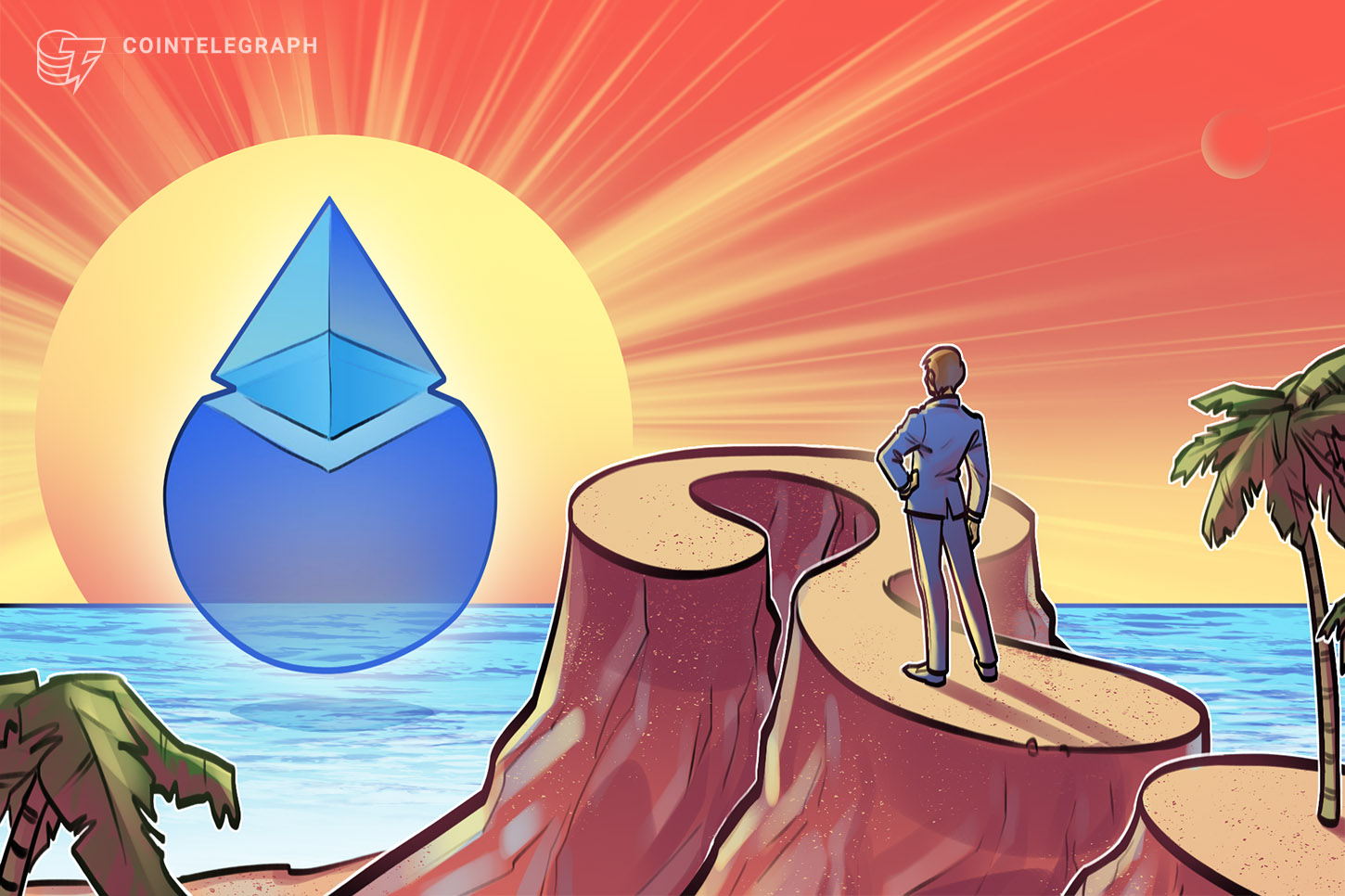
TIX, a decentralized settlement layer for the live-events industry, has emerged from stealth to apply DeFi lending and onchain infrastructure to transform ticketing. It has facilitated over $8 million in ticket sales and $2 million in venue financing through KYD Labs, a consumer-facing platform backed by a16z. TIX tokenizes tickets as real-world assets (RWAs), enabling venues to access upfront capital from multiple sources, artists to sell directly, and fans to benefit from lower fees and transparent resales. Despite competition, Ticketmaster itself has adopted blockchain, issuing nearly 100 million NFT tickets since 2022. Proponents argue that onchain ticketing reduces fraud, increases transparency, and improves control in secondary markets.

TIX, a settlement layer for the live-events industry, has emerged from stealth to apply decentralized finance (DeFi) lending and onchain settlement to a sector that has long functioned like a private credit market.

To date, the TIX network has facilitated over $8 million in ticket sales and generated approximately $2 million in venue financing. The activity has been conducted through KYD Labs, with TIX expected to launch on the Solana mainnet by mid-2026, the company told Cointelegraph.

TIX, led by Ticketmaster and Buildspace veterans, serves as the underlying settlement and financing layer for KYD Labs, a consumer-facing ticketing platform that raised $7 million in a funding round led by venture firm a16z.

While KYD Labs provides the interface used by venues and artists to sell tickets and manage events, TIX handles the onchain infrastructure, tokenizing tickets and enabling financing, settlement and repayment flows.

TIX aims to address what it describes as the live events industry’s credit-and-debt model, in which venues and promoters rely on upfront financing before any tickets are sold. The company does so by turning tickets into onchain real-world assets (RWAs).

In practice, the model is designed to allow venues to access upfront capital from multiple sources, enable artists to sell tickets directly and offer fans lower fees alongside more transparent resale policies.

Related: Securitize hires former PayPal exec as US tokenization gains traction

Ticketmaster takes blockchain technology seriously

While blockchain-based settlement layers are seeking to disrupt Ticketmaster’s dominance in the ticketing industry, the company itself has been experimenting with the technology for several years.

Ticketmaster has been working with blockchain technology since at least 2019 and chose the Flow blockchain in 2022 to support its non-fungible token (NFT)-based ticketing initiatives.

Since then, Ticketmaster has issued nearly 100 million NFT tickets, according to a report from TheStreet, which cited the continued integration of NFT technology across several apps as evidence of sustained adoption despite the waning hype since 2022.

Meanwhile, proponents of RWA technology argue it offers clear benefits for ticketing, including the ability to mint tickets as unique digital assets that reduce fraud and counterfeiting. Tokenization can also introduce greater transparency and control into secondary resale markets.

While NFTs and RWAs can overlap, they describe distinct concepts. NFTs refer to a token’s technical format, while RWAs describe the underlying asset or rights being represented. In ticketing, an RWA can be implemented using NFTs to tokenize access.

Related: Licensing-to-earn protocol turns intellectual property rights into RWAs

Crypto di tendenza

Letture associate

Mathematicians Refute Open AI's Claim of Proving Connes Rigidity Conjecture Within 24 Hours: 'AI Proved Every Sentence Correct, but They Are No Longer About the Original Conjecture'

Mathematician Refutes OpenAI's Claim of Disproving Connes Rigidity Conjecture in 24 Hours OpenAI claimed its next-generation AI model solved 10 world-class problems, including disproving the Connes Rigidity Conjecture. The next day, mathematician J. L. Nielsen from the University of Kansas published a paper refuting the AI's counterexample. Nielsen meticulously reviewed OpenAI's publicly released 37,000 lines of Lean 4 code, mapping each object back to its mathematical origin. He identified two independent failure paths in the AI's argument. He concluded that one of the two groups constructed by the AI does not satisfy the required conditions (specifically ICC and Kazhdan's property (T)) necessary to serve as a valid counterexample to the original conjecture. This means the AI may have successfully proven something about its constructed objects, but that statement is not equivalent to disproving the Connes Rigidity Conjecture itself. The incident highlights a crucial limitation of formal verification tools like Lean. While Lean's kernel can verify the logical correctness of a proof's steps, it cannot verify whether the formal statement being proven correctly corresponds to the intended mathematical conjecture. Human oversight remains essential to ensure the alignment between the formalized problem and the original research question. This case exemplifies what researchers call "successfully proving the wrong statement." The Connes Rigidity Conjecture, concerning the uniqueness of group von Neumann algebras under certain conditions, remains an open problem.

marsbit5 min fa

Mathematicians Refute Open AI's Claim of Proving Connes Rigidity Conjecture Within 24 Hours: 'AI Proved Every Sentence Correct, but They Are No Longer About the Original Conjecture'

marsbit5 min fa

When Crypto Assets Become Mortgage Collateral: The Triangular Dilemma of Regulation, Cost, and Tokenized Equity

When Crypto Assets Become Mortgage Collateral: The Trilemma of Regulation, Cost, and Tokenized Rights Better, in partnership with Coinbase, has launched a mortgage solution allowing borrowers to pledge Bitcoin or USDC as collateral. This facilitates two loans: a primary, Fannie Mae-compliant mortgage and a separate private loan for the down payment, secured by the crypto assets and a second lien on the property. The product targets asset-rich but cash-poor buyers, with high collateral requirements (250% for Bitcoin, 125% for USDC) and no margin calls. The initiative has drawn significant regulatory scrutiny. Seven U.S. Senators, led by Dick Durbin and Elizabeth Warren, sent a letter to the FHFA urging a halt, arguing the high collateral ratio itself acknowledges crypto's risk and that combined loan costs could be 1.5 percentage points higher, potentially burdening taxpayers. Despite criticism and Bitcoin's price volatility, Better's CEO Vishal Garg plans to expand support to tokenized equities (e.g., Tesla, SpaceX) and envisions using retirement accounts to help family members buy homes. A core challenge for tokenized assets is clarifying the legal rights conferred by holding such tokens. To reduce costs, Better partnered with Framework Ventures, aiming to lower capital expenses by over 100 basis points and offer sub-5% rates. While the company posted a loss in Q1 2025, it reports strong demand, with a waitlist representing ~$250M in potential loans. Garg remains committed to the model, viewing it as a key channel for integrating digital assets into the banking system.

marsbit15 min fa

When Crypto Assets Become Mortgage Collateral: The Triangular Dilemma of Regulation, Cost, and Tokenized Equity

marsbit15 min fa

Trading

Spot

Articoli Popolari

Come comprare T

Benvenuto in HTX.com! Abbiamo reso l'acquisto di Threshold Network Token (T) semplice e conveniente. Segui la nostra guida passo passo per intraprendere il tuo viaggio nel mondo delle criptovalute.Step 1: Crea il tuo Account HTXUsa la tua email o numero di telefono per registrarti il tuo account gratuito su HTX. Vivi un'esperienza facile e sblocca tutte le funzionalità,Crea il mio accountStep 2: Vai in Acquista crypto e seleziona il tuo metodo di pagamentoCarta di credito/debito: utilizza la tua Visa o Mastercard per acquistare immediatamente Threshold Network TokenT.Bilancio: Usa i fondi dal bilancio del tuo account HTX per fare trading senza problemi.Terze parti: abbiamo aggiunto metodi di pagamento molto utilizzati come Google Pay e Apple Pay per maggiore comodità.P2P: Fai trading direttamente con altri utenti HTX.Over-the-Counter (OTC): Offriamo servizi su misura e tassi di cambio competitivi per i trader.Step 3: Conserva Threshold Network Token (T)Dopo aver acquistato Threshold Network Token (T), conserva nel tuo account HTX. In alternativa, puoi inviare tramite trasferimento blockchain o scambiare per altre criptovalute.Step 4: Scambia Threshold Network Token (T)Scambia facilmente Threshold Network Token (T) nel mercato spot di HTX. Accedi al tuo account, seleziona la tua coppia di trading, esegui le tue operazioni e monitora in tempo reale. Offriamo un'esperienza user-friendly sia per chi ha appena iniziato che per i trader più esperti.

507 Totale visualizzazioniPubblicato il 2024.12.10Aggiornato il 2026.06.02

Come comprare T

Discussioni

Benvenuto nella Community HTX. Qui puoi rimanere informato sugli ultimi sviluppi della piattaforma e accedere ad approfondimenti esperti sul mercato. Le opinioni degli utenti sul prezzo di T T sono presentate come di seguito.

活动图片