Author: Bourbon
"The era of making money by buying anything with your eyes closed is truly over." The topic of conversation at friend gatherings has quietly shifted from previous years' discussions about buying property and speculating on stocks to "where else can we invest some money?"
In the second quarter of 2025, residents' new deposits once again exceeded one trillion yuan. In stark contrast, the seven-day annualized return rate of certain money market funds fell below 2%, and the returns of most bank wealth management products dropped to below 3%. Increased stock market volatility, with轮流回调 of the "Mao Index" and "Ning Portfolio," has also given many investors a roller-coaster-like experience.
A growing consensus is clear: High-quality assets for steady appreciation are becoming scarce.
At the same time, on social media, the topic #YoungPeopleStartHoardingGoldBars has garnered over a billion views. On Xiaohongshu, posts by ordinary users sharing their experiences of "saving gold beans" have received tens of thousands of likes.
In recent years, gold has强势 returned to the spotlight. In live streams, hosts for major gold jewelry brands rapidly promote their products, and more consumers are purchasing gold as a painless form of "savings-type consumption"—simultaneously achieving the pleasure of consumption and the effect of asset preservation, with the option to liquidate when needed.
On the investment side, a gold price surge is underway. Yesterday, the international gold price stood at $4,400 per ounce, having soared from just over $2,600 per ounce at the beginning of 2025. The domestic gold price in China also broke through the 900-1,000 yuan per gram mark, rising over 60% from 600 yuan per gram. Particularly noteworthy is that the market set over 30 historical highs in 2024, and after entering 2025, the number of record-breaking instances has exceeded 50. As the gold price climbs, it continually pushes the topic into news headlines and social media hot searches.
"When the domestic gold price was 300 yuan per gram, I thought it was expensive and didn't buy. At 600 yuan, I was sure it had peaked. Now it's 900 yuan—is there anything more frustrating than this?" Zhang Chen, a 30-year-old internet product manager, joked self-deprecatingly at a friend's gathering.
Now, Zhang Chen is seriously considering a question: "How should one actually invest in gold?"
01 In an Uncertain World, Why Can We Still Trust Gold?
The level of gold prices often correlates positively with the "liveliness" of international news. Just like recently, the prospects for Russia-Ukraine negotiations remain unclear, and the US is again saber-rattling towards Venezuela. According to World Gold Council data, global central banks continued to buy gold in 2025. Paraphrasing a line from a skit: "The world is quite a mess, full of intrigue and conflict every day. Looking at the world's winds and clouds, (gold) is the only scenery that looks good here."
Behind this is a consensus that transcends eras: in times of uncertainty, gold is the most reliable certificate of wealth. As the ancient Chinese saying goes, "Antiques in prosperous times, gold in troubled times." When the world faces challenges and new uncertainties, the prices of assets like antiques and jade, which rely on specific cultural contexts and a stable society, fall accordingly, while gold's safe-haven属性 once again shows its edge.
Looking back at human civilization, gold's role has been enduring, universal, and multifaceted. Gold possesses the dual stability of physical form and value recognition, coupled with strong liquidity—it can be cashed out at any time. This has made it the world's公认 "preservation artifact" since ancient times. The ancient Egyptians called gold "the touchable sun." From the gold masks of the Mesopotamian civilization to the gold standard of the Bretton Woods system, gold has always been the ultimate store of value and anchor of credit.
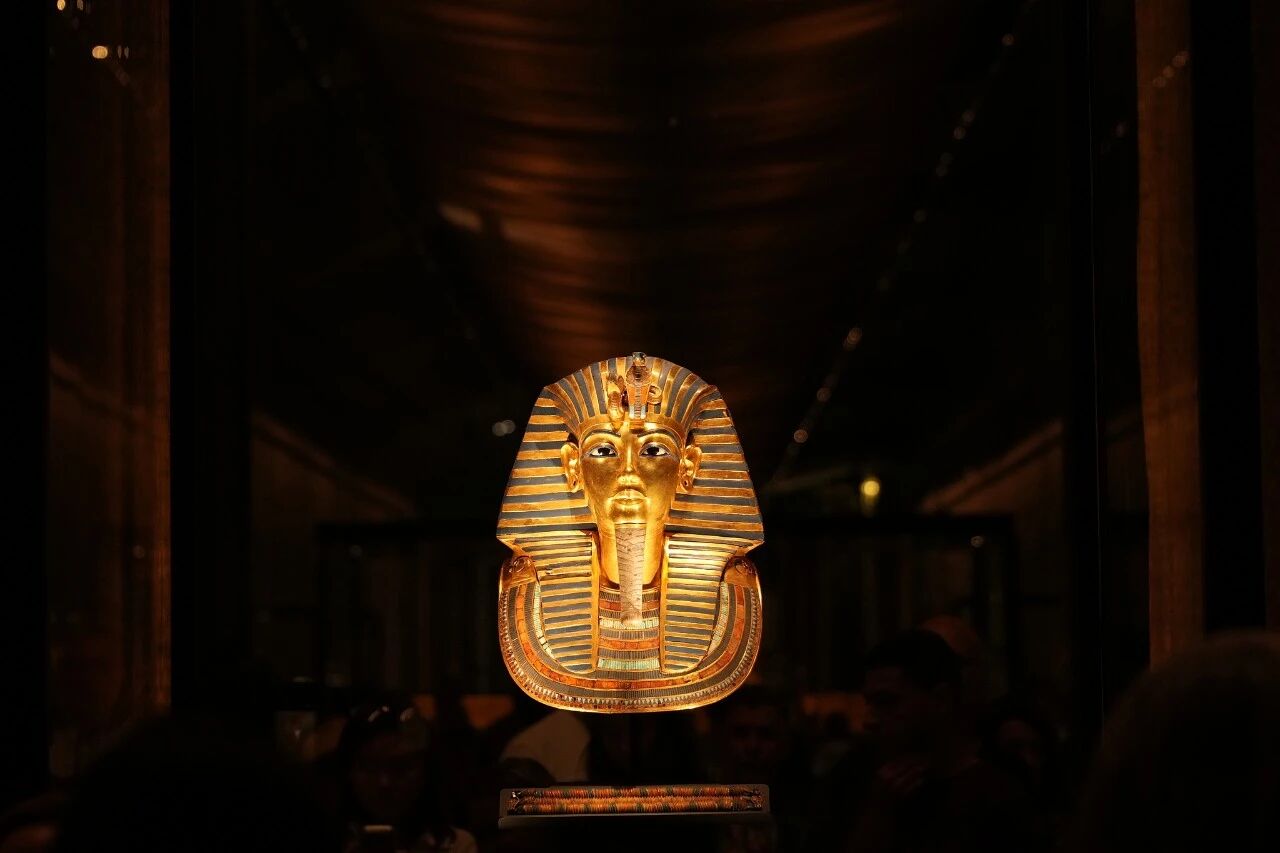
Ancient Egypt, Tutankhamun's Gold Mask
Investment targets like stocks, houses, and wealth management products often rise and fall together. But gold is like a "lone wolf"; its movements are often different from theirs.
History is the most powerful proof. During the market turmoil triggered by the 2020 pandemic, US stocks experienced multiple circuit breakers, oil futures fell into negative territory, and the global economy pressed pause. Gold demonstrated its characteristics, starting from around $1,500 at the beginning of the year and rising to a then-historic high of over $2,000 by August of the same year, becoming one of the best-performing mainstream assets that year. A more recent example is 2022. Facing the strongest global inflation and geopolitical conflicts in decades, traditional stock-bond portfolios suffered double losses, with the S&P 500 index falling nearly 20%, while gold once again held its ground, maintaining relatively resilient performance.
Gold, as a monetary asset that does not rely on the credit of any government or institution, naturally becomes the ultimate safe-haven choice凭借 its globally recognized independence, liquidity, and value storage function. This safe-haven demand erupts集中 when uncertainty intensifies, driving up gold prices and thereby hedging, to some extent, the losses in other assets within an investment portfolio.
Besides hedging risks and serving as a safe-haven asset, gold also has monetary properties. For thousands of years, it has been the ultimate "anchor" behind money. This imprint is deeply刻在 everyone's heart. Although it does not generate interest, it appreciates stably over the long term.
It's important to know that the money printing press is always working; the purchasing power of cash is悄悄 shrinking. Factories can continuously produce mobile phones and clothes, but the amount of gold underground is limited—it cannot be速成. Therefore, gold is one of the important tools to help ordinary people's wealth outpace the speed of money printing and protect purchasing power. It protects not the number on the account statement, but how many real things that number can exchange for.
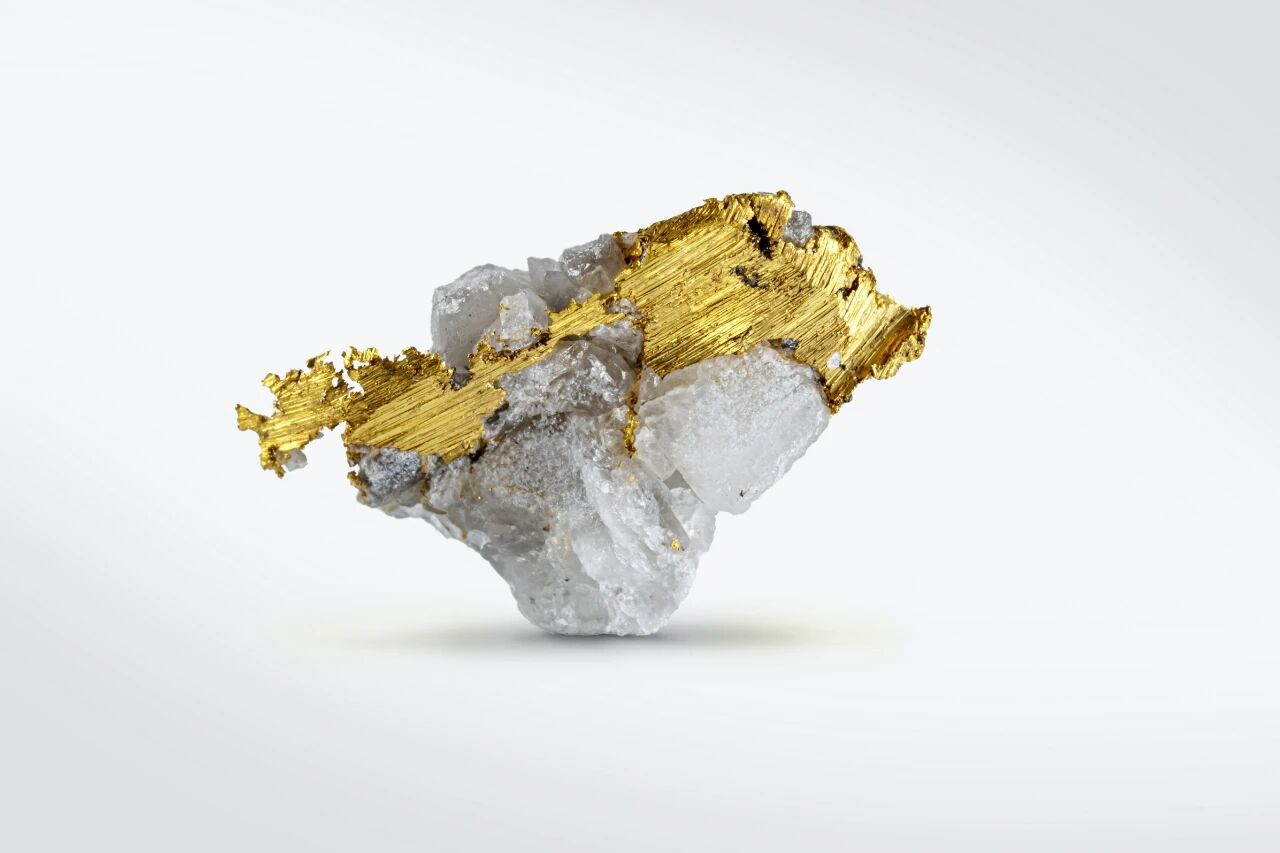
Gold's reserves and mining speed determine that its存量 can hardly grow rapidly
Over the past 20 years, calculated in RMB, the annualized increase in the gold price has exceeded 10%, not only outperforming the Shanghai Composite Index but also yielding higher returns than稳健 investments like ten-year government bonds.
Now it's not just ordinary people buying; major investment institutions and central banks are also continuously and大量 hoarding gold. Behind this is the major trend of逆全球化 and de-dollarization. Gold is becoming the most solid底牌 for wealth accumulation.
02 From Ballast to Engine, Asset Allocation Also Has a "Golden" Ratio
In today's 2025, as global central banks continue to increase their gold reserves and institutional investors重新审视 their portfolios, gold's role is undergoing a silent升华: from an ancient asset for value preservation to an indispensable strategic foundational holding in modern investment portfolios.
In personal, family, and even institutional investments, gold is gradually evolving from a tactical short-term role to a long-term strategic asset, playing the role of ballast. If an asset portfolio is a football team, then gold investment is like the defensive midfielder in the team, helping you secure the defense, organize the backline, and化解 the opponent's attacks (systemic market risks). When transitioning from defense to offense, it becomes the first passing point, linking up the entire team and bringing stable returns. Its presence makes the entire team's formation more stable and its play more从容, better able to cope with various unexpected situations.
And when, in addition to other product investments, you either buy a certain share of accumulated gold, allocate a portion to gold-themed funds during定投, or habitually buy one or two small gold bars each year, you are practicing the allocation concept of embedding gold into a diversified investment portfolio, achieving risk hedging, asset preservation, and long-term appreciation effects. Now, there is a fashionable term to describe this concept of配置 gold based on long-termism—"Gold+".
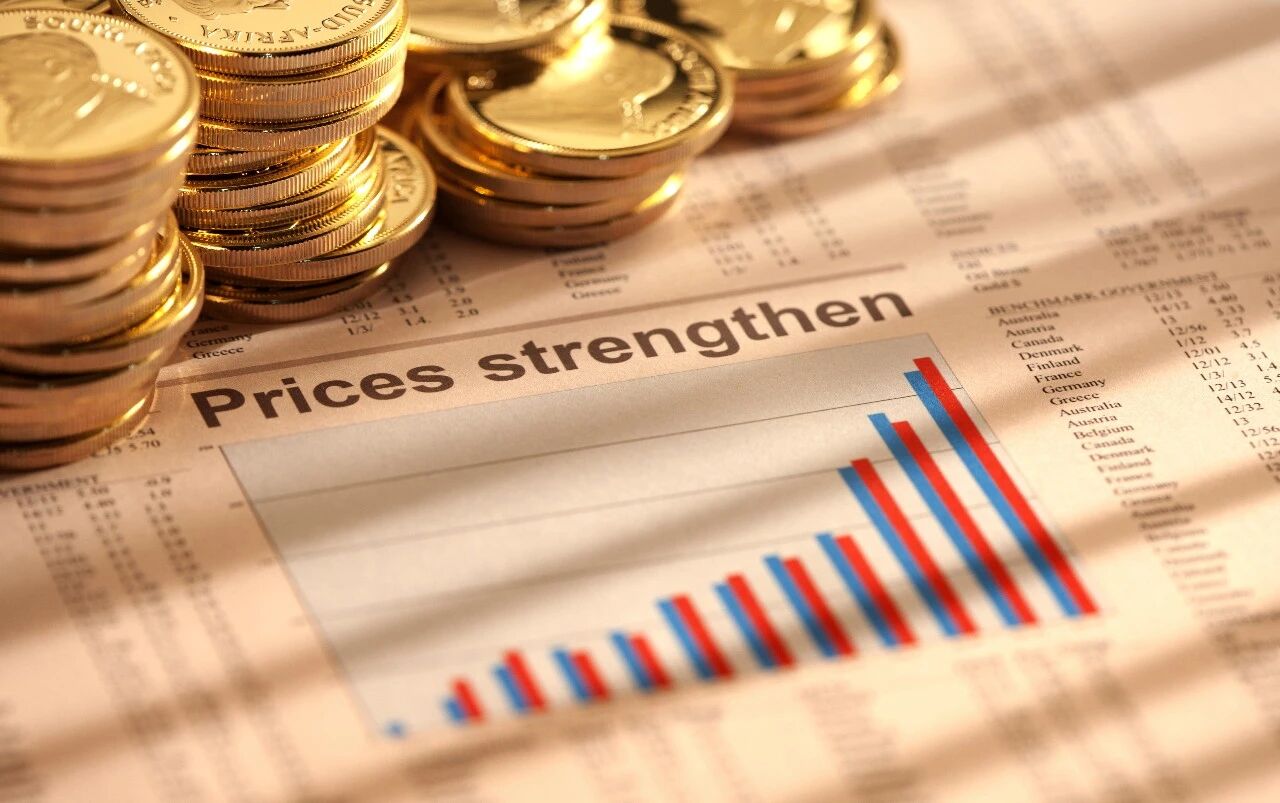
Embedding gold into a diversified investment portfolio can hedge risks, preserve assets, and seek long-term appreciation
Li Wei, a partner at a private equity fund in Shanghai, is a loyal practitioner of this concept. After all, "the market has taught me a lesson."
Li Wei clearly remembers the market震荡 of 2022: "There was no gold in my portfolio at that time. When the A-share market corrected deeply, even the defensive effect of bonds seemed inadequate, and the overall drawdown kept me up at night." After that experience, she深入研究 the data and found that the correlation coefficient between gold and core domestic assets like the CSI 300 has long been close to zero.
As a typical non-credit asset, gold's volatility logic does not rely on corporate profits or interest rates and has low correlation with other investment products. We often say not to put all your eggs in one basket, but gold and other "eggs" are not only not in the same basket, they're not even on the same table. This means that when stocks and bonds "fail," gold can often provide a rare, non-correlated source of returns, becoming the true ballast in the portfolio. Consequently, Li Wei began to allocate gold as a long-term fixed配置.
"The question is not whether to buy gold, but how to add it." Now, Li Wei shows clients screenshots of her account's allocation: 60% bond products, 30% equity funds, 10% gold ETF.
"Many people treat gold as a tool, only buying high in panic and selling hastily during volatility," Li Wei summarized. "But actually, gold is more like the vitamin pill you take every day. It doesn't cure acute illnesses, but in the long run, it helps strengthen your constitution (the portfolio's risk resistance), giving you more confidence to cope with life's ups and downs (market fluctuations)."
Gold investment has low correlation with other investment products, relatively stable value, and risk-resistant characteristics
If you imagine your family's investment allocation as a simple "half stocks, half bonds" piggy bank, over the past twenty years, simply adding an extra 10% gold to it would mean this piggy bank wouldn't摔得 so hard during the worst行情, and in the long run, the returns would be more stable. Over the past 20 years, the RMB-denominated gold price has had an average annual return of over 10%, which is quite impressive, but its even more valuable quality is: often when everyone is most panicked, it can反而 hold steady, or even rise悄悄 a bit, like taking a calming pill.
A simple comparison can illustrate: If 10 years ago, in December 2015, 10,000 yuan was used to purchase a Shanghai Composite Index ETF tracking Shanghai A-shares, after 10 years of ups and downs, the current holding value would be approximately 8,500 yuan. However, if we had allocated 10% of that amount to a gold ETF back then, with the remaining 90% still in the Shanghai Composite Index ETF, the total value now would be around 12,000 yuan.
As an ordinary person, how should one invest in gold? The principle is understood, but when it comes to doing it yourself, it becomes difficult. "I also know I should add some gold, but how much is appropriate? Can I buy it at such a high price now? What if I buy wrong?" It's like knowing you need a balanced diet for health, but facing琳琅满目的 ingredients and complex recipes, you instantly lose the desire to cook.
There are few people like Li Wei who have investment experience and clear concepts. More people lack understanding and grasp of gold investment products and timing, hence they fear直接投资 gold.
So, is there a one-stop "gold investment nutrition package"? It's important to know that gold investment products today are十分多元. You can choose to keep gold bars in your home safe, or opt for modern forms of physical gold, such as banks' accumulated gold, purchasing gold权益 regularly or sporadically in grams or even smaller units. This has a low threshold, a strong sense of accumulation, and combines savings and investment attributes. You can also directly buy and sell gold ETFs that track the domestic gold price through securities accounts, bank accounts, or even internet platforms. They trade as conveniently as stocks, have good liquidity, and are efficient tools for tracking gold price trends. Additionally, there are more黄金主题 funds with various structures and gold-linked wealth management products.
However, for most investors seeking convenience and efficiency, researching these products one by one and自行 deciding on allocation ratios and买卖 timing is still a time-consuming and effort-intensive professional task. What ordinary people need is perhaps not more options, but a professionally judged, pre-optimized, and combined answer.
03 Professionalism Replaces Going It Alone, A New Way to Invest in Gold
Hence, "Gold+" type investment portfolio products have begun to appear. They are like carefully proportioned investment portfolio meals, packaging professional asset allocation logic into financial products readily accessible to ordinary investors.
Wang Tao is a typical case. "I'm an investment novice. I neither have the time to research the market, nor do I want to make operational mistakes." As a busy employee in a large tech company, in early 2024, Wang Tao purchased a multi-asset portfolio wealth management product配置 with 10% gold, recommended by a bank理财经理.
The "Gold+" investment product Wang Tao purchased is issued by professional financial institutions, a multi-asset组合 product that allocates more than 5% to gold in its performance benchmark or asset allocation strategy. It does not require the investor to answer the difficult question of "should I buy gold now?" Instead, the product manager, based on the established investment objectives and strategies, systematically搭配 gold with other assets (such as stocks, bonds, etc.), turning the complex configuration project into a one-click purchase solution. It makes strategic gold allocation as simple and direct as choosing a mature wealth management plan.
"I don't need to constantly watch the gold行情, nor do I need to understand the specific stock-bond allocation," Wang Tao said. "The professional institution has already done the configuration for me. I just need to know that there is gold, this stabilizer, in my investment portfolio. After more than a year, my comprehensive return has exceeded 10%, and I see that some 'Gold+' products have even achieved a maximum return rate of over 40% in two years."
Wang Tao's experience shows that "Gold+" not only brings returns but also a cognitive shift. "I gradually discovered that for an asset like gold,盯着 its short-term fluctuations over a year or two doesn't mean much. Only by holding onto it can its strategic foundational role be highlighted." Now, Wang Tao no longer frequently checks short-term volatility but focuses more on the long-term asset allocation logic itself.
Long-term holding better reflects the value of gold investment
Of course,认同 the value of gold does not mean one should invest all funds into it. A single-asset "All in" strategy, regardless of the标的, often comes with huge volatility risk and psychological pressure. This is equivalent to putting all eggs back into the same basket.
Many investors interested in gold often get stuck on several practical problems: not knowing what proportion is appropriate to allocate, unable to把握准 the timing of purchase, and难以克服 the emotional波动 during price rises and falls. "Gold+" products can largely solve these problems. They are somewhat like an "asset allocation personal trainer," helping you standardize complex decisions through the product's established strategies (such as clear gold allocation ratios, professional macro research adjustment mechanisms, and structures that encourage long-term holding). At the same time, ordinary investors often have issues with discipline—their hearts race when the price drops a bit, and they want to cash out quickly when it rises a bit. In the movie "Goodbye Mr. Loser," the character Dachun, after taking Xia Luo's advice, bought a house early but sold it too soon—a dramatized example of poor investment discipline. "Gold+" type products can also discipline摇摆的情绪, allowing ordinary people to relatively稳健地 execute a long-term gold allocation plan.
According to World Gold Council statistics, from 2021 to the first half of 2025, the number of domestic products clearly using the "Gold+" strategy grew from the initial 1 to 24. As of June 2025, 45% of China's 515 FOF products held gold. "Gold+" is no longer a marginal attempt but is gradually becoming a普遍共识 in the asset management industry.
In short,这类 products have accomplished a clever conversion: they have integrated professional asset allocation knowledge, macro research logic, and the discipline required to resist human volatility into a clear product form. They allow the strategic value of gold as "ballast" to emerge from abstract concepts and complex data, becoming a specific, executable, and holdable plan within the investor's account.
The value of gold investment lies both in its stability and its diverse forms; everyone can find a gold investment method that suits them. In today's era, it seems each of us can consider how to seize the "dividends of the times" through gold. Among the various gold investment varieties, at least at the operational level, "Gold+" is undoubtedly one of the most user-friendly products for ordinary people.
True wealth management is not about finding a shortcut to get rich overnight, but about building a resilient, long-distance running mechanism that can accompany you through cycles.