Germany’s banking giants bring crypto to 80M customers – Why it matters

ambcryptoPubblicato 2026-07-05Pubblicato ultima volta 2026-07-05

Introduzione

Germany's two largest banking networks, Sparkassen and Volksbanken Raiffeisenbanken, are integrating cryptocurrency trading directly into their banking apps, potentially reaching around 80 million customers. This marks a major shift as these groups previously deemed crypto too risky. They are building their own regulated infrastructure, such as the BaFin-approved "meinKrypto" platform, rather than partnering with external exchanges. While this integration brings crypto to a vast retail audience within a trusted framework, critics warn it could lead inexperienced investors to underestimate the high volatility and risks. Despite a recent decline in retail crypto trading volume, Germany remains a top-ten market. The move signifies a significant step in merging traditional banking with digital assets in Europe.

Germany’s two largest banking networks are undergoing a major shift by integrating cryptocurrency trading directly into their banking apps. This includes Sparkassen savings banks and the cooperative Volksbanken Raiffeisenbanken.

Through this initiative, the banking network will enable millions of regular retail customers to purchase and sell digital assets without the need for third-party cryptocurrency exchanges.

Good news for Germany’s crypto ecosystem?

These organizations collectively cater to about 80 million clients across Germany, making it one of Europe’s largest integrations of crypto into traditional banking.

For its part, this shift is noteworthy because, only four years ago, both banking groups had written off cryptocurrencies as being too risky. Now, they are creating their own regulated cryptocurrency infrastructure rather than collaborating with outside exchanges.

However, through DZ Bank, the cooperative banks have already introduced the meinKrypto platform. For those unaware, “meinKrypto” is a platform that allows local Volksbanken and Raiffeisenbanken to deliver Bitcoin [BTC] and Ethereum [ETH] directly to millions of retail savers.

Approved by BaFin, Germany’s financial regulator, in December 2025, the platform runs under the European Union’s Markets in Crypto-Assets (MiCA) framework. Following the approval announcement on the 14th of January, ‘meinKrypto’ officially went live.

At the same time, Boerse Stuttgart Digital offers crypto custody, guaranteeing that asset storage and trading continue to be governed by German regulations. Meanwhile, DekaBank is getting ready to launch a comparable service for the nation’s savings banks.

Challenges remain!

Needless to say, the initiative has drawn criticism. This is because only a few percent of Germans who own cryptocurrency trust their main banks far more than independent cryptocurrency platforms.

According to Co-Pierre Georg, professor at the Frankfurt School of Finance & Management, novice clients may underestimate the high volatility and potential for total losses linked to cryptocurrencies due to the legitimacy of well-known banks.

Georg added,

It is concerning that the floodgates to the cryptocurrency market are now being opened by savings and cooperative banks.

Yet despite this, Germany remains one of the top ten countries in terms of retail volume in Q1 2026. The year-over-year comparison shows a 20% decline from Q1 2025, when it was $31.7 billion, to Q1 2026, when it was $25.3 billion.
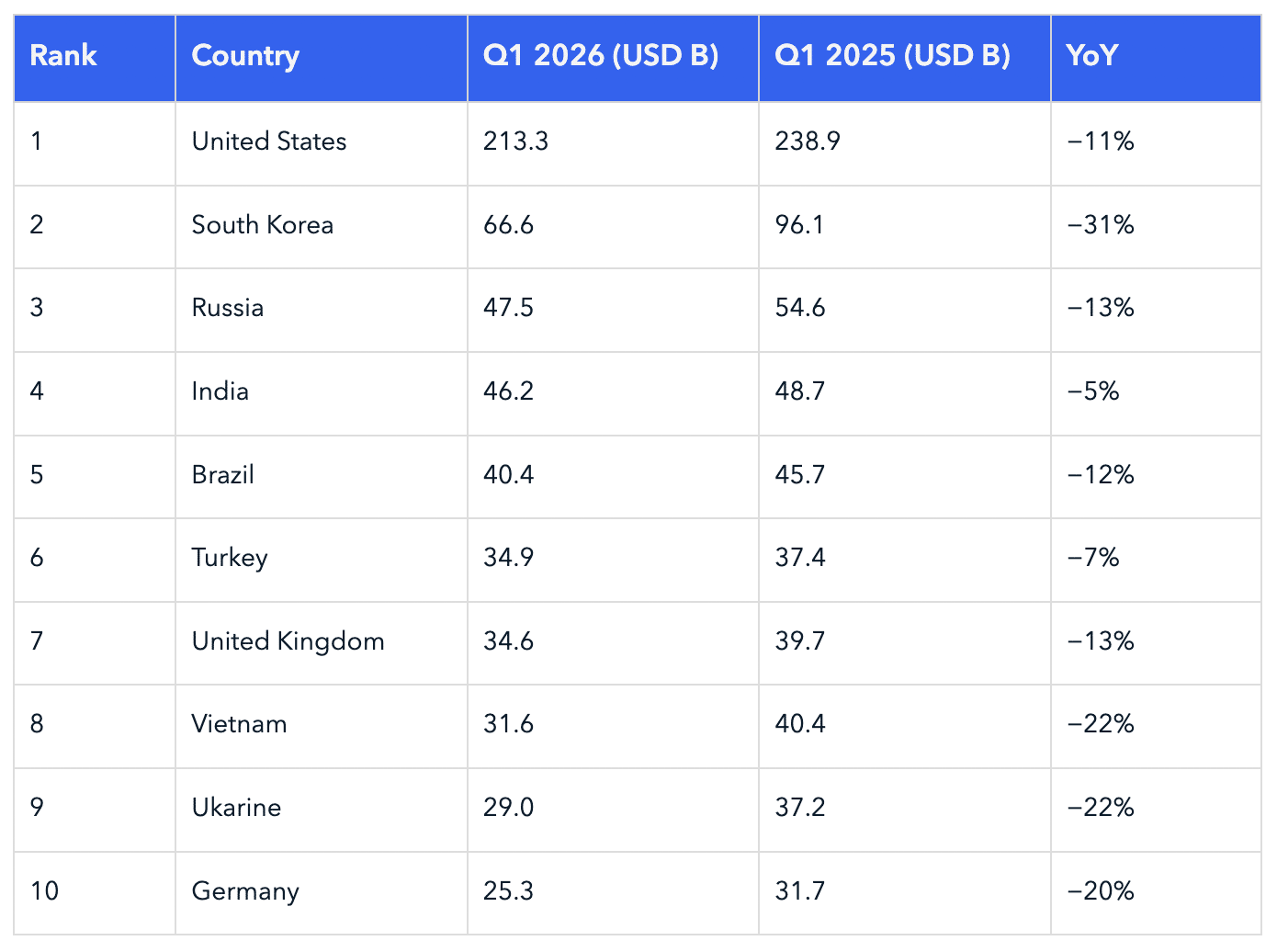
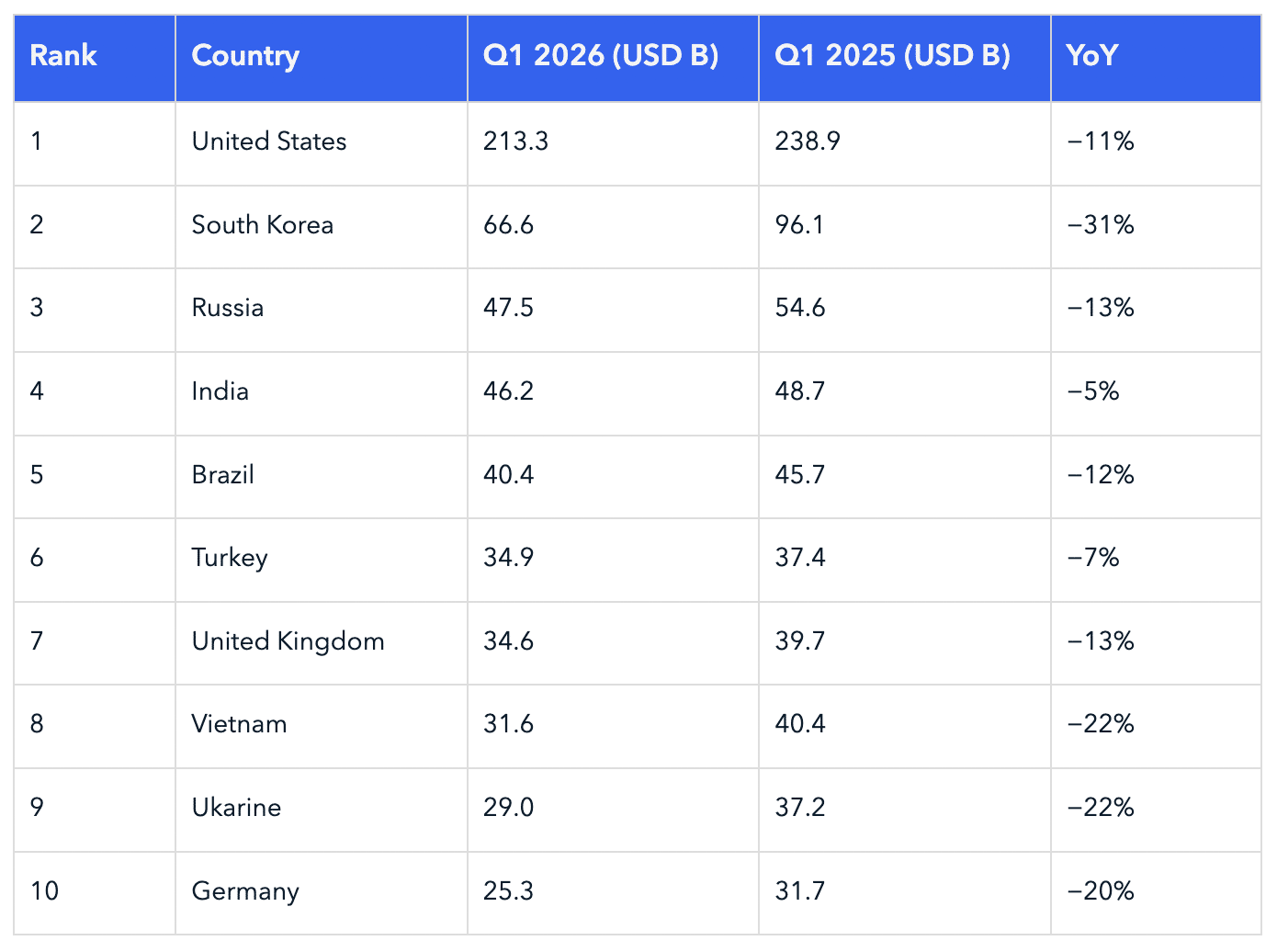
Source: TRM Labs

Final Summary

  • Germany’s two biggest banking networks are integrating cryptocurrency trading directly into their banking apps.
  • Roughly 25% of Germans who currently own cryptocurrency trust their main banks more than independent cryptocurrency platforms.


Domande pertinenti

QWhich two major German banking networks are integrating cryptocurrency trading into their apps?

AGermany's two largest banking networks, the Sparkassen savings banks and the cooperative Volksbanken Raiffeisenbanken, are integrating cryptocurrency trading directly into their banking apps.

QWhat is the name of the cryptocurrency platform introduced by the cooperative banks through DZ Bank?

AThe cooperative banks have introduced the 'meinKrypto' platform through DZ Bank, which allows local banks to deliver Bitcoin (BTC) and Ethereum (ETH) directly to retail savers.

QUnder which regulatory framework does the 'meinKrypto' platform operate?

AThe 'meinKrypto' platform operates under the European Union's Markets in Crypto-Assets (MiCA) framework and was approved by Germany's financial regulator, BaFin, in December 2025.

QAccording to Professor Co-Pierre Georg, what is a potential risk for novice clients using bank-integrated crypto services?

AProfessor Co-Pierre Georg suggests that novice clients may underestimate the high volatility and potential for total losses linked to cryptocurrencies due to the perceived legitimacy of well-known banks.

QWhat was the reported year-over-year change in Germany's retail cryptocurrency volume from Q1 2025 to Q1 2026?

AGermany's retail cryptocurrency volume declined by 20% year-over-year, from $31.7 billion in Q1 2025 to $25.3 billion in Q1 2026.

Letture associate

Tiger Research: Three Strategies for Financial Institutions to Keep Up with the Tokenization Wave

Tiger Research's in-depth report analyzes the strategic choices for financial institutions entering the rapidly growing Real-World Asset (RWA) tokenization market. With the market projected to be worth $25-36 billion and a lack of complete regulatory frameworks in many jurisdictions, institutions face three options: waiting for domestic legislation, using regulatory sandboxes for limited experiments, or moving first into established overseas markets to gain a competitive edge. Tokenization is not magic; it requires meticulous preparation. Before entry, institutions must strategically plan across six core areas: choosing a jurisdiction, obtaining necessary licenses, defining the asset type, targeting the appropriate investor base, selecting settlement currencies, and designing operational requirements like custody and governance. The report outlines two main operational paths. The first is a direct jurisdictional path, establishing a legal presence in mature markets like Hong Kong, Singapore, or the U.S., often leveraging local licensed platforms to accelerate market entry. The second is a chain-native path, using platforms like Ondo or Plume that are built with regulatory compliance embedded, allowing for faster, more flexible market access without being tied to a specific jurisdiction. Ultimately, the report advises against waiting for perfect regulation. The preparation process can take 6-12 months and requires thorough legal review. Using the example of a mid-sized securities firm, it details steps from evaluating existing entities to final execution. The core message is that accumulating real-world operational experience is paramount, as the market is moving ahead and will not wait for latecomers.

Foresight News43 min fa

Tiger Research: Three Strategies for Financial Institutions to Keep Up with the Tokenization Wave

Foresight News43 min fa

Unitree's IPO Frenzy: The Real Mystery is How It Will Spend the 42 Billion Raised

Unitree, a Chinese robotics company, is set for a public listing after its IPO registration was approved by regulators. The company, which started with quadruped robots and has expanded into humanoids, plans to raise approximately 4.2 billion yuan through its offering. The article traces Unitree's rapid growth from its founding in 2016 to its current status. It highlights key milestones like the 2021 CCTV Spring Festival Gala performance, the 2023 launch of its affordable Go2 robot dog and the H1 humanoid robot, and a series of subsequent product launches. By 2025, the company reported revenue of 1.71 billion yuan, profitability, and sales exceeding 5,500 humanoid robots. As the first publicly-listed humanoid robot company on China's STAR Market, Unitree's main challenges are sustaining growth and deploying its newly raised capital effectively. The humanoid robot sector in China is crowded, with over 140 companies. Competitors include UBTech (focusing on industrial and consumer markets), Fourier, and international players like Tesla Optimus and 1X NEO. The article outlines three critical challenges for Unitree: establishing a strong second product line beyond its quadruped robots, maintaining its price advantage while ensuring quality, and successfully advancing its embodied AI capabilities through partnerships like the one with NVIDIA for the H2 Plus platform. Unitree's likely strategy involves a "developer tools + industry benchmarks" approach: using low-cost models like the R1 and G1 to build developer adoption and volume, leveraging high-end platforms for AI training, and securing pilot projects in sectors like logistics and manufacturing to build case studies. The company's future success hinges on converting its current momentum in shipments and pilot programs into sustainable, large-scale commercial contracts as the broader market evolves.

marsbit2 h fa

Unitree's IPO Frenzy: The Real Mystery is How It Will Spend the 42 Billion Raised

marsbit2 h fa

Trading

Spot
活动图片