FTX Lawyers Pay $54M In Settlement Over Services Rendered To Exchange – Details

bitcoinistPubblicato 2026-05-25Pubblicato ultima volta 2026-05-25

Introduzione

U.S. law firm Fenwick & West has agreed to pay $54 million to settle claims from FTX customers who alleged the firm facilitated the crypto exchange's fraud. The settlement, pending court approval, resolves accusations that the lawyers helped craft regulatory and operational structures tied to the misuse of customer funds. Fenwick denied any knowledge of FTX's illicit activities. This marks the largest settlement in a second wave of FTX-related class actions, following the exchange's 2022 collapse and the conviction of founder Sam Bankman-Fried. The FTX bankruptcy estate has meanwhile distributed billions to reimburse creditors.

In a noteworthy development, US law firm Fenwick & West has agreed to pay $54 million to settle claims arising from its legal services for the defunct crypto exchange FTX. The proposed settlement, filed in federal court in Miami on Friday, resolves allegations from FTX customers who accused the Silicon Valley-based firm of facilitating misconduct tied to one of the largest financial frauds in US history.

Fenwick Denies Knowledge Of FTX Illicit Activities Despite Settlement

According to court filings as reported by Reuters, Fenwick & West served as a lead outside counsel for FTX during the exchange’s rapid expansion into a global crypto trading platform. Plaintiffs in the class action lawsuit alleged the firm “helped to craft and implement strategies that facilitated FTX’s fraud,” accusing the lawyers of assisting with regulatory and operational structures later tied to the misuse of customer funds.

The proposed settlement agreement still requires approval from US District Judge K. Michael Moore in Miami. Attorneys representing FTX customers, including prominent litigator David Boies, argued the deal was reasonable and would prevent prolonged and costly litigation.

However, Fenwick rejected allegations that it knowingly participated in fraudulent conduct. In a public statement, the law firm said it “was not aware of the fraud at FTX,” adding that it stood by the integrity of its legal work. The $54 million agreement marks the largest settlement in a second wave of FTX-related class action resolutions.

Other settlements include an $11.75 million payment from former FTX auditor Prager Metis and a $420,000 settlement involving former Miami Heat player Udonis Haslem, who promoted the exchange.

The Journey So Far

FTX collapsed in November 2022 after revelations that an estimated $11- $13 billion in customer funds had allegedly been diverted to its sister trading firm, Alameda Research. The exchange’s bankruptcy triggered widespread panic across the digital asset market and erased $200 billion in global crypto market cap.

In 2024, founder Sam Bankman-Fried was convicted on fraud and conspiracy charges and sentenced to 25 years in prison. Although he pleaded not guilty and has since appealed the conviction, claiming the initial trial was unfairly prejudiced against him.

Meanwhile, the FTX Recovery Trust has continued efforts to reimburse affected creditors under the company’s Chapter 11 restructuring process. In March 2026, the estate announced a fourth distribution of approximately $2.2 billion, bringing cumulative repayments to eligible claimants close to $10 billion. Several customer classes, including many US-based users, have reportedly reached full or near-full recovery levels under the court-approved repayment plan.

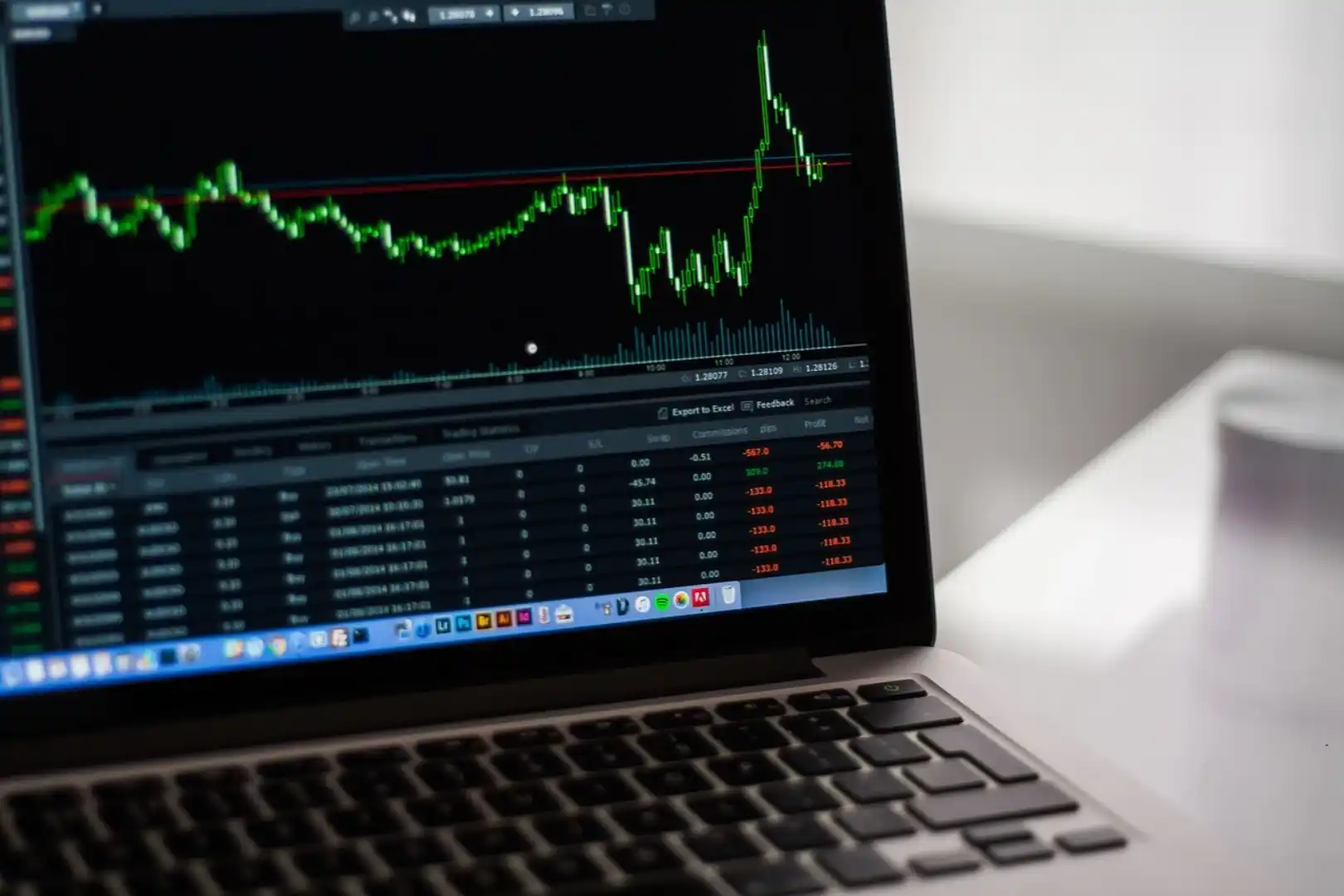
Total crypto market cap valued at $2.55 trillion on the daily chart | Source: TOTAL chart on Tradingview.com

Domande pertinenti

QWhich law firm agreed to pay $54 million to settle claims related to its services for FTX?

AThe US law firm Fenwick & West agreed to pay $54 million to settle the claims.

QWhat were the allegations against Fenwick & West in the class action lawsuit by FTX customers?

AThe plaintiffs alleged that Fenwick & West helped to craft and implement strategies that facilitated FTX's fraud, assisting with regulatory and operational structures tied to the misuse of customer funds.

QHow did Fenwick & West respond to the allegations of knowingly participating in FTX's fraud?

AFenwick & West rejected the allegations, stating in a public statement that it was not aware of the fraud at FTX and stood by the integrity of its legal work.

QWhat was the fate of FTX founder Sam Bankman-Fried as mentioned in the article?

ASam Bankman-Fried was convicted on fraud and conspiracy charges in 2024 and sentenced to 25 years in prison. He pleaded not guilty and has appealed the conviction.

QWhat is the reported cumulative repayment amount to eligible claimants from the FTX Recovery Trust as of the article's information?

AAs of the article's information, cumulative repayments to eligible claimants were close to $10 billion, following a fourth distribution of approximately $2.2 billion announced in March 2026.

Letture associate

SpaceX, OpenAI, Anthropic: The Three AI Giants Racing for IPO, Which One Is Worth Betting On?

SpaceX, OpenAI, and Anthropic are poised for historic IPOs within weeks, potentially raising a combined $180 billion—a sum exceeding the entire internet bubble's fundraising. The hosts of the Limitless Podcast argue this isn't just individual company financing but an unprecedented capital concentration for AI infrastructure, driven by an insatiable need for compute, data centers, power, and chips. SpaceX's IPO is notable for reportedly changing market index rules to allow faster inclusion, potentially funneling trillions in passive retirement funds into its stock, despite its unproven space-based data center business model. In contrast, Anthropic demonstrates explosive growth, with ARR reportedly hitting $45 billion and approaching profitability, fueled by strong enterprise adoption of products like Claude Code. Google's separate $80 billion raise highlights the immense capital pressure, even for giants. The discussion acknowledges bubble risks but leans optimistic. The hosts contend the massive spending is building essential physical infrastructure for the next technological era. A key bottleneck isn't capital but the real-world limits of chip manufacturing and construction speed. As long as demand for AI compute outstrips supply, this investment cycle represents a foundational build-out rather than a purely financial bubble. All three companies are seen as foundational bets on the future, with Anthropic often cited as the most immediately compelling due to its proven revenue trajectory.

marsbit1 h fa

SpaceX, OpenAI, Anthropic: The Three AI Giants Racing for IPO, Which One Is Worth Betting On?

marsbit1 h fa

From 'Old Guys' to 'New Favorites': How AI Is Revaluing Old Infrastructure from Dell to Nokia?

From "Vintage Tech" to "New AI Darlings": How AI Revalues Old Infrastructure One year ago, tech giants like Dell, Nokia, Cisco, and Western Data were seen as slow-growth, low-valuation stories, far from the AI spotlight dominated by players like Nvidia. Now, these legacy tech stocks are gaining market attention, sparking debate on whether this is genuine industry revaluation or a temporary narrative. As AI moves from model parameters to real-world data centers, the market is recognizing companies with proven delivery and infrastructure capabilities. This shift marks a change in the AI investment thesis: from pure model and GPU focus to the complex systems engineering required for deployment. Companies like Dell, HPE, and Corning are being revalued not for being "sexy" AI innovators, but for their decades of accumulated expertise in supply chains, enterprise delivery, and infrastructure—assets that have become critical in the AI buildout phase. The revaluation is unfolding across three key infrastructure lines: 1. **Servers & System Integration:** Dell and HPE are emerging as crucial system integrators or "general contractors" for AI data centers, translating GPU orders into complete, deployable server racks integrated with power, cooling, and networking. 2. **Networking & Connectivity:** AI's scale demands robust high-speed connections. Corning (fiber optics), Nokia (AI-RAN, 6G), and Cisco (data center switches) are gaining importance for enabling efficient data transfer within and between AI clusters. 3. **Storage:** Beyond high-speed memory (HBM/DRAM), the AI data explosion is driving demand for high-capacity hard drives (HDDs) from companies like Western Digital and Seagate to handle training data, logs, and cold storage cost-effectively. For this revaluation to be substantive and not just a narrative, three criteria are key: 1) Concrete AI-related order and revenue growth (e.g., Dell's AI server sales), 2) Upward revisions to company financial guidance, and 3) Sustainable improvements in profit quality, not just top-line revenue spikes. In essence, AI's transition to a real construction phase is re-pricing "old assets" against "new demand." The opportunity, however, is selective. Only those legacy firms that are demonstrably integrated into the capital expenditure chains of data center and enterprise AI deployment are likely to experience a true "logic re-rating" rather than just a temporary valuation bounce.

marsbit1 h fa

From 'Old Guys' to 'New Favorites': How AI Is Revaluing Old Infrastructure from Dell to Nokia?

marsbit1 h fa

The Merger of Codex and ChatGPT Marks the Beginning of a Major Reshuffle in Programming Tools

OpenAI is shifting its strategic focus from ChatGPT to Codex, merging them along with the browser tool Atlas into a unified desktop super-app. This move signals an internal belief that Codex, originally a programming tool, represents the next evolution of AI more than conversational models like ChatGPT. Over the past year, Codex's weekly active users have surged past 5 million. The key distinction is that while ChatGPT answers questions, Codex executes tasks. Enterprises increasingly value this ability to get work done over simply receiving advice. Consequently, Codex is attracting professionals beyond developers, including analysts, bankers, marketers, and product managers. OpenAI's reorganization and increased investment in Codex stem from recognizing that the future of AI competition lies in execution capabilities, not just conversation. The company is launching role-specific plugins (e.g., for data analysis, sales, design) to transform Codex into a broad knowledge work platform that automates and redefines white-collar workflows. Beyond being a tool, Codex reflects OpenAI's ambition to redefine software. New features like "Sites"—which generates interactive websites from documents—and collaborative "Annotations" aim to create a paradigm where the AI understands the goal and handles the tools and steps, functioning more like a digital colleague than traditional software. The ultimate goal is a unified experience where the user cares only about the completed task.

marsbit1 h fa

The Merger of Codex and ChatGPT Marks the Beginning of a Major Reshuffle in Programming Tools

marsbit1 h fa

Interpreting Investment Opportunities in the Age of Great Navigation, Invesco Great Wall Fund Releases '2026 Report on Chinese Enterprises Going Global'

Invesco Great Wall Fund has released its "2026 China Corporate Globalization Report," titled "The 'Great Navigation Era' of Chinese Enterprises." The report analyzes the new trends and investment opportunities as Chinese companies expand globally, moving from simple product exports to comprehensive overseas operations involving services, branding, and local production. Driven by factors like trade friction, the pursuit of higher profit margins abroad, and policy support, globalization is becoming essential for Chinese companies. The report outlines an evolution: from early product export ("Globalization 1.0") to the current "Globalization 2.0," characterized by overseas capacity, capital goods investment, consumer brand expansion, and service exports. Chinese firms' competitive advantages are highlighted, including a vast engineer talent pool, low-cost and robust infrastructure, and complete industrial clusters. Specific sectors with significant出海 potential are identified: * **Capital Goods** (e.g., engineering machinery, power equipment): Benefiting from global demand, especially in Belt & Road markets and the AI-driven power grid upgrade cycle. * **Consumer Brands**: Transitioning from cost to brand advantage, leveraging供应链 efficiency. * **Technology & Innovation**: Including AI applications, optical modules within global tech supply chains, and new energy vehicles focusing on local production. * **Pharmaceuticals**: Chinese biotech firms are becoming preferred partners for global pharma, with potential for breakthrough drugs in areas like oncology and weight loss. The report concludes that corporate globalization represents a sustained, core theme for China's capital markets, though companies must navigate challenges like geopolitics and localization.

marsbit1 h fa

Interpreting Investment Opportunities in the Age of Great Navigation, Invesco Great Wall Fund Releases '2026 Report on Chinese Enterprises Going Global'

marsbit1 h fa

Trading

Spot
Futures
活动图片