From Playing with Narratives to Coding: With L2 Fees Dropping Below 1 Cent, How Will Ethereum Make Money Without 'Selling Gas'?

marsbitPubblicato 2026-03-18Pubblicato ultima volta 2026-03-18

Introduzione

Once the engine of Web3 narratives, Ethereum is undergoing a fundamental shift in 2026, moving from grand visions to pragmatic engineering. Its updated protocol priorities—Scale, Improve UX, and Harden the L1—signal a transition into an "engineering-driven survival" mode, pressured by intense competition. A key development is the upcoming Glamsterdam hard fork, which will drastically increase the mainnet Gas limit and introduce parallel execution. This architectural shift from a single-threaded to a multi-lane "highway" aims to boost throughput but challenges Ethereum's "full node democratization" principle, accelerating state growth and hardware demands. To counter this, the core team is pushing for ~10% of validators to adopt zero-knowledge proof validation ("SNARKing the L1"), a pivotal move towards computational efficiency. This engineering push is a direct response to external threats, notably Solana's Alpenglow upgrade, which slashes finality to under 150ms—a disruptive latency level competitive with traditional web infrastructure. Ethereum's modular architecture, while secure, struggles with the speed required for consumer-grade applications. Internally, Ethereum faces the "L2 paradox." While Layer-2 scaling solutions like Rollups have succeeded, driving transaction costs below $0.001 and vastly improving UX, they risk making the mainnet an invisible backend. This decouples users from Ethereum's core value propositions: decentralization and its validator network. C...

Author: Max.S

Once, Ethereum was the narrative engine of the Web3 world. From the grand vision of "The Merge" to the myth of "ultrasound money" brought by the EIP-1559 burn mechanism, every key moment was accompanied by consensus狂欢 (consensus狂欢 -狂欢 can mean carnival/celebration, so perhaps 'consensus euphoria' or 'consensus celebration') and soaring prices. However, as we enter 2026, the sky above Ethereum has changed.

No longer radical dreams, but冷静的工程 (冷静的工程 -冷静 means calm, 工程 means engineering, so 'calm engineering' or 'sober engineering').

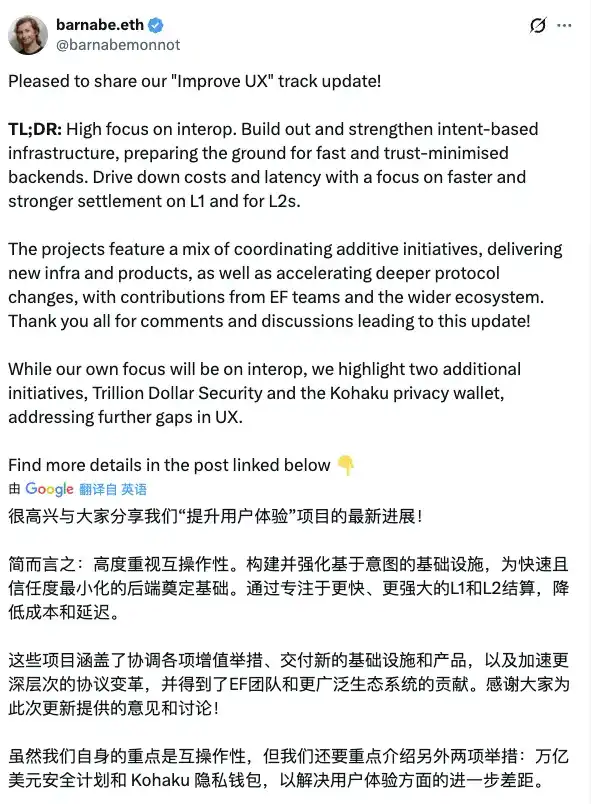
With the Ethereum Foundation recently updating its 2026 protocol priorities, a clear signal has been sent: Scale, Improve UX, and Harden the L1 have become the three main themes. This shift is less an active strategic adjustment and more a choice of "engineering survival" under competitive and real-world pressures. Industry competition is forcing this behemoth to move from "storytelling" to "doing engineering," from "narrative-driven growth" to "engineering-driven survival."
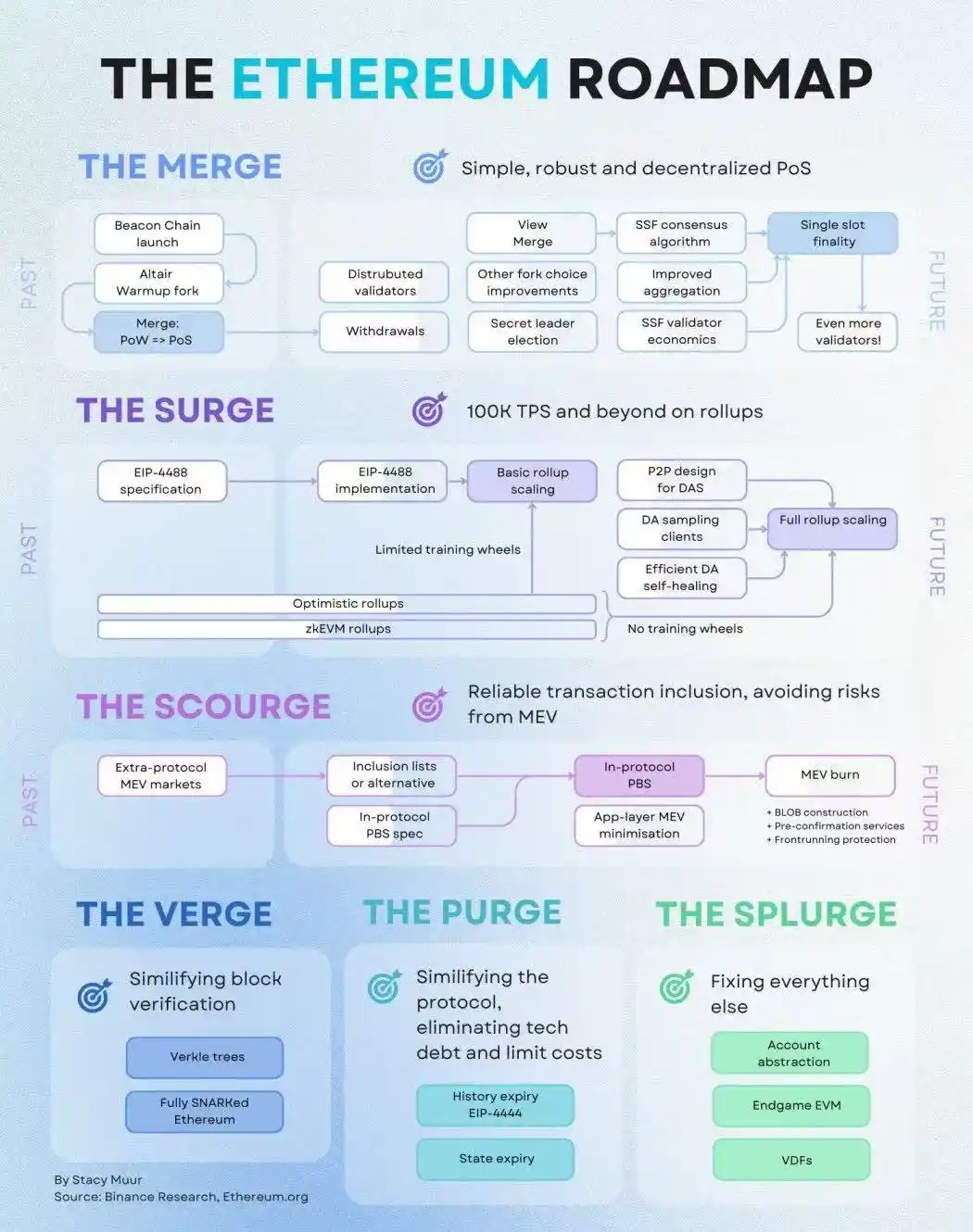
Looking back at Ethereum's history, from the smart contracts of the ICO era, to DeFi Summer, to the transition to PoS and the deflation narrative, every leap was accompanied by极强的市场叙事能力 (极强的市场叙事能力 -极强的 means extremely strong, 市场叙事能力 means market narrative ability, so 'extremely strong market narrative capability'). However, entering 2026, the marginal utility of narratives is diminishing, replaced by冰冷的数据指标与底层架构重构 (冰冷的数据指标 -冰冷 means icy/cold, 数据指标 means data metrics, so 'cold data metrics' and 底层架构重构 means 'underlying architectural restructuring').

The most iconic engineering leap in the roadmap is the upcoming Glamsterdam hard fork scheduled for mid-year. This upgrade directly addresses the long-standing pain points of Ethereum mainnet performance, with two core metrics being particularly crucial: first, significantly increasing the mainnet's Gas limit from the previous 60 million to 200 million; second, formally introducing a parallel execution architecture on the mainnet.

For a long time, Ethereum's EVM used a single-threaded serial processing model. This model has advantages in ensuring state consistency but becomes a fatal bottleneck in high-concurrency scenarios. Introducing parallel execution means Ethereum is expanding from a "single-lane road" to a "multi-lane highway."

Through block-level access lists, nodes can predict which transactions do not involve state conflicts, thereby processing multiple transactions simultaneously. Coupled with the Gas limit jump to 200 million, the amount of computation and transactions each block can accommodate will increase exponentially.

But this does not come without cost. The increase in the Gas limit directly challenges Ethereum's long-held底线 (底线 - bottom line) of "democratization of full nodes." State bloat will accelerate, and the storage and network bandwidth requirements for node hardware will increase dramatically. To hedge this risk, the Ethereum engineering team plans to push about 10% of validators within the year to switch from "re-executing all transactions" to "verifying zero-knowledge proofs." This is called "SNARKing the L1," which not only significantly lowers the hardware threshold for full nodes but is also a watershed moment in Ethereum's evolution from "repetitive labor" to "intelligent verification." This means that Ethereum's underlying computational model is undergoing a qualitative change, outsourcing or front-loading heavy computation, with L1 gradually shedding the burden of the complex execution layer. This is a pure engineering compromise and进步 (进步 - progress).

Performance Anxiety and Solana Alpenglow's Dimensionality Reduction Strike

Ethereum's moves on its underlying architecture are largely forced by the dimensionality reduction strikes from competitors. In 2026, the performance battle in the public blockchain arena has become白热化 (白热化 - white-hot, intensely competitive). Solana, with its Alpenglow upgrade, has completely abandoned its previous Proof of History (PoH) and Tower BFT consensus mechanisms, switching to a全新的 (全新的 - brand new) Votor and Rotor architecture.

The direct result of this underlying restructuring is: Solana's transaction finality has been reduced from 12.8 seconds to within 150 milliseconds. This is a极具破坏力的指标 (极具破坏力的指标 -极具破坏力 means extremely destructive, 指标 means metric, so 'an extremely disruptive metric'). A latency of 150 milliseconds has entered the response range of traditional Web2 internet infrastructure (like Google search or the Visa payment network). For applications极度敏感 (极度敏感 - extremely sensitive) to latency, such as high-frequency trading (HFT), fully on-chain derivative exchanges, and real-time payments, this constitutes a致命吸引力 (致命吸引力 - fatal attraction).
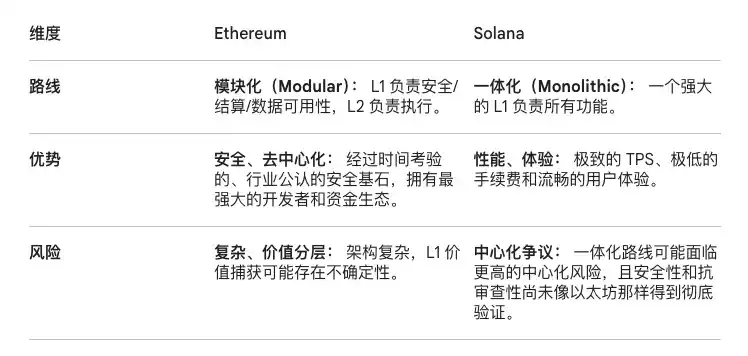
In contrast, although Ethereum's Glamsterdam upgrade and subsequent Heze-Bogota fork are committed to improving TPS and anti-censorship, its complex modular (Modular) architecture is inherently at a disadvantage in terms of cross-chain composability and latency. Ethereum's current block time is 12 seconds, but true finality requires several minutes. This architecture is固然稳如泰山 (固然稳如泰山 -固然 means admittedly, 稳如泰山 means as stable as Mount Tai, so 'admittedly rock-solid') when handling high-value, low-frequency asset settlements, but appears too笨重 (笨重 - cumbersome/clumsy) in the face of consumer-grade applications for the mass retail market. Ethereum's performance anxiety is essentially a路线之争 (路线之争 -路线 means path/route, 之争 means dispute, so 'a dispute over technical paths') between monolithic architecture and modular architecture during the period of technological explosion in 2026.

If Solana's步步紧逼 (步步紧逼 - step-by-step pressing,步步 means step by step, 紧逼 means pressing hard, so 'relentless pressure') is an external threat, then Ethereum also faces an internal paradox brought by its own strategy — the "L2 Paradox."

With the landing of the Pectra and Fusaka upgrades, and the maturation of PeerDAS technology, Ethereum's Rollup-centric scaling strategy has achieved great engineering胜利 (胜利 - victory). The data availability throughput of L2 has increased several times, and the capacity of data Blobs is also continuously growing. The direct result this brings is: L2 transaction fees have断崖式下降 (断崖式下降 - cliff-like drop) to $0.001 or even lower.

From a user experience perspective, this is a huge success, fully aligning with the "Improve UX" theme of the 2026 roadmap. Native Account Abstraction and Intent Frameworks are becoming普及 (普及 - widespread/popularized), making complex on-chain interactions彻底隐藏 (彻底隐藏 - completely hidden) behind seamless wallet operations.
However, this also raises a尖锐的问题 (尖锐的问题 - sharp/question): When users enjoy a smooth transaction experience costing $0.001 on L2, do they really still care what consensus mechanism the underlying Ethereum mainnet uses? The "decentralization legitimacy" that the Ethereum community is proud of, the anti-censorship network composed of thousands of independent validating nodes, is becoming an invisible, abstracted backend database in the eyes of the vast majority of end-users.

When application execution完全迁移 (完全迁移 - completely migrates) to Arbitrum, Base, or ZKsync, and the mainnet only serves as a data availability and state root verification layer, Ethereum not only loses direct reach to C-end users but also faces the risk of liquidity fragmentation and application layer hollowing out. This is not just a decoupling of technical architecture but also a decoupling of brand perception and user mindset.

From "selling Gas" to "selling security settlement services," the way ETH captures value has changed.

The evolution of the technical路线 (路线 - route/path) will ultimately be reflected in the asset's pricing model. The various changes currently happening in Ethereum are triggering a fundamental reshaping of ETH's value capture logic.

For most of the period from 2021 to 2024, ETH's value support mainly relied on the "world computer" narrative and the Gas fee burn mechanism brought by EIP-1559. The higher the on-chain activity, the more ETH was burned, and the stronger the deflation expectation of "Ultrasound Money" became. This model was essentially a C-end retail logic — Ethereum was "selling Gas."
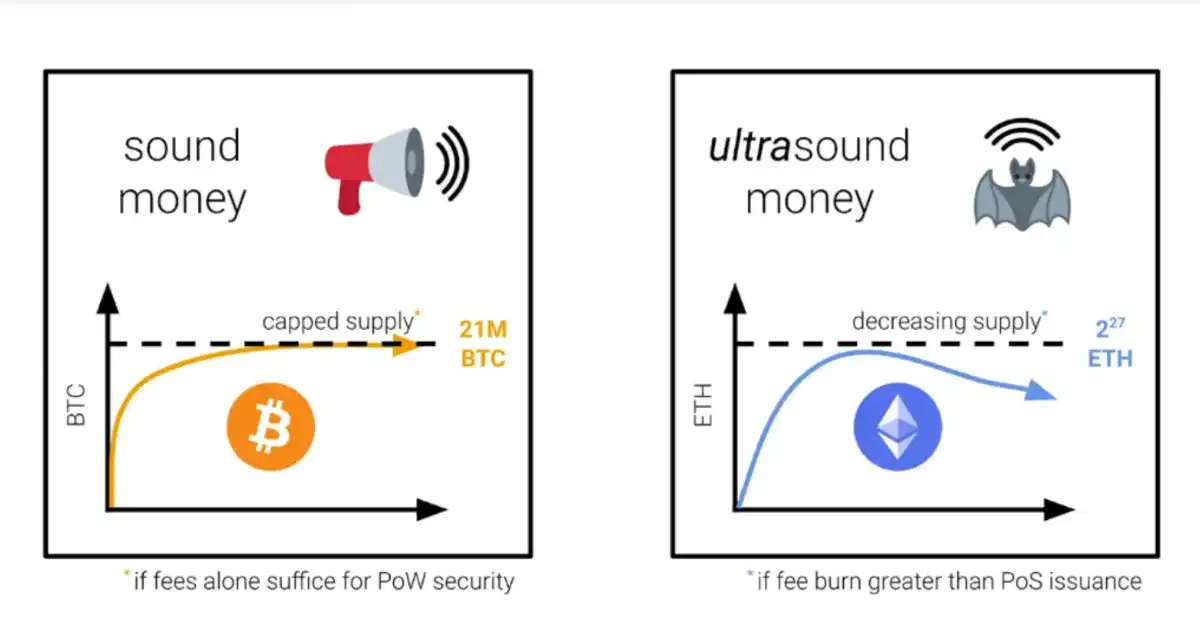
But entering 2026, the situation has changed dramatically. As execution layer activity irreversibly migrates to L2, the mainnet's Gas consumption has significantly decreased. Although L2s need to pay Data Availability (DA) fees to L1, against the backdrop of continuously expanding Blob space, this part of the fee income is far from enough to fill the gap left by the loss of L1 execution layer手续费 (手续费 - transaction fees). ETH's burn rate has dropped significantly, even returning to slight inflation during troughs, severely testing the traditional deflation expectation.

From the perspective of quantitative finance valuation models, ETH's DCF (Discounted Cash Flow) model is being rewritten. Ethereum is transforming from a high-margin computing platform面向零售端 (面向零售端 -面向 means facing/targeting, 零售端 means retail end, so 'targeting the retail end') to a low-margin, high-determinacy "security settlement layer"面向 B 端 (B端 - business end, B2B) (L2s甚至 L3甚至 L3甚至 - even L3s). Its new business model is no longer "selling Gas," but "selling economic security" and "anti-censorship finality."

Under this paradigm, the income structure of ETH as a monetary asset is changing. The落地 (落地 - implementation/landing) of ePBS (enshrined Proposer-Builder Separation) will restructure the MEV supply chain, making the distribution of MEV收益 (收益 -收益 means收益 income/收益 yield) within the validator network smoother and more predictable.

The baseline yield brought by staking and restaking will replace Gas burning as the core support for ETH's valuation. This makes ETH's asset attributes more aligned with traditional treasury bonds or institutional-grade clearing and settlement assets. It no longer needs fancy Meme coin trades to contribute transaction fees, but relies on its vast staking capital to provide immutable trust endorsement for the entire decentralized financial empire.

In 2026, Ethereum no longer tries to persuade the world with narratives, but proves itself with engineering capabilities.

This transformation is not only Ethereum's move for "engineering survival" under competitive and real-world pressures but also a redefinition of "what ETH is." When users no longer care about the underlying L1, when ETH's value capture model shifts from selling Gas to security and settlement, ETH must find new narratives to establish its position in the digital world.

Whether Ethereum can successfully transform, and whether ETH can capture the value of its ecological prosperity, will be key propositions that quantitative finance practitioners and all those interested in finance must closely watch in the coming years.


Domande pertinenti

QWhat are the three main priorities in Ethereum's 2026 protocol update as mentioned in the article?

AThe three main priorities are Scale (scaling), Improve UX (optimizing user experience), and Harden the L1 (strengthening the underlying security).

QWhat is the Glamsterdam hard fork expected to achieve for the Ethereum mainnet?

AThe Glamsterdam hard fork is expected to significantly increase the mainnet's Gas limit from 60 million to 200 million and formally introduce a parallel execution architecture to the mainnet.

QHow does the article describe the new value capture model for ETH in 2026 compared to the previous 'ultra sound money' narrative?

AThe value capture model is shifting from a retail-focused model of 'selling Gas' and relying on a deflationary burn mechanism to a B2B model of 'selling economic security' and 'censorship-resistant finality,' with staking and restaking yields becoming the core support for ETH's valuation.

QWhat is the 'L2 paradox' that Ethereum faces according to the article?

AThe 'L2 paradox' is that while the success of Layer 2 solutions drastically improves user experience with very low fees, it also risks making the Ethereum mainnet an invisible backend database, leading to a decoupling of user perception and potential liquidity fragmentation.

QWhat major upgrade did Solana implement that is putting competitive pressure on Ethereum?

ASolana implemented the Alpenglow upgrade, which replaced its previous Proof of History (PoH) and Tower BFT consensus with a new Votor and Rotor architecture, reducing transaction finality to under 150 milliseconds.

Letture associate

If Hyperliquid Is the New Nasdaq, Which Projects Are Playing the Role of Brokers?

Amidst sluggish market conditions, several crypto startups are pivoting towards building on the Hyperliquid ecosystem, positioning it as a potential "on-chain Nasdaq." These projects are developing trading frontends, strategy platforms, AI Agents, and custom markets using HIP-3, aiming to capture value by acting as "brokerages" that interface with users. The core idea is that while Hyperliquid provides the foundational liquidity and matching engine (like an exchange), these upper-layer applications handle user acquisition, product design, and experience optimization (like brokerages such as Robinhood). Their primary revenue models include transaction fee sharing and the potential appreciation of the HYPE token required for deployment. Key projects highlighted include: * **Trade.xyz**: Dominates the HIP-3 space by bringing traditional finance assets (indices, commodities, stocks) onto Hyperliquid. * **Dreamcash**: Focuses on mobile user growth with a simplified, gamified interface to lower the barrier to entry. * **Ventuals**: Targets the Pre-IPO market, creating perpetual contracts for unicorn company valuations. * **Based**: Aims to be a "super app" combining trading, prediction markets, and crypto payments, introducing yield-generating collateral via its HyENA protocol. * **Minara AI**: Explores an AI Agent future, allowing users to execute trades on Hyperliquid via natural language commands to AI tools. The article concludes that this open, composable ecosystem is Hyperliquid's key competitive advantage. It is evolving from a user-facing platform into a financial operating system (Financial OS). This creates a symbiotic network where each new application brings more users and liquidity to Hyperliquid, while the applications benefit from its robust infrastructure. This network effect could define the next phase of competition among decentralized financial networks.

Odaily星球日报11 min fa

If Hyperliquid Is the New Nasdaq, Which Projects Are Playing the Role of Brokers?

Odaily星球日报11 min fa

Different Choices After the Plunge: Institutions Buy the Dip, Traders Shift to US Stocks

Title: Diverging Strategies After the Crash: Institutions Buying the Dip, Traders Shifting to US Stocks Following a sharp decline where Bitcoin briefly fell below $60,000 on June 6th, market sentiment remains "extreme fear" despite a partial recovery. This has led to varied responses from major market participants. Several institutional figures and analysts present a cautiously optimistic long-term view for Bitcoin. Glassnode's co-founder identifies $46k-$54k as a probable key bottom range based on historical on-chain models, while a Standard Chartered executive suggests the bottom is nearly formed. Strive's CEO points to Bitcoin touching its 200-week moving average as a historically reliable buy signal. Analysts highlight metrics like MVRV ratio and the "Power Law" model indicating Bitcoin is in an extremely undervalued zone. Conversely, some traders are exiting the crypto space. One trader cited a more attractive risk/reward profile and deeper research opportunities in US stocks, particularly with AI-related equities outperforming and capital rotating away from crypto. This shift is partly attributed to perceived ongoing risks, including those related to Strategy's Bitcoin sales. Market prediction data suggests a high probability (72%) of Bitcoin falling below $55,000, but lower odds for a deeper crash below $35k-$40k. The overall picture is one of division: institutions and long-term analysts see a accumulating opportunity, while some active traders are seeking alpha elsewhere amidst the volatility and shifting capital flows.

marsbit58 min fa

Different Choices After the Plunge: Institutions Buy the Dip, Traders Shift to US Stocks

marsbit58 min fa

Tech Stocks in the Midst of Deleveraging: Rather Than Rushing to Buy the Dip, Wait for the Macro Environment to Stabilize First

"Technology Stocks in Deleveraging Phase: Wait for Macro Stability Before Buying the Dip" The current sell-off in tech/AI stocks is primarily driven by macro headwinds, not a breakdown in AI fundamentals. After a parabolic rise, the market faced a perfect storm: an overcrowded trade, a massive SpaceX IPO draining liquidity, pre-CPI/PPI/FOMC hedging, and strong jobs data renewing "higher-for-longer" rate fears. This triggered a concentrated deleveraging in hot tech names. Key historical context: Unlike the December 2023 sell-off focused on AI capex returns, the current correction centers on the "denominator" – rising concerns over rates, inflation, the Fed, geopolitics, and liquidity. Leading memory stocks like Micron have seen ~20% pullbacks, significant but not yet at panic levels seen in March. The intense selling wave may be largely over, but a quick V-shaped recovery is unlikely. The market will likely churn in high volatility, awaiting clarity. The immediate catalyst needed for a sustainable reversal is a "stop-bleeding" signal from macro conditions. This doesn't require a major positive shock (like the April Iran ceasefire), but simply a halt to further deterioration: CPI not surprising hotter, Treasury yields stabilizing, the Fed not turning more hawkish, and post-SpaceX IPO liquidity easing. Once macro pressure plateaus, the intact AI investment thesis – centered on persistent compute/memory shortages and accelerating commercialization – can quickly regain market focus. The strategy is clear: prioritize monitoring macro stabilization over rushing to bottom-fish individual AI stories. Patience is key.

marsbit1 h fa

Tech Stocks in the Midst of Deleveraging: Rather Than Rushing to Buy the Dip, Wait for the Macro Environment to Stabilize First

marsbit1 h fa

South Korean Stocks Plunge, Global Funds Liquidate: Has the Semiconductor Fundamentals Really Changed?

South Korean stocks experienced their sharpest decline of the year, with the KOSPI index plunging nearly 9% on Monday, triggering a market circuit breaker. Leading semiconductor firms Samsung Electronics and SK Hynix were heavily sold off, raising questions about whether the AI-driven bull market has reached an inflection point. This sell-off was largely triggered by a significant drop in the U.S. semiconductor sector late last week. Concurrently, NVIDIA CEO Jensen Huang visited Seoul over the weekend, meeting with top executives from SK Group, Samsung, LG, and NAVER. He announced a new multi-year partnership with SK Hynix to co-develop next-generation memory products for AI data centers. Huang emphasized that AI infrastructure build-out remains in its early stages, creating a stark contrast between market panic and ongoing, strengthened industry collaboration. The article argues that South Korea has become one of the most sensitive markets for global AI-related capital flows, functioning like a large AI memory ETF due to the heavy weighting of its chipmakers. The current market turmoil reflects a shift in investor focus: from simply betting on overall AI growth to scrutinizing which companies will actually capture the profits from that growth. This "profit pool reassessment" phase is causing high volatility based on supply chain news and earnings guidance. Ultimately, the direction of the Korean market will be determined by external factors—NVIDIA's orders, HBM supply-demand dynamics, and capital expenditures from cloud service providers—rather than domestic conditions. The disconnect between sharp price corrections and continued strong signals from the industry core leaves the market at a crossroads, awaiting clearer data on the durability of AI infrastructure demand.

marsbit1 h fa

South Korean Stocks Plunge, Global Funds Liquidate: Has the Semiconductor Fundamentals Really Changed?

marsbit1 h fa

Trading

Spot
Futures

Articoli Popolari

Come comprare GAS

Benvenuto in HTX.com! Abbiamo reso l'acquisto di GAS (GAS) semplice e conveniente. Segui la nostra guida passo passo per intraprendere il tuo viaggio nel mondo delle criptovalute.Step 1: Crea il tuo Account HTXUsa la tua email o numero di telefono per registrarti il tuo account gratuito su HTX. Vivi un'esperienza facile e sblocca tutte le funzionalità,Crea il mio accountStep 2: Vai in Acquista crypto e seleziona il tuo metodo di pagamentoCarta di credito/debito: utilizza la tua Visa o Mastercard per acquistare immediatamente GASGAS.Bilancio: Usa i fondi dal bilancio del tuo account HTX per fare trading senza problemi.Terze parti: abbiamo aggiunto metodi di pagamento molto utilizzati come Google Pay e Apple Pay per maggiore comodità.P2P: Fai trading direttamente con altri utenti HTX.Over-the-Counter (OTC): Offriamo servizi su misura e tassi di cambio competitivi per i trader.Step 3: Conserva GAS (GAS)Dopo aver acquistato GAS (GAS), conserva nel tuo account HTX. In alternativa, puoi inviare tramite trasferimento blockchain o scambiare per altre criptovalute.Step 4: Scambia GAS (GAS)Scambia facilmente GAS (GAS) nel mercato spot di HTX. Accedi al tuo account, seleziona la tua coppia di trading, esegui le tue operazioni e monitora in tempo reale. Offriamo un'esperienza user-friendly sia per chi ha appena iniziato che per i trader più esperti.

231 Totale visualizzazioniPubblicato il 2024.12.12Aggiornato il 2026.06.02

Come comprare GAS

Discussioni

Benvenuto nella Community HTX. Qui puoi rimanere informato sugli ultimi sviluppi della piattaforma e accedere ad approfondimenti esperti sul mercato. Le opinioni degli utenti sul prezzo di GAS GAS sono presentate come di seguito.

活动图片