From OpenClaw to AI Agent: A New Investment Paradigm in the Crypto Market

比推Pubblicato 2026-03-09Pubblicato ultima volta 2026-03-09

Introduzione

This article explores the impact of AI Agent technology, particularly the open-source framework OpenClaw, on the cryptocurrency market and its potential to create a new investment paradigm. It describes how AI has evolved from simple chatbots to autonomous agents capable of executing tasks, accessing tools, and making decisions. OpenClaw serves as a foundational infrastructure for building such agents, enabling developers to integrate AI with various tools and APIs. The piece highlights how AI Agents can transform crypto markets by automating trading, analyzing on-chain data, optimizing DeFi strategies, and even participating in governance. This convergence of AI and blockchain could lead to more automated and efficient digital economies. Key sectors likely to benefit include decentralized compute networks (e.g., Render Network), AI data marketplaces (e.g., Ocean Protocol), automated trading platforms, and decentralized AI networks (e.g., Fetch.ai). The author concludes that OpenClaw and similar frameworks are catalysts for broader adoption of AI Agents in crypto, potentially making them as fundamental to the ecosystem as smart contracts.

Author: Climber, CryptoPulse

Original Title: The Era of AI Agent is Coming: The Crypto Investment Logic Behind OpenClaw


Over the past two years, the evolution of AI technology has undergone distinct phases. From initial large language model chat tools to AI assistants capable of invoking tools, and now the rapidly emerging AI Agents.

AI is no longer just answering questions; it is beginning to perform tasks, call programs, and even autonomously complete complex work. Under this trend, an open-source project named OpenClaw has gradually entered the view of the tech community and the crypto industry.

OpenClaw is seen by many as the infrastructure for the AI agent era. Its emergence not only changes the way developers build AI applications but may also bring a new narrative direction to the crypto industry. From on-chain transactions to automated investing, and then to decentralized AI networks, the technological paradigm represented by OpenClaw is redefining the possibilities of combining AI and blockchain.

I. OpenClaw: The Open-Source Operating System for the AI Agent Era

OpenClaw is essentially an AI Agent framework. To put it simply, its role is to enable AI to not just chat but to perform tasks like a human. Developers can use OpenClaw to connect AI to various tools, such as browsers, databases, API interfaces, or script programs, enabling AI to complete complex tasks.
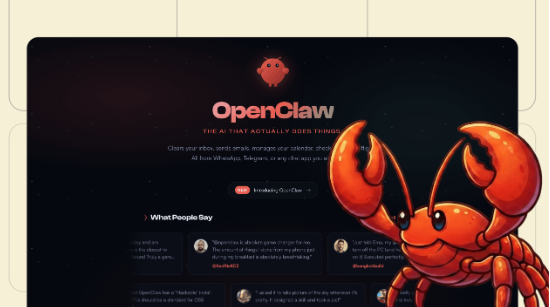
In traditional large language model applications, AI is more "passively responsive." Users ask questions, and the model provides answers, with the entire interaction process always controlled by humans. But in the Agent mode, AI can autonomously plan task steps based on goals.

For example, when a user gives an instruction to analyze a certain market and generate a report, AI can automatically complete data search, information organization, chart generation, and final content output. This capability means that AI is beginning to transform from a tool to an executor.

The core architecture of OpenClaw typically includes several key parts:

First is the large language model itself, such as GPT, Claude, or other models, which are responsible for reasoning and decision-making. Second is the Agent scheduling system, used to manage task flows and call tools. The third part is the skill module, which can also be understood as a plugin system, enabling AI to perform specific actions, such as scraping web pages, processing data, or calling blockchain interfaces. Finally, there is the runtime environment, responsible for actually executing AI's operations.

The significance of this architecture is that it modularizes AI capabilities. Developers do not need to build complex AI systems from scratch; they only need to connect models and tools on the OpenClaw framework to quickly build an AI agent that can perform tasks. This significantly lowers the threshold for AI application development and also leads to a trend similar to a modular market in the AI ecosystem.

Another important reason OpenClaw has attracted attention is its open-source nature. Open source means developers can freely modify the code, extend functions, and build new applications on its basis.

Because of this, OpenClaw's community has grown very rapidly, with more and more developers building automation tools, workflow systems, and AI agent applications within its ecosystem.

From a technology trend perspective, AI development is moving from model competition to Agent ecosystem competition. Future AI applications will likely not be single models but systems where multiple AI agents work together. The framework provided by OpenClaw fits this trend well, so it is regarded by many as one of the infrastructures of the AI Agent era.

II. AI Agents On-Chain: OpenClaw Reshapes the Crypto Narrative

The emergence of OpenClaw is not just a technological innovation for the crypto industry; more importantly, it may change the way on-chain applications operate. Blockchain networks themselves are automated systems, and AI agents can become "digital participants" running on the chain.

In traditional crypto markets, most transactions and operations still require manual completion. For example, analyzing market data, executing trading strategies, participating in DeFi liquidity management. These actions often require experienced investors or professional institutions to complete. But when AI Agents get involved, these tasks can be automated.

A typical scenario is the AI trading agent. Using an Agent framework like OpenClaw, developers can build AI systems that can automatically analyze market data, formulate strategies, and execute trades.
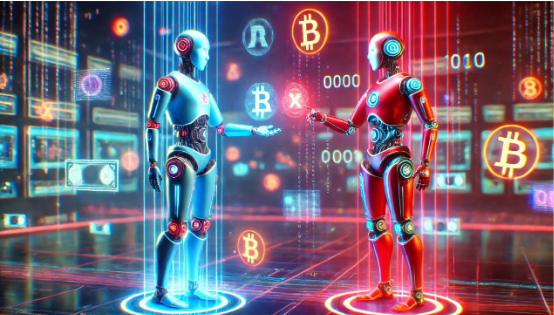
Such systems can run 24/7, automatically adjusting strategies based on on-chain data, price fluctuations, and market sentiment. For the crypto market, this means more machine participants will enter the trading ecosystem.

Another potential impact is the automation of on-chain data analysis. Blockchain data is public and transparent, but the volume is huge, making it difficult for ordinary users to utilize effectively.

AI agents can analyze on-chain fund flows, whale address behaviors, and market trends in real-time, and convert this information into investment decision suggestions. This capability may change the way traditional crypto research is conducted.

OpenClaw may also promote the deep integration of AI and DeFi. In the DeFi ecosystem, liquidity management, yield optimization, and cross-protocol arbitrage themselves highly rely on automated strategies.

If AI agents can analyze the market in real-time and automatically execute operations, then DeFi products will become more intelligent. For example, AI can automatically adjust liquidity provision strategies based on market conditions or allocate funds across multiple protocols.

In addition, AI agents may also become "users" of on-chain applications. In the future, some blockchain networks may no longer only have human addresses but also a large number of AI addresses. These AI addresses can participate in transactions, governance, and even protocol operations. In other words, a new type of participant may emerge in the blockchain ecosystem, namely members of the AI economy.

From a macro perspective, the greatest significance of combining AI Agents with blockchain is that it further enhances the degree of on-chain automation. Blockchain solves the trust problem, while AI agents solve the decision-making problem. When the two are combined, a true "automated digital economy" may be formed.

III. OpenClaw and the Track Opportunities Under the AI Agent Transformation

With the development of AI Agent frameworks like OpenClaw, some crypto tracks may usher in new narrative opportunities. The most directly benefiting area is AI + Crypto infrastructure. These projects typically focus on providing computing power, data, or network support for AI.
For example, the decentralized computing power network Render Network aims to provide distributed GPU resources for AI and graphics computing. As the number of AI agents increases, the demand for computing power will continue to grow, and the value of such networks may further increase.

Another important track is the AI data market. The training and operation of AI models and agents require a large amount of data, and blockchain can provide a decentralized data trading mechanism.

For example, Ocean Protocol attempts to build a data sharing market, allowing data owners to sell data access rights while ensuring privacy. In the era of AI Agents, the value of data may be further highlighted.

The rise of AI agents may also benefit automated trading and strategy platforms. As more AI systems enter the market, the importance of on-chain trading infrastructure will also continue to rise.

For instance, high-performance DeFi protocols or automated trading platforms may become important places for AI agents to execute strategies. This means trading infrastructure and liquidity protocols will also gain new demand.

In addition, decentralized AI networks may also become an important track. For example, Fetch.ai proposed the concept of an "autonomous agent network" early on, trying to let AI agents run autonomously on the blockchain and exchange value. With the popularity of tools like OpenClaw, such concepts may regain market attention.

Finally, AI agents may also change the mode of on-chain governance. In future DAO organizations, AI agents may represent users in voting, proposing governance suggestions, and even managing funds. Such changes mean that DAO governance tools and AI collaboration platforms may also usher in new development space.

From an investment logic perspective, the core of the AI Agent narrative is not a single project but an entire ecosystem chain. From computing power and data to the application layer, new opportunities may appear in every link. OpenClaw, as an AI Agent framework, plays more of a role as a technical catalyst, promoting the development of the entire AI automation ecosystem.

Conclusion

The emergence of OpenClaw marks AI technology entering a new stage. AI is no longer just an auxiliary tool but is beginning to become a digital agent that can perform tasks. When this capability is combined with blockchain, it may give birth to a more automated digital economic system.

For the crypto industry, this is both a technological innovation and a narrative upgrade. From AI trading agents to decentralized AI networks, to on-chain automated governance, AI Agents are bringing new imagination space to blockchain. In the coming years, AI agents may become an important part of the blockchain ecosystem, just like smart contracts.


Twitter:https://twitter.com/BitpushNewsCN

Bitpush TG Communication Group:https://t.me/BitPushCommunity

Bitpush TG Subscription: https://t.me/bitpush

Original link:https://www.bitpush.news/articles/7617962

Crypto di tendenza

Domande pertinenti

QWhat is OpenClaw and how does it represent a shift in AI technology?

AOpenClaw is an open-source AI Agent framework that enables AI to perform tasks autonomously by integrating tools like browsers, databases, and APIs. It represents a shift from passive AI models that only respond to queries to active agents capable of planning and executing complex tasks, such as market analysis and report generation.

QHow does OpenClaw's architecture facilitate AI application development?

AOpenClaw's architecture includes a large language model for reasoning and decision-making, an Agent scheduling system for task management, a skill module (plugin system) for executing actions like data processing, and a runtime environment. This modular design lowers the barrier for developers to build AI applications by allowing them to integrate models and tools quickly.

QWhat impact could AI Agents like those built on OpenClaw have on the cryptocurrency market?

AAI Agents could automate tasks such as market analysis, trading strategy execution, and DeFi liquidity management, introducing more machine participants into the crypto ecosystem. They may also analyze on-chain data in real-time, enhance DeFi strategies, and even act as autonomous participants in blockchain networks, potentially leading to a more automated digital economy.

QWhich crypto sectors might benefit from the rise of AI Agents, as highlighted in the article?

ASectors that could benefit include AI + Crypto infrastructure (e.g., decentralized compute networks like Render Network), AI data markets (e.g., Ocean Protocol), automated trading and strategy platforms, decentralized AI networks (e.g., Fetch.ai), and DAO governance tools, as AI Agents drive demand for compute power, data, and intelligent automation.

QWhy is OpenClaw considered a potential foundational infrastructure for the AI Agent era?

AOpenClaw is open-source, allowing developers to modify and extend its capabilities, which accelerates community growth and ecosystem development. Its framework supports the trend toward multi-agent systems where AI Agents collaborate, making it a key enabler for the next phase of AI evolution, similar to how operating systems support software applications.

Letture associate

Must-Watch Events Next Week|CLARITY Act Could Face Senate Vote; SpaceX, Circle to Report Earnings (8.3-8.9)

**Summary: Key Events and Developments to Watch (August 3-9)** The upcoming week is marked by significant financial disclosures, key legislative deadlines, and notable product updates. **Major Financial Events:** Several companies are scheduled to release their Q2 2026 earnings. American Bitcoin (ABTC) will report on August 3, followed by SpaceX and Hut 8 Mining Corp. on August 4, and Circle on August 5. Notably, a significant portion of SpaceX shares (up to 12% of total shares) will be unlocked on August 6 following their earnings release. **Key Legislative Deadline:** The U.S. Senate faces an August 7 deadline to secure 60 votes for the CLARITY Act, a bipartisan bill aiming to establish a federal regulatory framework for cryptocurrencies. The Senate may hold a full vote on the bill during the week. **Economic Data:** The U.S. July Non-Farm Payrolls report will be released on August 7, providing crucial labor market data. **Technology & Product Updates:** * **Shutdowns:** DeFi portfolio tracker Zapper and wallet app Ctrl Wallet will cease operations on August 3. * **Upgrades:** LayerZero will deprecate its v1 relayers on August 3. XRP Ledger's new version 3.3.0, featuring five new functions, is expected next week. * **AI:** Elon Musk announced that the advanced Grok 4.6 AI model is set for release around August 7. * **Bitcoin:** The BIP-110 forced signaling for a potential Bitcoin network change is scheduled to begin around August 8. **Other Notable Events:** Chinese robotics firm Unitree Tech has set its preliminary price inquiry for its IPO for August 5. South Korean exchange Upbit will delist AQT and AERGO tokens on August 3.

marsbit1 h fa

Must-Watch Events Next Week|CLARITY Act Could Face Senate Vote; SpaceX, Circle to Report Earnings (8.3-8.9)

marsbit1 h fa

Stocks Are Plummeting More Sharply Than Cryptocurrencies. Where Has the Money Gone?

Stock Markets Plunge Deeper Than Cryptocurrencies: Where Did the Money Go? In late July, Seoul's Kospi index triggered circuit breakers for two consecutive days, plummeting over 40% from its June high. The collapse was led by heavyweight stocks like SK Hynix, whose record profits still disappointed investors, and devastating leveraged ETFs, with one major product losing over 83% of its value. This signaled a global, forced deleveraging targeting the most crowded trades. Interestingly, while stocks exhibited extreme volatility akin to crypto markets, Bitcoin rose nearly 15% in July after a prior steep drop. Analysis shows the money fleeing equities did not flow into Bitcoin. Instead, Bitcoin had already absorbed its sell-off in May-June, when U.S. spot Bitcoin ETFs saw historic outflows. The true safe-haven beneficiary was gold, whose price rose over 20% year-on-year, highlighting a decoupling between Bitcoin and gold as "digital gold." The sell-off was a targeted unwinding of leveraged positions in tech and semiconductors, accelerated by broker-dealer risk management and shifts in the AI narrative, including new competition from Chinese memory chipmakers. The retreat path was clear: from high-valuation tech stocks to cash and U.S. Treasuries, then to gold. For Bitcoin to attract sustained institutional inflows, conditions like eased global liquidity pressure, a "soft-landing" Fed rate cut, and U.S. regulatory clarity via legislation like the stalled CLARITY Act are needed. Currently, Bitcoin is not a safe haven but an already-cleared asset. Its low correlation with tech stocks, however, makes it a potential diversification play for institutional portfolios once the storm passes. The money isn't here yet, but the positioning is underway.

marsbit1 h fa

Stocks Are Plummeting More Sharply Than Cryptocurrencies. Where Has the Money Gone?

marsbit1 h fa

In Conversation with Ray Dalio: We Are Currently in an AI Bubble, with 1% of My Portfolio in Bitcoin

Ray Dalio, founder of Bridgewater Associates, warns in an interview that the current AI boom shows classic bubble characteristics, which could lead to significant economic downturns as seen in past cycles like 1929 or 2000. He explains that speculative enthusiasm, fueled by debt and overvaluation, often precedes a crash when rising rates or taxation force asset sales, causing widespread losses and recession. Dalio also outlines his "Big Cycle" theory, describing an approximate 80-year pattern where widening wealth gaps, massive government deficits, and shifting geopolitical power (like China's rise) create internal conflict and global instability. He emphasizes that we are in a late-cycle, transitional phase where traditional powers like the US and UK face decline. For personal wealth protection, Dalio advises diversification beyond cash into assets like stocks, bonds, real estate, and particularly gold, which he prefers over Bitcoin. While he holds about 1% of his portfolio in Bitcoin as a non-printable hard asset, he views gold as more secure from technological or governmental threats. Regarding AI's impact, Dalio believes it will disproportionately benefit capital owners, worsening inequality by replacing both physical and cognitive labor. He suggests that human intuition and emotional intelligence, combined with AI, will be key for future workers. On taxation, Dalio argues that wealth taxes are impractical and risk triggering asset sell-offs, reducing productive investment. He points to the UK as a cautionary example of debt, low productivity, and political strife. Geopolitically, Dalio foresees a more regionalized world, with the US showing weakness in prolonged conflicts like with Iran, akin to past imperial declines. The ideal outcome, he suggests, is coexisting powerful blocs (e.g., Americas, China-Asia Pacific) without major war.

marsbit5 h fa

In Conversation with Ray Dalio: We Are Currently in an AI Bubble, with 1% of My Portfolio in Bitcoin

marsbit5 h fa

Trading

Spot

Articoli Popolari

Come comprare ERA

Benvenuto in HTX.com! Abbiamo reso l'acquisto di Caldera (ERA) semplice e conveniente. Segui la nostra guida passo passo per intraprendere il tuo viaggio nel mondo delle criptovalute.Step 1: Crea il tuo Account HTXUsa la tua email o numero di telefono per registrarti il tuo account gratuito su HTX. Vivi un'esperienza facile e sblocca tutte le funzionalità,Crea il mio accountStep 2: Vai in Acquista crypto e seleziona il tuo metodo di pagamentoCarta di credito/debito: utilizza la tua Visa o Mastercard per acquistare immediatamente CalderaERA.Bilancio: Usa i fondi dal bilancio del tuo account HTX per fare trading senza problemi.Terze parti: abbiamo aggiunto metodi di pagamento molto utilizzati come Google Pay e Apple Pay per maggiore comodità.P2P: Fai trading direttamente con altri utenti HTX.Over-the-Counter (OTC): Offriamo servizi su misura e tassi di cambio competitivi per i trader.Step 3: Conserva Caldera (ERA)Dopo aver acquistato Caldera (ERA), conserva nel tuo account HTX. In alternativa, puoi inviare tramite trasferimento blockchain o scambiare per altre criptovalute.Step 4: Scambia Caldera (ERA)Scambia facilmente Caldera (ERA) nel mercato spot di HTX. Accedi al tuo account, seleziona la tua coppia di trading, esegui le tue operazioni e monitora in tempo reale. Offriamo un'esperienza user-friendly sia per chi ha appena iniziato che per i trader più esperti.

440 Totale visualizzazioniPubblicato il 2025.07.17Aggiornato il 2026.06.02

Come comprare ERA

Discussioni

Benvenuto nella Community HTX. Qui puoi rimanere informato sugli ultimi sviluppi della piattaforma e accedere ad approfondimenti esperti sul mercato. Le opinioni degli utenti sul prezzo di ERA ERA sono presentate come di seguito.

活动图片













