From Cheap Customer Service to Billion-Dollar Leaks: The Dual Faces of India's Outsourcing Industry

比推Pubblicato 2026-01-06Pubblicato ultima volta 2026-01-06

Introduzione

An investigation into India's massive BPO (Business Process Outsourcing) industry reveals a dual reality of cost efficiency and severe security risks, highlighted by a major data breach at Coinbase. In December 2025, Coinbase’s CEO announced the arrest of a former customer support employee in Hyderabad, India, linked to a $400 million data leak. The employee, working for outsourcing firm TaskUs, allegedly stole and sold user data for substantial personal gain—earning up to 200 times their daily wage per photo of sensitive information. This incident is not isolated. Companies like Amazon and Microsoft have also experienced similar breaches due to insider threats from underpaid Indian外包 employees, who often earn as little as $300–500 per month. Despite these risks, India remains the global leader in BPO, with its market valued at around $50 billion in 2024 and projected to grow significantly. The country’s advantages include low labour costs, English proficiency, and time-zone benefits for Western companies. However, the industry is evolving. Many multinationals are now establishing Global Capability Centers (GCCs) in India for higher-value work like R&D and AI, leveraging local talent for innovation at lower costs. Meanwhile, repetitive low-end tasks face growing competition from automation and AI. While companies like Coinbase continue to rely on Indian outsourcing for economic reasons, the recurring security lapses underscore ongoing management challenges and the human cos...

Author: Cookie

Original Title: India, the Outsourcing Factory of the Crypto World


On December 27, 2025, Coinbase CEO Brian Armstrong announced on Twitter that the Hyderabad police in India had arrested a former Coinbase customer service employee and were continuing to pursue more individuals involved in the case.

This is related to a data breach case with estimated losses of up to $400 million. On June 2 of last year, according to a Reuters report, six informed sources revealed to Reuters that Coinbase had known as early as January of last year about a user data breach at TaskUs, the company handling its customer service outsourcing. An employee at the customer service center set up by TaskUs in Indore, India, was found using their personal phone to take pictures of their work computer and was suspected of selling Coinbase data to hackers along with an accomplice. The hackers used this information to impersonate Coinbase employees, defraud victims of their cryptocurrency, and demand a $20 million ransom for the user data.

However, after such a serious security incident, although Coinbase has made progress in apprehending those involved, there has been no clear public information indicating that they will shift to hiring employees from other countries and regions or from the United States. This trend has sparked much dissatisfaction on X, with many believing that outsourcing services from India are unreliable and that Coinbase lacks a serious attitude toward user data security.

Although TaskUs is not an Indian company, the problem did indeed occur at TaskUs' Indian branch. And companies suffering losses due to Indian outsourcing staff actively engaging in malicious activities for profit are not limited to Coinbase.

One of the most famous "insider" cases in the e-commerce field involved Amazon outsourcing its "Seller Support" and "Anti-Fraud Review" services to third-party service providers in Hyderabad and Bangalore, India. Some Indian outsourcing employees were bribed by third-party sellers through channels like Telegram, receiving cash rewards ranging from a few hundred to a few thousand dollars for each negative review deleted, suspended account reinstated, or internal sales data of competitors leaked. The monthly salary of these outsourcing employees was only about $300 - $500.

Microsoft also outsourced its basic technical support services to third-party providers in India. Similarly, outsourcing employees, dissatisfied with their meager salaries, sold information to fraud gangs and even actively guided customers to click on phishing websites or purchase fake services during work hours.

The model of entrusting external service providers with customer service, customer support, auditing, and other business processes is called "BPO (Business Process Outsourcing)." To reduce costs, improve efficiency, and focus on core business, these highly repetitive, non-creative business processes are handed over to third parties.

Despite so many problems, India remains the king of the global outsourcing industry. A research report from Astute Analytica shows that in 2024, the size of India's BPO market was approximately $50 billion and is expected to reach $139.35 billion by 2033. For business processes resolved by voice, Indians handle 35% of the entire industry. For non-voice (email, online chat, etc.) business processes, Indians handle 45% of the entire industry.

The massive scale comes with chaos caused by structural problems. It can solve problems but also creates them. Indian outsourcing—what is the real situation inside?

Cheap is Really Fragrant, Simply Irresistible

Everyone says that one of the advantages of Indian outsourcing is definitely "cheap." This is correct, and it even explains why Coinbase suffered a data breach with losses of up to $400 million.

When TaskUs finally discovered the data breach, the mastermind Ashita Mishra's phone contained data for over 10,000 Coinbase users. This employee and other accomplices could receive a reward of $200 for each photo they took of user account data. Ashita Mishra sometimes took up to 200 photos a day.

According to data from 6figr.com, the salary TaskUs offers for customer support positions is an annual 330,000 - 400,000 rupees, equivalent to approximately $3,700 - $4,440 USD. Calculated as a daily wage, the daily salary is no more than $15.

This means that Ashita Mishra's daily "photo-taking" income could be more than 2,600 times her daily salary. This is why the hackers chose to bribe TaskUs' outsourcing employees and why the bribery was successful.

In comparison, the expected salary level Coinbase offers on web3.career for a "Customer Support Agent" position is $69,000 - $77,000.
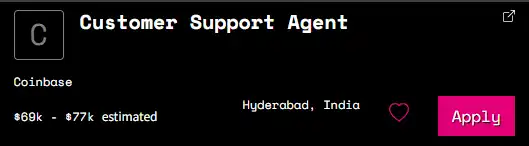
The huge salary gap between "full-time employees" and "outsourced staff," coupled with the lack of stricter controls on data access permissions for outsourced employees, is the reason for Coinbase's data security incident.

As long as the labor costs saved by outsourcing are greater than the money paid for accident compensation, these companies will continue. We cannot simply say they are persistently short-sighted, choosing to sacrifice long-term interests. After the incidents, these companies have taken measures to prevent similar accidents from happening again. For example, the direct hiring of Indian customer service positions by Coinbase we saw earlier was a change from outsourcing to direct hiring after the incident. Amazon's seller support centers now implement extreme physical controls; employees must hand in their phones and smartwatches before entering the office area, and paper and pens are strictly prohibited on desks.

"Cheap" is certainly a huge advantage, but if we switch our perspective to these ordinary outsourcing employees doing the specific execution, "cheap" actually stems from the fact that outsourcing itself is a form of labor arbitrage. The process of transferring work or production to locations with lower labor costs for arbitrage inherently involves layers of "subcontracting." An outsourcing contract from a large enterprise can sometimes be subcontracted 2-4 more times, with commissions, management fees, and profits deducted each time.

Although there is no public data to tell us exactly how much Coinbase paid TaskUs, resulting in TaskUs' Indian employees receiving a daily salary of only about $15. However, according to a research report on the outsourcing market by Astute Analytica last year, in Tier 1 cities in India, the monthly salary offered for each position is approximately 15,000 - 20,000 rupees (about $165 - $220 USD), and it's lower in Tier 2 cities, 8,000 - 12,000 rupees (about $88 - $132 USD). What is the billing standard given by the outsourcing company as a service provider? $12 to $15 per hour for voice processes, and $18 to $22 per hour for non-voice processes.
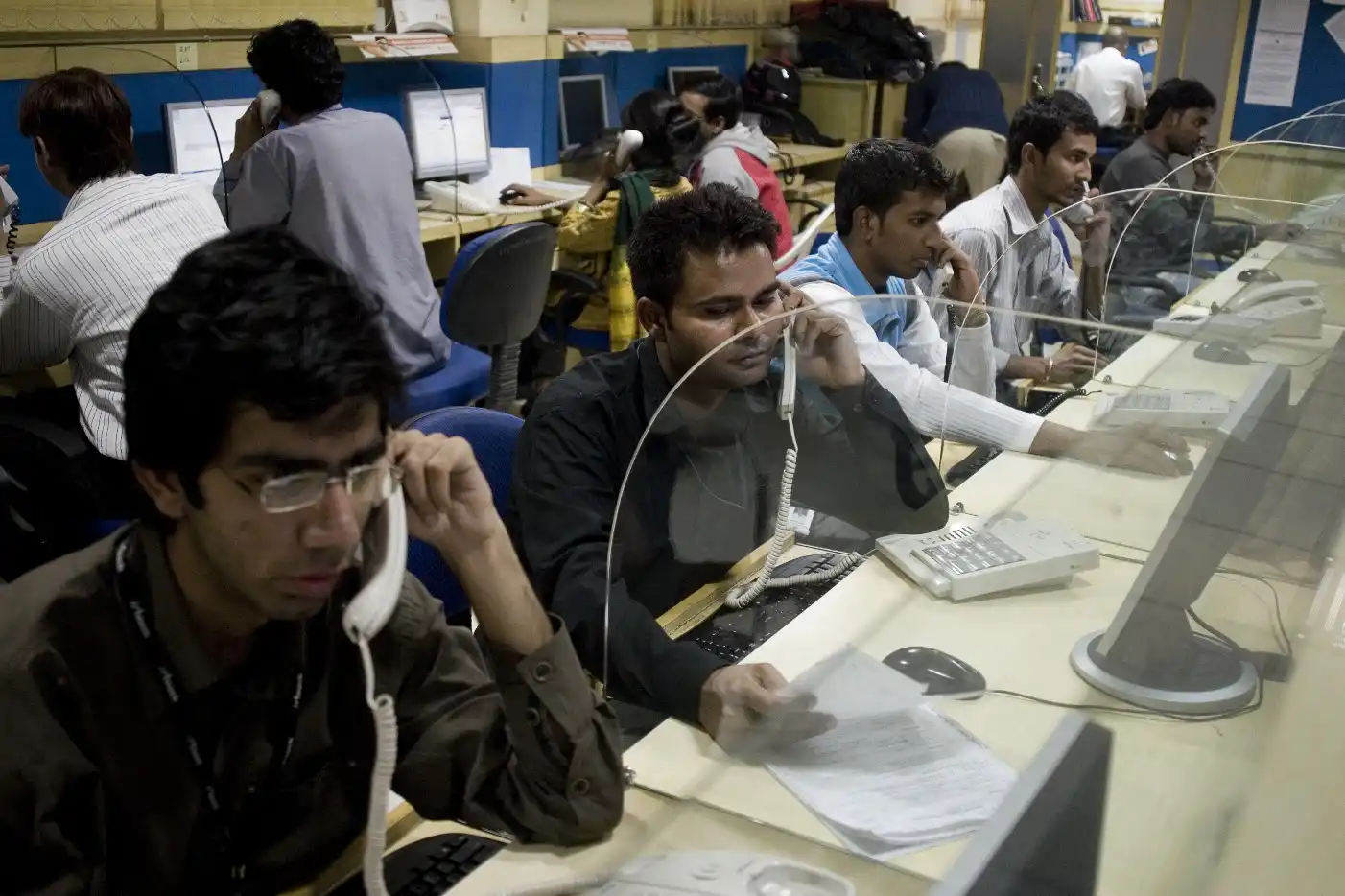
This is roughly equivalent to the outsourcing company paying you, the outsourced worker, the value of just 1 day's salary for working 24 hours a day non-stop for a full month. Because this job is so grueling, employee turnover is extremely high, with a rate of up to 30%, and this is an optimized level down from 50%.

You might think, it's just answering phones and being a客服, what higher salary could you want? In reality, the global outsourcing that India undertakes poses another level of考验 for customer service. In 2024, the United States contributed 55 - 60% of the revenue to India's outsourcing industry. Considering the approximately 12-hour time difference between India and the US, it basically means working in an environment and life schedule that never sees daylight, stationed in front of the phone or computer screen. As an Indian客服, communicating with users from Europe and America requires not only mastering business knowledge but also minimizing one's accent for the other party to understand, and being familiar with the other party's dialects, word usage habits, and culture to communicate more efficiently.

Cheap is indeed irresistibly fragrant, but it is also built on the sweat and blood of the底层 Indians.

The Counterattack of "Cheap Labor": The Path of Indian Outsourcing

In the early 1990s, the average salary in India was less than 1/10th of that in the United States. Not only that, India had a large workforce with higher education who could work in English. American managers discovered that instead of finding expensive programmers locally, it was better to send tasks to India, where there were almost no obstacles in document exchange and phone conferences.

Not only was there no "language barrier" in communication, but the approximately 12-hour time difference between India and the US also meant that when US company finished work and passed the task to India, Indian employees started working; by the next day when the US started work, the task was already completed. This "sun-never-sets" development model greatly shortened project cycles.

How does that sound? Quite like the爽感 of those idle mobile games with "offline auto-leveling," right? This is also known as the "time zone dividend."

As the saying goes, "right time, right place, right people." The emergence of the "Y2K" crisis around the turn of the century over 20 years ago became the "right time" for India's IT industry. Faced with the massive and tedious information and data storage problems caused by "Y2K," European and American companies, due to IT talent shortages and high labor costs, turned to subcontracting their company's data processing work to Indian companies with cost and language advantages. Indian companies, in the process of solving "Y2K" for European and American companies, accumulated experience and customer channels, thus making a name for themselves and putting the industry on the fast track.

To shed the label of "cheap labor," Indians also thought of a universally applicable good solution—certification. In the late 1990s, nearly 75% of the companies globally that obtained CMM Level 5 (the highest level of software capability maturity) certification were Indian companies. With certificates in hand, it meant an image of specialization and process orientation was established. Indians realized this nearly 30 years ago.

As they progressed, the Indian government also found this to be a good industry. The IT industry doesn't require physical bridge or road construction; with internet cables and talent in place, it can snowball. Therefore, India established a large number of Software Technology Parks (STPI) very early on, providing satellite links (solving India's poor infrastructure and power/network outage problems at the time) and tax exemptions. India's top universities also continued to cultivate excellent talent for the industry.

Thus, India gradually摸索出了 the complete formula for conquering the global outsourcing market—cheap English-speaking talent + seizing historical opportunities (Y2K) + certification to establish professional process assurance + government support + continuous talent cultivation. With this formula, they succeeded.

But now, this formula is also beginning to分化.

High-End "Offshore Outsourcing," Low-End "Struggling"

Indians, of course, are not content with only doing low-end outsourcing of repetitive work; they are still developing. In recent years, more and more well-known companies have established GCCs (Global Capability Centers) in India. Currently, India has over 1,900 GCCs, with about 35% of Fortune 500 companies having this kind of "wholly-owned direct" technology and R&D base in India.

These companies include giants from various industries, such as JPMorgan Chase, Goldman Sachs, HSBC, Wells Fargo in finance; Microsoft, Amazon, Google in technology; Walmart, Target in retail.

These GCCs no longer handle repetitive work like customer service or basic code maintenance but are directly subordinate to the parent company, responsible for global, core business. The R&D and innovation activities of Indian GCCs can already contribute over even 50% of the industry's revenue, and about 45% of Indian GCCs have begun managing end-to-end global product lifecycles, from conceptual design to final release, all completed in India. This means Indians are not only cheap and fragrant but also确实有东西 (really have something).

GCCs are like these global leading companies leaving their home countries and conducting "offshore outsourcing" in India.

It's hard to imagine that even Japanese companies have significantly begun to flee their home country to build GCCs in India over the past year. Honda and Hitachi expanded their R&D scale in India in 2025. Their reason was that digital transformation in Japan is too slow, there is a talent gap, and in India, they can obtain the most cutting-edge AI and Software Defined Vehicle (SDV) technology at 1/3 of the cost in Japan.

In India, if you want to recruit 500 engineers mastering specific cloud technologies within a month, the recruitment market in Bangalore or Hyderabad can respond quickly. India currently possesses about 20% of the world's digital skills talent. In generative AI, cybersecurity, and cloud architecture, the scale of its talent pool is难以比拟 (hard to match) by other regions (such as Eastern Europe or Latin America).

And Indian university graduates also love going to these GCCs—no need to leave their hometowns, yet enjoying the same福利待遇 (benefits and treatment) and career development paths as employees at the headquarters of these global large enterprises. The flywheel is running again.

As for repetitive, non-creative outsourcing work like customer service and auditing, although there are some competitors like Vietnam and the Philippines that can challenge India starting from "cheap," the most threatening opponent for India is still the rapidly evolving AI technology.

Conclusion

Therefore, Coinbase's attitude is not strange; it's a pragmatic business decision, but the occurrence of the accident also exposed major loopholes in previous internal management.

Loopholes? No problem. I, Coinbase, will arrest who needs arresting, fix what needs fixing, and then we continue with business as usual.

The reason why Indian outsourcing can "defeat the world无敌手 (be unmatched)" is also very clear by now—places cheaper than it don't have as much talent, places with better English than it aren't as cheap, places cheaper than it don't have as much talent...

But this advantage that satisfies large companies and allows them to chat and laugh freely, is it not also the fatigue and心酸 (heartache) of the employees?


Twitter:https://twitter.com/BitpushNewsCN

Bitpush TG Discussion Group:https://t.me/BitPushCommunity

Bitpush TG Subscription: https://t.me/bitpush

Original link:https://www.bitpush.news/articles/7600484

Domande pertinenti

QWhat was the estimated financial loss in the Coinbase data breach case involving an Indian outsourcing employee?

AThe estimated loss was up to $400 million.

QWhich company was the outsourcing provider for Coinbase's customer support when the data breach occurred?

ATaskUs was the outsourcing provider for Coinbase's customer support.

QWhat is the primary reason companies like Coinbase continue to use Indian outsourcing despite security risks?

AThe primary reason is cost savings, as Indian outsourcing offers significantly cheaper labor compared to hiring locally in countries like the US.

QWhat does BPO stand for, and what type of business processes does it typically involve?

ABPO stands for Business Process Outsourcing, and it typically involves repetitive, non-creative business processes such as customer service, customer support, and auditing.

QWhat is a GCC in the context of Indian outsourcing, and how does it differ from traditional BPO?

AGCC stands for Global Capability Center, which is a fully-owned subsidiary of a multinational company in India that handles core, global business functions like R&D and innovation, unlike traditional BPO which focuses on repetitive tasks.

Letture associate

Not Speculation but a Necessity: The 4 Unique Values of Prediction Markets

Polymarket's recent $4 billion funding round and soaring valuation of $15 billion highlight the explosive growth of prediction markets, with trading volume reaching $25.7 billion in March 2026—a 10.6% monthly increase. This analysis argues that prediction markets serve critical non-speculative functions, positioning them as essential tools rather than mere gambling platforms. Prediction markets offer four unique values: entertainment consumption, insurance-like protection, risk hedging, and truth discovery. Firstly, they stimulate economic activity by engaging users in event-based betting, similar to the broader sports industry. Secondly, they act as a form of decentralized insurance, allowing users to hedge against specific, well-defined risks (e.g., weather events) transparently and without traditional overhead costs. Thirdly, institutions and individuals use these markets to hedge against geopolitical and commodity price risks, as demonstrated during the U.S.-Iran conflict and the launch of 24/7 commodity markets on platforms like Kalshi. Finally, prediction markets counter media bias by aggregating crowd-sourced information, often achieving 30% higher accuracy than surveys due to users' vested interests. Experts like Bitwise’s Jeff Park and SIG’s Jeff Yass emphasize the markets' role in risk transfer and financial innovation. As these platforms evolve, they are poised to become trillion-dollar markets, offering more reliable, decentralized mechanisms for information pricing and risk management.

marsbit2 h fa

Not Speculation but a Necessity: The 4 Unique Values of Prediction Markets

marsbit2 h fa

Trading

Spot
Futures

Articoli Popolari

Cosa è $S$

Comprendere SPERO: Una Panoramica Completa Introduzione a SPERO Mentre il panorama dell'innovazione continua a evolversi, l'emergere delle tecnologie web3 e dei progetti di criptovaluta gioca un ruolo fondamentale nel plasmare il futuro digitale. Un progetto che ha attirato l'attenzione in questo campo dinamico è SPERO, denotato come SPERO,$$s$. Questo articolo mira a raccogliere e presentare informazioni dettagliate su SPERO, per aiutare gli appassionati e gli investitori a comprendere le sue basi, obiettivi e innovazioni nei domini web3 e crypto. Che cos'è SPERO,$$s$? SPERO,$$s$ è un progetto unico all'interno dello spazio crypto che cerca di sfruttare i principi della decentralizzazione e della tecnologia blockchain per creare un ecosistema che promuove l'impegno, l'utilità e l'inclusione finanziaria. Il progetto è progettato per facilitare interazioni peer-to-peer in modi nuovi, fornendo agli utenti soluzioni e servizi finanziari innovativi. Al suo interno, SPERO,$$s$ mira a responsabilizzare gli individui fornendo strumenti e piattaforme che migliorano l'esperienza dell'utente nello spazio delle criptovalute. Questo include la possibilità di metodi di transazione più flessibili, la promozione di iniziative guidate dalla comunità e la creazione di percorsi per opportunità finanziarie attraverso applicazioni decentralizzate (dApps). La visione sottostante di SPERO,$$s$ ruota attorno all'inclusività, cercando di colmare le lacune all'interno della finanza tradizionale mentre sfrutta i vantaggi della tecnologia blockchain. Chi è il Creatore di SPERO,$$s$? L'identità del creatore di SPERO,$$s$ rimane piuttosto oscura, poiché ci sono risorse pubblicamente disponibili limitate che forniscono informazioni dettagliate sul suo fondatore o fondatori. Questa mancanza di trasparenza può derivare dall'impegno del progetto per la decentralizzazione—un ethos che molti progetti web3 condividono, dando priorità ai contributi collettivi rispetto al riconoscimento individuale. Centrando le discussioni attorno alla comunità e ai suoi obiettivi collettivi, SPERO,$$s$ incarna l'essenza dell'empowerment senza mettere in evidenza individui specifici. Pertanto, comprendere l'etica e la missione di SPERO rimane più importante che identificare un creatore singolo. Chi sono gli Investitori di SPERO,$$s$? SPERO,$$s$ è supportato da una varietà di investitori che vanno dai capitalisti di rischio agli investitori angelici dedicati a promuovere l'innovazione nel settore crypto. Il focus di questi investitori generalmente si allinea con la missione di SPERO—dando priorità a progetti che promettono avanzamenti tecnologici sociali, inclusività finanziaria e governance decentralizzata. Queste fondazioni di investitori sono tipicamente interessate a progetti che non solo offrono prodotti innovativi, ma contribuiscono anche positivamente alla comunità blockchain e ai suoi ecosistemi. Il supporto di questi investitori rafforza SPERO,$$s$ come un concorrente degno di nota nel dominio in rapida evoluzione dei progetti crypto. Come Funziona SPERO,$$s$? SPERO,$$s$ impiega un framework multifunzionale che lo distingue dai progetti di criptovaluta convenzionali. Ecco alcune delle caratteristiche chiave che sottolineano la sua unicità e innovazione: Governance Decentralizzata: SPERO,$$s$ integra modelli di governance decentralizzati, responsabilizzando gli utenti a partecipare attivamente ai processi decisionali riguardanti il futuro del progetto. Questo approccio favorisce un senso di proprietà e responsabilità tra i membri della comunità. Utilità del Token: SPERO,$$s$ utilizza il proprio token di criptovaluta, progettato per servire varie funzioni all'interno dell'ecosistema. Questi token abilitano transazioni, premi e la facilitazione dei servizi offerti sulla piattaforma, migliorando l'impegno e l'utilità complessivi. Architettura Stratificata: L'architettura tecnica di SPERO,$$s$ supporta la modularità e la scalabilità, consentendo un'integrazione fluida di funzionalità e applicazioni aggiuntive man mano che il progetto evolve. Questa adattabilità è fondamentale per mantenere la rilevanza nel panorama crypto in continua evoluzione. Coinvolgimento della Comunità: Il progetto enfatizza iniziative guidate dalla comunità, impiegando meccanismi che incentivano la collaborazione e il feedback. Nutrendo una comunità forte, SPERO,$$s$ può affrontare meglio le esigenze degli utenti e adattarsi alle tendenze di mercato. Focus sull'Inclusione: Offrendo basse commissioni di transazione e interfacce user-friendly, SPERO,$$s$ mira ad attrarre una base utenti diversificata, inclusi individui che potrebbero non aver precedentemente interagito nello spazio crypto. Questo impegno per l'inclusione si allinea con la sua missione generale di empowerment attraverso l'accessibilità. Cronologia di SPERO,$$s$ Comprendere la storia di un progetto fornisce preziose intuizioni sulla sua traiettoria di sviluppo e sui traguardi. Di seguito è riportata una cronologia suggerita che mappa eventi significativi nell'evoluzione di SPERO,$$s$: Fase di Concettualizzazione e Ideazione: Le idee iniziali che formano la base di SPERO,$$s$ sono state concepite, allineandosi strettamente con i principi di decentralizzazione e focus sulla comunità all'interno dell'industria blockchain. Lancio del Whitepaper del Progetto: Dopo la fase concettuale, è stato rilasciato un whitepaper completo che dettaglia la visione, gli obiettivi e l'infrastruttura tecnologica di SPERO,$$s$ per suscitare interesse e feedback dalla comunità. Costruzione della Comunità e Prime Interazioni: Sono stati effettuati sforzi attivi di outreach per costruire una comunità di early adopters e potenziali investitori, facilitando discussioni attorno agli obiettivi del progetto e ottenendo supporto. Evento di Generazione del Token: SPERO,$$s$ ha condotto un evento di generazione del token (TGE) per distribuire i propri token nativi ai primi sostenitori e stabilire una liquidità iniziale all'interno dell'ecosistema. Lancio della Prima dApp: La prima applicazione decentralizzata (dApp) associata a SPERO,$$s$ è stata attivata, consentendo agli utenti di interagire con le funzionalità principali della piattaforma. Sviluppo Continuo e Partnership: Aggiornamenti e miglioramenti continui alle offerte del progetto, inclusi partnership strategiche con altri attori nello spazio blockchain, hanno plasmato SPERO,$$s$ in un concorrente competitivo e in evoluzione nel mercato crypto. Conclusione SPERO,$$s$ rappresenta una testimonianza del potenziale del web3 e delle criptovalute di rivoluzionare i sistemi finanziari e responsabilizzare gli individui. Con un impegno per la governance decentralizzata, il coinvolgimento della comunità e funzionalità progettate in modo innovativo, apre la strada verso un panorama finanziario più inclusivo. Come per qualsiasi investimento nello spazio crypto in rapida evoluzione, si incoraggiano potenziali investitori e utenti a ricercare approfonditamente e a impegnarsi in modo riflessivo con gli sviluppi in corso all'interno di SPERO,$$s$. Il progetto mostra lo spirito innovativo dell'industria crypto, invitando a ulteriori esplorazioni delle sue innumerevoli possibilità. Mentre il percorso di SPERO,$$s$ è ancora in fase di sviluppo, i suoi principi fondamentali potrebbero effettivamente influenzare il futuro di come interagiamo con la tecnologia, la finanza e tra di noi in ecosistemi digitali interconnessi.

75 Totale visualizzazioniPubblicato il 2024.12.17Aggiornato il 2024.12.17

Cosa è $S$

Cosa è AGENT S

Agent S: Il Futuro dell'Interazione Autonoma in Web3 Introduzione Nel panorama in continua evoluzione di Web3 e criptovalute, le innovazioni stanno costantemente ridefinendo il modo in cui gli individui interagiscono con le piattaforme digitali. Uno di questi progetti pionieristici, Agent S, promette di rivoluzionare l'interazione uomo-computer attraverso il suo framework agentico aperto. Aprendo la strada a interazioni autonome, Agent S mira a semplificare compiti complessi, offrendo applicazioni trasformative nell'intelligenza artificiale (AI). Questa esplorazione dettagliata approfondirà le complessità del progetto, le sue caratteristiche uniche e le implicazioni per il dominio delle criptovalute. Cos'è Agent S? Agent S si presenta come un innovativo framework agentico aperto, progettato specificamente per affrontare tre sfide fondamentali nell'automazione dei compiti informatici: Acquisizione di Conoscenze Specifiche del Dominio: Il framework apprende in modo intelligente da varie fonti di conoscenza esterne ed esperienze interne. Questo approccio duale gli consente di costruire un ricco repository di conoscenze specifiche del dominio, migliorando le sue prestazioni nell'esecuzione dei compiti. Pianificazione su Lungo Orizzonte di Compiti: Agent S impiega una pianificazione gerarchica potenziata dall'esperienza, un approccio strategico che facilita la suddivisione e l'esecuzione efficiente di compiti complessi. Questa caratteristica migliora significativamente la sua capacità di gestire più sottocompiti in modo efficiente ed efficace. Gestione di Interfacce Dinamiche e Non Uniformi: Il progetto introduce l'Interfaccia Agente-Computer (ACI), una soluzione innovativa che migliora l'interazione tra agenti e utenti. Utilizzando Modelli Linguistici Multimodali di Grandi Dimensioni (MLLM), Agent S può navigare e manipolare senza sforzo diverse interfacce grafiche utente. Attraverso queste caratteristiche pionieristiche, Agent S fornisce un framework robusto che affronta le complessità coinvolte nell'automazione dell'interazione umana con le macchine, preparando il terreno per innumerevoli applicazioni nell'AI e oltre. Chi è il Creatore di Agent S? Sebbene il concetto di Agent S sia fondamentalmente innovativo, informazioni specifiche sul suo creatore rimangono elusive. Il creatore è attualmente sconosciuto, il che evidenzia sia la fase embrionale del progetto sia la scelta strategica di mantenere i membri fondatori sotto anonimato. Indipendentemente dall'anonimato, l'attenzione rimane sulle capacità e sul potenziale del framework. Chi sono gli Investitori di Agent S? Poiché Agent S è relativamente nuovo nell'ecosistema crittografico, informazioni dettagliate riguardanti i suoi investitori e sostenitori finanziari non sono documentate esplicitamente. La mancanza di approfondimenti pubblicamente disponibili sulle fondazioni di investimento o sulle organizzazioni che supportano il progetto solleva interrogativi sulla sua struttura di finanziamento e sulla roadmap di sviluppo. Comprendere il supporto è cruciale per valutare la sostenibilità del progetto e il suo potenziale impatto sul mercato. Come Funziona Agent S? Al centro di Agent S si trova una tecnologia all'avanguardia che gli consente di funzionare efficacemente in contesti diversi. Il suo modello operativo è costruito attorno a diverse caratteristiche chiave: Interazione Uomo-Computer Simile a Quella Umana: Il framework offre una pianificazione AI avanzata, cercando di rendere le interazioni con i computer più intuitive. Mimando il comportamento umano nell'esecuzione dei compiti, promette di elevare le esperienze degli utenti. Memoria Narrativa: Utilizzata per sfruttare esperienze di alto livello, Agent S utilizza la memoria narrativa per tenere traccia delle storie dei compiti, migliorando così i suoi processi decisionali. Memoria Episodica: Questa caratteristica fornisce agli utenti una guida passo-passo, consentendo al framework di offrire supporto contestuale mentre i compiti si sviluppano. Supporto per OpenACI: Con la capacità di funzionare localmente, Agent S consente agli utenti di mantenere il controllo sulle proprie interazioni e flussi di lavoro, allineandosi con l'etica decentralizzata di Web3. Facile Integrazione con API Esterne: La sua versatilità e compatibilità con varie piattaforme AI garantiscono che Agent S possa adattarsi senza problemi agli ecosistemi tecnologici esistenti, rendendolo una scelta attraente per sviluppatori e organizzazioni. Queste funzionalità contribuiscono collettivamente alla posizione unica di Agent S all'interno dello spazio crittografico, poiché automatizza compiti complessi e multi-fase con un intervento umano minimo. Man mano che il progetto evolve, le sue potenziali applicazioni in Web3 potrebbero ridefinire il modo in cui si svolgono le interazioni digitali. Cronologia di Agent S Lo sviluppo e le tappe di Agent S possono essere riassunti in una cronologia che evidenzia i suoi eventi significativi: 27 Settembre 2024: Il concetto di Agent S è stato lanciato in un documento di ricerca completo intitolato “Un Framework Agentico Aperto che Usa i Computer Come un Umano”, mostrando le basi per il progetto. 10 Ottobre 2024: Il documento di ricerca è stato reso pubblicamente disponibile su arXiv, offrendo un'esplorazione approfondita del framework e della sua valutazione delle prestazioni basata sul benchmark OSWorld. 12 Ottobre 2024: È stata rilasciata una presentazione video, fornendo un'idea visiva delle capacità e delle caratteristiche di Agent S, coinvolgendo ulteriormente potenziali utenti e investitori. Questi indicatori nella cronologia non solo illustrano i progressi di Agent S, ma indicano anche il suo impegno per la trasparenza e il coinvolgimento della comunità. Punti Chiave su Agent S Man mano che il framework Agent S continua a evolversi, diversi attributi chiave si distinguono, sottolineando la sua natura innovativa e il potenziale: Framework Innovativo: Progettato per fornire un uso intuitivo dei computer simile all'interazione umana, Agent S porta un approccio nuovo all'automazione dei compiti. Interazione Autonoma: La capacità di interagire autonomamente con i computer attraverso GUI segna un passo avanti verso soluzioni informatiche più intelligenti ed efficienti. Automazione di Compiti Complessi: Con la sua metodologia robusta, può automatizzare compiti complessi e multi-fase, rendendo i processi più veloci e meno soggetti a errori. Miglioramento Continuo: I meccanismi di apprendimento consentono ad Agent S di migliorare dalle esperienze passate, migliorando continuamente le sue prestazioni e la sua efficacia. Versatilità: La sua adattabilità attraverso diversi ambienti operativi come OSWorld e WindowsAgentArena garantisce che possa servire un'ampia gamma di applicazioni. Man mano che Agent S si posiziona nel panorama di Web3 e delle criptovalute, il suo potenziale per migliorare le capacità di interazione e automatizzare i processi segna un significativo avanzamento nelle tecnologie AI. Attraverso il suo framework innovativo, Agent S esemplifica il futuro delle interazioni digitali, promettendo un'esperienza più fluida ed efficiente per gli utenti in vari settori. Conclusione Agent S rappresenta un audace passo avanti nell'unione tra AI e Web3, con la capacità di ridefinire il modo in cui interagiamo con la tecnologia. Sebbene sia ancora nelle sue fasi iniziali, le possibilità per la sua applicazione sono vaste e coinvolgenti. Attraverso il suo framework completo che affronta sfide critiche, Agent S mira a portare le interazioni autonome al centro dell'esperienza digitale. Man mano che ci addentriamo nei regni delle criptovalute e della decentralizzazione, progetti come Agent S giocheranno senza dubbio un ruolo cruciale nel plasmare il futuro della tecnologia e della collaborazione uomo-computer.

400 Totale visualizzazioniPubblicato il 2025.01.14Aggiornato il 2025.01.14

Cosa è AGENT S

Come comprare S

Benvenuto in HTX.com! Abbiamo reso l'acquisto di Sonic (S) semplice e conveniente. Segui la nostra guida passo passo per intraprendere il tuo viaggio nel mondo delle criptovalute.Step 1: Crea il tuo Account HTXUsa la tua email o numero di telefono per registrarti il tuo account gratuito su HTX. Vivi un'esperienza facile e sblocca tutte le funzionalità,Crea il mio accountStep 2: Vai in Acquista crypto e seleziona il tuo metodo di pagamentoCarta di credito/debito: utilizza la tua Visa o Mastercard per acquistare immediatamente SonicS.Bilancio: Usa i fondi dal bilancio del tuo account HTX per fare trading senza problemi.Terze parti: abbiamo aggiunto metodi di pagamento molto utilizzati come Google Pay e Apple Pay per maggiore comodità.P2P: Fai trading direttamente con altri utenti HTX.Over-the-Counter (OTC): Offriamo servizi su misura e tassi di cambio competitivi per i trader.Step 3: Conserva Sonic (S)Dopo aver acquistato Sonic (S), conserva nel tuo account HTX. In alternativa, puoi inviare tramite trasferimento blockchain o scambiare per altre criptovalute.Step 4: Scambia Sonic (S)Scambia facilmente Sonic (S) nel mercato spot di HTX. Accedi al tuo account, seleziona la tua coppia di trading, esegui le tue operazioni e monitora in tempo reale. Offriamo un'esperienza user-friendly sia per chi ha appena iniziato che per i trader più esperti.

802 Totale visualizzazioniPubblicato il 2025.01.15Aggiornato il 2025.03.21

Come comprare S

Discussioni

Benvenuto nella Community HTX. Qui puoi rimanere informato sugli ultimi sviluppi della piattaforma e accedere ad approfondimenti esperti sul mercato. Le opinioni degli utenti sul prezzo di S S sono presentate come di seguito.

活动图片











