From 6000 Points to Two Circuit Breakers: A Missile Exposes South Korea's Stock Market Weakness

比推Pubblicato 2026-03-04Pubblicato ultima volta 2026-03-04

Introduzione

The South Korean Stock Exchange (KOSPI) experienced two consecutive trading halts (circuit breakers) on March 3 and 4, 2026, plunging nearly 13% from a recent high of 6,244 points. This sharp decline, triggered by escalating U.S.-Iran tensions and the closure of the Strait of Hormuz, exposed the extreme vulnerability of South Korea's stock market, which is heavily reliant on semiconductor stocks, particularly Samsung Electronics and SK Hynix. These two companies, dominating the global HBM (high-bandwidth memory) market crucial for AI and GPUs, had driven KOSPI's 75.6% surge in 2025. However, the market's concentration on chip exports, which account for over a third of total exports, became its Achilles' heel. The closure of the Strait of Hormuz—a vital shipping route for liquefied natural gas (LNG), which fuels nearly a third of Korea's power generation—threatened energy supplies and semiconductor manufacturing costs. While defense stocks surged on geopolitical tensions, foreign investors sold a record $8.5 billion in Korean shares over two days, highlighting the market's liquidity and its status as a prime target for rapid capital flight during global panic. Retail investors attempted to buy the dip, but were overwhelmed by the sell-off. The crash underscored deeper structural risks beyond corporate governance reforms: South Korea's market is exceptionally exposed to a single industry dependent on imported energy and vulnerable to global shocks. The incident demonstrated ...

Author: David, Shenchao TechFlow

Original Title: From 6000 Points to Two "Circuit Breakers": South Korea's Semiconductor Myth Paused by a Middle Eastern Missile


As the US-Iran conflict continues, global capital markets are panicking, with the South Korean stock market performing particularly badly.

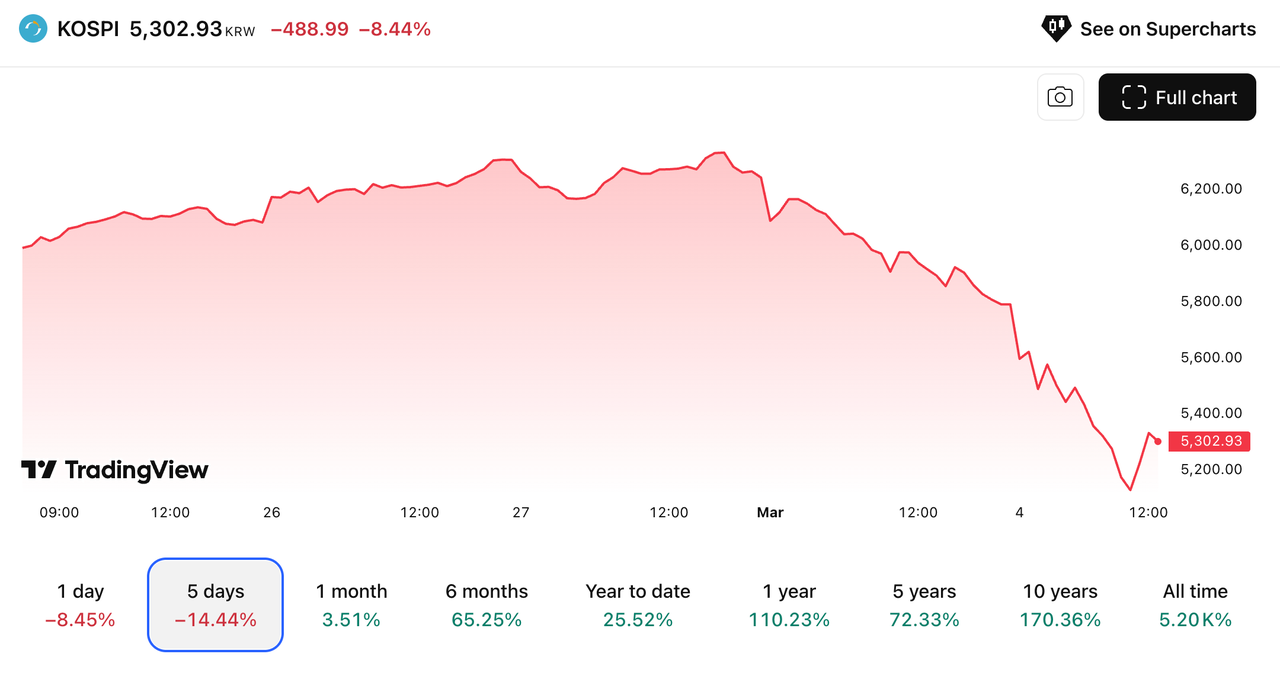
On March 3, the Korea Composite Stock Price Index (KOSPI) fell 7.24%, triggering trading limits. Samsung Electronics fell nearly 10%, and SK Hynix fell 11.5%;

On March 4, which is today, the KOSPI fell over 8% during the session, triggering another circuit breaker and halting trading for 20 minutes. It closed down about 6% at 5440 points. Samsung fell another 5.1%, and Hynix fell another 3.9%.

Two trading days, two circuit breakers. The South Korean stock market fell from 6244 to 5440, a drop of nearly 13%. This is the worst consecutive plunge since 2008.

Yet just a week earlier, on February 25, the KOSPI had just broken through 6000 points. The total market capitalization of the South Korean stock market rose to 3.76 trillion USD, surpassing France to rank ninth globally; Samsung and Hynix were still the most recommended stocks by investment bloggers.

The Middle East is at war, global markets are falling, but why is South Korea falling the hardest?
Buying Korean Stocks is Buying Memory

The bull market in the South Korean stock market over the past year is, simply put, the story of two companies.

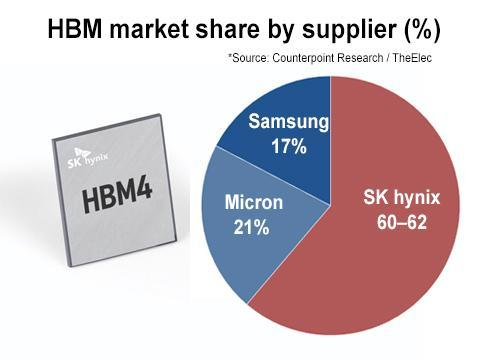
Global AI training requires GPUs, and GPUs require a type of high-bandwidth memory called HBM. The production barrier for this is extremely high, and there are essentially only three companies in the world that can mass-produce it: SK Hynix, Samsung, and Micron.

Among them, SK Hynix alone captures over half of the market share, Samsung about 30%. Combined, the two South Korean companies control over 80% of the global HBM market capacity.
Nvidia is their biggest customer. Every H100, every B200 shipped requires Korean memory. In 2025, Nvidia's quarterly revenue reached 68.1 billion USD, a significant portion of which ultimately flowed into the pockets of SK Hynix and Samsung.

Reflected in the stock prices: in 2025, SK Hynix rose 274%, Samsung rose 125%. The entire KOSPI index rose 75.6%, with nearly half of the gains contributed by these two stocks.

Buying the Korean大盘 (broad market) is essentially buying memory chips.

This year is even more intense. In the first 20 days of February, South Korea's chip export value surged 134% year-on-year to 15.1 billion USD, accounting for over one-third of total exports. Goldman Sachs said that in 2026, South Korean stock market profit growth is expected to be 120%, with 88 percentage points coming from tech hardware.

Translated: remove chips, and the growth of the South Korean stock market is just a fraction.

It took KOSPI 34 days to go from 5000 to 6000 points. During these 34 days, Nomura Securities called for a target price of 8000, J.P. Morgan said 7500, Goldman Sachs adjusted to 6400. Behind each number is the same assumption:

AI computing power demand has no ceiling, so Korean chips have no ceiling.

Close the Strait, Where Does the Power Come From

But making chips requires electricity.

Where does South Korea's electricity come from? Natural gas and coal each account for about 27%, nuclear power about 30%. South Korea produces neither natural gas nor coal itself; it relies entirely on imports. South Korea is the world's third-largest liquefied natural gas (LNG) importer, after China and Japan.

On February 28, the US and Israel jointly launched airstrikes on Iran. After Khamenei's death was confirmed, Iran announced the closure of the Strait of Hormuz.

This strait is 33 km wide at its narrowest point. About one-fifth of the world's oil and a large amount of LNG pass through it. Qatar is one of the world's largest LNG exporters and a major source for South Korea; its ships must pass through this strait to leave port.

Close the strait, oil prices soar first, natural gas follows; the global energy market has always been interconnected.

Public information shows European natural gas prices rose nearly 50%, Asian natural gas prices rose nearly 40%. Major supplier Qatar Energy suspended LNG production after its facilities were attacked.
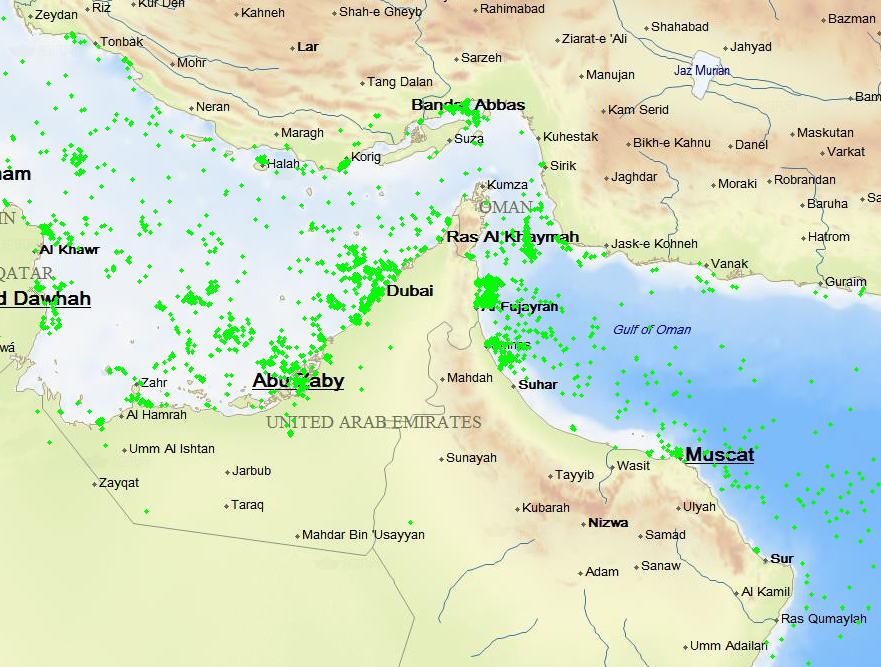
Fig: Ship tracking data shows the number of vessels transiting the Strait of Hormuz dropped significantly on March 1 local time | Source: Ship Search Network

Samsung and Hynix chips are not created out of thin air. One HBM goes through thousands of processes from wafer to packaging, each consuming electricity. Semiconductor manufacturing is one of the most energy-intensive industries in the world.

Theoretically, the chain is like this:

Nvidia places an order, SK Hynix starts work, the factory needs electricity, power generation needs natural gas, natural gas needs to pass through the Strait of Hormuz, the strait is now closed.

The Korean market was closed on March 1, coinciding with their Samiljeol holiday. Other markets panicked all weekend, Korean investors could only watch.

Tuesday opening, three days of panic compressed into one bearish candlestick. Samsung fell nearly 10%, Hynix fell 11.5%. Gas prices rise, electricity prices must rise, chip margins are eaten into, factory utilization rates are also in doubt.

Wednesday was worse. Iran moved from threat to action, actually interfering with strait shipping. Brent crude rose above 82 USD, natural gas also began to soar. Samsung fell nearly 15% over two days, Hynix fell 15%.

But in the same Korean exchange, Hanwha Aerospace rose nearly 20% on March 3, LIG Nex1 rose 30% hitting the upper limit.

These two companies, the former makes fighter jets and missile engines, the latter makes air defense systems and precision-guided weapons. The Middle East is at war, the whole world needs to replenish inventories.

On one side, chip makers are falling; on the other, missile makers are rising.

Has the Korea Discount Disappeared?

The South Korean stock market has a nickname: the "Korea Discount".

It means the same company, listed in South Korea, is cheaper than if listed in the US or Japan. Samsung Electronics and TSMC are both chip giants with similar profitability, but TSMC's price-to-book ratio has long been two to three times that of Samsung.

You can understand it as the same dish being cheaper in Seoul than in New York.

Why? Because South Korea's large companies are almost all controlled by chaebol families. Samsung, Hyundai, SK, LG—the founding families use pyramid-style cross-shareholdings to control the entire group with very few shares.

Earnings aren't paid as dividends, treasury shares aren't canceled, the board is filled with their own people, independent directors haven't cast a single dissenting vote in five years. Foreign investors look at this and think investing money is just working for someone else, forget it.

How long has this discount lasted? Over the past decade, the S&P 500 rose 179%, the Nikkei rose 155%, India rose 255%, even Brazil rose 167%.

KOSPI rose only 35%.

In 2025, the new president, Lee Jae-myung, took office, amended commercial law, forced dividends, mandated cancellation of treasury shares, and flew to the New York Stock Exchange to tell Wall Street: the Korea Discount will become the Korea Premium.
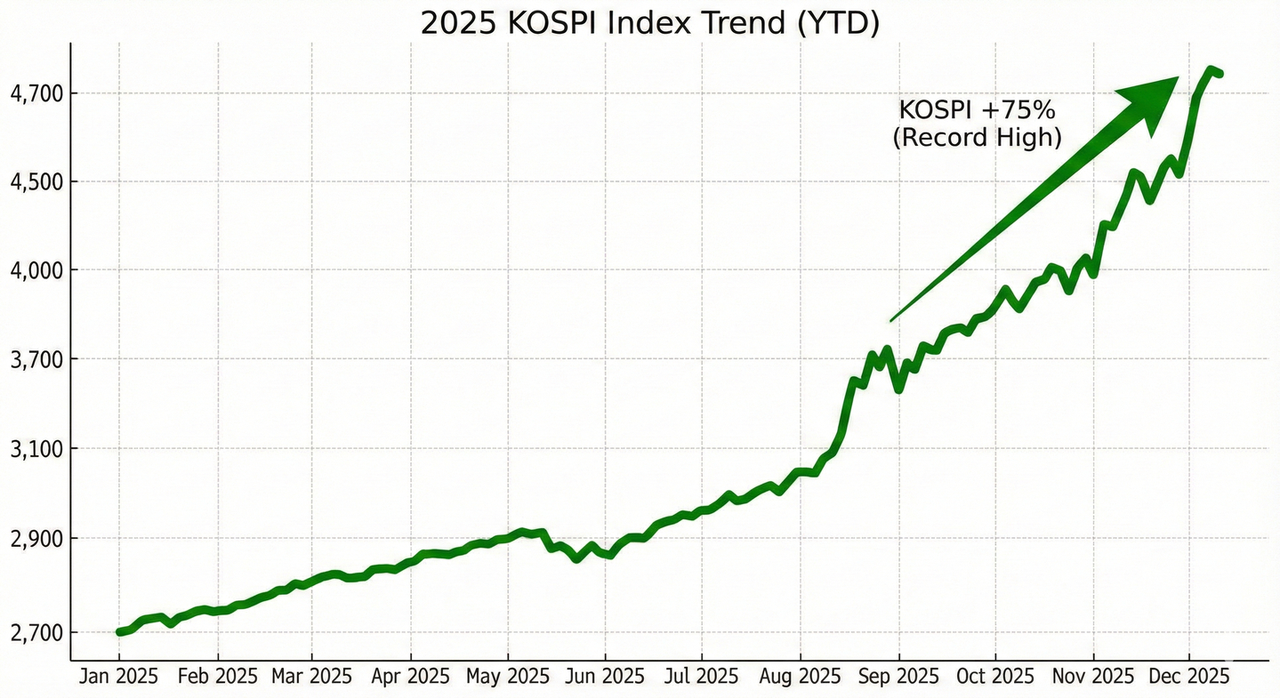
At the same time, AI completely rewrote the valuation logic for Samsung and Hynix. The two things collided, foreign capital poured in, KOSPI rose 75.6% in a year, number one globally.

A discount of over twenty years seemed to be erased in one year.

But two consecutive days of暴跌 (plunge) reveal another problem: the previous discount was due to poor corporate governance in Korean listed companies, and governance is indeed being reformed.

But there is another layer of discount, hidden deeper.

In South Korea, two stocks carry half the market's gains, power generation relies on imported natural gas and coal, the entire market is bet on one industry.

When the world outside this industry has an incident, it results in consecutive circuit breakers. The fragility written into South Korea's geography and industrial structure is difficult to change just by amending commercial law.

Foreign Capital Withdraws, Retail Investors Buy the Dip

On February 27, foreign capital net sold 6.8 trillion won in the Korean market,刷新 (refreshing/breaking) the single-day record. On March 3, they sold another 5.1 trillion won. Two days合计 (combined) nearly 12 trillion won, equivalent to 8.5 billion USD, half of the inflow over 6 weeks, gone in less than two days.
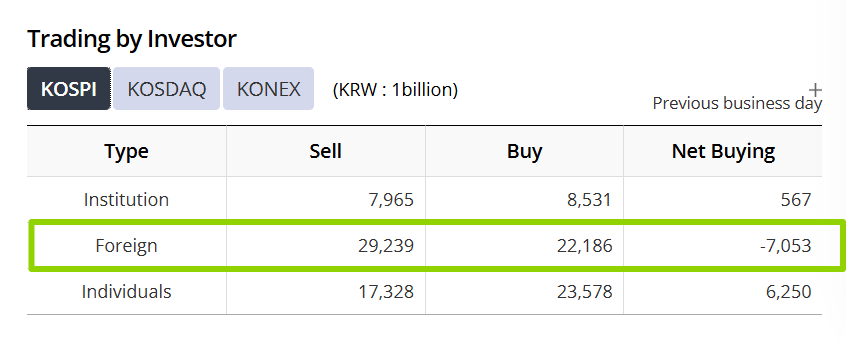
Foreign capital's affection for emerging markets has always been conditional. When conditions are good, they call you the core of the global AI supply chain; when conditions change, you are the most liquid, most convenient item to sell in the portfolio.

The Korean stock market is active and has high trading volume. Precisely because it's easy to sell, it's the first to be sold.

So who is buying?

On March 3, retail investors net bought 5.8 trillion won. Foreign capital fled, South Korean retail investors rushed in. Someone on a Seoul forum said Samsung at this price is a once-in-a-decade opportunity.

The next day it fell another 6%,一度 (at one point) falling 8% during the session triggering a circuit breaker. Those who rushed in on March 3 lost another chunk within 24 hours. On March 4, retail investors continued to bottom-fish, but could not stop the foreign selling pressure.

The last time Korean retail investors大规模 (large-scale) bottom-fishing was during the August 2024 Yen carry trade collapse. That time they were right, it came back in a month. Whether they are right this time may depend on a variable they完全控制不了 (have no control over whatsoever):

When the Strait of Hormuz will reopen.

Sentiment is More Important Than Facts

KOSPI took 34 days to go from 5,000 to 6,000, and 2 days to fall from 6,000 to 5,440.

Two days, two circuit breakers.

The energy chain is real: natural gas needs to pass through the Strait of Hormuz, chips rely on electricity from natural gas.

But a 13% drop in two days is no longer pricing in natural gas. A market where 75% of the gains are supported by two stocks, everyone crowded in the same direction, the exit is only so big.

It rose too much before. When panic strikes, whoever runs fast survives first.

SK Hynix will likely rise again. AI's computing power demand is real, the HBM shortage is real, Nvidia's orders next quarter won't disappear because of a Middle East war.

But these two days tell everyone one thing: the rise back depends on fundamentals, the fall depends on sentiment. Fundamentals move slowly, sentiment moves fast. Gains made over 34 days can be mostly lost in 2 days.

Everyone who buys Korean stocks thinks they are buying the红利 (dividend/benefit) of AI chips.

But for South Korea, the chips are grown on an economy that relies on imported natural gas for power, sold to a customer who might impose tariffs at any time, with a nuclear-armed neighbor next door.

All research reports will tell you what a stock is worth.

No research report will tell you what will happen in the world during the time you hold it.


Twitter:https://twitter.com/BitpushNewsCN

Bitpush TG Discussion Group:https://t.me/BitPushCommunity

Bitpush TG Subscription: https://t.me/bitpush

Original link:https://www.bitpush.news/articles/7616748

Letture associate

Why Do You Always Lose Money on Polymarket? Because You're Betting on News, While the Pros Read the Rules

Why do you always lose money on Polymarket? Because you bet on news, while the pros study the rules. This article explains how top traders ("che tou") profit by meticulously analyzing market rules, not just predicting events. Polymarket, a prediction market platform, often sees disputes over event outcomes due to ambiguous rule wording. For instance, a market asking "Who will be the leader of Venezuela by the end of 2026?" was misinterpreted by many who bet on Delcy Rodríguez, assuming she held power. However, the rules specified "officially holds" as the formally appointed, sworn-in individual. Since Nicolás Maduro was still recognized as president officially, he won the market—even being in prison. To resolve such disputes, Polymarket uses a decentralized arbitration system via UMA protocol. The process involves: 1. Proposal: Anyone can propose a market outcome by staking 750 USDC, earning 5 USDC if unchallenged. 2. Dispute: A 2-hour window allows challenges with a 750 USDC stake; successful challengers earn 250 USDC. 3. Discussion: A 48-hour period on UMA Discord for evidence and debate. 4. Voting: UMA token holders vote in two 24-hour phases (blind then public). Outcomes require >65% consensus and 5M tokens voted; otherwise, four re-votes occur before Polymarket intervention. 5. Settlement: Results are final and automatic. Unlike traditional courts, Polymarket’s system lacks separation between arbitrators and stakeholders—voters often hold market positions, creating conflicts of interest. This leads to herd mentality in discussions and non-transparent outcomes without explanatory rulings, preventing precedent formation. Thus, success on Polymarket hinges on deep rule interpretation, not just event prediction, exploiting gaps between reality and contractual wording.

marsbit1 h fa

Why Do You Always Lose Money on Polymarket? Because You're Betting on News, While the Pros Read the Rules

marsbit1 h fa

DeepSeek Funding: Liang Wenfeng's 'Realist' Pivot

DeepSeek, a leading Chinese AI company, has initiated its first external funding round, aiming to raise at least $300 million at a valuation of no less than $10 billion. This move marks a significant shift from its founder Liang Wenfeng’s previous idealistic stance of rejecting external capital to maintain independence. Despite strong financial backing from its parent company, quantitative trading firm幻方量化 (Huanfang Quant), which provided an estimated $700 million in revenue in 2025 alone, DeepSeek faces mounting challenges. Key issues include a 15-month gap in major model updates, delays in its flagship V4 release, and the loss of several core researchers to competitors offering significantly higher compensation. The company is also undergoing a strategic pivot by migrating its infrastructure from NVIDIA’s CUDA to Huawei’s Ascend platform, a move aligned with China’s push for technological self-reliance amid U.S. export controls. However, DeepSeek lags behind rivals like智谱AI and MiniMax—both now publicly listed—in areas such as product ecosystem, multimodal capabilities, and commercialization. The funding round, though relatively small in scale, is seen as a way to establish a market-validated valuation anchor, making employee stock options more competitive and facilitating talent retention. It also signals DeepSeek’s transition from a pure research-oriented organization to a commercially-driven player in the global AI ecosystem.

marsbit2 h fa

DeepSeek Funding: Liang Wenfeng's 'Realist' Pivot

marsbit2 h fa

Trading

Spot
Futures

Articoli Popolari

Cosa è $S$

Comprendere SPERO: Una Panoramica Completa Introduzione a SPERO Mentre il panorama dell'innovazione continua a evolversi, l'emergere delle tecnologie web3 e dei progetti di criptovaluta gioca un ruolo fondamentale nel plasmare il futuro digitale. Un progetto che ha attirato l'attenzione in questo campo dinamico è SPERO, denotato come SPERO,$$s$. Questo articolo mira a raccogliere e presentare informazioni dettagliate su SPERO, per aiutare gli appassionati e gli investitori a comprendere le sue basi, obiettivi e innovazioni nei domini web3 e crypto. Che cos'è SPERO,$$s$? SPERO,$$s$ è un progetto unico all'interno dello spazio crypto che cerca di sfruttare i principi della decentralizzazione e della tecnologia blockchain per creare un ecosistema che promuove l'impegno, l'utilità e l'inclusione finanziaria. Il progetto è progettato per facilitare interazioni peer-to-peer in modi nuovi, fornendo agli utenti soluzioni e servizi finanziari innovativi. Al suo interno, SPERO,$$s$ mira a responsabilizzare gli individui fornendo strumenti e piattaforme che migliorano l'esperienza dell'utente nello spazio delle criptovalute. Questo include la possibilità di metodi di transazione più flessibili, la promozione di iniziative guidate dalla comunità e la creazione di percorsi per opportunità finanziarie attraverso applicazioni decentralizzate (dApps). La visione sottostante di SPERO,$$s$ ruota attorno all'inclusività, cercando di colmare le lacune all'interno della finanza tradizionale mentre sfrutta i vantaggi della tecnologia blockchain. Chi è il Creatore di SPERO,$$s$? L'identità del creatore di SPERO,$$s$ rimane piuttosto oscura, poiché ci sono risorse pubblicamente disponibili limitate che forniscono informazioni dettagliate sul suo fondatore o fondatori. Questa mancanza di trasparenza può derivare dall'impegno del progetto per la decentralizzazione—un ethos che molti progetti web3 condividono, dando priorità ai contributi collettivi rispetto al riconoscimento individuale. Centrando le discussioni attorno alla comunità e ai suoi obiettivi collettivi, SPERO,$$s$ incarna l'essenza dell'empowerment senza mettere in evidenza individui specifici. Pertanto, comprendere l'etica e la missione di SPERO rimane più importante che identificare un creatore singolo. Chi sono gli Investitori di SPERO,$$s$? SPERO,$$s$ è supportato da una varietà di investitori che vanno dai capitalisti di rischio agli investitori angelici dedicati a promuovere l'innovazione nel settore crypto. Il focus di questi investitori generalmente si allinea con la missione di SPERO—dando priorità a progetti che promettono avanzamenti tecnologici sociali, inclusività finanziaria e governance decentralizzata. Queste fondazioni di investitori sono tipicamente interessate a progetti che non solo offrono prodotti innovativi, ma contribuiscono anche positivamente alla comunità blockchain e ai suoi ecosistemi. Il supporto di questi investitori rafforza SPERO,$$s$ come un concorrente degno di nota nel dominio in rapida evoluzione dei progetti crypto. Come Funziona SPERO,$$s$? SPERO,$$s$ impiega un framework multifunzionale che lo distingue dai progetti di criptovaluta convenzionali. Ecco alcune delle caratteristiche chiave che sottolineano la sua unicità e innovazione: Governance Decentralizzata: SPERO,$$s$ integra modelli di governance decentralizzati, responsabilizzando gli utenti a partecipare attivamente ai processi decisionali riguardanti il futuro del progetto. Questo approccio favorisce un senso di proprietà e responsabilità tra i membri della comunità. Utilità del Token: SPERO,$$s$ utilizza il proprio token di criptovaluta, progettato per servire varie funzioni all'interno dell'ecosistema. Questi token abilitano transazioni, premi e la facilitazione dei servizi offerti sulla piattaforma, migliorando l'impegno e l'utilità complessivi. Architettura Stratificata: L'architettura tecnica di SPERO,$$s$ supporta la modularità e la scalabilità, consentendo un'integrazione fluida di funzionalità e applicazioni aggiuntive man mano che il progetto evolve. Questa adattabilità è fondamentale per mantenere la rilevanza nel panorama crypto in continua evoluzione. Coinvolgimento della Comunità: Il progetto enfatizza iniziative guidate dalla comunità, impiegando meccanismi che incentivano la collaborazione e il feedback. Nutrendo una comunità forte, SPERO,$$s$ può affrontare meglio le esigenze degli utenti e adattarsi alle tendenze di mercato. Focus sull'Inclusione: Offrendo basse commissioni di transazione e interfacce user-friendly, SPERO,$$s$ mira ad attrarre una base utenti diversificata, inclusi individui che potrebbero non aver precedentemente interagito nello spazio crypto. Questo impegno per l'inclusione si allinea con la sua missione generale di empowerment attraverso l'accessibilità. Cronologia di SPERO,$$s$ Comprendere la storia di un progetto fornisce preziose intuizioni sulla sua traiettoria di sviluppo e sui traguardi. Di seguito è riportata una cronologia suggerita che mappa eventi significativi nell'evoluzione di SPERO,$$s$: Fase di Concettualizzazione e Ideazione: Le idee iniziali che formano la base di SPERO,$$s$ sono state concepite, allineandosi strettamente con i principi di decentralizzazione e focus sulla comunità all'interno dell'industria blockchain. Lancio del Whitepaper del Progetto: Dopo la fase concettuale, è stato rilasciato un whitepaper completo che dettaglia la visione, gli obiettivi e l'infrastruttura tecnologica di SPERO,$$s$ per suscitare interesse e feedback dalla comunità. Costruzione della Comunità e Prime Interazioni: Sono stati effettuati sforzi attivi di outreach per costruire una comunità di early adopters e potenziali investitori, facilitando discussioni attorno agli obiettivi del progetto e ottenendo supporto. Evento di Generazione del Token: SPERO,$$s$ ha condotto un evento di generazione del token (TGE) per distribuire i propri token nativi ai primi sostenitori e stabilire una liquidità iniziale all'interno dell'ecosistema. Lancio della Prima dApp: La prima applicazione decentralizzata (dApp) associata a SPERO,$$s$ è stata attivata, consentendo agli utenti di interagire con le funzionalità principali della piattaforma. Sviluppo Continuo e Partnership: Aggiornamenti e miglioramenti continui alle offerte del progetto, inclusi partnership strategiche con altri attori nello spazio blockchain, hanno plasmato SPERO,$$s$ in un concorrente competitivo e in evoluzione nel mercato crypto. Conclusione SPERO,$$s$ rappresenta una testimonianza del potenziale del web3 e delle criptovalute di rivoluzionare i sistemi finanziari e responsabilizzare gli individui. Con un impegno per la governance decentralizzata, il coinvolgimento della comunità e funzionalità progettate in modo innovativo, apre la strada verso un panorama finanziario più inclusivo. Come per qualsiasi investimento nello spazio crypto in rapida evoluzione, si incoraggiano potenziali investitori e utenti a ricercare approfonditamente e a impegnarsi in modo riflessivo con gli sviluppi in corso all'interno di SPERO,$$s$. Il progetto mostra lo spirito innovativo dell'industria crypto, invitando a ulteriori esplorazioni delle sue innumerevoli possibilità. Mentre il percorso di SPERO,$$s$ è ancora in fase di sviluppo, i suoi principi fondamentali potrebbero effettivamente influenzare il futuro di come interagiamo con la tecnologia, la finanza e tra di noi in ecosistemi digitali interconnessi.

75 Totale visualizzazioniPubblicato il 2024.12.17Aggiornato il 2024.12.17

Cosa è $S$

Cosa è AGENT S

Agent S: Il Futuro dell'Interazione Autonoma in Web3 Introduzione Nel panorama in continua evoluzione di Web3 e criptovalute, le innovazioni stanno costantemente ridefinendo il modo in cui gli individui interagiscono con le piattaforme digitali. Uno di questi progetti pionieristici, Agent S, promette di rivoluzionare l'interazione uomo-computer attraverso il suo framework agentico aperto. Aprendo la strada a interazioni autonome, Agent S mira a semplificare compiti complessi, offrendo applicazioni trasformative nell'intelligenza artificiale (AI). Questa esplorazione dettagliata approfondirà le complessità del progetto, le sue caratteristiche uniche e le implicazioni per il dominio delle criptovalute. Cos'è Agent S? Agent S si presenta come un innovativo framework agentico aperto, progettato specificamente per affrontare tre sfide fondamentali nell'automazione dei compiti informatici: Acquisizione di Conoscenze Specifiche del Dominio: Il framework apprende in modo intelligente da varie fonti di conoscenza esterne ed esperienze interne. Questo approccio duale gli consente di costruire un ricco repository di conoscenze specifiche del dominio, migliorando le sue prestazioni nell'esecuzione dei compiti. Pianificazione su Lungo Orizzonte di Compiti: Agent S impiega una pianificazione gerarchica potenziata dall'esperienza, un approccio strategico che facilita la suddivisione e l'esecuzione efficiente di compiti complessi. Questa caratteristica migliora significativamente la sua capacità di gestire più sottocompiti in modo efficiente ed efficace. Gestione di Interfacce Dinamiche e Non Uniformi: Il progetto introduce l'Interfaccia Agente-Computer (ACI), una soluzione innovativa che migliora l'interazione tra agenti e utenti. Utilizzando Modelli Linguistici Multimodali di Grandi Dimensioni (MLLM), Agent S può navigare e manipolare senza sforzo diverse interfacce grafiche utente. Attraverso queste caratteristiche pionieristiche, Agent S fornisce un framework robusto che affronta le complessità coinvolte nell'automazione dell'interazione umana con le macchine, preparando il terreno per innumerevoli applicazioni nell'AI e oltre. Chi è il Creatore di Agent S? Sebbene il concetto di Agent S sia fondamentalmente innovativo, informazioni specifiche sul suo creatore rimangono elusive. Il creatore è attualmente sconosciuto, il che evidenzia sia la fase embrionale del progetto sia la scelta strategica di mantenere i membri fondatori sotto anonimato. Indipendentemente dall'anonimato, l'attenzione rimane sulle capacità e sul potenziale del framework. Chi sono gli Investitori di Agent S? Poiché Agent S è relativamente nuovo nell'ecosistema crittografico, informazioni dettagliate riguardanti i suoi investitori e sostenitori finanziari non sono documentate esplicitamente. La mancanza di approfondimenti pubblicamente disponibili sulle fondazioni di investimento o sulle organizzazioni che supportano il progetto solleva interrogativi sulla sua struttura di finanziamento e sulla roadmap di sviluppo. Comprendere il supporto è cruciale per valutare la sostenibilità del progetto e il suo potenziale impatto sul mercato. Come Funziona Agent S? Al centro di Agent S si trova una tecnologia all'avanguardia che gli consente di funzionare efficacemente in contesti diversi. Il suo modello operativo è costruito attorno a diverse caratteristiche chiave: Interazione Uomo-Computer Simile a Quella Umana: Il framework offre una pianificazione AI avanzata, cercando di rendere le interazioni con i computer più intuitive. Mimando il comportamento umano nell'esecuzione dei compiti, promette di elevare le esperienze degli utenti. Memoria Narrativa: Utilizzata per sfruttare esperienze di alto livello, Agent S utilizza la memoria narrativa per tenere traccia delle storie dei compiti, migliorando così i suoi processi decisionali. Memoria Episodica: Questa caratteristica fornisce agli utenti una guida passo-passo, consentendo al framework di offrire supporto contestuale mentre i compiti si sviluppano. Supporto per OpenACI: Con la capacità di funzionare localmente, Agent S consente agli utenti di mantenere il controllo sulle proprie interazioni e flussi di lavoro, allineandosi con l'etica decentralizzata di Web3. Facile Integrazione con API Esterne: La sua versatilità e compatibilità con varie piattaforme AI garantiscono che Agent S possa adattarsi senza problemi agli ecosistemi tecnologici esistenti, rendendolo una scelta attraente per sviluppatori e organizzazioni. Queste funzionalità contribuiscono collettivamente alla posizione unica di Agent S all'interno dello spazio crittografico, poiché automatizza compiti complessi e multi-fase con un intervento umano minimo. Man mano che il progetto evolve, le sue potenziali applicazioni in Web3 potrebbero ridefinire il modo in cui si svolgono le interazioni digitali. Cronologia di Agent S Lo sviluppo e le tappe di Agent S possono essere riassunti in una cronologia che evidenzia i suoi eventi significativi: 27 Settembre 2024: Il concetto di Agent S è stato lanciato in un documento di ricerca completo intitolato “Un Framework Agentico Aperto che Usa i Computer Come un Umano”, mostrando le basi per il progetto. 10 Ottobre 2024: Il documento di ricerca è stato reso pubblicamente disponibile su arXiv, offrendo un'esplorazione approfondita del framework e della sua valutazione delle prestazioni basata sul benchmark OSWorld. 12 Ottobre 2024: È stata rilasciata una presentazione video, fornendo un'idea visiva delle capacità e delle caratteristiche di Agent S, coinvolgendo ulteriormente potenziali utenti e investitori. Questi indicatori nella cronologia non solo illustrano i progressi di Agent S, ma indicano anche il suo impegno per la trasparenza e il coinvolgimento della comunità. Punti Chiave su Agent S Man mano che il framework Agent S continua a evolversi, diversi attributi chiave si distinguono, sottolineando la sua natura innovativa e il potenziale: Framework Innovativo: Progettato per fornire un uso intuitivo dei computer simile all'interazione umana, Agent S porta un approccio nuovo all'automazione dei compiti. Interazione Autonoma: La capacità di interagire autonomamente con i computer attraverso GUI segna un passo avanti verso soluzioni informatiche più intelligenti ed efficienti. Automazione di Compiti Complessi: Con la sua metodologia robusta, può automatizzare compiti complessi e multi-fase, rendendo i processi più veloci e meno soggetti a errori. Miglioramento Continuo: I meccanismi di apprendimento consentono ad Agent S di migliorare dalle esperienze passate, migliorando continuamente le sue prestazioni e la sua efficacia. Versatilità: La sua adattabilità attraverso diversi ambienti operativi come OSWorld e WindowsAgentArena garantisce che possa servire un'ampia gamma di applicazioni. Man mano che Agent S si posiziona nel panorama di Web3 e delle criptovalute, il suo potenziale per migliorare le capacità di interazione e automatizzare i processi segna un significativo avanzamento nelle tecnologie AI. Attraverso il suo framework innovativo, Agent S esemplifica il futuro delle interazioni digitali, promettendo un'esperienza più fluida ed efficiente per gli utenti in vari settori. Conclusione Agent S rappresenta un audace passo avanti nell'unione tra AI e Web3, con la capacità di ridefinire il modo in cui interagiamo con la tecnologia. Sebbene sia ancora nelle sue fasi iniziali, le possibilità per la sua applicazione sono vaste e coinvolgenti. Attraverso il suo framework completo che affronta sfide critiche, Agent S mira a portare le interazioni autonome al centro dell'esperienza digitale. Man mano che ci addentriamo nei regni delle criptovalute e della decentralizzazione, progetti come Agent S giocheranno senza dubbio un ruolo cruciale nel plasmare il futuro della tecnologia e della collaborazione uomo-computer.

396 Totale visualizzazioniPubblicato il 2025.01.14Aggiornato il 2025.01.14

Cosa è AGENT S

Come comprare S

Benvenuto in HTX.com! Abbiamo reso l'acquisto di Sonic (S) semplice e conveniente. Segui la nostra guida passo passo per intraprendere il tuo viaggio nel mondo delle criptovalute.Step 1: Crea il tuo Account HTXUsa la tua email o numero di telefono per registrarti il tuo account gratuito su HTX. Vivi un'esperienza facile e sblocca tutte le funzionalità,Crea il mio accountStep 2: Vai in Acquista crypto e seleziona il tuo metodo di pagamentoCarta di credito/debito: utilizza la tua Visa o Mastercard per acquistare immediatamente SonicS.Bilancio: Usa i fondi dal bilancio del tuo account HTX per fare trading senza problemi.Terze parti: abbiamo aggiunto metodi di pagamento molto utilizzati come Google Pay e Apple Pay per maggiore comodità.P2P: Fai trading direttamente con altri utenti HTX.Over-the-Counter (OTC): Offriamo servizi su misura e tassi di cambio competitivi per i trader.Step 3: Conserva Sonic (S)Dopo aver acquistato Sonic (S), conserva nel tuo account HTX. In alternativa, puoi inviare tramite trasferimento blockchain o scambiare per altre criptovalute.Step 4: Scambia Sonic (S)Scambia facilmente Sonic (S) nel mercato spot di HTX. Accedi al tuo account, seleziona la tua coppia di trading, esegui le tue operazioni e monitora in tempo reale. Offriamo un'esperienza user-friendly sia per chi ha appena iniziato che per i trader più esperti.

781 Totale visualizzazioniPubblicato il 2025.01.15Aggiornato il 2025.03.21

Come comprare S

Discussioni

Benvenuto nella Community HTX. Qui puoi rimanere informato sugli ultimi sviluppi della piattaforma e accedere ad approfondimenti esperti sul mercato. Le opinioni degli utenti sul prezzo di S S sono presentate come di seguito.

活动图片