From $300 Million to $10 Million: Messari Was Still Sold at a Discount

Foresight NewsPubblicato 2026-06-15Pubblicato ultima volta 2026-06-15

Introduzione

Blockworks has acquired its long-time competitor Messari for over $10 million, a significant discount from Messari's peak valuation of approximately $300 million in 2022. The deal highlights survival pressures on high-valuation crypto startups and industry consolidation during a bear market. Following the acquisition, Messari's data platform and API—covering assets, markets, news, research, and more—will be integrated into Blockworks. Messari CEO Diran Li will join Blockworks in a senior leadership role. Blockworks, founded in 2018, initially focused on media and events but has shifted toward building institutional data, investor relations, and compliance tools. Its recent Series A extension funding, aimed at consolidating fragmented crypto data, facilitated this acquisition. Messari, also founded in 2018, raised a $35 million Series B at its $300 million valuation but faced challenges post-2022 market downturn, including staff reductions and leadership changes. The acquisition combines Blockworks' strengths in issuer-side disclosure and compliance workflows with Messari's extensive datasets and API capabilities. The move aligns with a broader trend of mergers in the crypto sector as firms seek efficiency and aim to build comprehensive, standardized data infrastructure akin to traditional financial platforms like Bloomberg.


Author: Ma He, Foresight News


On June 12, Blockworks, a leading platform in crypto data and capital markets, announced the acquisition of its long-time competitor Messari for a transaction price exceeding $10 million. Messari had reached a valuation of approximately $300 million in 2022, making this sale price a significant discount. This highlights the survival pressures faced by high-valuation startups and the consolidation wave in the data infrastructure sector during a deep bear market.


In the official announcement, Jason Yanowitz, Co-founder of Blockworks, stated, "For eight years, Messari has provided the industry with transparency, market intelligence, and comprehensive data coverage for every crypto asset, building the industry's most extensive dataset. This integration will combine Blockworks' strengths in issuer disclosure, investor relations, and compliance workflows with Messari's strengths in data breadth and API capabilities, jointly building a 'single source of truth' for on-chain markets."


Transaction Details


According to Blockworks' official announcement and confirmation by multiple media outlets, following the acquisition, Messari CEO Diran Li will join Blockworks in a senior leadership role.


Diran Li


Messari's core assets, including its data platform and API, will be integrated into the Blockworks system. This API supports multi-dimensional data such as assets, markets, exchanges, news, research, stablecoins, protocols, networks, token unlocks, fundraising, social sentiment, event monitoring, and watchlists, and is already used by funds, exchanges, developers, and various market participants.


Blockworks indicated that this transaction is its first major acquisition following the completion of its Series A extension funding several weeks ago. That funding round valued the company at approximately $192 million, was co-led by ParaFi Capital and Reciprocal Ventures with participation from Coinbase Ventures, and its stated purpose was to consolidate the fragmented data and information landscape in the crypto space.


Blockworks and Messari


Founded in 2018 by Jason Yanowitz and Michael Ippolito and headquartered in New York, Blockworks initially focused on media and events, accumulating significant influence among crypto professionals and investors through podcasts (like Empire), research reports, and offline summits.
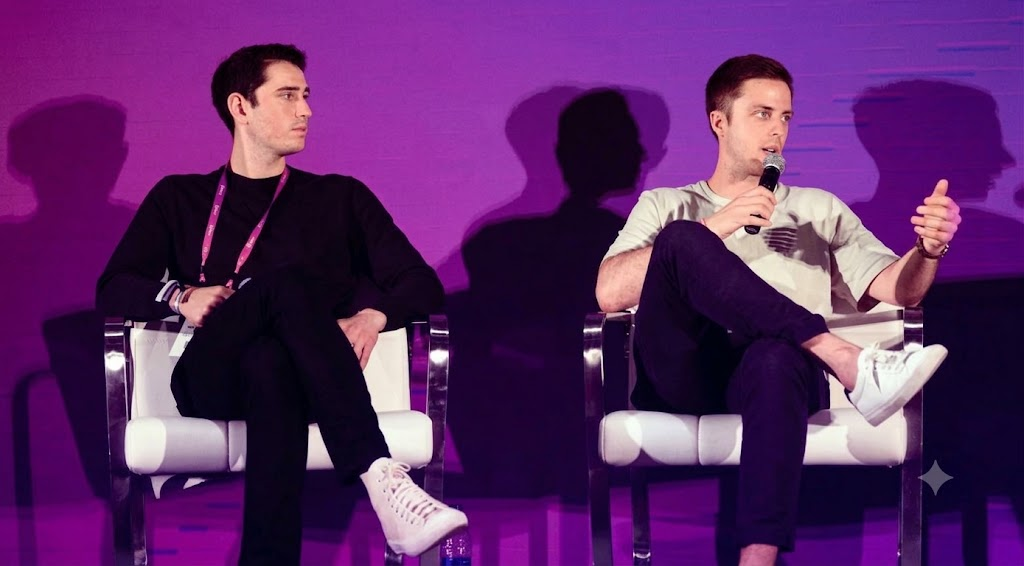

Jason Yanowitz and Michael Ippolito


As the industry matured, the company gradually pivoted from content creation to an on-chain capital markets intelligence platform, focusing on building institutional-grade data, investor relations, and compliance tools.


Around October 2025, Blockworks shut down its news department, concentrating resources on the data, investor relations, and compliance services segments, with its Blockworks Intelligence business line becoming a key growth area. The Series A extension funding completed this April was precisely to fuel this transition and subsequent M&A. Yanowitz publicly stated that the company's revenue is scaling rapidly, and this funding round was explicitly aimed at "consolidating the fragmented crypto data and information landscape."


Blockworks' strength lies in its issuer-side capabilities: helping on-chain asset issuers (protocols, chains, foundations, applications, stablecoin and RWA issuers, prediction markets, etc.) establish standardized disclosure frameworks, investor relations processes, and compliance workflows. Its products already serve institutions looking to enter on-chain markets, providing end-to-end support from due diligence to continuous monitoring.


Messari, also founded in 2018 and headquartered in New York, was established by Ryan Selkis and Dan McArdle. The company initially focused on professional-grade crypto research and data analysis, quickly becoming the go-to platform for institutional and retail investors seeking reliable information.
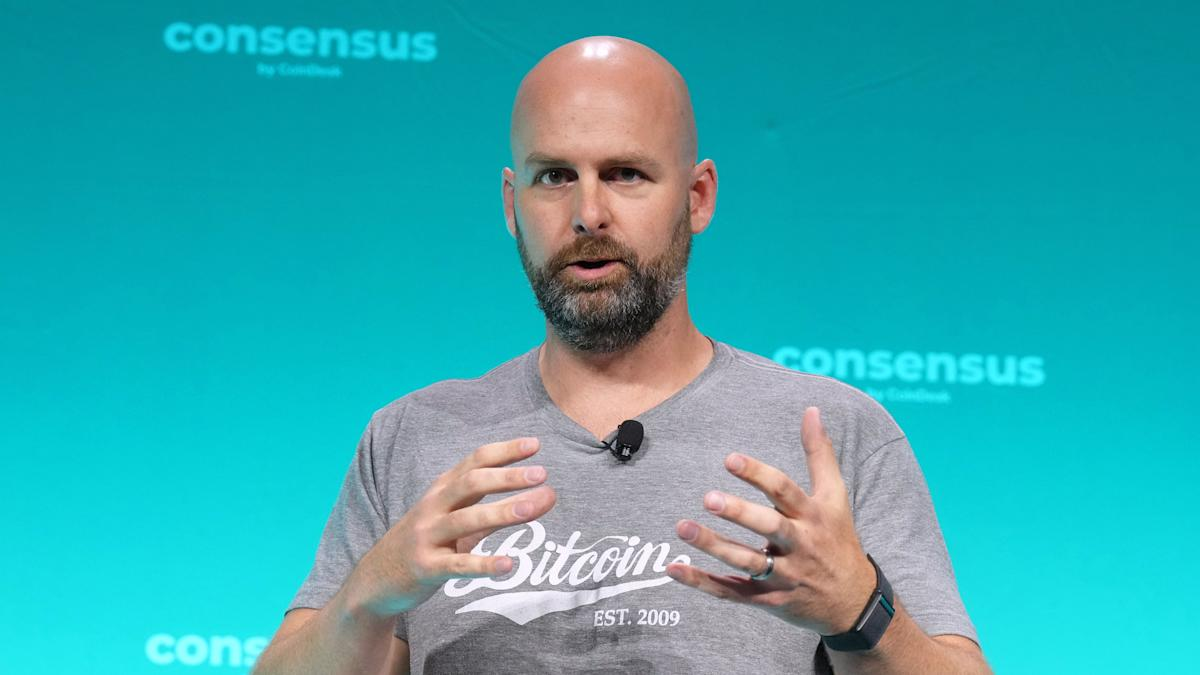

Ryan Selkis


In September 2022, Messari raised $35 million in a Series B funding round led by Brevan Howard Digital and followed by Point72 Ventures among others, valuing the company at approximately $300 million. This funding round occurred at the tail end of the bull market, reflecting the strong demand for high-quality data infrastructure at the time. However, the prolonged bear market post-2022, with tightening crypto project funding and trading volume pressures, presented real challenges for Messari. Following the departure of co-founder and former CEO Ryan Selkis in 2024, the company underwent workforce optimization. In a bear market environment, high-valuation data companies struggled to sustain previous growth expectations, facing increasing survival pressure.


Behind the Acquisition


According to Architect Partners' data, there have been 144 M&A transactions so far in 2026, totaling $11.8 billion, an increase of about 3.5% compared to the same period last year. Against a backdrop of pressure on trading volumes and token prices, some high-valuation startups are opting for mergers and acquisitions to achieve resource consolidation or exit.


Eric Risley, Founder of Architect Partners, pointed out that the industry is in a phase of divergence, where pressure may lead to more distress sales. The gap between Messari's $300 million valuation and its final sale price of just over $10 million exemplifies this phenomenon—early valuations based on growth narratives are being recalibrated against fundamentals and capital efficiency.


Yanowitz emphasized in the announcement: "This acquisition connects two sides of the market — issuers maintaining verifiable records of their operations, and investors, exchanges, and regulators consuming those records through research, APIs, and automated workflows." The core data foundation provided by Messari is precisely the prerequisite for AI agents to function effectively: an agent's capability depends on the data it can access and the APIs it can call.


The crypto industry is currently at a critical inflection point: institutional adoption is accelerating on-chain, sectors like stablecoins, RWA, and prediction markets continue to expand, driving surging demand for standardized disclosure, compliance monitoring, real-time data, and programmable access. In traditional financial markets, platforms like Bloomberg, FactSet, and S&P Global built data moats through long-term consolidation; the crypto field similarly requires such infrastructure but must adapt to the characteristics of on-chain native, real-time, and structured data.


By building upon Messari's vast dataset and overlaying its own issuer-side disclosure and IR capabilities, Blockworks aims to form a full-cycle solution from data collection, verification, and analysis to distribution and compliance. The introduction of AI will further accelerate this process, as high-quality, structured data is the core fuel for training and operating on-chain agents. For the Messari team, joining a platform with greater resources and strategic clarity allows its data assets to deliver value within a larger ecosystem, rather than continuing to contract under the pressure of independent operation.


The crypto data and research sector is transitioning from a period of flourishing diversity to consolidation of the fittest. Through market cycles, data and trust constitute long-term moats, and consolidation is often one of the optimal paths to navigate these cycles.


Domande pertinenti

QWhat is the key difference between Messari's valuation in 2022 and its recent acquisition price by Blockworks, and what does this signify?

AIn 2022, Messari was valued at approximately $300 million. It was recently acquired by Blockworks for a price exceeding $10 million. This significant devaluation, from $300 million to just over $10 million, highlights the survival pressure faced by high-valuation startups and the consolidation wave within the crypto data infrastructure sector during the prolonged bear market.

QWhat are the core assets of Messari that will be integrated into Blockworks, and what capabilities do they provide?

AMessari's core assets being integrated into Blockworks are its data platform and its API. This API provides multi-dimensional data support covering assets, markets, exchanges, news, research, stablecoins, protocols, networks, token unlocks, fundraising, social sentiment, event monitoring, watchlists, etc. It is utilized by funds, exchanges, developers, and various market participants.

QHow did Blockworks' business focus shift over time, leading up to the acquisition of Messari?

ABlockworks initially started in 2018 with a core focus on media and events (podcasts, research reports, conferences). As the industry matured, the company transitioned towards becoming an on-chain capital markets intelligence platform. It shifted its focus to building institutional-grade data, investor relations, and compliance tools. This strategic shift culminated in the acquisition of Messari to strengthen its data capabilities.

QWhat strategic goal did Blockworks aim to achieve by acquiring Messari, according to its co-founder?

AAccording to Blockworks co-founder Jason Yanowitz, the acquisition aims to build the 'single source of truth' for on-chain markets. The strategy is to connect the market's two sides by combining Blockworks' strengths in issuer disclosure, investor relations, and compliance workflows with Messari's strengths in data breadth and API capabilities.

QWhat broader trend in the crypto industry does the Messari acquisition represent, according to the data from Architect Partners?

AAccording to data from Architect Partners, the Messari acquisition represents a broader trend of consolidation and pressure-induced 'distressed' sales in the crypto industry. The data shows 144 M&A deals worth $11.8 billion year-to-date in 2026, a roughly 3.5% increase year-over-year. This indicates that in a bearish market with low trading volume and token price pressure, high-valuation startups are opting for mergers and acquisitions to consolidate resources or exit.

Letture associate

Microsoft CEO: In the AI Era, How Do You Define a Company's Moat?

Microsoft CEO Satya Nadella argues that in the AI era, a company's true competitive edge, or "moat," is not determined by choosing the single most powerful model, but by its ability to build a continuous "learning loop." This system integrates and evolves by connecting human workflows, domain expertise, organizational judgment, and employee experience. He posits that future companies will accumulate two types of capital: Human Capital (employee knowledge, judgment, creativity) and "Token Capital" (a firm's own built and owned AI capabilities). Importantly, AI amplifies rather than devalues human capital. Human direction is essential to guide progress, as computational power alone is aimless. The core opportunity lies in creating a closed-loop system where human and token capital reinforce each other in a compound, self-improving cycle. A company must be able to preserve its unique institutional knowledge—its "company veteran" expertise—even if it switches underlying general-purpose AI models. This requires private evaluation benchmarks, reinforcement learning environments based on internal data, and queryable knowledge bases. Nadella warns against a future where economic value is concentrated by a few dominant models that commoditize entire industries' knowledge. Instead, the priority should be building a broad "frontier ecosystem" where every company, industry, and nation can own its learning loop. This allows organizations to retain control of their intellectual property, amplify employee capabilities, and ensure the economic value created by AI is captured within their own businesses and communities. True corporate sovereignty in the AI age comes from turning organizational knowledge into a compounding system that creates enduring, defensible value.

marsbit17 min fa

Microsoft CEO: In the AI Era, How Do You Define a Company's Moat?

marsbit17 min fa

ETFs Are Just the Ticket: The True Institutionalization of Bitcoin Is Happening Where You Can't See It

Beyond the Bitcoin ETF spotlight, a deeper institutionalization is underway, leveraging Bitcoin as a foundational financial primitive. Institutions are using Bitcoin for purposes long reserved for assets like U.S. Treasuries and gold: as collateral for loans, insurance reserves, and the backbone of rated bonds. Examples include a Barbados-based insurer capitalizing with $40M in Bitcoin reserves and Ledn's $188M securitization of Bitcoin-backed loans, which received the first-ever investment-grade rating (BBB-) from S&P for a digital asset-backed security. This structure was stress-tested during a 27% price drop in early 2026, triggering automatic liquidations that functioned as designed but revealed the systemic risk of synchronized selling across leveraged positions. Infrastructure is evolving to support this, with platforms like Anchorage Digital's Atlas network enabling secure, institutional-grade settlement and collateral management. Strategies like basis trades and corporate treasuries (exemplified by companies like MicroStrategy issuing billions in equity and debt to fund Bitcoin acquisitions) further integrate Bitcoin into financial mechanics. While ETFs solved "how to own" Bitcoin, these developments answer "what to do with it," embedding the asset into the working machinery of finance—as collateral upon which loans, derivatives, and structured products are built. The real, enduring institutional shift is happening in these largely invisible plumbing and financing systems.

marsbit24 min fa

ETFs Are Just the Ticket: The True Institutionalization of Bitcoin Is Happening Where You Can't See It

marsbit24 min fa

ZEC Co-Founder Responds to Orchard Vulnerability: No Signs of Theft, Orchard Pool to Be Sealed

ZEC Co-Founder Addresses Orchard Vulnerability: No Signs of Theft, Plans to Sunset Orchard Pool A security vulnerability was recently discovered in Zcash's Orchard shielded pool, raising key concerns. The primary questions are whether the flaw was exploited, if user funds are safe, whether users can verify the total ZEC supply, and if other similar vulnerabilities exist. Analysis suggests the vulnerability was likely not exploited prior to its discovery. It was found proactively by a researcher using specialized tools, not due to an active breach. The development team and mining pools acted quickly to contain the issue. Typical financially-motivated attacks would likely have left visible on-chain evidence, which has not been observed. User funds in Orchard are considered safe and should be recoverable, assuming no prior exploitation. If the flaw was never used, all legitimate funds can be withdrawn. The article outlines risks associated with moving funds to transparent addresses or other pools, but concludes that leaving assets in place is a reasonable option. Currently, users cannot independently verify that the total ZEC supply hasn't been inflated due to this bug. However, the planned Ironwood network upgrade is designed to resolve this. It will permanently close the Orchard pool to new deposits and internal transfers, allowing only withdrawals. This mechanism will cap total withdrawals at the amount of legitimately deposited funds, enabling anyone to cryptographically verify the supply post-upgrade. Multiple teams, including Shielded Labs, have conducted extensive audits focused on counterfeiting vulnerabilities, assisted by advanced AI tools. No additional flaws of this type have been found so far, increasing confidence that no other similar undisclosed vulnerabilities exist. In summary, evidence indicates the Orchard bug was probably not used, user funds are secure, and no other counterfeiting flaws are currently known. The upcoming Ironwood upgrade will restore users' ability to independently verify the total ZEC supply, closing this chapter.

Foresight News29 min fa

ZEC Co-Founder Responds to Orchard Vulnerability: No Signs of Theft, Orchard Pool to Be Sealed

Foresight News29 min fa

Microsoft Announces Commercial-Grade Quantum Computer to be Completed in Three Years: Will the Boots Land?

Microsoft announces plans to build a commercially viable quantum computer by 2029, a significant acceleration from the previous industry consensus of a decade. The breakthrough is fueled by their new Majorana 2 quantum chip, which boasts a record-breaking average qubit lifetime of 20 seconds—a 1,000-fold reliability improvement over its predecessor. This leap was achieved by leveraging topological qubits, a theoretically more stable technology using Majorana zero modes, and switching the core superconducting material from aluminum to lead. Crucially, Microsoft's "Discovery" agentic AI platform accelerated the R&D process. AI agents autonomously analyzed vast experimental data, optimized manufacturing parameters (like the lead alloy composition), and solved issues like "ghost noise," dramatically speeding up experimentation. While the 20-second coherence time is a landmark, challenges remain: scaling from 12 qubits to the millions needed for practical applications, managing compilation costs, and verifying quantum results. Skeptics call for peer-reviewed data, and questions persist about whether even 20 seconds is sufficient for complex algorithms like breaking RSA encryption. The race is on with other approaches (superconducting, trapped ions), but Microsoft's confidence in its topological roadmap signals a potential shortcut to a scalable quantum future.

marsbit47 min fa

Microsoft Announces Commercial-Grade Quantum Computer to be Completed in Three Years: Will the Boots Land?

marsbit47 min fa

Trading

Spot
Futures
活动图片




