Four Outrageous Details Hidden in Justin Sun's Lawsuit Against WLFI

marsbitPubblicato 2026-04-24Pubblicato ultima volta 2026-04-24

Introduzione

Cryptocurrency billionaire Justin Sun has filed a lawsuit against World Liberty Financial (WLFI), accusing its executives of fraud, theft, and other violations. The complaint highlights four key allegations: First, it details the controversial history of WLFI co-founder Chase Herro, including past scams, a prison record, tax liens, and alleged visits to Jeffrey Epstein’s private island. Second, Sun claims WLFI secretly upgraded its smart contract without token holder approval, granting itself the power to freeze and seize WLFI tokens—a move allegedly used against Sun. WLFI defended the action as necessary to protect user interests. Third, the dispute may have been fueled by Sun’s $100 million purchase of TRUMP meme tokens issued by a Trump-affiliated project. WLFI reportedly objected, though the purchase was allegedly approved by a Trump family member involved with both projects. Finally, Sun accuses WLFI of operating an unlicensed money transmission business due to its centralized control over token transfers, potentially violating federal and state laws. WLFI CEO Zach Witkoff dismissed the suit as a desperate distraction from Sun’s own misconduct. Herro did not directly address the allegations.

Written by: Aleks Gilbert

Compiled by: Chopper, Foresight News

Cryptocurrency tycoon Justin Sun wants to maintain good relations with Donald Trump, but he has taken a hard line against the former president's business partners.

In a lawsuit filed on Tuesday, Sun accused World Liberty Financial executives of fraud, theft, and other illegal activities.

These allegations are not couched in lengthy, dry legal jargon. Instead, the complaint emphasizes that World Liberty Financial is facing "collapse and potential bankruptcy" and is struggling to operate.

Sun directs the most damaging content at one person: World Liberty co-founder Chase Herro, whom the complaint describes as a habitual fraudster and tax evader.

Some details have been reported before. And content such as World Liberty's imminent collapse is purely speculative. Nevertheless, this lawsuit will provide ample ammunition for the company's critics, including disgruntled investors and opposition lawmakers waiting to pounce.

When asked about the lawsuit on Wednesday, a spokesperson for World Liberty Financial pointed to a statement posted on social media by the company's co-founder.

The company's CEO, Zach Witkoff, called the lawsuit "a desperate attempt by Justin Sun to divert attention from his own misconduct."

Herro did not directly respond to the lawsuit. He reposted a motivational poem by Rudyard Kipling and Witkoff's statement, captioning it: "Building is never easy; it is often filled with successes and failures, like a huge maze you need to navigate."

Here are the four most noteworthy allegations and details from the 52-page lawsuit.

Herro's Past

Mainstream media reports have previously detailed Herro's checkered history, including a prison record, inflammatory remarks, questionable business practices, and involvement in a DeFi protocol in 2024 that lost almost all of its crypto assets due to a hack.

The complaint includes all of the above and adds several new details.

The complaint states: "Herro's business misconduct was so egregious that around 2010, deceived clients and partners set up a website called ChaseHeroScam.com."

The website was inaccessible on Thursday, and DL News could not verify whether the content mentioned in Sun's complaint existed on the site.

The complaint alleges that Herro has been subject to four federal tax liens, and a tax deed was issued for a property he owned in Florida.

The complaint also states that Herro "publicly boasted" about visiting Little St. James Island, the private island owned by the disgraced financier Jeffrey Epstein. However, the complaint does not provide evidence of this statement, and DL News has not been able to verify whether Herro made such remarks.

"Secret" Upgrade

Since the early stages of the project, holders of World Liberty Financial's governance token, WLFI, have had very limited rights.

According to company documents, token holders have no right to participate in the operation of World Liberty Financial but can vote on upgrades to the underlying technology.

Sun alleges that World Liberty executives broke their promise and unilaterally and quietly carried out two technical upgrades last year without any governance vote or disclosure to WLFI holders.

The upgrade allegedly gave World Liberty Financial the authority to freeze and seize WLFI tokens, and this authority has been used against Sun. Sun describes this upgrade as a devastating move.

"Although the upgrade is queryable on the public blockchain, World Liberty Financial hid it deep in the code, failing to inform token holders of the function's existence and potential impact," the complaint states. "The company secretly added a 'blacklist' function that could be activated at will."

World Liberty Financial stated that the freezing function is only used to protect user rights.

Witkoff said in a statement: "Justin Sun engaged in违规 behavior, and World Liberty Financial had to take action to protect its own and its users' rights. World Liberty Financial will continue to take all necessary measures to protect the community ecosystem."

TRUMP Meme Coin

World Liberty Financial's allegations of Sun's so-called misconduct have been vague. But Sun says company executives provided detailed explanations in private.

The reasons include: executives determined that Sun's selling of tokens caused the WLFI price to drop by 40%, that he违规 purchased tokens on behalf of others, and that he violated the "token purchase agreement," among others.

But the complaint points to another trigger for the conflict: the TRUMP Meme coin.

"World Liberty Financial stated that one of the reasons for freezing the WLFI tokens was dissatisfaction with Sun's purchase of $100 million worth of TRUMP tokens (issued by another Trump-backed project)," the complaint states. Part of the next sentence is redacted, but the ending indicates that something (likely the purchase of TRUMP tokens) "was approved in advance by a member of the Trump family, who is also a partner in both projects."

The complaint does not explain why World Liberty Financial would object to Sun buying TRUMP coins.

Money Transmission Business违规

Last year, two crypto developers were sentenced to prison for operating an unlicensed money transmission business, and another was convicted on the same charge but has not yet been sentenced.

Sun alleges that World Liberty Financial is also in violation of this regulation.

The complaint argues that by granting itself the power to transfer tokens on behalf of others, World Liberty Financial became a money transmitter.

"World Liberty's highly centralized control over WLFI tokens is not only completely contrary to the philosophy of DeFi but also indicates that it is conducting a money transmission business without registration or a license, violating numerous U.S. federal and state criminal laws."


Crypto di tendenza

Domande pertinenti

QWhat are the four key allegations or details highlighted in Justin Sun's lawsuit against WLFI?

AThe four key details are: 1) Chase Herro's alleged history as a 'recidivist fraudster and tax evader,' including a dedicated scam website and tax liens. 2) A 'secret' protocol upgrade that gave WLFI the power to freeze tokens without a governance vote. 3) A dispute partly fueled by Sun's purchase of $100 million in TRUMP meme coins. 4) An allegation that WLFI was operating an unlicensed money transmission business.

QWhat reason did WLFI's CEO, Zach Witkoff, give for the company's actions against Justin Sun?

AZach Witkoff stated that the lawsuit was a 'desperate attempt by Justin Sun to divert attention from his own misconduct' and that WLFI 'took action to protect itself and its users' from Sun's alleged violations, vowing to take all necessary measures to protect the community.

QAccording to the lawsuit, what was one of the controversial reasons WLFI gave for freezing Justin Sun's tokens?

AOne of the lawsuit claims is that WLFI was dissatisfied with Justin Sun's purchase of $100 million worth of TRUMP meme tokens, which were issued by a different Trump-affiliated project.

QWhat new power did the alleged 'secret upgrade' to the WLFI protocol grant the company?

AThe 'secret upgrade' allegedly granted World Liberty Financial the power to freeze and seize WLFI tokens, a function that was hidden deep within the code and enabled a 'blacklist' function without informing token holders.

QWhat specific federal violation does Justin Sun accuse World Liberty Financial of in the lawsuit?

AJustin Sun accuses World Liberty Financial of operating an unlicensed money transmission business, violating U.S. federal and state criminal laws, due to its highly centralized control over the WLFI tokens which allows it to transfer tokens on behalf of others.

Letture associate

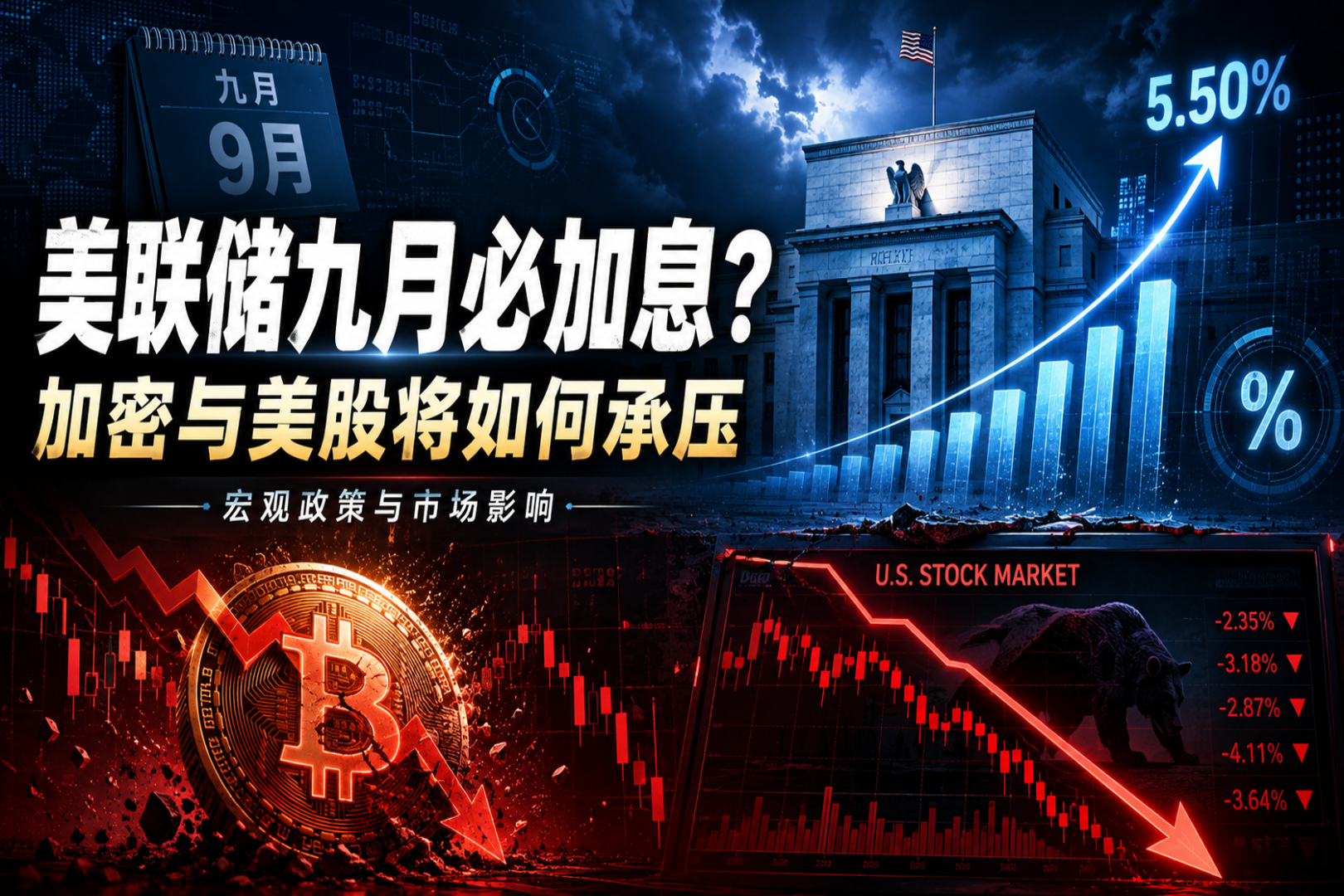
Will the Fed Definitely Raise Interest Rates in September? How Will Crypto and U.S. Stocks Withstand the Pressure?

The market's expectation for a September Fed rate hike surged dramatically in early August, jumping from under 50% to over 80% within a week. This shift followed a contentious July FOMC meeting, where a 9-3 vote to hold rates revealed growing dissent from hawkish members advocating for an immediate hike to combat persistent inflation. The primary catalyst for this repricing is rising oil prices, driven by renewed geopolitical tensions around the Strait of Hormuz, which threaten global supply. Energy costs directly influence inflation metrics, making the upcoming July CPI report (due August 12th) a critical data point. If it shows inflation reaccelerating, the probability of a September hike will solidify. For Bitcoin and crypto assets, this is typically bearish news. Bitcoin continues to behave as a high-beta, liquidity-sensitive risk asset. A rate hike raises the opportunity cost of holding non-yielding assets and could drive capital toward money markets, pressuring crypto prices in the short term. However, historical patterns suggest that if a hike is perceived as the end of a tightening cycle rather than the start, any negative price impact may be brief. U.S. stocks, particularly crypto-linked equities like Coinbase and growth-oriented tech stocks, are also vulnerable. Higher rates increase discount rates in valuation models, putting pressure on high-multiple companies. This coincides with a pivotal tech earnings season where investor focus has shifted from massive AI capital expenditure to tangible revenue and cash flow generation. Companies with negative cash flow and weak growth narratives could face heightened volatility if borrowing costs rise in September. In summary, a September Fed hike has evolved into a mainstream market scenario. Key factors to watch are oil prices, the July CPI report, and Fed communications, which will determine the final decision and its impact on volatile crypto and equity markets.

marsbit5 min fa

Will the Fed Definitely Raise Interest Rates in September? How Will Crypto and U.S. Stocks Withstand the Pressure?

marsbit5 min fa

A 'Overlooked' Market Event: Joint US-Japan-South Korea Intervention, Rare US Treasury Involvement, and Bessent's Quiet 'Market Rescue'?

Summary: The United States, Japan, and South Korea executed their largest coordinated foreign exchange intervention in nearly 30 years. The action targeted depreciation pressure on the Japanese yen and South Korean won. This move is seen as a significant effort by the US to stabilize the financial markets of its key allies and prevent the spillover of risks. Key details: * Japan reportedly intervened on July 30 using approximately 8.45 trillion yen (about $52.8 billion). South Korean authorities also intervened that day, selling dollars to support the won. * Notably, the US Treasury Department intervened directly in yen markets for the first time in roughly 30 years. The New York Fed, reportedly acting on behalf of the Treasury, sold euros to buy yen via Goldman Sachs and Morgan Stanley on July 31. Analysts view the use of the euro-yen pair as a way to alleviate yen pressure without adding selling pressure to the US dollar. * Prior to the action, the New York Fed conducted "rate checks" on both USD/JPY and EUR/JPY, a newer signaling tool that falls between verbal and physical intervention. The intervention is interpreted as going beyond traditional currency stabilization. Analysts, such as Michael Hartnett of Bank of America, suggest it resembles a "Price Keeping Operation" for the AI era. The core US objectives are perceived to be: 1. Preventing rapid yen depreciation from triggering a sharp rise in Japanese government bond yields. 2. Containing financial stress from spreading across Asian markets like South Korea and Japan. 3. Reducing the risk of disorderly capital flows impacting the US bond market. This coordinated action underscores the importance of Japan and South Korea as critical partners in the US semiconductor and AI supply chain. Stabilizing their financial markets is seen as vital to mitigating risks to the broader tech industry and the US market itself. The intervention coincides with market pressures, including the KOSDAQ index hitting a low since October 2022. While seen as a move to control volatility, some analysts caution it may not fundamentally reverse existing market trends.

marsbit9 min fa

A 'Overlooked' Market Event: Joint US-Japan-South Korea Intervention, Rare US Treasury Involvement, and Bessent's Quiet 'Market Rescue'?

marsbit9 min fa

Will the Federal Reserve Definitely Raise Interest Rates in September? How Will Cryptocurrencies and US Stocks Bear the Pressure?

In early August 2024, market expectations for a September Federal Reserve rate hike surged dramatically, from below 50% to over 80%, driven by renewed inflation concerns. This shift followed a contentious July FOMC meeting where a 9-3 vote to hold rates revealed a growing hawkish faction advocating for an immediate hike, citing prolonged above-target inflation. The key catalyst is escalating conflict near the Strait of Hormuz, which has pushed oil prices up approximately 20% in July, threatening to reignite inflation. The next critical data point is the July CPI report on August 12th; a hot reading could solidify hike expectations. For crypto assets, particularly Bitcoin, this represents near-term pressure. Bitcoin continues to exhibit high-beta, risk-on characteristics, making it sensitive to tightening liquidity and higher opportunity costs. However, historical precedent suggests that if a hike is perceived as the cycle's end rather than its start, the negative impact may be brief, with markets quickly pivoting to anticipate future rate cuts. U.S. stocks, especially crypto-linked equities like Coinbase and high-valuation tech stocks, face amplified volatility. Higher rates increase discount rates in valuation models, pressuring growth stocks. This coincides with a pivotal tech earnings season where investor focus has shifted from massive AI capital expenditures to demonstrable revenue and cash flow generation. Companies with negative cash flows and weak growth narratives could see severe pressure if a September hike materializes, as financing costs would rise. Key indicators to watch include oil prices, upcoming inflation data, and Fed commentary at events like the Jackson Hole symposium.

Odaily星球日报9 min fa

Will the Federal Reserve Definitely Raise Interest Rates in September? How Will Cryptocurrencies and US Stocks Bear the Pressure?

Odaily星球日报9 min fa

Trading

Spot

Articoli Popolari

Come comprare SUN

Benvenuto in HTX.com! Abbiamo reso l'acquisto di SUN (SUN) semplice e conveniente. Segui la nostra guida passo passo per intraprendere il tuo viaggio nel mondo delle criptovalute.Step 1: Crea il tuo Account HTXUsa la tua email o numero di telefono per registrarti il tuo account gratuito su HTX. Vivi un'esperienza facile e sblocca tutte le funzionalità,Crea il mio accountStep 2: Vai in Acquista crypto e seleziona il tuo metodo di pagamentoCarta di credito/debito: utilizza la tua Visa o Mastercard per acquistare immediatamente SUNSUN.Bilancio: Usa i fondi dal bilancio del tuo account HTX per fare trading senza problemi.Terze parti: abbiamo aggiunto metodi di pagamento molto utilizzati come Google Pay e Apple Pay per maggiore comodità.P2P: Fai trading direttamente con altri utenti HTX.Over-the-Counter (OTC): Offriamo servizi su misura e tassi di cambio competitivi per i trader.Step 3: Conserva SUN (SUN)Dopo aver acquistato SUN (SUN), conserva nel tuo account HTX. In alternativa, puoi inviare tramite trasferimento blockchain o scambiare per altre criptovalute.Step 4: Scambia SUN (SUN)Scambia facilmente SUN (SUN) nel mercato spot di HTX. Accedi al tuo account, seleziona la tua coppia di trading, esegui le tue operazioni e monitora in tempo reale. Offriamo un'esperienza user-friendly sia per chi ha appena iniziato che per i trader più esperti.

925 Totale visualizzazioniPubblicato il 2024.12.12Aggiornato il 2025.03.21

Come comprare SUN

Discussioni

Benvenuto nella Community HTX. Qui puoi rimanere informato sugli ultimi sviluppi della piattaforma e accedere ad approfondimenti esperti sul mercato. Le opinioni degli utenti sul prezzo di SUN SUN sono presentate come di seguito.

活动图片