Former SEC Chair Made Shocking Revelation to Ripple’s CEO During White House Meet

bitcoinistPubblicato 2026-03-03Pubblicato ultima volta 2026-03-03

Introduzione

Former SEC Chair Gary Gensler privately apologized to Ripple CEO Brad Garlinghouse during a White House meeting on digital asset policy in late 2024, admitting he was wrong about XRP and praising Ripple’s work. This marked a significant shift after a four-year legal battle where the SEC sued Ripple for an unregistered securities offering involving XRP. Although the case created regulatory uncertainty and led to exchange delistings, Ripple secured a partial victory in 2023 when a judge ruled XRP was not a security on public markets. Gensler, who resigned in early 2025, had been a controversial figure in crypto for his aggressive enforcement approach. His apology validates Ripple’s stance and suggests a potential change in how Washington may engage with crypto.

XRP Australia 2026 turned into an unexpected window into Washington’s inner workings when Ripple CEO Brad Garlinghouse revealed that former SEC Chair Gary Gensler had privately apologized and admitted, during a high‐level White House meeting, that he had been wrong about XRP. The revelation marks an unbelievable shift in tone after years of aggressive SEC enforcement and a bruising legal battle against Ripple.

Related Reading: XRP Ledger Positioned For Real World Asset Explosion As Securitize Teases $400-T Market

The Room Where It Happened

Ripple CEO Brad Garlinghouse could hardly believe it himself as he recounted to a stunned audience the encounter he had with former SEC Chair Gary Gensler near the end of 2024 at the White House, during a meeting on digital asset policy, just after the SEC–Ripple legal battle had finally wrapped up. According to Garlinghouse’s account, Gensler approached him in private after the session ended: “He comes up to me and he says sorry,” Garlinghouse recalled, laughing, still visibly astonished:

“I’m sorry, I was wrong, and you guys have done an incredible job”

How the SEC vs Ripple Battle Defined XRP

The four-year legal battle between the SEC and Ripple began in December 2020, when the U.S. Securities and Exchange Commission sued Ripple for allegedly raising $1.3 billion through an unregistered securities offering tied to XRP, framing XRP itself as an investment contract. This resulted in many exchanges delisting XRP, putting the token under a huge regulatory cloud for years and the Ripple vs. SEC case becoming a symbol for the entire crypto market.

However, in 2023, Ripple achieved a very important partial victory, when a judge ruled that, despise some issues with certain institutional sales, XRP was not a security when sold on public markets.

More Than An Apology

Gensler, who stepped down from his role as SEC Chair in early 2025, became the face of the enemy for many in crypto as he pushed an aggressive “regulation by enforcement” strategy against digital asset projects, with Garlinghouse himself previously labeling him a “political liability” and an “autocrat”.

Related Reading: XRP’s Macro Plan Hasn’t Changed, And This Target Remains Valid

Therefore, his brief apology to Garlinghouse behind closed doors carries immense weight: it not only validates Ripple’s narrative that the SEC overreached but also hints at a broader shift in how Washington may choose to engage with XRP and the wider crypto industry going forward.
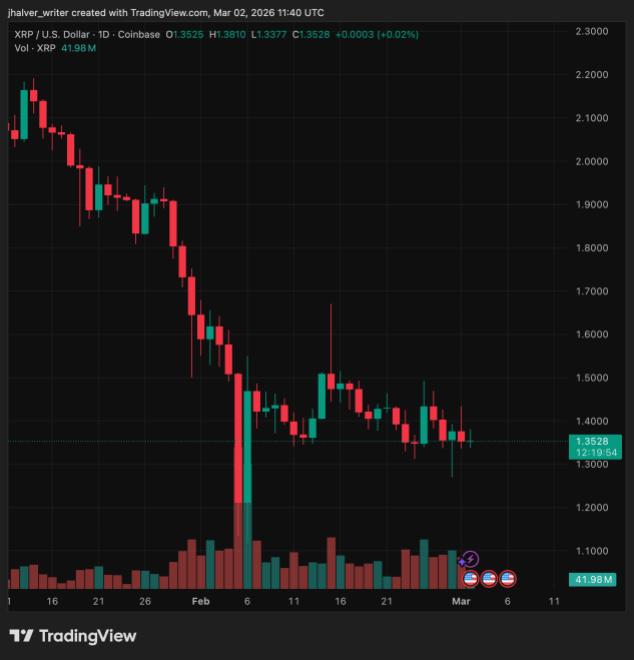
XRP's price trends to the downside on the daily chart. Source: XRPUSD on Tradingview

Cover image from ChatGPT, XRPUSD on TradingView

Crypto di tendenza

Domande pertinenti

QWhat shocking revelation did former SEC Chair Gary Gensler make to Ripple's CEO during a White House meeting?

AFormer SEC Chair Gary Gensler privately apologized to Ripple CEO Brad Garlinghouse and admitted, 'I'm sorry, I was wrong, and you guys have done an incredible job.'

QWhen and where did the encounter between Gary Gensler and Brad Garlinghouse take place?

AThe encounter took place near the end of 2024 at the White House, during a meeting on digital asset policy, shortly after the SEC-Ripple legal battle had concluded.

QWhat was the core allegation made by the SEC against Ripple in its 2020 lawsuit?

AThe SEC sued Ripple for allegedly raising $1.3 billion through an unregistered securities offering tied to XRP, framing XRP itself as an investment contract.

QWhat was the significant legal outcome for Ripple in 2023 that preceded this apology?

AIn 2023, a judge ruled that, despite some issues with certain institutional sales, XRP was not a security when sold on public markets, marking a major partial victory for Ripple.

QWhy does Gary Gensler's apology carry immense weight for the crypto industry, according to the article?

AThe apology not only validates Ripple's narrative that the SEC overreached but also hints at a broader shift in how Washington may choose to engage with XRP and the wider crypto industry going forward.

Letture associate

The Clarity Act's Journey Through Congress: The Thorny Path of Bipartisan Compromise in the U.S.

The U.S. Congress is struggling to advance the crypto market structure bill known as the Clarity Act, with bipartisan compromise proving difficult. Key hurdles include unresolved disputes over "yield" products and, more critically, the inclusion of strong ethics provisions for elected officials—a non-negotiable demand for many Democrats. While a compromise on yield was reached in May, securing only limited Democratic support in committee, the separate Senate Agriculture Committee version later passed with no Democratic votes due to the ethics impasse. As Republicans push for a full Senate vote in July, demands for ethics rules have expanded, and other contentious issues like developer protections and concerns from law enforcement and large banks further complicate negotiations. Despite consensus on the need for legislation, the path forward is unclear. Recent discussions between senators and White House officials aim to find acceptable ethics language. Some lawmakers question whether a compromise text can garner enough bipartisan support, with one Democrat stating the current proposal lacks the strong ethics provisions required for their vote. Potential short-term goals for the crypto community include symbolic Senate action before the August recess, a longer-term aim for passage by 2026, or establishing a detailed framework that addresses ethics and other compromises. The process remains arduous, relying on the traditional, vote-by-vote effort to build bipartisan support.

marsbit12 min fa

The Clarity Act's Journey Through Congress: The Thorny Path of Bipartisan Compromise in the U.S.

marsbit12 min fa

Are Kalshi and Polymarket Founders at Odds? This Business Rivalry Is More Brutal Than You Think

"The Rivalry Between Kalshi and Polymarket Founders Turns Bitter and Litigious" The intense feud between Tarek Mansour, CEO of Kalshi, and Shayne Coplan, founder of Polymarket, has escalated far beyond typical business competition into personal animosity and regulatory battles. Both lead billion-dollar prediction market platforms, but their approaches differ sharply. Kalshi positions itself as the compliant operator, securing U.S. regulatory approval before launching. In contrast, Polymarket initially operated offshore, allowing U.S. users to access its platform via VPN, which drew regulatory scrutiny. The conflict reached a peak in November 2024 when FBI agents raided Coplan's New York apartment. While Coplan publicly blamed political motives, his team privately suspected Kalshi was involved. According to sources, Kalshi's lawyers had previously reported Polymarket's operations to federal prosecutors, highlighting its accessibility to U.S. users despite a ban. This incident fueled mutual accusations and underhanded tactics, including social media smear campaigns and attempts to sabotage each other's major business deals. Their rivalry also played out in Washington, influencing regulatory debates. Kalshi actively lobbied against Polymarket's practices, framing them as illegal and unethical. Polymarket, after facing a CFTC fine and investigation, later acquired a licensed U.S. firm to launch a domestic app, regaining a foothold. Despite the hostility, both companies have seen massive growth, with combined trading volumes soaring. However, increased regulatory scrutiny, particularly around insider trading on Polymarket's platform, continues to pose challenges. The founders' deep-seated mutual disdain ensures their battle for market dominance remains as much a personal vendetta as a commercial one.

marsbit21 min fa

Are Kalshi and Polymarket Founders at Odds? This Business Rivalry Is More Brutal Than You Think

marsbit21 min fa

Bank of America Quietly Positions: Could $6 Trillion in Bank Deposits Flow into Stablecoins?

Bank of America (BofA) is making strategic moves in digital assets, appointing senior leaders to advance a platform covering stablecoins, tokenized deposits, custody, and crypto settlement. This comes amid a broader discussion about the potential migration of trillions in bank deposits to stablecoins. A cited TBAC report estimated up to $6.6 trillion in transactional deposits could be at risk of moving to stablecoins long-term, a point BofA's CEO previously conditioned on stablecoins being allowed to pay interest. The regulatory landscape is evolving, with the GENIUS Act setting a final implementation deadline for January 2027. Major banks, however, are not waiting; JPMorgan, Citi, BofA, and others are already developing tokenized deposit networks and services. Industry observers note that while retail crypto trading is sluggish, institutional adoption of stablecoins for real-world use cases is driving growth. Despite the activity, some analysts remain cautious, noting banks have a long history of blockchain announcements and that true structural change is slow. The stablecoin market itself has seen a recent dip from its peak. Optimistic projections, however, foresee significant growth, with stablecoin settlement volume already reaching $33 trillion in 2025. The race is on for the post-January 2027 landscape, where regulatory clarity is expected to accelerate the fusion of traditional finance and crypto.

marsbit26 min fa

Bank of America Quietly Positions: Could $6 Trillion in Bank Deposits Flow into Stablecoins?

marsbit26 min fa

Trading

Spot

Articoli Popolari

Come comprare HOUSE

Benvenuto in HTX.com! Abbiamo reso l'acquisto di Housecoin (HOUSE) semplice e conveniente. Segui la nostra guida passo passo per intraprendere il tuo viaggio nel mondo delle criptovalute.Step 1: Crea il tuo Account HTXUsa la tua email o numero di telefono per registrarti il tuo account gratuito su HTX. Vivi un'esperienza facile e sblocca tutte le funzionalità,Crea il mio accountStep 2: Vai in Acquista crypto e seleziona il tuo metodo di pagamentoCarta di credito/debito: utilizza la tua Visa o Mastercard per acquistare immediatamente HousecoinHOUSE.Bilancio: Usa i fondi dal bilancio del tuo account HTX per fare trading senza problemi.Terze parti: abbiamo aggiunto metodi di pagamento molto utilizzati come Google Pay e Apple Pay per maggiore comodità.P2P: Fai trading direttamente con altri utenti HTX.Over-the-Counter (OTC): Offriamo servizi su misura e tassi di cambio competitivi per i trader.Step 3: Conserva Housecoin (HOUSE)Dopo aver acquistato Housecoin (HOUSE), conserva nel tuo account HTX. In alternativa, puoi inviare tramite trasferimento blockchain o scambiare per altre criptovalute.Step 4: Scambia Housecoin (HOUSE)Scambia facilmente Housecoin (HOUSE) nel mercato spot di HTX. Accedi al tuo account, seleziona la tua coppia di trading, esegui le tue operazioni e monitora in tempo reale. Offriamo un'esperienza user-friendly sia per chi ha appena iniziato che per i trader più esperti.

333 Totale visualizzazioniPubblicato il 2025.04.27Aggiornato il 2026.06.02

Come comprare HOUSE

Discussioni

Benvenuto nella Community HTX. Qui puoi rimanere informato sugli ultimi sviluppi della piattaforma e accedere ad approfondimenti esperti sul mercato. Le opinioni degli utenti sul prezzo di HOUSE HOUSE sono presentate come di seguito.

活动图片