Former FTX Employee Secures $35 Million in Funding, This Time They Built a Special Exchange

marsbitPubblicato 2025-12-25Pubblicato ultima volta 2025-12-25

Introduzione

Former FTX US President Brett Harrison's fintech firm, Architect Financial Technologies, has raised $35 million in Series A funding at a $187 million valuation. The round was led by MIAX and Tioga Capital, with participation from ARK Invest, Galaxy Ventures, VanEck, and Coinbase Ventures, among others. Founded in January 2023, Architect aims to bridge traditional and digital asset markets by offering brokerage services, trading technology, and post-trade solutions for institutional clients. A key product is AX, a perpetual futures exchange for traditional assets like forex, interest rates, and metals—bypassing strict U.S. crypto regulations. The platform provides API-driven tools, multi-asset brokerage, and compliance with U.S. financial standards. Architect, which operates as a B2B infrastructure provider rather than a crypto exchange, targets hedge funds and asset managers seeking to integrate TradFi and DeFi. Harrison, a Harvard graduate and ex-Jane Street executive, left FTX US in early 2022 before its collapse. Architect’s focus on regulated, institutional-grade technology positions it to capitalize on the convergence of traditional and blockchain-based finance.

Original Author: 1912212.eth, Foresight News

On December 23, Architect Financial Technologies (hereinafter referred to as Architect), a fintech company founded by former FTX US president Brett Harrison, completed a $35 million Series A funding round, reaching a valuation of $187 million. This round was led by MIAX and Tioga Capital, with participation from ARK Invest, Galaxy Ventures, VanEck, Coinbase Ventures, CMT Digital, and others. As early as February 2024, Architect completed a $12 million funding round led by BlockTower and Tioga Capital.

In the current bear market for cryptocurrencies, gaining the favor of venture capitalists and securing tens of millions of dollars in funding is quite rare across the entire industry. What makes Architect stand out?

Centralized Traditional Asset Perpetual Contract Exchange AX

Architect was established in January 2023, right as the aftershocks of the FTX collapse were still being felt. The company aims to bridge centralized and decentralized digital asset markets, helping financial institutions efficiently handle trading and post-trade processing for asset classes such as stocks, ETFs, futures, and options.

Specifically, Architect's platform covers three main modules: brokerage services, trading technology, and post-trade solutions. First, its brokerage business provides multi-asset brokerage services under US regulation, supporting stocks, stock options, futures, and futures options. The platform is equipped with a full-featured API, SDKs in various programming languages (such as Rust, Python, JavaScript), paper trading simulations, execution algorithms, and customizable trading dashboards. Users can access major global markets, including CME Group, Cboe, Nasdaq, Coinbase Derivatives, and the NYSE. This makes Architect a one-stop portal for institutional investors to access both traditional and digital assets.

In September 2023, Architect was approved by the National Futures Association (NFA) to register as an independent introducing broker, allowing it to provide derivatives brokerage services.

Secondly, one of Architect's core products is AX—a perpetual futures exchange specifically designed for traditional assets. Perpetual futures are widely popular in the crypto market, but in the US regulatory environment overseen by the SEC and CFTC, perpetual contracts for crypto assets face strict restrictions. AX cleverly sidesteps this pain point by focusing on perpetual contracts for traditional financial asset classes such as foreign exchange, interest rates, and metals.

Finally, the Post-Trade module, targeting digital assets and derivatives, provides advanced post-trade reconciliation, real-time profit and loss tracking, and detailed transaction cost analysis (TCA). This service is particularly suitable for hedge funds, family offices, asset managers, and trading firms, helping them optimize operational efficiency.

Overall, Architect's platform emphasizes flexibility in self-custody and custody options, supports multi-language APIs, and facilitates developers in building custom execution algorithms, streaming market data, and position management tools. The company also has its own regulatory entities: Architect Financial Derivatives LLC (NFA ID 0556853) and Architect Securities LLC (an SEC-registered broker-dealer and FINRA/SIPC member), ensuring all operations comply with US financial regulatory standards.

From a business model perspective, Architect is not a crypto exchange but rather more like a FinTech infrastructure provider. It does not issue tokens, does not rely on community governance, and instead profits through trading fees and similar means. This B2B-oriented strategy makes it more resilient in a bear market, avoiding the severe volatility of cryptocurrency prices.

According to the company's website, Architect's target customer base is institutional players, such as hedge funds and asset management groups, who need reliable technology stacks to bridge TradFi and DeFi. The integration of traditional assets and Crypto is already a trend, and SEC Chairman Paul Atkins predicts that within the next two years, the entire US financial market might migrate to blockchain-based technology.

Impressive Resume, Left Before the FTX Collapse

Architect founder Brett Harrison has extensive fintech experience. His career trajectory is exemplary: from traditional high-frequency trading to a crypto leadership role, and then to independent entrepreneurship.
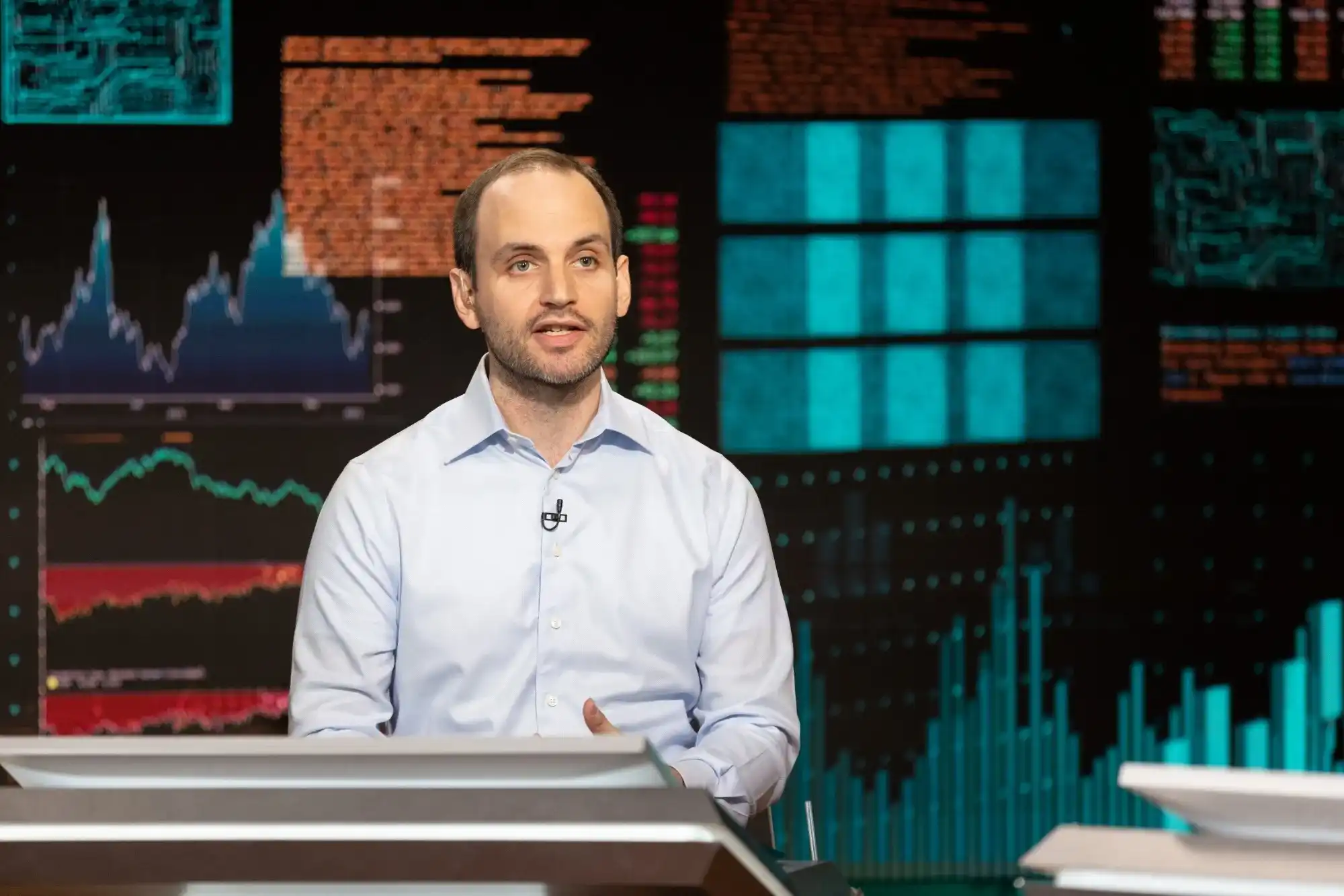
Harrison graduated from Harvard University with a Bachelor's and Master's degree in Computer Science. His career began at the top quantitative trading firm Jane Street, where from August 2010 to April 2021, he served as Head of Trading Systems Technology, responsible for building high-performance trading infrastructure. This experience gave him core skills in low-latency systems, algorithmic execution, and risk management.

In May 2021, Harrison joined FTX US as President, responsible for the expansion of the US business. At the time, FTX was at its peak, and he led the platform's technological upgrades and product innovations, including the development of derivatives tools. However, in January 2022, months before the FTX collapse, Harrison announced his resignation. In a public letter, he stated that the departure stemmed from management disagreements with founder SBF, not financial issues. According to the FTX report, it was due to a "lack of proper authorization, formal management structure, and key personnel."

This departure was seen as foresight, avoiding subsequent legal entanglements. During his time at FTX US, Harrison drove the platform's institutional transformation, attracting many traditional investors. Just months after leaving, Harrison founded Architect in January 2023 and completed a $5 million seed funding round the following month, with participation from Coinbase Ventures and others.

Currently, its AX exchange has opened its whitelist registration to both individual and institutional users.

In the macro environment of late 2025, Architect's rise is timely, coinciding with a collective surge in gold, silver, and stock assets. While the entire crypto asset market is languishing, tapping into the most profitable and fastest-growing markets, with compliance and technology as support, might be doing the right thing in the right direction.


Crypto di tendenza

Domande pertinenti

QWhat is Architect Financial Technologies and what recent funding milestone did it achieve?

AArchitect Financial Technologies is a fintech company founded by former FTX US president Brett Harrison, focusing on bridging centralized and decentralized digital asset markets. It recently completed a $35 million Series A funding round at a valuation of $187 million.

QWhat is the core product offered by Architect, and how does it differ from typical crypto exchanges?

AArchitect's core product is AX, a perpetual futures exchange designed for traditional assets like forex, interest rates, and metals, rather than cryptocurrencies. Unlike typical crypto exchanges, it operates as a B2B fintech infrastructure provider, emphasizing compliance, institutional services, and avoiding token issuance or community governance.

QWho led the Series A funding round for Architect, and which notable firms participated?

AThe Series A funding round was co-led by MIAX and Tioga Capital, with participation from ARK Invest, Galaxy Ventures, VanEck, Coinbase Ventures, CMT Digital, and others.

QWhat regulatory approvals has Architect obtained to operate its services?

AArchitect has registered as an independent introducing broker with the National Futures Association (NFA) and operates through its regulated entities: Architect Financial Derivatives LLC (NFA ID: 0556853) and Architect Securities LLC (an SEC-registered broker-dealer and FINRA/SIPC member).

QWhat is Brett Harrison's professional background prior to founding Architect?

ABrett Harrison has a computer science degree from Harvard and previously worked as the head of trading systems technology at Jane Street. He later served as president of FTX US before resigning in January 2022, months before FTX's collapse, due to management disagreements with founder SBF.

Letture associate

From South Korea to the United States: Blue-Collar Jobs Are Becoming Increasingly Popular, Thanks to AI

AI is reshaping the labor market's value proposition. The traditional four-year college degree is losing its appeal as a guaranteed career path, while skilled blue-collar trades like electricians, welders, and plumbers are experiencing historic demand and wage premiums. This shift is driven by dual pressures: AI's displacement of certain white-collar roles and a booming need for physical infrastructure and data center construction. Data confirms the trend. In the U.S., vocational school revenue surged, and a significant portion of recent layoffs are AI-related. Surveys show a majority of Gen Z adults plan to pursue blue-collar work, citing better job security against AI automation. Vocational education interest has exploded recently. Experts cite a psychological shift as younger generations seek tangible, AI-resistant careers and avoid high student debt. In many cases, salaries for skilled trades now match or exceed those requiring a bachelor's degree. In South Korea, semiconductor vocational high schools boast near-total employment, with graduates securing high-paying roles at companies like Samsung. The shortage is structural, exacerbated by a retiring baby boomer workforce and massive infrastructure projects. Companies like JPMorgan Chase, Meta, and Lowe's are investing heavily in training programs. However, overcoming historical stigma and a "perception gap" around trade careers remains a key challenge to closing the talent gap.

marsbit45 min fa

From South Korea to the United States: Blue-Collar Jobs Are Becoming Increasingly Popular, Thanks to AI

marsbit45 min fa

Qualcomm: AI Hype Subsides, When Will Smartphones Emerge from the Gloom?

Qualcomm reported its Q3 FY2026 results (ending June 2026), with revenue of $9.95B, down 4% YoY but above expectations. Gross margin declined to 53.1%, pressured by rising costs across manufacturing and memory. Key business segments showed mixed performance: Handset revenue fell 19.6% YoY to $5.09B, dragged by an 11% decline in non-Apple Android shipments and weaker high-end mix. Conversely, Automotive revenue surged 61% to $1.59B, and IoT grew 9% to $1.83B. Core operating profit dropped 41% YoY due to margin compression and higher expenses. Management's Q4 FY2026 guidance projects revenue of $9.7B-$10.5B, in line with consensus, but Non-GAAP EPS guidance of $2.05-$2.25 fell short of expectations. Amidst persistent weakness in its core handset market, Qualcomm is pursuing growth in AI, focusing on Edge AI (smartphones, PCs, automotive) and Data Center AI. Its data center strategy includes four pillars: AI accelerators (e.g., AI200), commercial CPUs (Dragonfly C1000), custom silicon, and connectivity solutions. While these initiatives initially boosted its stock, concerns over AI capital expenditure sustainability have since erased those gains. The company targets $5B in data center revenue for FY2027 and $15B for FY2029. The report concludes that with the traditional handset business still under pressure, the data center opportunity is currently viewed as a longer-term option, and a more conservative valuation based on core operations may be warranted until AI contributions materialize.

marsbit49 min fa

Qualcomm: AI Hype Subsides, When Will Smartphones Emerge from the Gloom?

marsbit49 min fa

From TPU to Self-Evolving Agents: How Jeff Dean Predicts the Next Step in AI

At the 2026 YC Startup School, Jeff Dean outlined his vision for AI's next phase, shifting focus from simply scaling models to building intelligent, autonomous systems. He believes AI's progress is no longer just about creating smarter models, but about integrating them into systems capable of long-term, iterative work, automated experimentation, and continuous learning. This evolution moves the competition from "who has the bigger model" to "who can best organize intelligence." Dean suggests AI capabilities are now comparable to a junior engineer, enabling the automation of complex workflows. However, the true challenge and opportunity lie in managing these AI "workers" at scale. He emphasizes the importance of **context engineering**—structuring tools, memory, and feedback loops—over raw model power. For startups, this means building deep expertise in niche domains where general models currently fail (near 0-1% success rates), leveraging proprietary data, specialized tools, and domain-specific evaluators. A recurring theme is re-examining fundamental constraints. Dean's past work, like moving Google's search index to memory or creating the TPU, stemmed from questioning outdated assumptions about hardware and cost. He sees similar inflection points today, particularly in **specialized inference hardware** to drastically reduce latency and energy consumption for real-time Agent operation. Notably, he points out that in modern AI systems, the dominant cost is often not computation but **data movement**. Reliable, long-running Agents require robust system design, borrowing concepts from distributed computing like checkpointing, state management, and parallel exploration to handle failures and maintain progress over days or weeks. As AI automates execution, the scarcest human skills will shift to **defining clear specifications**, **judging what problems are worth solving** (taste), and designing effective feedback loops. Ultimately, Dean's framework prioritizes understanding the problem deeply, identifying the true bottlenecks, and systematically building closed-loop systems where AI can not only perform tasks but also improve AI itself.

marsbit49 min fa

From TPU to Self-Evolving Agents: How Jeff Dean Predicts the Next Step in AI

marsbit49 min fa

Trading

Spot

Articoli Popolari

Come comprare O

Benvenuto in HTX.com! Abbiamo reso l'acquisto di O1 exchange (O) semplice e conveniente. Segui la nostra guida passo passo per intraprendere il tuo viaggio nel mondo delle criptovalute.Step 1: Crea il tuo Account HTXUsa la tua email o numero di telefono per registrarti il tuo account gratuito su HTX. Vivi un'esperienza facile e sblocca tutte le funzionalità,Crea il mio accountStep 2: Vai in Acquista crypto e seleziona il tuo metodo di pagamentoCarta di credito/debito: utilizza la tua Visa o Mastercard per acquistare immediatamente O1 exchangeO.Bilancio: Usa i fondi dal bilancio del tuo account HTX per fare trading senza problemi.Terze parti: abbiamo aggiunto metodi di pagamento molto utilizzati come Google Pay e Apple Pay per maggiore comodità.P2P: Fai trading direttamente con altri utenti HTX.Over-the-Counter (OTC): Offriamo servizi su misura e tassi di cambio competitivi per i trader.Step 3: Conserva O1 exchange (O)Dopo aver acquistato O1 exchange (O), conserva nel tuo account HTX. In alternativa, puoi inviare tramite trasferimento blockchain o scambiare per altre criptovalute.Step 4: Scambia O1 exchange (O)Scambia facilmente O1 exchange (O) nel mercato spot di HTX. Accedi al tuo account, seleziona la tua coppia di trading, esegui le tue operazioni e monitora in tempo reale. Offriamo un'esperienza user-friendly sia per chi ha appena iniziato che per i trader più esperti.

586 Totale visualizzazioniPubblicato il 2026.06.19Aggiornato il 2026.06.29

Come comprare O

Come comprare PROS

Benvenuto in HTX.com! Abbiamo reso l'acquisto di Pharos (PROS) semplice e conveniente. Segui la nostra guida passo passo per intraprendere il tuo viaggio nel mondo delle criptovalute.Step 1: Crea il tuo Account HTXUsa la tua email o numero di telefono per registrarti il tuo account gratuito su HTX. Vivi un'esperienza facile e sblocca tutte le funzionalità,Crea il mio accountStep 2: Vai in Acquista crypto e seleziona il tuo metodo di pagamentoCarta di credito/debito: utilizza la tua Visa o Mastercard per acquistare immediatamente PharosPROS.Bilancio: Usa i fondi dal bilancio del tuo account HTX per fare trading senza problemi.Terze parti: abbiamo aggiunto metodi di pagamento molto utilizzati come Google Pay e Apple Pay per maggiore comodità.P2P: Fai trading direttamente con altri utenti HTX.Over-the-Counter (OTC): Offriamo servizi su misura e tassi di cambio competitivi per i trader.Step 3: Conserva Pharos (PROS)Dopo aver acquistato Pharos (PROS), conserva nel tuo account HTX. In alternativa, puoi inviare tramite trasferimento blockchain o scambiare per altre criptovalute.Step 4: Scambia Pharos (PROS)Scambia facilmente Pharos (PROS) nel mercato spot di HTX. Accedi al tuo account, seleziona la tua coppia di trading, esegui le tue operazioni e monitora in tempo reale. Offriamo un'esperienza user-friendly sia per chi ha appena iniziato che per i trader più esperti.

550 Totale visualizzazioniPubblicato il 2026.06.22Aggiornato il 2026.06.29

Come comprare PROS

Cosa è VERONA

I. Introduzione al Progetto VERONA è una blockchain costruita per tutti, ovunque attraverso l'astrazione della catena. Utilizzando il suo livello di astrazione generalizzato, VERONA si distingue integrando funzionalità blockchain complesse, come conti, firme e interoperabilità, direttamente a livello di protocollo. Questo approccio consente di interagire con le applicazioni blockchain senza la necessità di comprendere le tecnologie sottostanti.1) Informazioni di Base Nome:VERONA(VERONA)III. Link Correlati Link al sito ufficiale:https://xion.burnt.com/ Whitepaper:https://xion.burnt.com/whitepaper.pdf Esploratori:https://explorer.burnt.com/ Social Media: https://x.com/burnt_xion Nota: L'introduzione al progetto proviene dai materiali pubblicati o forniti dal team ufficiale del progetto, che è solo a scopo di riferimento e non costituisce consulenza per investimenti. HTX non si assume responsabilità per eventuali perdite dirette o indirette risultanti.

534 Totale visualizzazioniPubblicato il 2026.06.22Aggiornato il 2026.06.22

Cosa è VERONA

Discussioni

Benvenuto nella Community HTX. Qui puoi rimanere informato sugli ultimi sviluppi della piattaforma e accedere ad approfondimenti esperti sul mercato. Le opinioni degli utenti sul prezzo di A A sono presentate come di seguito.

活动图片













