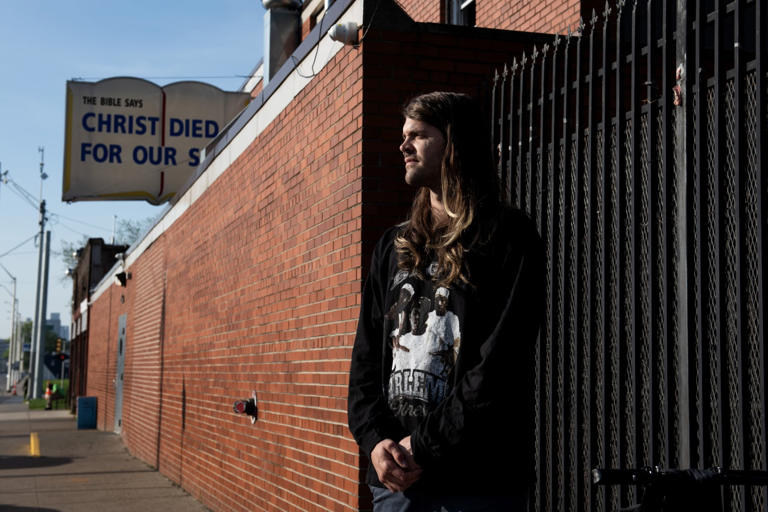
Forbes 30 Under 30 in Trouble Again: Fintech CEO Accused of Fraud

marsbitPubblicato 2026-02-04Pubblicato ultima volta 2026-02-04

Introduzione

Forbes 30 Under 30 honoree Gökçe Güven, the 26-year-old founder and CEO of fintech startup Kalder, has been charged by the U.S. Department of Justice with securities fraud, wire fraud, visa fraud, and aggravated identity theft. The Turkish entrepreneur, who was featured on last year’s list, is accused of misleading investors during a $7 million seed funding round in April 2024. Prosecutors allege that Güven presented a business plan containing false claims, including that 26 brands were using Kalder’s services—though many had no agreement with the company—and that the startup had reached $1.2 million in annual recurring revenue. The government also claims she maintained two sets of financial records and used fraudulent documents to obtain a U.S. visa. This case adds to the growing number of Forbes 30 Under 30 alumni facing legal troubles, including figures like Sam Bankman-Fried and Charlie Javice.

Author: Lucas Ropek

Compiled by: Deep Tide TechFLow

Deep Tide Introduction: The Forbes 30 Under 30 list has added another "black mark" to its history. Gökçe Güven, a 26-year-old Turkish founder and CEO of the fintech startup Kalder, has been charged by the U.S. Department of Justice with securities fraud, wire fraud, visa fraud, and aggravated identity theft. Prosecutors allege that during a $7 million seed funding round in April 2024, she provided investors with a business plan filled with false information—claiming that 26 brands were using Kalder, when in fact many companies had no agreement with Kalder whatsoever.

This is not the first time the list has "derailed"; notable figures like SBF and Charlie Javice have also previously been on the list.

Full Text Below:

Today, the Forbes 30 Under 30 list has become notorious for the number of its honorees who have later been accused of fraud. Prominent "alumni" include FTX founder Sam Bankman-Fried, Frank CEO Charlie Javice, AI startup AllHere Education founder Joanna Smith-Griffin, and "pharma villain" Martin Shkreli. Now, another member of the list has been indicted by the federal government.

Gökçe Güven, a 26-year-old Turkish entrepreneur and founder and CEO of the fintech startup Kalder, was charged last week with securities fraud, wire fraud, visa fraud, and aggravated identity theft.

The New York-based fintech startup, which uses the slogan "Turn your rewards into a revenue engine," claimed to help businesses create and monetize personalized reward programs. Founded in 2022, the company offered participating enterprises the opportunity to earn a continuous revenue stream through partner affiliate sales, as previously reported by Axios.

Güven was featured on last year's Forbes 30 Under 30 list. The magazine's profile noted that Güven's clients included major chocolate manufacturer Godiva and the International Air Transport Association (IATA)—a trade organization representing most of the world's airlines. Kalder also claimed support from several well-known venture capital firms.

The U.S. Department of Justice alleges that during Kalder's seed funding round in April 2024, Güven successfully raised $7 million from more than a dozen investors by presenting a business plan filled with false information.

According to the authorities, Kalder's business plan claimed that 26 brands were "using Kalder," with an additional 53 brands in a "freemium model." However, officials stated that in many cases, Kalder had only offered these companies heavily discounted pilot programs. Other brands had "no agreement with Kalder at all—not even for free services," officials said in a press release announcing the indictment. The business plan also "falsely reported that Kalder's recurring revenue had steadily increased month-over-month since February 2023, and that by March 2024, Kalder had reached $1.2 million in annual recurring revenue."

The government also accused Güven of maintaining two separate sets of financial books. One set contained "false and inflated numbers" presented to investors or potential investors to conceal "the company's true financial condition," the government claimed. The Justice Department also alleged that Güven used lies about Kalder and forged documents to obtain a visa category reserved for individuals of "extraordinary ability," allowing her to live and work in the United States.

TechCrunch contacted Güven through her personal website. The CEO stated that she would issue a statement regarding the charges on Tuesday.

Domande pertinenti

QWhat is Gökçe Güven, the CEO of fintech startup Kalder, accused of by the U.S. Department of Justice?

AGökçe Güven is accused of securities fraud, wire fraud, visa fraud, and aggravated identity theft.

QHow much funding did Kalder raise in its April 2024 seed round through allegedly fraudulent means?

AKalder raised $7 million in its April 2024 seed round through allegedly fraudulent means.

QWhich prestigious list did Gökçe Güven appear on prior to these charges?

AGökçe Güven appeared on the Forbes 30 Under 30 list.

QWhat specific false claim did Kalder's business plan make about its client base to attract investors?

AThe business plan falsely claimed that 26 brands were 'using Kalder' and that 53 were in a 'freemium mode,' while many had no agreement with the company at all.

QName two other notable individuals previously featured on the Forbes 30 Under 30 list who have also faced fraud allegations.

ATwo other notable individuals are FTX founder Sam Bankman-Fried and Frank CEO Charlie Javice.

Letture associate

TurboFlow Announces Strategic Partnership with Global Giant Susquehanna Crypto, Introducing Wall Street Institutional-Grade Liquidity and Dynamic Odds Market Structure Support

TurboFlow announces a strategic partnership with Susquehanna Crypto, a leading global proprietary digital asset trading firm. As part of this collaboration, Susquehanna Crypto will act as an on-chain liquidity provider and market maker for all TurboFlow products. This partnership brings institutional-grade liquidity, market-making support, and expertise in professional trading, market structure, price discovery, and risk management to the TurboFlow ecosystem. This marks a significant milestone for TurboFlow as it expands its product suite, which includes perpetual contracts and newly launched Event Contracts with durations as short as 30 seconds. Enhanced liquidity depth, efficient price discovery, and market stability are becoming increasingly critical for user experience. Notably, TurboFlow is transitioning its Event Contracts from a traditional fixed-odds model to a more dynamic, market-driven odds structure. Susquehanna Crypto will inject deep liquidity through TurboFlow's proprietary PFOF (Payment for Order Flow) architecture. This aims to ensure minimal slippage and millisecond-level execution for users, even during extreme market volatility, whether trading 1000x leveraged perpetuals or short-duration event contracts. Looking ahead, TurboFlow plans to onboard more top-tier institutional market makers to build a diversified liquidity network. The platform will continue expanding its product ecosystem across several verticals: Event Contracts (extending to assets like crude oil and gold), prediction markets and Telegram Mini Apps, and perpetual contracts. TurboFlow's mission is to democratize trading by making professional-grade infrastructure and a simplified, engaging experience accessible to all users.

链捕手4 min fa

TurboFlow Announces Strategic Partnership with Global Giant Susquehanna Crypto, Introducing Wall Street Institutional-Grade Liquidity and Dynamic Odds Market Structure Support

链捕手4 min fa

$30 Billion DeFi Capital Exodus: LayerZero Stumbles, Chainlink Feasts

Following the major DeFi security incident involving Kelp DAO, a significant migration of funds is underway from the cross-chain protocol LayerZero to Chainlink's CCIP (Cross-Chain Interoperability Protocol). Over $30 billion in Total Value Locked (TVL) from protocols like Kelp DAO, Solv Protocol, Re, and Tydro has moved to Chainlink in the past week, driven by security concerns. LayerZero is facing a severe trust crisis after the attack. Initially denying responsibility, LayerZero Labs has now issued a public apology, acknowledging management oversights. These include a vulnerable "1/1" single-node configuration for its Decentralized Verification Network (DVN) and past misuse of a multi-signature wallet by a team member. The protocol's weekly bridge volume has slumped to near-historic lows of around $470 million. In contrast, Chainlink is experiencing a surge in adoption and activity. Its independent active addresses recently hit multi-month highs, and whales have been accumulating LINK tokens. Beyond DeFi, Chainlink is securing partnerships with traditional finance giants like DTCC, European stock exchange operator SIX Group, and asset manager Amundi. While LayerZero has announced security upgrades—such as migrating to stronger multi-signature configurations and developing a second DVN client—and contributed to a rescue fund, the event underscores that security is becoming a decisive competitive factor as DeFi matures.

marsbit47 min fa

$30 Billion DeFi Capital Exodus: LayerZero Stumbles, Chainlink Feasts

marsbit47 min fa

The $13 Trillion Repo Market Is Quietly Being Rewritten by Blockchain

The $13 trillion repurchase agreement (repo) market, a crucial artery for global short-term funding, is experiencing a significant transformation through blockchain technology. After years of limited impact in finance, blockchain is finding substantial adoption in repo transactions. Major institutions like JPMorgan Chase, HSBC, and Broadridge are deploying tokenized repo platforms, with daily volumes already reaching tens of billions of dollars. Traditional repo markets operate with fixed hours, rely on intermediaries, and involve manual, time-consuming processes. Tokenized repos, by contrast, use blockchain to create digital tokens representing cash and securities collateral. This enables near-instantaneous settlement, 24/7 trading, automated execution, and enhanced auditability. The key drivers for adoption include maturing technology, more receptive regulators, and growing client recognition of tangible benefits like reduced operational friction and capital efficiency. Analyses, such as one from Broadridge, indicate that moving a portion of repo activity onto blockchain can significantly reduce a bank's required liquidity buffers, potentially freeing up billions in capital. The infrastructure is also seen as foundational for a future of round-the-clock trading for traditional assets. Challenges remain, including the existence of fragmented blockchain networks, the need for stress testing under extreme market conditions, and the loss of operational flexibility compared to manual processes. However, the industry consensus is that these are implementation hurdles. Tokenized repo has moved beyond pilot stages to become one of blockchain's most concrete and impactful applications in traditional finance, marking a pivotal shift in how a core market functions.

marsbit47 min fa

The $13 Trillion Repo Market Is Quietly Being Rewritten by Blockchain

marsbit47 min fa

Trading

Spot
Futures
活动图片