Fed slashes interest rates, but issues mixed forward guidance

cointelegraphPubblicato 2025-12-10Pubblicato ultima volta 2025-12-10

Introduzione

The Federal Reserve cut interest rates by 25 basis points to a range of 3.5%–3.75%. Chair Jerome Powell delivered mixed guidance, noting upside risks to inflation and downside risks to employment. Analysts suggest this may curb a Bitcoin rally, with only one rate cut expected in 2026. Market expectations show low probability of a cut in January 2026. Powell’s term ends in May 2026, and President Trump is considering replacements, with Kevin Hassett as a potential candidate. Trump has urged the next Fed chair to lower rates further.

The Federal Reserve slashed interest rates by 25 basis points on Wednesday to a target range of 3.5% to 3.75%. However, mixed comments from Federal Reserve Chair Jerome Powell will likely quell a Bitcoin price rally until the rate-cutting cycle resumes in 2026, analysts say.

“In the near term, risks to inflation are tilted to the upside and risks to employment to the downside, a challenging situation. There is no risk-free path for policy,” Powell said at Wednesday’s Federal Reserve Open Committee (FOMC) meeting.

These comments were not as “hawkish” as some analysts expected, but the Federal Reserve is now expected to issue only one rate cut in 2026 under Powell’s leadership, according to market analyst and Coinbureau founder Nic Puckrin. He added:

“Attention will turn to liquidity and the Fed’s balance sheet policy in early 2026. However, despite the Treasury bill purchase announced today, quantitative easing isn’t coming until things start breaking, and that always means more volatility and potential pain.”

Low Interest rates fuel risk-on assets, such as Bitcoin (BTC), but only 24.4% of traders expect a rate cut at the next FOMC meeting in January 2026, according to data from the CME Group.
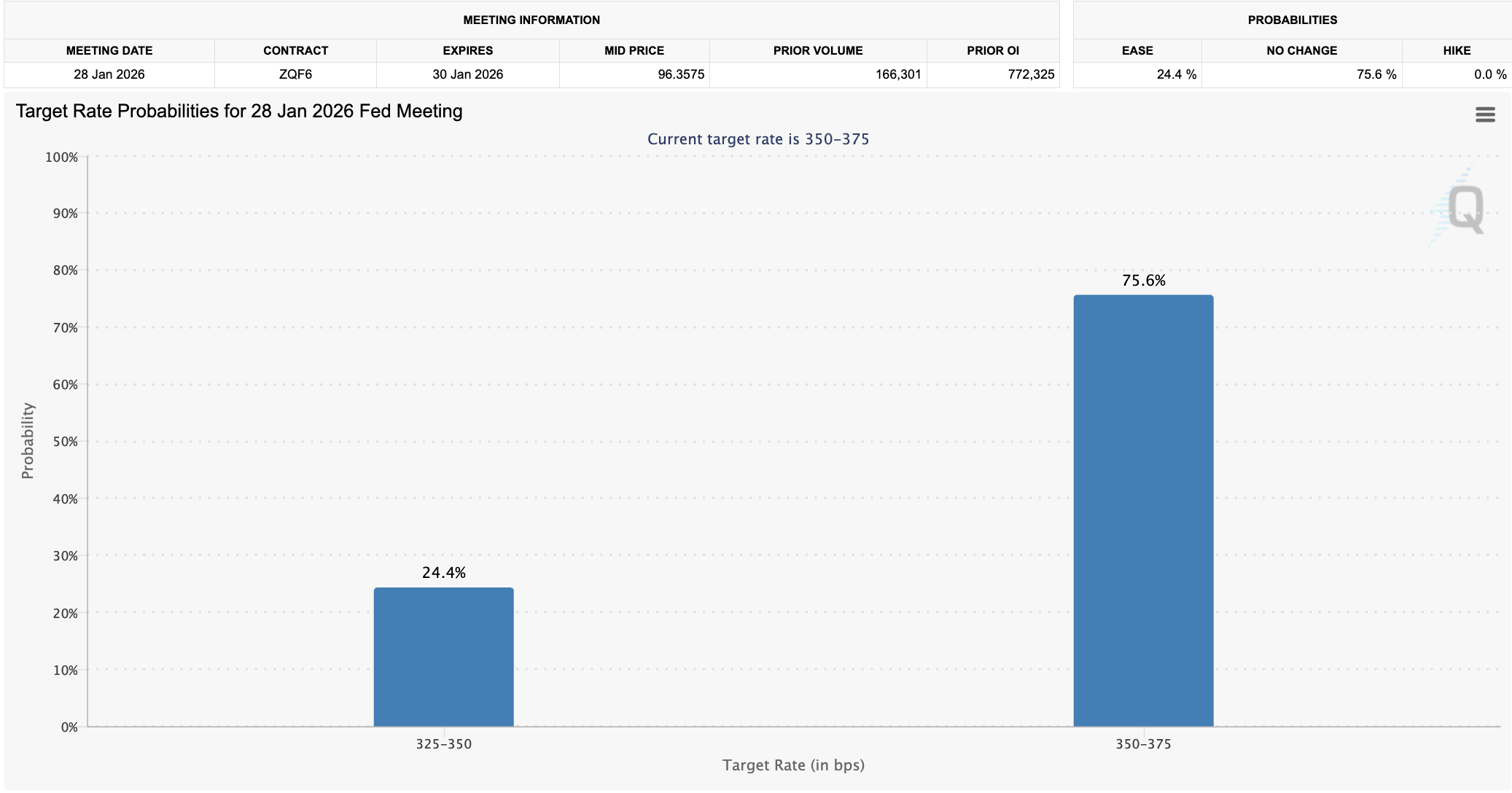
Interest rate target probabilities for January 2026. Source: CME

US President Donald Trump has been weighing Powell’s replacement, with National Economic Council director Kevin Hassett widely reported as the frontrunner for the position. Hassett is also a former adviser on Coinbase’s Academic and Regulatory Advisory Council

Related: Short the dip and buy the rip? What FOMC outcomes reveal about Bitcoin price action

Powell gives mixed remarks, but Trump says the next Fed chair will slash rates

Powell said consumer spending and business investment remain “solid” and added that layoffs and hiring remain low. However, inflation remains “somewhat elevated” above the Federal Reserve’s 2% inflation target, while the housing sector is considered still “weak.”

The Fed reached these conclusions using available market data, but Powell acknowledged that it is missing months of public economic reports due to the US government shutdown.
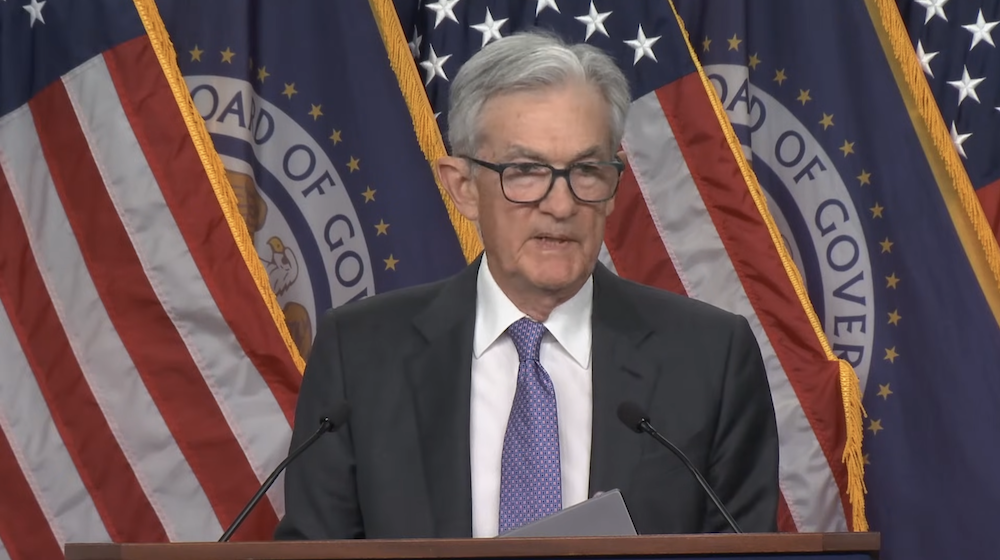
Jerome Powell delivers remarks following the December 2025 FOMC meeting. Source: Federal Reserve

Trump has already pressured the next Fed chair to slash rates. Powell’s term is set to expire in May 2026.

Magazine: Meet the onchain crypto detectives fighting crime better than the cops

Letture associate

Pricing OpenAI Pre-IPO: A New, Life-or-Death Business on Hyperliquid Lasting Half a Year

Pricing OpenAI Pre-IPO: Hyperliquid's High-Stakes, Six-Month Business Venture The article analyzes the nascent market for pre-IPO perpetual contracts on the Hyperliquid blockchain, exemplified by two contrasting teams: Trade.xyz and Ventuals. Trade.xyz, an anonymous team, successfully built the largest pre-market on Hyperliquid. Its strategy focused on near-term events, like the SpaceX IPO. By listing a SpaceX contract with a known launch date and price, the market had a tangible "anchor" (the eventual Nasdaq opening price) to converge upon, which kept speculation in check. This approach fueled significant growth. In stark contrast, Ventuals, backed by Paradigm, failed despite holding coveted contracts for OpenAI and Anthropic. Its critical flaw was its pricing mechanism for these companies, which have no imminent IPO. Ventuals' oracle price was half-derived from infrequent private market transactions and half from its own contract's moving average. This created a self-reinforcing loop where buying pressure artificially inflated the price, disconnecting it from real supply and demand. The market became illiquid and structurally skewed. Ventuals shut down nine months after launch, reportedly through an acquisition. Its final settlement prices—OpenAI at ~$1,341 and Anthropic at ~$1,618—were thus partially products of its flawed model. Ironically, some company employees and late-stage VCs reportedly used these prices for valuation reference, highlighting the desperate demand for price discovery in opaque private markets. The failure of Ventuals exposes the core challenge of this business: price for illiquid, non-public assets requires a robust, self-correcting market, which is absent without a definitive public listing event. Nevertheless, demand is driving major players like Coinbase and traditional finance (e.g., Citi) to enter the space, aiming to provide 24/7 trading for coveted private company shares. The venture's ultimate viability, however, hinges on solving the fundamental pricing problem Ventuals could not.

marsbit8 min fa

Pricing OpenAI Pre-IPO: A New, Life-or-Death Business on Hyperliquid Lasting Half a Year

marsbit8 min fa

M&A Deals in the Crypto Market Are Unusually Active

Title: M&A Activity in Crypto Market Becomes Unusually Active A rare signal is emerging in the crypto primary market: mergers and acquisitions (M&A) are nearing half of all financing deals. According to RootData, this month, M&A cases in the crypto industry reached 10, while financing rounds numbered only 14, meaning M&A accounts for approximately 42% of primary market transactions—the highest level in history. This does not signal a sudden industry boom. Instead, the rapid rise in M&A share primarily reflects the continued downturn in the financing market. Since November 2024, monthly crypto M&A deals have remained between 10-20, while financing deals have plummeted from around 100 to about 50, possibly hitting a new low this month. For project teams, this means the traditional path of relying on narratives, token expectations, and ecosystem subsidies to maintain valuations is narrowing. For leading companies, it presents a rare window to acquire teams, licenses, technology, liquidity, and market access at lower prices, with less competition and stronger bargaining power. Key active buyers include Coinbase, Kraken, Ripple, MoonPay, Polymarket, Kaiko, Sol Strategies, GSR, Keyrock, Jupiter, Paxos, and Ondo Finance. Their M&A logic is consistent: acquiring key capabilities at lower costs during the industry downturn. This is driven by more attractive valuations, reduced time and trial-and-error costs, the acquisition of licenses and compliance resources, and the integration of industry upstream and downstream segments. Current M&A focuses are concentrated in four areas: trading infrastructure (e.g., Coinbase acquiring Deribit, Kraken acquiring NinjaTrader), payments and stablecoins (e.g., MoonPay, Ripple expanding payment networks), compliance licenses, and asset issuance/distribution (e.g., acquisitions related to RWA and token issuance platforms like Coinbase's purchases of Liquifi and Echo). The rise in M&A is altering the primary market's exit logic. It provides an alternative path to the token-dependent model, encouraging teams to build tangible products, revenue, and strategic value that can be integrated. This could inject confidence into the market, showing that asset buyers and exit possibilities still exist, albeit with a stricter focus on real utility. However, this trend also indicates the crypto industry is becoming more centralized. As asset issuance, trading, market-making, custody, payments, and data gradually consolidate in the hands of a few major players, the industry's initial emphasis on openness and anti-monopoly is being reshaped by commercial realities. Coupled with rising compliance barriers, this signals the end of the low-barrier era for crypto entrepreneurship.

链捕手41 min fa

M&A Deals in the Crypto Market Are Unusually Active

链捕手41 min fa

Trading

Spot
Futures

Articoli Popolari

Cosa è ATWO

I. Introduzione al ProgettoArena Two è una piattaforma interattiva decentralizzata che consente ai fan di svolgere un ruolo attivo e tokenizzato nei risultati degli eventi in tempo reale. A differenza dei modelli di trasmissione tradizionali che riducono i fan a spettatori passivi, Arena Two sfrutta la tecnologia blockchain per consentire ai fan di votare direttamente in tempo reale e influenzare i risultati sul campo.II. Informazioni sul TokenNome del token: ATWO(Arena Two)III. Link CorrelatiSito web:https://arenatwo.com/Esploratori:https://basescan.org/token/0x499D35eBE6cEe9B2Ac35Fd003fcBbeeB9CFc7B32Twitter:https://x.com/arenatwoXNota: L'introduzione al progetto proviene dai materiali pubblicati o forniti dal team ufficiale del progetto, che è solo a scopo di riferimento e non costituisce consulenza sugli investimenti. HTX non si assume responsabilità per eventuali perdite dirette o indirette derivanti.

215 Totale visualizzazioniPubblicato il 2026.05.18Aggiornato il 2026.06.02

Cosa è ATWO

Come comprare ATWO

Benvenuto in HTX.com! Abbiamo reso l'acquisto di Arena Two (ATWO) semplice e conveniente. Segui la nostra guida passo passo per intraprendere il tuo viaggio nel mondo delle criptovalute.Step 1: Crea il tuo Account HTXUsa la tua email o numero di telefono per registrarti il tuo account gratuito su HTX. Vivi un'esperienza facile e sblocca tutte le funzionalità,Crea il mio accountStep 2: Vai in Acquista crypto e seleziona il tuo metodo di pagamentoCarta di credito/debito: utilizza la tua Visa o Mastercard per acquistare immediatamente Arena TwoATWO.Bilancio: Usa i fondi dal bilancio del tuo account HTX per fare trading senza problemi.Terze parti: abbiamo aggiunto metodi di pagamento molto utilizzati come Google Pay e Apple Pay per maggiore comodità.P2P: Fai trading direttamente con altri utenti HTX.Over-the-Counter (OTC): Offriamo servizi su misura e tassi di cambio competitivi per i trader.Step 3: Conserva Arena Two (ATWO)Dopo aver acquistato Arena Two (ATWO), conserva nel tuo account HTX. In alternativa, puoi inviare tramite trasferimento blockchain o scambiare per altre criptovalute.Step 4: Scambia Arena Two (ATWO)Scambia facilmente Arena Two (ATWO) nel mercato spot di HTX. Accedi al tuo account, seleziona la tua coppia di trading, esegui le tue operazioni e monitora in tempo reale. Offriamo un'esperienza user-friendly sia per chi ha appena iniziato che per i trader più esperti.

121 Totale visualizzazioniPubblicato il 2026.05.18Aggiornato il 2026.06.02

Come comprare ATWO

Cosa è ZEST

I. Introduzione al Progetto1. Cos'è Zest Protocol?Zest Protocol è un protocollo di prestito nativo di Bitcoin costruito su Stacks Layer 2 che consente agli utenti di guadagnare rendimento con BTC o di prendere in prestito asset collaterizzando BTC. I contratti intelligenti del protocollo sono scritti nel linguaggio Clarity, operano interamente on-chain e sono open-source, con un design ispirato a Aave v3. Zest è attualmente il più grande protocollo DeFi su Stacks, con oltre 800 BTC depositati e un TVL massimo che supera i 100 milioni di dollari. Nel maggio 2026, il protocollo ha ulteriormente introdotto i Bitcoin Collateral Vaults, estendendo le capacità di prestito da Stacks alla rete principale di Bitcoin. Questo consente agli utenti di prendere in prestito stablecoin senza spostare BTC dalla rete Bitcoin, abilitando prestiti in custodia autonoma.2. Come Funziona Zest Protocol?Zest Protocol è composto da due mercati. Il mercato di Stacks è costruito su Aave v3, consentendo agli utenti di depositare asset come sBTC, STX e USDC per guadagnare rendimento o prendere prestiti sovra-collaterizzati. Il LTV massimo predefinito è del 50% (70% per sBTC). Il mercato di Bitcoin opera attraverso i recentemente lanciati Bitcoin Collateral Vaults. Gli utenti prendono in prestito stablecoin bloccando BTC in vaults di custodia autonoma sulla catena di Bitcoin. Il collaterale rimane sulla rete principale di Bitcoin durante l'intero processo, e gli utenti mantengono la custodia a meno che la posizione non venga liquidata.3. Chi Ha Fondato Zest Protocol?Tycho Onnasch (Co-Fondatore): Laureato all'Università di Oxford. Coinvolto nella ricerca e nei finanziamenti per la Stacks Open Internet Foundation. Ex Manager presso Trust Machines e Fondatore di Deedmob. Profilo LinkedIn: https://www.linkedin.com/in/tychokoonnasch/.Fernando Foy (Co-Fondatore): Ha precedentemente lavorato nella consulenza IT presso Objectif Emploi. Profilo LinkedIn: https://www.linkedin.com/in/fernando-foy/.Emil E. (Co-Fondatore): Ha un Master in Fisica dall'Università di Warwick. Ex Partner Ingegneristico presso Trust Machines, Sviluppatore Full-Stack per progetti Web3 e Data Scientist presso HSBC. Profilo LinkedIn: https://www.linkedin.com/in/emil-e-49771a145/.Dettagli sul Finanziamento: Nel maggio 2024, Zest Protocol ha annunciato il completamento di un round di finanziamento seed da 3,5 milioni di dollari guidato da Tim Draper, con la partecipazione di Binance Labs, Flow Traders, Trust Machines e altri.4. Tokenomics di $ZEST$ZEST è il token nativo di Zest Protocol con un'offerta totale fissa di 1 miliardo di token e senza meccanismo inflazionistico.Comunità (27,83%): Utilizzato per airdrop e incentivi per gli utenti;Sviluppo dell'Ecosistema (24,82%): Utilizzato per liquidità, partnership, marketing, listing su exchange, ecc.;Investitori (22,35%): Sostegno alle parti investitrici che hanno supportato lo sviluppo iniziale di Zest Protocol;Team (25%): Allocato per i contributori principali.Piano di Vesting: I token del Team e degli Investitori sono soggetti a un periodo di lock-up di 1 anno seguito da 3 anni di sblocco lineare.5. Cronologia delle Pietre Miliari Chiave2022: Zest Protocol è ufficialmente fondato.Marzo 2024: Completato l'audit di sicurezza e lanciato il mercato di prestiti di Stacks sulla mainnet.Nel febbraio 2026, viene lanciato il Mercato Stacks V2, introducendo i Gruppi di Rischio.Nel maggio 2026, sono stati introdotti i Bitcoin Collateral Vaults e un prototipo operativo della mainnet è ora disponibile. Questo consente agli utenti di utilizzare BTC in custodia autonoma sulla L1 di Bitcoin come collaterale per prendere in prestito stablecoin su catene EVM, ponendo fine a bridging, wrapping e custodia di terze parti. Questo rollout è diviso in due fasi. Fase 1: Utilizza transazioni pre-firmate per limitare il movimento di BTC; Fase 2: Utilizza BitVM per la verifica. II. Informazioni sul TokenNome del token: ZEST (Zest Protocol)III. Link CorrelatiSito web: https://www.zestprotocol.com/Esploratori: https://bscscan.com/token/0x5506599c722389a60580b5213ea1da60d64754a1Twitter: https://twitter.com/ZestProtocolNota: L'introduzione del progetto proviene dai materiali pubblicati o forniti dal team ufficiale del progetto, che è solo a scopo di riferimento e non costituisce consulenza per gli investimenti. HTX non si assume responsabilità per eventuali perdite dirette o indirette risultanti.

117 Totale visualizzazioniPubblicato il 2026.05.19Aggiornato il 2026.06.02

Cosa è ZEST

Discussioni

Benvenuto nella Community HTX. Qui puoi rimanere informato sugli ultimi sviluppi della piattaforma e accedere ad approfondimenti esperti sul mercato. Le opinioni degli utenti sul prezzo di A A sono presentate come di seguito.

活动图片