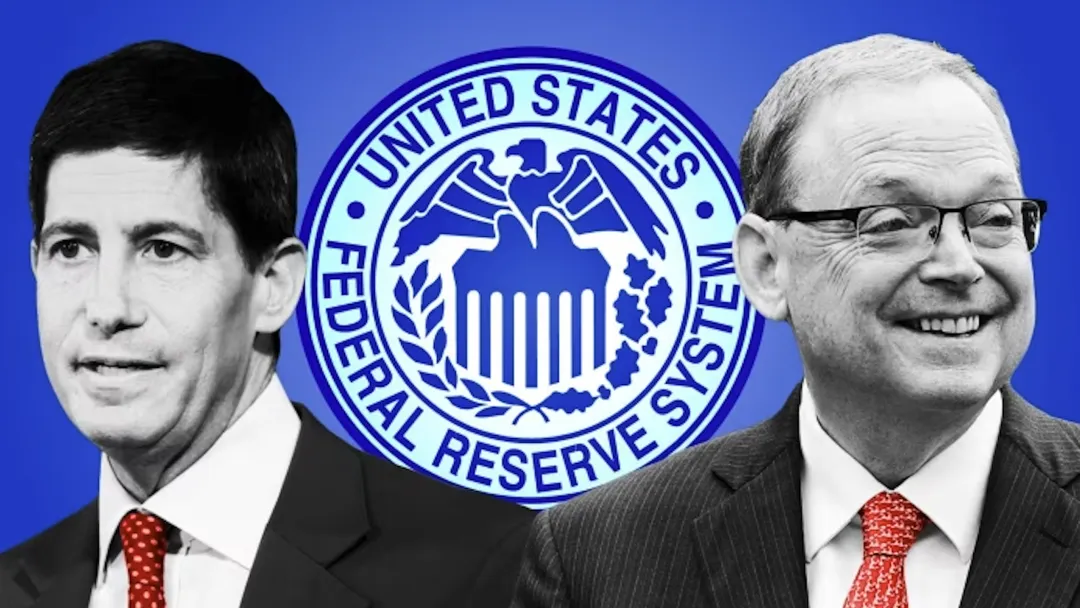
Fed Candidates Warsh and Hassett: Who Is More Beneficial for Us?

marsbitPubblicato 2025-12-16Pubblicato ultima volta 2025-12-16

Introduzione

Amidst inflation pressures and geopolitical uncertainty in 2025, the potential successors to the U.S. Federal Reserve Chair—Kevin Warsh and Kevin Hassett—present sharply contrasting policy approaches. Warsh, a former Fed governor with a hawkish stance, emphasizes financial stability, market discipline, and inflation control, advocating for cautious monetary tightening and reduced intervention risks. In contrast, Hassett, a former White House economic advisor and dovish figure, supports aggressive rate cuts, growth-oriented policies, and closer alignment with presidential agendas, potentially benefiting markets and cryptocurrencies. Market predictions show narrowing odds, with Warsh gaining traction post-Trump’s endorsement, though Hassett retains advantages due to his political ties. The selection will significantly influence long-term economic stability versus short-term growth, testing the Fed’s independence and global financial resilience.

Against the backdrop of inflation pressures, geopolitical uncertainties, and technological changes facing the U.S. economy in 2025, the successor to the Federal Reserve Chair position has drawn significant attention.‍‍‍‍‍‍‍‍‍‍‍‍‍‍‍‍‍‍‍‍‍‍‍‍‍‍‍‍‍‍‍

President Donald Trump recently stated that he is "leaning towards Warsh or Hassett," a remark that has triggered market volatility and widespread discussion.

Kevin Warsh, a former Federal Reserve Governor, is known for his hawkish stance and experience in responding to the financial crisis;


Kevin Hassett, a former White House economic advisor, is renowned for his dovish perspective and pro-growth policies.


Comparing their backgrounds, monetary policy thinking, potential impacts, and current online public sentiment, who has a greater chance of being elected?

Overview of the Two Candidates' Backgrounds


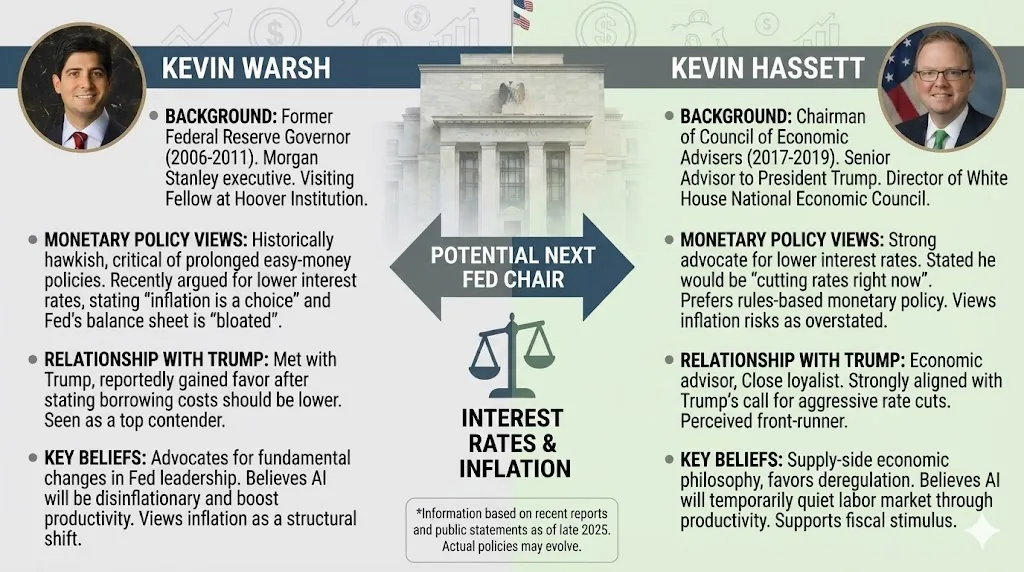
Kevin Warsh is an experienced financial policy expert, born in 1970, and a graduate of Stanford University and Harvard Law School. He worked as an investment banker at Morgan Stanley and served as Special Assistant to the President for Economic Policy during the George W. Bush administration. From 2006 to 2011, Warsh served as a Federal Reserve Governor, participating in the response to the global financial crisis, including the formulation of quantitative easing (QE) policies. Currently, he is a visiting scholar at the Hoover Institution and serves on the boards of several companies. Warsh's career emphasizes financial stability and market discipline, and he is seen as a representative of conservative economics.


Kevin Hassett is a seasoned economist with a Ph.D. in economics from the University of Pennsylvania. He has taught at Yale University and Columbia University and worked at the conservative think tank American Enterprise Institute. Hassett served as Chairman of the White House Council of Economic Advisers during Trump's first term and as Director of the National Economic Council in the second term. He led the design of the Trump tax reforms and is known for his expertise in macroeconomics and tax policy. Currently, Hassett also serves as an advisor to Coinbase, showing an affinity for cryptocurrencies.

Distinct Contrasts in Monetary Policy Thinking


The differences in monetary policy thinking between Warsh and Hassett are rooted in their philosophical foundations.


Warsh holds a hawkish view, believing that inflation is a result of policy choices rather than simply an outcome of economic growth. He criticizes the Fed for indirectly fueling fiscal deficits through low interest rates and QE, advocating for shrinking the central bank's balance sheet, restoring market discipline, and avoiding the moral hazard of "too big to fail."


Warsh views tariffs as a one-time price shock rather than a sustained driver of inflation, emphasizing that the central bank should intervene in crises but quickly normalize policies to maintain long-term economic stability.


Hassett, on the other hand, leans more dovish, emphasizing that monetary policy should coordinate with fiscal policy, supporting investment growth driven by tax incentives and regulatory certainty. He advocates for aggressive rate cuts, such as recently suggesting a 50-basis-point cut to address slowing growth and inflation below expectations, and criticizes the Fed for potential "anti-Trump partisan bias" if it does not cut rates.


Hassett believes the Fed should not be a "black box," advocating for "slow and steady" interest rate adjustments to boost the stock and cryptocurrency markets.


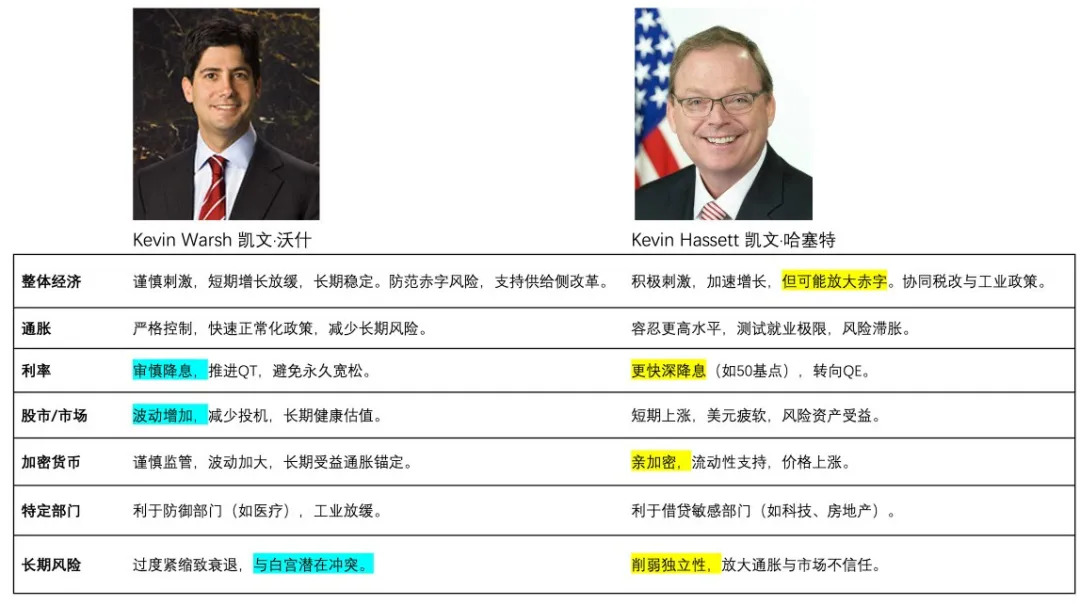
This difference reflects the classic hawk versus dove opposition:Warsh prioritizes controlling inflation and fiscal sustainability, guarding against the risks of excessive easing; Hassett focuses on stimulating economic growth and coordinating with White House policies, potentially being more market-friendly.


If Warsh is elected, the Fed may shift to a more cautious monetary policy framework.In the short term, this could lead to slower economic growth, prudent rate cuts, and the推进 of quantitative tightening (QT), thereby controlling inflation and reducing the risk of asset bubbles. However, it could also exacerbate an economic recession and create political friction with the White House. Stock market volatility may increase, but in the long run, it would promote healthy valuations, benefiting defensive sectors like healthcare and utilities.


Conversely, under Hassett's leadership, the Fed might focus more on short-term prosperity, stimulating consumption and investment through faster rate cuts and ending QT.This would benefit borrowing-sensitive sectors like technology and real estate, driving up stock and cryptocurrency markets, but could amplify deficits and inflation expectations, leading to stagflation risks and weakening the Fed's independence.


Overall, Warsh's policies focus more on long-term stability, while Hassett could amplify short-term market prosperity but increase the risk of political intervention.


Online Public Sentiment and Election Chance Analysis


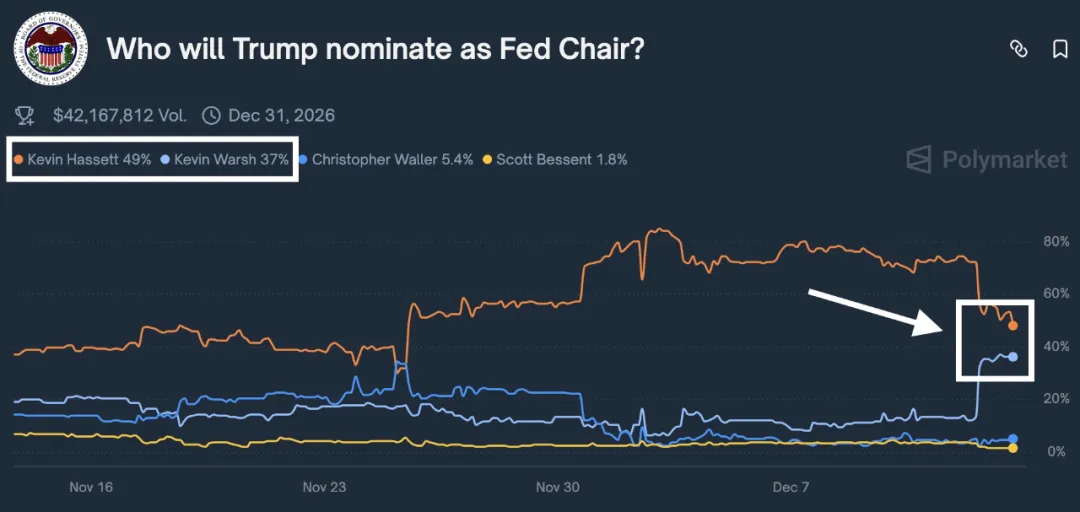
As of December 13, 2025, opinion leaders and public sentiment on X platform (formerly Twitter) show that Hassett initially led, but after Trump's statement, Warsh's probability surged from 15% to 37-40%.


Prediction markets like Kalshi and Polymarket show Hassett's probability at around 49%, but the gap is narrowing.

Wall Street Journal reporter Nick Timiraos pointed out that Hassett might "win the race," while financial commentator Steve Grasso emphasized that his pro-rate-cut stance is beneficial for the market.


Crypto analyst MartyParty sees Hassett as a pro-crypto candidate.


Mainstream media reports indicate that Trump views both as "top contenders" and expects an announcement before Christmas.


Warsh has received support from JPMorgan CEO Dimon, enhancing his prestige in financial circles. Currently, Warsh has stronger momentum and a slightly greater chance of being elected, but Hassett's pro-Trump background still gives him an advantage.


The appointment of the Fed Chair will profoundly affect the trajectory of the U.S. economy.


Warsh could bring an era of disciplined stability, while Hassett预示着 more aggressive growth-oriented policies.


Against the backdrop of the Trump administration's emphasis on "America First," who will prevail remains undecided, but regardless of the outcome, this choice will test the Fed's independence and the resilience of global financial markets.


Investors and policy observers should closely monitor subsequent developments to应对 potential market volatility.



Domande pertinenti

QWhat are the key differences in monetary policy philosophy between Kevin Warsh and Kevin Hassett?

AKevin Warsh holds a hawkish view, prioritizing inflation control and fiscal sustainability, advocating for market discipline and cautious monetary policy normalization. Kevin Hassett is more dovish, emphasizing growth stimulation through aggressive rate cuts and coordination with fiscal policy, which may favor short-term market prosperity but risks higher deficits and inflation.

QHow did the market and prediction markets react to Trump's preference for Warsh or Hassett?

AFollowing Trump's statement, Kevin Warsh's probability surged from 15% to 37-40%, while prediction markets like Kalshi and Polymarket showed Hassett's probability around 49%, indicating a narrowing gap between the two candidates.

QWhat are the potential economic impacts if Kevin Warsh is appointed as Fed Chair?

AUnder Warsh's leadership, the Fed might adopt a more cautious monetary framework, leading to slower growth, prudent rate cuts, and quantitative tightening. This could control inflation and reduce asset bubbles but may increase recession risks and cause political friction with the White House.

QWhat are the potential economic impacts if Kevin Hassett is appointed as Fed Chair?

AHassett's Fed would likely focus on short-term prosperity through faster rate cuts and ending quantitative tightening, benefiting sectors like tech and real estate. However, this approach could amplify deficits, inflation expectations, and stagflation risks, potentially undermining Fed independence.

QWho are the key supporters of Warsh and Hassett, and how does this influence their chances?

AWarsh gained support from JPMorgan CEO Dimon, enhancing his credibility in financial circles. Hassett is favored for his pro-Trump background and endorsements from figures like crypto analyst MartyParty. Currently, Warsh has slightly stronger momentum, but Hassett's alignment with Trump keeps him competitive.

Letture associate

STRC Breaks Below $95: Why Does It Continue to Depeg? Is There Default Risk?

"STRC Falls Below $95: Why the Persistent Depegging and Is There Default Risk?" The article discusses the recent decline in the price of STRC, a perpetual preferred stock issued by Strategy (MSTR) designed to trade around a $100 par value. As of publication, STRC traded at $94.65, raising market concerns. STRC is described as a high-yield cash flow product, offering an 11.50% annual dividend paid monthly. Its "preferred" status grants it priority over common stock for dividends and in liquidation. Key reasons cited for the price depegging include: 1. **Bitcoin's Price Drop:** MSTR's assets are heavily tied to Bitcoin (BTC), which fell over 21% from its recent high, pressuring all Strategy-related products. 2. **Competitive Pressure:** Rival Strive Asset Management's similar product, SATA, offers daily dividends and has maintained its $100 par value with a ~13% yield. In response, Strategy has proposed changing STRC's dividend frequency from monthly to bi-weekly, pending shareholder vote. 3. **Technical Selling:** A break below $100 may have triggered algorithmic selling and stop-losses, exacerbating the decline. Regarding default risk, the analysis suggests it is currently low. Strategy founder Michael Saylor confirmed the June 2026 dividend rate remains at 11.50% with no cuts or suspensions. The company's massive reserve of 843,706 BTC provides a significant backstop for its obligations. Industry opinions are mixed. Some analysts view the BTC holdings as reliable support for dividends, while critics like Peter Schiff warn of potential dividend cuts leading to price crashes and lawsuits. Others highlight inflation risk and the company's ability to reduce dividends without a formal default. In summary, STRC's drop is attributed to BTC volatility, competition, and technical factors. While immediate default risk appears contained, the product faces challenges from market conditions and competitive dynamics.

marsbit31 min fa

STRC Breaks Below $95: Why Does It Continue to Depeg? Is There Default Risk?

marsbit31 min fa

AI Trading Cools, South Korean Stocks Plunge 1.8%, Spot Gold Rises 1%, Bitcoin Dives

A sell-off in AI-related stocks, triggered by Broadcom's disappointing earnings forecast, sent shockwaves through global markets. South Korea's KOSPI led Asia's decline, plunging 1.8% as the risks from concentrated chip stock gains and surging leveraged investments came to the fore. The tech-heavy Nasdaq 100 futures fell 0.5% following Broadcom's 14% after-hours plunge, which signaled a slower-than-expected transition to AI clients. This pullback extended Wall Street's weakness, halting the S&P 500's nine-day rally amid hawkish Fed signals and renewed Middle East tensions. South Korean authorities convened an emergency meeting, pledging "immediate measures" against market volatility and warning of record-high stock margin debt. The adjustment rippled across assets: Bitcoin fell to around $64,000, its lowest since February, while safe-haven gold rose 1% on bargain hunting. Oil prices dipped on Middle East ceasefire news. Market analysts noted the sell-off was driven by profit-taking after massive gains, particularly in chip stocks like Samsung and SK Hynix, which now dominate the KOSPI. Wall Street banks are divided on Korea's outlook, with Goldman Sachs raising its target while Citigroup and others warn of overvaluation and a potential bubble. Bridgewater's Ray Dalio noted that great technological shifts often create bubbles. Meanwhile, Fed officials' hints at potential future rate hikes added to the cautious mood ahead of key U.S. jobs data.

华尔街日报57 min fa

AI Trading Cools, South Korean Stocks Plunge 1.8%, Spot Gold Rises 1%, Bitcoin Dives

华尔街日报57 min fa

Seeking Alpha's Hot Article: Why Might the U.S. Stock Market Crash in June?

In a recent Seeking Alpha article, financial professor and analyst Damir Tokic argues that the US stock market may be poised for a significant crash in June 2026. The core thesis centers on a "mega-bubble" in equities, particularly within the technology sector, which has driven the S&P 500 to near-record valuations, with a Shiller P/E ratio exceeding 40—a level comparable to the 2000 dot-com bubble. Tokic identifies two primary catalysts for a potential collapse. First, he points to unsustainable market exuberance fueled by what he terms the "Trump Stimulus"—massive AI capital expenditure by tech giants, which he believes is politically driven and cannot last. Second, and more urgently, he highlights the escalating Iran war as a critical threat. The ongoing closure of the Strait of Hormuz has created a severe global energy supply crunch. Strategic petroleum reserves are projected to hit critically low operational levels by June, potentially causing oil prices to spike above $200 per barrel and triggering a severe, supply-driven inflationary shock. This scenario, Tokic warns, would force the Federal Reserve's hand. Despite currently maintaining a dovish bias, the Fed would likely be compelled to officially pivot to a hawkish stance at its June FOMC meeting to combat soaring inflation and bond yields. He contends that such a shift—or even a failure to act, which would destroy Fed credibility—could be the trigger that punctures the market bubble. The resulting downturn, he concludes, could rival the bear markets of 2000 and 2008, advising investors to prepare for a major correction.

marsbit1 h fa

Seeking Alpha's Hot Article: Why Might the U.S. Stock Market Crash in June?

marsbit1 h fa

Trading

Spot
Futures

Articoli Popolari

Come comprare US

Benvenuto in HTX.com! Abbiamo reso l'acquisto di Talus Network (US) semplice e conveniente. Segui la nostra guida passo passo per intraprendere il tuo viaggio nel mondo delle criptovalute.Step 1: Crea il tuo Account HTXUsa la tua email o numero di telefono per registrarti il tuo account gratuito su HTX. Vivi un'esperienza facile e sblocca tutte le funzionalità,Crea il mio accountStep 2: Vai in Acquista crypto e seleziona il tuo metodo di pagamentoCarta di credito/debito: utilizza la tua Visa o Mastercard per acquistare immediatamente Talus NetworkUS.Bilancio: Usa i fondi dal bilancio del tuo account HTX per fare trading senza problemi.Terze parti: abbiamo aggiunto metodi di pagamento molto utilizzati come Google Pay e Apple Pay per maggiore comodità.P2P: Fai trading direttamente con altri utenti HTX.Over-the-Counter (OTC): Offriamo servizi su misura e tassi di cambio competitivi per i trader.Step 3: Conserva Talus Network (US)Dopo aver acquistato Talus Network (US), conserva nel tuo account HTX. In alternativa, puoi inviare tramite trasferimento blockchain o scambiare per altre criptovalute.Step 4: Scambia Talus Network (US)Scambia facilmente Talus Network (US) nel mercato spot di HTX. Accedi al tuo account, seleziona la tua coppia di trading, esegui le tue operazioni e monitora in tempo reale. Offriamo un'esperienza user-friendly sia per chi ha appena iniziato che per i trader più esperti.

397 Totale visualizzazioniPubblicato il 2025.12.11Aggiornato il 2026.06.02

Come comprare US

Discussioni

Benvenuto nella Community HTX. Qui puoi rimanere informato sugli ultimi sviluppi della piattaforma e accedere ad approfondimenti esperti sul mercato. Le opinioni degli utenti sul prezzo di US US sono presentate come di seguito.

活动图片











