Farewell to the 'Casino' Mindset: The Next Wave of Crypto Applications Should Aim for Mass Adoption

marsbitPubblicato 2026-03-05Pubblicato ultima volta 2026-03-05

Introduzione

The article argues that by 2026, the crypto industry will shift from being a speculative casino to providing "crypto as a service," focusing on mass adoption by solving real-world problems while making the underlying blockchain technology invisible to users. Key trends include crypto's structural advantage of 24/7 market operation, Asia's growing role in areas like cross-border stablecoin payments and asset tokenization, and the rise of practical applications. Examples include Novig, which uses a decentralized order book to improve sports betting odds; Based, a consumer super app that abstracts away complex blockchain interactions; and Doppler, an infrastructure for secure asset issuance. The core advice for builders is to prioritize solving customer problems over showcasing technology, as true adoption occurs when the tech becomes so seamless that users don't notice it.

Author: Paul Veradittakit

Compiled by: AididiaoJP, Foresight News

2026 will be a pivotal year. We will witness the complete transformation of "crypto as an industry" into "crypto as a service".

The past decade in the crypto world has been filled with various gimmicks. The approval of the Bitcoin ETF in 2024 gained it recognition from mainstream finance. In 2025, everyone focused on building out the underlying infrastructure. By 2026, the real value will belong to those companies that leverage blockchain to solve long-standing problems in traditional industries while making users to be completely unaware of the blockchain's presence.

The future crypto unicorns will not be built on hype. They will be the kind of companies that use blockchain technology to improve product efficiency by an order of magnitude, thereby leveraging trillion-dollar markets, and completely hiding the complex technology.

Crypto Technology Won the 'Weekend'

When the Iran conflict broke out, the U.S. stock market was closed for the weekend and couldn't react to the sudden global risk. But the crypto market didn't stop; Bitcoin once rose to $74,000. Commodities completed price discovery first on the decentralized prediction market Hyperliquid, even before the traditional market opened. This is not an isolated incident—the same thing happened last month when China introduced new policies.

Traditional hedge funds are increasingly flooding into this space. The crypto market's "24/7 non-stop" operation is no longer just a slogan, but a structural advantage that traditional finance cannot match.

Nevertheless, the current valuation of the crypto market is still far below the level it should be based on its fundamentals. There's no doubt we are in another bear market (this is the fourth one I've experienced), but this time it's completely different: regulations are gradually becoming clearer, institutional funds have entered the market, and the infrastructure is increasingly mature.

This feeling was particularly strong at the recent Hong Kong Consensus conference. The vitality of the Asian market contrasted sharply with the West. There, support from bipartisan governments, newly entered institutional funds, and a focus on consumer-facing applications are all driving strong bullish sentiment.

What to watch in Asia in 2026:

  • Cross-border payments via stablecoins, especially in the B2B sector. For Asia's relatively fragmented economic systems, crypto payments are a natural choice.
  • Tokenization of gold, stocks, and real estate. Asian banks and fintech companies are catching up with the pace set in the U.S.
  • Perpetual contract trading on DeFi. Driven by retail investors, development speed may surpass that of the West.
  • Prediction markets are expected to become an important track, although their form may differ from that in the West.

Core Trend: 'Crypto as a Service'

The core theme for 2026 is the shift from "crypto as an industry" to "crypto as a service". The goal is no longer to make users see the blockchain, but to make them completely forget its existence.

For over a decade, we have been keen on building "crypto spectacles"—Gas fee wars, TPS competitions, modular stacks, ZK proofs. The 2024 ETF was a vote of approval from mainstream institutions. In 2025, we laid all the underlying infrastructure. In 2026, it's time to turn around.

Farewell to the 'Casino' Era

The new generation of unicorns will not be those "L3 networks built for AI-NFTs". They will be the companies that use blockchain to improve product efficiency tenfold, completely hide the technology, and thereby leverage trillion-dollar markets.

This exactly explains our recent investment logic:
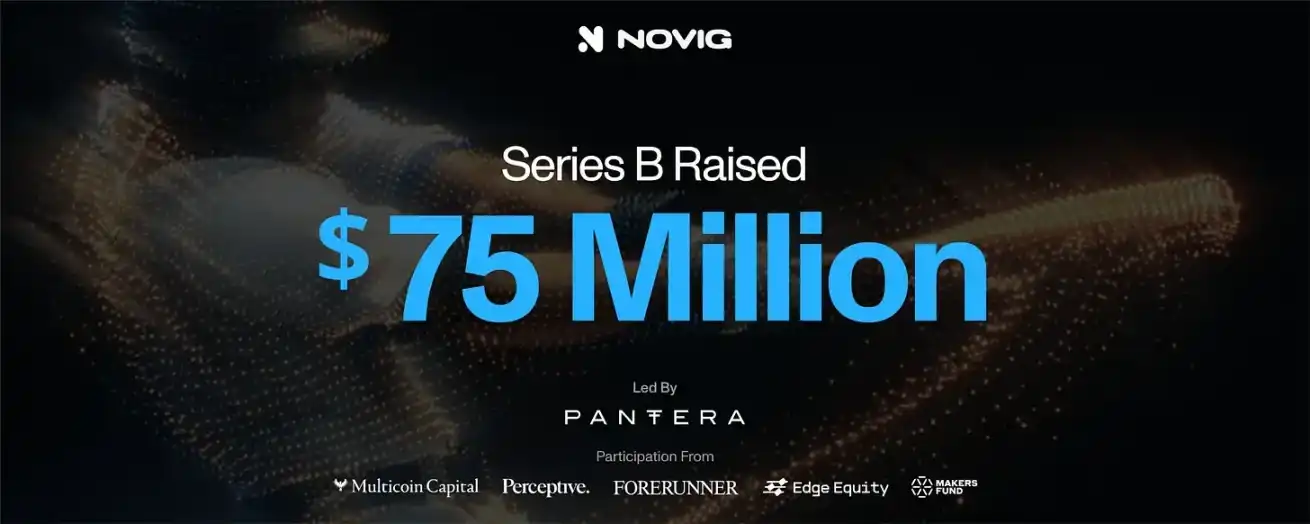
Novig: Farewell to the 'Vig' Era ($75 Million Series B)

Traditional sports betting is a monopolistic,畸形 (distorted/j畸形的 - likely meant 'distorted' or 'dysfunctional') market. Bookies take high commissions from every bet, resulting in a miserable user win rate of only 2%. We led Novig's $75 million round because they treat sports betting as a high-frequency financial product. Through a peer-to-peer trading model, Novig users achieve an average win rate of 23%. Most users don't care at all whether a decentralized order book is used in the backend; they just know they get the best odds in the US here. This is a vivid case of "crypto as a service".
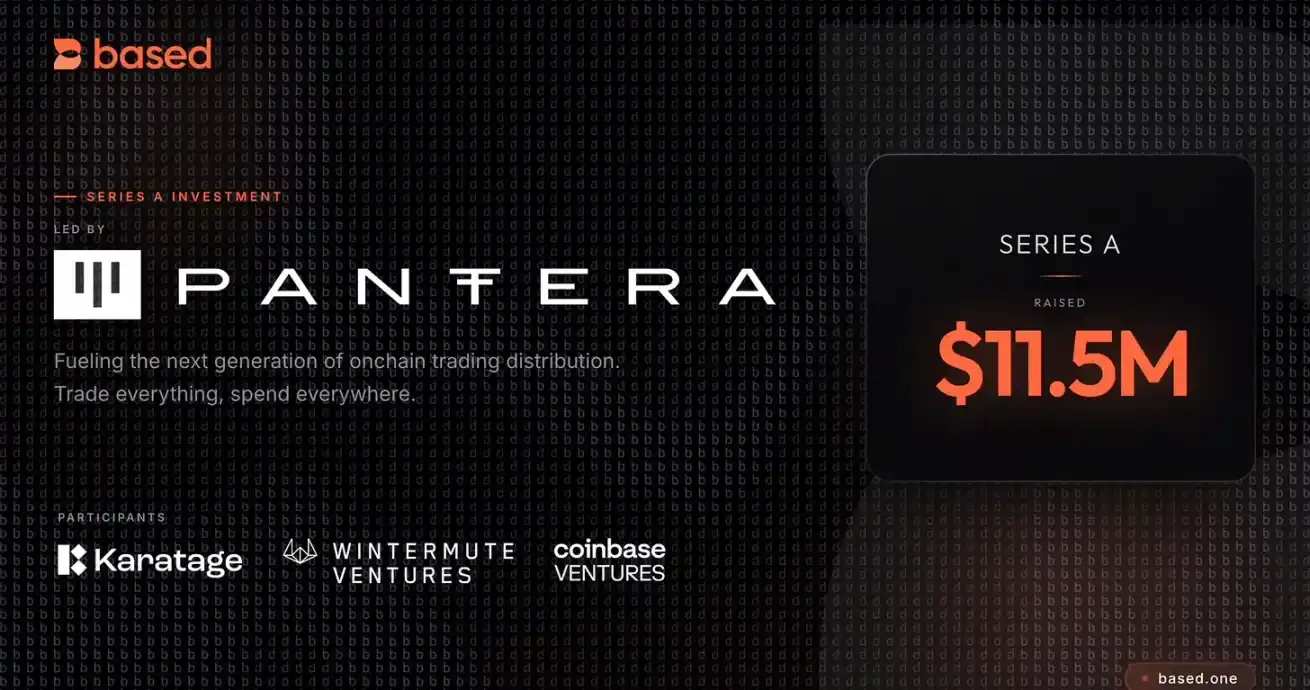
Based: Consumer-Grade Super App ($11.5 Million Series A)

We recently led the Series A funding for Based. This is a composable Web3 consumer-grade super app built on the Hyperliquid ecosystem. "Consumer-grade crypto" was often equated with "clunky experience". Based is changing that; it makes the on-chain interaction experience as smooth and seamless as a top-tier fintech app. Complex operations like cross-chain bridging and Gas fees are abstracted away; users are completely unaware. They only need to focus on the social and financial value brought by the assets.
Doppler: The Default Asset Issuance Infrastructure ($9 Million Seed Round)

If Based and Novig are cool new cars, then Doppler is the high-performance fuel system. We led Doppler's $9 million seed round, aiming for it to become the default infrastructure for on-chain asset issuance. It allows developers to issue assets with institutional-grade security and compliance standards without having to build all the underlying technology from scratch. Doppler is like the Stripe for on-chain assets—pure utility, all encapsulated behind a simple API.

Why 'Invisibility' is More Important Than 'Virality'

This trend of "invisibilization" also runs through our entire investment portfolio:

  • Real World Assets (RWA): Tokenized treasury bonds are no longer an experiment in the crypto world; they are becoming the backend liquidity cornerstone for global trade.
  • AI Agents: Blockchain provides a trusted "truth layer" for AI agents through prediction markets and verifiable data, enabling them to autonomously and trustworthily interact with digital assets.
  • Agent payments will accelerate all this. Payment standards like x402 allow AI agents to directly complete transactions using crypto assets. The gradual clarification of stablecoin regulations is making this payment轨道 (track/rail - likely meant 'rail') smoother.

Advice for Entrepreneurs

If you are planning to start a business in 2026, my advice is simple: Stop talking so much about the technology, and talk more about what practical problems you can solve. If the slide in your funding presentation about the consensus mechanism comes before the one about customer return rates, it means your thinking is still stuck in 2022.

We are looking for teams that are building the next Novig, Based, or Doppler—those who truly understand what "mass adoption" means: when a technology becomes so seamless that people completely ignore its existence, it has truly entered millions of households.


Domande pertinenti

QWhat is the core theme for the crypto industry in 2026 according to the article?

AThe core theme for 2026 is the shift from 'crypto as an industry' to 'crypto as a service', where the goal is to solve real-world problems using blockchain technology while making it completely invisible to the end-user.

QWhat structural advantage does the crypto market have over traditional finance, as highlighted in the article?

AThe crypto market operates 24/7, which is a structural advantage over traditional finance that closes on weekends, allowing it to react to global events and complete price discovery without interruption.

QName one of the companies mentioned as an example of 'crypto as a service' and explain its approach.

ANovig is mentioned as an example. It treats sports betting as a high-frequency financial product using a peer-to-peer trading model, which increases user profitability to 23% compared to the traditional 2%, without users needing to know about the decentralized order book technology behind it.

QWhat are some key areas of focus for the Asian crypto market in 2026, as per the article?

AKey areas for Asia include cross-border payments via stablecoins (especially in B2B), tokenization of assets like gold and real estate, perpetual contract trading on DeFi driven by retail investors, and the potential growth of prediction markets.

QWhat advice does the article give to entrepreneurs looking to start a crypto business in 2026?

AThe advice is to focus on solving real-world problems rather than emphasizing the technology itself. If the pitch deck discusses consensus mechanisms before customer ROI, it's considered a mindset from 2022. The goal should be massive adoption through seamless, invisible technology integration.

Letture associate

Dan Koe: The Counterintuitive Truth—You Don't Need to Remember Everything You Read

Dan Koe: The Counterintuitive Truth — You Don't Need to Remember Everything You Read The central idea is that deliberately trying to remember information is often misguided. True learning isn't about memorizing facts but about having important knowledge surface naturally when needed through use. Most forgetting is normal, not a failure. The article reframes learning using a control theory framework—a four-step feedback loop: having a clear Goal, accurately Sensing your current state, Comparing the gap, and Acting to close it. Most learning stalls because people only do step 2 (blind input) without a goal to create the necessary "error signal" for focused action. The most effective method is to start with output, not input. Begin a meaningful personal project first, and learn only what's necessary to complete it. This project-driven, "just-in-time" learning ensures knowledge is contextual and retained. The concept of a "Second Brain" often fails because it becomes a digital graveyard—over-collected and under-utilized. The goal should be building a "Second Subconscious"—a dynamic system that proactively surfaces relevant ideas during creation, not a static storage vault. Tools like Obsidian+Claude or Eden can help by automating organization and enabling semantic search, but their value depends on linking knowledge to active projects. Ultimately, what matters is not what you store, but what you filter and internalize. Focus on ideas that shape your worldview, use projects as filters, and transform collected material through writing and sharing. AI should be used to reduce friction in research and editing, not to formulate your core views. In conclusion, remembering is a byproduct, not the goal. Knowledge that sticks comes from pursuing personal goals, applying it in real projects, and digesting it through creation. The tools are merely aids; the crucial step is to start doing meaningful work and let the necessary knowledge find you.

marsbit55 min fa

Dan Koe: The Counterintuitive Truth—You Don't Need to Remember Everything You Read

marsbit55 min fa

A New Era: The Fundamental Transformation of China's Entrepreneurs

A profound generational shift is underway among Chinese entrepreneurs. The wealth and influence once dominated by real estate and internet giants is now being claimed by a new wave of founders driving breakthroughs in AI, semiconductors, and robotics. This change is vividly reflected in 2026's wealth rankings. Figures like Zhang Yiming (ByteDance), Liang Wenfeng (DeepSeek), Chen Tianshi (Cambricon), and Wang Xingxing (Unitree Robotics) are ascending. Their wealth stems not from traditional business models but from market expectations for future technological competitiveness, with AI, chips, and smart hardware becoming the primary engines of wealth creation. Their common trait is a foundational focus on technology, often starting from the laboratory rather than a business plan. Examples include Chen Tianshi's decade-long push in AI chips, Liang Wenfeng's core algorithmic innovations at DeepSeek with a compact team, and Zhu Yiming's "no salary until profitable" 9-year journey to build Changxin Memory into a global DRAM player. This transition marks a fundamental shift in China's economic imperative: from commercial expansion and learning to indigenous innovation and deep industrial capability. While the previous generation built the foundational market and infrastructure, this new cohort is tasked with achieving global leadership in core technologies, moving China from "keeping pace" to pioneering original, breakthrough innovations that are industrialized at scale. The baton is being passed to those competing on the world stage through technological originality.

marsbit55 min fa

A New Era: The Fundamental Transformation of China's Entrepreneurs

marsbit55 min fa

Once-Popular Web3 Enters Wave of Layoffs

The once-hot Web3 industry is experiencing a severe wave of layoffs. While many companies attribute job cuts to AI-driven restructuring, the primary reason is often financial pressure. The Web3 sector, at the intersection of tech and finance, has been hit particularly hard. Employees at major cryptocurrency exchanges report sudden, impersonal layoffs—often with system access revoked overnight—and minimal or no severance. Common tactics include setting impossible performance targets or terminating employees for minor policy violations. The working atmosphere has become toxic, marked by intense monitoring, excessive meetings, and management obsessed with control and internal politics rather than product innovation. The industry's core business model is collapsing. Exchange revenue from trading fees and listing charges has plummeted due to a decline in quality projects and retail investor exodus. Events like the massive forced liquidation on October 10th further shattered confidence. Competition from on-chain derivatives platforms and prediction markets is intensifying the downturn. As layoffs continue, displaced workers struggle to find new opportunities. Many transition to the AI sector, but face significant bias from traditional finance and even some AI firms, which view crypto industry experience with suspicion. The current downturn appears more structural than cyclical, driven by unsustainable practices, internal strife, and a failure to innovate, raising questions about the industry's future trajectory.

marsbit1 h fa

Once-Popular Web3 Enters Wave of Layoffs

marsbit1 h fa

Trading

Spot
活动图片