Exploring Physical World AGI with "Visual Reasoning", ElorianAI Raises $55 Million

marsbitPubblicato 2026-04-23Pubblicato ultima volta 2026-04-23

Introduzione

ElorianAI, co-founded by ex-Google AI expert Andrew Dai and former AI specialist Yinfei Yang, has raised $55 million in early funding to develop next-generation AI systems with advanced visual reasoning capabilities. While current large models excel in text-based tasks like programming and math, they perform poorly in visual reasoning—even top models like Gemini only match a 3-year-old’s ability in basic visual benchmarks. The key limitation lies in the architecture of current vision-language models (VLMs), which first convert visual inputs into text before reasoning, losing critical spatial and structural information. ElorianAI aims to build a native multimodal model that processes and reasons directly in visual space, enabling deeper understanding of physical relationships, constraints, and environments. The company plans to release a state-of-the-art visual reasoning model by 2026, with potential applications in robotics, disaster management, engineering, healthcare, and AI hardware. By using high-quality, diverse, and synthetically generated data, ElorianAI intends to create models that don’t just perceive but truly understand and reason about the physical world—bringing us closer to visual AGI.

By Alpha Community

AI large models have surpassed average humans in certain areas, such as programming and mathematics. Reports indicate that Anthropic has almost achieved 100% AI programming internally, and Google's Gemini Deep Think solved 5 out of 6 problems in IMO 2025, reaching gold medal level.

However, in visual reasoning, even the leading Gemini 3 Pro only reached the level of a 3-year-old child on BabyVision, a benchmark testing basic visual reasoning abilities.

Why are large models strong in programming and mathematics but weak in visual reasoning? This is due to limitations in their "thinking process." Visual Language Models (VLMs) need to first convert visual input into language and then perform text-based reasoning. However, many visual tasks cannot be accurately described in words, resulting in poor visual reasoning capabilities of the models.

Andrew Dai, who worked at Google DeepMind for 14 years, teamed up with Apple's seasoned AI expert Yinfei Yang to establish a company called Elorian AI. Their goal is to elevate the model's visual reasoning ability from "child level" to "adult level," enabling the model to natively "think" within the "visual space" and thereby advance toward AGI in the physical world.

Elorian AI raised $55 million in early-stage funding co-led by Striker Venture Partners, Menlo Ventures, and Altimeter, with participation from 49 Palms and top AI scientists including Jeff Dean.

Pioneers in Multimodal Models Aim to Equip Visual Models with Reasoning Abilities

Andrew Dai, who is of Chinese descent, holds a bachelor's degree in computer science from Cambridge and a PhD in machine learning from Edinburgh. He interned at Google during his PhD and joined the company in 2012, staying for 14 years until starting his own business.
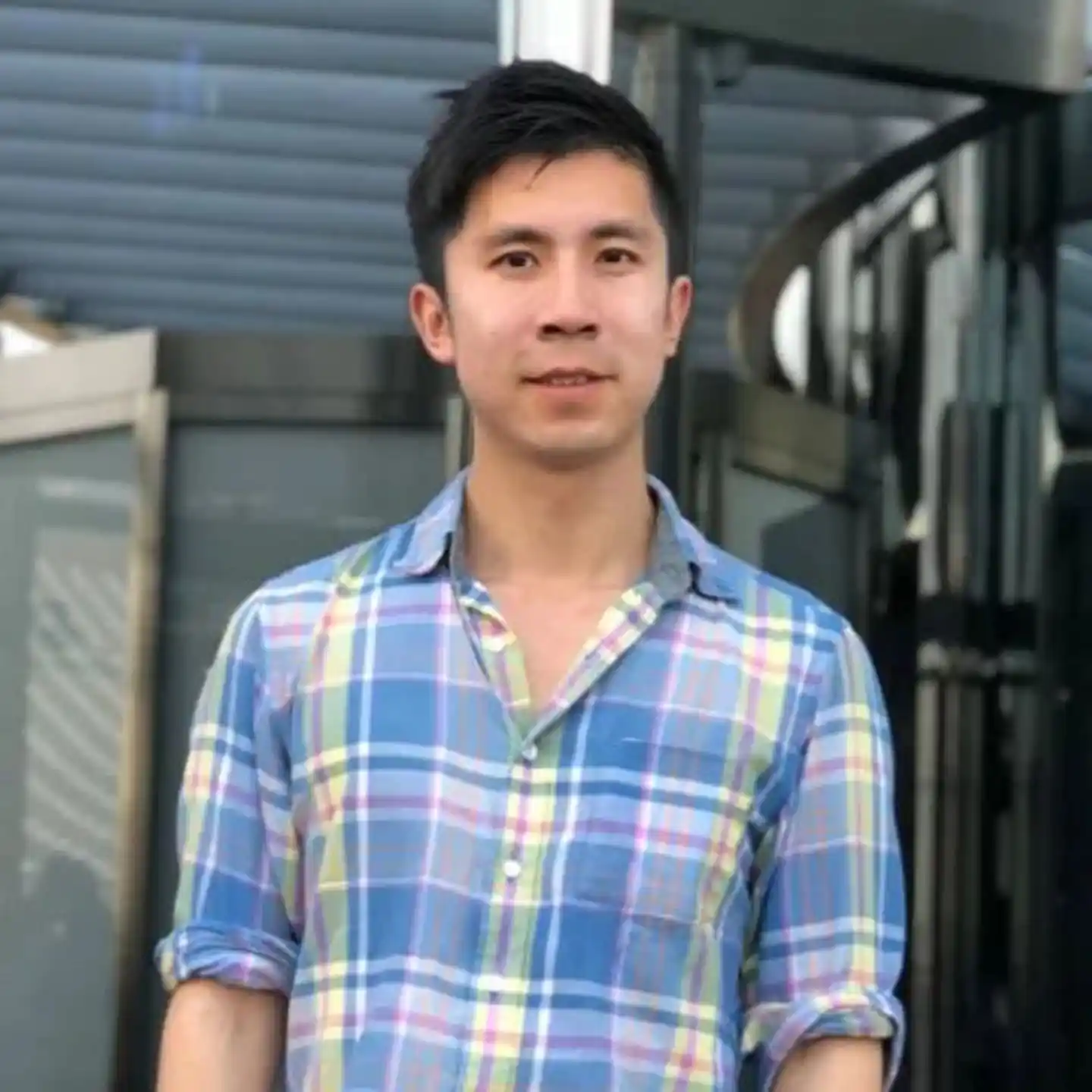

Image Source: Andrew Dai's LinkedIn

Shortly after joining Google, he co-authored the first paper on language model pre-training and supervised fine-tuning, "Semi-supervised Sequence Learning," with Quoc V. Le. This paper laid the foundation for the birth of GPT. Another foundational paper of his is "Glam: Efficient scaling of language models with mixture-of-experts," which paved the way for the now mainstream MoE architecture.
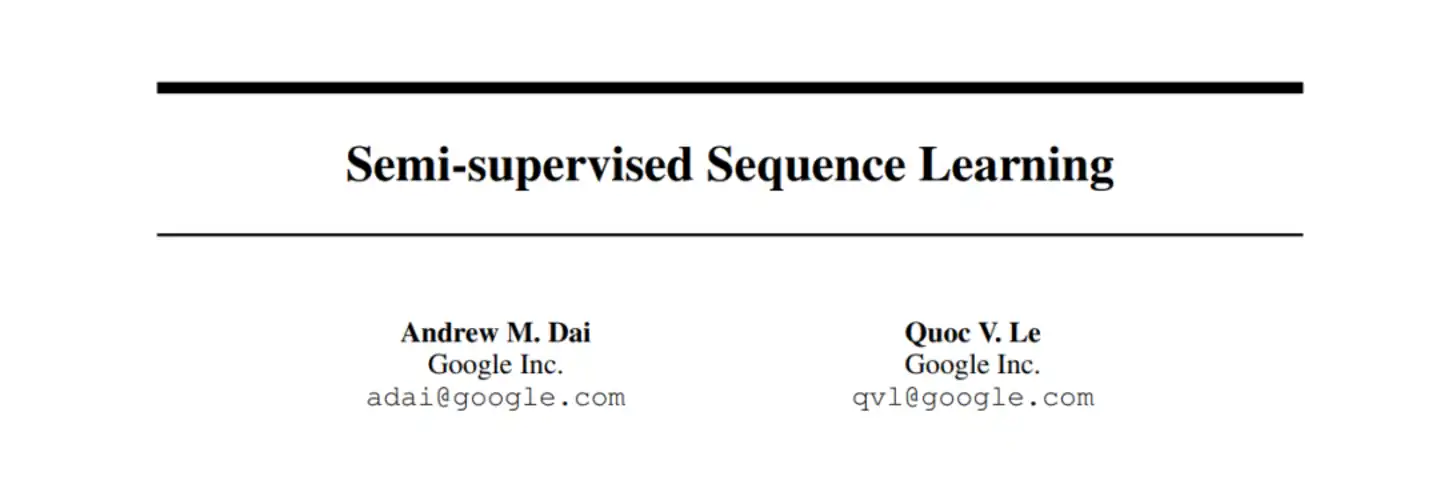
Image Source: Google

During his time at Google, he was deeply involved in almost all large model trainings, from Palm to Gemini 1.5 and Gemini 2.5. Under Jeff Dean's arrangement, he began leading the data division of Gemini (including synthetic data) in 2023, and the team later expanded to hundreds of people.

Image Source: Yinfei Yang's LinkedIn

Co-founding Elorian AI with Andrew Dai is Yinfei Yang, who worked at Google Research for four years, focusing on multimodal representation learning, before joining Apple to lead multimodal model R&D.
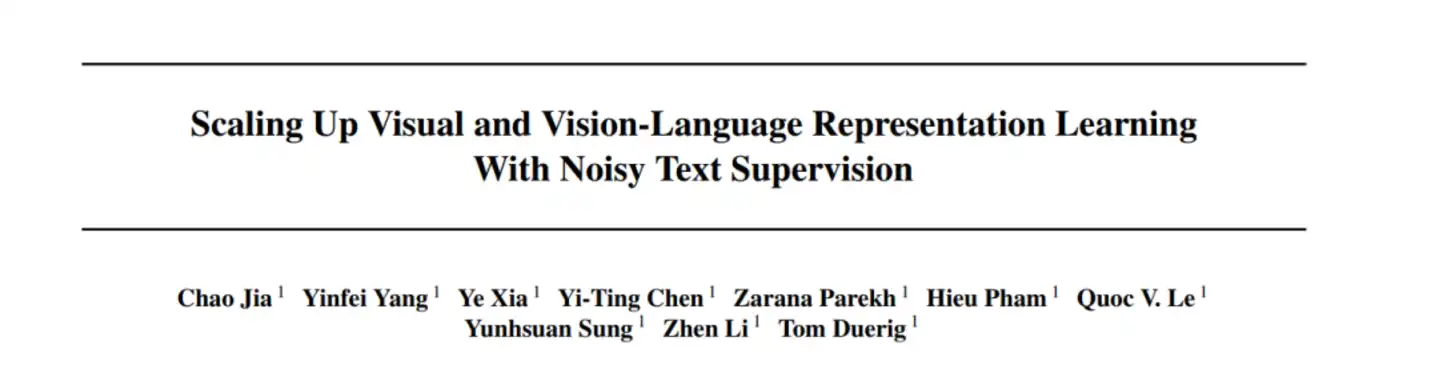
Image Source: arxiv

His representative research, "Scaling up visual and vision-language representation learning with noisy text supervision," advanced the development of multimodal representation learning.

Elorian AI's co-founders also include Seth Neel, who was an Assistant Professor at Harvard University and is an expert in data and AI.

Why discuss the groundbreaking papers written by Elorian AI's co-founders? Because their goal is not just engineering optimization but a paradigm shift at the foundational architecture level, upgrading AI from text-based intelligent understanding to vision-based intelligent understanding.

The current state of AI models is that, despite excelling in text-based tasks, even the most advanced frontier multimodal large models still stumble on the most basic visual grounding tasks.

For example, how to fit a part precisely into a mechanical device to make it run more accurately and efficiently? Such spatial physical tasks are simple for elementary school students but challenging for existing multimodal large models.

This brings us back to biology for clues. In the human brain, vision is the underlying substrate supporting many thinking processes. Humans' ability to use visual and spatial reasoning is far more ancient than language-based logical reasoning.

For instance, teaching someone to navigate a maze using language can be confusing, but drawing a sketch makes it instantly understandable.

Even a bird, without language, can recognize and reason about geographical features through vision to achieve global long-distance migration. This is a strong signal that vision is likely the correct direction for truly advancing machine reasoning.

So, imagine if, from the very beginning of model construction, this biological visual instinct is encoded into AI's genes, building a native multimodal model that "simultaneously understands and processes text, images, video, and audio," enabling the model to possess visual understanding capabilities. Andrew Dai and his team aim to build an innate "synesthete," teaching machines not only to "see" the world but also to "understand" it.

To Andrew Dai and his team, a deep understanding of the real "physical world" is the key to achieving the next leap in machine intelligence and ultimately reaching "Visual AGI."

VLMs with Post-Reasoning Are Not the Right Path to Visual Reasoning

There have been teams attempting this before. In fact, Andrew Dai's previous Gemini team was already among the global leaders in the multimodal field. However, traditional multimodal models are still primarily VLMs (Visual Language Models), built on a "two-step" logic: first converting visual input into language, then performing text-based reasoning (sometimes assisted by external tools).

However, post-reasoning inherently has limitations. On one hand, it is prone to model hallucinations; on the other, many visual tasks cannot be precisely described in words.

Additionally, visual generation models like NanoBanana excel in multimodal generation, but generation ability does not equal reasoning ability. The "thinking" before generation still relies on language models, not native reasoning capability.

To develop models that truly understand the spatial, structural, and relational complexities of the visual world, disruptive innovation at the underlying technology level is necessary.

So, how to innovate? Elorian AI's founders, with years of experience in the multimodal field, approach this by deeply integrating multimodal training with a new architecture specifically designed for multimodal reasoning. They abandon the traditional approach of treating images as static input, instead training models to directly interact with and manipulate visual representations to autonomously parse their structure, relationships, and physical constraints.

Of course, another core element is data, which is crucial to the performance and success of these models.

Andrew Dai stated that they place great importance on data quality, data mix ratios, data sources, and data diversity. They have innovated at the data layer, reconstructing the reasoning chain in visual space, and are extensively and deeply using synthetic data.

Combined, these efforts will give rise to new AI systems that move beyond simple visual "perception" to high-level visual "reasoning."

This AI system could be a visual reasoning foundation model: building a highly general but exceptionally proficient model in a specific capability set—visual reasoning.

As a general foundation model, its application areas should be broad.

First, in the robotics field, it could become the underlying neural center of powerful systems,赋予ing them the ability to operate autonomously in various unfamiliar environments.

For example, sending a robot to handle a sudden safety fault in a hazardous environment requires the robot to make quick and accurate instant decisions. If the robot lacks a foundation model with deep reasoning capabilities, people wouldn't dare let it randomly press buttons or operate levers. But if it has strong reasoning能力, it might think: "Before operating this panel, maybe I should pull this lever first to activate the safety mechanism."

Furthermore, in disaster management, models with visual reasoning could analyze satellite images to monitor and prevent forest fires. In engineering, they could accurately understand complex visual blueprints and system diagrams. The significance of this ability lies in the fact that the operating principles of the physical world are fundamentally different from the pure code world. You can't design an airplane wing just by typing a few lines of pure code.

However, Elorian AI's models and capabilities are currently still on paper. They plan to release a model in 2026 that achieves SOTA level in visual reasoning. At that time, we can verify if their results match their claims.

When AI Truly Possesses "Visual Reasoning" Ability, How Will It Change the Physical World?

To enable AI to understand and influence the real physical world, technology has iterated several times.

From image recognition in the traditional CV era, to image generation models/multimodal models in generative AI, to world models, the understanding of the physical world has been continuously enhanced.

Visual reasoning foundation models could take it a step further. Because achieving visual reasoning allows AI to understand the physical world more deeply, thereby achieving a higher level of machine intelligence.

Imagine, when models with deep understanding and fine operation empower the embodied intelligence industry and the AI hardware industry, it will greatly expand their application scope. For example, robots could perform more reliable industrial production or work in medical care; AI hardware, especially wearable devices, could become smarter personal assistants.

However, underlying these technologies is still data. As Andrew Dai mentioned earlier, data quality, data mix ratios, data sources, and data diversity all determine model performance.

In the physical AI field, Chinese companies, whether at the model level or the data level, are closer to world leadership compared to text large models. If they can leverage their advantages of richer data and application scenarios to accelerate iteration speed, then whether in embodied intelligence or AI hardware, whether applied in industry, healthcare, or homes, there is a greater opportunity to reach leading levels and potentially produce world-class enterprises.


Crypto di tendenza

Domande pertinenti

QWhat is the main goal of current Vision Language Models (VLMs) according to the article, and what are their limitations?

AThe main goal of VLMs is to process visual input by first converting it into language and then performing text-based reasoning. Their limitation is that many visual tasks cannot be accurately described with text, leading to poor visual reasoning capabilities.

QWho are the founders of Elorian AI and what are their backgrounds?

AThe founders are Andrew Dai, a former Google DeepMind researcher with 14 years of experience, and Yinfei Yang, an AI expert who worked at Google Research and Apple. Andrew Dai contributed to foundational papers in language model pre-training and MoE architecture, while Yinfei Yang focused on multimodal representation learning.

QHow does Elorian AI plan to improve AI's visual reasoning capabilities?

AElorian AI aims to develop a native multimodal model that processes text, images, video, and audio simultaneously. They focus on integrating multimodal training with new architectures designed for visual reasoning, directly interacting with visual representations to parse structures and physical constraints, and using high-quality, diverse synthetic data.

QWhat potential applications are mentioned for AI with advanced visual reasoning skills?

AApplications include robotics for autonomous operations in unfamiliar environments, disaster management through satellite image analysis, engineering by interpreting complex visual diagrams, and enhancing AI hardware like wearable devices for personal assistance.

QWhen does Elorian AI plan to release their model, and what is the expected achievement?

AElorian AI plans to release a model in 2026 that achieves state-of-the-art (SOTA) performance in visual reasoning, aiming to elevate capabilities from 'child-level' to 'adult-level'.

Letture associate

Must-Watch Events Next Week|CLARITY Act Could Face Senate Vote; SpaceX, Circle to Report Earnings (8.3-8.9)

**Summary: Key Events and Developments to Watch (August 3-9)** The upcoming week is marked by significant financial disclosures, key legislative deadlines, and notable product updates. **Major Financial Events:** Several companies are scheduled to release their Q2 2026 earnings. American Bitcoin (ABTC) will report on August 3, followed by SpaceX and Hut 8 Mining Corp. on August 4, and Circle on August 5. Notably, a significant portion of SpaceX shares (up to 12% of total shares) will be unlocked on August 6 following their earnings release. **Key Legislative Deadline:** The U.S. Senate faces an August 7 deadline to secure 60 votes for the CLARITY Act, a bipartisan bill aiming to establish a federal regulatory framework for cryptocurrencies. The Senate may hold a full vote on the bill during the week. **Economic Data:** The U.S. July Non-Farm Payrolls report will be released on August 7, providing crucial labor market data. **Technology & Product Updates:** * **Shutdowns:** DeFi portfolio tracker Zapper and wallet app Ctrl Wallet will cease operations on August 3. * **Upgrades:** LayerZero will deprecate its v1 relayers on August 3. XRP Ledger's new version 3.3.0, featuring five new functions, is expected next week. * **AI:** Elon Musk announced that the advanced Grok 4.6 AI model is set for release around August 7. * **Bitcoin:** The BIP-110 forced signaling for a potential Bitcoin network change is scheduled to begin around August 8. **Other Notable Events:** Chinese robotics firm Unitree Tech has set its preliminary price inquiry for its IPO for August 5. South Korean exchange Upbit will delist AQT and AERGO tokens on August 3.

marsbit16 min fa

Must-Watch Events Next Week|CLARITY Act Could Face Senate Vote; SpaceX, Circle to Report Earnings (8.3-8.9)

marsbit16 min fa

Stocks Are Plummeting More Sharply Than Cryptocurrencies. Where Has the Money Gone?

Stock Markets Plunge Deeper Than Cryptocurrencies: Where Did the Money Go? In late July, Seoul's Kospi index triggered circuit breakers for two consecutive days, plummeting over 40% from its June high. The collapse was led by heavyweight stocks like SK Hynix, whose record profits still disappointed investors, and devastating leveraged ETFs, with one major product losing over 83% of its value. This signaled a global, forced deleveraging targeting the most crowded trades. Interestingly, while stocks exhibited extreme volatility akin to crypto markets, Bitcoin rose nearly 15% in July after a prior steep drop. Analysis shows the money fleeing equities did not flow into Bitcoin. Instead, Bitcoin had already absorbed its sell-off in May-June, when U.S. spot Bitcoin ETFs saw historic outflows. The true safe-haven beneficiary was gold, whose price rose over 20% year-on-year, highlighting a decoupling between Bitcoin and gold as "digital gold." The sell-off was a targeted unwinding of leveraged positions in tech and semiconductors, accelerated by broker-dealer risk management and shifts in the AI narrative, including new competition from Chinese memory chipmakers. The retreat path was clear: from high-valuation tech stocks to cash and U.S. Treasuries, then to gold. For Bitcoin to attract sustained institutional inflows, conditions like eased global liquidity pressure, a "soft-landing" Fed rate cut, and U.S. regulatory clarity via legislation like the stalled CLARITY Act are needed. Currently, Bitcoin is not a safe haven but an already-cleared asset. Its low correlation with tech stocks, however, makes it a potential diversification play for institutional portfolios once the storm passes. The money isn't here yet, but the positioning is underway.

marsbit16 min fa

Stocks Are Plummeting More Sharply Than Cryptocurrencies. Where Has the Money Gone?

marsbit16 min fa

In Conversation with Ray Dalio: We Are Currently in an AI Bubble, with 1% of My Portfolio in Bitcoin

Ray Dalio, founder of Bridgewater Associates, warns in an interview that the current AI boom shows classic bubble characteristics, which could lead to significant economic downturns as seen in past cycles like 1929 or 2000. He explains that speculative enthusiasm, fueled by debt and overvaluation, often precedes a crash when rising rates or taxation force asset sales, causing widespread losses and recession. Dalio also outlines his "Big Cycle" theory, describing an approximate 80-year pattern where widening wealth gaps, massive government deficits, and shifting geopolitical power (like China's rise) create internal conflict and global instability. He emphasizes that we are in a late-cycle, transitional phase where traditional powers like the US and UK face decline. For personal wealth protection, Dalio advises diversification beyond cash into assets like stocks, bonds, real estate, and particularly gold, which he prefers over Bitcoin. While he holds about 1% of his portfolio in Bitcoin as a non-printable hard asset, he views gold as more secure from technological or governmental threats. Regarding AI's impact, Dalio believes it will disproportionately benefit capital owners, worsening inequality by replacing both physical and cognitive labor. He suggests that human intuition and emotional intelligence, combined with AI, will be key for future workers. On taxation, Dalio argues that wealth taxes are impractical and risk triggering asset sell-offs, reducing productive investment. He points to the UK as a cautionary example of debt, low productivity, and political strife. Geopolitically, Dalio foresees a more regionalized world, with the US showing weakness in prolonged conflicts like with Iran, akin to past imperial declines. The ideal outcome, he suggests, is coexisting powerful blocs (e.g., Americas, China-Asia Pacific) without major war.

marsbit4 h fa

In Conversation with Ray Dalio: We Are Currently in an AI Bubble, with 1% of My Portfolio in Bitcoin

marsbit4 h fa

Daily 7.2 Trillion KRW: Foreign Capital's Record Net Buying on Friday! Wall Street Says Headwinds for Korean Stock Fund Flows Have Subsided

South Korean stock market sees a dramatic shift in fund flows. On July 31, foreign investors made a record net purchase of approximately KRW 7.2 trillion in KOSPI stocks, marking a fundamental reversal from the persistent large-scale net outflows seen in previous months. This contributed to a significant narrowing of foreign net selling in July to KRW 9.8 trillion, down sharply from KRW 48.4 trillion in June and KRW 44.5 trillion in May. Simultaneously, domestic institutional pressure eased. South Korean pension funds and asset managers turned to a net buying position in July, purchasing KRW 1.0 trillion worth of KOSPI shares, contrasting with net sales in May and June. Market volatility is expected to be dampened by new financial regulations. Effective July 31, the Financial Services Commission tightened access for retail investors to single-stock leveraged ETFs by raising the minimum cash deposit requirement. Trading volumes for these products subsequently dropped to about 50% of their monthly average. Citigroup Research maintains its year-end KOSPI target of 10,000 points. The firm cites several supportive factors: the substantial easing of headwinds from capital outflows, a robust fundamental outlook for the semiconductor sector, historically low market valuations, strong economic fundamentals, and the potential for policy support from financial authorities if needed.

marsbit4 h fa

Daily 7.2 Trillion KRW: Foreign Capital's Record Net Buying on Friday! Wall Street Says Headwinds for Korean Stock Fund Flows Have Subsided

marsbit4 h fa

Trading

Spot

Articoli Popolari

Come comprare AR

Benvenuto in HTX.com! Abbiamo reso l'acquisto di Arweave (AR) semplice e conveniente. Segui la nostra guida passo passo per intraprendere il tuo viaggio nel mondo delle criptovalute.Step 1: Crea il tuo Account HTXUsa la tua email o numero di telefono per registrarti il tuo account gratuito su HTX. Vivi un'esperienza facile e sblocca tutte le funzionalità,Crea il mio accountStep 2: Vai in Acquista crypto e seleziona il tuo metodo di pagamentoCarta di credito/debito: utilizza la tua Visa o Mastercard per acquistare immediatamente ArweaveAR.Bilancio: Usa i fondi dal bilancio del tuo account HTX per fare trading senza problemi.Terze parti: abbiamo aggiunto metodi di pagamento molto utilizzati come Google Pay e Apple Pay per maggiore comodità.P2P: Fai trading direttamente con altri utenti HTX.Over-the-Counter (OTC): Offriamo servizi su misura e tassi di cambio competitivi per i trader.Step 3: Conserva Arweave (AR)Dopo aver acquistato Arweave (AR), conserva nel tuo account HTX. In alternativa, puoi inviare tramite trasferimento blockchain o scambiare per altre criptovalute.Step 4: Scambia Arweave (AR)Scambia facilmente Arweave (AR) nel mercato spot di HTX. Accedi al tuo account, seleziona la tua coppia di trading, esegui le tue operazioni e monitora in tempo reale. Offriamo un'esperienza user-friendly sia per chi ha appena iniziato che per i trader più esperti.

676 Totale visualizzazioniPubblicato il 2024.12.11Aggiornato il 2026.06.02

Come comprare AR

Discussioni

Benvenuto nella Community HTX. Qui puoi rimanere informato sugli ultimi sviluppi della piattaforma e accedere ad approfondimenti esperti sul mercato. Le opinioni degli utenti sul prezzo di AR AR sono presentate come di seguito.

活动图片












