EU Proposes Ban On Russian Crypto Transactions To Crack Down Sanctions Evasion – Report

bitcoinistPubblicato 2026-02-11Pubblicato ultima volta 2026-02-11

Introduzione

The European Union is considering a comprehensive ban on all cryptocurrency transactions with Russia to prevent the country from using digital assets to evade sanctions. According to a report, the European Commission has proposed prohibiting engagement with any crypto asset service provider established in Russia, arguing that targeting individual entities would lead to the creation of new ones to circumvent restrictions. The proposal specifically aims to prevent the growth of platforms like the sanctioned exchange Garantex and targets the payments platform A7 and its ruble-pegged stablecoin. Additionally, the Commission suggested adding 20 Russian banks to the sanctions list, banning digital ruble transactions, and restricting certain exports to Kyrgyzstan. The measures require unanimous support from EU member states, though some countries have expressed doubts. This potential crackdown coincides with Russia's ongoing development of its digital assets regulatory system.

As Russia moves to regulate the crypto sector later this year, the European Union (EU) is considering implementing strict sanctions on all digital asset transactions linked to the country to curb sanctions evasion.

EU Seeks Sanctions On Russian Crypto Transactions

On Tuesday, the Financial Times (FT) reported that the European Commission (EC) is evaluating measures to prohibit all crypto transactions with Russia, stepping up its efforts to crack down on the country’s use of digital assets to evade sanctions.

According to documents reviewed by the FT, the Commission has seemingly proposed a broader prohibition “instead of attempting to ban copycat Russian crypto entities spun out of already sanctioned platforms.”

“In order to ensure that sanctions achieve their intended effect [the EU] prohibits to engage with any crypto asset service provider, or to make use of any platform allowing the transfer and exchange of crypto assets that is established in Russia,” explained the internal document outlining the proposed sanctions.

The Commission argued that “any further listing of individual crypto asset service providers ... is therefore likely to result in the set-up of new ones to circumvent those listings.”

Notably, the proposal reportedly focuses on preventing the growth of successors to the Russia-linked crypto exchange Garantex. In 2022, the US sanctioned the platform for “operating as the exchange of choice for cybercriminals”.

Moreover, the document is aimed at the payments platform A7, a company reportedly conceived as a mechanism to facilitate cross-border trades due to sanctions imposed after Russia invaded Ukraine, and its connected ruble-pegged stablecoin A7A5, previously used by Garantex to transfer funds to Kyrgyz exchange Grinex.

As reported by Bitcoinist, the EU, UK, and US have adopted restrictive measures against the payment platform. Despite this, recent reports revealed the stablecoin has an aggregate transaction volume of $100 billion.

In addition, the EC suggested adding 20 banks to the list of sanctioned entities and a ban on any digital ruble-related transactions. The Commission also proposed a ban on the export of certain dual-use goods to Kyrgyzstan, claiming that local companies have sold prohibited goods to Russia.

Nonetheless, imposing the measures would require the unanimous support of member states, and three of the bloc’s countries have reportedly expressed doubts, three diplomats briefed on discussions told the FT.

Russia’s Digital Assets Landscape

The potential crackdown comes as Russia continues to develop its upcoming digital assets framework. The CBR recently unveiled its comprehensive regulatory proposals to enable retail and qualified investors to buy digital assets through licensed platforms in the country.

Last month, the Committee on State Building and Legislation at the State Duma also advanced a bill to regulate the seizure of crypto assets in criminal proceedings and reduce the risks associated with the use of digital assets in criminal activities, including money laundering, corruption, and terrorist financing.

Meanwhile, Russia’s largest bank by assets, Sberbank, recently announced that it is preparing to offer crypto-backed loans to corporate clients following strong corporate interest.

The bank affirmed its readiness to work with the Central Bank of Russia (CBR) to develop regulations, and it is finalizing the necessary infrastructure and procedures for potential scaling of crypto-backed lending.
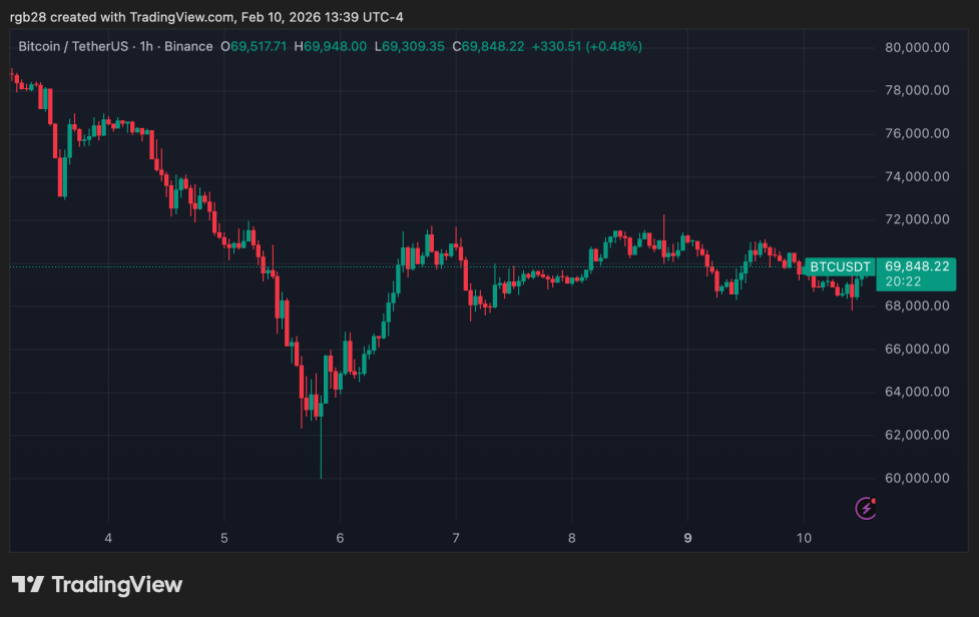
Bitcoin (BTC) trades at $69,848 in the one-week chart. Source: BTCUSDT on TradingView


Letture associate

The Value Distribution of Stablecoins

**Summary: The Value Distribution of Stablecoins** The article argues that stablecoins are evolving from mere trading tools into broader channels for dollar access. It divides the stablecoin ecosystem into four layers to analyze how value is distributed: 1. **Issuance Layer:** Mints stablecoins, holds reserve assets, and captures the spread between reserve yield and user costs (e.g., Tether, Circle). This layer currently earns the largest profit margin. 2. **Infrastructure Layer:** Connects stablecoins to the traditional financial system, handling fiat on/off-ramps, banking integration, compliance (KYC/AML), and asset management (e.g., Bridge, BVNK). This is the "unglamorous" but critical work, building the essential bridges between crypto and real-world finance. 3. **Acquiring/Distribution Layer:** Integrates stablecoins into merchant systems, manages payment flows, and provides enterprise financial software (e.g., Stripe, Coinbase). They act as the access point for businesses. 4. **Application Layer:** The end-users and businesses that ultimately use stablecoins for payments, settlements, or as a store of value. They benefit from convenience but have little pricing power. The core thesis is that while the issuance layer currently dominates profits, the often-overlooked **infrastructure layer holds significant long-term potential**. The real challenge and barrier to mass adoption is not the on-chain transfer of stablecoins (which is simple), but the complex "last mile" integration into existing business workflows, banking systems, and regulatory frameworks across different countries. Companies in this layer are currently in a "land grab" phase, investing heavily to build networks, secure bank partnerships, and establish compliance pathways. While their position is currently pressured by the profitable issuers above and distribution platforms below, the article suggests that if stablecoins become a default financial rail for businesses, the infrastructure providers who have done the hard work of integration will ultimately gain strong pricing power and become entrenched, essential players.

marsbit5 h fa

The Value Distribution of Stablecoins

marsbit5 h fa

The Value Distribution of Stablecoins

The Value Distribution of Stablecoins The article argues that stablecoins are evolving from a mere trading tool into a broad "dollar channel." It analyzes the industry's value chain through four layers: 1. **Issuance Layer (e.g., Tether, Circle):** The top layer that mints stablecoins, holds reserve assets, and captures the thickest interest rate spread. 2. **Infrastructure Layer (e.g., Bridge, BVNK):** Connects stablecoins to the traditional financial system, handling critical but complex "dirty work" like fiat on/off-ramps, banking integration, compliance (KYC/AML), and cross-border settlement. 3. **Acquiring/Distribution Layer (e.g., Stripe, Coinbase):** Embeds stablecoins into merchant systems, manages payment flows, and integrates with enterprise software. 4. **Application Layer:** End-users and businesses that ultimately use stablecoins for payments, settlement, or storing value. The author posits that while the issuance layer currently captures the most profit, the most overlooked and potentially critical layer is infrastructure. The core challenge for stablecoin adoption isn't the on-chain transfer (which is simple), but bridging the gap between blockchain and the real-world financial system. This involves solving practical problems for businesses: fiat conversion, reconciliation, tax handling, and user onboarding. Infrastructure companies are currently in a difficult "land-grab" phase—building networks, securing banking relationships, and achieving compliance country-by-country. They face pressure from both the profitable issuance layer above and distribution platforms below. However, the author suggests this layer is building a crucial moat. Once stablecoins become a default business rail, the infrastructure players who have done the hard work of integration may gain significant, durable value and pricing power.

链捕手5 h fa

The Value Distribution of Stablecoins

链捕手5 h fa

Trading

Spot
Futures

Articoli Popolari

Come comprare BAN

Benvenuto in HTX.com! Abbiamo reso l'acquisto di Comedian (BAN) semplice e conveniente. Segui la nostra guida passo passo per intraprendere il tuo viaggio nel mondo delle criptovalute.Step 1: Crea il tuo Account HTXUsa la tua email o numero di telefono per registrarti il tuo account gratuito su HTX. Vivi un'esperienza facile e sblocca tutte le funzionalità,Crea il mio accountStep 2: Vai in Acquista crypto e seleziona il tuo metodo di pagamentoCarta di credito/debito: utilizza la tua Visa o Mastercard per acquistare immediatamente ComedianBAN.Bilancio: Usa i fondi dal bilancio del tuo account HTX per fare trading senza problemi.Terze parti: abbiamo aggiunto metodi di pagamento molto utilizzati come Google Pay e Apple Pay per maggiore comodità.P2P: Fai trading direttamente con altri utenti HTX.Over-the-Counter (OTC): Offriamo servizi su misura e tassi di cambio competitivi per i trader.Step 3: Conserva Comedian (BAN)Dopo aver acquistato Comedian (BAN), conserva nel tuo account HTX. In alternativa, puoi inviare tramite trasferimento blockchain o scambiare per altre criptovalute.Step 4: Scambia Comedian (BAN)Scambia facilmente Comedian (BAN) nel mercato spot di HTX. Accedi al tuo account, seleziona la tua coppia di trading, esegui le tue operazioni e monitora in tempo reale. Offriamo un'esperienza user-friendly sia per chi ha appena iniziato che per i trader più esperti.

505 Totale visualizzazioniPubblicato il 2024.12.11Aggiornato il 2026.06.02

Come comprare BAN

Discussioni

Benvenuto nella Community HTX. Qui puoi rimanere informato sugli ultimi sviluppi della piattaforma e accedere ad approfondimenti esperti sul mercato. Le opinioni degli utenti sul prezzo di BAN BAN sono presentate come di seguito.

活动图片