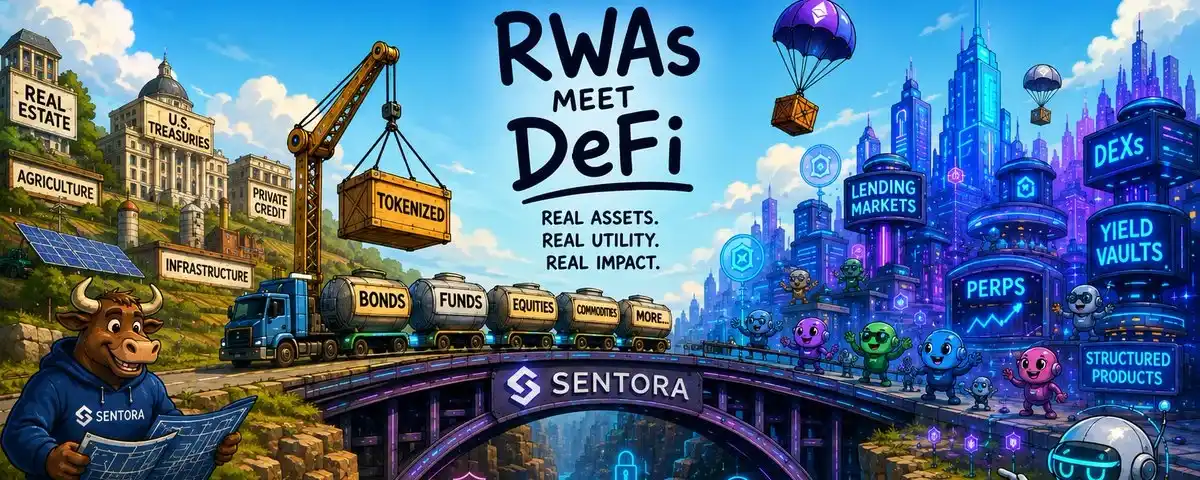
EtherFi Founder Criticizes: All Crypto Apps Are Variants of Casinos, We Choose to Be a "Boring" Bank

marsbitPubblicato 2026-08-17Pubblicato ultima volta 2026-08-17

Introduzione

**Title:** EtherFi Founder Criticizes Crypto "Casino" Apps, Embraces "Boring" Banking Model **Summary:** EtherFi CEO Mike Silagadze argues that mainstream crypto applications like Pump.fun, CEXs, and Polymarket are merely "casino" variants—highly profitable but failing to retain ordinary users. In contrast, EtherFi is pursuing a "boring" and sustainable path by building a self-custody neobank that aims to function as a new brokerage. The platform's summer rollout introduces key features aligned with this vision: expanded fiat on-ramps, an integrated Aave credit line, and tokenized stocks/metals (starting with xStocks). This marks a progression from its initial focus on savings (via liquid restaking vaults) and spending (stablecoins & card) to now include "investing" and "borrowing." A core anti-casino design is embedded in its new Aave-powered lending market. Unlike typical DeFi lending pools which Silagadze calls "woodchippers" for users, EtherFi's system features a conservative threshold that halts further borrowing well before liquidation, aiming to serve as a personal finance tool rather than a high-leverage gambling venue. Silagadze highlights the untapped potential, noting that traditional neobanking is a $300 billion revenue industry—roughly 300 times larger than current DeFi. He believes moving beyond the "casino" phase is crucial for crypto's real economic accumulation. Looking ahead, EtherFi's "Autumn" update plans to add a social, peer-to-peer layer, envision...

Author: William Peaster

Compiled by: Deep Tide TechFlow

Deep Tide's Introduction: The crypto casino business is highly profitable but struggles to retain average users. EtherFi has chosen an anti-casino route, integrating stocks, lending, and self-custody into a new banking portal. This might be the sustainable path for crypto finance to go mainstream.

EtherFi Bets Against the Crypto Casino Economy

EtherFi CEO Mike Silagadze believes the crypto industry doesn't have a product problem, but a distraction problem:

"Look at crypto consumer apps like Pump.fun, centralized exchanges, and even Polymarket — they're all Casino 1.0, Casino 2.0, just with different facades. 'Now bet on the weather.' It's very profitable because gambling is an extremely high-margin industry."

Silagadze said this to David Hoffman in a recent podcast episode, while outlining the alternative that EtherFi is championing instead. EtherFi is a self-custody neo-bank that is evolving into a de facto neo-broker.

EtherFi explicitly positions itself as the more boring, more sustainable antithesis, aiming to provide useful financial products that can genuinely attract and retain ordinary people. This vision naturally drives the platform's new feature rollout this summer, including expanded fiat on-ramps, Aave credit lines, and tokenized stocks.

As David noted in the show, EtherFi's roadmap so far has been a series of gradually unlocked "money verbs," aligned with the maturation of Ethereum's own infrastructure. Step one was saving, launching with liquid restaking vaults. Step two was spending, with stablecoins and the EtherFi Card making those restaked assets spendable in daily life.

This summer release adds two verbs at once: investing and borrowing.

Investing means the EtherFi app can now hold tokenized stocks and metals alongside crypto assets, starting with xStocks. According to Silagadze, the plan is to extend permissionlessly to any asset that emerges on Ethereum in the future. "I think this is the first time a crypto neo-bank is letting people trade stocks with the same non-custodial benefits," he said.

Borrowing means EtherFi now has a new Aave V4 market that treats your entire portfolio (crypto assets, stablecoins, stocks, gold, etc.) uniformly. Users can draw a single line of credit against a collateral pool, instead of borrowing separately against each asset. The design of this lending market is where EtherFi's anti-casino ethos is written into code. In Silagadze's view, most DeFi lending markets are built for gamblers:

"It's a wood chipper. You feed users in: they lose money, get liquidated, earn a bit back, and then put more in. That's the casino business model. We can't treat our users like that, or we'll go out of business ourselves."

Therefore, EtherFi deliberately built something more conservative. Here are a few details worth knowing about this new Aave integration:

Typical Aave markets have a single line, crossing which triggers liquidation. EtherFi's market adds an earlier, gentler threshold that merely pauses further borrowing, with liquidation triggered much later. As Silagadze puts it: "We have a conservative threshold that won't kill you even with a 40% price swing, and a much higher threshold for actual liquidation. We don't want people coming here to over-leverage themselves to the max. This should be a personal finance tool."

Furthermore, the current market is a single unified pool on Optimism, with reported plans to add a second spoke for more DeFi-native activities. Deposits are permissionless, open to anyone wanting to earn yield, with external capital effectively funding the loans on the other side.

As for the economic model, according to the public Aave governance proposal, the plan is for EtherFi to retain 80% of the revenue generated by its market, with Aave taking 20% as a fee for the underlying infrastructure service.

Will this new product succeed? Time will tell. But ultimately, the key point is that the crypto casino seems to be leaving ordinary, non-gambler revenue on the table. As Silagadze stated:

Neo-banking, let alone the entire banking industry, is a $300 billion revenue industry today. That's roughly 300 times the size of DeFi. All these gambling shenanigans we're playing with are really just a distraction. The sooner we move past this phase, the sooner the real gains for cryptocurrency begin to accumulate.

Similarly, whether the neo-broker model can replace the "casino" as crypto's biggest growth engine remains an open question. But EtherFi has already spent multiple product cycles polishing in that direction. If any team can pull it off, they currently have the best shot at getting there first.

Meanwhile, we only need to look to the future, and we've already seen a preview. EtherFi's next version was teased in the show as "Autumn." Reportedly, it aims to add a social, peer-to-peer layer to the app. Silagadze described the idea like this:

Imagine sending someone $10, and when they open it, it's a fully functional account without needing a bank account. They can spend it or send it to someone else. The monetary unit itself becomes self-sovereign.

That's a rather interesting idea and the next natural frontier for EtherFi to explore. So for now, let's see if these experiments translate into deeper adoption of the EtherFi tech stack.


Crypto di tendenza

Domande pertinenti

QAccording to EtherFi's founder Mike Silagadze, what is the fundamental problem of the crypto industry regarding consumer applications?

AMike Silagadze believes the crypto industry does not have a product problem, but a distraction problem. He states that many leading crypto consumer applications, such as Pump.fun, centralized exchanges, and even Polymarket, are essentially variations of casinos ('Casino 1.0, Casino 2.0') with different facades, designed primarily for high-profit gambling activities.

QWhat is the core vision and alternative path that EtherFi is pursuing, as opposed to the 'crypto casino' model?

AEtherFi's core vision is to build a 'boring' and sustainable alternative to the crypto casino model. It aims to be a self-custody neobank evolving into a de facto neobrokerage, providing genuinely useful financial products that can attract and retain ordinary, non-gambling users.

QWhat are the two new key functionalities ('money verbs') introduced in EtherFi's summer release?

AThe two new key functionalities introduced in EtherFi's summer release are 'Invest' and 'Borrow'. 'Invest' allows the app to hold tokenized stocks and metals (starting with xStocks) alongside crypto assets. 'Borrow' integrates a new Aave V4 market where users can get a single credit line against their entire portfolio (crypto, stablecoins, stocks, gold, etc.).

QHow does EtherFi's new Aave-integrated lending market specifically embody its anti-casino philosophy in its design?

AEtherFi's new lending market is designed conservatively to avoid a casino-like 'wood chipper' model. It features two thresholds instead of one: a conservative 'pause threshold' that only halts further borrowing during moderate price drops (~40%), and a much higher threshold for actual liquidation. This structure discourages extreme leverage and is intended as a personal finance tool rather than a high-risk gambling platform.

QWhat future development for EtherFi was previewed as 'Autumn', and what is its intended purpose?

AThe future development previewed as 'Autumn' aims to add a social, peer-to-peer layer to the EtherFi application. The idea is to enable scenarios where sending someone money (e.g., $10) automatically opens a fully functional account for the recipient without needing a bank account. They can then spend it or send it to others, with the currency unit itself enabling self-sovereignty.

Letture associate

Is RWA Still Meaningful Without DeFi?

The article "Would RWA Still Matter Without DeFi?" argues that tokenizing real-world assets (RWA) alone, like putting a barcode on a container, is not transformative. True value emerges when these tokenized assets are integrated into decentralized finance (DeFi) ecosystems, enabling valuation, financing, hedging, trading, and loss management in a programmable, automated manner. Tokenization provides digital representation, but DeFi provides utility through leverage, liquidity, and composability. The core challenge lies in aligning the different "time clocks" of blockchain (fast, 24/7), traditional markets (limited hours), and asset redemption (slow processes), which creates liquidation risks and gaps. Effective RWA integration requires more than a token; it needs a full stack: legally enforceable rights, reliable data oracles, clear transfer rules, executable secondary liquidity, appropriate collateral parameters, and credible loss resolution paths. Liquidity is defined not by total value locked (TVL) but by the ability to exit a position under stress within a required timeframe. Risk management for RWAs must be modeled as a dependency graph, monitoring interconnected nodes like issuers, custodians, oracles, and liquidity pools for early warning signs beyond just price data. While tokenized government bonds serve as an initial "ping test," the future lies in more complex assets like computing power and energy, which require bespoke risk models. Tokenized stocks paired with perpetual futures present a major test, combining global equity ownership with crypto-native leverage, necessitating robust architectural safeguards like isolation and dynamic collateral rules. The conclusion is that without DeFi, RWA tokenization offers limited value—improving distribution and transparency. The significant opportunity arises when tokenized assets become functional components within open, programmable capital markets, where they can be used as collateral and facilitate complex financial strategies. The token is merely the barcode; the market operating system is the real machine.

marsbit10 min fa

Is RWA Still Meaningful Without DeFi?

marsbit10 min fa

Government Intervention in the Bond Market: What Does It Mean?

On August 19, 2026, the U.S. Treasury unexpectedly announced it would at least double the size of its long-term Treasury buyback operations, starting September 9. The move triggered an immediate market reaction, with the 30-year yield falling 9 basis points. This intervention came against a backdrop of the 30-year yield hitting a 19-year high of 5.34% the previous day, driven by persistent inflation, high oil prices, deteriorating U.S. fiscal health with public debt surpassing $40 trillion, and a global "buyers' strike" for long-dated bonds. Treasury buybacks involve the government repurchasing older, less liquid bonds from the market via reverse auctions to improve market functioning, not to reduce overall debt. While the action provided tactical relief and signaled the Treasury's willingness to intervene, analysts caution it does not address core structural issues: massive fiscal deficits, high borrowing needs, and fading demand from traditional buyers like foreign central banks. For investors, the announcement offered short-term support for long-duration bond ETFs and boosted assets like gold, which rose 2.7%. However, it's unlikely to significantly lower mortgage rates or alter the challenging environment for long-term bonds. The key takeaway is the distinction between a tactical market operation and the unresolved structural pressures that continue to push yields higher, requiring close monitoring of upcoming economic data, Treasury auctions, and potential signals of more aggressive policy measures.

marsbit14 min fa

Government Intervention in the Bond Market: What Does It Mean?

marsbit14 min fa

After 'Bessent Put', How Far Is the U.S. from Restarting QE?

Following an unscheduled announcement from the U.S. Treasury Department on August 19th, investor discussions have intensified regarding the potential for future policy interventions in long-term bond markets. The Treasury increased the maximum size of its regular buyback operations for 10-to-30 year bonds from $2 billion to $4 billion, citing a desire to improve liquidity. This move came shortly after a surge in long-term yields, with the 30-year Treasury yield briefly touching 5.34%. Market analysts, rather than focusing on the modest operational size, have interpreted the timing—outside the normal quarterly communication window—as a significant signal. The move has been dubbed the "Bessent Put," implying the market's growing expectation that Treasury officials, led by Deputy Secretary Josh Bessent, may act to prevent a disorderly rise in long-term borrowing costs. This perception represents a potential shift in the market's view of the government's "policy reaction function." The underlying pressures on long-term bonds are multifaceted, including large fiscal deficits, increased Treasury supply, a rise in corporate debt issuance for AI infrastructure (creating a "crowding out" effect), and uncertainty around foreign holdings, particularly from Japan. Geopolitical risks in the Middle East further complicate the policy landscape, potentially creating conflicting pressures between fighting inflation and managing financing costs. However, the article clarifies that this Treasury buyback program is distinct from Quantitative Easing (QE). It is a debt management operation, not a Federal Reserve balance sheet expansion. While the announcement opens the door for market speculation about more forceful tools like Yield Curve Control (YCC) or a return to QE, analysts note that conditions would need to deteriorate significantly for such measures to be implemented. For now, the "Bessent Put" reflects a change in market expectations about possible policy boundaries, not an imminent launch of new monetary stimulus.

marsbit14 min fa

After 'Bessent Put', How Far Is the U.S. from Restarting QE?

marsbit14 min fa

Is Stablecoin Really Necessary for Cross-border Payments?

"Is Stablecoin Truly Necessary for Cross-Border Payments? While stablecoins are often praised as superior for cross-border transfers—especially if the recipient desires crypto—their advantage is less clear in traditional cross-currency scenarios (e.g., USD to Mexican Peso). The existing correspondent banking system is slow and costly (≈15% fees) due to multiple intermediaries. Modern fintech solutions like Wise have dramatically improved this by using a netting model: they hold local currency pools and settle payments domestically, avoiding actual cross-border fund movement. This offers near-instant transfers with low, transparent fees (averaging ~0.52%). The 'stablecoin sandwich' model (convert fiat to stablecoin, transfer on-chain, convert to local fiat) offers similar user experience but doesn't inherently provide major cost or speed advantages over fintech. Its on-chain transfer is cheap, but fiat conversion spreads remain. Stablecoin's real innovation is 'unbundling' the cross-border payment stack. Instead of requiring a proprietary global network like Wise, businesses only need reliable on- and off-ramps in specific corridors. This lowers market entry barriers, fosters competition among local providers, and can drive down costs, particularly for niche or underserved corridors (e.g., US to Africa). While vertical integration may reoccur, the open, permissionless nature of the underlying blockchain layer makes monopolistic pricing difficult. The long-term benefit is the potential redistribution of value—previously captured as intermediary rents—to consumers through lower costs."

marsbit18 min fa

Is Stablecoin Really Necessary for Cross-border Payments?

marsbit18 min fa

Ethereum Finally 'Bounces Back'! ETH Returns to the Golden Line, What's Different About This Rally?

Ethereum has surged above $2,300, a level not seen in over three months, marking a significant recovery and technical breakthrough by reclaiming key resistance levels, including the weekly EMA50 for the first time in the current bear market. The rally has been fueled by a combination of factors: improved market risk appetite, positive regulatory sentiment, and a major short squeeze where over 88% of recent ETH liquidations were short positions. The ETH/BTC ratio has also broken its long-term downtrend, indicating renewed strength for Ethereum relative to Bitcoin. Fundamentally, Ethereum spot ETFs have shown strong inflows, outperforming their Bitcoin counterparts in recent months. Wall Street institutions like Morgan Stanley and JPMorgan have notably increased their ETH exposure, while several banks have added or expanded positions in ETH ETFs. On-chain fundamentals remain robust, with the proportion of staked ETH reaching a new all-time high of nearly 33.7%. Data indicates long-term holding sentiment, as small wallet holdings increased while large outflows were often directed towards staking or contracts, not selling. However, potential headwinds include declining staking yields and community debate over proposals to adjust staking rewards at high participation levels. The upcoming Glamsterdam upgrade, featuring improvements to validator exit efficiency, could enhance liquidity and further attract institutional stakers. While the rebound is supported by sentiment, capital flows, and fundamentals, its sustainability hinges on continued positive developments.

marsbit18 min fa

Ethereum Finally 'Bounces Back'! ETH Returns to the Golden Line, What's Different About This Rally?

marsbit18 min fa

Trading

Spot

Articoli Popolari

Cosa è $BANK

Banca AI: Un Passo Rivoluzionario nel Futuro della Banca Introduzione In un'era caratterizzata da rapidi progressi tecnologici, Banca AI si trova all'incrocio tra intelligenza artificiale (AI) e servizi bancari. Questo progetto innovativo mira a ridefinire il panorama finanziario, migliorando l'efficienza operativa, le misure di sicurezza e le esperienze dei clienti attraverso il potere dell'AI. Mentre ci impegniamo in questa esplorazione di Banca AI, esamineremo cosa comporta il progetto, le sue dinamiche operative, il suo contesto storico e i traguardi significativi. Cos'è Banca AI? Alla sua essenza, Banca AI rappresenta un'iniziativa trasformativa volta a integrare l'intelligenza artificiale in varie operazioni bancarie. Questo progetto sfrutta le capacità dell'AI per automatizzare processi, migliorare i protocolli di gestione del rischio e potenziare l'interazione con i clienti attraverso servizi personalizzati. Gli obiettivi principali di Banca AI includono: Automazione delle Funzioni Bancarie: Sfruttando le tecnologie AI, Banca AI mira ad automatizzare compiti di routine, riducendo il carico sulle risorse umane e aumentando l'efficienza. Miglioramento della Gestione del Rischio: Il progetto utilizza algoritmi AI per prevedere e identificare i rischi, rafforzando così le misure di sicurezza contro le frodi e altre minacce. Personalizzazione dei Servizi Bancari: Banca AI si concentra sull'offrire prodotti e servizi finanziari su misura analizzando i dati e i comportamenti dei clienti. Miglioramento dell'Esperienza del Cliente: L'implementazione di soluzioni guidate dall'AI, come chatbot e assistenti virtuali, mira a fornire agli utenti interazioni più umane, rivoluzionando il modo in cui i clienti si relazionano con le banche. Con questi obiettivi, Banca AI si posiziona come un attore cruciale nel rendere la banca più efficiente, sicura e centrata sull'utente. Chi è il Creatore di Banca AI? I dettagli riguardanti il creatore di Banca AI rimangono sconosciuti. Pertanto, non è stata identificata alcuna persona o organizzazione specifica nelle informazioni disponibili. L'anonimato che circonda la nascita del progetto solleva domande, ma non sminuisce la sua ambiziosa visione e obiettivi. Chi sono gli Investitori di Banca AI? Simile al creatore del progetto, informazioni specifiche riguardo gli investitori o le organizzazioni di supporto di Banca AI non sono state divulgate. Senza queste informazioni, è difficile delineare il sostegno finanziario e istituzionale che potrebbe spingere il progetto in avanti. Tuttavia, l'importanza di avere una solida base di investimento è fondamentale per sostenere lo sviluppo in un campo così innovativo. Come Funziona Banca AI? Banca AI opera su più fronti innovativi, concentrandosi su fattori unici che la differenziano dai framework bancari tradizionali. Di seguito sono riportate le caratteristiche operative chiave: Automazione: Applicando algoritmi di machine learning, Banca AI automatizza vari processi manuali all'interno delle banche. Ciò si traduce in una riduzione dei costi operativi e consente ai lavoratori umani di reindirizzare i propri sforzi verso attività più strategiche. Gestione Avanzata del Rischio: L'integrazione dell'AI nelle pratiche di gestione del rischio fornisce alle banche strumenti per prevedere con precisione potenziali minacce come le frodi, garantendo che le informazioni e i beni dei clienti rimangano al sicuro. Raccomandazioni Finanziarie Personalizzate: Attraverso l'apprendimento continuo dalle interazioni con i clienti, i sistemi AI sviluppano una comprensione sfumata delle esigenze degli utenti, consentendo loro di offrire consigli su misura per le decisioni finanziarie. Interazioni Migliorate con i Clienti: Utilizzando chatbot e assistenti virtuali alimentati dall'AI, Banca AI consente un'esperienza cliente più coinvolgente, permettendo agli utenti di risolvere rapidamente le loro richieste, riducendo così i tempi di attesa e migliorando i livelli di soddisfazione. Tutte queste caratteristiche operative posizionano Banca AI come un pioniere nel settore bancario, stabilendo nuovi standard per la fornitura di servizi e l'eccellenza operativa. Timeline di Banca AI Comprendere la traiettoria di Banca AI richiede uno sguardo al suo contesto storico. Di seguito è riportata una timeline che evidenzia traguardi e sviluppi importanti: Inizio 2010: La concettualizzazione dell'integrazione dell'AI nei servizi bancari ha cominciato a guadagnare attenzione mentre le istituzioni bancarie riconoscevano i potenziali benefici. 2018: Si è verificato un aumento significativo nell'implementazione delle tecnologie AI quando le banche hanno iniziato a utilizzare strumenti AI come i chatbot per servizi clienti di base e sistemi di gestione del rischio per migliorare la sicurezza. 2023: La sofisticazione dell'AI ha continuato ad avanzare, con l'introduzione dell'AI generativa per compiti più complessi come l'elaborazione di documenti e l'analisi degli investimenti in tempo reale. Quest'anno ha segnato un significativo salto nelle capacità offerte alle banche dalla tecnologia AI. 2024-Stato Attuale: A partire da quest'anno, Banca AI è su una traiettoria ascendente, con ricerche e sviluppi in corso pronti a migliorare ulteriormente le capacità nelle operazioni bancarie. L'esplorazione continua delle applicazioni AI suggerisce sviluppi entusiasmanti in arrivo. Punti Chiave su Banca AI Integrazione dell'AI nella Banca: Banca AI si concentra sull'adozione dell'intelligenza artificiale per snellire i processi bancari e migliorare le esperienze degli utenti. Focus su Automazione e Gestione del Rischio: Il progetto enfatizza fortemente queste aree, mirando a spostare il carico di compiti di routine mentre migliora le strutture di sicurezza attraverso analisi predittive. Soluzioni Bancarie Personalizzate: Sfruttando i dati dei clienti, Banca AI consente servizi bancari su misura che si adattano alle esigenze individuali degli utenti. Impegno per lo Sviluppo: Banca AI rimane impegnata in sforzi di ricerca e sviluppo continuativi, garantendo la sua adattabilità e rilevanza continua man mano che la tecnologia continua a evolversi. Conclusione In sintesi, Banca AI rappresenta un passo cruciale in avanti nell'industria bancaria, sfruttando l'intelligenza artificiale per rimodellare i paradigmi operativi, migliorare la sicurezza e promuovere la soddisfazione del cliente. Nonostante le lacune nelle informazioni riguardo il creatore e gli investitori, gli obiettivi chiari e i meccanismi funzionali di Banca AI forniscono una solida base per la sua continua evoluzione. Mentre la tecnologia AI continua ad avanzare e fondersi con il settore bancario, Banca AI è ben posizionata per avere un impatto significativo sul futuro dei servizi finanziari, migliorando il modo in cui comprendiamo e interagiamo con la banca.

283 Totale visualizzazioniPubblicato il 2024.04.06Aggiornato il 2024.12.03

Cosa è $BANK

Come comprare BANK

Benvenuto in HTX.com! Abbiamo reso l'acquisto di Lorenzo Protocol (BANK) semplice e conveniente. Segui la nostra guida passo passo per intraprendere il tuo viaggio nel mondo delle criptovalute.Step 1: Crea il tuo Account HTXUsa la tua email o numero di telefono per registrarti il tuo account gratuito su HTX. Vivi un'esperienza facile e sblocca tutte le funzionalità,Crea il mio accountStep 2: Vai in Acquista crypto e seleziona il tuo metodo di pagamentoCarta di credito/debito: utilizza la tua Visa o Mastercard per acquistare immediatamente Lorenzo ProtocolBANK.Bilancio: Usa i fondi dal bilancio del tuo account HTX per fare trading senza problemi.Terze parti: abbiamo aggiunto metodi di pagamento molto utilizzati come Google Pay e Apple Pay per maggiore comodità.P2P: Fai trading direttamente con altri utenti HTX.Over-the-Counter (OTC): Offriamo servizi su misura e tassi di cambio competitivi per i trader.Step 3: Conserva Lorenzo Protocol (BANK)Dopo aver acquistato Lorenzo Protocol (BANK), conserva nel tuo account HTX. In alternativa, puoi inviare tramite trasferimento blockchain o scambiare per altre criptovalute.Step 4: Scambia Lorenzo Protocol (BANK)Scambia facilmente Lorenzo Protocol (BANK) nel mercato spot di HTX. Accedi al tuo account, seleziona la tua coppia di trading, esegui le tue operazioni e monitora in tempo reale. Offriamo un'esperienza user-friendly sia per chi ha appena iniziato che per i trader più esperti.

902 Totale visualizzazioniPubblicato il 2025.05.09Aggiornato il 2026.06.02

Come comprare BANK

Discussioni

Benvenuto nella Community HTX. Qui puoi rimanere informato sugli ultimi sviluppi della piattaforma e accedere ad approfondimenti esperti sul mercato. Le opinioni degli utenti sul prezzo di BANK BANK sono presentate come di seguito.

活动图片