Elon Musk's Latest Interview: The Next 3-7 Years Will Be Very Tough

marsbitPubblicato 2026-01-23Pubblicato ultima volta 2026-01-23

Introduzione

In a recent 3-hour interview, Elon Musk shared his predictions and concerns about the next 3–7 years, describing it as a turbulent transition period. He warned that white-collar jobs—such as those in law, accounting, and design—will be the first to be disrupted by AI, as artificial intelligence excels at information processing. He also cautioned that traditional higher education is rapidly losing value due to soaring costs and outdated curricula, while AI-powered tutors could revolutionize learning. Looking further ahead, Musk envisions a future of extreme material abundance, where most goods and services become nearly free due to automation, making retirement savings less relevant. He predicts that within three years, surgical robots will surpass human surgeons in capability, thanks to exponential improvements in AI software, processing power, and mechanical dexterity. Energy, measured in watts, will become the true currency of the future. Musk advocates for solar power as the primary energy source and even proposes moving AI data centers to space for unlimited solar energy access—a goal driving SpaceX’s Starship development. He also highlighted China’s growing advantage in AI compute power, citing its massive investments in energy infrastructure, manufacturing scale, and chip production capacity. Musk concluded by emphasizing the importance of instilling AI with a sense of truth-seeking, curiosity, and aesthetic appreciation—rather than rigid rules—to ensure a future mo...

Source: Liu Run

What will this world ultimately become?

What changes will we face in the next three to five years? How great will the challenges be for our jobs, wealth, and the next generation?

In the face of the giant waves of the times, are we surfers or are we drowning?

I know. I know. No one can pat their chest and say they have truly predicted the future. Because the future is not a precise track; it is a foggy forest. We are all groping our way forward.

But there are always some people walking in relatively advanced positions. The scenes they see and the views they hold may not be the final answer, but they are still worth learning from, understanding, and referencing. Then, we can calibrate our own path.

Elon Musk might be one of them.

On January 6th, a deep interview lasting 3 hours was released on the podcast "Moonshots." In this interview, there were three interlocutors: Musk, investor Dave Burdin, and the famous futurist and founder of Singularity University, Peter Diamandis.

However, rather than an interview, it was more like a high-density prophecy about the next decade. The massive amount of information and disruptive views also made this conversation a focus of discussion. Musk also brought out his underlying thoughts on artificial intelligence, robotics, energy, space, and the future form of society. And not vague visions, but judgments with timetables.

So, what exactly was said in this latest Musk interview? And what does it have to do with us?

I tried to sort it out.

Today, I share it with you.

01

"The next 3-7 years will be very tough."

Do you have a feeling?

This world is getting faster and faster, harder and harder to understand. The technology discussed yesterday is covered by new terms today. That faint unease and anxiety are also beginning to appear.

Is this feeling real?

I think Musk would tell you, yes. Your feelings are real.

At the beginning of the interview, Diamandis asked a question many people care about.

My concern is not the long term, but the next 3-7 years. How do we move towards "Star Trek" and not "Terminator"?

This is a very precise question. It pulls the fear of the future from a distant imagination to a time frame that each of us can perceive. 3-7 years. And Musk offered no comfort, no hesitation.

"This transition period will be bumpy."

Before we reach that potentially incredibly beautiful future, there will be an extremely difficult uphill road. And we are at the starting point of this road. So, your anxiety is not an illusion. This feeling of "toughness" will be a complex feeling we have never experienced before. Musk even said that by then, drastic changes, social turmoil, and huge prosperity will occur simultaneously.

On one side, the sea. On the other side, the flame.

On one side, there are the production miracles brought by AI and robots, wealth will be created at an unprecedented speed, and material goods will be extremely abundant. On the other side, old social structures, business models, and jobs are being destroyed by new technology at the same speed, causing great discomfort.

This contradictory scene is the main theme of the next 3-7 years.

Excitement and fear are intertwined, hope and confusion coexist.

And we are standing at the entrance to this change.

02

"White-collar workers will be the first to be eliminated."

So, who will bear the brunt of this change?

In the past, we always thought that machines would, of course, replace manual labor. Assembly line workers, porters on construction sites... We called this the "blue-collar crisis." White-collar workers sitting in offices, processing documents, data, and information, seemed relatively safe.

But Musk gave a different judgment.

The arrival of AI and robotics technology is a "supersonic tsunami." In the face of this tsunami, white-collar work will be the first wave of the beach to be washed away.

Why?

Because the essence of AI is not "artificial physical strength" but "artificial intelligence."

What it replaces first is not the ability to move atoms, but the ability to process information. Lawyers, accountants, designers, programmers, analysts, writers... The core of these jobs is to receive information, process information, and then output new information.

It sounds cruel. But history always rhymes.

For example. Human computers.

Before the birth of electronic computers, "computer" was actually a job title. Hundreds or thousands of people filled an entire skyscraper. Their job was to perform complex mathematical calculations with pen and paper. They were the white-collar workers of that era.

And then? Then, a small computer with spreadsheet software appeared. The computing power of one computer exceeded that of the entire building of people. So, the profession of "human computer" disappeared forever.

The same story may be repeated. Musk said that even with the current level of artificial intelligence, more than half of white-collar jobs can already be completed.

More importantly, the rules of competition have also changed.

In the past, it was one company competing with another. But in the future, it will be one "company almost entirely driven by AI" competing with one "company still using a large number of human white-collar workers." This is not a fair game at all.

So, when your core value is processing information, you are standing in the main channel of artificial intelligence.

03

"Academic qualifications are depreciating at an unprecedented rate."

If even the job itself is no longer stable, what about the long-term investments we make for work, such as education?

Study hard, get into a good university, find a good job. This seems to be a generation's "social contract." For this, many people have invested a lot of time, energy, and money.

But Musk says this contract is being torn up. That expensive university diploma in your hand is depreciating at an unprecedented rate.

Why?

First, there is a sharp imbalance between input and output.

Since 1983, U.S. university tuition fees have increased by 900%. The input is becoming more and more expensive. But the value? In the face of a rapidly changing world, university courses may not be updated for years, making it difficult to keep up with the needs of the real world. Four years of time, and the knowledge just learned, may be outdated the moment you graduate.

Second, there is a fundamental change in the way knowledge is acquired.

A long time ago, university was almost the only channel to acquire advanced knowledge. But now, a person who is truly curious and capable of learning has ten thousand ways to acquire the knowledge they want to learn. And in the future, AI tutors will also play a very important role in education.

It is patient, can understand your knowledge blind spots, learning habits, and even emotional fluctuations. It can teach you 24 hours a day in the way that best suits you. In the face of such a super private tutor, the competitiveness of traditional classrooms will be greatly reduced.

So, are universities worthless?

Not exactly. Musk gave a word.

Social experience.

Yes. Going to school may be more for social activities. You need to be with a group of peers, learn how to get along with people, how to live independently, and experience a "social experience of maturing." Knowledge learning may be secondary.

Of course. This does not mean that knowledge is not important. On the contrary, knowledge is more important than ever.

But, merely as an academic qualification, universities are rapidly losing their monopoly position as "proof of knowledge ability."

So, how much cost are you still willing to invest in this diploma?

This is a question worth considering for each of us.

04

"No need to save for retirement, it will be irrelevant."

Alright. Up to this point, we seem to have been talking about "bad news."

Take a deep breath. Let's pull our perspective to a longer dimension and see what that distant future might look like.

Don't worry about saving for retirement. In the next 10-20 years, this will become irrelevant.

Why say that?

Because the reason we save for retirement is that we worry that when we are old and no longer have the ability to work, we cannot afford the basic living costs of food, clothing, housing, transportation, and medical care. So, we set aside some money today to counter future uncertainty.

But what if, in the future, these goods and services that seem to require a lot of money today become almost free?

This is Musk's core logic.

He believes that when automated productivity is applied to the extreme, the production costs of almost all goods and services will be compressed infinitely. Labor costs? Approaching zero. Intellectual costs? Also approaching zero. What remains is only the most basic raw material and energy costs.

So, that will be an era of "extreme material abundance."

05

"Within 3 years, the surgical capabilities of robots will surpass those of human surgeons."

But, who will realize that era?

It will likely be robots. Musk even said that within the next 3 years, the surgical capabilities of robots will surpass those of the top human surgeons.

Please note. Not "assist," but "surpass."

Why say that?

Because of the Triple Exponential Law.

Musk believes that the development speed of humanoid robots is not driven by one engine, but by three powerful "exponential engines" simultaneously.

1) The exponential improvement of AI software capabilities will make algorithms smarter and smarter; 2) The exponential improvement of AI chip capabilities will make computing power more and more powerful; 3) The exponential improvement of mechatronic dexterity will make the body more and more flexible and precise.

These three engines, which are already running at an exponential rate, multiplied together, will show an astonishingly fast evolution speed. Moreover, a recursive effect will occur.

That is, robots will begin to manufacture robots.

A top human surgeon may have started from medical school, undergone nearly ten years of study, and practiced thousands or even tens of thousands of surgeries before finally honing superb skills. His knowledge and experience are almost impossible to 100% replicate to another person.

But what about robots? The first surgical robot may be very clumsy. It needs to learn from human doctors and undergo a lot of simulation training. But once it completes a successful surgery, all its experience, data, and every mistake made will be instantly uploaded to the cloud. The second, third, and ten-thousandth robot, the second they leave the factory, possess all the experience of all their predecessors.

They don't get tired, have no emotional fluctuations, and don't shake their hands because they didn't sleep well the night before. They can see blood vessels and nerves on a microscopic scale that human doctors cannot see.

This is a kind of "group evolution."

It takes humans a long time. For robots, it might only take a few hours.

This is what is truly awe-inspiring about robots.

06

"The currency of the future world is essentially the Watt."

AI brains and robot bodies will constitute a future of extremely developed productivity.

And energy is the foundation of all this. Musk said,

The currency of the future world is essentially the Watt.

In the future, the ultimate measure of a country's, an organization's, or even an individual's strength may no longer be how much financial capital they possess, but how much energy they can mobilize and convert.

Energy, especially electricity, is the food for AI computing power, the calories for robots, and the primary driving force for world change.

Without energy, the smartest AI is just lines of sleeping code. The most powerful robot is just a pile of cold metal.

But where will the energy come from?

As an extreme "solar energy fundamentalist," Musk believes that compared to the sun, all other energy sources in human history are like "cavemen throwing a few branches into a fire." Why? Because the sun is that huge, free nuclear fusion reactor hanging 93 million miles away. The energy it pours onto the Earth every second far exceeds the total annual consumption of human civilization.

So, solar energy is his answer. The essence of humanity's energy problem is not "not enough," but "how to capture and utilize this almost infinite energy more efficiently."

Interestingly, when talking about this topic, Musk also expressed amazement at China.

China's speed and scale in solar panel manufacturing and power infrastructure construction are "unbelievable."

He even predicted that this year, China's power output will exceed that of the United States by three times.

07

"The real destination is not Mars, but space data centers."

So, what about Musk himself regarding energy? What does he plan to do?

"Establish AI computing centers in space."

Why? Isn't it more convenient and cheaper to build them on the ground?

Because AI is a greedy "electricity tiger." Training and running increasingly powerful AI models requires astronomical amounts of electricity. And on Earth, the production and transmission of electricity face various physical and environmental bottlenecks. But in space, you can receive solar energy 24 hours a day, uninterrupted and with low loss.

So, 1) The core value of the future is AI; 2) The core bottleneck of AI is computing power; 3) The core bottleneck of computing power is energy; 4) Energy on Earth is limited and expensive; 5) Solar energy in space is unlimited and free.

"Moving AI data centers into space is, in the long run, a more efficient and economical solution."

But to achieve this, there is a prerequisite. That is, the launch cost must be reduced to a sufficiently low level.

This is the fundamental reason why Musk is obsessed with developing fully reusable Starships.

Because when Starships can travel between heaven and earth multiple times a day like airplanes, the cost of sending a solar panel or a server into space will become cheap enough.

08

"China will surpass the rest of the world in AI computing power."

So, what about us?

During the 3-hour interview, the word "China" was mentioned repeatedly.

Musk expressed both amazement and awe. At the same time, he shared a derived core judgment. He said:

Based on current trends, China will far exceed the sum of the rest of the world in AI computing power.

Why? How is this derived?

The AI race is like an F1 racing car race. Two things will determine your final result.

The racing car. The race track.

The racing car is the top technologies like AI algorithms and chip design. In this regard, it seems that the United States still has the most powerful "engine" and the best designers.

The race track is the infrastructure that can support these racing cars to keep running wild, which is the computing power we mentioned repeatedly before. Behind computing power is electricity, manufacturing, and the industrial capability to implement all this on a large scale. On the "race track," China has huge advantages.

For example, electricity. China has the ability to provide more ample food for the AI "electricity tiger."

For example, chips. Although there is still a gap in the most advanced chip manufacturing processes, when the nanometer race approaches the physical limit, the performance gap between chips will gradually narrow. At that time, scale itself is an advantage. Using twice the chips to pile up stronger computing power is completely feasible in logic.

Another example, manufacturing. China has the world's most complete and largest manufacturing system. Whether building power stations, data centers, or producing solar panels, this powerful "infrastructure capability" can quickly turn plans into physical reality.

So, although your racing car is temporarily faster. But my race track is three times longer, three times wider than yours, and is still expanding.

Then, in the long run, the total mileage I can run will far exceed yours.

09

"The biggest challenge is the future without challenges."

Alright. So far, we've talked about technology, work, wealth, energy... This 3-hour interview has also begun to delve into deep waters.

So, if one day, all problems are solved, what then?

Yes. As Musk said, a life without challenges might not be a good thing for humanity.

So many of our achievements, art, science, culture, philosophy, were born in the struggle with scarcity, difficulty, and pain. It is because resources are limited that we learned to innovate. It is because life is short that we crave to create immortality. It is because there is pain that we understand the pursuit of happiness.

Challenge is the whetstone of humanity.

But if one day, the knife is still there, but the whetstone is taken away, what then?

I don't know.

Perhaps, we must at least retain a trace of vigilance deep in our hearts as we rush towards the future.

Technology can solve our problem of "how to survive," but it can hardly answer our question of "why to live."

That ultimate answer may also have to be found by ourselves, anew.

10

"Pursue truth, maintain curiosity, possess an aesthetic sense."

Yes.

Now, we are standing at the entrance to change.

So, let's go back to the initial question.

How do we move towards "Star Trek" and not "Terminator"?

Musk said, perhaps we should not write rules for AI like "do not harm humans." Because such rule-based constraints can easily be bypassed by smart AI. What we should instill in AI is perhaps three of the most underlying driving forces, similar to "humanity." These three things are also the most important things I can think of.

Pursue truth, maintain curiosity, possess an aesthetic sense.

An AI that pursues truth will be like an upright scientist. It will make judgments based on facts and logic. It will not go down the path of destruction due to prejudice or misguidance. Truth is the baseline for its behavior, the compass that calibrates all its actions.

An AI that maintains curiosity will find this universe interesting. It will want to explore, to understand. And humans are one of the most complex and interesting existences. Then, in its eyes, humans will not be a bug that needs to be cleared. Curiosity will drive it to coexist with us.

An AI with an aesthetic sense will desire to create a beautiful future. It will appreciate the magnificence of the universe, the elegance of art, and the miracle of life itself. An aesthetic sense is the final guarantee that after possessing powerful capabilities, it will be willing to use this ability to "create" rather than "destroy."

Cold rules can hardly constrain a genius. But wisdom and goodwill might guide a genius.

Perhaps.

Final words

A 3-7 year period of painful transformation, a distant shore of extreme material abundance, and behind it, the hard underlying logic composed of energy, computing power, and robots. There is both the harsh alarm of "mass white-collar unemployment" and the beautiful promise of "no need to save for retirement." There is both fanatical confidence in the exponential development of technology and deep worry about the meaning of humanity's future.

This 3-hour conversation paints a future picture so complex it is dizzying.

Yes. We all live in an era full of uncertainty. Anxiety is perhaps the common底色 of our generation.

Because the familiar ground under our feet is being violently reshaped by an unprecedented force. Old maps are being torn up, and new continents are slowly and inexorably emerging before our eyes.

Of course. I must emphasize again, this is after all Musk's "one opinion." These predictions, no matter how stimulating they sound, may not be 100% realized in the future. The future may be much better than he thinks, may be worse, or may unfold in a way none of us can imagine.

So, sharing all this is not for you to accept it all, but to provide you with a mirror and a stone.

Use this mirror to see the blind spots in your knowledge and the shortcomings in your abilities. Use this stone to throw into the deep pool of the future, listen to the echo, and look at the direction.

Then, roll up your sleeves and step by step, forge your own future.

May you find your place on this注定不凡 journey.

And may you enjoy this journey.

Good luck.

Domande pertinenti

QAccording to Elon Musk, why will the next 3-7 years be particularly challenging for society?

AElon Musk states that the next 3-7 years will be a difficult transition period because the rapid advancement of AI and robotics will create immense wealth and material abundance on one hand, while simultaneously destroying old social structures, business models, and jobs at an unprecedented speed, leading to significant societal disruption and discomfort.

QWhich group does Musk predict will be the first to be significantly impacted by AI and automation, and why?

AMusk predicts that white-collar workers will be the first to be significantly impacted. This is because AI's core function is 'artificial intelligence'—processing information. Jobs like lawyers, accountants, designers, programmers, and analysts, which revolve around receiving, processing, and outputting information, are directly in the path of AI replacement, unlike manual labor which involves moving atoms.

QWhat is Musk's view on the future value of a traditional university degree?

AMusk believes that the value of a traditional university degree is depreciating at an unprecedented rate. He cites the soaring cost of tuition against the slow update of curricula, making the knowledge often outdated upon graduation. He suggests the primary remaining value of university is the 'social experience' of maturing and learning to interact with peers, rather than its monopoly as a credential for knowledge.

QWhat does Musk identify as the fundamental 'currency' of the future world and why?

AMusk identifies energy, specifically measured in power (watts), as the fundamental 'currency' of the future. He argues that the ultimate measure of a nation or organization's strength will be its ability to harness and convert energy, as it is the essential fuel for AI computation, robotics, and is the primary driver of world-changing progress.

QWhat long-term solution does Musk propose for powering the immense computational needs of AI, and what is the key to enabling it?

AMusk proposes building AI data centers in space as a long-term solution. The key enabler is drastically reducing launch costs through fully reusable spacecraft like SpaceX's Starship. This is because space offers near-limitless, free solar energy 24/7, overcoming the energy production and transmission bottlenecks found on Earth that limit AI's 'computational hunger'.

Letture associate

Transcending Cycles, Defining the Future: BIT Hosts Global Asset Strategy Sharing Session in Hong Kong, Exploring New Paradigms of Web3 and Traditional Markets

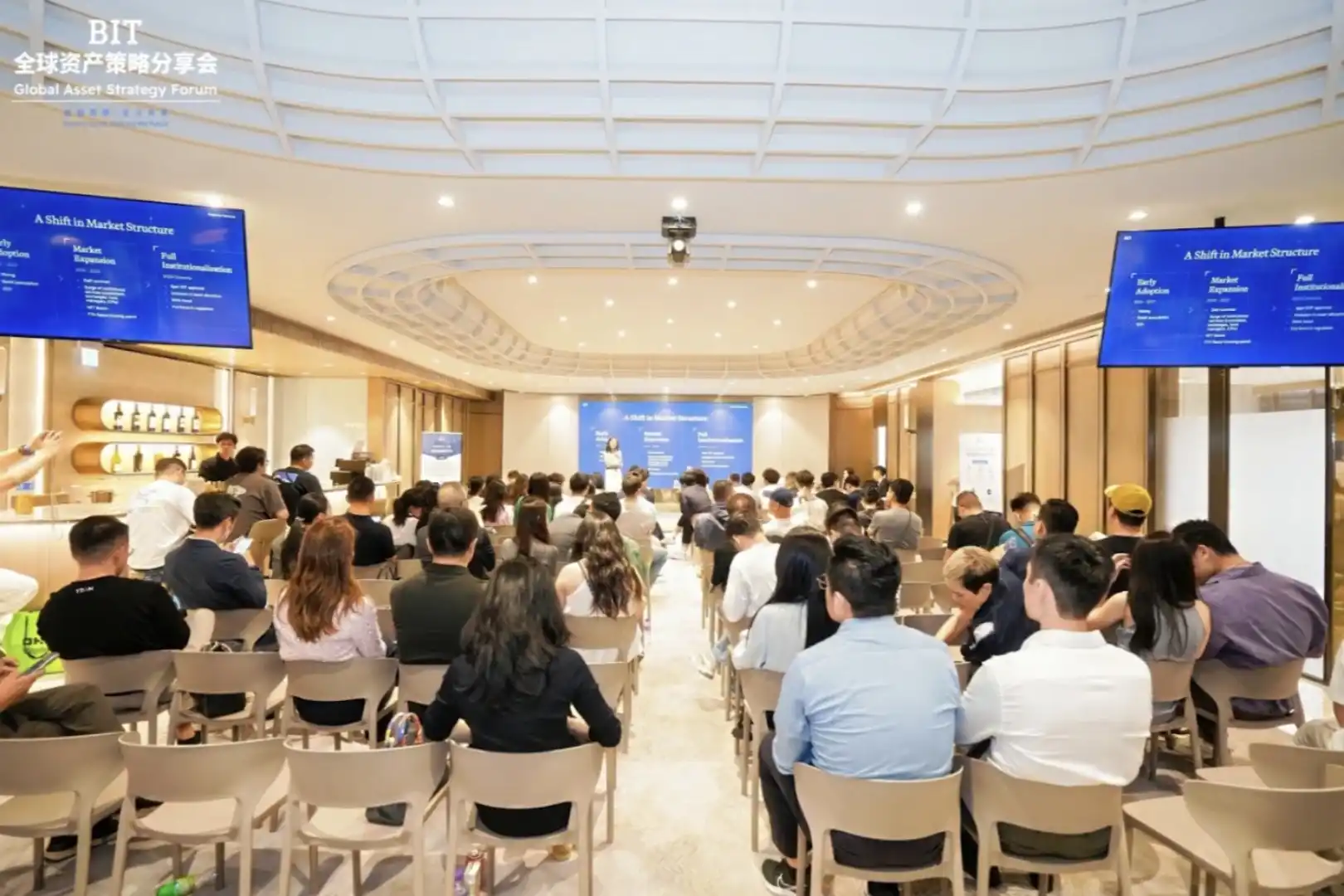
Amid a shifting global macroeconomic landscape, BIT, a global digital asset financial services group, hosted the "Global Asset Strategy Forum" in Hong Kong on April 22, 2026, under the theme "Transcending Cycles, Defining the Future." The event brought together industry leaders from financial institutions, crypto platforms, and professional service firms to explore new paradigms in Web3 and traditional markets. Key discussions centered on cross-market investment opportunities, regulatory pathways for compliant stablecoins, and the role of precious metals like gold and silver in the digital economy. BIT Founding Partner Cynthia Wu highlighted the institutionalization of the digital asset sector, noting its evolution from early retail-driven speculation to a phase marked by clearer regulation, the approval of spot ETFs, and the rise of Real-World Assets (RWA). She emphasized RWA’s role in bridging the gap between traditional finance and digital assets. Speakers observed a structural "reversal" between Web3 and traditional markets: Web3 is becoming more rational and profit-oriented, while traditional markets, especially U.S. equities driven by AI, are attracting concentrated capital and attention. The U.S. "Goldilocks" economic environment and AI commercialization were noted as key factors supporting risk assets. In stablecoin discussions, panelists emphasized the importance of regulatory compliance, asset-backed reserves, and transparency, noting that algorithmic stablecoins remain uncertain from a regulatory perspective. For RWA, gold was discussed as a macro-sensitive asset, with its value closely tied to interest rates, dollar strength, and geopolitical factors. The forum concluded that the digital asset industry is transitioning from narrative-driven growth to structure-driven, cross-market integration, with a focus on institutional participation and trust-based financial infrastructure. Disclaimer: This summary is for informational purposes only and does not constitute investment advice.

marsbit3 h fa

Transcending Cycles, Defining the Future: BIT Hosts Global Asset Strategy Sharing Session in Hong Kong, Exploring New Paradigms of Web3 and Traditional Markets

marsbit3 h fa

Trading

Spot
Futures

Articoli Popolari

Cosa è $S$

Comprendere SPERO: Una Panoramica Completa Introduzione a SPERO Mentre il panorama dell'innovazione continua a evolversi, l'emergere delle tecnologie web3 e dei progetti di criptovaluta gioca un ruolo fondamentale nel plasmare il futuro digitale. Un progetto che ha attirato l'attenzione in questo campo dinamico è SPERO, denotato come SPERO,$$s$. Questo articolo mira a raccogliere e presentare informazioni dettagliate su SPERO, per aiutare gli appassionati e gli investitori a comprendere le sue basi, obiettivi e innovazioni nei domini web3 e crypto. Che cos'è SPERO,$$s$? SPERO,$$s$ è un progetto unico all'interno dello spazio crypto che cerca di sfruttare i principi della decentralizzazione e della tecnologia blockchain per creare un ecosistema che promuove l'impegno, l'utilità e l'inclusione finanziaria. Il progetto è progettato per facilitare interazioni peer-to-peer in modi nuovi, fornendo agli utenti soluzioni e servizi finanziari innovativi. Al suo interno, SPERO,$$s$ mira a responsabilizzare gli individui fornendo strumenti e piattaforme che migliorano l'esperienza dell'utente nello spazio delle criptovalute. Questo include la possibilità di metodi di transazione più flessibili, la promozione di iniziative guidate dalla comunità e la creazione di percorsi per opportunità finanziarie attraverso applicazioni decentralizzate (dApps). La visione sottostante di SPERO,$$s$ ruota attorno all'inclusività, cercando di colmare le lacune all'interno della finanza tradizionale mentre sfrutta i vantaggi della tecnologia blockchain. Chi è il Creatore di SPERO,$$s$? L'identità del creatore di SPERO,$$s$ rimane piuttosto oscura, poiché ci sono risorse pubblicamente disponibili limitate che forniscono informazioni dettagliate sul suo fondatore o fondatori. Questa mancanza di trasparenza può derivare dall'impegno del progetto per la decentralizzazione—un ethos che molti progetti web3 condividono, dando priorità ai contributi collettivi rispetto al riconoscimento individuale. Centrando le discussioni attorno alla comunità e ai suoi obiettivi collettivi, SPERO,$$s$ incarna l'essenza dell'empowerment senza mettere in evidenza individui specifici. Pertanto, comprendere l'etica e la missione di SPERO rimane più importante che identificare un creatore singolo. Chi sono gli Investitori di SPERO,$$s$? SPERO,$$s$ è supportato da una varietà di investitori che vanno dai capitalisti di rischio agli investitori angelici dedicati a promuovere l'innovazione nel settore crypto. Il focus di questi investitori generalmente si allinea con la missione di SPERO—dando priorità a progetti che promettono avanzamenti tecnologici sociali, inclusività finanziaria e governance decentralizzata. Queste fondazioni di investitori sono tipicamente interessate a progetti che non solo offrono prodotti innovativi, ma contribuiscono anche positivamente alla comunità blockchain e ai suoi ecosistemi. Il supporto di questi investitori rafforza SPERO,$$s$ come un concorrente degno di nota nel dominio in rapida evoluzione dei progetti crypto. Come Funziona SPERO,$$s$? SPERO,$$s$ impiega un framework multifunzionale che lo distingue dai progetti di criptovaluta convenzionali. Ecco alcune delle caratteristiche chiave che sottolineano la sua unicità e innovazione: Governance Decentralizzata: SPERO,$$s$ integra modelli di governance decentralizzati, responsabilizzando gli utenti a partecipare attivamente ai processi decisionali riguardanti il futuro del progetto. Questo approccio favorisce un senso di proprietà e responsabilità tra i membri della comunità. Utilità del Token: SPERO,$$s$ utilizza il proprio token di criptovaluta, progettato per servire varie funzioni all'interno dell'ecosistema. Questi token abilitano transazioni, premi e la facilitazione dei servizi offerti sulla piattaforma, migliorando l'impegno e l'utilità complessivi. Architettura Stratificata: L'architettura tecnica di SPERO,$$s$ supporta la modularità e la scalabilità, consentendo un'integrazione fluida di funzionalità e applicazioni aggiuntive man mano che il progetto evolve. Questa adattabilità è fondamentale per mantenere la rilevanza nel panorama crypto in continua evoluzione. Coinvolgimento della Comunità: Il progetto enfatizza iniziative guidate dalla comunità, impiegando meccanismi che incentivano la collaborazione e il feedback. Nutrendo una comunità forte, SPERO,$$s$ può affrontare meglio le esigenze degli utenti e adattarsi alle tendenze di mercato. Focus sull'Inclusione: Offrendo basse commissioni di transazione e interfacce user-friendly, SPERO,$$s$ mira ad attrarre una base utenti diversificata, inclusi individui che potrebbero non aver precedentemente interagito nello spazio crypto. Questo impegno per l'inclusione si allinea con la sua missione generale di empowerment attraverso l'accessibilità. Cronologia di SPERO,$$s$ Comprendere la storia di un progetto fornisce preziose intuizioni sulla sua traiettoria di sviluppo e sui traguardi. Di seguito è riportata una cronologia suggerita che mappa eventi significativi nell'evoluzione di SPERO,$$s$: Fase di Concettualizzazione e Ideazione: Le idee iniziali che formano la base di SPERO,$$s$ sono state concepite, allineandosi strettamente con i principi di decentralizzazione e focus sulla comunità all'interno dell'industria blockchain. Lancio del Whitepaper del Progetto: Dopo la fase concettuale, è stato rilasciato un whitepaper completo che dettaglia la visione, gli obiettivi e l'infrastruttura tecnologica di SPERO,$$s$ per suscitare interesse e feedback dalla comunità. Costruzione della Comunità e Prime Interazioni: Sono stati effettuati sforzi attivi di outreach per costruire una comunità di early adopters e potenziali investitori, facilitando discussioni attorno agli obiettivi del progetto e ottenendo supporto. Evento di Generazione del Token: SPERO,$$s$ ha condotto un evento di generazione del token (TGE) per distribuire i propri token nativi ai primi sostenitori e stabilire una liquidità iniziale all'interno dell'ecosistema. Lancio della Prima dApp: La prima applicazione decentralizzata (dApp) associata a SPERO,$$s$ è stata attivata, consentendo agli utenti di interagire con le funzionalità principali della piattaforma. Sviluppo Continuo e Partnership: Aggiornamenti e miglioramenti continui alle offerte del progetto, inclusi partnership strategiche con altri attori nello spazio blockchain, hanno plasmato SPERO,$$s$ in un concorrente competitivo e in evoluzione nel mercato crypto. Conclusione SPERO,$$s$ rappresenta una testimonianza del potenziale del web3 e delle criptovalute di rivoluzionare i sistemi finanziari e responsabilizzare gli individui. Con un impegno per la governance decentralizzata, il coinvolgimento della comunità e funzionalità progettate in modo innovativo, apre la strada verso un panorama finanziario più inclusivo. Come per qualsiasi investimento nello spazio crypto in rapida evoluzione, si incoraggiano potenziali investitori e utenti a ricercare approfonditamente e a impegnarsi in modo riflessivo con gli sviluppi in corso all'interno di SPERO,$$s$. Il progetto mostra lo spirito innovativo dell'industria crypto, invitando a ulteriori esplorazioni delle sue innumerevoli possibilità. Mentre il percorso di SPERO,$$s$ è ancora in fase di sviluppo, i suoi principi fondamentali potrebbero effettivamente influenzare il futuro di come interagiamo con la tecnologia, la finanza e tra di noi in ecosistemi digitali interconnessi.

75 Totale visualizzazioniPubblicato il 2024.12.17Aggiornato il 2024.12.17

Cosa è $S$

Cosa è AGENT S

Agent S: Il Futuro dell'Interazione Autonoma in Web3 Introduzione Nel panorama in continua evoluzione di Web3 e criptovalute, le innovazioni stanno costantemente ridefinendo il modo in cui gli individui interagiscono con le piattaforme digitali. Uno di questi progetti pionieristici, Agent S, promette di rivoluzionare l'interazione uomo-computer attraverso il suo framework agentico aperto. Aprendo la strada a interazioni autonome, Agent S mira a semplificare compiti complessi, offrendo applicazioni trasformative nell'intelligenza artificiale (AI). Questa esplorazione dettagliata approfondirà le complessità del progetto, le sue caratteristiche uniche e le implicazioni per il dominio delle criptovalute. Cos'è Agent S? Agent S si presenta come un innovativo framework agentico aperto, progettato specificamente per affrontare tre sfide fondamentali nell'automazione dei compiti informatici: Acquisizione di Conoscenze Specifiche del Dominio: Il framework apprende in modo intelligente da varie fonti di conoscenza esterne ed esperienze interne. Questo approccio duale gli consente di costruire un ricco repository di conoscenze specifiche del dominio, migliorando le sue prestazioni nell'esecuzione dei compiti. Pianificazione su Lungo Orizzonte di Compiti: Agent S impiega una pianificazione gerarchica potenziata dall'esperienza, un approccio strategico che facilita la suddivisione e l'esecuzione efficiente di compiti complessi. Questa caratteristica migliora significativamente la sua capacità di gestire più sottocompiti in modo efficiente ed efficace. Gestione di Interfacce Dinamiche e Non Uniformi: Il progetto introduce l'Interfaccia Agente-Computer (ACI), una soluzione innovativa che migliora l'interazione tra agenti e utenti. Utilizzando Modelli Linguistici Multimodali di Grandi Dimensioni (MLLM), Agent S può navigare e manipolare senza sforzo diverse interfacce grafiche utente. Attraverso queste caratteristiche pionieristiche, Agent S fornisce un framework robusto che affronta le complessità coinvolte nell'automazione dell'interazione umana con le macchine, preparando il terreno per innumerevoli applicazioni nell'AI e oltre. Chi è il Creatore di Agent S? Sebbene il concetto di Agent S sia fondamentalmente innovativo, informazioni specifiche sul suo creatore rimangono elusive. Il creatore è attualmente sconosciuto, il che evidenzia sia la fase embrionale del progetto sia la scelta strategica di mantenere i membri fondatori sotto anonimato. Indipendentemente dall'anonimato, l'attenzione rimane sulle capacità e sul potenziale del framework. Chi sono gli Investitori di Agent S? Poiché Agent S è relativamente nuovo nell'ecosistema crittografico, informazioni dettagliate riguardanti i suoi investitori e sostenitori finanziari non sono documentate esplicitamente. La mancanza di approfondimenti pubblicamente disponibili sulle fondazioni di investimento o sulle organizzazioni che supportano il progetto solleva interrogativi sulla sua struttura di finanziamento e sulla roadmap di sviluppo. Comprendere il supporto è cruciale per valutare la sostenibilità del progetto e il suo potenziale impatto sul mercato. Come Funziona Agent S? Al centro di Agent S si trova una tecnologia all'avanguardia che gli consente di funzionare efficacemente in contesti diversi. Il suo modello operativo è costruito attorno a diverse caratteristiche chiave: Interazione Uomo-Computer Simile a Quella Umana: Il framework offre una pianificazione AI avanzata, cercando di rendere le interazioni con i computer più intuitive. Mimando il comportamento umano nell'esecuzione dei compiti, promette di elevare le esperienze degli utenti. Memoria Narrativa: Utilizzata per sfruttare esperienze di alto livello, Agent S utilizza la memoria narrativa per tenere traccia delle storie dei compiti, migliorando così i suoi processi decisionali. Memoria Episodica: Questa caratteristica fornisce agli utenti una guida passo-passo, consentendo al framework di offrire supporto contestuale mentre i compiti si sviluppano. Supporto per OpenACI: Con la capacità di funzionare localmente, Agent S consente agli utenti di mantenere il controllo sulle proprie interazioni e flussi di lavoro, allineandosi con l'etica decentralizzata di Web3. Facile Integrazione con API Esterne: La sua versatilità e compatibilità con varie piattaforme AI garantiscono che Agent S possa adattarsi senza problemi agli ecosistemi tecnologici esistenti, rendendolo una scelta attraente per sviluppatori e organizzazioni. Queste funzionalità contribuiscono collettivamente alla posizione unica di Agent S all'interno dello spazio crittografico, poiché automatizza compiti complessi e multi-fase con un intervento umano minimo. Man mano che il progetto evolve, le sue potenziali applicazioni in Web3 potrebbero ridefinire il modo in cui si svolgono le interazioni digitali. Cronologia di Agent S Lo sviluppo e le tappe di Agent S possono essere riassunti in una cronologia che evidenzia i suoi eventi significativi: 27 Settembre 2024: Il concetto di Agent S è stato lanciato in un documento di ricerca completo intitolato “Un Framework Agentico Aperto che Usa i Computer Come un Umano”, mostrando le basi per il progetto. 10 Ottobre 2024: Il documento di ricerca è stato reso pubblicamente disponibile su arXiv, offrendo un'esplorazione approfondita del framework e della sua valutazione delle prestazioni basata sul benchmark OSWorld. 12 Ottobre 2024: È stata rilasciata una presentazione video, fornendo un'idea visiva delle capacità e delle caratteristiche di Agent S, coinvolgendo ulteriormente potenziali utenti e investitori. Questi indicatori nella cronologia non solo illustrano i progressi di Agent S, ma indicano anche il suo impegno per la trasparenza e il coinvolgimento della comunità. Punti Chiave su Agent S Man mano che il framework Agent S continua a evolversi, diversi attributi chiave si distinguono, sottolineando la sua natura innovativa e il potenziale: Framework Innovativo: Progettato per fornire un uso intuitivo dei computer simile all'interazione umana, Agent S porta un approccio nuovo all'automazione dei compiti. Interazione Autonoma: La capacità di interagire autonomamente con i computer attraverso GUI segna un passo avanti verso soluzioni informatiche più intelligenti ed efficienti. Automazione di Compiti Complessi: Con la sua metodologia robusta, può automatizzare compiti complessi e multi-fase, rendendo i processi più veloci e meno soggetti a errori. Miglioramento Continuo: I meccanismi di apprendimento consentono ad Agent S di migliorare dalle esperienze passate, migliorando continuamente le sue prestazioni e la sua efficacia. Versatilità: La sua adattabilità attraverso diversi ambienti operativi come OSWorld e WindowsAgentArena garantisce che possa servire un'ampia gamma di applicazioni. Man mano che Agent S si posiziona nel panorama di Web3 e delle criptovalute, il suo potenziale per migliorare le capacità di interazione e automatizzare i processi segna un significativo avanzamento nelle tecnologie AI. Attraverso il suo framework innovativo, Agent S esemplifica il futuro delle interazioni digitali, promettendo un'esperienza più fluida ed efficiente per gli utenti in vari settori. Conclusione Agent S rappresenta un audace passo avanti nell'unione tra AI e Web3, con la capacità di ridefinire il modo in cui interagiamo con la tecnologia. Sebbene sia ancora nelle sue fasi iniziali, le possibilità per la sua applicazione sono vaste e coinvolgenti. Attraverso il suo framework completo che affronta sfide critiche, Agent S mira a portare le interazioni autonome al centro dell'esperienza digitale. Man mano che ci addentriamo nei regni delle criptovalute e della decentralizzazione, progetti come Agent S giocheranno senza dubbio un ruolo cruciale nel plasmare il futuro della tecnologia e della collaborazione uomo-computer.

418 Totale visualizzazioniPubblicato il 2025.01.14Aggiornato il 2025.01.14

Cosa è AGENT S

Come comprare S

Benvenuto in HTX.com! Abbiamo reso l'acquisto di Sonic (S) semplice e conveniente. Segui la nostra guida passo passo per intraprendere il tuo viaggio nel mondo delle criptovalute.Step 1: Crea il tuo Account HTXUsa la tua email o numero di telefono per registrarti il tuo account gratuito su HTX. Vivi un'esperienza facile e sblocca tutte le funzionalità,Crea il mio accountStep 2: Vai in Acquista crypto e seleziona il tuo metodo di pagamentoCarta di credito/debito: utilizza la tua Visa o Mastercard per acquistare immediatamente SonicS.Bilancio: Usa i fondi dal bilancio del tuo account HTX per fare trading senza problemi.Terze parti: abbiamo aggiunto metodi di pagamento molto utilizzati come Google Pay e Apple Pay per maggiore comodità.P2P: Fai trading direttamente con altri utenti HTX.Over-the-Counter (OTC): Offriamo servizi su misura e tassi di cambio competitivi per i trader.Step 3: Conserva Sonic (S)Dopo aver acquistato Sonic (S), conserva nel tuo account HTX. In alternativa, puoi inviare tramite trasferimento blockchain o scambiare per altre criptovalute.Step 4: Scambia Sonic (S)Scambia facilmente Sonic (S) nel mercato spot di HTX. Accedi al tuo account, seleziona la tua coppia di trading, esegui le tue operazioni e monitora in tempo reale. Offriamo un'esperienza user-friendly sia per chi ha appena iniziato che per i trader più esperti.

835 Totale visualizzazioniPubblicato il 2025.01.15Aggiornato il 2025.03.21

Come comprare S

Discussioni

Benvenuto nella Community HTX. Qui puoi rimanere informato sugli ultimi sviluppi della piattaforma e accedere ad approfondimenti esperti sul mercato. Le opinioni degli utenti sul prezzo di S S sono presentate come di seguito.

活动图片