Elon Musk's First Interview in 2026: Discussing the Impact of AI, Robotics, Energy, and US-China Competition on the Near Future

marsbitPubblicato 2026-01-13Pubblicato ultima volta 2026-01-13

Introduzione

In a January 2026 interview, Elon Musk discussed the profound impact of AI, robotics, energy, and global competition on the near future. He declared 2026 as the "Year of Singularity," asserting that AI progress is exponential, with AGI achievable by 2026 and AI intelligence surpassing all humans combined by 2030. Musk predicted that Optimus robots would outperform human surgeons within three years, making high-quality healthcare essentially free due to AI, chip performance, and robotic dexterity advancing exponentially. He argued that pursuing medical degrees would become pointless unless for social reasons. On global AI competition, Musk stated China would dominate in computing power, citing its massive electricity production (3 times the U.S. by 2026), reduced chip advantage gaps, and exceptional execution capabilities. He envisioned the AI landscape led by XAI, Google, and China. For energy, Musk emphasized solar power as the ultimate solution, proposing a three-phase plan: doubling grid efficiency with battery storage, deploying space-based solar satellites, and eventually building satellite factories on the Moon. He described energy as the future currency. Economically, Musk suggested that money might become irrelevant in 10-20 years due to AI and robotics driving abundance, leading to "Universal High Income" (UHI) instead of UBI. He warned of a turbulent 3-7 year transition period. He also noted that work would become optional within two decades, expressed concern ...

Video: Moonshots

Compiled by: Model English

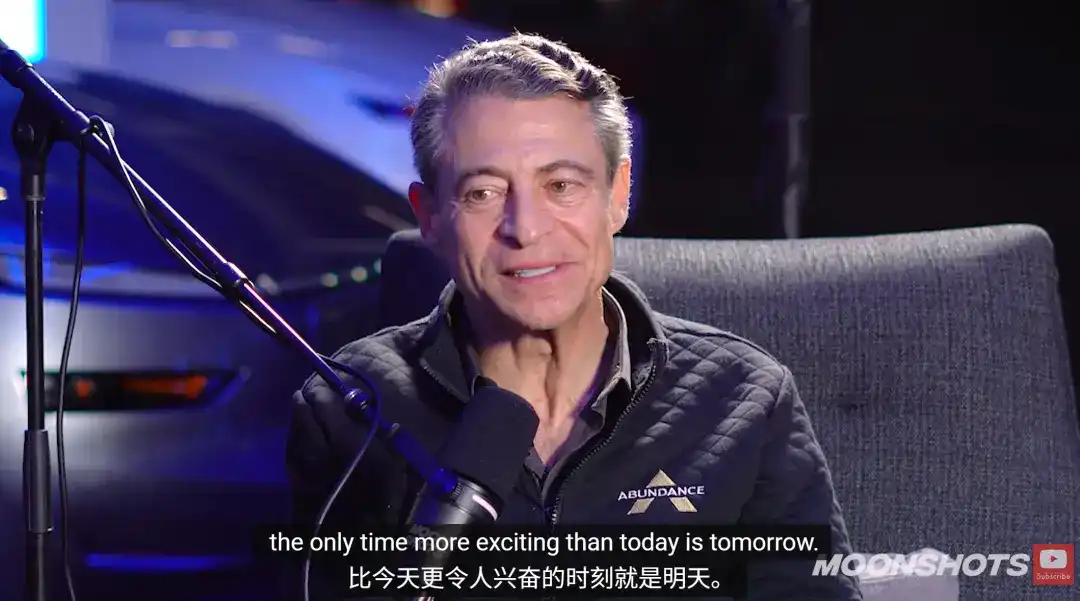
On January 6, 2026, Tesla founder Elon Musk was interviewed by renowned futurist and Singularity University founder Peter Diamandis and investor Dave Blundin.

In this podcast titled "Moonshots #220," the three engaged in a deep three-hour conversation. Musk clearly stated that 2026 is the "Year of Singularity" and elaborated on the industrial, technological, and economic foundations supporting this argument, painting a picture of a future reshaped by technological transformation.
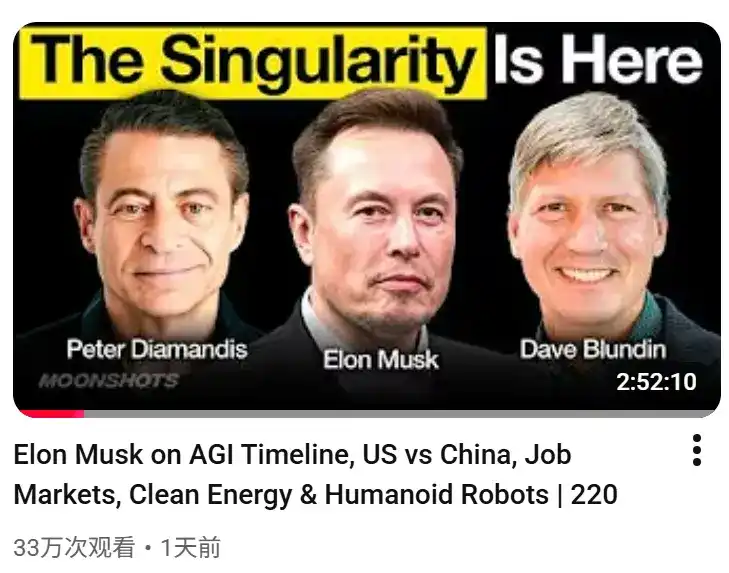
The conversation covered nearly 10 themes, including artificial intelligence, labor and social change, energy development, education and talent, health and longevity, space exploration, and innovation and entrepreneurship, totaling over 85,600 words. Many of the insights were extremely profound and forward-thinking.

To help everyone quickly grasp the core points of the interview, we have compiled and summarized the highlights to share with you all!

1. AI Exceeds Imagination; Intelligence Level to Surpass All Humanity Combined by 2030

Host Peter asked Musk, "Why are you so optimistic?"

Musk did not answer directly but instead offered a more shocking observation: "We are not moving towards the singularity; we are already living in it."
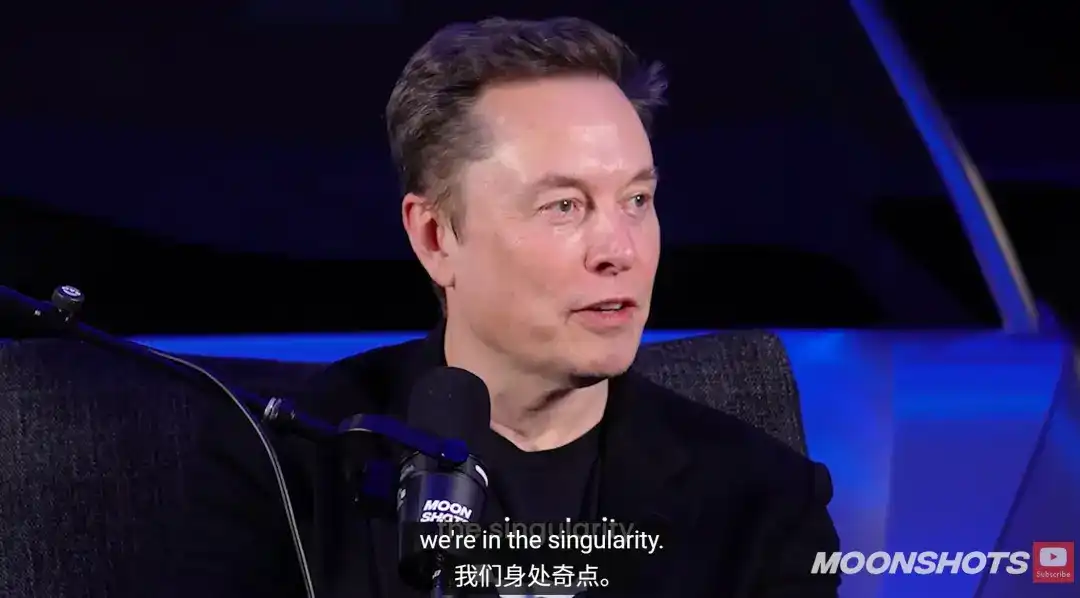
He explained that the pace of AI progress is so rapid that he himself is astonished several times a week—just as he finds one breakthrough amazing, a new shock arrives two days later. This is the power of exponential growth.

Musk predicted that AGI (Artificial General Intelligence) will be achieved in 2026, and by 2030, AI's intelligence level will surpass the sum total of all humanity.

2. Disruption in the Medical Field; Attending Medical School Will Be Meaningless

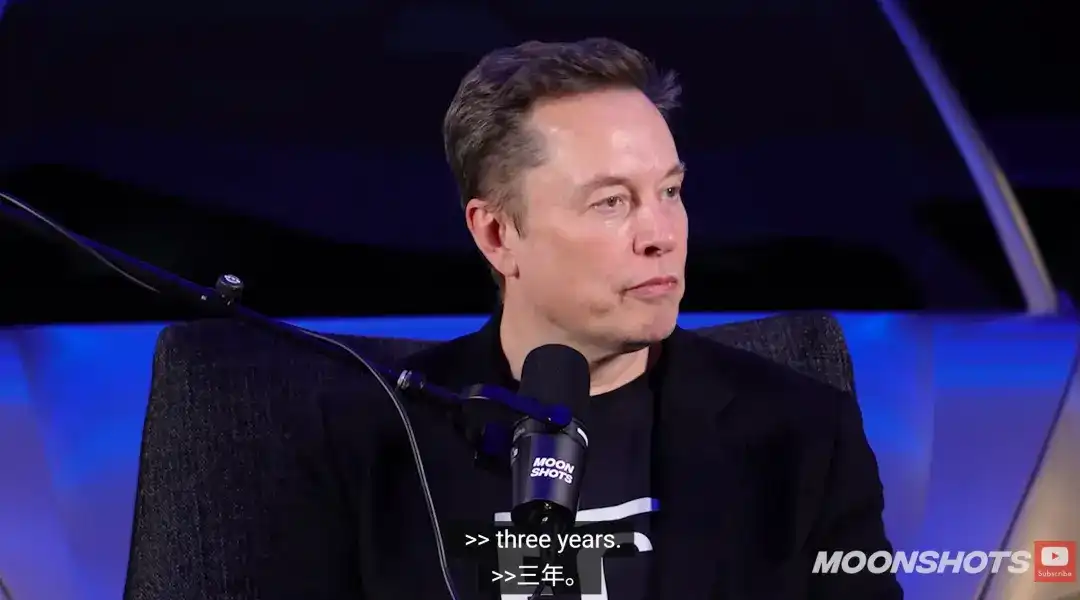
Addressing the current shortage of doctors and skilled surgeons, Musk predicted that within three years, the Optimus robot will become a better surgeon than any human, and this will be applied "at scale."

"In the future, the best medical care will basically be free," Musk stated.

Why so fast?

Musk pointed to the triple exponential growth advantages of robotic doctors:

  • First, exponential growth in AI capabilities;
  • Second, exponential growth in chip performance;
  • Third, exponential growth in electromechanical dexterity.

Multiplying these three exponential curves results in a rocket-like explosion of speed.
Musk added that more importantly, robots have a "recursive effect," meaning a robot's experience can accumulate, and all robots share the same knowledge base.

Ten thousand robotic doctors performing surgeries means each one can possess the experience of ten thousand operations. Different patients, different emergencies, different complications, even every detail under full spectrum light including infrared, ultraviolet, and X-ray—they can master it all precisely. Moreover, they won't get distracted because they argued with their family the night before, nor will their hands tremble from fatigue after four hours of continuous surgery.

Musk believes that (attending medical school in the future) is "meaningless. Unless it's for social reasons."
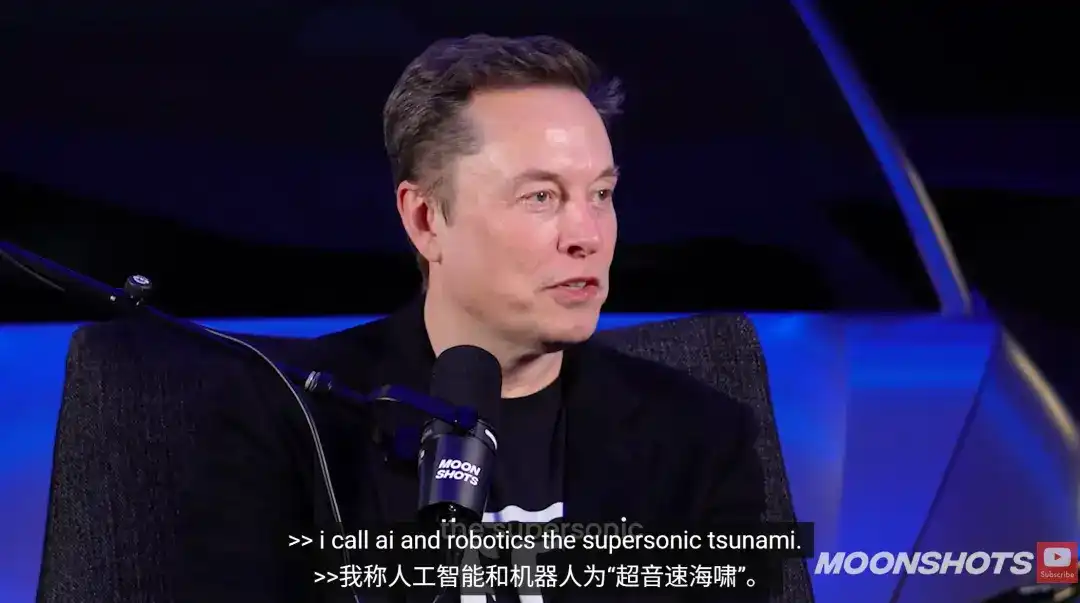
3. US-China AI Competition; China's Computing Power Will Far Exceed Other Regions

Regarding the current AI competition landscape, Musk asserted with great certainty: Based on current trends, China will far exceed the rest of the world in AI computing power.
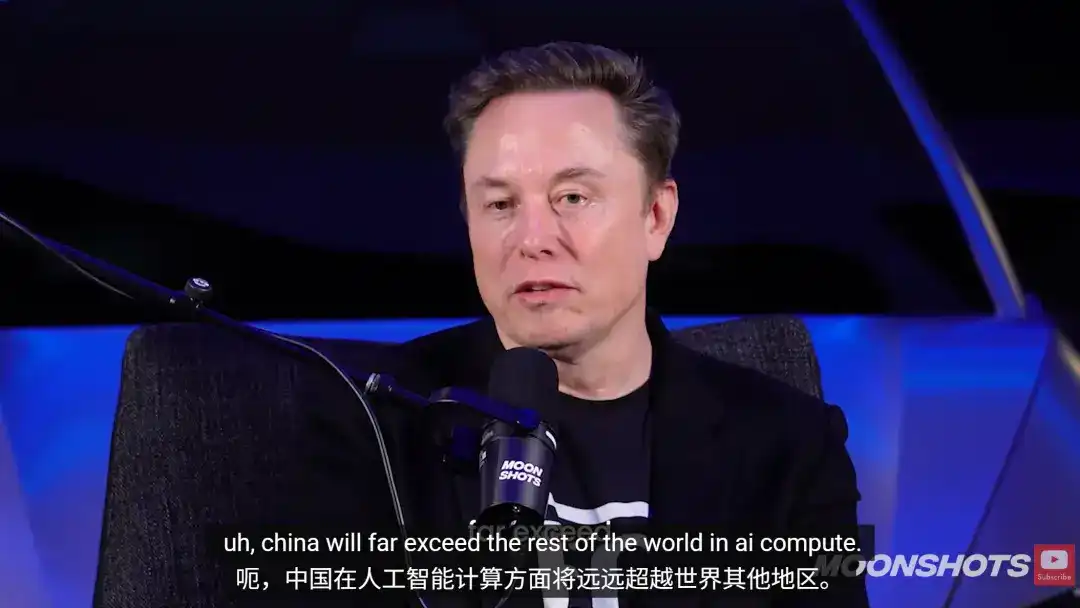
He provided three key reasons:

1) Overwhelming Power Advantage

China's power generation in 2026 will be three times that of the United States. Last year, China added 500 terawatt-hours of electricity, 70% of which came from solar power. Musk couldn't help but remark, "It's like they listen to everything I say and then immediately put it into action."

2) Chip Generation Gap Narrows; Moore's Law is Dead

From 3nm to 2nm, chip performance only improved by 10%, meaning Moore's Law has失效 (shīxiào - become invalid). The US chip advantage is continuously diminishing, making it easier for China to catch up.

3) Unmatched Execution Capability

Musk stated frankly: "I've met too many Chinese engineers. When the requirements are clear, their speed and scale of execution are unimaginable."

He predicted that the final world AI competition landscape will consist of XAI, Google, and China.
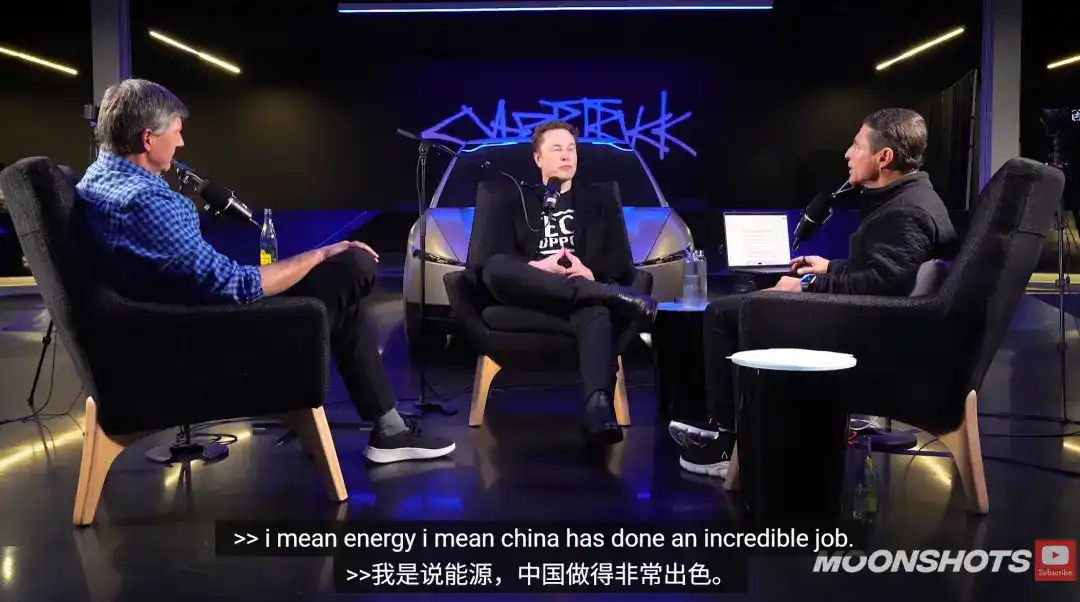
4. Energy Revolution; Solar is the Only Answer

Regarding the prospects of solar energy, Musk's attitude is exceptionally firm:

"The sun accounts for 99.8% of the mass of the solar system. Doing nuclear fusion on Earth is like making ice in Antarctica—we have a free giant nuclear reactor 93 million miles above our heads, so why build a small one on Earth?"

He proposed a three-step plan for solar energy development:

Step 1: Double the Efficiency of the Existing Power Grid

Power plants have大量 (dàliàng - a large amount of) idle capacity at night, but not enough during peak daytime hours. The solution is to use Tesla's Mega Pack batteries to store idle electricity at night and release it during peak daytime hours. This doubles energy throughput without building any new power plants.

Step 2: Launch Solar Power into Space

The environment where AI satellites are located in space has daylight 24 hours a day, maximizing solar energy utilization. Deploying these satellites would take about 8,000 launches, one launch per hour持续 (chíxù -持续 for) a full year.

Step 3: Build Satellite Factories on the Moon

To capture solar energy on a larger scale, we cannot rely solely on launching satellites from Earth. Musk's ultimate plan is to build factories on the Moon, using local materials to manufacture satellites and then sending them directly into orbit from the Moon.

Musk emphasized: "The currency of the future is essentially energy—with energy, you can power AI, manufacture anything, and change the physical world."

5. Economy and Currency; Money Might Not Matter in 10-20 Years

This is one of the most颠覆 (diānfù -颠覆颠覆颠覆颠覆颠覆颠覆颠覆颠覆颠覆颠覆颠覆颠覆颠覆颠覆颠覆颠覆颠覆颠覆颠覆颠覆颠覆颠覆颠覆颠覆颠覆颠覆颠覆颠覆颠覆颠覆颠覆颠覆颠覆颠覆颠覆颠覆颠覆颠覆颠覆颠覆颠覆颠覆颠覆颠覆颠覆颠覆颠覆颠覆颠覆颠覆颠覆颠覆颠覆颠覆颠覆颠覆颠覆颠覆颠覆颠覆颠覆颠覆颠覆颠覆颠覆颠覆颠覆颠覆颠覆颠覆颠覆颠覆颠覆颠覆颠覆颠覆颠覆颠覆颠覆颠覆颠覆颠覆颠覆颠覆颠覆颠覆颠覆颠覆颠覆颠覆颠覆颠覆颠覆颠覆颠覆颠覆颠覆颠覆颠覆颠覆颠覆颠覆颠覆颠覆颠覆颠覆颠覆颠覆颠覆颠覆颠覆颠覆颠覆颠覆颠覆颠覆颠覆颠覆颠覆颠覆颠覆颠覆颠覆颠覆颠覆颠覆颠覆颠覆颠覆颠覆颠覆颠覆颠覆颠覆颠覆颠覆颠覆颠覆颠覆颠覆颠覆颠覆颠覆颠覆颠覆颠覆颠覆颠覆颠覆颠覆颠覆颠覆颠覆颠覆颠覆颠覆颠覆颠覆颠覆颠覆颠覆颠覆颠覆颠覆颠覆颠覆颠覆颠覆颠覆颠覆颠覆颠覆颠覆颠覆颠覆颠覆颠覆颠覆颠覆颠覆颠覆颠覆颠覆颠覆颠覆颠覆颠覆颠覆颠覆颠覆颠覆颠覆颠覆颠覆颠覆颠覆颠覆颠覆颠覆颠覆颠覆颠覆颠覆颠覆颠覆颠覆颠覆颠覆颠覆颠覆颠覆颠覆颠覆颠覆颠覆颠覆颠覆颠覆颠覆颠覆颠覆颠覆颠覆颠覆颠覆颠覆颠覆颠覆颠覆颠覆颠覆颠覆颠覆颠覆颠覆颠覆颠覆颠覆颠覆颠覆颠覆颠覆颠覆颠覆颠覆颠覆颠覆颠覆颠覆颠覆颠覆颠覆颠覆颠覆颠覆颠覆颠覆颠覆颠覆颠覆颠覆颠覆颠覆颠覆颠覆颠覆颠覆颠覆颠覆颠覆颠覆颠覆颠覆颠覆颠覆颠覆颠覆颠覆颠覆颠覆颠覆颠覆颠覆颠覆颠覆颠覆颠覆颠覆颠覆颠覆颠覆颠覆颠覆颠覆颠覆颠覆颠覆颠覆颠覆颠覆颠覆颠覆颠覆颠覆颠覆颠覆颠覆颠覆颠覆颠覆颠覆颠覆颠覆颠覆颠覆颠覆颠覆颠覆颠覆颠覆颠覆颠覆颠覆颠覆颠覆颠覆颠覆颠覆颠覆颠覆颠覆颠覆颠覆颠覆颠覆颠覆颠覆颠覆颠覆颠覆颠覆颠覆颠覆颠覆颠覆颠覆颠覆颠覆颠覆颠覆颠覆颠覆颠覆颠覆颠覆颠覆颠覆颠覆颠覆颠覆颠覆颠覆颠覆颠覆颠覆颠覆颠覆颠覆颠覆颠覆颠覆颠覆颠覆颠覆颠覆颠覆颠覆颠覆颠覆颠覆颠覆颠覆颠覆颠覆颠覆颠覆颠覆颠覆颠覆颠覆颠覆颠覆颠覆颠覆颠覆颠覆颠覆颠覆颠覆颠覆颠覆颠覆颠覆颠覆颠覆颠覆颠覆颠覆颠覆颠覆颠覆颠覆颠覆颠覆颠覆颠覆颠覆颠覆颠覆颠覆颠覆颠覆颠覆颠覆颠覆颠覆颠覆颠覆颠覆颠覆颠覆颠覆颠覆颠覆颠覆颠覆颠覆颠覆颠覆颠覆颠覆颠覆颠覆颠覆颠覆颠覆颠覆颠覆颠覆颠覆颠覆颠覆颠覆颠覆颠覆颠覆颠覆颠覆颠覆颠覆颠覆颠覆颠覆颠覆颠覆颠覆颠覆颠覆颠覆颠覆颠覆颠覆颠覆颠覆颠覆颠覆颠覆颠覆颠覆颠覆颠覆颠覆颠覆颠覆颠覆颠覆颠覆颠覆颠覆颠覆颠覆颠覆颠覆颠覆颠覆颠覆颠覆颠覆颠覆颠覆颠覆颠覆颠覆颠覆颠覆颠覆颠覆颠覆颠覆颠覆颠覆颠覆颠覆颠覆颠覆颠覆颠覆颠覆颠覆颠覆颠覆颠覆颠覆颠覆颠覆颠覆颠覆颠覆颠覆颠覆颠覆颠覆颠覆颠覆颠覆颠覆颠覆颠覆颠覆颠覆颠覆颠覆颠覆颠覆颠覆颠覆颠覆颠覆颠覆颠覆颠覆颠覆颠覆颠覆颠覆颠覆颠覆颠覆颠覆颠覆颠覆颠覆颠覆颠覆颠覆颠覆颠覆颠覆颠覆颠覆颠覆颠覆颠覆颠覆颠覆颠覆颠覆颠覆颠覆颠覆颠覆颠覆颠覆颠覆颠覆颠覆颠覆颠覆颠覆颠覆颠覆颠覆颠覆颠覆颠覆颠覆颠覆颠覆颠覆颠覆颠覆颠覆颠覆颠覆颠覆颠覆颠覆颠覆颠覆颠覆颠覆颠覆颠覆颠覆颠覆颠覆颠覆颠覆颠覆颠覆颠覆颠覆颠覆颠覆颠覆颠覆颠覆颠覆颠覆颠覆颠覆颠覆颠覆颠覆颠覆颠覆颠覆颠覆颠覆颠覆颠覆颠覆颠覆颠覆颠覆颠覆颠覆颠覆颠覆颠覆颠覆颠覆颠覆颠覆颠覆颠覆颠覆颠覆颠覆颠覆颠覆颠覆颠覆颠覆颠覆颠覆颠覆颠覆颠覆颠覆颠覆颠覆颠覆颠覆颠覆颠覆颠覆颠覆颠覆颠覆颠覆颠覆颠覆颠覆颠覆颠覆颠覆颠覆颠覆颠覆颠覆颠覆颠覆颠覆颠覆颠覆颠覆颠覆颠覆颠覆颠覆颠覆颠覆颠覆颠覆颠覆颠覆颠覆颠覆颠覆颠覆颠覆颠覆颠覆颠覆颠覆颠覆颠覆颠覆颠覆颠覆颠覆颠覆颠覆颠覆颠覆颠覆颠覆颠覆颠覆颠覆颠覆颠覆颠覆颠覆颠覆颠覆颠覆颠覆颠覆颠覆颠覆颠覆颠覆颠覆颠覆颠覆颠覆颠覆颠覆颠覆颠覆颠覆颠覆颠覆颠覆颠覆颠覆颠覆颠覆颠覆颠覆颠覆颠覆颠覆颠覆颠覆颠覆颠覆颠覆颠覆颠覆颠覆颠覆颠覆颠覆颠覆颠覆颠覆颠覆颠覆颠覆颠覆颠覆颠覆颠覆颠覆颠覆颠覆颠覆颠覆颠覆颠覆颠覆颠覆颠覆颠覆颠覆颠覆颠覆颠覆颠覆颠覆颠覆颠覆颠覆颠覆颠覆颠覆颠覆颠覆颠覆颠覆颠覆颠覆颠覆颠覆颠覆颠覆颠覆颠覆颠覆颠覆颠覆颠覆颠覆颠覆颠覆颠覆颠覆颠覆颠覆颠覆颠覆颠覆颠覆颠覆颠覆颠覆颠覆颠覆颠覆颠覆颠覆颠覆颠覆颠覆颠覆颠覆颠覆颠覆颠覆颠覆颠覆颠覆颠覆颠覆颠覆颠覆颠覆颠覆颠覆颠覆颠覆颠覆颠覆颠覆颠覆颠覆颠覆颠覆颠覆颠覆颠覆颠覆颠覆颠覆颠覆颠覆颠覆颠覆颠覆颠覆颠覆颠覆颠覆颠覆颠覆颠覆颠覆颠覆颠覆颠覆颠覆颠覆颠覆颠覆颠覆颠覆颠覆颠覆颠覆颠覆颠覆颠覆颠覆颠覆颠覆颠覆颠覆颠覆颠覆颠覆颠覆颠覆颠覆颠覆颠覆颠覆颠覆颠覆颠覆颠覆颠覆颠覆颠覆颠覆颠覆颠覆颠覆颠覆颠覆颠覆颠覆颠覆颠覆颠覆颠覆颠覆颠覆颠覆颠覆颠覆颠覆颠覆颠覆颠覆颠覆颠覆颠覆颠覆颠覆颠覆颠覆颠覆颠覆颠覆颠覆颠覆颠覆颠覆颠覆颠覆颠覆颠覆颠覆颠覆颠覆颠覆颠覆颠覆颠覆颠覆颠覆颠覆颠覆颠覆颠覆颠覆颠覆颠覆颠覆颠覆颠覆颠覆颠覆颠覆颠覆颠覆颠覆颠覆颠覆颠覆颠覆颠覆颠覆颠覆颠覆颠覆颠覆颠覆颠覆颠覆颠覆颠覆颠覆颠覆颠覆颠覆颠覆颠覆颠覆颠覆颠覆颠覆颠覆颠覆颠覆颠覆颠覆颠覆颠覆颠覆颠覆颠覆颠覆颠覆颠覆颠覆颠覆颠覆颠覆颠覆颠覆颠覆颠覆颠覆颠覆颠覆颠覆颠覆颠覆颠覆颠覆颠覆颠覆颠覆颠覆颠覆颠覆颠覆颠覆颠覆颠覆颠覆颠覆颠覆颠覆颠覆颠覆颠覆颠覆颠覆颠覆颠覆颠覆颠覆颠覆颠覆颠覆颠覆颠覆颠覆颠覆颠覆颠覆颠覆颠覆颠覆颠覆颠覆颠覆颠覆颠覆颠覆颠覆颠覆颠覆颠覆颠覆颠覆颠覆颠覆颠覆颠覆颠覆颠覆颠覆颠覆颠覆颠覆颠覆颠覆颠覆颠覆颠覆颠覆颠覆颠覆颠覆颠覆颠覆颠覆颠覆颠覆颠覆颠覆颠覆颠覆颠覆颠覆颠覆颠覆颠覆颠覆颠覆颠覆颠覆颠覆颠覆颠覆颠覆颠覆颠覆颠覆颠覆颠覆颠覆颠覆颠覆颠覆颠覆颠覆颠覆颠覆颠覆颠覆颠覆颠覆颠覆颠覆颠覆颠覆颠覆颠覆颠覆颠覆颠覆颠覆颠覆颠覆颠覆颠覆颠覆颠覆颠覆颠覆颠覆颠覆颠覆颠覆颠覆颠覆颠覆极富洞察与远见。 Musk explained that in 10-20 years, either we won't exist anymore, or money will no longer be important.

Many people worry that AI will cause widespread unemployment, but Musk proposed a new concept—"Universal High Income" (UHI). This is not the government-distributed "Universal Basic Income (UBI)" but a more fundamental change in economic logic:

AI and robots will cause the output growth rate of goods and services to exceed the growth rate of the money supply, leading to plummeting prices and production costs approaching zero. When the output growth rate of goods and services exceeds the growth rate of the money supply, it causes prices to暴跌 (bàodiē - plummet).

Because物质 (wùzhì - material goods) are extremely abundant, everyone can easily obtain the goods and services they desire.

But he also warned that the next 3-7 years will be very bumpy:

We will simultaneously experience radical change, social unrest, and great prosperity; this is an inevitable transition period. And if none of this happens, it means we have encountered bigger problems—such as stalled AI development or civilizational collapse.

6. Careers and the Future; Work Will Become Optional

Musk predicted that within less than 20 years, work will become optional. AI and robots will make work a "hobby" within 10-20 years, allowing people to freely pursue their interests.

He also expressed concern about the global decline in birth rates, believing that population decline is a huge threat to civilization because "more people mean more consciousness, which helps humanity understand the universe."

7. Education and Growth; The Essence of Learning is Returning to Curiosity

Musk pointed out that the traditional education model is dead.

Due to his own poor school experience, he does not like the current education model—"I found school painful. It was boring, and in South Africa, it was also violent."

He believes that over the years, the driving force behind his continuous learning has been "curiosity about the nature of the universe. I'm just curious about the meaning of life and the reality we live in."

With the rapid development of AI, he坦言 (tǎnrán - admitted frankly) that obviously AI can be a personalized teacher. It is infinitely patient and answers all your questions. But you still need curiosity, you still need to want to learn. He has already launched an AI personalized education pilot in El Salvador.

At the end of the interview, Musk also admitted that he was once very pessimistic and even suggested slowing down AI development multiple times, but ultimately found that rather than being a pessimistic bystander, it's better to be an optimistic participant.

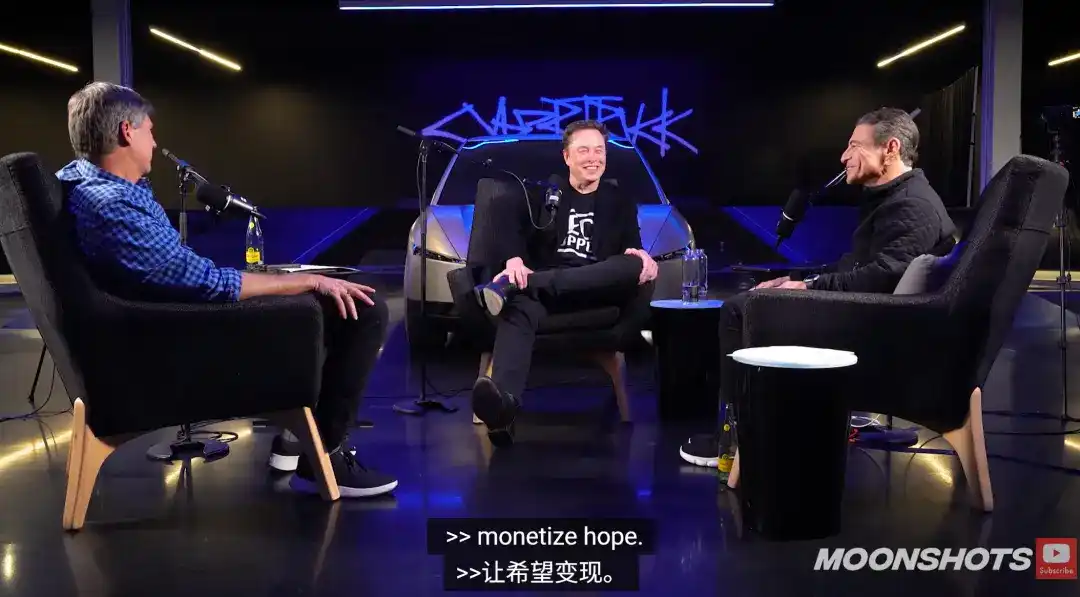
He sincerely offered everyone a piece of advice, which is—Make Hope a Reality!

Let's encourage each other!
Domande pertinenti

QWhat is Elon Musk's prediction about the timeline for achieving AGI and surpassing total human intelligence?

AElon Musk predicts that AGI (Artificial General Intelligence) will be achieved by 2026, and by 2030, AI's intelligence level will surpass the sum total of all human intelligence.

QHow does Musk justify his claim that going to medical school will become 'meaningless' in the near future?

AMusk claims it will be meaningless because within three years, Optimus robots will become better surgeons than any human and will be deployed at scale. This is due to the exponential growth in AI capability, chip performance, and electromechanical dexterity, combined with the 'recursive effect' where all robots share a collective knowledge base, making them more precise and reliable than human doctors.

QWhat are the three key reasons Musk gives for China's projected dominance in AI compute power?

AThe three key reasons are: 1) Power Advantage: China's electricity generation will be triple that of the US by 2026, with 70% of new capacity coming from solar. 2) Diminishing Chip Advantage: The performance gap between chip generations (e.g., 3nm to 2nm) is narrowing, making it easier for China to catch up as Moore's Law becomes less effective. 3) Unmatched Execution: Chinese engineers demonstrate incredible speed and scale of execution when goals are clearly defined.

QWhat is Musk's three-step plan for a solar energy revolution?

AMusk's three-step plan is: 1) Double the efficiency of the existing power grid by using batteries like Tesla's Mega Pack to store excess energy at night and release it during peak daytime hours. 2) Launch solar panels into space, where the sun is always shining, to achieve the highest efficiency. 3) Ultimately, build a satellite factory on the Moon to manufacture and launch satellites directly from there, using local materials.

QWhat does Musk mean by 'Universal High Income' (UHI) and how does it differ from Universal Basic Income (UBI)?

AUniversal High Income (UHI) is an economic concept where the abundance of goods and services produced by AI and robots causes prices to plummet as production costs approach zero. This allows everyone to easily obtain what they need, making money less important. It differs from government-funded Universal Basic Income (UBI) because it is a fundamental change in the economic logic of production and cost, not a redistribution of money.

Letture associate

Trading

Spot
Futures

Articoli Popolari

Cosa è $S$

Comprendere SPERO: Una Panoramica Completa Introduzione a SPERO Mentre il panorama dell'innovazione continua a evolversi, l'emergere delle tecnologie web3 e dei progetti di criptovaluta gioca un ruolo fondamentale nel plasmare il futuro digitale. Un progetto che ha attirato l'attenzione in questo campo dinamico è SPERO, denotato come SPERO,$$s$. Questo articolo mira a raccogliere e presentare informazioni dettagliate su SPERO, per aiutare gli appassionati e gli investitori a comprendere le sue basi, obiettivi e innovazioni nei domini web3 e crypto. Che cos'è SPERO,$$s$? SPERO,$$s$ è un progetto unico all'interno dello spazio crypto che cerca di sfruttare i principi della decentralizzazione e della tecnologia blockchain per creare un ecosistema che promuove l'impegno, l'utilità e l'inclusione finanziaria. Il progetto è progettato per facilitare interazioni peer-to-peer in modi nuovi, fornendo agli utenti soluzioni e servizi finanziari innovativi. Al suo interno, SPERO,$$s$ mira a responsabilizzare gli individui fornendo strumenti e piattaforme che migliorano l'esperienza dell'utente nello spazio delle criptovalute. Questo include la possibilità di metodi di transazione più flessibili, la promozione di iniziative guidate dalla comunità e la creazione di percorsi per opportunità finanziarie attraverso applicazioni decentralizzate (dApps). La visione sottostante di SPERO,$$s$ ruota attorno all'inclusività, cercando di colmare le lacune all'interno della finanza tradizionale mentre sfrutta i vantaggi della tecnologia blockchain. Chi è il Creatore di SPERO,$$s$? L'identità del creatore di SPERO,$$s$ rimane piuttosto oscura, poiché ci sono risorse pubblicamente disponibili limitate che forniscono informazioni dettagliate sul suo fondatore o fondatori. Questa mancanza di trasparenza può derivare dall'impegno del progetto per la decentralizzazione—un ethos che molti progetti web3 condividono, dando priorità ai contributi collettivi rispetto al riconoscimento individuale. Centrando le discussioni attorno alla comunità e ai suoi obiettivi collettivi, SPERO,$$s$ incarna l'essenza dell'empowerment senza mettere in evidenza individui specifici. Pertanto, comprendere l'etica e la missione di SPERO rimane più importante che identificare un creatore singolo. Chi sono gli Investitori di SPERO,$$s$? SPERO,$$s$ è supportato da una varietà di investitori che vanno dai capitalisti di rischio agli investitori angelici dedicati a promuovere l'innovazione nel settore crypto. Il focus di questi investitori generalmente si allinea con la missione di SPERO—dando priorità a progetti che promettono avanzamenti tecnologici sociali, inclusività finanziaria e governance decentralizzata. Queste fondazioni di investitori sono tipicamente interessate a progetti che non solo offrono prodotti innovativi, ma contribuiscono anche positivamente alla comunità blockchain e ai suoi ecosistemi. Il supporto di questi investitori rafforza SPERO,$$s$ come un concorrente degno di nota nel dominio in rapida evoluzione dei progetti crypto. Come Funziona SPERO,$$s$? SPERO,$$s$ impiega un framework multifunzionale che lo distingue dai progetti di criptovaluta convenzionali. Ecco alcune delle caratteristiche chiave che sottolineano la sua unicità e innovazione: Governance Decentralizzata: SPERO,$$s$ integra modelli di governance decentralizzati, responsabilizzando gli utenti a partecipare attivamente ai processi decisionali riguardanti il futuro del progetto. Questo approccio favorisce un senso di proprietà e responsabilità tra i membri della comunità. Utilità del Token: SPERO,$$s$ utilizza il proprio token di criptovaluta, progettato per servire varie funzioni all'interno dell'ecosistema. Questi token abilitano transazioni, premi e la facilitazione dei servizi offerti sulla piattaforma, migliorando l'impegno e l'utilità complessivi. Architettura Stratificata: L'architettura tecnica di SPERO,$$s$ supporta la modularità e la scalabilità, consentendo un'integrazione fluida di funzionalità e applicazioni aggiuntive man mano che il progetto evolve. Questa adattabilità è fondamentale per mantenere la rilevanza nel panorama crypto in continua evoluzione. Coinvolgimento della Comunità: Il progetto enfatizza iniziative guidate dalla comunità, impiegando meccanismi che incentivano la collaborazione e il feedback. Nutrendo una comunità forte, SPERO,$$s$ può affrontare meglio le esigenze degli utenti e adattarsi alle tendenze di mercato. Focus sull'Inclusione: Offrendo basse commissioni di transazione e interfacce user-friendly, SPERO,$$s$ mira ad attrarre una base utenti diversificata, inclusi individui che potrebbero non aver precedentemente interagito nello spazio crypto. Questo impegno per l'inclusione si allinea con la sua missione generale di empowerment attraverso l'accessibilità. Cronologia di SPERO,$$s$ Comprendere la storia di un progetto fornisce preziose intuizioni sulla sua traiettoria di sviluppo e sui traguardi. Di seguito è riportata una cronologia suggerita che mappa eventi significativi nell'evoluzione di SPERO,$$s$: Fase di Concettualizzazione e Ideazione: Le idee iniziali che formano la base di SPERO,$$s$ sono state concepite, allineandosi strettamente con i principi di decentralizzazione e focus sulla comunità all'interno dell'industria blockchain. Lancio del Whitepaper del Progetto: Dopo la fase concettuale, è stato rilasciato un whitepaper completo che dettaglia la visione, gli obiettivi e l'infrastruttura tecnologica di SPERO,$$s$ per suscitare interesse e feedback dalla comunità. Costruzione della Comunità e Prime Interazioni: Sono stati effettuati sforzi attivi di outreach per costruire una comunità di early adopters e potenziali investitori, facilitando discussioni attorno agli obiettivi del progetto e ottenendo supporto. Evento di Generazione del Token: SPERO,$$s$ ha condotto un evento di generazione del token (TGE) per distribuire i propri token nativi ai primi sostenitori e stabilire una liquidità iniziale all'interno dell'ecosistema. Lancio della Prima dApp: La prima applicazione decentralizzata (dApp) associata a SPERO,$$s$ è stata attivata, consentendo agli utenti di interagire con le funzionalità principali della piattaforma. Sviluppo Continuo e Partnership: Aggiornamenti e miglioramenti continui alle offerte del progetto, inclusi partnership strategiche con altri attori nello spazio blockchain, hanno plasmato SPERO,$$s$ in un concorrente competitivo e in evoluzione nel mercato crypto. Conclusione SPERO,$$s$ rappresenta una testimonianza del potenziale del web3 e delle criptovalute di rivoluzionare i sistemi finanziari e responsabilizzare gli individui. Con un impegno per la governance decentralizzata, il coinvolgimento della comunità e funzionalità progettate in modo innovativo, apre la strada verso un panorama finanziario più inclusivo. Come per qualsiasi investimento nello spazio crypto in rapida evoluzione, si incoraggiano potenziali investitori e utenti a ricercare approfonditamente e a impegnarsi in modo riflessivo con gli sviluppi in corso all'interno di SPERO,$$s$. Il progetto mostra lo spirito innovativo dell'industria crypto, invitando a ulteriori esplorazioni delle sue innumerevoli possibilità. Mentre il percorso di SPERO,$$s$ è ancora in fase di sviluppo, i suoi principi fondamentali potrebbero effettivamente influenzare il futuro di come interagiamo con la tecnologia, la finanza e tra di noi in ecosistemi digitali interconnessi.

75 Totale visualizzazioniPubblicato il 2024.12.17Aggiornato il 2024.12.17

Cosa è $S$

Cosa è AGENT S

Agent S: Il Futuro dell'Interazione Autonoma in Web3 Introduzione Nel panorama in continua evoluzione di Web3 e criptovalute, le innovazioni stanno costantemente ridefinendo il modo in cui gli individui interagiscono con le piattaforme digitali. Uno di questi progetti pionieristici, Agent S, promette di rivoluzionare l'interazione uomo-computer attraverso il suo framework agentico aperto. Aprendo la strada a interazioni autonome, Agent S mira a semplificare compiti complessi, offrendo applicazioni trasformative nell'intelligenza artificiale (AI). Questa esplorazione dettagliata approfondirà le complessità del progetto, le sue caratteristiche uniche e le implicazioni per il dominio delle criptovalute. Cos'è Agent S? Agent S si presenta come un innovativo framework agentico aperto, progettato specificamente per affrontare tre sfide fondamentali nell'automazione dei compiti informatici: Acquisizione di Conoscenze Specifiche del Dominio: Il framework apprende in modo intelligente da varie fonti di conoscenza esterne ed esperienze interne. Questo approccio duale gli consente di costruire un ricco repository di conoscenze specifiche del dominio, migliorando le sue prestazioni nell'esecuzione dei compiti. Pianificazione su Lungo Orizzonte di Compiti: Agent S impiega una pianificazione gerarchica potenziata dall'esperienza, un approccio strategico che facilita la suddivisione e l'esecuzione efficiente di compiti complessi. Questa caratteristica migliora significativamente la sua capacità di gestire più sottocompiti in modo efficiente ed efficace. Gestione di Interfacce Dinamiche e Non Uniformi: Il progetto introduce l'Interfaccia Agente-Computer (ACI), una soluzione innovativa che migliora l'interazione tra agenti e utenti. Utilizzando Modelli Linguistici Multimodali di Grandi Dimensioni (MLLM), Agent S può navigare e manipolare senza sforzo diverse interfacce grafiche utente. Attraverso queste caratteristiche pionieristiche, Agent S fornisce un framework robusto che affronta le complessità coinvolte nell'automazione dell'interazione umana con le macchine, preparando il terreno per innumerevoli applicazioni nell'AI e oltre. Chi è il Creatore di Agent S? Sebbene il concetto di Agent S sia fondamentalmente innovativo, informazioni specifiche sul suo creatore rimangono elusive. Il creatore è attualmente sconosciuto, il che evidenzia sia la fase embrionale del progetto sia la scelta strategica di mantenere i membri fondatori sotto anonimato. Indipendentemente dall'anonimato, l'attenzione rimane sulle capacità e sul potenziale del framework. Chi sono gli Investitori di Agent S? Poiché Agent S è relativamente nuovo nell'ecosistema crittografico, informazioni dettagliate riguardanti i suoi investitori e sostenitori finanziari non sono documentate esplicitamente. La mancanza di approfondimenti pubblicamente disponibili sulle fondazioni di investimento o sulle organizzazioni che supportano il progetto solleva interrogativi sulla sua struttura di finanziamento e sulla roadmap di sviluppo. Comprendere il supporto è cruciale per valutare la sostenibilità del progetto e il suo potenziale impatto sul mercato. Come Funziona Agent S? Al centro di Agent S si trova una tecnologia all'avanguardia che gli consente di funzionare efficacemente in contesti diversi. Il suo modello operativo è costruito attorno a diverse caratteristiche chiave: Interazione Uomo-Computer Simile a Quella Umana: Il framework offre una pianificazione AI avanzata, cercando di rendere le interazioni con i computer più intuitive. Mimando il comportamento umano nell'esecuzione dei compiti, promette di elevare le esperienze degli utenti. Memoria Narrativa: Utilizzata per sfruttare esperienze di alto livello, Agent S utilizza la memoria narrativa per tenere traccia delle storie dei compiti, migliorando così i suoi processi decisionali. Memoria Episodica: Questa caratteristica fornisce agli utenti una guida passo-passo, consentendo al framework di offrire supporto contestuale mentre i compiti si sviluppano. Supporto per OpenACI: Con la capacità di funzionare localmente, Agent S consente agli utenti di mantenere il controllo sulle proprie interazioni e flussi di lavoro, allineandosi con l'etica decentralizzata di Web3. Facile Integrazione con API Esterne: La sua versatilità e compatibilità con varie piattaforme AI garantiscono che Agent S possa adattarsi senza problemi agli ecosistemi tecnologici esistenti, rendendolo una scelta attraente per sviluppatori e organizzazioni. Queste funzionalità contribuiscono collettivamente alla posizione unica di Agent S all'interno dello spazio crittografico, poiché automatizza compiti complessi e multi-fase con un intervento umano minimo. Man mano che il progetto evolve, le sue potenziali applicazioni in Web3 potrebbero ridefinire il modo in cui si svolgono le interazioni digitali. Cronologia di Agent S Lo sviluppo e le tappe di Agent S possono essere riassunti in una cronologia che evidenzia i suoi eventi significativi: 27 Settembre 2024: Il concetto di Agent S è stato lanciato in un documento di ricerca completo intitolato “Un Framework Agentico Aperto che Usa i Computer Come un Umano”, mostrando le basi per il progetto. 10 Ottobre 2024: Il documento di ricerca è stato reso pubblicamente disponibile su arXiv, offrendo un'esplorazione approfondita del framework e della sua valutazione delle prestazioni basata sul benchmark OSWorld. 12 Ottobre 2024: È stata rilasciata una presentazione video, fornendo un'idea visiva delle capacità e delle caratteristiche di Agent S, coinvolgendo ulteriormente potenziali utenti e investitori. Questi indicatori nella cronologia non solo illustrano i progressi di Agent S, ma indicano anche il suo impegno per la trasparenza e il coinvolgimento della comunità. Punti Chiave su Agent S Man mano che il framework Agent S continua a evolversi, diversi attributi chiave si distinguono, sottolineando la sua natura innovativa e il potenziale: Framework Innovativo: Progettato per fornire un uso intuitivo dei computer simile all'interazione umana, Agent S porta un approccio nuovo all'automazione dei compiti. Interazione Autonoma: La capacità di interagire autonomamente con i computer attraverso GUI segna un passo avanti verso soluzioni informatiche più intelligenti ed efficienti. Automazione di Compiti Complessi: Con la sua metodologia robusta, può automatizzare compiti complessi e multi-fase, rendendo i processi più veloci e meno soggetti a errori. Miglioramento Continuo: I meccanismi di apprendimento consentono ad Agent S di migliorare dalle esperienze passate, migliorando continuamente le sue prestazioni e la sua efficacia. Versatilità: La sua adattabilità attraverso diversi ambienti operativi come OSWorld e WindowsAgentArena garantisce che possa servire un'ampia gamma di applicazioni. Man mano che Agent S si posiziona nel panorama di Web3 e delle criptovalute, il suo potenziale per migliorare le capacità di interazione e automatizzare i processi segna un significativo avanzamento nelle tecnologie AI. Attraverso il suo framework innovativo, Agent S esemplifica il futuro delle interazioni digitali, promettendo un'esperienza più fluida ed efficiente per gli utenti in vari settori. Conclusione Agent S rappresenta un audace passo avanti nell'unione tra AI e Web3, con la capacità di ridefinire il modo in cui interagiamo con la tecnologia. Sebbene sia ancora nelle sue fasi iniziali, le possibilità per la sua applicazione sono vaste e coinvolgenti. Attraverso il suo framework completo che affronta sfide critiche, Agent S mira a portare le interazioni autonome al centro dell'esperienza digitale. Man mano che ci addentriamo nei regni delle criptovalute e della decentralizzazione, progetti come Agent S giocheranno senza dubbio un ruolo cruciale nel plasmare il futuro della tecnologia e della collaborazione uomo-computer.

422 Totale visualizzazioniPubblicato il 2025.01.14Aggiornato il 2025.01.14

Cosa è AGENT S

Come comprare S

Benvenuto in HTX.com! Abbiamo reso l'acquisto di Sonic (S) semplice e conveniente. Segui la nostra guida passo passo per intraprendere il tuo viaggio nel mondo delle criptovalute.Step 1: Crea il tuo Account HTXUsa la tua email o numero di telefono per registrarti il tuo account gratuito su HTX. Vivi un'esperienza facile e sblocca tutte le funzionalità,Crea il mio accountStep 2: Vai in Acquista crypto e seleziona il tuo metodo di pagamentoCarta di credito/debito: utilizza la tua Visa o Mastercard per acquistare immediatamente SonicS.Bilancio: Usa i fondi dal bilancio del tuo account HTX per fare trading senza problemi.Terze parti: abbiamo aggiunto metodi di pagamento molto utilizzati come Google Pay e Apple Pay per maggiore comodità.P2P: Fai trading direttamente con altri utenti HTX.Over-the-Counter (OTC): Offriamo servizi su misura e tassi di cambio competitivi per i trader.Step 3: Conserva Sonic (S)Dopo aver acquistato Sonic (S), conserva nel tuo account HTX. In alternativa, puoi inviare tramite trasferimento blockchain o scambiare per altre criptovalute.Step 4: Scambia Sonic (S)Scambia facilmente Sonic (S) nel mercato spot di HTX. Accedi al tuo account, seleziona la tua coppia di trading, esegui le tue operazioni e monitora in tempo reale. Offriamo un'esperienza user-friendly sia per chi ha appena iniziato che per i trader più esperti.

838 Totale visualizzazioniPubblicato il 2025.01.15Aggiornato il 2025.03.21

Come comprare S

Discussioni

Benvenuto nella Community HTX. Qui puoi rimanere informato sugli ultimi sviluppi della piattaforma e accedere ad approfondimenti esperti sul mercato. Le opinioni degli utenti sul prezzo di S S sono presentate come di seguito.

活动图片