Different Choices After the Plunge: Institutions Buy the Dip, Traders Shift to US Stocks

marsbitPubblicato 2026-06-08Pubblicato ultima volta 2026-06-08

Introduzione

Title: Diverging Strategies After the Crash: Institutions Buying the Dip, Traders Shifting to US Stocks Following a sharp decline where Bitcoin briefly fell below $60,000 on June 6th, market sentiment remains "extreme fear" despite a partial recovery. This has led to varied responses from major market participants. Several institutional figures and analysts present a cautiously optimistic long-term view for Bitcoin. Glassnode's co-founder identifies $46k-$54k as a probable key bottom range based on historical on-chain models, while a Standard Chartered executive suggests the bottom is nearly formed. Strive's CEO points to Bitcoin touching its 200-week moving average as a historically reliable buy signal. Analysts highlight metrics like MVRV ratio and the "Power Law" model indicating Bitcoin is in an extremely undervalued zone. Conversely, some traders are exiting the crypto space. One trader cited a more attractive risk/reward profile and deeper research opportunities in US stocks, particularly with AI-related equities outperforming and capital rotating away from crypto. This shift is partly attributed to perceived ongoing risks, including those related to Strategy's Bitcoin sales. Market prediction data suggests a high probability (72%) of Bitcoin falling below $55,000, but lower odds for a deeper crash below $35k-$40k. The overall picture is one of division: institutions and long-term analysts see a accumulating opportunity, while some active traders are seeking alpha e...

On June 6th, BTC once fell below the $60,000 mark, dipping as low as $59,130. By June 8th, the Bitcoin price had recovered to around $63,000. Although the price has rebounded several thousand dollars, the earlier breach of the key psychological integer level continues to weigh heavily on market confidence and sentiment in the cryptocurrency space.

The current Fear & Greed Index stands at 15, indicating that market sentiment remains in "Extreme Fear." Most altcoins have also followed suit, plunging into a deep correction alongside the broader market.

Is it now a dip-buying zone? Institutions, traders, and others have shared their perspectives.

Glassnode Co-founder: $46k to $54k is the Key Bottom Range

Rafael, the co-founder of Glassnode, posted stating that Bitcoin has retraced approximately 50% from its all-time high. On-chain data shows that BTC is currently trading near a crucial support zone formed by the Median Realized Price ($64.1k) and the 200-week moving average ($61.7k).

Historically, Bitcoin has traded below this level for only about 7% of the time.
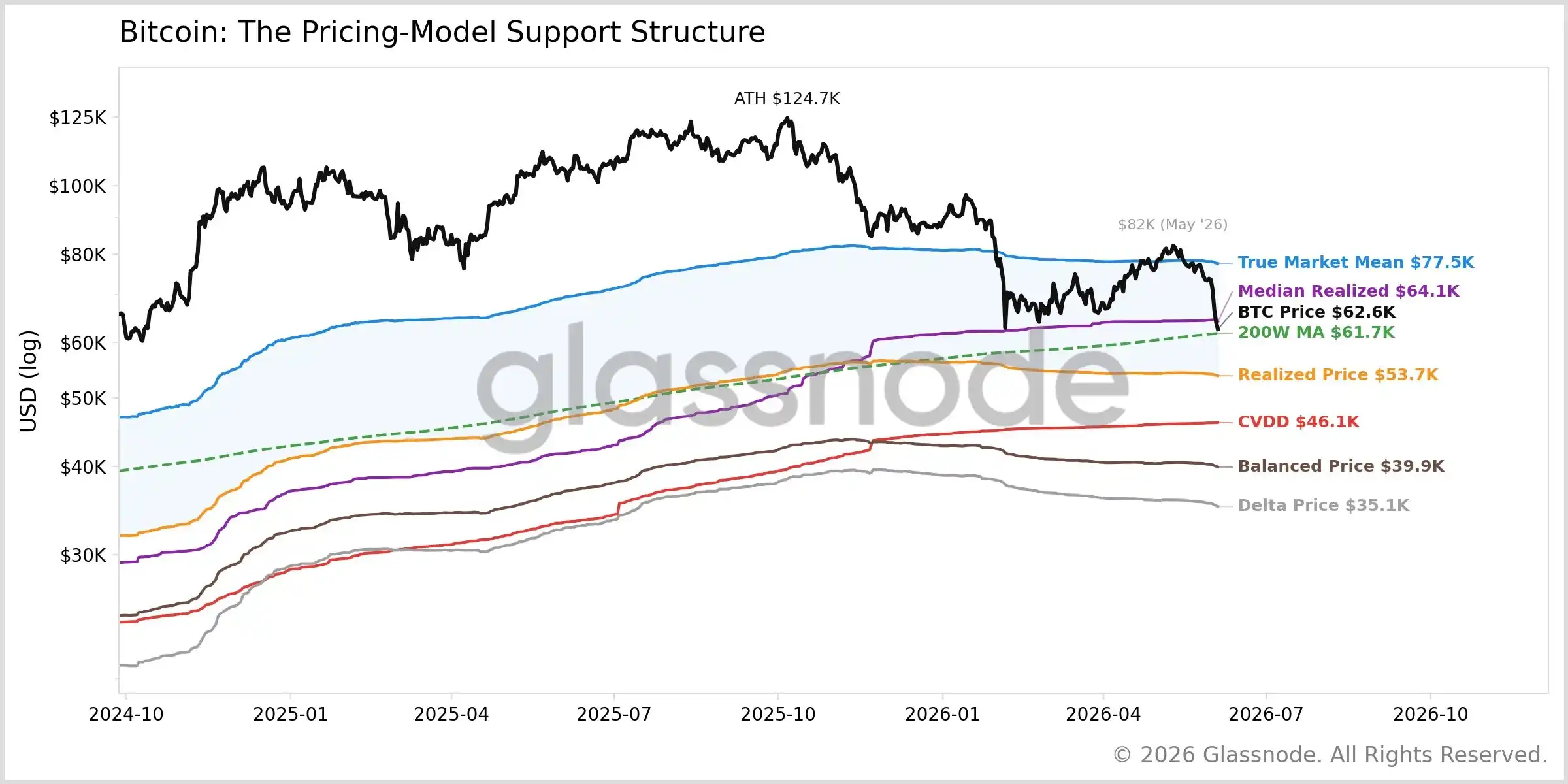
Looking at long-term valuation models, below the 200-week moving average lie the Realized Price (~$54k), the CVDD (~$46.2k), the Balanced Price (~$40k), and the Delta Price (~$35k) in descending order. Historically, bear market bottoms have touched this cost basis range before reversing. Among these, the CVDD is considered the most historically accurate bottom anchor. According to current model projections, the $46k to $54k range constitutes a higher-probability bottom zone, while $35k to $40k belongs to a deep capitulation area under extreme panic scenarios, accounting for less than 3% of trading days in history.

However, as the Bitcoin market matures, the magnitude of cyclical drawdowns shows a narrowing trend. The maximum declines in previous bear markets were 85%, 84%, and 77% respectively, whereas the current cycle has only retraced about 50% from its all-time high so far. This suggests the possibility of further declines, but a higher-probability bottom may lie in the $46k to $54k range. If a subsequent rebound occurs, $75k to $79k will become the first significant recovery zone, with greater resistance likely around the 50-week moving average near ~$93k and the previous all-time highs.

NYDIG Global Head of Research: AI is Siphoning Significant Crypto Capital

Greg Cipolaro, Global Head of Research at NYDIG, stated in a research report that he believes the overlap between AI and crypto investors is far greater than many realize. Both attract investors seeking exposure to emerging technologies and alpha returns. As AI-related stocks continue to outperform the broader market, capital flows and rotates out of the crypto market. Investors are also preparing for what could be the largest tech IPO cycle in years. Sales by Mt. Gox creditors and increased market concerns have exacerbated the downturn.

Greg Cipolaro noted in his report that multiple metrics are approaching levels historically coincident with major bottoms. Bitcoin's MVRV Ratio has fallen to 1.2, and the percentage of supply in profit recently slipped below 50%, another indicator often associated with capitulation. However, the magnitude of this drawdown remains relatively mild by historical standards. He pointed out that Bitcoin's decline of about 53% from its peak ($126k in October) is much shallower than the 75%-90% retracements seen in previous cycles. Whether the low has already been formed likely depends on whether institutional demand has structurally altered the cycle or merely delayed a deeper realignment.

Standard Chartered Head of Digital Asset Research: Bitcoin Bottom is Almost Formed

Geoffrey Kendrick, Head of Digital Asset Research at Standard Chartered, stated that the Bitcoin bottom is "almost certainly formed," and the current price range may be the long-awaited buying opportunity for investors.

An important trigger for this decline was the sale of 32k BTC by Mt. Gox creditors. However, referencing the historical experience from late 2022, it's likely that Mt. Gox creditors will soon engage in much larger-scale repurchases, potentially reaching 10 or even 100 times the amount previously sold.

If such buying is confirmed, it would serve as a significant signal for a market bottom.

Strive CEO: Bitcoin Touched 200-Week Moving Average (Fifth Time in History), First Four Times Were Perfect Buying Opportunities
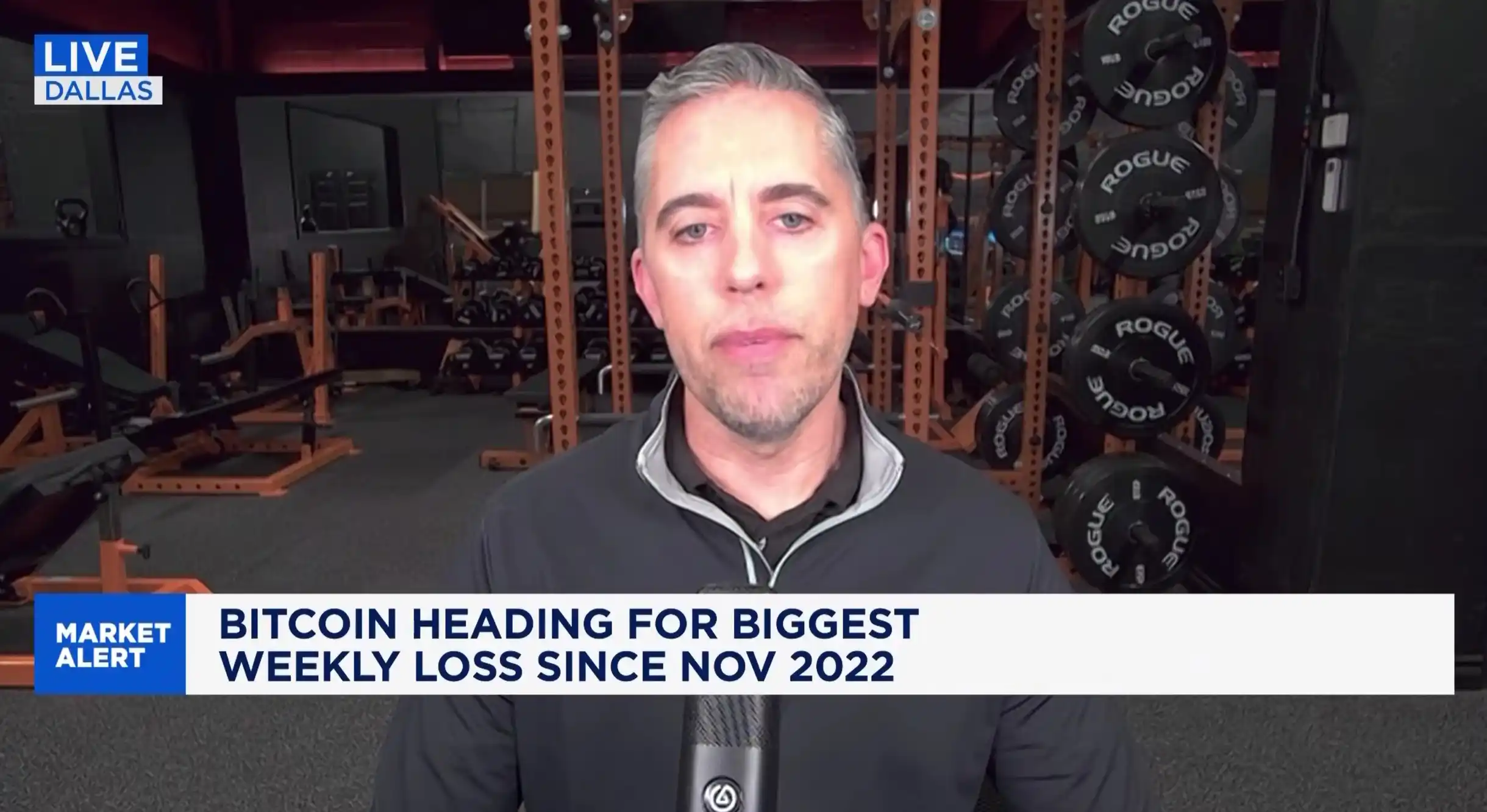
Matt Cole, CEO of asset management firm Strive, stated in an interview with CNBC's Squawk Box Europe that Bitcoin touching the 200-week moving average (the fifth time in history) with the first four times being "perfect buying opportunities." He also emphasized that Bitcoin's fundamentals have "never been better" and views this touch of the 200-week MA as a historic buying opportunity.

Trader Eugene: Has Temporarily Exited Crypto for US Stocks, Won't Try to Catch the Bitcoin Falling Knife

Trader Eugene Ng Ah Sio posted on his personal channel that he has largely exited the cryptocurrency market since May 13th of this year and shifted his primary focus to researching the stock market. He believes that, compared to the current crypto market, the stock market offers greater appeal in terms of research depth, cognitive challenge, and trading/investment opportunities. Based on his assessment of the industry's current state, he expects to maintain this strategy for the foreseeable future, only continuing to follow crypto industry developments without active participation in trading.

Eugene further stated that unless the market presents an extremely attractive risk-reward opportunity, he has no plans to return to the crypto market in the near term, and he does not currently see such conditions materializing. He believes the trajectory of the crypto market is diminishing its appeal as a trading and investment arena, hence he will continue focusing on traditional stock markets for now.

Regarding Mt. Gox, Eugene believes the associated risks are just beginning to surface. He stated that even if Mt. Gox creditors have sold more Bitcoin recently, it merely delays the problem rather than solving it.

Until the high correlation between Mt. Gox and Bitcoin is broken, he is not optimistic about long opportunities for Bitcoin. As for the market bottom location, he admitted he cannot predict it, but he has stopped attempting "catching the falling knife" style dip-buying trades.

Trader Killa: Now is a Generational Buying Opportunity

Trader Killa tweeted during Bitcoin's decline on June 6th, stating that now is a generational buying opportunity. On June 8th, he indicated that BTC has entered the "final phase" and "final extension," and he has deployed 90% of his capital.

Additionally, Killa mentioned that the "protective buy walls" that emerged during last weekend's crash have not been withdrawn, and he believes the likelihood of quickly revisiting these support levels in the short term is low. Killa is a quantitative trader focused on BTC, who previously predicted the peak of this bull cycle in May 2025.

Analyst Darkfost: Bitcoin Has Entered Extreme Undervaluation Zone

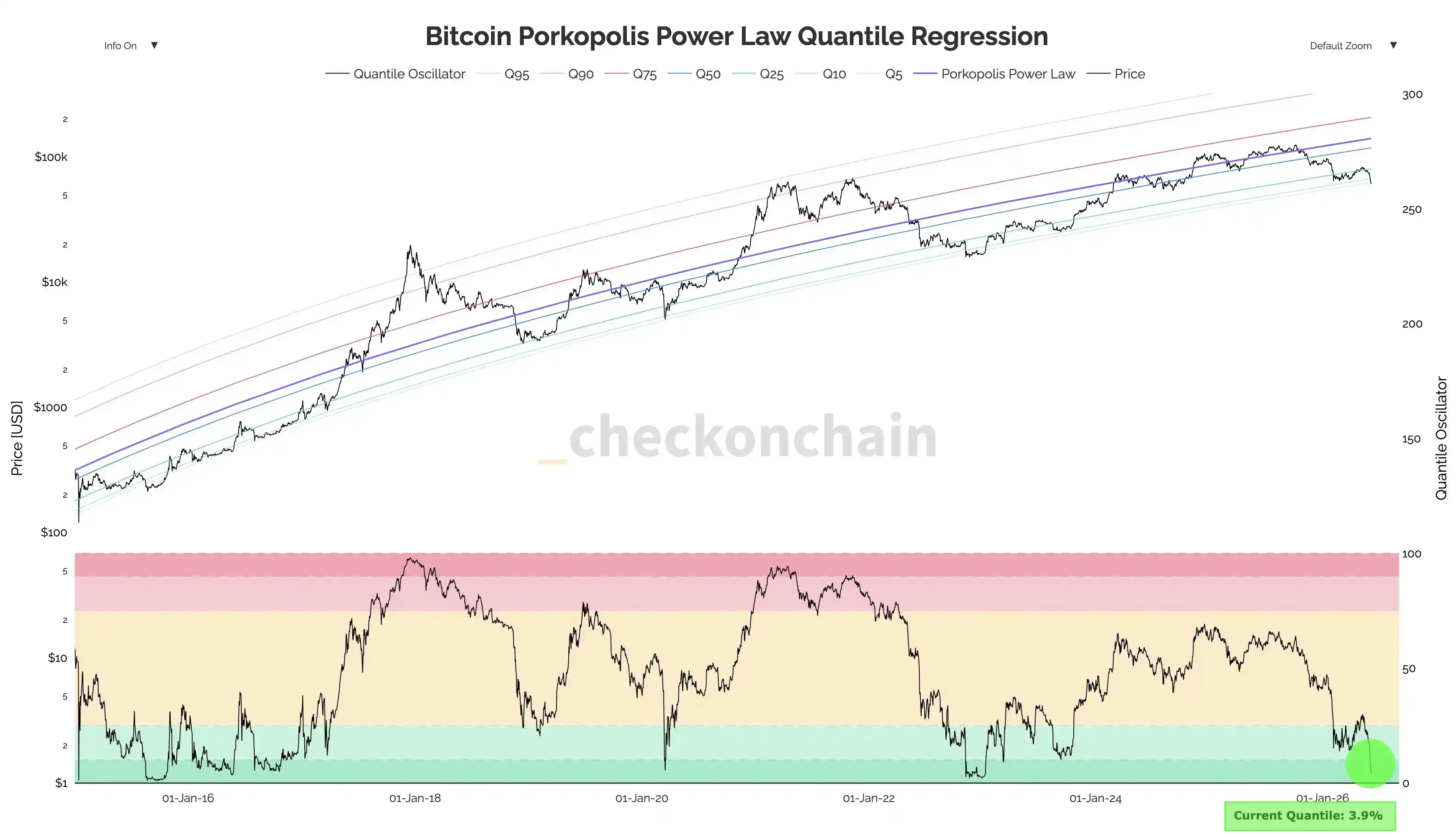
According to data from analyst Darkfost, Bitcoin has retraced to fall below the 4th percentile line of the Power Law model, entering an extreme undervaluation zone. Historically, Bitcoin has only traded at such valuation levels 4% of the time. Darkfost emphasized that this is a suitable period for long-term position building, not a short-term price prediction.
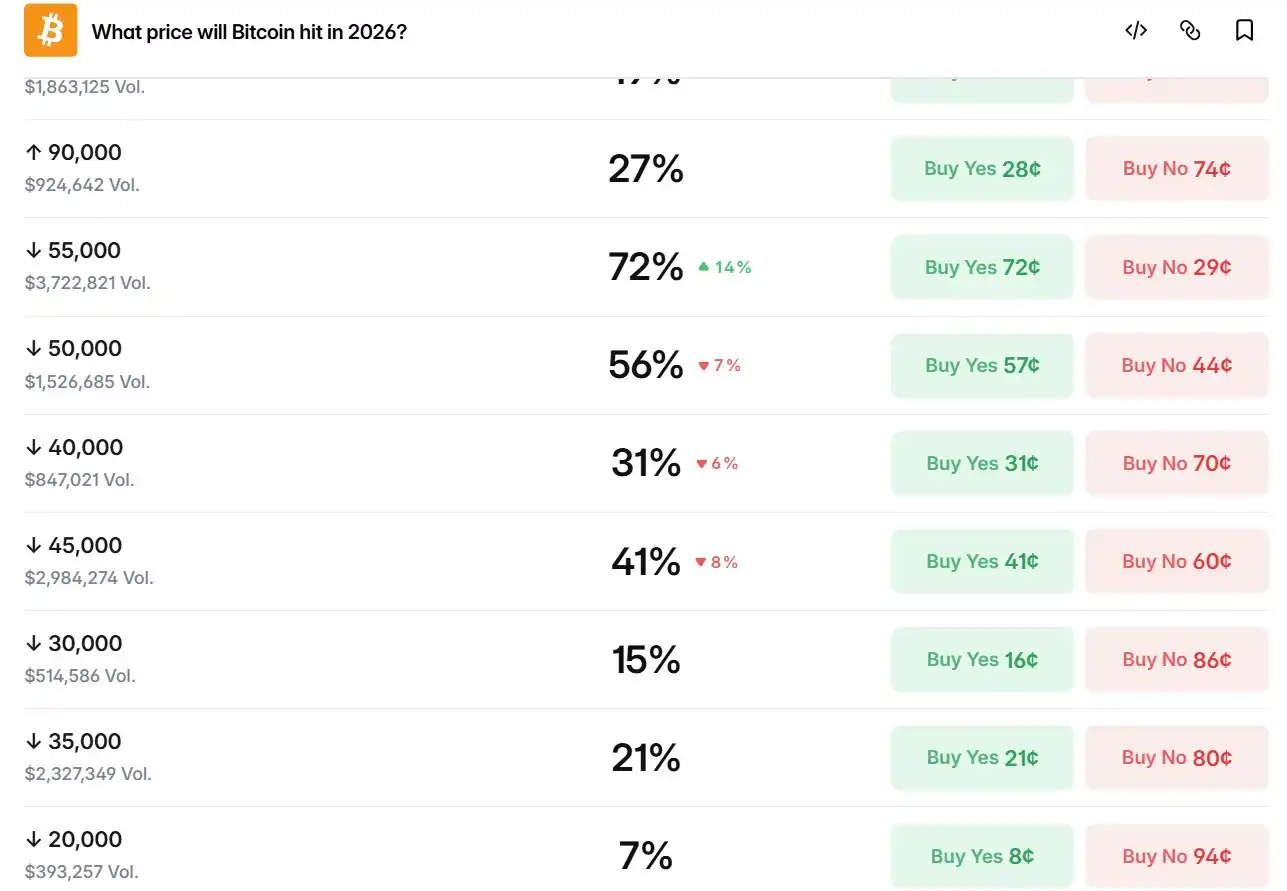
Polymarket Data: 72% Probability BTC Falls Below $55k

Latest data on Polymarket shows the probability of BTC falling below $45k is 41%, below $50k is 56%, and below $55k is 72%. The probability of falling below $40k is 31%, and below $35k is only 21%.

Most market participants currently believe the probability of BTC falling to the $35k–$40k range is not high.
Domande pertinenti

QAccording to the article, what price range does Glassnode's co-founder identify as the key bottom zone for Bitcoin, and what model does he cite as historically the most accurate bottom anchor?

AGlassnode's co-founder, Rafael, identifies the key bottom zone for Bitcoin as between $46,000 and $54,000. He cites the CVDD model as historically the most accurate bottom anchor point.

QWhat is the main reason provided by NYDIG's Global Head of Research, Greg Cipolaro, for capital flowing out of the crypto market?

AGreg Cipolaro states that capital is flowing out of the crypto market because AI-related stocks are outperforming, attracting investors who seek exposure to emerging technologies and excess returns. This has led to a rotation of capital from crypto into AI and also in anticipation of a large tech IPO cycle.

QWhy does Standard Chartered's Head of Digital Assets Research, Geoffrey Kendrick, believe the Bitcoin bottom is 'almost formed'?

AGeoffrey Kendrick believes the Bitcoin bottom is 'almost formed' because he sees the current price range as a long-awaited buying opportunity. He points to Mt. Gox's potential large-scale buyback as a key signal, expecting it to be 10 to 100 times the size of their recent sales, similar to the pattern observed in late 2022.

QWhat is the primary reason trader Eugene Ng Ah Sio has shifted his focus from crypto to the stock market?

ATrader Eugene Ng Ah Sio has shifted his focus to the stock market because he finds it more attractive in terms of research depth, intellectual challenge, and the availability of trading and investment opportunities compared to the current crypto market. He believes the crypto market's development trajectory is diminishing its appeal as a trading/investment field for now.

QWhat does the data from the prediction market Polymarket indicate about the probability of Bitcoin's price falling to different levels?

AAccording to Polymarket data, the probability of Bitcoin falling below $55,000 is 72%, below $50,000 is 56%, and below $45,000 is 41%. The probabilities for dropping to $40,000 and $35,000 are 31% and 21% respectively, indicating that most market participants believe a drop to the $35,000-$40,000 range is less likely.

Letture associate

Reddit Weekly Hot Stock Watch: RKLB/LUNR/ASTS Plunge Collectively, Is the Space Sector Still Worth Considering?

Reddit's stock communities witnessed a concentrated surge in discussion around space stocks last week, with SPCE, RKLB, LUNR, and ASTS leading the chatter. This often signals an underlying catalyst for investor attention. However, despite being grouped as "space plays," these companies have vastly different fundamentals and recent performances. While SPCE (Virgin Galactic) saw a 22% single-day surge—potentially fueled by short covering and fallout from Blue Origin's rocket test anomaly—the other three stocks declined sharply. RKLB dropped 15%, LUNR fell 13%, and ASTS was down 7%. This divergence highlights they are not a monolithic sector. The downturn for RKLB, LUNR, and ASTS stemmed from multiple headwinds converging: Blue Origin's New Glenn rocket explosion (directly impacting ASTS's launch plans), anticipation of SpaceX's massive IPO drawing funds away from these "alternative" public space stocks, and insider selling at RKLB after significant rallies. A closer look reveals key differences: RKLB stands out with substantial, growing revenue ($113.9M in Q1) and a $2.2B backlog, though its high valuation (~80x Forward P/S) prices in success for its upcoming Neutron rocket. LUNR's reported revenue growth is largely acquisition-driven, with its core moon landing business facing a crucial test with the upcoming IM-3 mission. ASTS has a large potential market in space-based cellular connectivity but faces significant execution risk, especially after the Blue Origin launch setback. SPCE, despite high discussion volume, has minimal revenue and its recent spike appears driven more by sentiment than fundamentals. The analysis suggests it's premature to call a "buying opportunity" for the sector broadly. RKLB is considered the most fundamentally sound but may be more attractive at a lower price point ($96-$102). For the others, investors are advised to wait for specific catalysts: LUNR's IM-3 mission outcome, clarity on ASTS's revised launch timeline, and for SPCE, to avoid the speculative frenzy. The long-term space thesis remains, but short-term valuations have run ahead of fundamentals for most names.

marsbit6 min fa

Reddit Weekly Hot Stock Watch: RKLB/LUNR/ASTS Plunge Collectively, Is the Space Sector Still Worth Considering?

marsbit6 min fa

Why Does Crypto Always Build 'Casinos', But Rarely Creates 'Indispensable Products'?

The article explores why cryptocurrency has primarily fostered speculation rather than essential, "sticky" consumer products. It introduces the concept of "sofalarity"—the point where a platform's convenience becomes so ingrained that leaving feels unthinkable. While Big Tech creates this lock-in through ecosystem control and data harvesting, crypto lacks equivalent everyday utility. Its appeal hinges on the variable rewards of price volatility, akin to gambling, which drives engagement but not dependency. The author argues crypto's core promise—fixing opaque backend systems like correspondent banking—solves problems most people never see or feel, failing to deliver a tangible "aha moment" of improved daily life. This need for explanation hinders mass adoption. Meanwhile, platforms like Google and Meta monetize vast behavioral data, a treasure trove crypto's transparent ledgers (recording only financial transactions) cannot match for predictive insight. The piece further questions whether crypto's potential lies in consumer super-apps or, more plausibly, in becoming enterprise-grade infrastructure—modern settlement rails. It concludes with a critical look at Real-World Asset (RWA) tokenization, suggesting it may merely digitize and accelerate corporate extraction (e.g., in housing or healthcare) rather than democratize access, as the technology itself is a neutral tool. True disruption, the author implies, requires building sovereign systems outside exploitative platforms.

marsbit7 min fa

Why Does Crypto Always Build 'Casinos', But Rarely Creates 'Indispensable Products'?

marsbit7 min fa

If Hyperliquid Is the New Nasdaq, Which Projects Are Playing the Role of Brokers?

Amidst sluggish market conditions, several crypto startups are pivoting towards building on the Hyperliquid ecosystem, positioning it as a potential "on-chain Nasdaq." These projects are developing trading frontends, strategy platforms, AI Agents, and custom markets using HIP-3, aiming to capture value by acting as "brokerages" that interface with users. The core idea is that while Hyperliquid provides the foundational liquidity and matching engine (like an exchange), these upper-layer applications handle user acquisition, product design, and experience optimization (like brokerages such as Robinhood). Their primary revenue models include transaction fee sharing and the potential appreciation of the HYPE token required for deployment. Key projects highlighted include: * **Trade.xyz**: Dominates the HIP-3 space by bringing traditional finance assets (indices, commodities, stocks) onto Hyperliquid. * **Dreamcash**: Focuses on mobile user growth with a simplified, gamified interface to lower the barrier to entry. * **Ventuals**: Targets the Pre-IPO market, creating perpetual contracts for unicorn company valuations. * **Based**: Aims to be a "super app" combining trading, prediction markets, and crypto payments, introducing yield-generating collateral via its HyENA protocol. * **Minara AI**: Explores an AI Agent future, allowing users to execute trades on Hyperliquid via natural language commands to AI tools. The article concludes that this open, composable ecosystem is Hyperliquid's key competitive advantage. It is evolving from a user-facing platform into a financial operating system (Financial OS). This creates a symbiotic network where each new application brings more users and liquidity to Hyperliquid, while the applications benefit from its robust infrastructure. This network effect could define the next phase of competition among decentralized financial networks.

Odaily星球日报24 min fa

If Hyperliquid Is the New Nasdaq, Which Projects Are Playing the Role of Brokers?

Odaily星球日报24 min fa

Trading

Spot
Futures

Articoli Popolari

Cosa è BITCOIN

Comprendere HarryPotterObamaSonic10Inu (ERC-20) e la sua posizione nel mondo delle criptovalute Negli ultimi anni, il mercato delle criptovalute ha assistito a un aumento della popolarità delle meme coin, catturando l'interesse non solo dei trader, ma anche di coloro che cercano coinvolgimento comunitario e valore di intrattenimento. Tra questi token unici c'è HarryPotterObamaSonic10Inu (ERC-20), un progetto intrigante che mescola riferimenti culturali nel tessuto delle criptovalute. Questo articolo esplora gli aspetti chiave di HarryPotterObamaSonic10Inu, analizzando i suoi meccanismi, l'etica guidata dalla comunità e il suo coinvolgimento con il panorama crittografico più ampio. Che cos'è HarryPotterObamaSonic10Inu (ERC-20)? Come suggerisce il suo nome, HarryPotterObamaSonic10Inu è una meme coin costruita sulla blockchain di Ethereum, classificata secondo lo standard ERC-20. A differenza delle criptovalute tradizionali che possono enfatizzare l'utilità pratica o il potenziale investimento, questo token prospera grazie al valore di intrattenimento e alla forza della sua comunità. Il progetto mira a creare un ambiente in cui gli utenti coinvolti possono riunirsi, condividere idee e partecipare ad attività ispirate a diversi fenomeni culturali. Una caratteristica notevole di HarryPotterObamaSonic10Inu è la zero tassa sulle transazioni. Questo elemento allettante tende a incoraggiare il trading e il coinvolgimento della comunità, privo di costi aggiuntivi che possono scoraggiare i trader di piccole dimensioni. L'offerta totale della moneta è fissata a un miliardo di token, un numero che segna la sua intenzione di mantenere una circolazione sostanziale all'interno della comunità. Creatore di HarryPotterObamaSonic10Inu (ERC-20) Le origini di HarryPotterObamaSonic10Inu sono avvolte in un certo mistero; i dettagli sul creatore rimangono sconosciuti. Lo sviluppo di questo token non presenta un team identificabile o un piano esplicito, cosa non rara nel settore delle meme coin. Invece, il progetto è emerso organicamente, con il suo progresso fortemente dipendente dall'entusiasmo e dalla partecipazione della sua comunità. Investitori di HarryPotterObamaSonic10Inu (ERC-20) Per quanto riguarda investimenti esterni e finanziamenti, HarryPotterObamaSonic10Inu rimane ambiguo. Il token non elenca alcuna fondazione di investimento conosciuta o un sostegno organizzativo significativo. Invece, la linfa vitale del progetto è la sua comunità di base, che informa la sua crescita e sostenibilità attraverso azioni collettive e coinvolgimento nello spazio crittografico. Come funziona HarryPotterObamaSonic10Inu (ERC-20)? In quanto meme coin, HarryPotterObamaSonic10Inu opera principalmente al di fuori delle strutture tradizionali che governano spesso il valore degli asset. Ci sono diversi aspetti distintivi che definiscono il funzionamento del progetto: Transazioni senza tasse: Senza costi fiscali sulle transazioni, gli utenti possono comprare e vendere liberamente il token senza preoccuparsi di costi nascosti. Coinvolgimento della comunità: Il progetto prospera sull'interazione della comunità, sfruttando le piattaforme social per creare entusiasmo e facilitare il coinvolgimento. Discussioni, condivisione di contenuti e coinvolgimento sono elementi cruciali che aiutano ad espandere la sua portata e a favorire la lealtà tra i sostenitori. Nessuna utilità pratica: Va notato che HarryPotterObamaSonic10Inu non offre un'utilità concreta all'interno dell'ecosistema finanziario. Piuttosto, è classificato come un token principalmente per attività di intrattenimento e comunitarie. Riferimento culturale: Il token incorpora astutamente elementi della cultura pop per attirare interesse, collegandosi a appassionati di meme e seguaci delle criptovalute. HarryPotterObamaSonic10Inu esemplifica come le meme coin operino in modo diverso rispetto ai progetti di criptovalute più tradizionali, entrando nel mercato come costrutti sociali innovativi piuttosto che come asset utilitari. Cronologia di HarryPotterObamaSonic10Inu (ERC-20) La storia di HarryPotterObamaSonic10Inu è segnata da diversi traguardi notevoli: Creazione: Il token è emerso da un meme virale, catturando l'immaginazione di molti appassionati di criptovalute. Le date di creazione specifiche non sono disponibili, sottolineando la sua crescita organica. Inserimento negli scambi: HarryPotterObamaSonic10Inu ha fatto il suo ingresso in vari scambi, consentendo un accesso e un trading più facili da parte della comunità. Iniziative di coinvolgimento della comunità: Attività in corso volte a migliorare l'interazione della comunità, comprese gare, campagne sui social media e generazione di contenuti da parte di fan e sostenitori. Piani di espansione futura: La tabella di marcia del progetto include il lancio di una collezione NFT, merchandising e un sito di eCommerce relativo ai suoi temi culturali, coinvolgendo ulteriormente la comunità e cercando di aggiungere più dimensioni al suo ecosistema. Punti chiave su HarryPotterObamaSonic10Inu (ERC-20) Natura guidata dalla comunità: Il progetto dà priorità al contributo collettivo e alla creatività, garantendo che il coinvolgimento degli utenti sia al centro del suo sviluppo. Classificazione come meme coin: Rappresenta l'epitome delle criptovalute basate sull'intrattenimento, distinguendosi dai veicoli d'investimento tradizionali. Nessuna affiliazione diretta con Bitcoin: Nonostante la somiglianza nel nome del ticker, HarryPotterObamaSonic10Inu è distintivo e non ha alcuna relazione con Bitcoin o altre criptovalute consolidate. Focus sulla collaborazione: HarryPotterObamaSonic10Inu è progettato per creare uno spazio per la collaborazione e la condivisione di storie tra i suoi detentori, fornendo un canale per la creatività e il legame comunitario. Prospettive future: L'ambizione di espandersi oltre il suo presupposto iniziale verso NFT e merchandising delinea un percorso per il progetto per potenzialmente entrare in strade più mainstream all'interno della cultura digitale. Poiché le meme coin continuano a catturare l'immaginazione della comunità crittografica, HarryPotterObamaSonic10Inu (ERC-20) si distingue per i suoi legami culturali e il suo approccio centrato sulla comunità. Anche se potrebbe non adattarsi al modello tipico di un token orientato all'utilità, la sua essenza risiede nella gioia e nella camaraderia coltivate tra i suoi sostenitori, evidenziando la natura in evoluzione delle criptovalute in un'epoca sempre più digitale. Con la continuazione dello sviluppo del progetto, sarà importante osservare come le dinamiche della comunità influenzano la sua traiettoria nel panorama in continuo cambiamento della tecnologia blockchain.

1.6k Totale visualizzazioniPubblicato il 2024.04.01Aggiornato il 2024.12.03

Cosa è BITCOIN

Come comprare BTC

Benvenuto in HTX.com! Abbiamo reso l'acquisto di Bitcoin (BTC) semplice e conveniente. Segui la nostra guida passo passo per intraprendere il tuo viaggio nel mondo delle criptovalute.Step 1: Crea il tuo Account HTXUsa la tua email o numero di telefono per registrarti il tuo account gratuito su HTX. Vivi un'esperienza facile e sblocca tutte le funzionalità,Crea il mio accountStep 2: Vai in Acquista crypto e seleziona il tuo metodo di pagamentoCarta di credito/debito: utilizza la tua Visa o Mastercard per acquistare immediatamente BitcoinBTC.Bilancio: Usa i fondi dal bilancio del tuo account HTX per fare trading senza problemi.Terze parti: abbiamo aggiunto metodi di pagamento molto utilizzati come Google Pay e Apple Pay per maggiore comodità.P2P: Fai trading direttamente con altri utenti HTX.Over-the-Counter (OTC): Offriamo servizi su misura e tassi di cambio competitivi per i trader.Step 3: Conserva Bitcoin (BTC)Dopo aver acquistato Bitcoin (BTC), conserva nel tuo account HTX. In alternativa, puoi inviare tramite trasferimento blockchain o scambiare per altre criptovalute.Step 4: Scambia Bitcoin (BTC)Scambia facilmente Bitcoin (BTC) nel mercato spot di HTX. Accedi al tuo account, seleziona la tua coppia di trading, esegui le tue operazioni e monitora in tempo reale. Offriamo un'esperienza user-friendly sia per chi ha appena iniziato che per i trader più esperti.

4.0k Totale visualizzazioniPubblicato il 2024.12.12Aggiornato il 2026.06.02

Come comprare BTC

Cosa è $BITCOIN

ORO DIGITALE ($BITCOIN): Un'Analisi Completa Introduzione all'ORO DIGITALE ($BITCOIN) L'ORO DIGITALE ($BITCOIN) è un progetto basato su blockchain che opera sulla rete Solana, con l'obiettivo di combinare le caratteristiche dei metalli preziosi tradizionali con l'innovazione delle tecnologie decentralizzate. Sebbene condivida un nome con Bitcoin, spesso definito “oro digitale” a causa della sua percezione come riserva di valore, l'ORO DIGITALE è un token separato progettato per creare un ecosistema unico all'interno del panorama Web3. Il suo obiettivo è posizionarsi come un asset digitale alternativo valido, anche se i dettagli riguardanti le sue applicazioni e funzionalità sono ancora in fase di sviluppo. Cos'è l'ORO DIGITALE ($BITCOIN)? L'ORO DIGITALE ($BITCOIN) è un token di criptovaluta esplicitamente progettato per l'uso sulla blockchain di Solana. A differenza di Bitcoin, che fornisce un ruolo di stoccaggio di valore ampiamente riconosciuto, questo token sembra concentrarsi su applicazioni e caratteristiche più ampie. Aspetti notevoli includono: Infrastruttura Blockchain: Il token è costruito sulla blockchain di Solana, nota per la sua capacità di gestire transazioni ad alta velocità e a basso costo. Dinamiche di Offerta: L'ORO DIGITALE ha un'offerta massima fissata a 100 quadrilioni di token (100P $BITCOIN), sebbene i dettagli riguardanti la sua offerta circolante siano attualmente non divulgati. Utilità: Sebbene le funzionalità precise non siano esplicitamente delineate, ci sono indicazioni che il token potrebbe essere utilizzato per varie applicazioni, potenzialmente coinvolgendo applicazioni decentralizzate (dApp) o strategie di tokenizzazione degli asset. Chi è il Creatore dell'ORO DIGITALE ($BITCOIN)? Attualmente, l'identità dei creatori e del team di sviluppo dietro l'ORO DIGITALE ($BITCOIN) rimane sconosciuta. Questa situazione è tipica tra molti progetti innovativi nel settore blockchain, in particolare quelli allineati con la finanza decentralizzata e i fenomeni delle meme coin. Sebbene tale anonimato possa favorire una cultura guidata dalla comunità, intensifica le preoccupazioni riguardo alla governance e alla responsabilità. Chi sono gli Investitori dell'ORO DIGITALE ($BITCOIN)? Le informazioni disponibili indicano che l'ORO DIGITALE ($BITCOIN) non ha alcun sostenitore istituzionale noto o investimenti di venture capital prominenti. Il progetto sembra operare su un modello peer-to-peer incentrato sul supporto e sull'adozione della comunità piuttosto che su percorsi di finanziamento tradizionali. La sua attività e liquidità si trovano principalmente su exchange decentralizzati (DEX), come PumpSwap, piuttosto che su piattaforme di trading centralizzate consolidate, evidenziando ulteriormente il suo approccio di base. Come Funziona l'ORO DIGITALE ($BITCOIN) Le meccaniche operative dell'ORO DIGITALE ($BITCOIN) possono essere elaborate in base al suo design blockchain e alle caratteristiche della rete: Meccanismo di Consenso: Sfruttando il proof-of-history (PoH) unico di Solana combinato con un modello di proof-of-stake (PoS), il progetto garantisce una validazione efficiente delle transazioni contribuendo all'alta performance della rete. Tokenomics: Sebbene meccanismi deflazionistici specifici non siano stati dettagliati ampiamente, l'ampia offerta massima di token implica che potrebbe soddisfare microtransazioni o casi d'uso di nicchia che devono ancora essere definiti. Interoperabilità: Esiste il potenziale per l'integrazione con l'ecosistema più ampio di Solana, inclusi vari piattaforme di finanza decentralizzata (DeFi). Tuttavia, i dettagli riguardanti integrazioni specifiche rimangono non specificati. Cronologia degli Eventi Chiave Ecco una cronologia che evidenzia traguardi significativi riguardanti l'ORO DIGITALE ($BITCOIN): 2023: Il dispiegamento iniziale del token avviene sulla blockchain di Solana, contrassegnato dal suo indirizzo di contratto. 2024: L'ORO DIGITALE guadagna visibilità poiché diventa disponibile per il trading su exchange decentralizzati come PumpSwap, consentendo agli utenti di scambiarlo contro SOL. 2025: Il progetto assiste a un'attività di trading sporadica e a un potenziale interesse per impegni guidati dalla comunità, sebbene non siano state documentate partnership significative o avanzamenti tecnici fino ad ora. Analisi Critica Punti di Forza Scalabilità: L'infrastruttura sottostante di Solana supporta alti volumi di transazioni, il che potrebbe migliorare l'utilità di $BITCOIN in vari scenari di transazione. Accessibilità: Il potenziale basso prezzo di trading per token potrebbe attrarre investitori al dettaglio, facilitando una partecipazione più ampia grazie a opportunità di proprietà frazionata. Rischi Mancanza di Trasparenza: L'assenza di sostenitori, sviluppatori o di un processo di audit pubblicamente noti potrebbe generare scetticismo riguardo alla sostenibilità e all'affidabilità del progetto. Volatilità del Mercato: L'attività di trading è fortemente dipendente dal comportamento speculativo, il che può comportare una significativa volatilità dei prezzi e incertezze per gli investitori. Conclusione L'ORO DIGITALE ($BITCOIN) emerge come un progetto intrigante ma ambiguo all'interno dell'evolvente ecosistema di Solana. Sebbene tenti di sfruttare la narrativa dell'“oro digitale”, la sua partenza dal ruolo consolidato di Bitcoin come riserva di valore sottolinea la necessità di una chiara differenziazione della sua utilità e struttura di governance. L'accettazione e l'adozione future dipenderanno probabilmente dall'affrontare l'attuale opacità e dalla definizione più esplicita delle sue strategie operative ed economiche. Nota: Questo rapporto comprende informazioni sintetizzate disponibili a ottobre 2023, e potrebbero essersi verificati sviluppi oltre il periodo di ricerca.

99 Totale visualizzazioniPubblicato il 2025.05.13Aggiornato il 2025.05.13

Cosa è $BITCOIN

Discussioni

Benvenuto nella Community HTX. Qui puoi rimanere informato sugli ultimi sviluppi della piattaforma e accedere ad approfondimenti esperti sul mercato. Le opinioni degli utenti sul prezzo di BTC BTC sono presentate come di seguito.

活动图片