Did crypto firms ‘pay’ Trump for regulatory rollbacks? NYT thinks so…

ambcryptoPubblicato 2025-12-15Pubblicato ultima volta 2025-12-15

Introduzione

According to a New York Times report, former President Donald Trump and his family allegedly benefited from dismissed or settled crypto cases through political donations and business ties. The Trump administration reportedly dismissed 33% of Biden-era crypto cases, significantly higher than the 4% average in other industries. Over half of the defendants in these cases had close ties to the administration. Examples include Coinbase, which had a lawsuit dismissed and backed pro-crypto PACs, and Binance, whose case was resolved after its founder assisted a Trump-linked stablecoin project. The report suggests a "pay-to-play" pattern involving firms like Consensys, Kraken, and Ripple. SEC Commissioner Hester Peirce defended the dismissals, stating the cases lacked legal basis. Trump’s growing crypto empire and regulatory rollbacks have faced Democratic scrutiny, raising concerns about conflicts of interest.

U.S President Donald Trump and his family allegedly benefited from most of the dismissed or settled crypto cases, according to a New York Times (NYT) report.

The dropped cases were reportedly attached to deals, in the form of political donations or business ties to the broader Trump family crypto empire.

Trump’s pay-to-play?

According to the report, the Trump Administration dismissed 33% of Biden-era crypto cases, way more than the average of 4% seen in other industries.

Out of the 14 crypto investigations that were rolled back, more than half of the defendants formed close ties with the administration. This happened either before or after the cases were resolved, NYT claimed.

Coinbase, for example, had its lawsuit dismissed, but was one of the backers of Fairshake – A pro-crypto super PAC during the 2024/2025 cycle. It also formed Stand With Crypto, which collectively supports pro-crypto lawmakers in their efforts to win elections.

In May, a civil SEC case against Binance for operating an unregistered exchange in the U.S was also dismissed. The founder, Changpeng Zhao (CZ), was pardoned months later – A move that sparked allegations of corruption.

According to the NYT, the CZ and Binance cases were resolved after he helped Trump-backed World Liberty Financial develop and promote its USD1 stablecoin.

“And just weeks before the Binance case was dismissed, the firm participated in a $2 billion business transaction that used digital currency from World Liberty. That deal is poised to generate tens of millions of dollars a year for the Trumps.”

A similar trend of ‘pay-to-play’ was reported across Consensys, Cumberland, Kraken, Tron, Ripple, and others.

However, Hester M. Peirce has since defended the rollbacks, stating that “they shouldn’t have been filed in the first place.” She added,

“I would say that the drastic action happened in the prior years, namely, bringing cases that we didn’t have a legal basis for.”

The Trump family’s crypto empire has grown significantly over the past year. In fact, it now includes BTC mining, DeFi lending, memecoins, and stablecoins, among others. However, his interest in the sector and the pro-crypto regulatory push have been met with scrutiny by Democrats.

In fact, the conflict of interest almost derailed the stablecoin law (GENIUS Act) and resurfaced during the ongoing discussions on the crypto markets structure bill.

Most of the cases were dismissed with prejudice (can’t be revisited by a new SEC regime). However, it remains to be seen whether regulatory headwinds will be an issue again if Democrats regain power in the future.


Final Thoughts

  • According to the NYT, the Trump family benefited from dismissed crypto cases.
  • However, Commissioner Peirce believes the cases didn’t have a legal basis in the first place.
Letture associate

Olympus DAO Myth Reappears? A "Sovereign On-Chain Central Bank" Written with 4000 Lines of Immutable Code

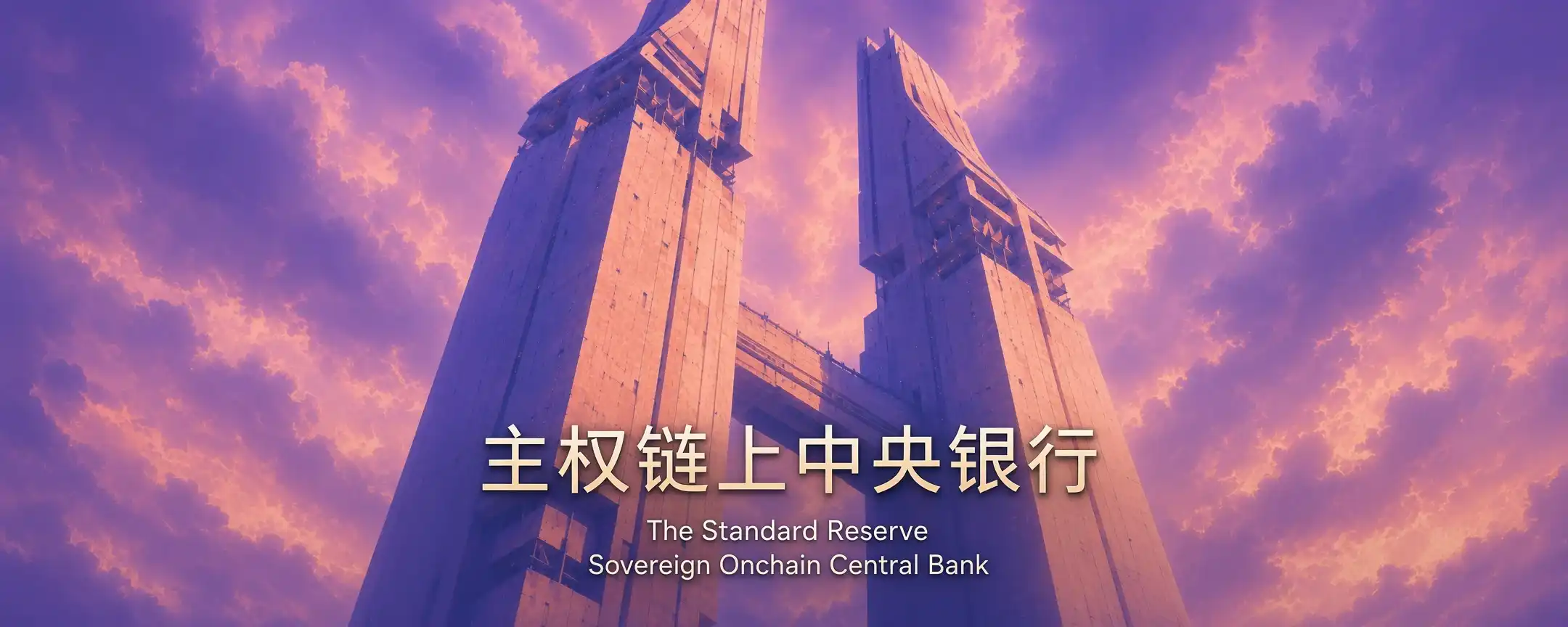
A new project called The Standard Reserve has emerged, branding itself as a "sovereign on-chain central bank." It aims to replicate core central bank functions—currency issuance, money supply adjustment, and reserve accumulation—entirely through 4,000 lines of immutable code, with no human governance. Its core mechanism is a "reflexive monetary policy" based on a single signal: the net ETH flow into or out of the system's sole Uniswap v4 ETH/$STANDARD pool. Sustained net ETH inflows trigger an "expansion" phase, increasing $STANDARD issuance and using protocol fees to buy tokenized gold as a permanent hard reserve. Net outflows (or zero flow) trigger an immediate "contraction" phase, reducing issuance and using fees to buy back and burn $STANDARD. The system involves six key entities: the $STANDARD token (hard-capped at 1 billion), the central Uniswap pool, the Central Bank contract, Charter NFTs (acting as "banking licenses"), Branch units under each Charter (which earn a share of newly minted $STANDARD), and separate Vaults for expansion (buying gold) and contraction (buying back $STANDARD). To participate, users ideally acquire a Founding Charter NFT (initially 1,000 are free via allowlist/public mint). Each Charter comes with one Branch; more can be opened by burning $STANDARD for "expansion permits," increasing revenue share. Retiring a Branch lets users claim accumulated $STANDARD but imposes a dynamic exit fee (higher if many exit simultaneously), with half the fee burned and half distributed to remaining participants. All protocol revenue (from pool fees and Charter auctions) is allocated: 70% to the active Vault (for gold or buybacks), 15% to permanent protocol-owned liquidity, and 15% to the team. The project presents an innovative, game-theoretic model where user actions (expanding Branches by burning tokens or exiting) align with system goals of building reserves or inducing deflation. However, it is fully anonymous, with key parameters undefined and unaudited code, posing significant risks.

marsbit6 min fa

Olympus DAO Myth Reappears? A "Sovereign On-Chain Central Bank" Written with 4000 Lines of Immutable Code

marsbit6 min fa

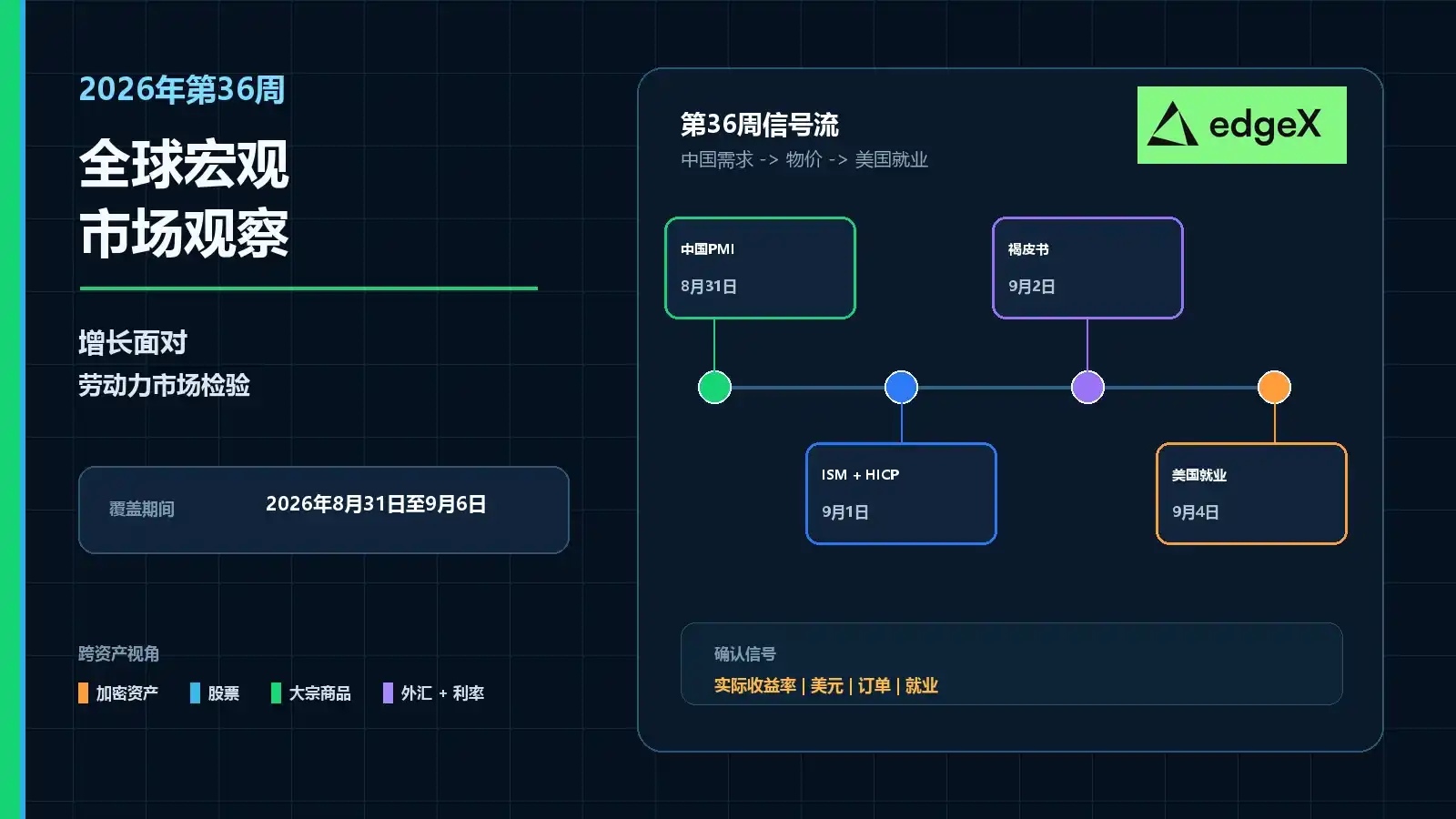
US Jobs, China PMI, and Inflation on Stage: Can Global Growth Maintain Resilience?

**Week 36 Macro Outlook: Key Data to Test Global Growth Resilience** The week from August 31 to September 6 will shift focus from policy discussions to a critical test of global economic activity. The sequence of events is key, starting with China's official August PMI on Aug 31, which will provide early signals on factory orders, services, and employment following July's contraction. The data flow then broadens. On September 1, US ISM Manufacturing PMI and the Eurozone's flash inflation estimate will offer simultaneous checks on demand, prices, and regional divergence. The subsequent US Federal Reserve Beige Book on September 2 adds granular, qualitative evidence on consumer spending, wages, and regional conditions. Australian Q2 GDP and Canadian trade and jobs data will test resilience in other major economies. The week's pivotal event, however, is the US August employment report on September 4. It will decisively influence expectations for interest rates, the US dollar, and broader risk appetite, acting as a final cross-check for the preceding data. The core question for markets is whether global growth can remain resilient. An ideal outcome would combine a rebound in China's PMI, stable US jobs growth, cooling inflation, and signs of a gradual demand slowdown. Conversely, weak Chinese manufacturing, sticky Eurozone prices, and disappointing US non-farm payrolls would create a more complex scenario of reduced corporate confidence and limited room for aggressive monetary easing, increasing pressure on cyclical assets. Investors should monitor the breadth of improvements—such as new orders and employment—rather than headline PMI figures alone. Confirmation across different data points is crucial. A positive combination of steady activity and disinflation could support equities, industrial commodities, and risk assets like crypto. However, if a growth slowdown triggers lower yields, it must be distinguished from a scenario of rising recession risks that would pressure corporate earnings, potentially limiting rallies. The market's final reaction will hinge on whether the week's signals align to either reinforce or challenge the current growth narrative.

marsbit8 min fa

US Jobs, China PMI, and Inflation on Stage: Can Global Growth Maintain Resilience?

marsbit8 min fa

Trading

Spot
活动图片